South Dakota Agent's Certification as to Power of Attorney
What this document covers
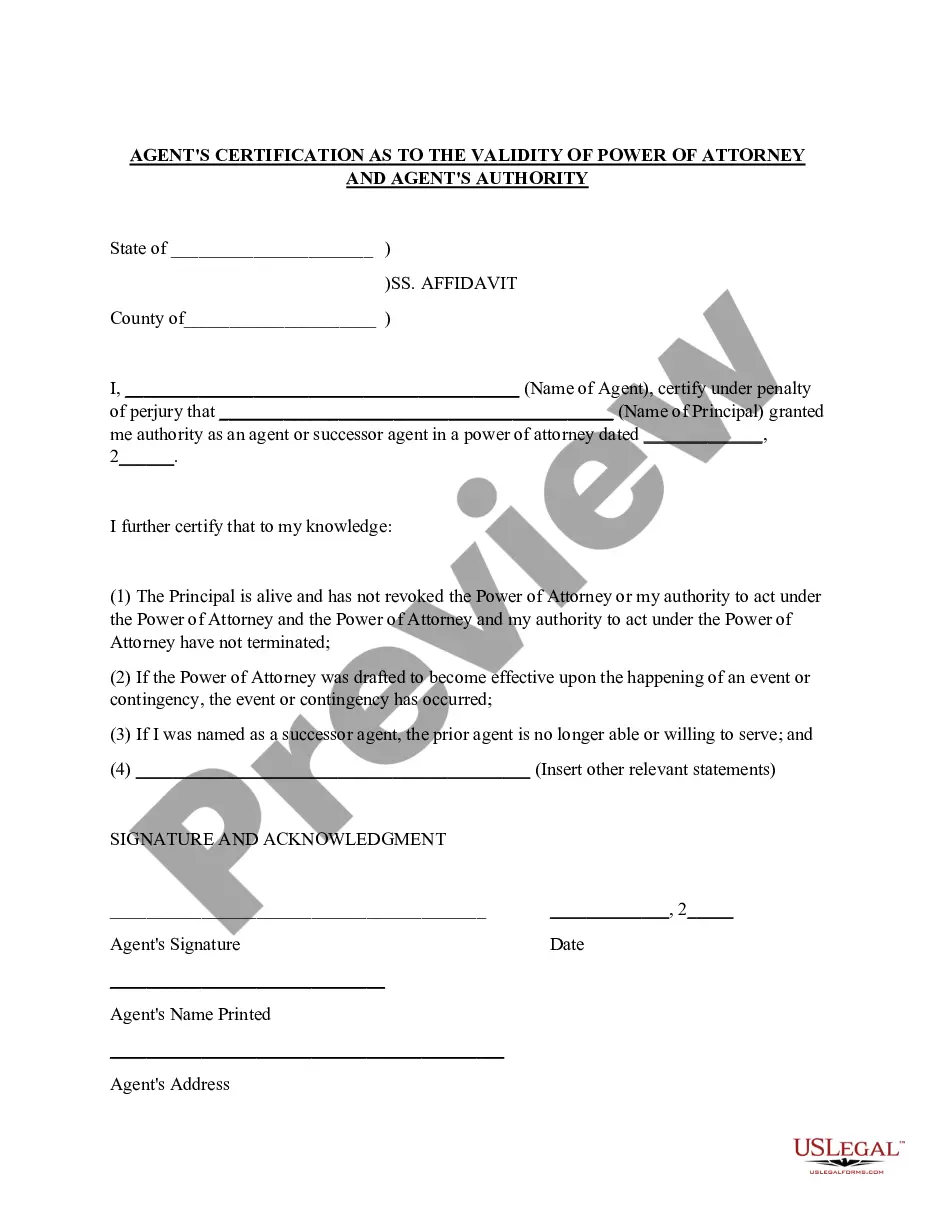
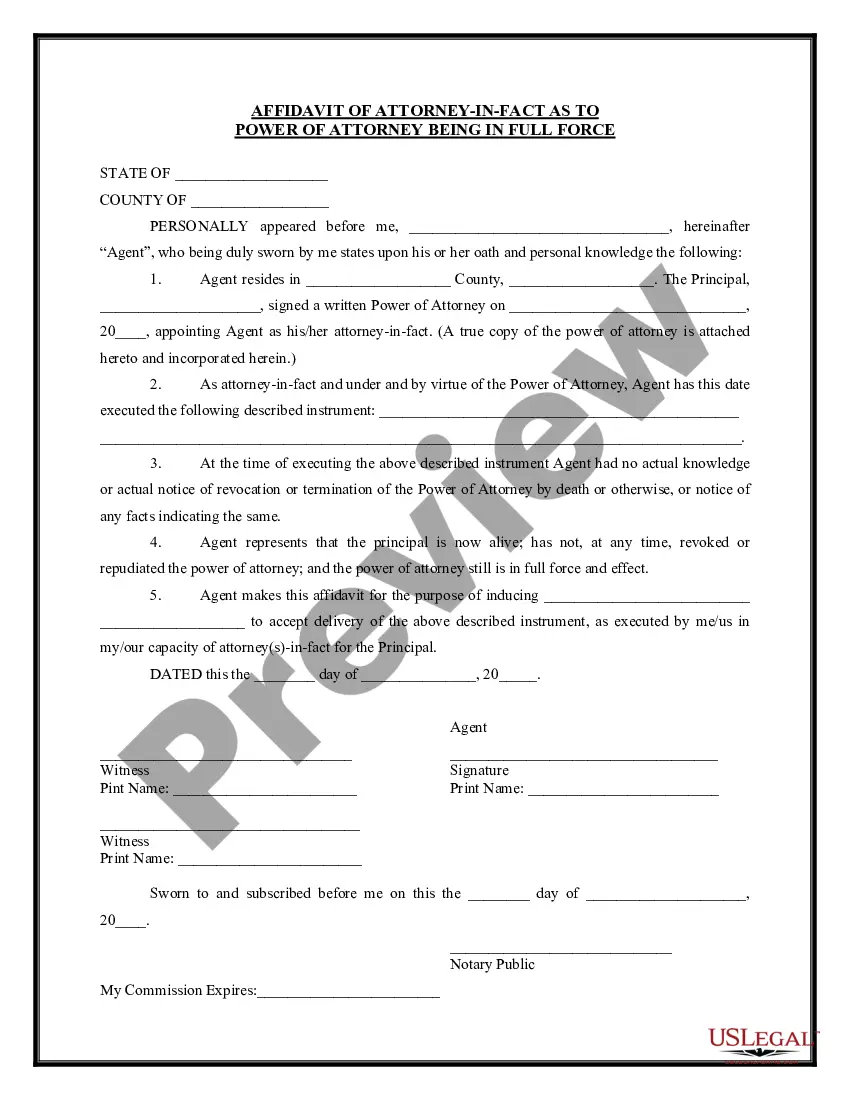
The Agent's Certification as to Power of Attorney is a legal document used to confirm the validity of an agent's authority to act on behalf of a principal under a power of attorney. This form serves to verify that the agent has not exceeded their legal authority and that the power of attorney remains in effect. Unlike other forms related to power of attorney, this certification specifically addresses the agent's status and the principal's current state regarding the document.
Key components of this form
- Name and signature of the agent, confirming their authority.
- Name of the principal, the individual granting the power of attorney.
- Date the power of attorney was executed.
- Statements affirming the principal's authority and the agent's current capability to act.
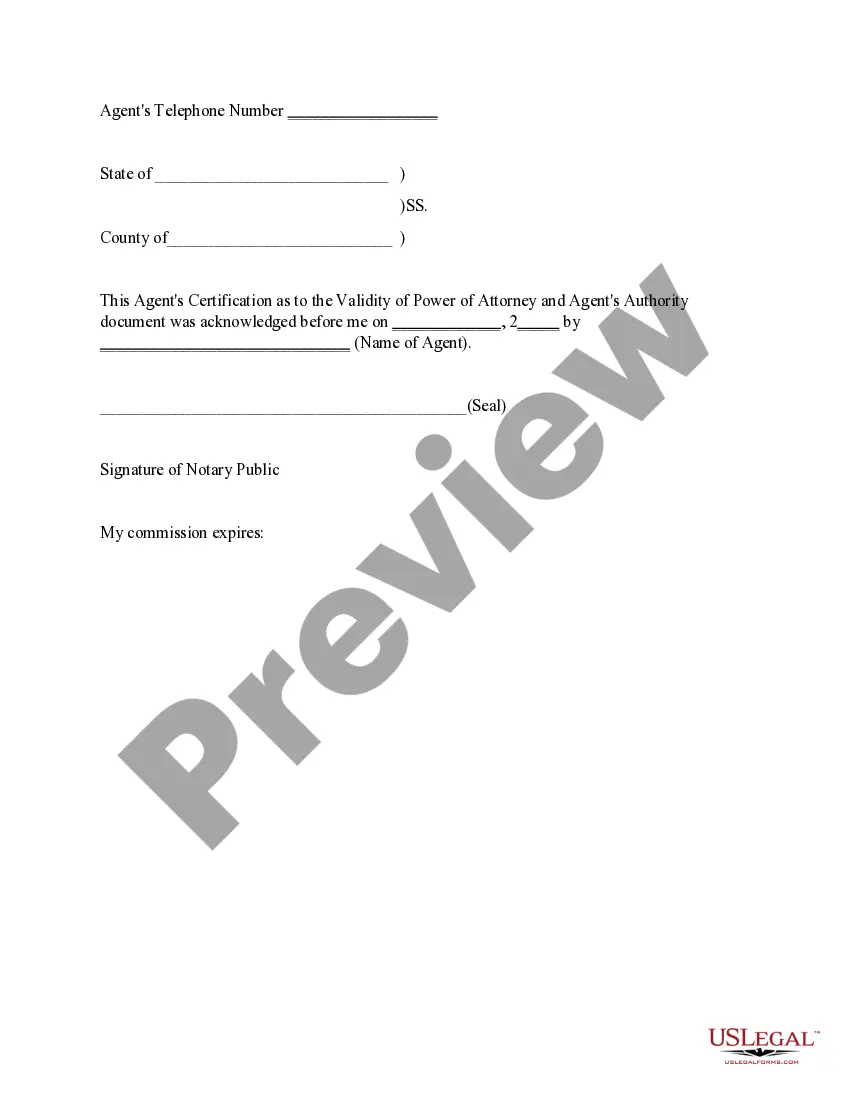
- Notary acknowledgment section, verifying the identity of the agent.
Situations where this form applies
This form is used when you need to provide proof of an agent's authority under a power of attorney. Situations may include managing financial affairs, executing legal documents, or handling transactions that require verification of the agent's authority. It may be needed in medical, financial, or legal contexts where third parties require assurance that the agent's powers have not been revoked.
Who can use this document
- Agents acting on behalf of a principal under a previously executed power of attorney.
- Individuals or institutions that require verification of an agent's authority, such as banks or healthcare providers.
- Anyone involved in a legal process or transaction where proof of authority is necessary.
Steps to complete this form
- Enter the name of the agent in the designated space.
- Specify the principal's name as it appears in the power of attorney document.
- Fill in the date the power of attorney was executed.
- Provide any additional relevant statements that may support the agent's authority.
- Sign and date the form as the agent, including your printed name and contact information.
- Acquire a notary acknowledgment for the completed document.
Does this form need to be notarized?
Yes, this form must be notarized to be legally valid. The notary public will confirm the identity of the agent and their signature, providing an extra layer of authenticity to the document. US Legal Forms offers integrated online notarization services, allowing you to securely complete this step via a video call, ensuring legal equivalence without the need to travel.
Get your form ready online
Our built-in tools help you complete, sign, share, and store your documents in one place.
Make edits, fill in missing information, and update formatting in US Legal Forms—just like you would in MS Word.
Download a copy, print it, send it by email, or mail it via USPS—whatever works best for your next step.
Sign and collect signatures with our SignNow integration. Send to multiple recipients, set reminders, and more. Go Premium to unlock E-Sign.
If this form requires notarization, complete it online through a secure video call—no need to meet a notary in person or wait for an appointment.
We protect your documents and personal data by following strict security and privacy standards.

Make edits, fill in missing information, and update formatting in US Legal Forms—just like you would in MS Word.

Download a copy, print it, send it by email, or mail it via USPS—whatever works best for your next step.

Sign and collect signatures with our SignNow integration. Send to multiple recipients, set reminders, and more. Go Premium to unlock E-Sign.

If this form requires notarization, complete it online through a secure video call—no need to meet a notary in person or wait for an appointment.

We protect your documents and personal data by following strict security and privacy standards.
Common mistakes to avoid
- Failing to sign or date the form, which can render it invalid.
- Not including all necessary partiesâ names, leading to confusion about authority.
- Missing the notary acknowledgment, which may be required for validity.
Benefits of completing this form online
- Convenient access to a legally drafted template at any time.
- Easy customization to fit specific needs or state requirements.
- Reliable formats that ensure compliance with legal standards.
Looking for another form?
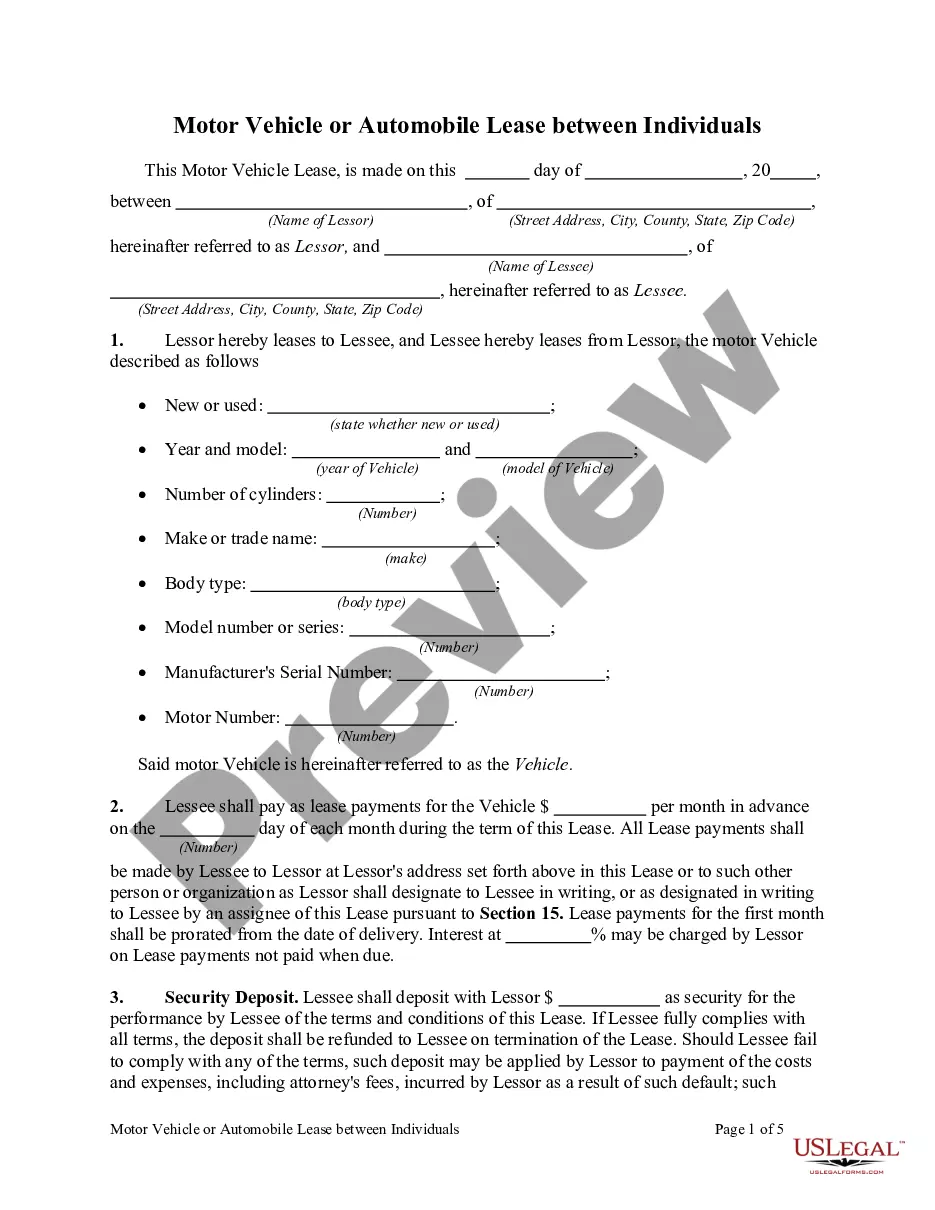
Form popularity
FAQ
In many states, notarization is required by law to make the durable power of attorney valid. But even where law doesn't require it, custom usually does. A durable power of attorney that isn't notarized may not be accepted by people with whom your attorney-in-fact tries to deal.
Who can make a power of attorney? Anyone over 18 can make a power of attorney as long as they understand what they are signing (that is, if they have mental capacity).
The person named in a power of attorney to act on your behalf is commonly referred to as your "agent" or "attorney-in-fact." With a valid power of attorney, your agent can take any action permitted in the document. Often your agent must present the actual document to invoke the power.
A Financial Power of Attorney: is a legal document that allows one person to act for another person, but the authority comes with duties and responsibilities. The giver of the authority is known as the principal, while the receiver is referred to as an agent.
An agent under a durable power of attorney, appointment of health care agent, or a successor trustee, is the person who will handle specific decisions and issues on your behalf should you become incapacitated. A personal representative, or successor trustee, will handle your affairs upon your death.
Signing Requirements: No specific signing requirement; however, it is suggested that the document be notarized. Tax Power of Attorney (Form RV-071) Used when you wish to appoint another to take care of your tax issues in front of the tax authority, such as to obtain information and make filings, etc.
Most states do not require the power of attorney (POA) to have both signatures as only the principal is required to sign.The person bestowing the authority is the principal, and the person appointed to act is the agent, sometimes called the attorney-in-fact.
The durable power of attorney appoints an agent to manage the principal's financial affairs and conduct business during the period the principal is unable to make their own decisions. A durable power of attorney remains effective throughout the period the principal is incapable of handling their own affairs.