South Dakota Marital Domestic Separation and Property Settlement Agreement Adult Children
About this form
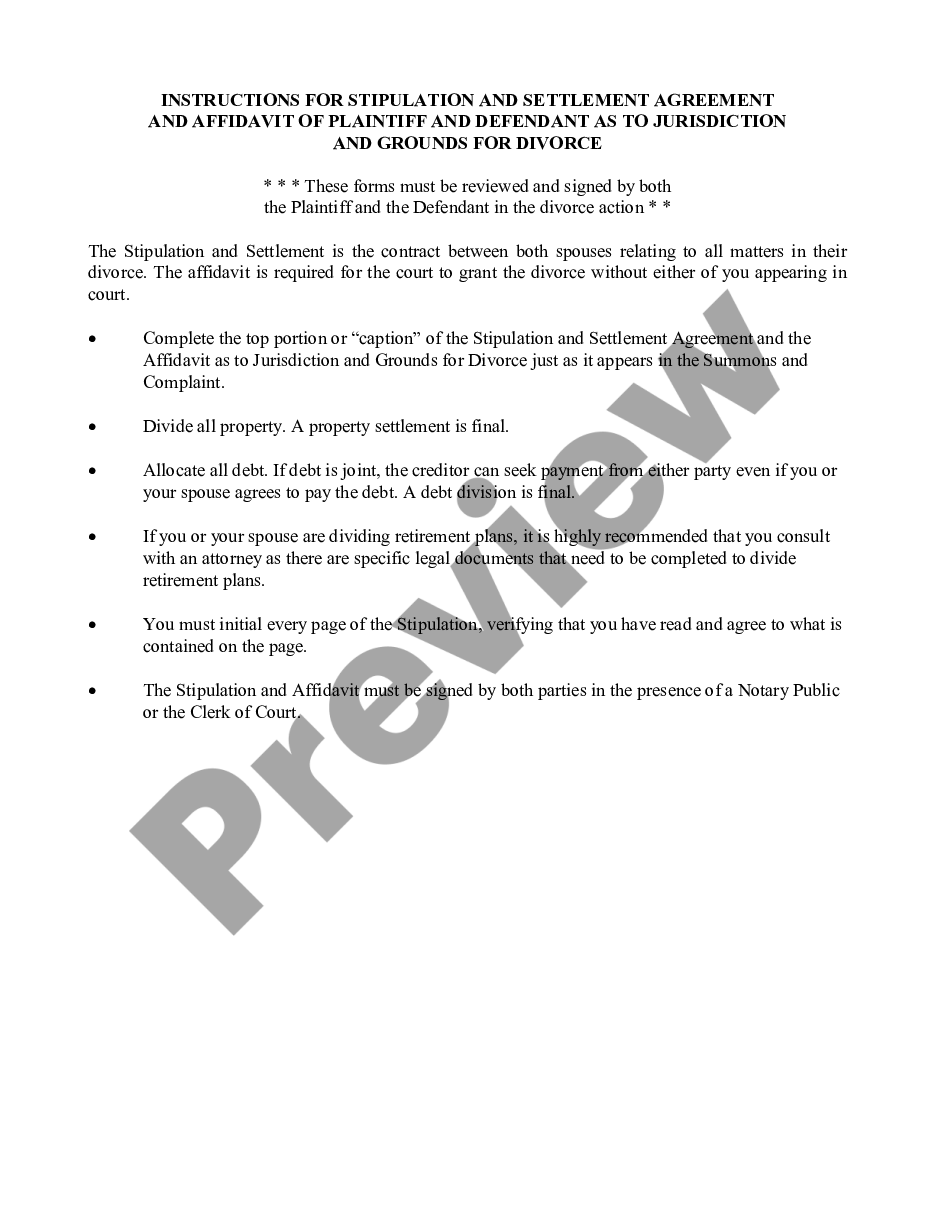
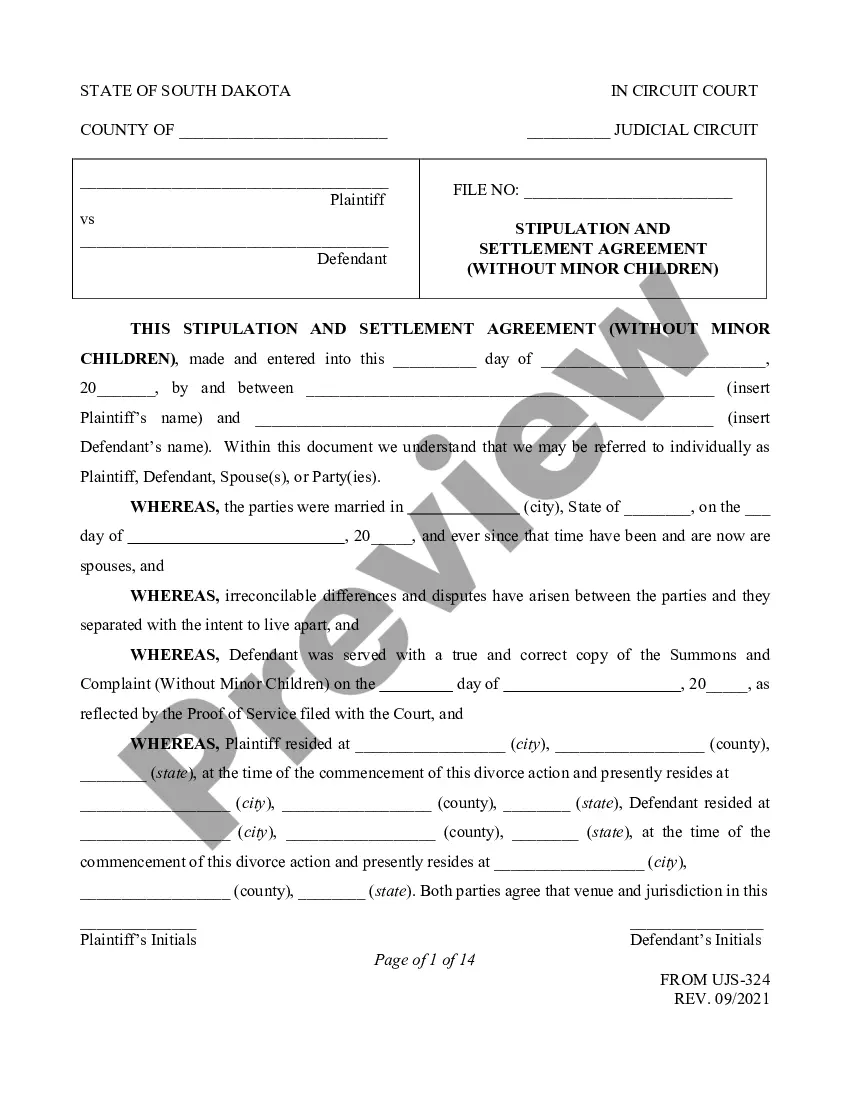
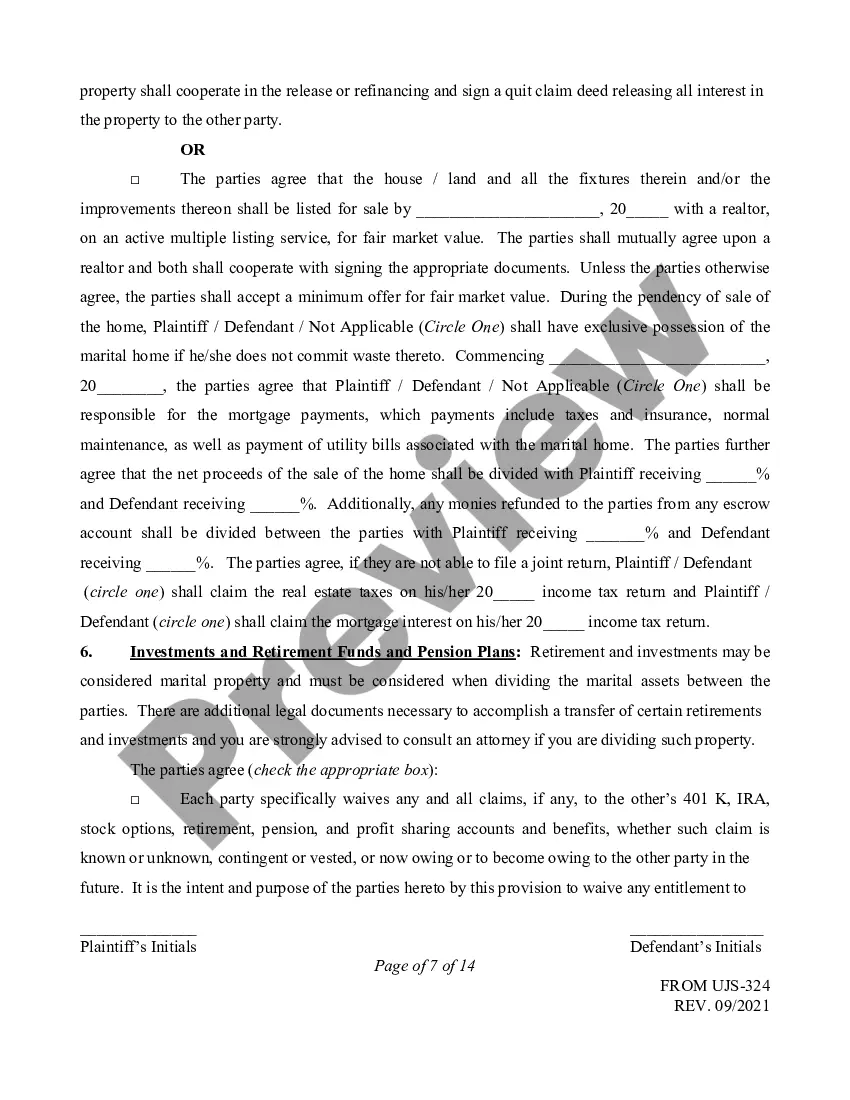
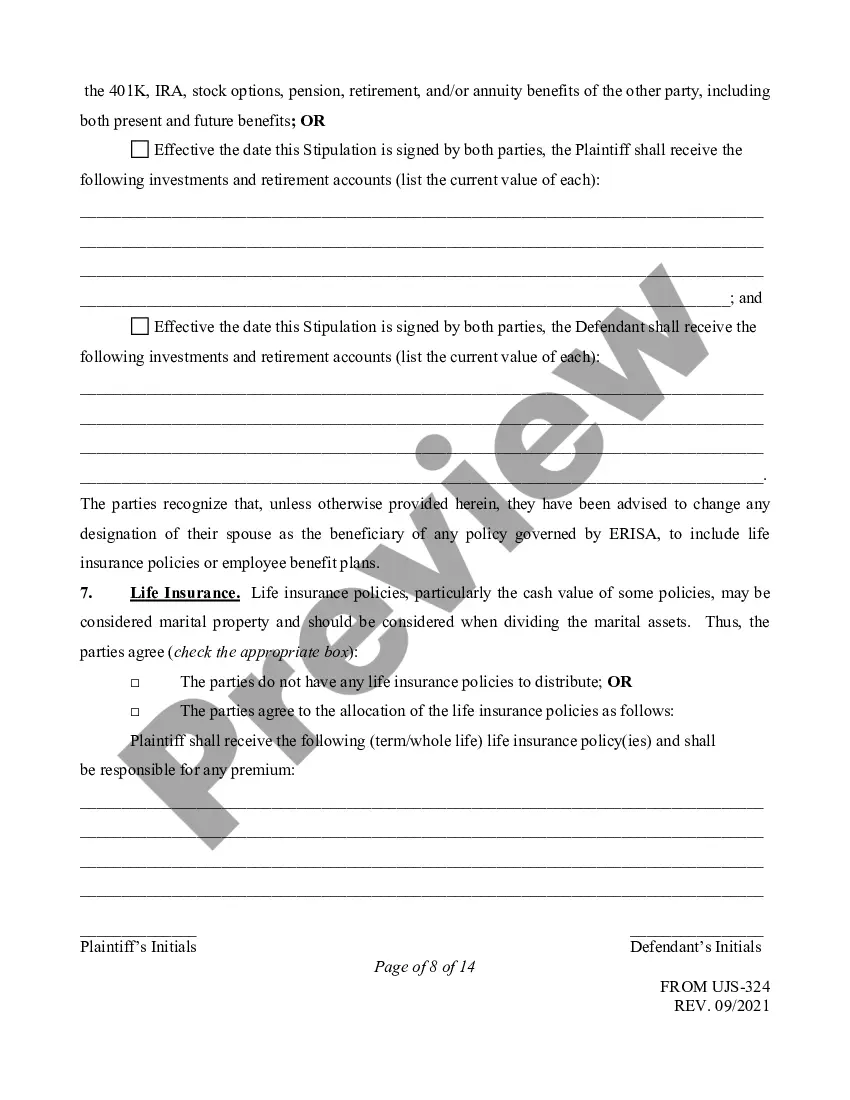
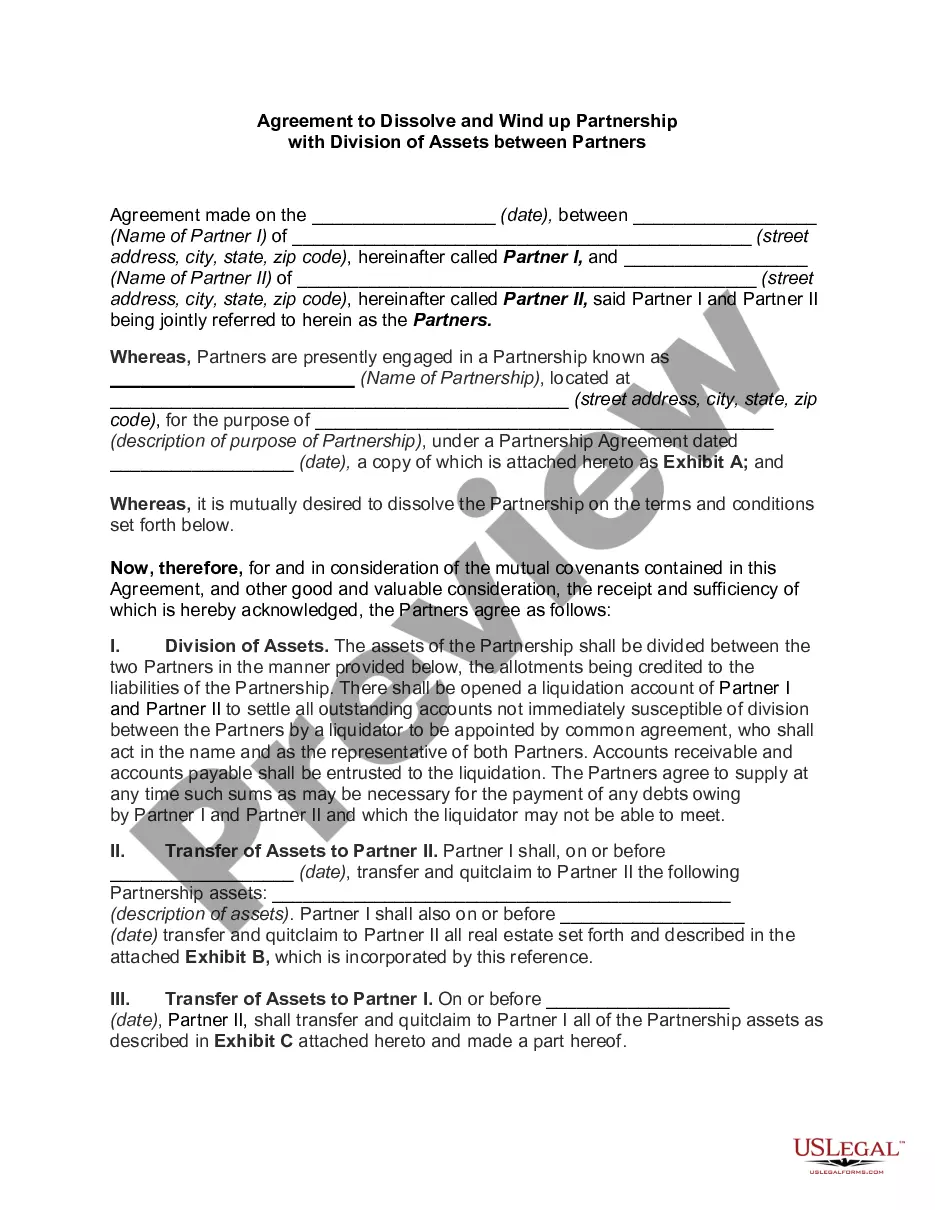
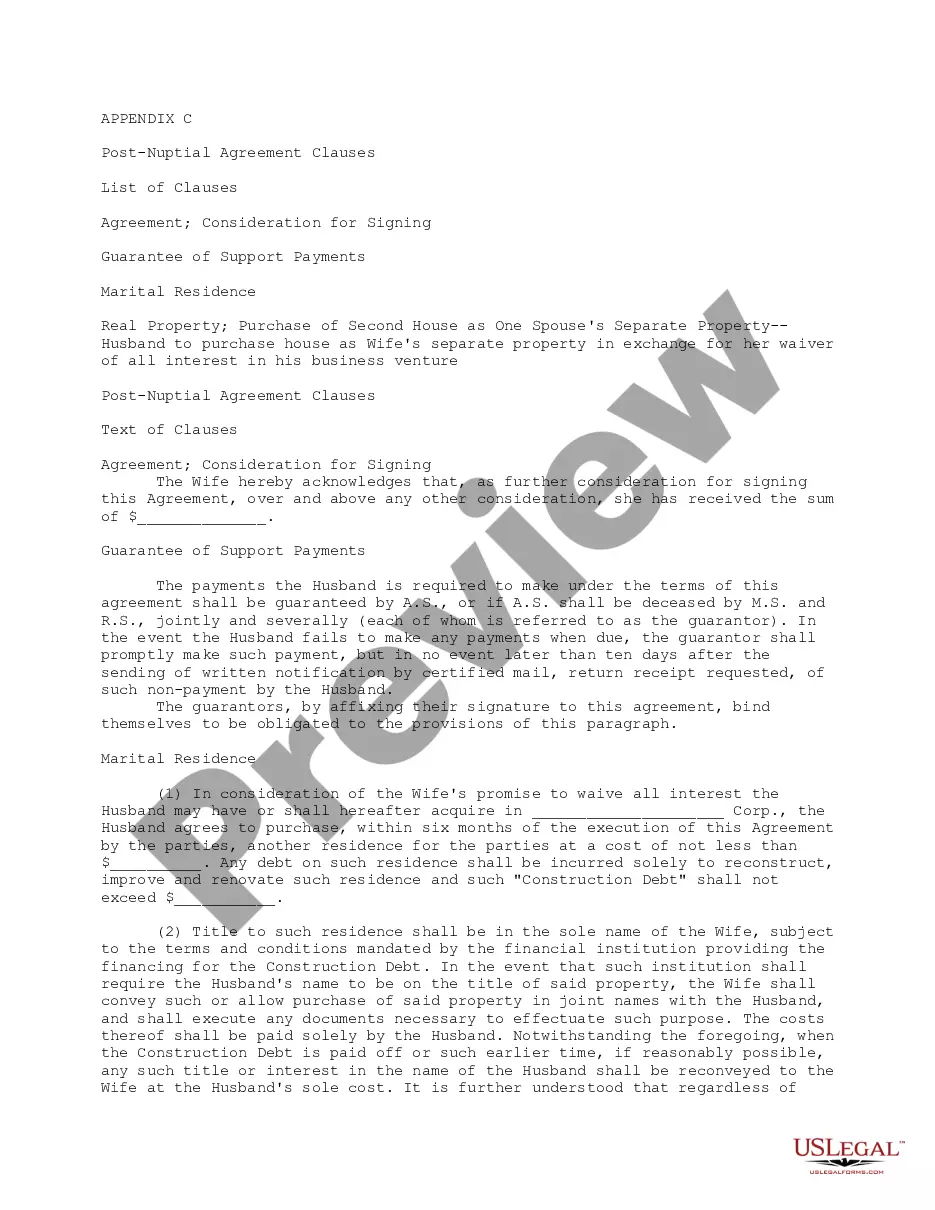
The Marital Domestic Separation and Property Settlement Agreement for Adult Children is a legal document that outlines the division of property, debts, and any custodial arrangements relating to adult children following a separation. This form serves to formalize the decisions of both spouses regarding their financial responsibilities and the terms of their separation, ensuring clarity and preventing future disputes. Unlike other divorce agreements tailored for couples with minor children, this agreement is specifically for those with adult children, allowing parents to address unique circumstances that arise in such situations.
Key components of this form
- Introduction of the parties involved, including their names and marriage details.
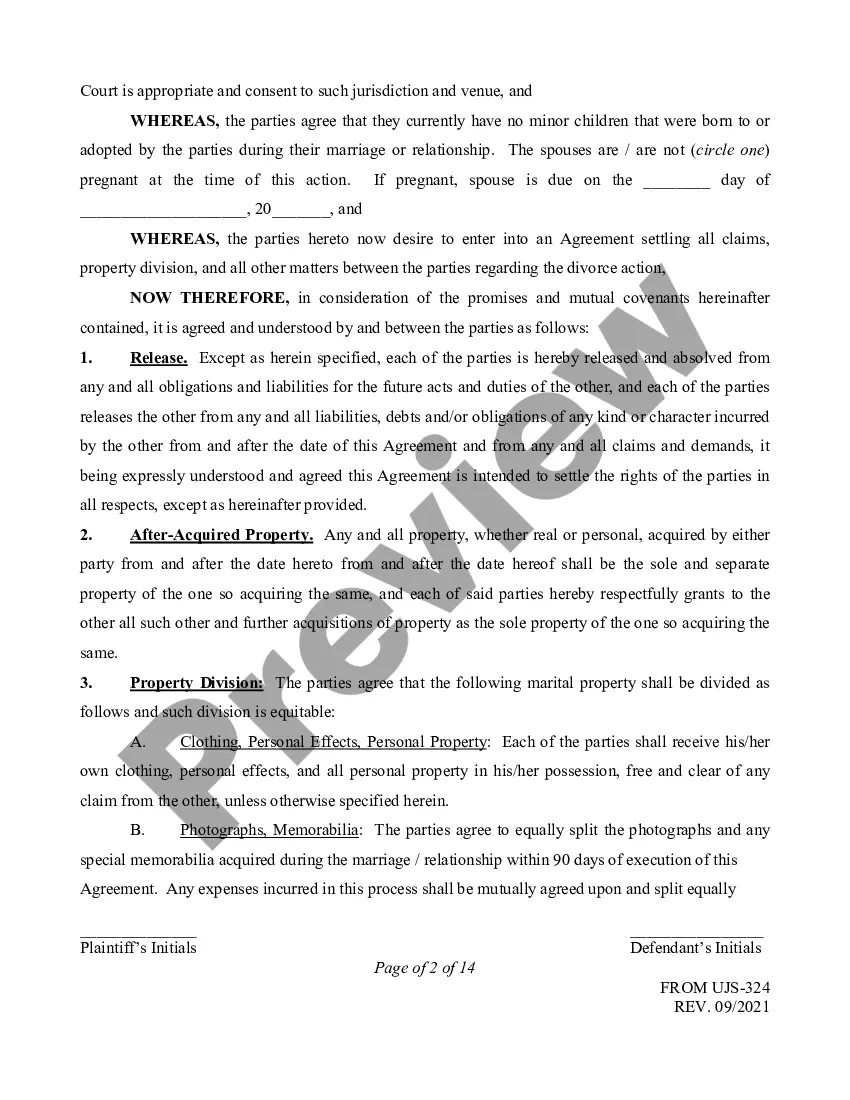
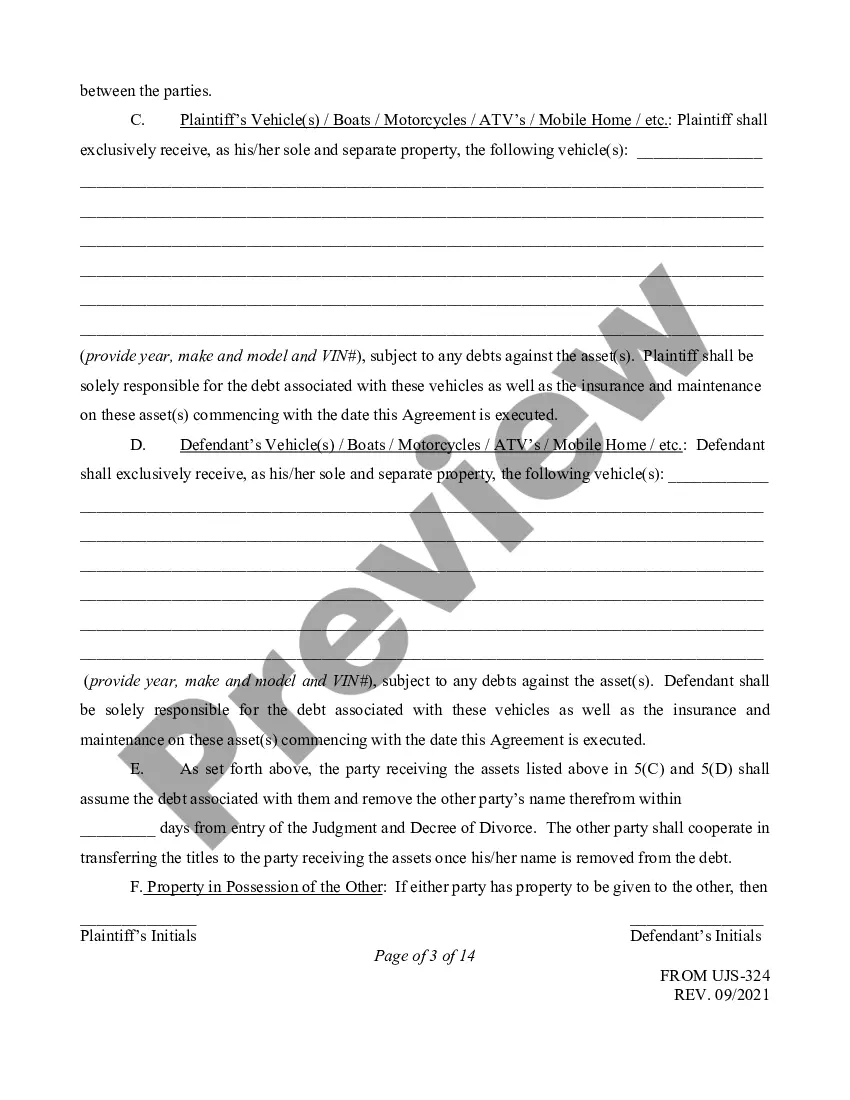
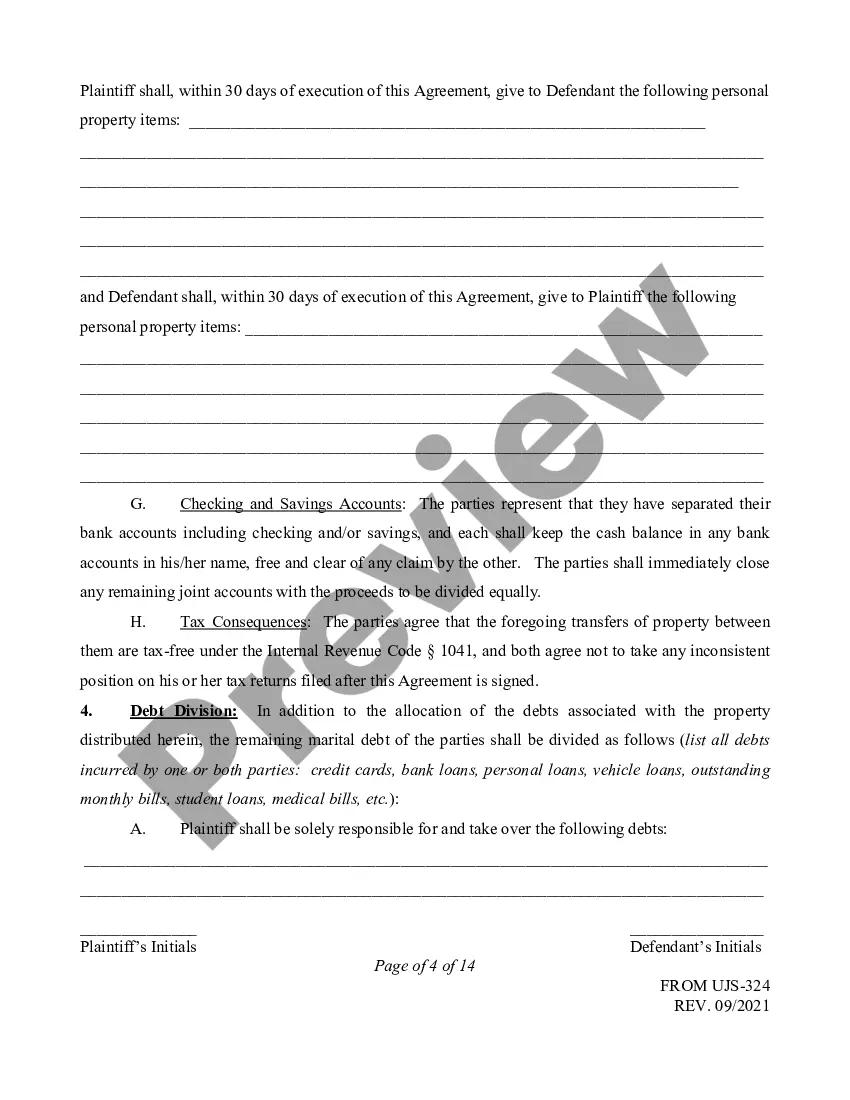
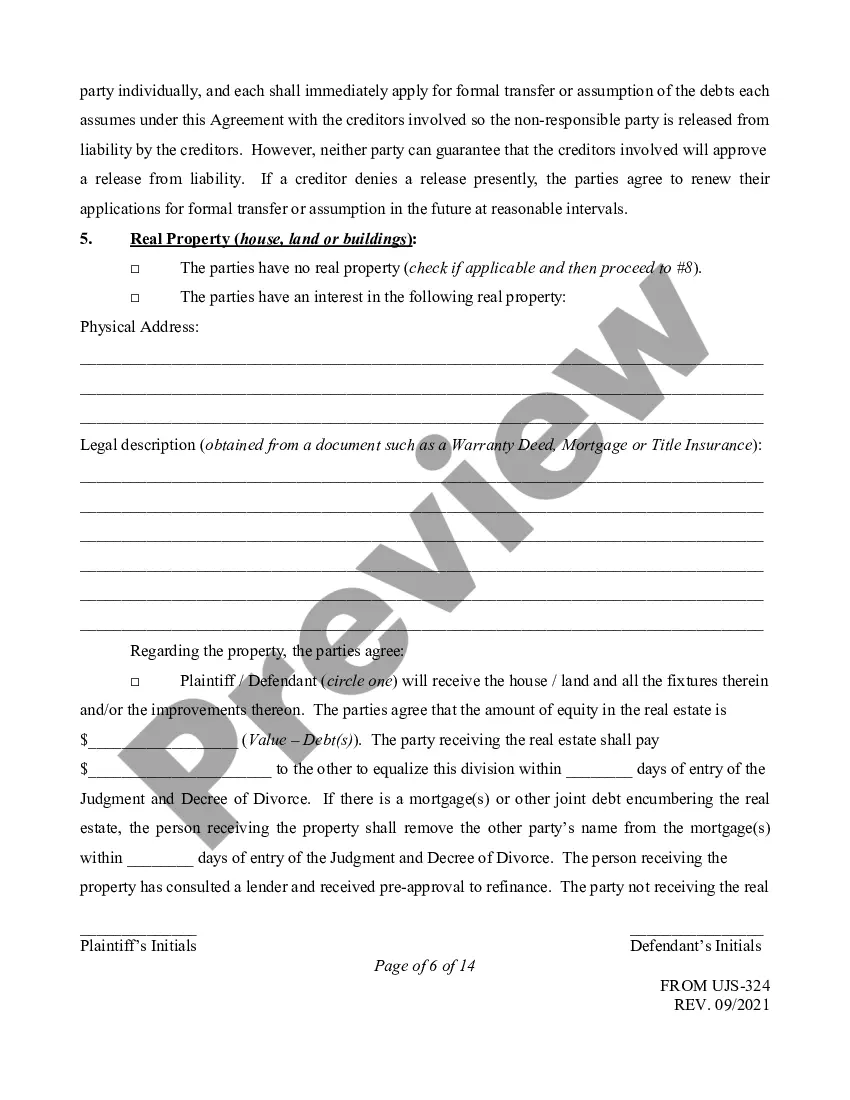
- A comprehensive property division section detailing individual ownership of marital assets.
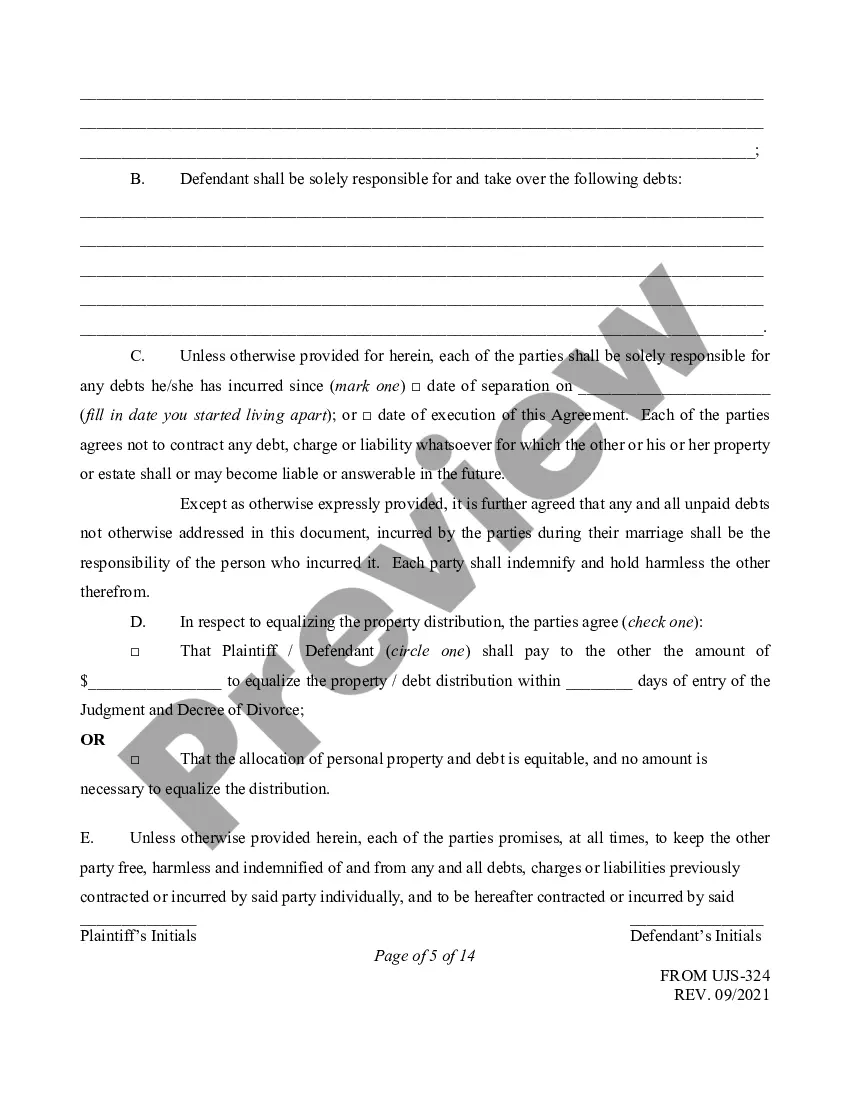
- A clause for debt allocation, specifying the responsibility for any joint debts.
- Provisions for alimony or spousal support, if applicable.
- Requirements for the notarization of signatures to validate the agreement.
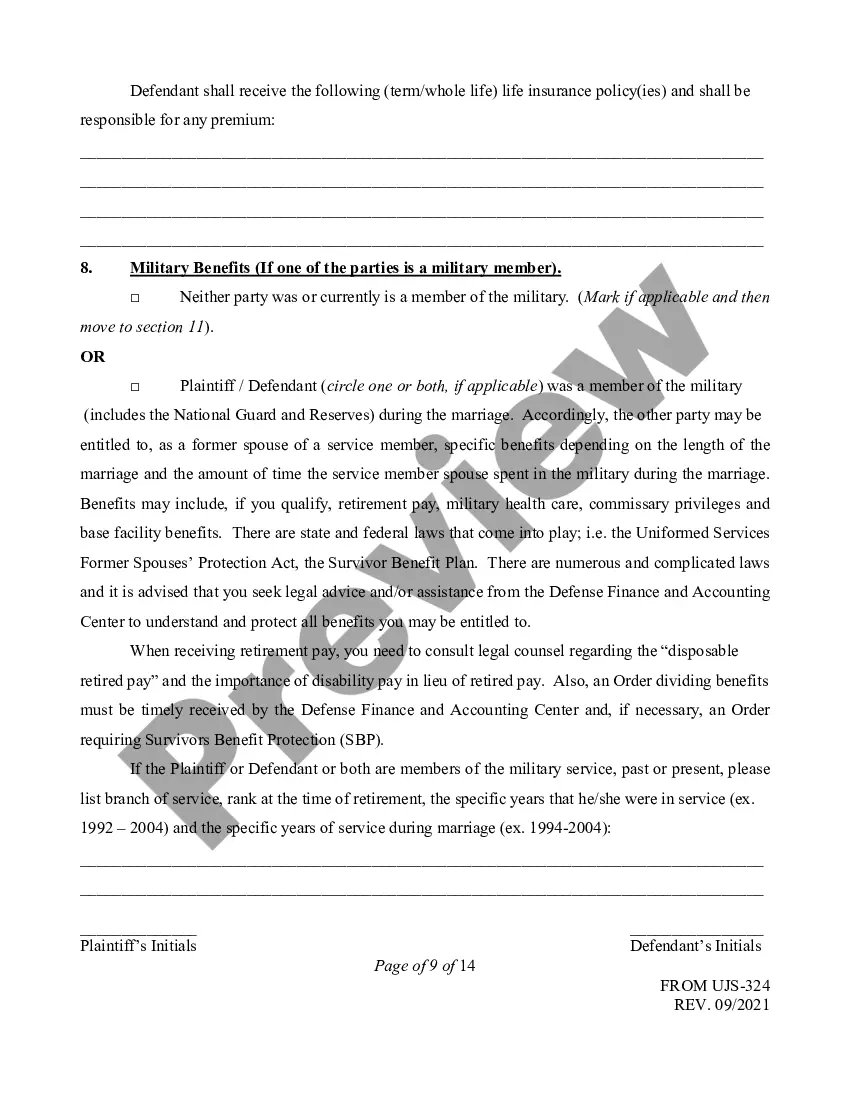
- Terms regarding military benefits if one spouse is a member of the armed forces.


Common use cases
This form is necessary when a couple that has adult children decides to separate and need to address the division of property and debts without involving minor children. It is particularly relevant if the couple has accumulated significant assets and limited liabilities and seeks to avoid lengthy court proceedings. Utilizing this form can help both parties clearly outline their agreement and understand their rights and responsibilities post-separation.
Who this form is for
- Couples who have decided to separate and have adult children.
- Individuals seeking a legally binding agreement to manage the division of property and assets.
- Spouses wanting to clarify financial responsibilities and debts resulting from their marriage.
- Parties who wish to avoid court appearances and streamline the divorce process.
How to prepare this document
- Begin by filling in the basic information, including the names of both parties and the date of marriage.
- Clearly allocate each spouse's property and list any joint debts to specify who is responsible for payment.
- Include provisions for alimony or spousal support, if applicable, detailing the terms of the payment.
- Ensure that both parties initial every page of the agreement, confirming understanding and acceptance of the terms.
- Finalize the document by signing in front of a Notary Public to properly validate the agreement.
Notarization requirements for this form
Yes, this form must be notarized to be legally valid. Both parties are required to sign the agreement in the presence of a Notary Public or Clerk of Court, ensuring it meets the necessary legal standards for enforceability.
Get your form ready online
Our built-in tools help you complete, sign, share, and store your documents in one place.
Make edits, fill in missing information, and update formatting in US Legal Forms—just like you would in MS Word.
Download a copy, print it, send it by email, or mail it via USPS—whatever works best for your next step.
Sign and collect signatures with our SignNow integration. Send to multiple recipients, set reminders, and more. Go Premium to unlock E-Sign.
If this form requires notarization, complete it online through a secure video call—no need to meet a notary in person or wait for an appointment.
We protect your documents and personal data by following strict security and privacy standards.

Make edits, fill in missing information, and update formatting in US Legal Forms—just like you would in MS Word.

Download a copy, print it, send it by email, or mail it via USPS—whatever works best for your next step.

Sign and collect signatures with our SignNow integration. Send to multiple recipients, set reminders, and more. Go Premium to unlock E-Sign.

If this form requires notarization, complete it online through a secure video call—no need to meet a notary in person or wait for an appointment.

We protect your documents and personal data by following strict security and privacy standards.
Typical mistakes to avoid
- Failing to list all assets and debts, leading to confusion or conflicts later.
- Not including clear terms for alimony or spousal support when necessary.
- Neglecting to have both parties sign in the presence of a Notary Public.
- Overlooking the need to initial each page of the form, which may invalidate the agreement.
Why use this form online
- Convenience of downloading and completing the form at your own pace.
- Editability allows you to customize the agreement to fit your specific situation.
- Reliability from using professionally drafted legal templates prepared by licensed attorneys.
Looking for another form?
Form popularity
FAQ
You need to have your written agreement notarized. Make sure, when you sign the agreement, that you understand everything you are agreeing to. This type of agreement is often called a marital settlement agreement or MSA.
Legal separations are allowed in South Dakota. A petition for separation is required, and the husband and wife may agree in writing to provisions for child & spousal support and property division, which the court may honor provided that the grounds (which otherwise must be met for a full divorce) are also met here.
There are many factors to consider, including assets, incomes, living expenses, inflation, alimony, child support, taxes, retirement plans, investments, medical expenses and health insurance costs, and child-related expenses such as education.
Your divorce settlement agreement should cover everything that is important to you, including custody of your children, child support payments, alimony, and the separation of your property, such as your family home, vehicles, and other assets.
#1. Start with the Basics. #2. Include the Details. #3. Confirm Your Agreement. #4. Identify and Divide Assets and Debts. #5. Create a Parenting Plan for Custody and Visitation. #6. Agree on Child Support and Spousal Support (Alimony) #7. Polishing Your Agreement. Conclusion.
Marital Settlement Agreements, reached between the parties in writing and signed by the parties, become legally binding when approved by the court at the time of the final court hearing.Once approved by the court, such post judgment stipulations do become legally binding and enforceable between the parties.
A fair settlement should include ample parenting time for each parent. An equitable visitation agreement may not give parents equal custodial time, but it should provide for frequent and continuing contact with each parent.
South Dakota is not a community property state; it is an all property state.All property in a divorce is divided into two categories, marital and non-marital property. Marital property is typically defined as all property obtained during the course of a marriage.