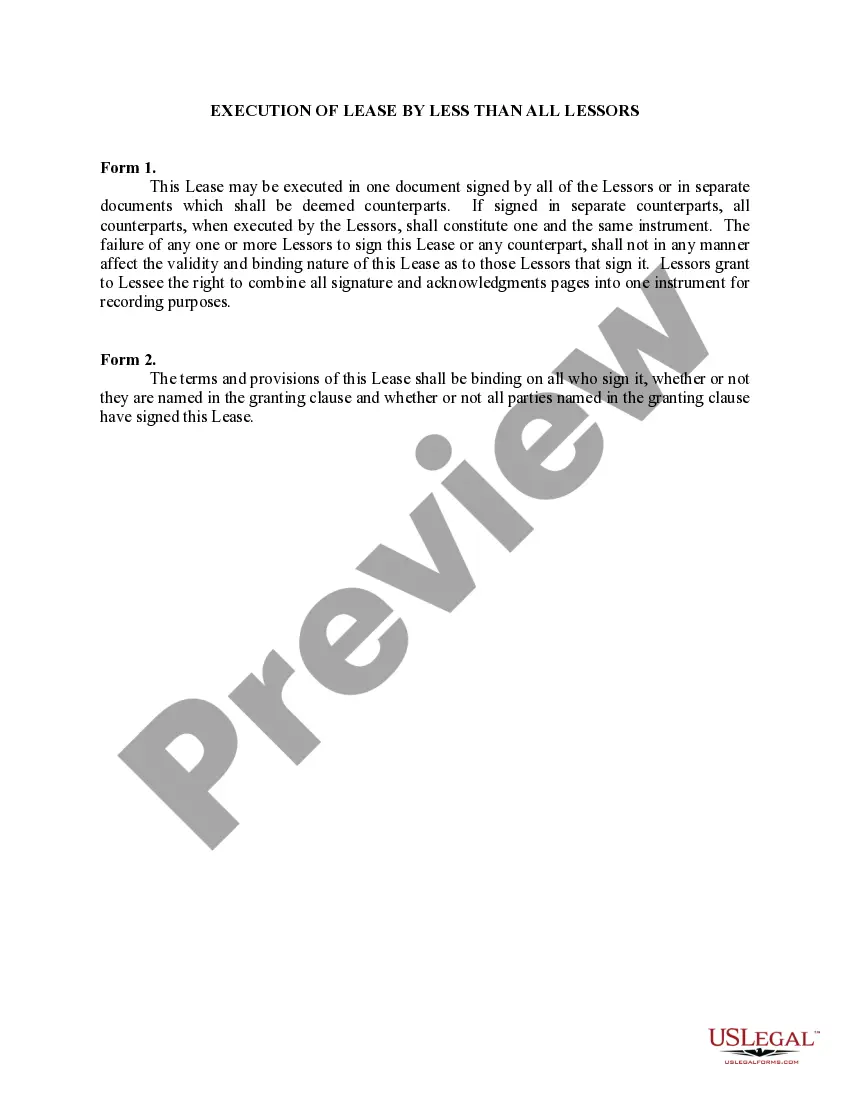
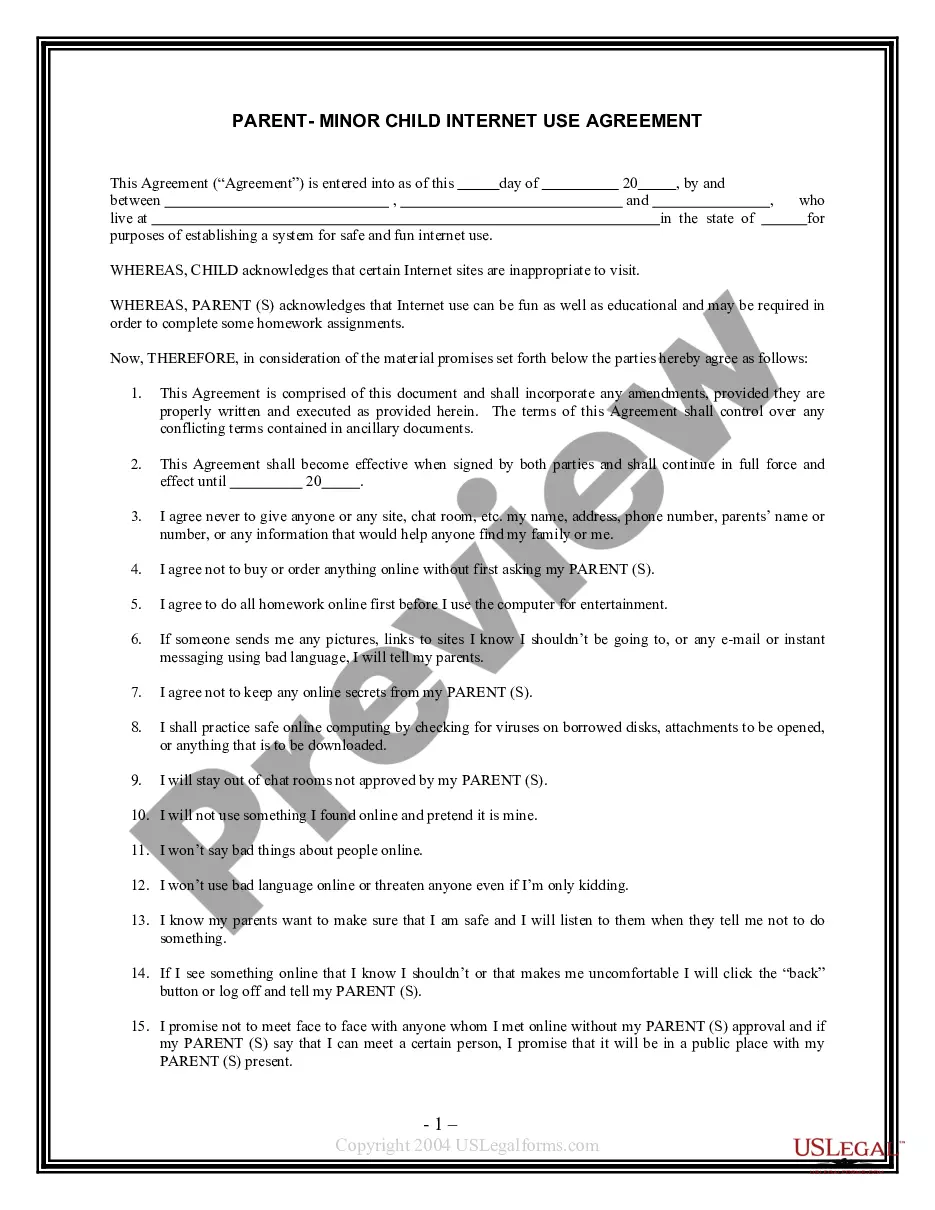
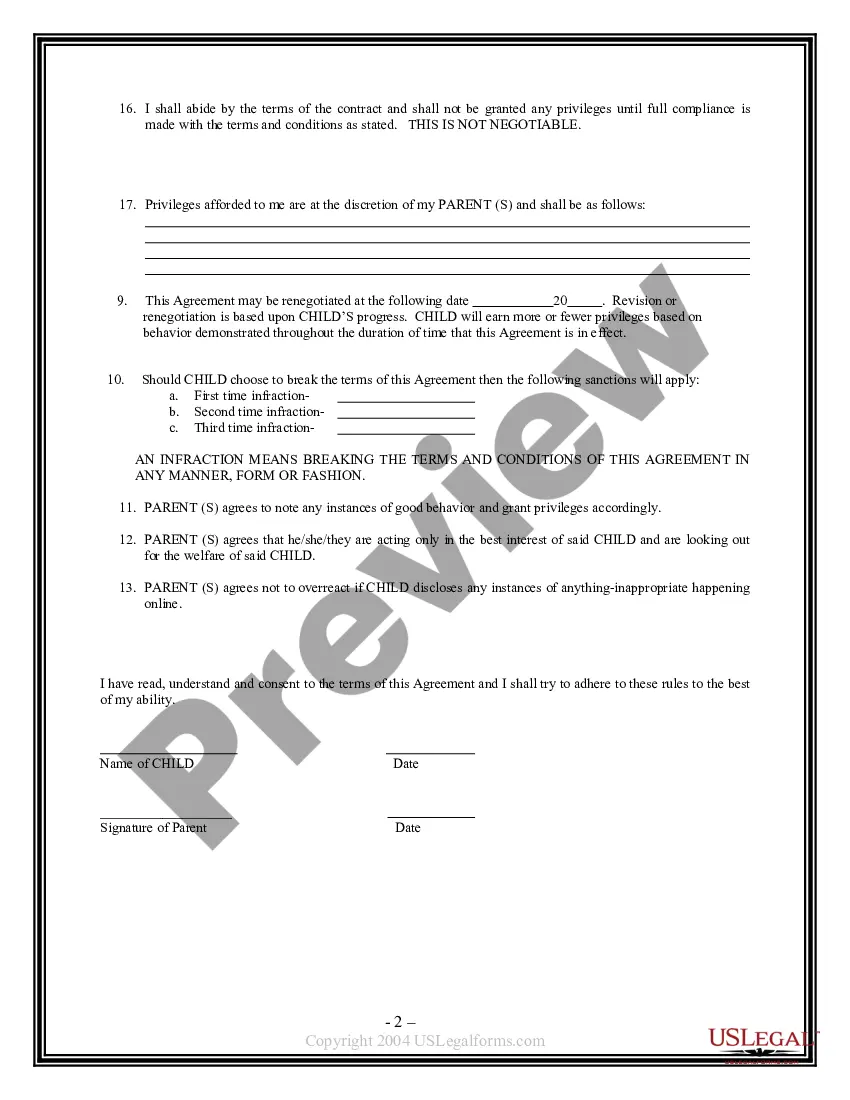
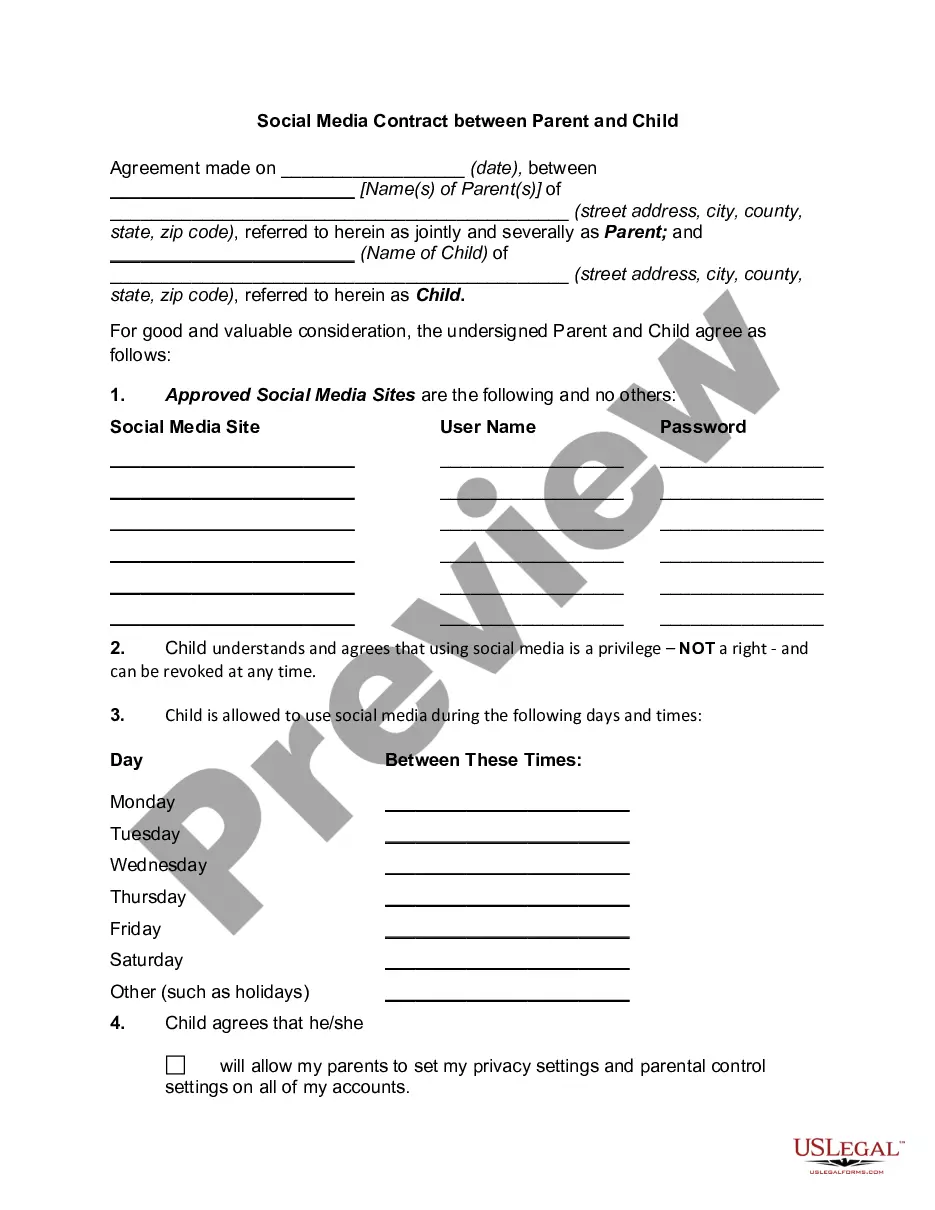
This is a contract between parent(s) and a younger child introducing child to Internet safety by describing what types of sites child should not contact and other general rules for Internet use.
South Carolina Parent - Minor Child Internet Use Agreement
Category:
State:
Multi-State
Control #:
US-PC10
Format:
Word;
Rich Text
Instant download
Description
Free preview
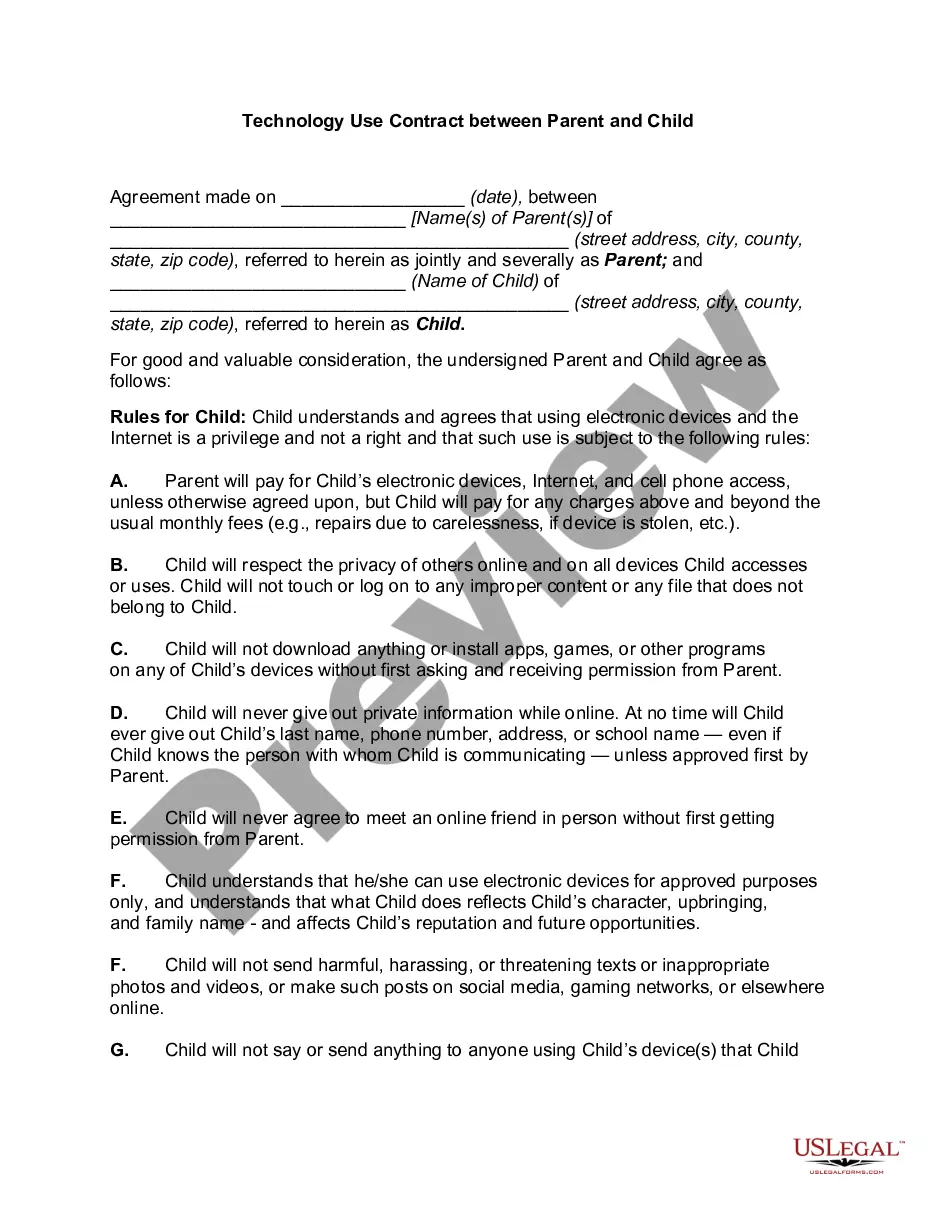
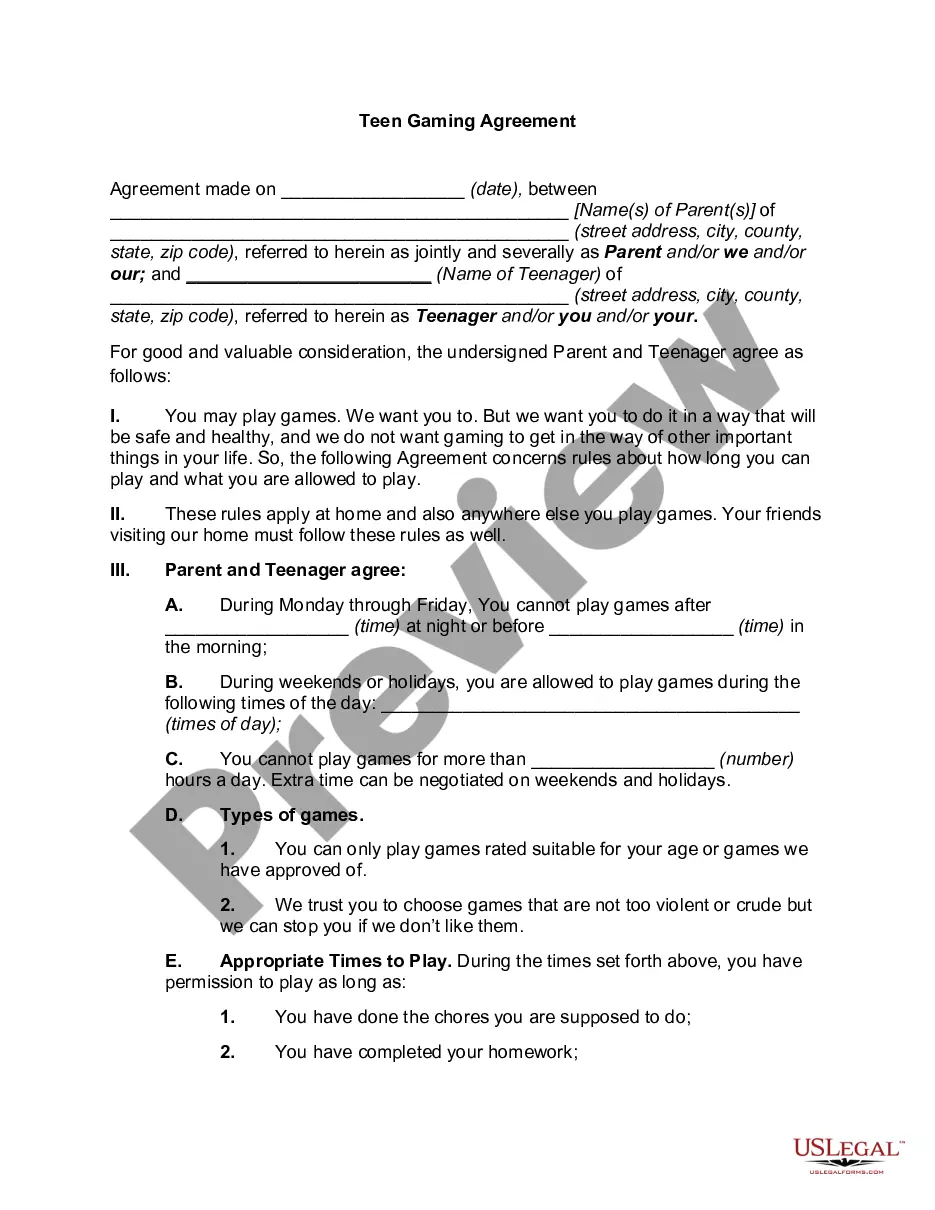
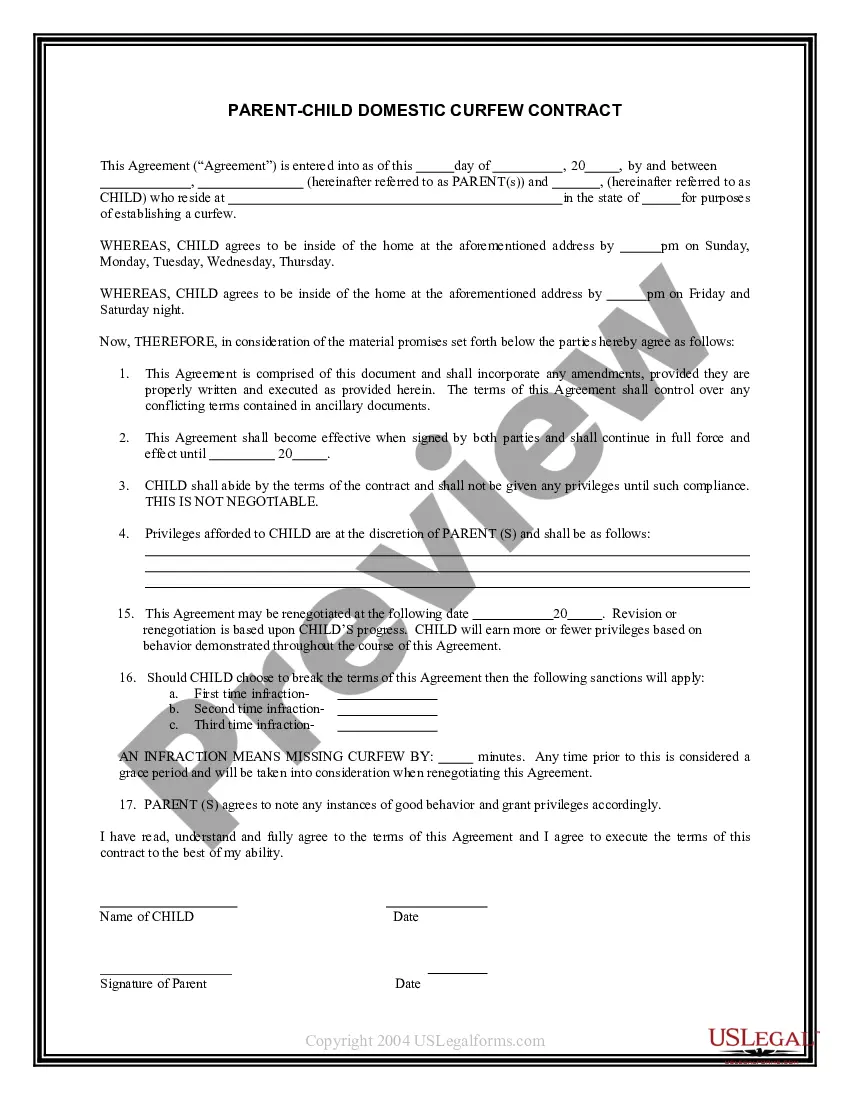
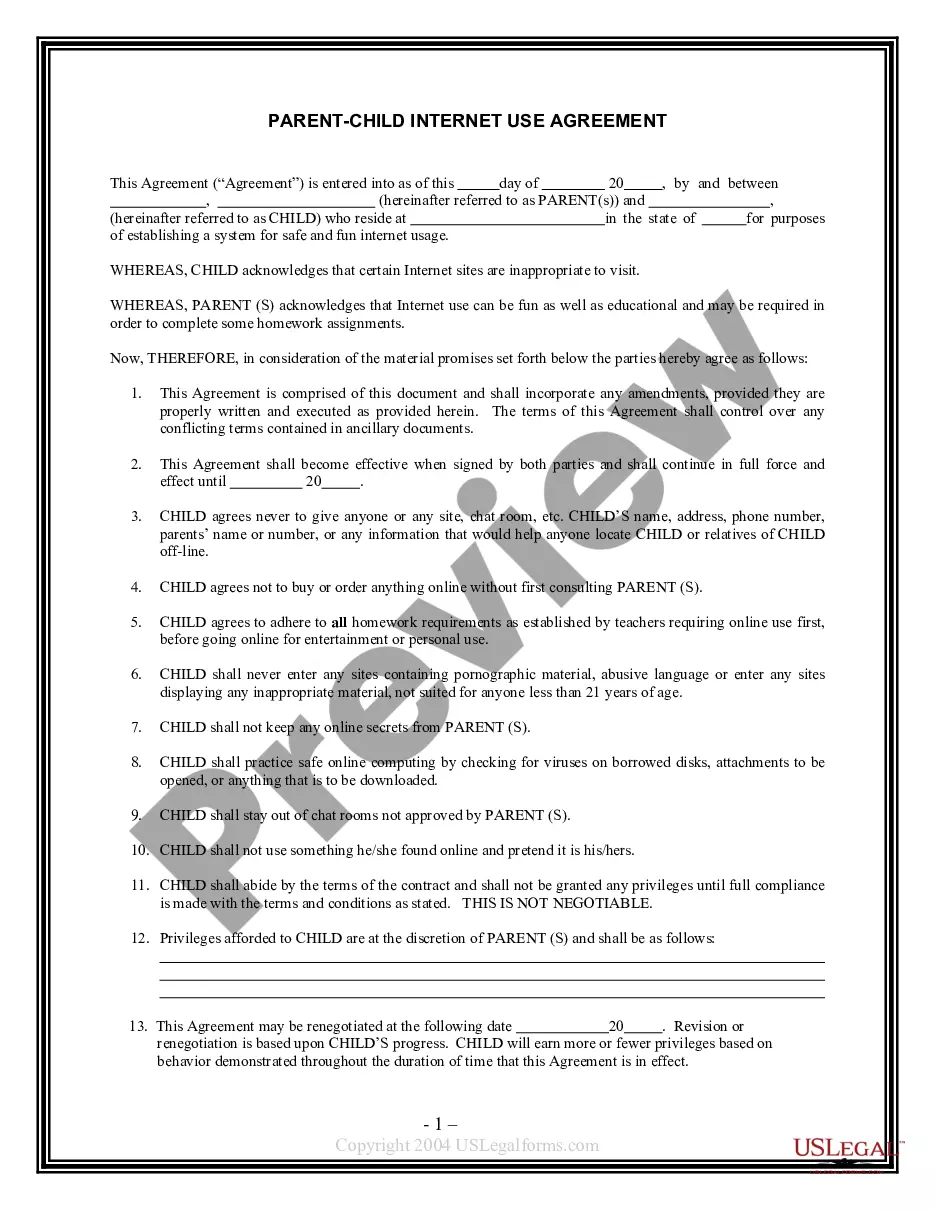
Get your form ready online
Our built-in tools help you complete, sign, share, and store your documents in one place.
Built-in online Word editor
Make edits, fill in missing information, and update formatting in US Legal Forms—just like you would in MS Word.
Export easily
Download a copy, print it, send it by email, or mail it via USPS—whatever works best for your next step.
E-sign your document
Sign and collect signatures with our SignNow integration. Send to multiple recipients, set reminders, and more. Go Premium to unlock E-Sign.
Notarize online 24/7
If this form requires notarization, complete it online through a secure video call—no need to meet a notary in person or wait for an appointment.
Store your document securely
We protect your documents and personal data by following strict security and privacy standards.

Make edits, fill in missing information, and update formatting in US Legal Forms—just like you would in MS Word.

Download a copy, print it, send it by email, or mail it via USPS—whatever works best for your next step.

Sign and collect signatures with our SignNow integration. Send to multiple recipients, set reminders, and more. Go Premium to unlock E-Sign.

If this form requires notarization, complete it online through a secure video call—no need to meet a notary in person or wait for an appointment.

We protect your documents and personal data by following strict security and privacy standards.
Looking for another form?
How to fill out Parent - Minor Child Internet Use Agreement?
You can allocate time on the web trying to locate the authentic document template that meets the federal and state requirements you will need.
US Legal Forms provides thousands of authentic forms that are reviewed by professionals.
It is easy to access or create the South Carolina Parent - Minor Child Internet Use Agreement from our services.
If available, use the Preview button to view the document template at the same time. If you wish to find another version of the form, use the Search field to locate the template that suits your needs and requirements. Once you find the template you want, click Purchase now to proceed. Select the pricing plan you desire, enter your credentials, and register for an account on US Legal Forms. Complete the transaction. You can use your credit card or PayPal account to pay for the authentic form. Choose the document format and download it to your device. Make modifications to the document if necessary. You can complete, edit, sign, and create the South Carolina Parent - Minor Child Internet Use Agreement. Download and produce thousands of document templates using the US Legal Forms website, which offers the largest selection of authentic forms. Utilize professional and state-specific templates to address your business or personal needs.
- If you already possess a US Legal Forms account, you can Log In and click the Download button.
- Then, you can complete, modify, create, or sign the South Carolina Parent - Minor Child Internet Use Agreement.
- Every authentic document template you purchase is yours permanently.
- To obtain another copy of the acquired form, visit the My documents tab and click the corresponding button.
- If you are using the US Legal Forms site for the first time, follow the simple instructions outlined below.
- First, ensure that you have selected the correct document template for the county/town of your choice.
- Review the form details to confirm you have chosen the right template.
Form popularity
FAQ
In South Carolina, a child cannot legally refuse to see a parent until they are 18 years old. However, the court may consider a child's wishes if they are 12 years or older during custody evaluations. It's vital to address any concerns a child has regarding visitation openly. A South Carolina Parent - Minor Child Internet Use Agreement can be instrumental in setting expectations and fostering a safe space for children to express their feelings.
In South Carolina, there is no specific age when a child can unilaterally decide which parent to live with. However, as children reach the age of 12, their preferences are given more weight in custody decisions. The court will always prioritize the best interests of the child, considering various factors. Implementing a South Carolina Parent - Minor Child Internet Use Agreement may help establish a stable environment conducive to these discussions.
If your child expresses a desire not to see their father, it is important to consider their feelings seriously. In South Carolina, the court may assess the child's preference, especially if they are of a certain age and maturity. Additionally, discussing the situation with a family mediator or counselor can help address any underlying issues. Utilizing a South Carolina Parent - Minor Child Internet Use Agreement can also facilitate healthier communication and set clear boundaries around internet use.
However, if your child refuses, the non-resident parent could apply to the Court and the resident parent could be held in contempt of Court. If your child regularly refuses contact with the other parent, you can apply to the Court for variation of the order or to have it discharged.
In law, there is no fixed age that determines when a child can express a preference as to where they want to live. However, legally, a child cannot decide who they want to live with until they are 16 years old. Once a child reaches the age of 16, they are legally allowed to choose which parent to live with.
In South Carolina, a child does not get to choose which parent to live with, but the family court may consider the child's preference.
Generally speaking, if the child is younger than 12 years old, the court will likely not heavily weigh the child's preference. When a child is between 12 and 14 years of age, a court will weigh the preference more heavily, but the court will not necessarily make a decision based on that preference.
Generally speaking, if the child is younger than 12 years old, the court will likely not heavily weigh the child's preference. When a child is between 12 and 14 years of age, a court will weigh the preference more heavily, but the court will not necessarily make a decision based on that preference.
Despite popular belief, there is no specific age in South Carolina whereby the child gets to choose where he lives. Family court judges are hesitant, for good reason, to consider giving any child the power to tell his or her parents what he or she will or will not do.
In marriage, parents in South Carolina have equal power, rights, and duties regarding their children. However, under South Carolina child custody law, divorce can drastically change that. In addition, if the parents were never married, then custody is solely with the mother unless the father goes to court.