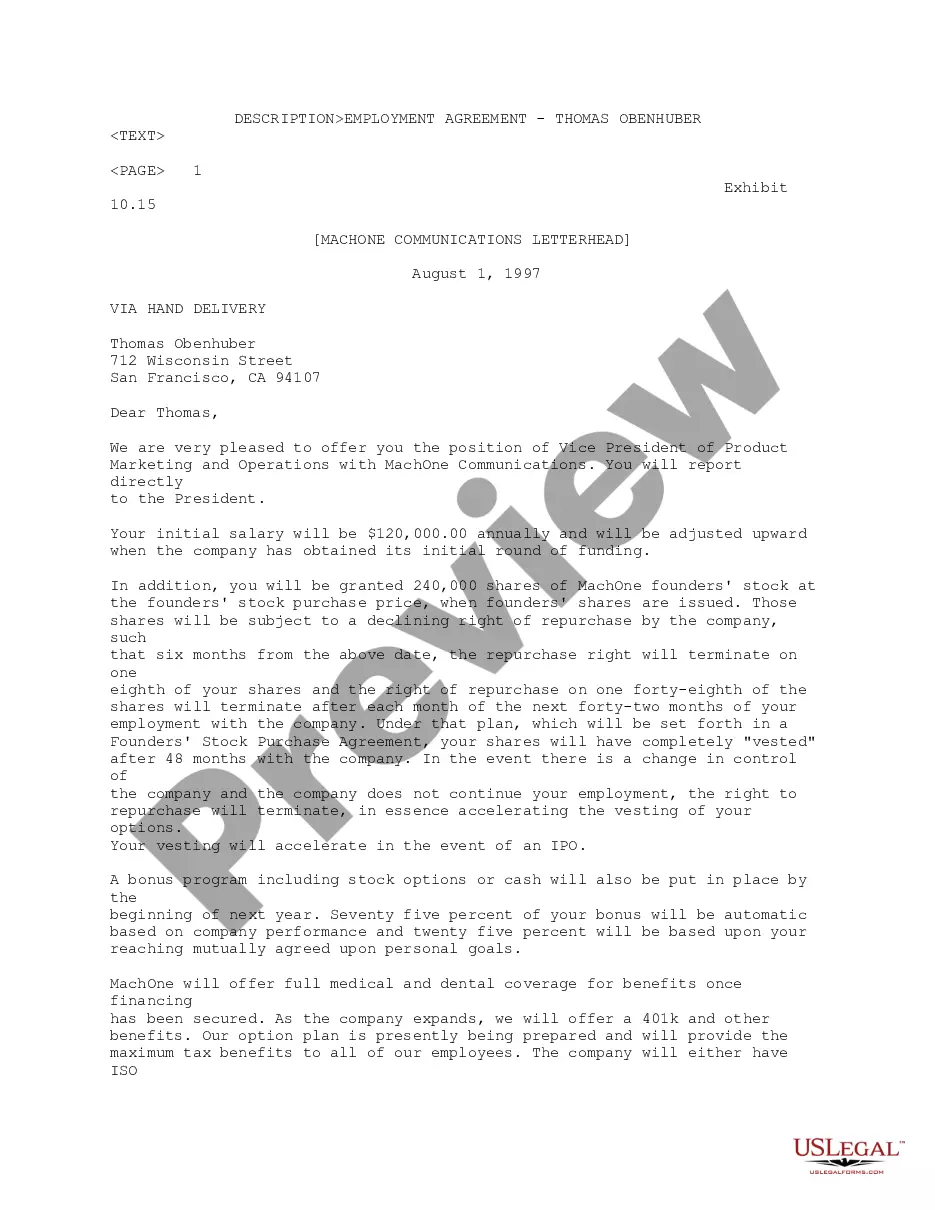
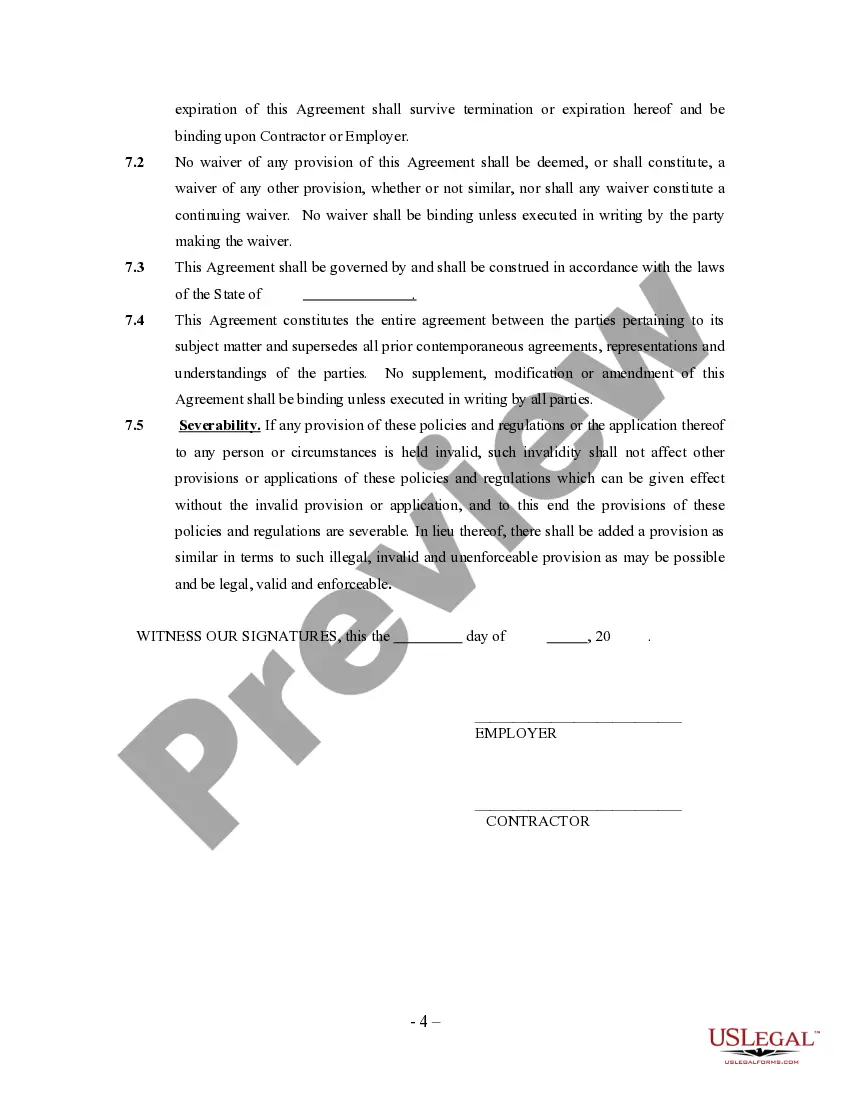
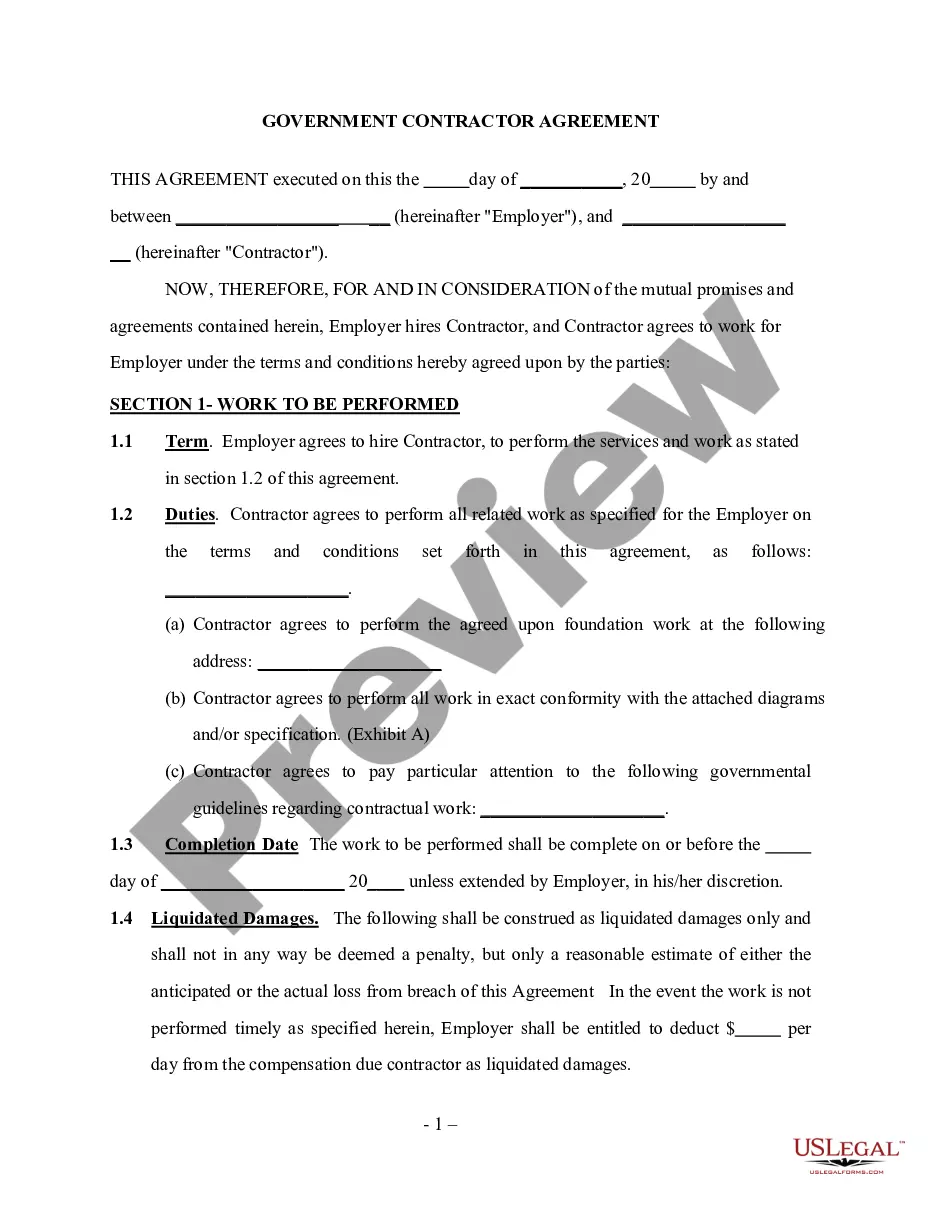
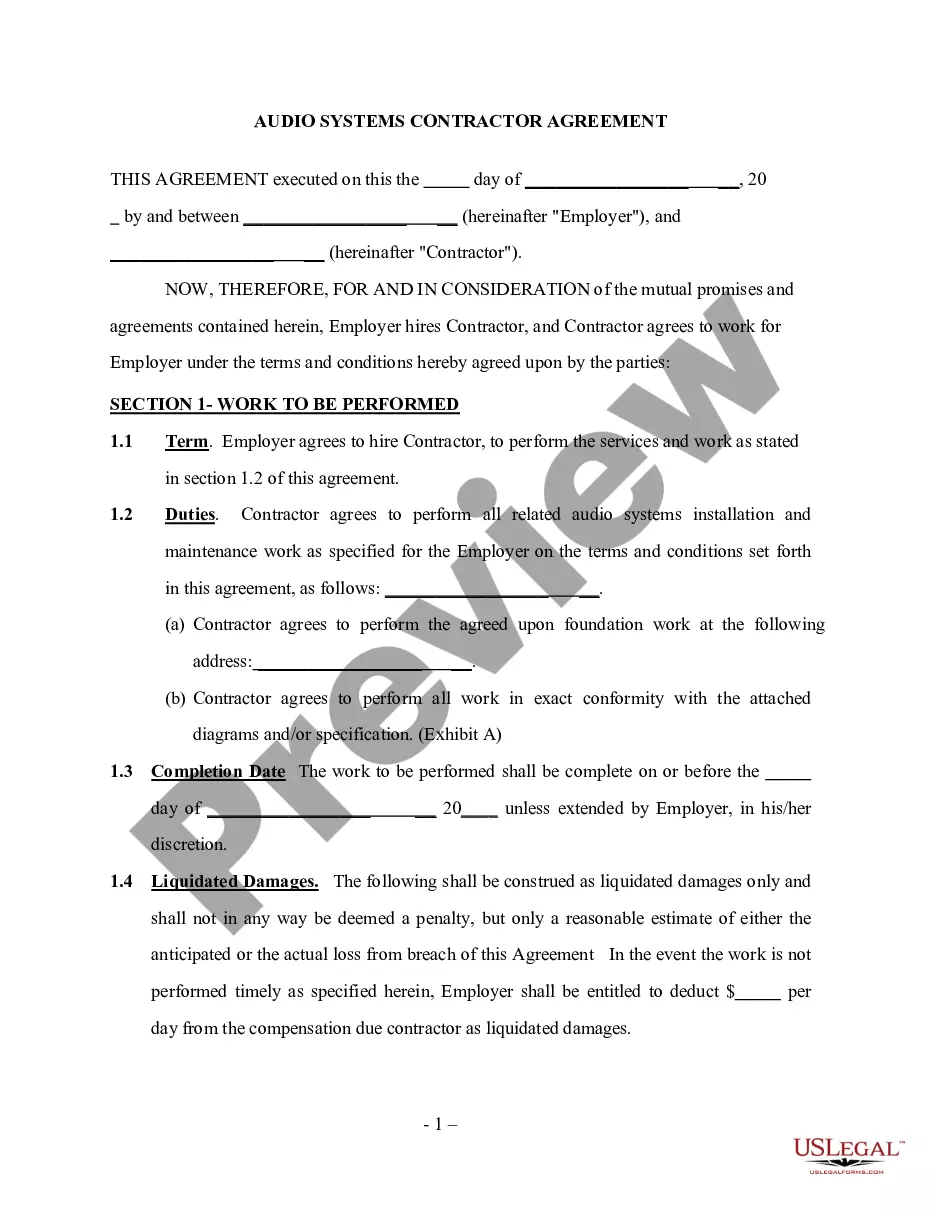
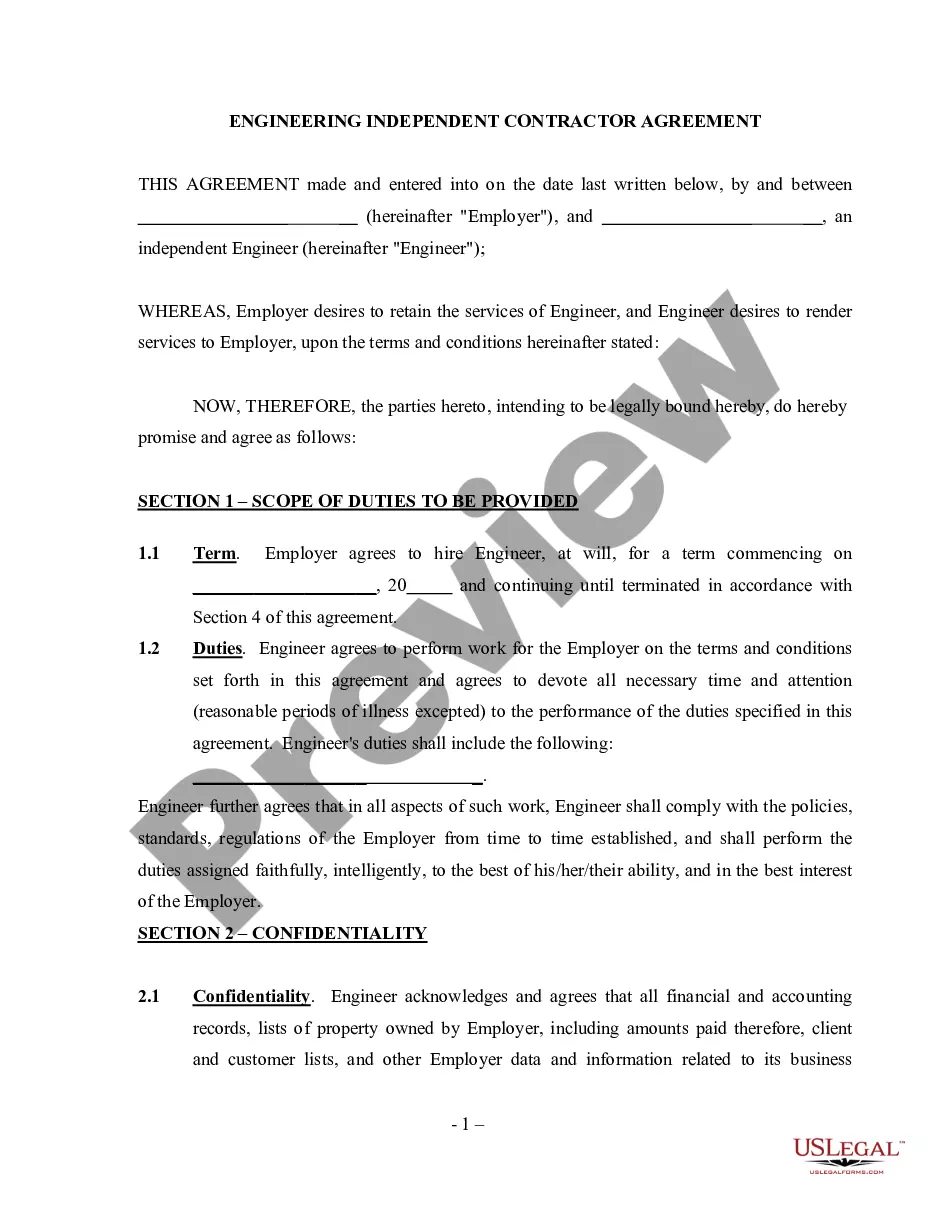
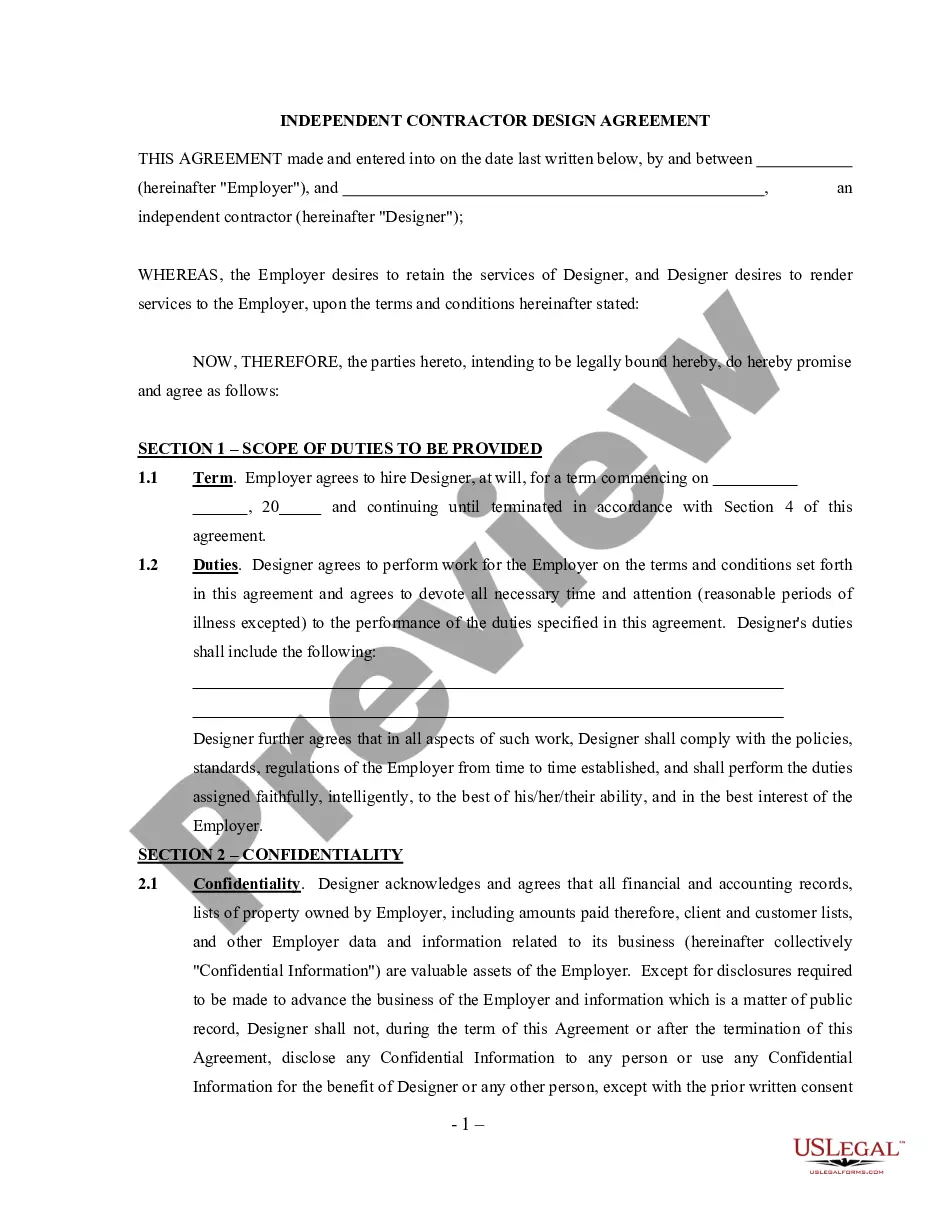
Employer hires an electronics assembly specialist on an independent contractor basis to provide assembly services for employer as specified in the contract.
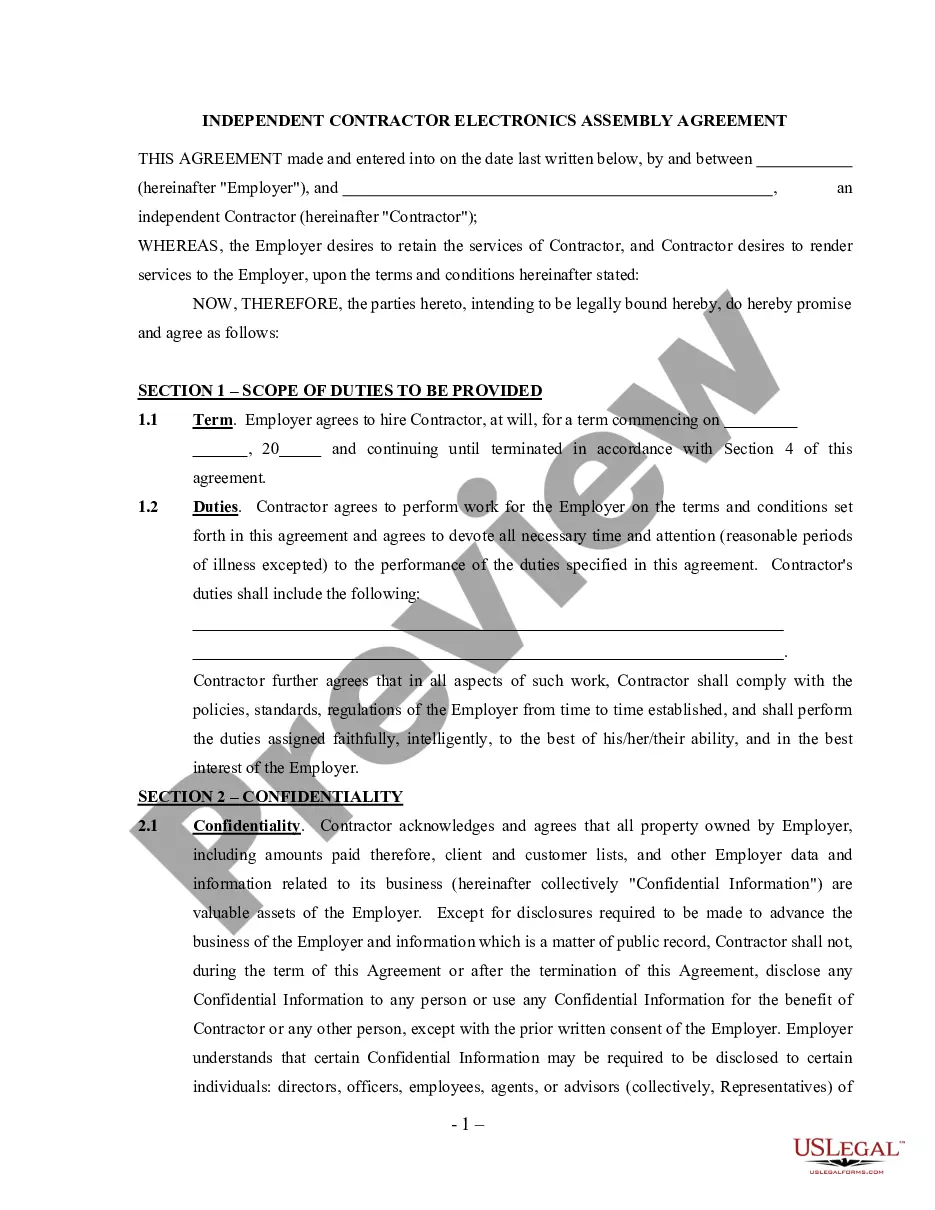
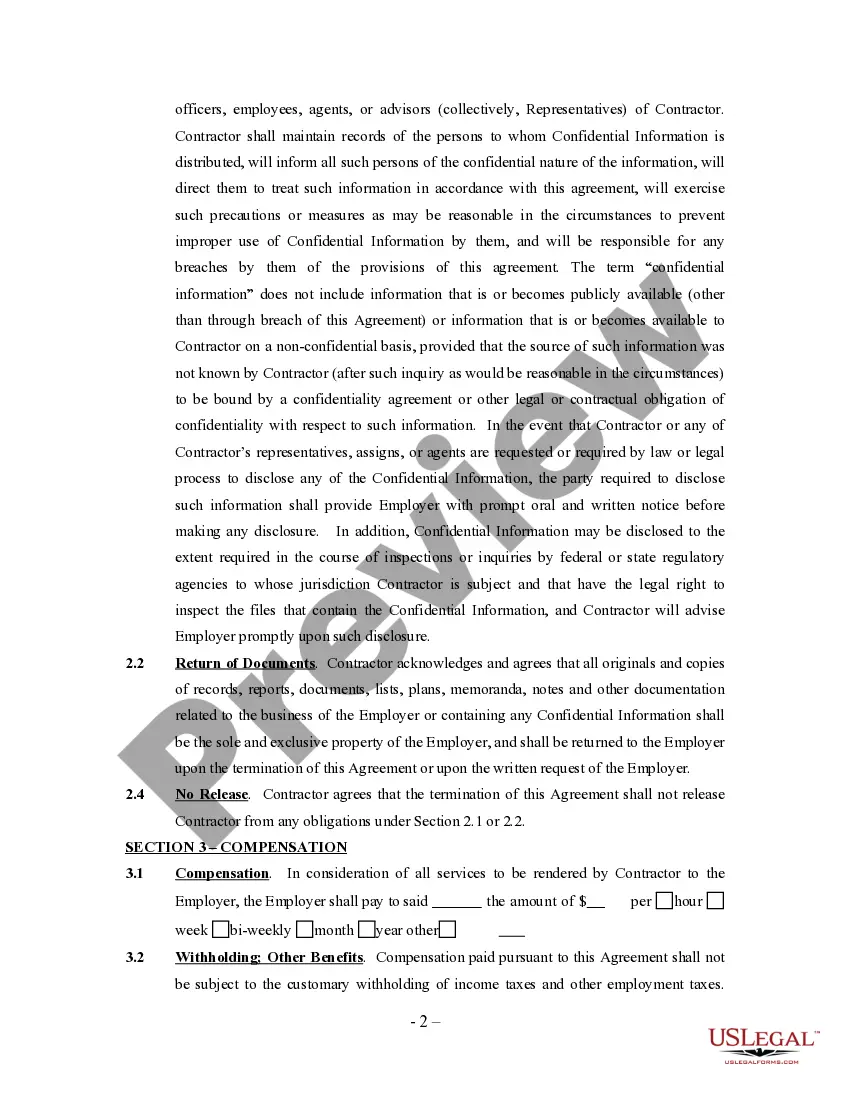
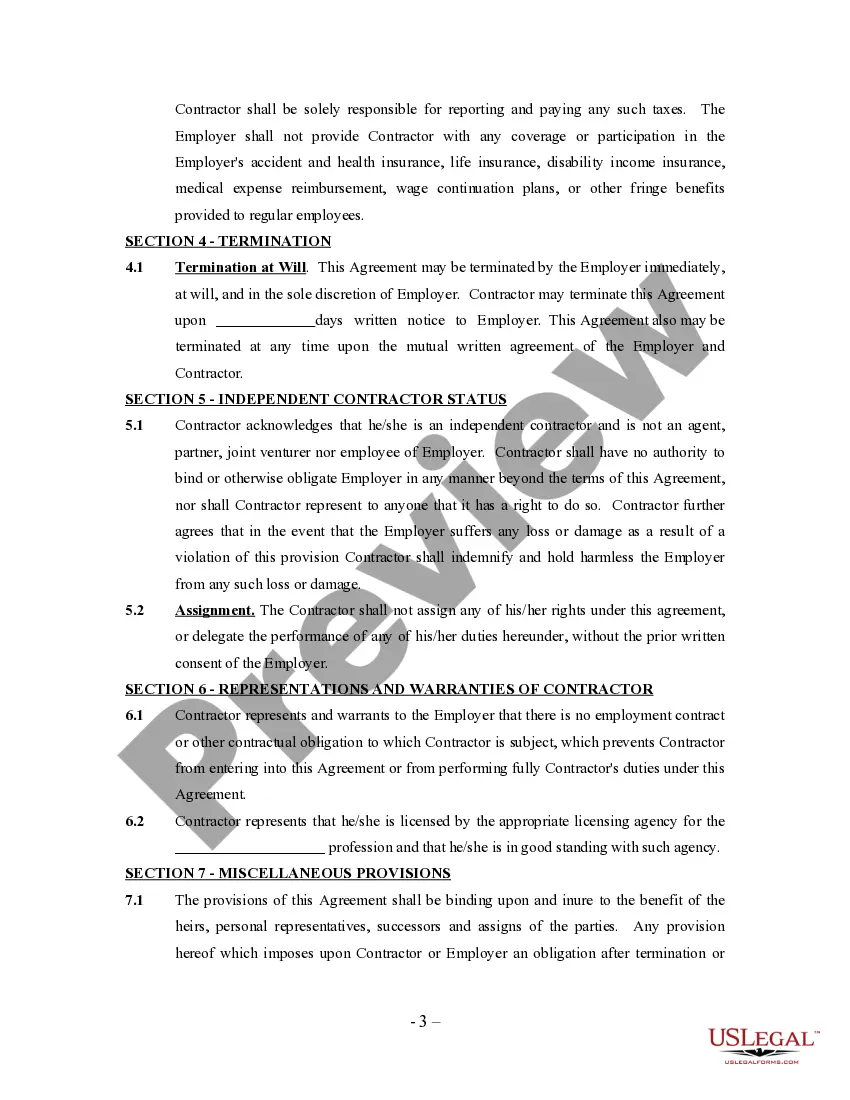
South Carolina Electronics Assembly Agreement - Self-Employed Independent Contractor
State:
Multi-State
Control #:
US-INDC-232
Format:
Word;
Rich Text
Instant download
Description
Free preview
Get your form ready online
Our built-in tools help you complete, sign, share, and store your documents in one place.
Built-in online Word editor
Make edits, fill in missing information, and update formatting in US Legal Forms—just like you would in MS Word.
Export easily
Download a copy, print it, send it by email, or mail it via USPS—whatever works best for your next step.
E-sign your document
Sign and collect signatures with our SignNow integration. Send to multiple recipients, set reminders, and more. Go Premium to unlock E-Sign.
Notarize online 24/7
If this form requires notarization, complete it online through a secure video call—no need to meet a notary in person or wait for an appointment.
Store your document securely
We protect your documents and personal data by following strict security and privacy standards.

Make edits, fill in missing information, and update formatting in US Legal Forms—just like you would in MS Word.

Download a copy, print it, send it by email, or mail it via USPS—whatever works best for your next step.

Sign and collect signatures with our SignNow integration. Send to multiple recipients, set reminders, and more. Go Premium to unlock E-Sign.

If this form requires notarization, complete it online through a secure video call—no need to meet a notary in person or wait for an appointment.

We protect your documents and personal data by following strict security and privacy standards.
Looking for another form?


How to fill out Electronics Assembly Agreement - Self-Employed Independent Contractor?
Are you presently in the condition where you require documentation for organizational or personal reasons nearly all the time.
There is an array of legal document templates available online, but finding reliable ones is challenging.
US Legal Forms offers thousands of form templates, including the South Carolina Electronics Assembly Agreement - Self-Employed Independent Contractor, designed to fulfill federal and state regulations.
Utilize US Legal Forms, which offers one of the largest collections of legal documents, to save time and avoid errors.
The service provides professionally crafted legal document templates that can be utilized for a variety of purposes. Create your account on US Legal Forms and start making your life easier.
- If you are already familiar with the US Legal Forms website and have an account, simply Log In.
- After that, you can download the South Carolina Electronics Assembly Agreement - Self-Employed Independent Contractor template.
- If you do not have an account and want to start using US Legal Forms, follow these steps.
- Locate the form you need and ensure it is for your specific city/state.
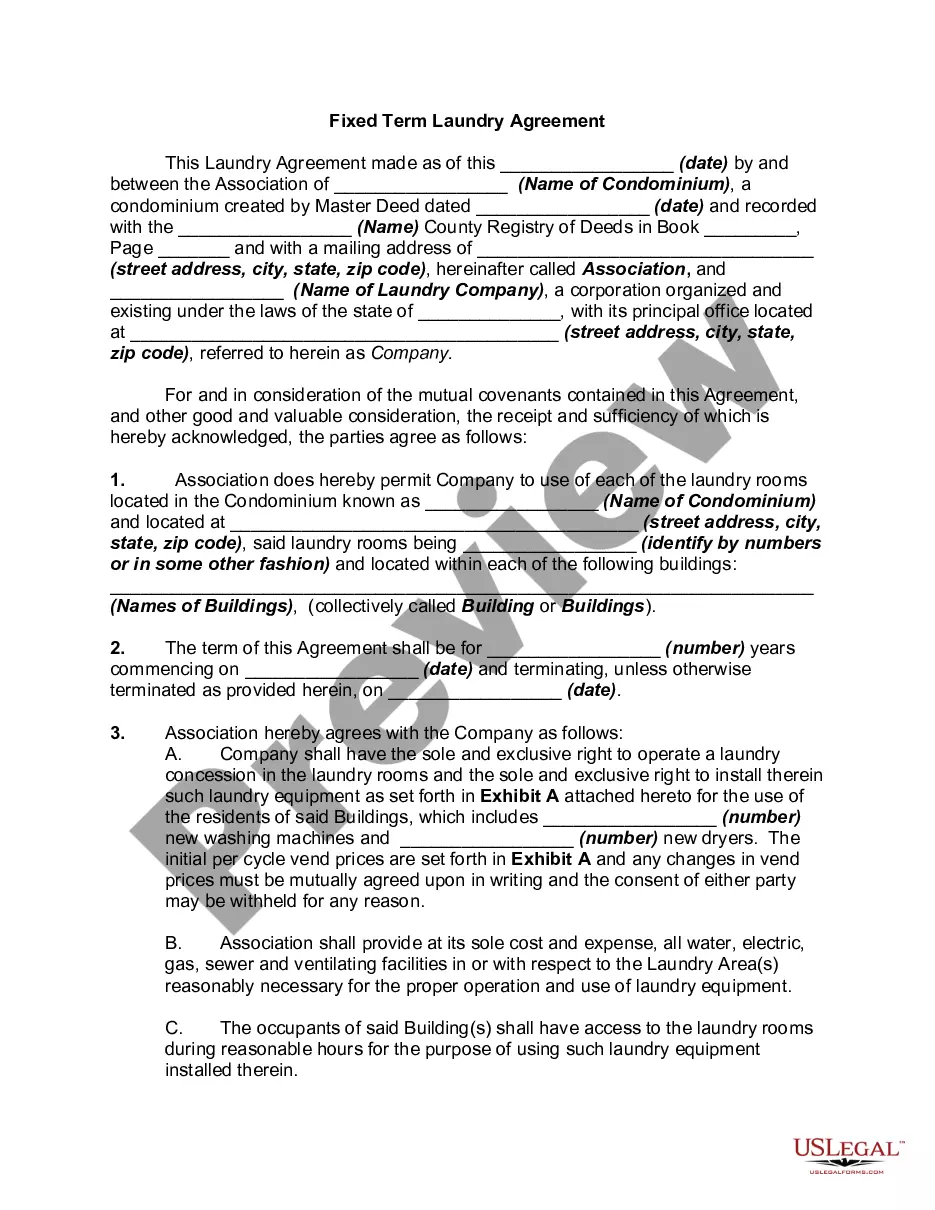
- Use the Preview button to review the document.
- Go through the details to ensure you have selected the correct form.
- If the form does not meet your needs, use the Search field to find the document that suits your needs and requirements.
- Once you find the correct form, click Get now.
- Select the pricing plan you prefer, complete the required information to create your account, and pay for your order with PayPal or credit card.
- Choose a convenient document format and download your copy.
- Find all the document templates you have purchased in the My documents section. You can obtain an additional copy of the South Carolina Electronics Assembly Agreement - Self-Employed Independent Contractor at any time if needed. Just follow the necessary form to retrieve or print the document template.
Form popularity
FAQ
Yes, an independent contractor is considered self-employed. This means they operate their own business and are responsible for their taxes and benefits. A South Carolina Electronics Assembly Agreement - Self-Employed Independent Contractor formalizes this relationship, clarifying the distinctions from traditional employment. Utilizing platforms like US Legal Forms can help you create this essential document accurately, ensuring you meet all legal standards.
An independent contractor agreement in South Carolina outlines the working relationship between a business and a self-employed individual. This document specifies tasks, payment, and other responsibilities, ensuring both parties understand their obligations. By using a well-structured South Carolina Electronics Assembly Agreement - Self-Employed Independent Contractor, you protect your interests while maintaining compliance with state laws. US Legal Forms provides templates that can help make this process easier.
To write an independent contractor agreement, start by clearly defining the scope of work. Specify the responsibilities of the contractor, payment terms, and the duration of the agreement. It's important to include clauses about confidentiality and intellectual property. Utilizing resources like US Legal Forms simplifies the process and ensures that your South Carolina Electronics Assembly Agreement - Self-Employed Independent Contractor meets all legal requirements.
The legal agreement for an independent contractor is a formal document that establishes the relationship between the contractor and the client. This agreement typically covers aspects such as the scope of work, payment details, and confidentiality clauses. By utilizing the South Carolina Electronics Assembly Agreement - Self-Employed Independent Contractor from uslegalforms, you can ensure that your agreement is comprehensive and legally sound.
To fill out an independent contractor agreement, start by clearly identifying the parties involved, including their names and addresses. Next, outline the specific services the contractor will provide, followed by the payment terms, project timelines, and any necessary terms and conditions. Using the South Carolina Electronics Assembly Agreement - Self-Employed Independent Contractor template from uslegalforms can simplify this process, ensuring compliance with local laws.
If you are an independent contractor, then you are self-employed. The earnings of a person who is working as an independent contractor are subject to self-employment tax. To find out what your tax obligations are, visit the Self-Employed Individuals Tax Center.
Becoming an independent contractor is one of the many ways to be classified as self-employed. By definition, an independent contractor provides work or services on a contractual basis, whereas, self-employment is simply the act of earning money without operating within an employee-employer relationship.
The general rule is that you will be: An employee if you work for someone and do not have the risks of running a business. Self-employed if you have a trade, profession or vocation, are in business on your own account and are responsible for the success or failure of that business.
An independent contractor agreement is a legally binding document signed by a 1099 employee and the company that hires them. It outlines the scope of work and the terms under which that work will be completed, which goes a long way to making sure both parties are on the same page about the project from the start.
Don't give an IC a company email. Don't give an IC a title within your company. Don't pay the IC's travel or other business expenses, unless they are unique to the project and have been negotiated in advance.