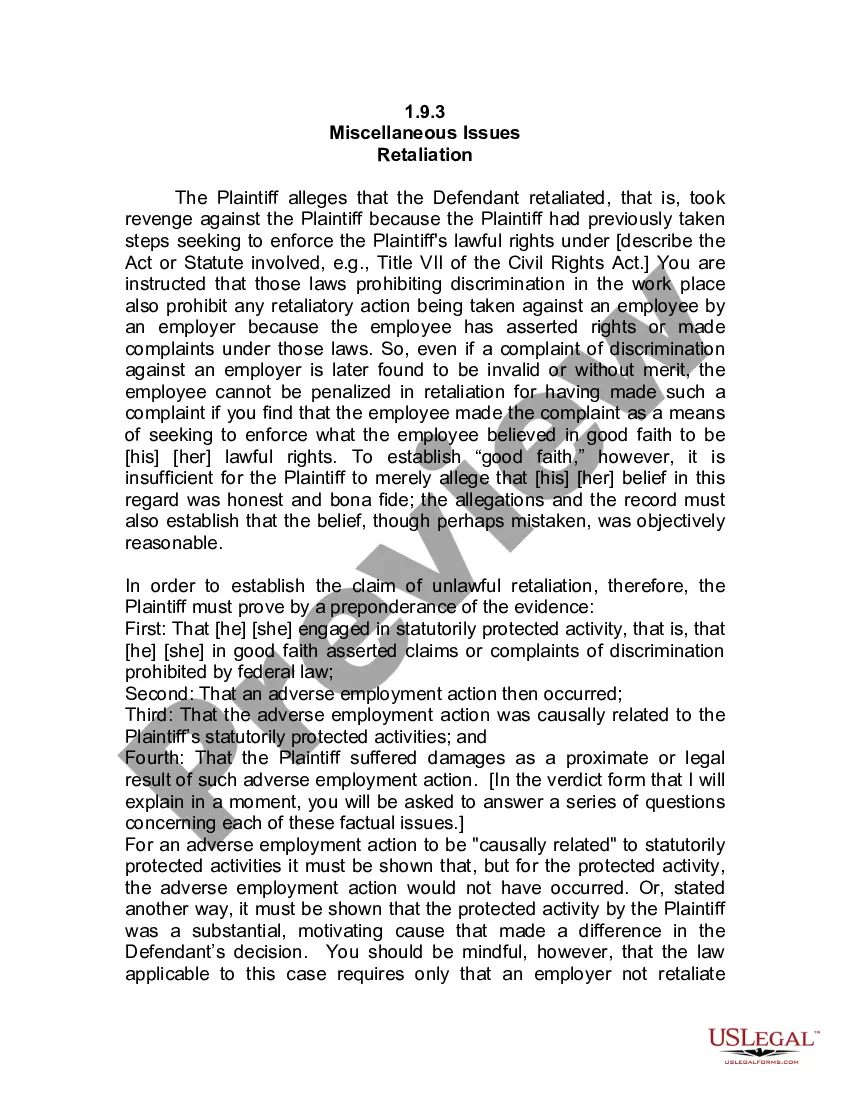
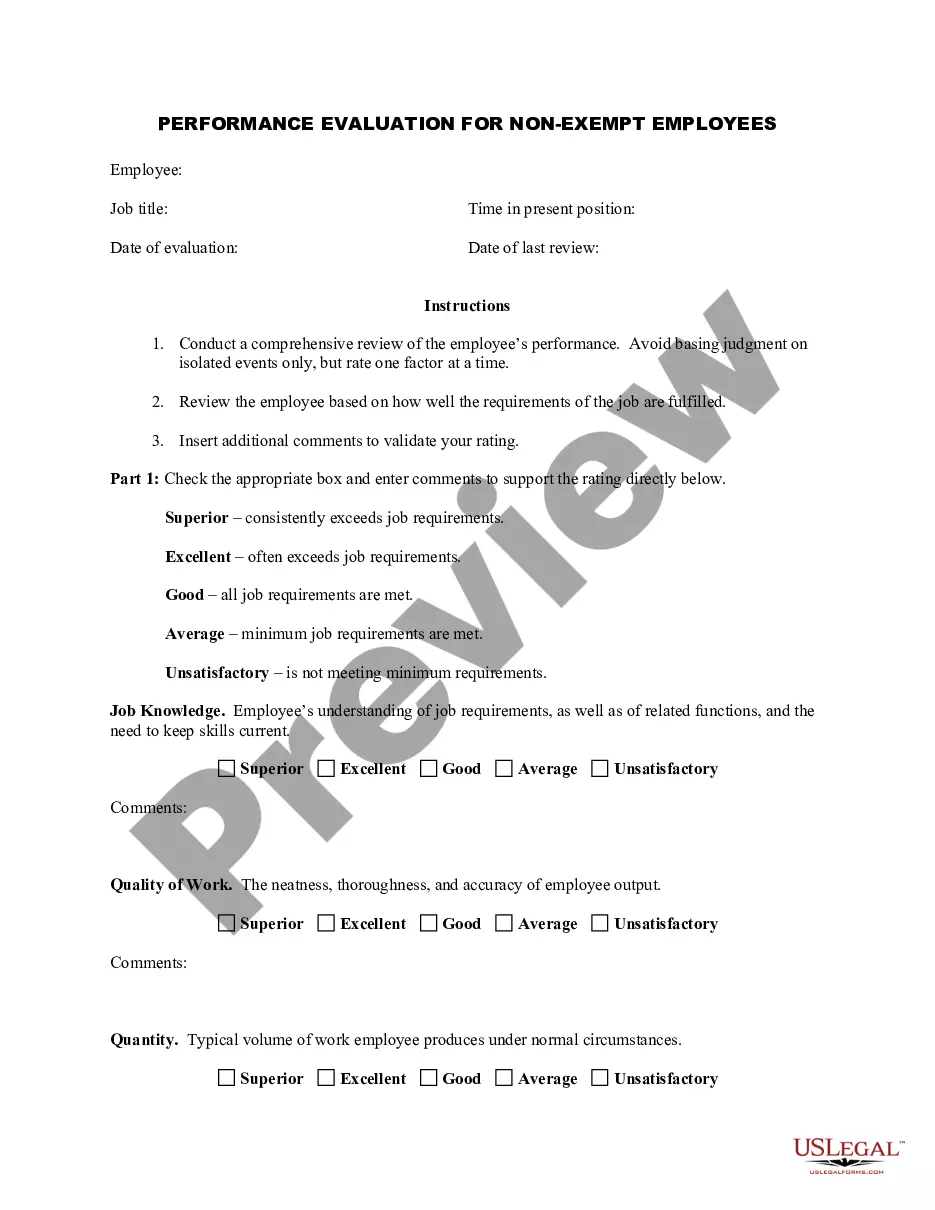
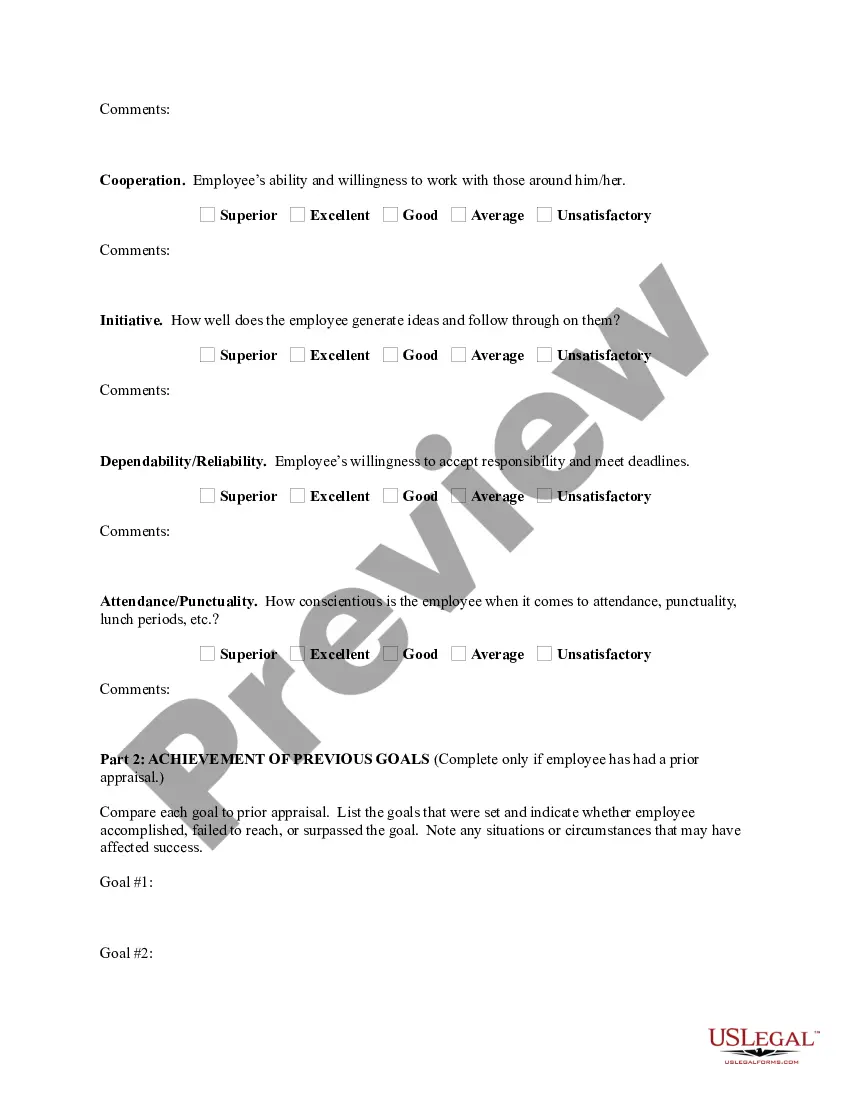
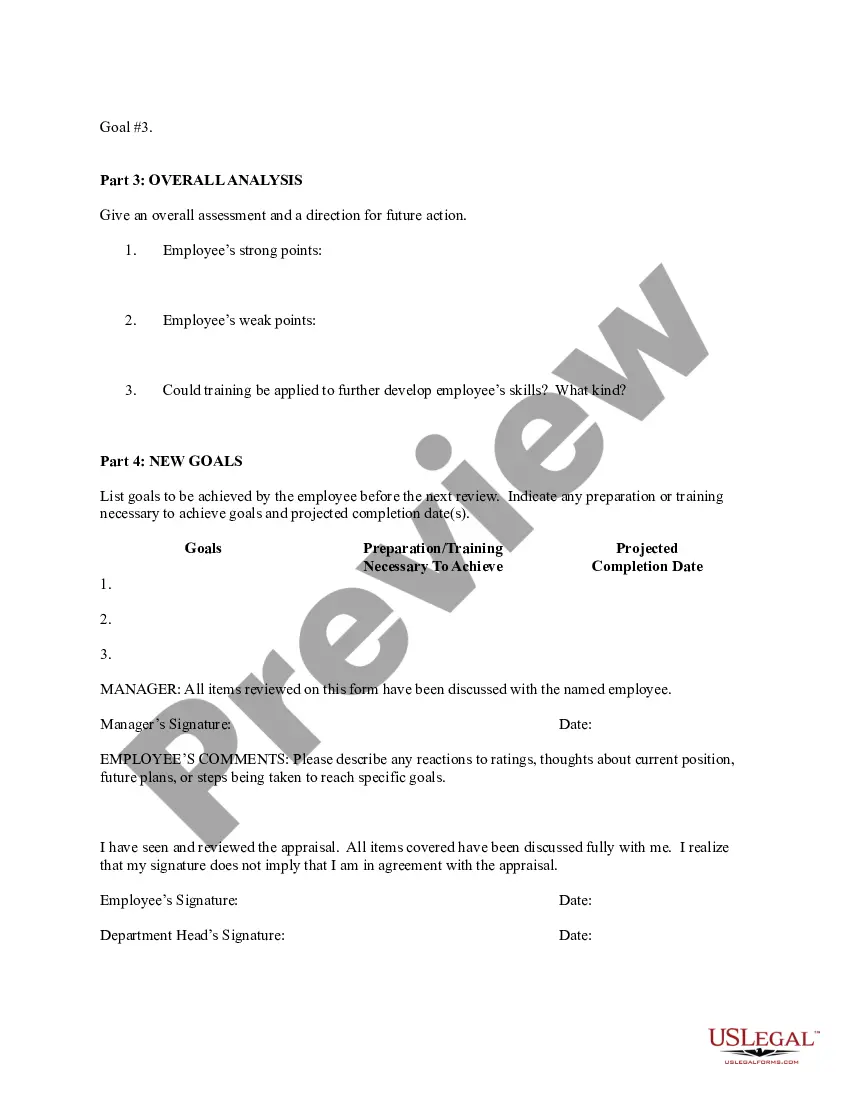
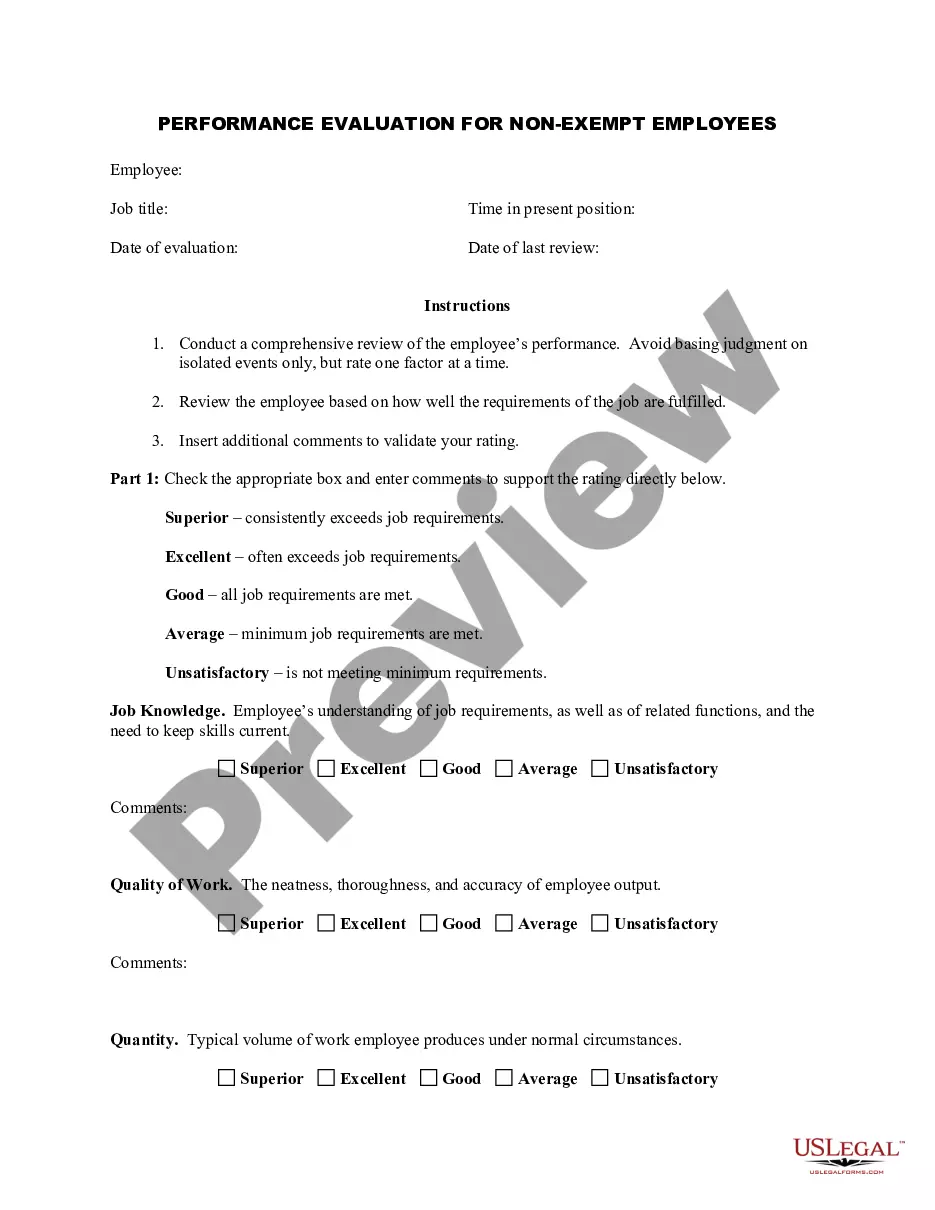
South Carolina Employee Evaluation Form for Farmer
Description
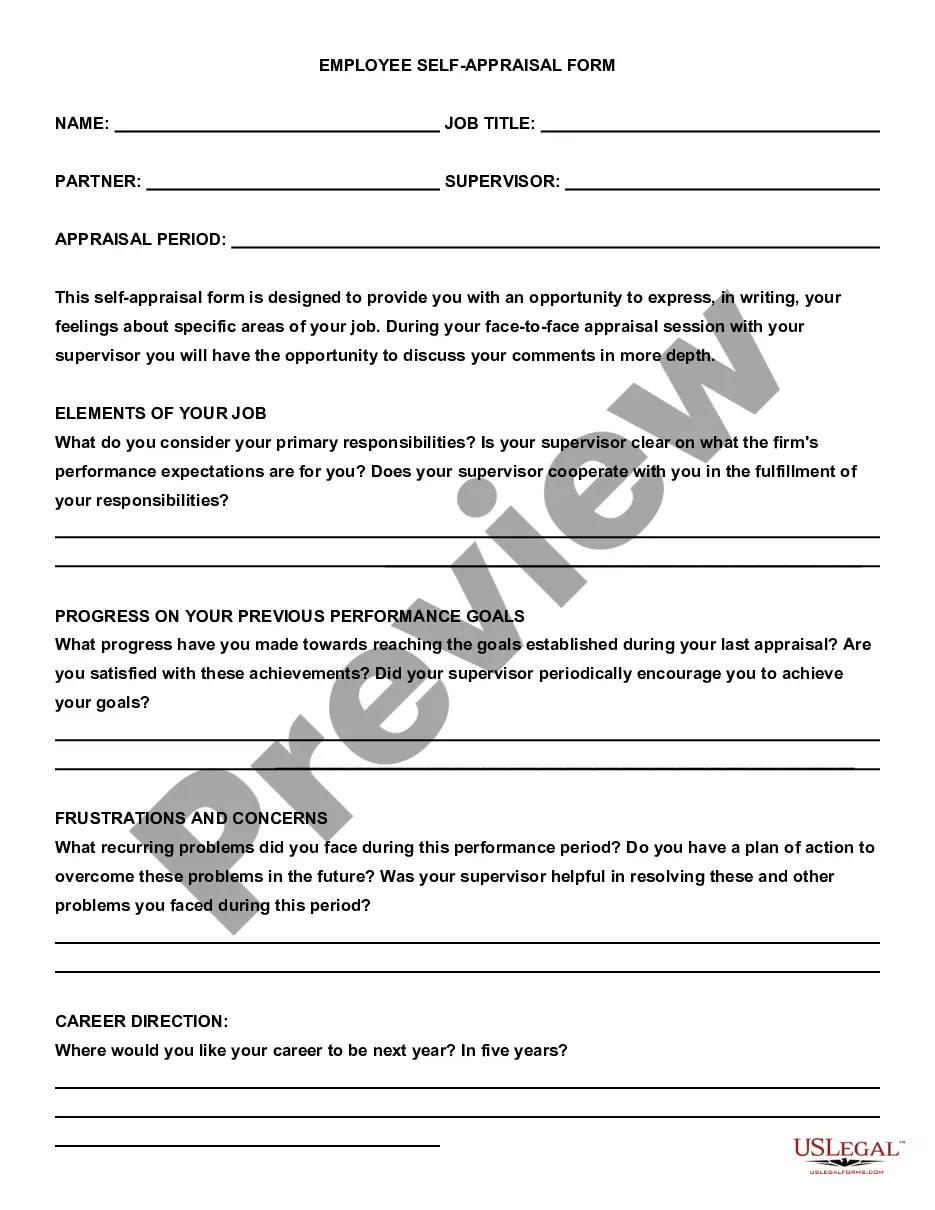
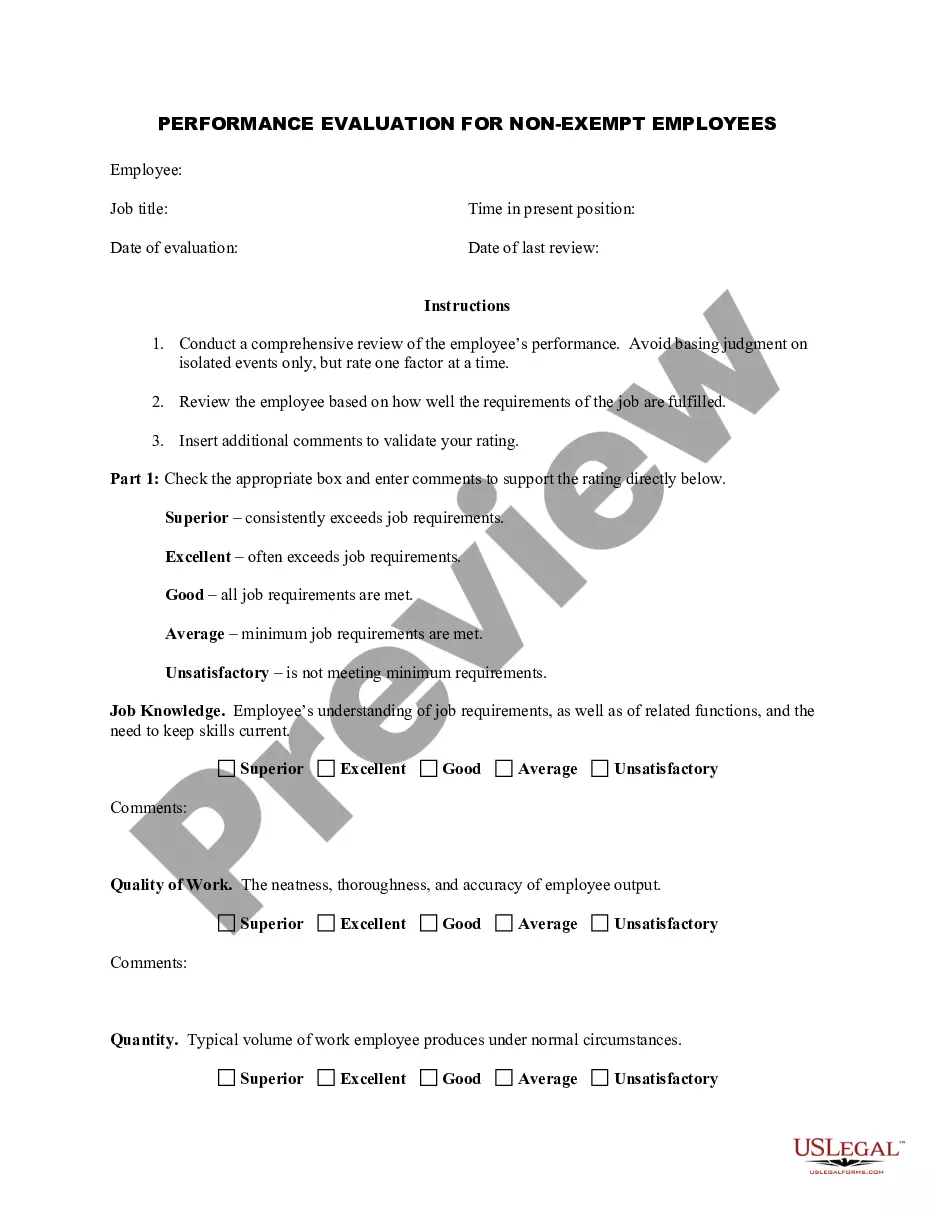
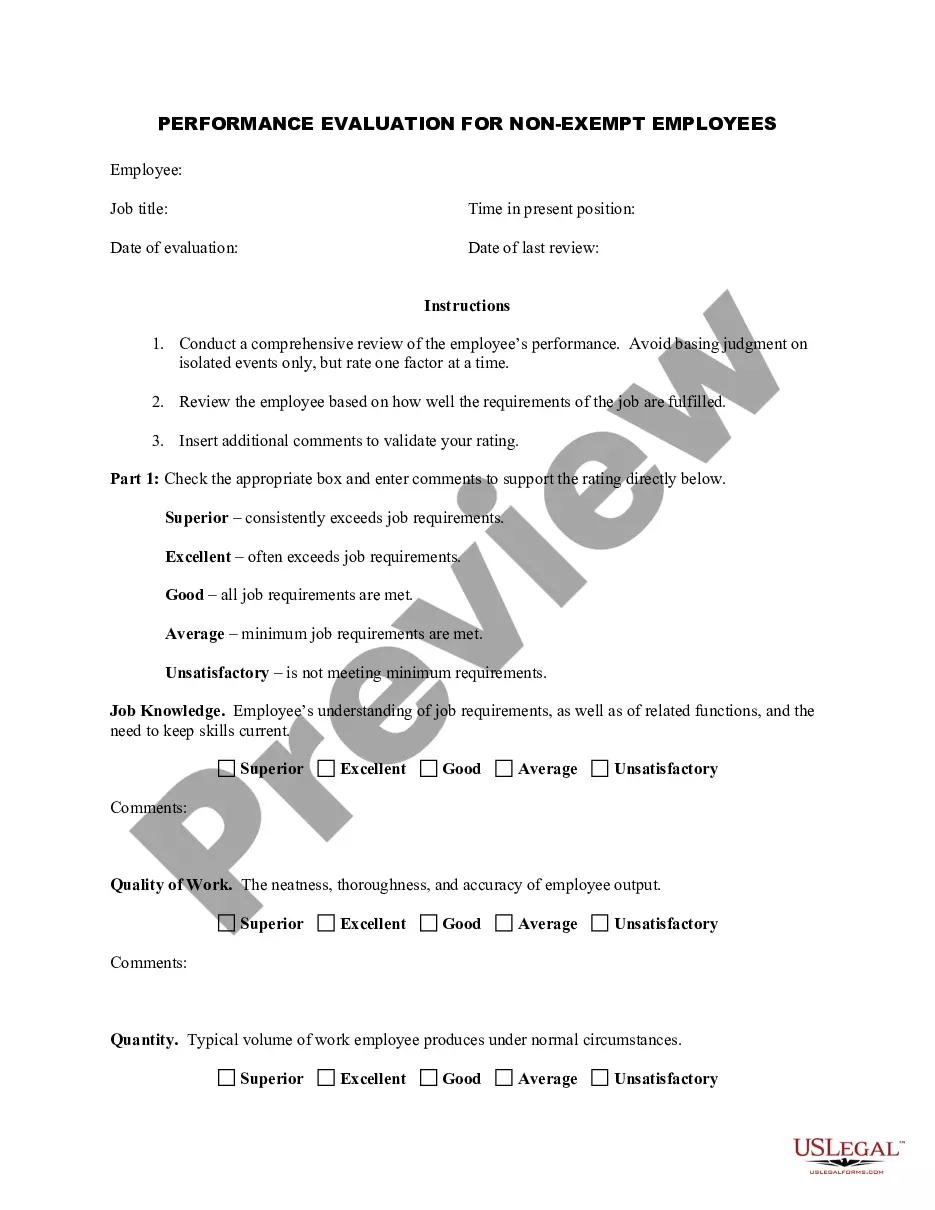
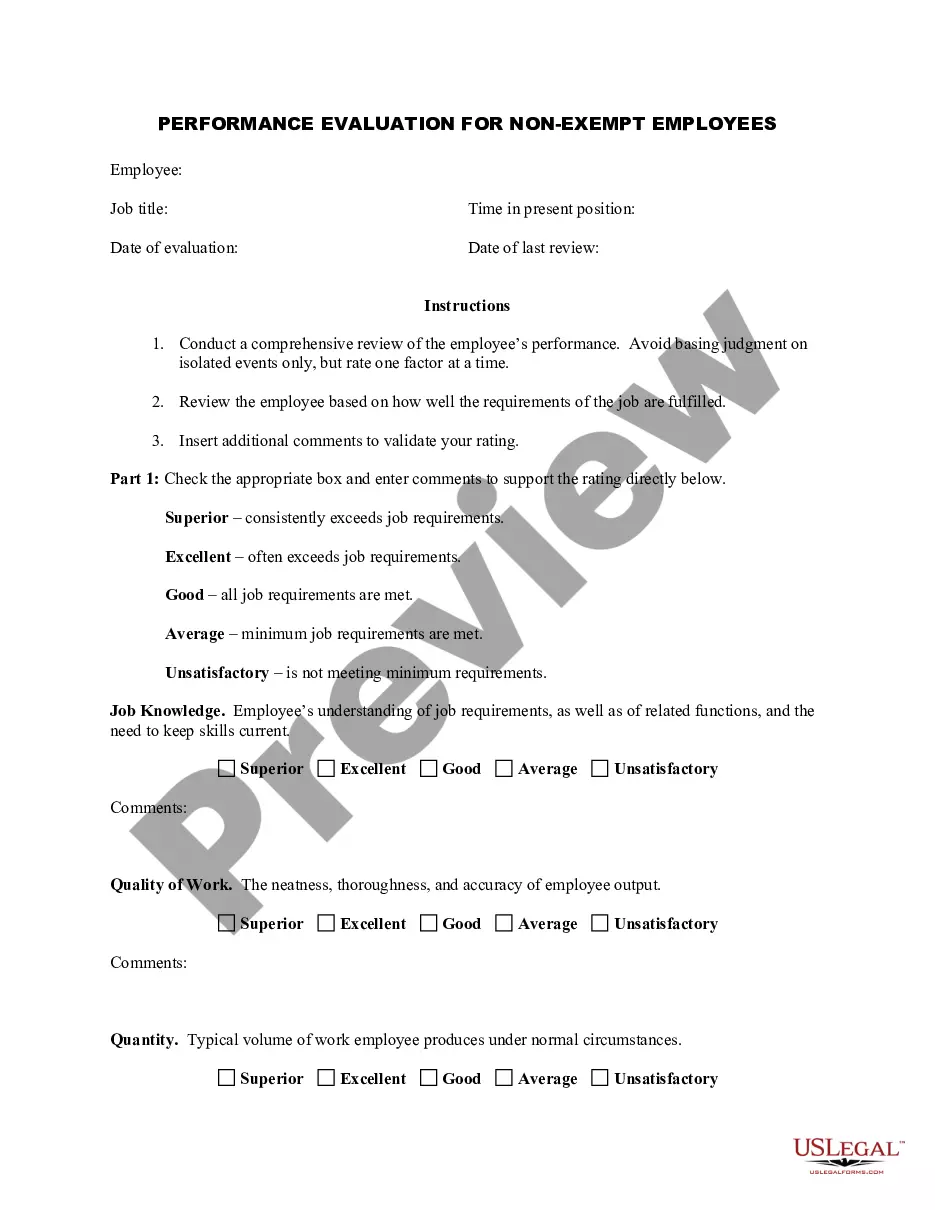
Get your form ready online
Our built-in tools help you complete, sign, share, and store your documents in one place.
Make edits, fill in missing information, and update formatting in US Legal Forms—just like you would in MS Word.
Download a copy, print it, send it by email, or mail it via USPS—whatever works best for your next step.
Sign and collect signatures with our SignNow integration. Send to multiple recipients, set reminders, and more. Go Premium to unlock E-Sign.
If this form requires notarization, complete it online through a secure video call—no need to meet a notary in person or wait for an appointment.
We protect your documents and personal data by following strict security and privacy standards.

Make edits, fill in missing information, and update formatting in US Legal Forms—just like you would in MS Word.

Download a copy, print it, send it by email, or mail it via USPS—whatever works best for your next step.

Sign and collect signatures with our SignNow integration. Send to multiple recipients, set reminders, and more. Go Premium to unlock E-Sign.

If this form requires notarization, complete it online through a secure video call—no need to meet a notary in person or wait for an appointment.

We protect your documents and personal data by following strict security and privacy standards.
Looking for another form?


How to fill out Employee Evaluation Form For Farmer?
You might spend numerous hours online searching for the legal document template that meets the state and federal requirements you require.
US Legal Forms offers a vast array of legal forms that can be reviewed by professionals.
You can easily download or print the South Carolina Employee Evaluation Form for Farmer from the service.
If available, utilize the Preview option to view the document template as well.
- If you already have a US Legal Forms account, you can Log In and click the Acquire button.
- Subsequently, you can complete, modify, print, or sign the South Carolina Employee Evaluation Form for Farmer.
- Every legal document template you purchase is yours indefinitely.
- To obtain another copy of an acquired form, navigate to the My documents section and click the relevant option.
- If you are using the US Legal Forms website for the first time, adhere to the following simple instructions.
- First, ensure you have chosen the correct document template for the area/city of your preference.
- Review the template details to confirm you have chosen the right document.
Form popularity
FAQ
The South Carolina Department of Agriculture oversees agricultural practices and regulations in the state. It supports farmers through various programs, provides crucial information, and promotes agricultural education. Farmers can benefit from tools like the South Carolina Employee Evaluation Form for Farmer to align with the department's guidelines and enhance their operations.
You are in the business of farming if you cultivate, operate, or manage a farm for profit, either as owner or tenant. A farm includes livestock, dairy, poultry, fish, fruit, and truck farms. It also includes plantations, ranches, ranges, and orchards.
--An agricultural assessment provides for a reduction in property taxes for land used in agricultural production. --The farmer must apply to the town assessor on an annual basis.
GAPs focus on post-harvest handling and proper cooling, handling and storing of product. This can reduce spoilage, improve quality and ensure that you have the best quality produce for your customers.
Good Agricultural Practices (GAP) audits are voluntary audits that verify that fruits and vegetables are produced, packed, handled, and stored to minimize risks of microbial food safety hazards.
Under the program:An applicant for a farmland assessment must own the land and file an application with the municipal tax assessor.Land must be devoted to agricultural and/or horticultural uses for at least two years prior to the tax year the applicant is applying for an assessment.More items...?
Job Requirements Primarily, farmers are trained through hands-on experience and are not required to have a college degree. However, associate's and bachelor's degrees in farming or agriculture are available. Aspiring farmers can learn through apprenticeships or by being supervised and trained by experienced farmers.
Good Agricultural Practices (GAP) is a set of standards for the safe and sustainable production of crops and livestock. It aims to help farm owners maximize yields and optimize business operations while also minimizing production costs and environmental impact.
Good Agricultural Practices (GAP) audits are voluntary audits that verify that fruits and vegetables are produced, packed, handled, and stored to minimize risks of microbial food safety hazards.
What is an agricultural assessment? An agricultural assessment allows land utilized for agricultural purposes to be assessed based on its agricultural value as opposed to its commercial value. An agricultural assessment applies to school, country and town property taxes and is based on the soil types on the farm.