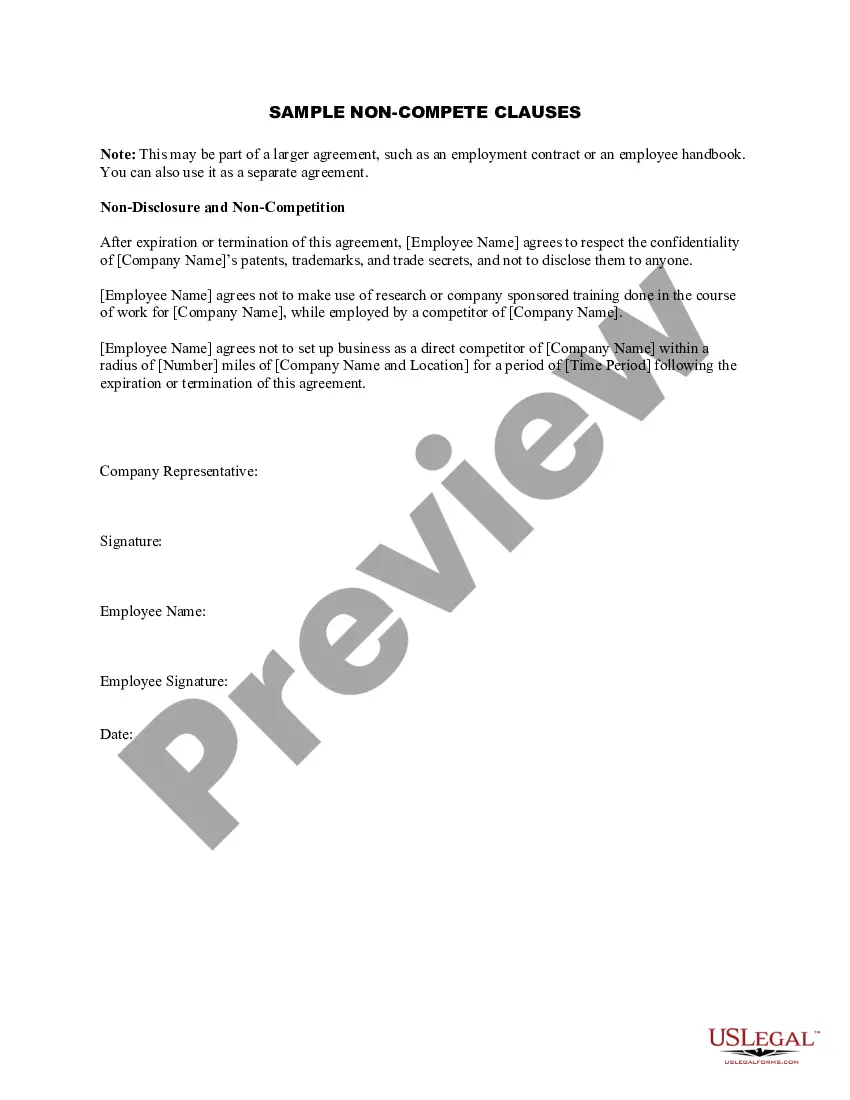
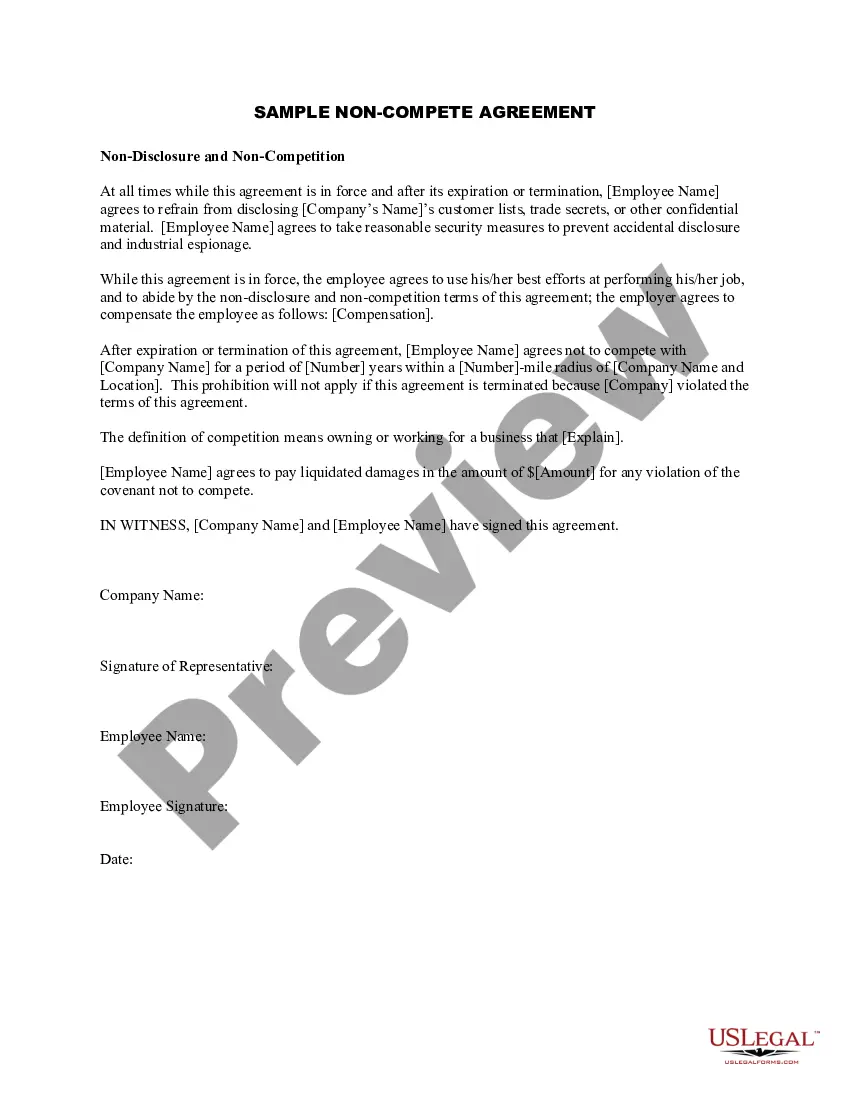
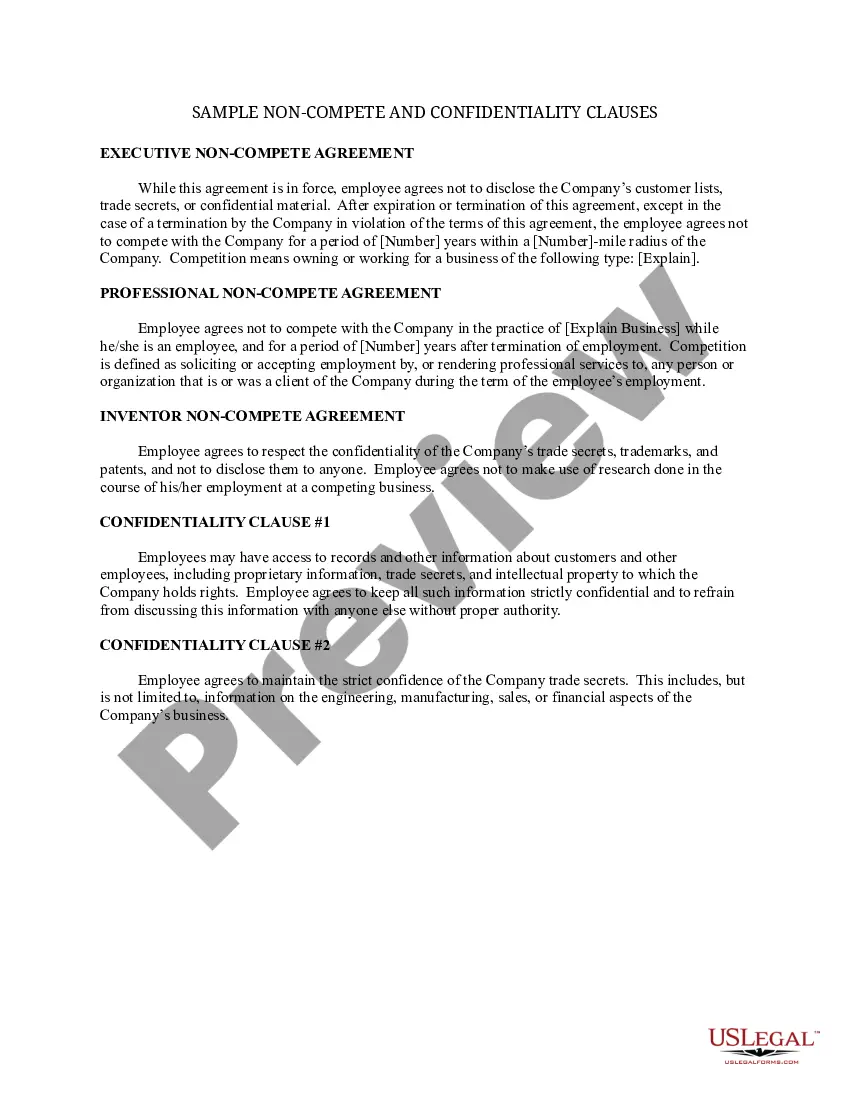
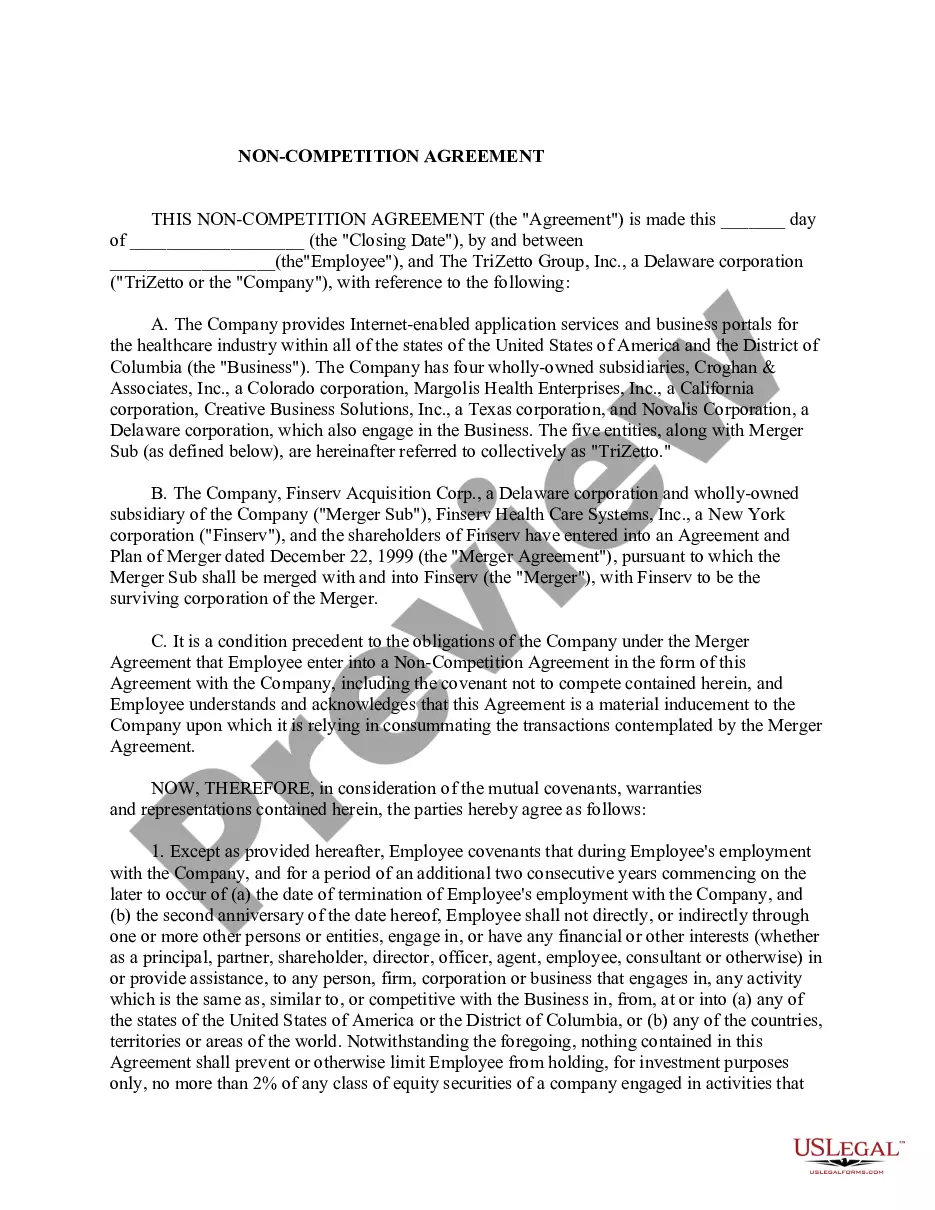
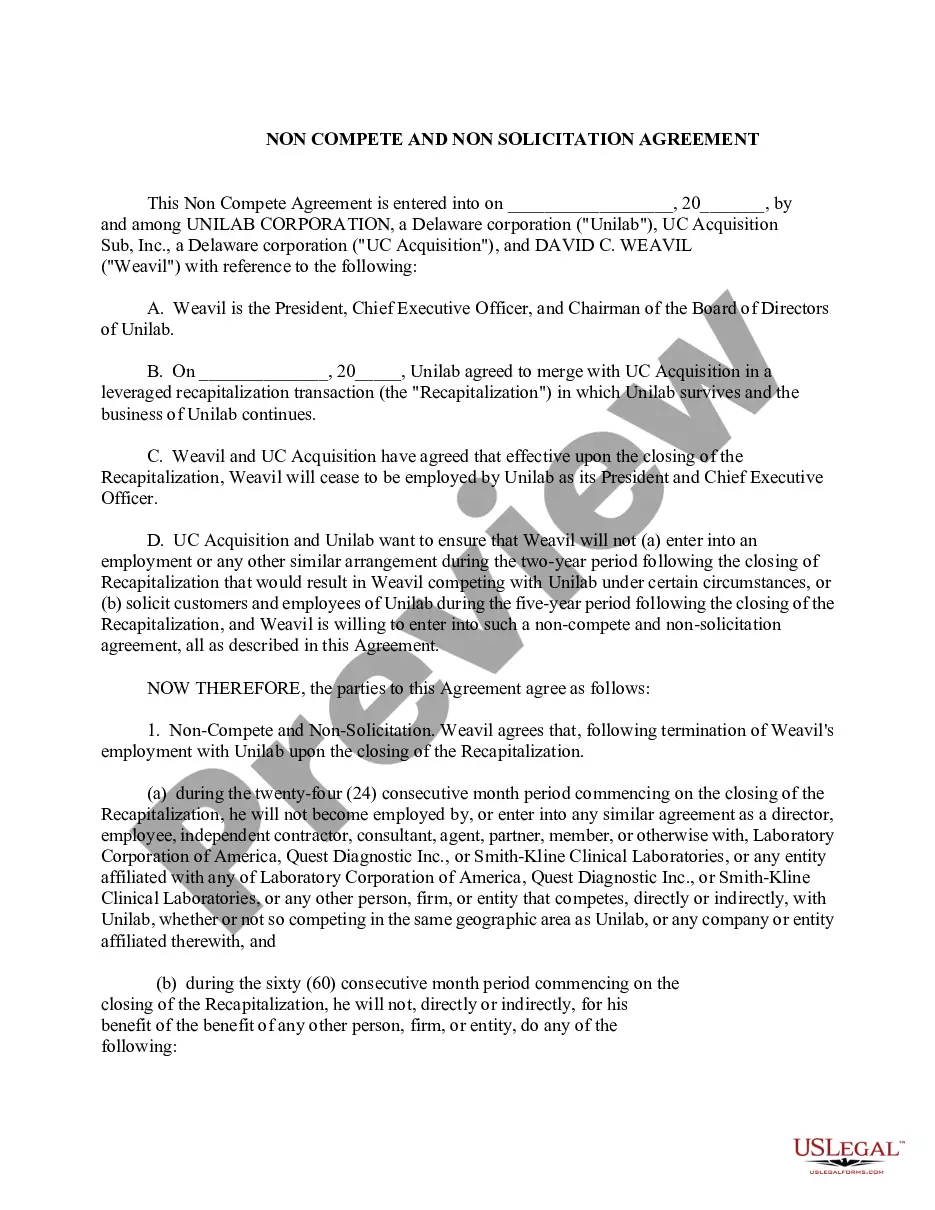
South Carolina Sample Noncompete Clauses
Description
Get your form ready online
Our built-in tools help you complete, sign, share, and store your documents in one place.
Make edits, fill in missing information, and update formatting in US Legal Forms—just like you would in MS Word.
Download a copy, print it, send it by email, or mail it via USPS—whatever works best for your next step.
Sign and collect signatures with our SignNow integration. Send to multiple recipients, set reminders, and more. Go Premium to unlock E-Sign.
If this form requires notarization, complete it online through a secure video call—no need to meet a notary in person or wait for an appointment.
We protect your documents and personal data by following strict security and privacy standards.

Make edits, fill in missing information, and update formatting in US Legal Forms—just like you would in MS Word.

Download a copy, print it, send it by email, or mail it via USPS—whatever works best for your next step.

Sign and collect signatures with our SignNow integration. Send to multiple recipients, set reminders, and more. Go Premium to unlock E-Sign.

If this form requires notarization, complete it online through a secure video call—no need to meet a notary in person or wait for an appointment.

We protect your documents and personal data by following strict security and privacy standards.
Looking for another form?

How to fill out Sample Noncompete Clauses?
You can allocate considerable time online searching for the valid document template that satisfies the state and federal requirements you need.
US Legal Forms offers a vast array of valid forms which can be reviewed by professionals.
You can easily download or print the South Carolina Sample Noncompete Clauses from our service.
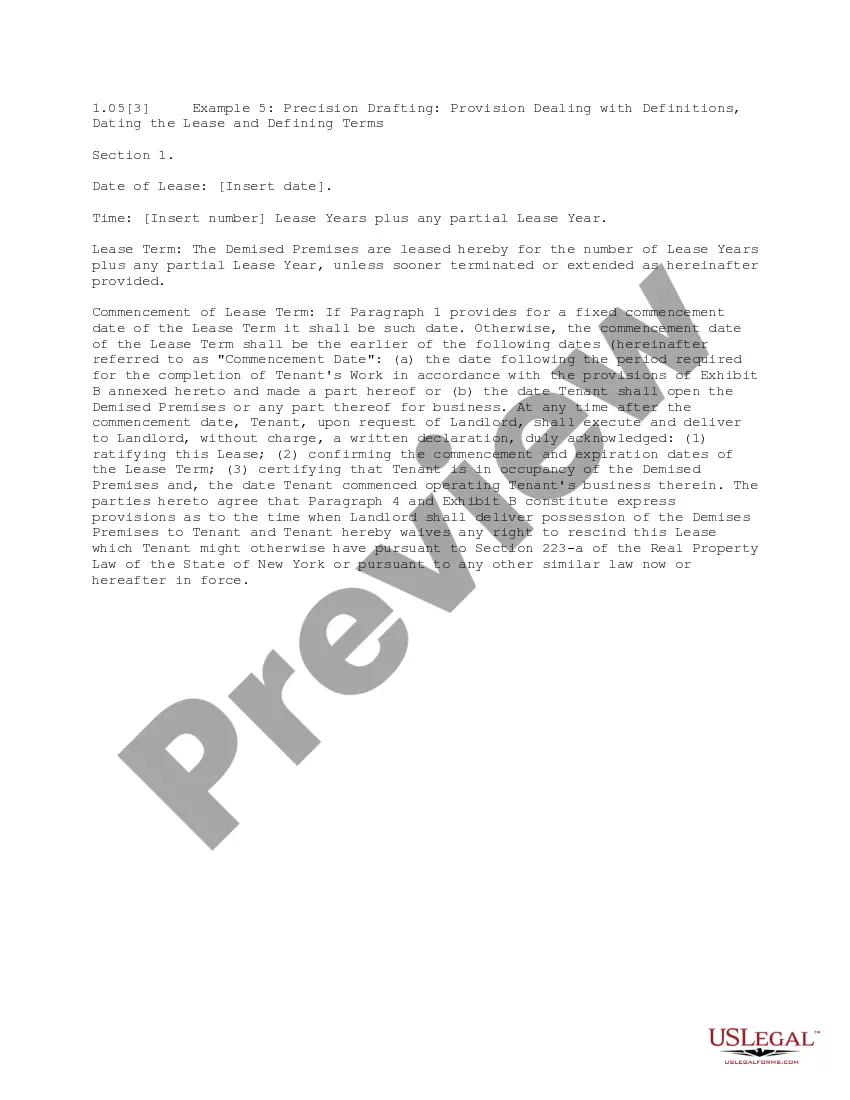
If available, utilize the Preview button to examine the document template as well.
- If you already possess a US Legal Forms account, you may Log In and click the Download button.
- Subsequently, you can fill out, modify, print, or sign the South Carolina Sample Noncompete Clauses.
- Every valid document template you obtain is yours permanently.
- To get an additional copy of any purchased form, navigate to the My documents section and click the relevant button.
- If you are using the US Legal Forms website for the first time, follow the simple steps below.
- First, ensure you have chosen the correct document template for the state/city of your choice.
- Review the form summary to confirm you have selected the appropriate form.
Form popularity
FAQ
South Carolina courts will not follow a blue pencil rule for covenants not to compete. This means the court will not construe the agreement so as to make it enforceable it must be enforceable on its face.
By Janet A. In California, North Dakota, the District of Columbia, and Oklahoma, non-competes are either entirely or largely unenforceable as against public policy. Other states, including Maine, Maryland, New Hampshire, Rhode Island, and Washington, have banned non-compete agreements for low-wage workers.
Non-competition clause examples include: Example 1: Preventing former employees from using trade secrets. Example 2: Stopping contractors from competing with you. Example 3: Former partners limiting the geographical reach.
South Carolina courts may enforce covenants not to compete if they meet all of the following five criteria: Necessary for the protection of the legitimate interest of the business Simply avoiding competition or the loss of a trained employee are not legitimate business interests.
compete agreement is a legal agreement or clause in a contract specifying that an employee must not enter into competition with an employer after the employment period is over.
You Can Void a Non-Compete by Proving Its Terms Go Too Far or Last Too Long. Whether a non-compete is unenforceable because it covers too large of a geographical area or it lasts too long can depend on many factors. Enforceability can depend on your industry, skills, location, etc.
Fortunately for you, courts have recently limited the power of non-compete agreements to protect employees' rights, making it possible (though not guaranteed) for you to get out of your non-compete. For a non-compete agreement to be enforceable, it must first be reasonable.
A traditional non-compete stops an employee from working for a competitor in a certain geographical area for a certain amount of time after leaving the company. A non-solicitation agreement prevents an employee from poaching customers, contracts or other employees from the company that first hired them.
The Employee specifically agrees that for a period of months/years after the Employee is no longer employed by the Company, the Employee will not engage, directly or indirectly, either as proprietor, stockholder, partner, officer, employee or otherwise, in the same or similar activities as were performed for