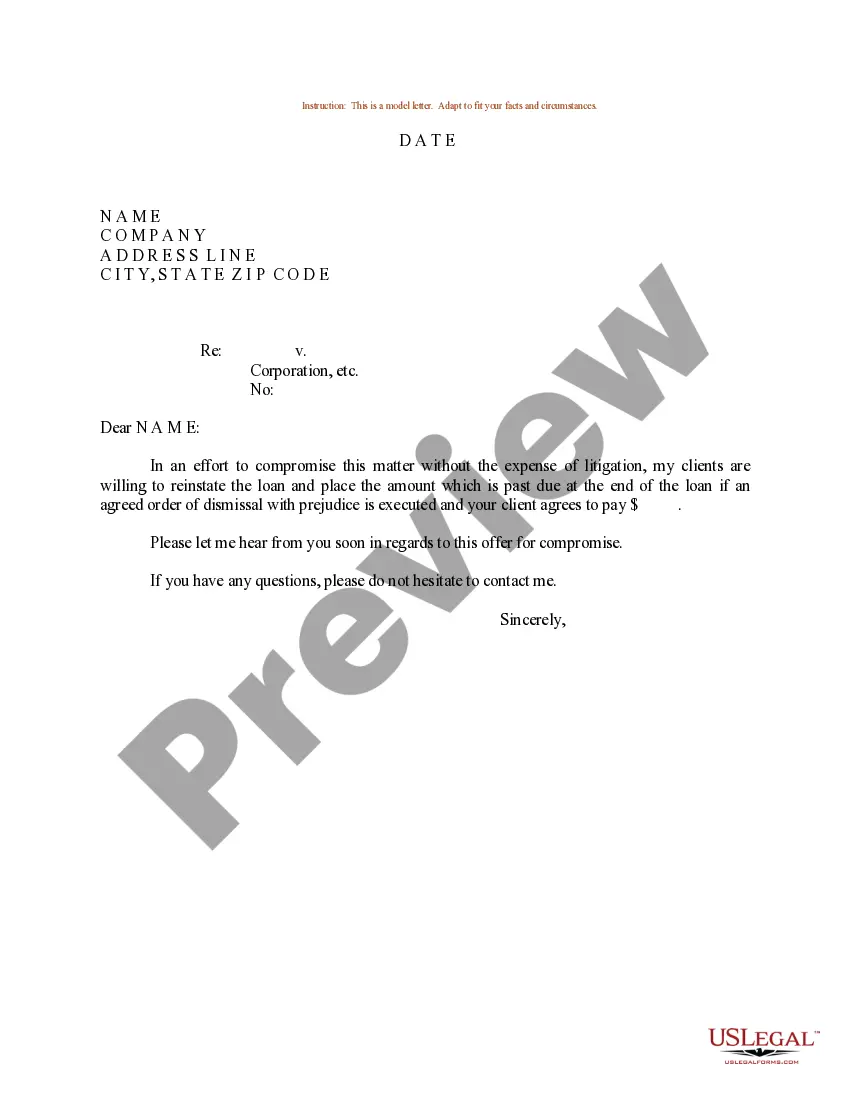
South Carolina Agreement for Sale of all Assets of a Corporation with Allocation of Purchase Price to Tangible and Intangible Business Assets
Description
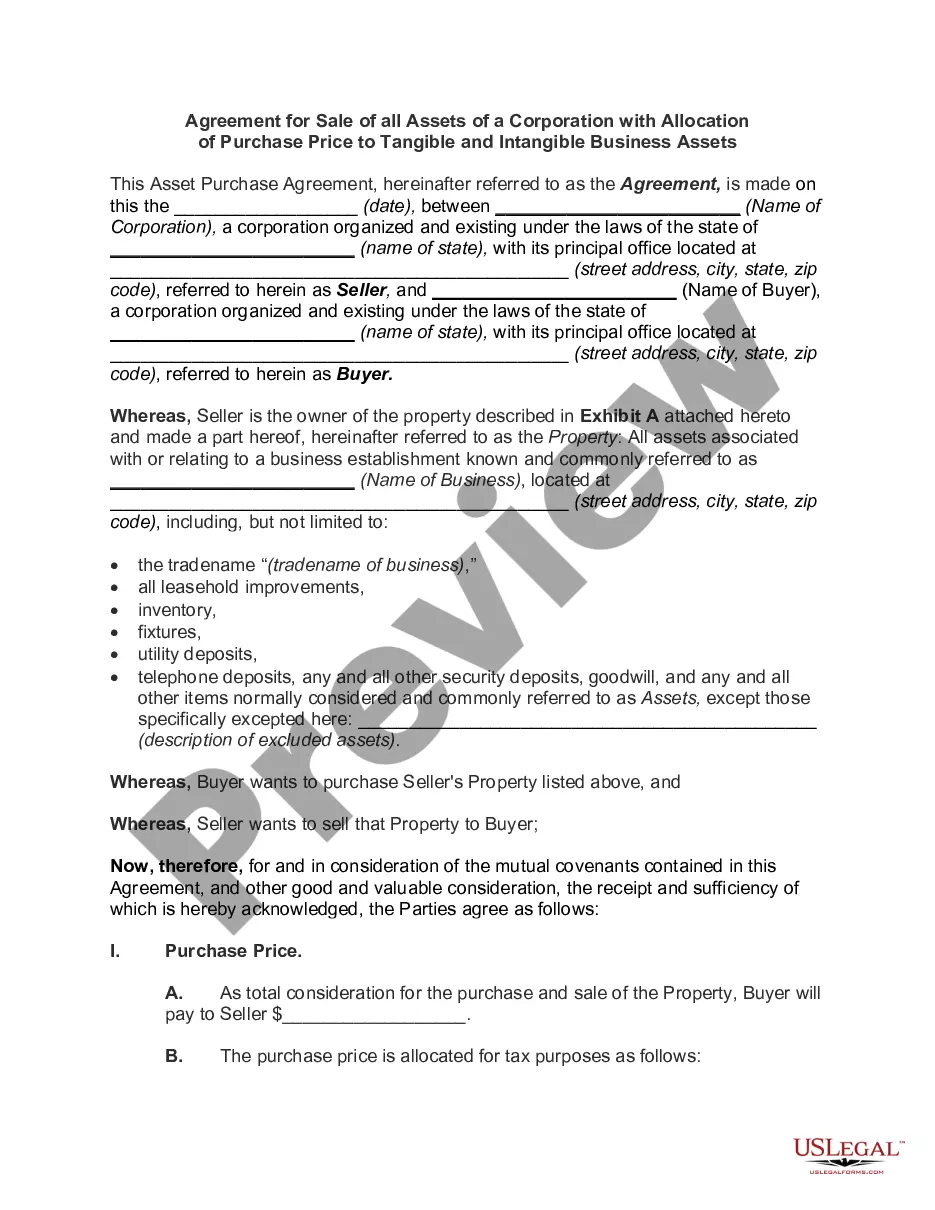
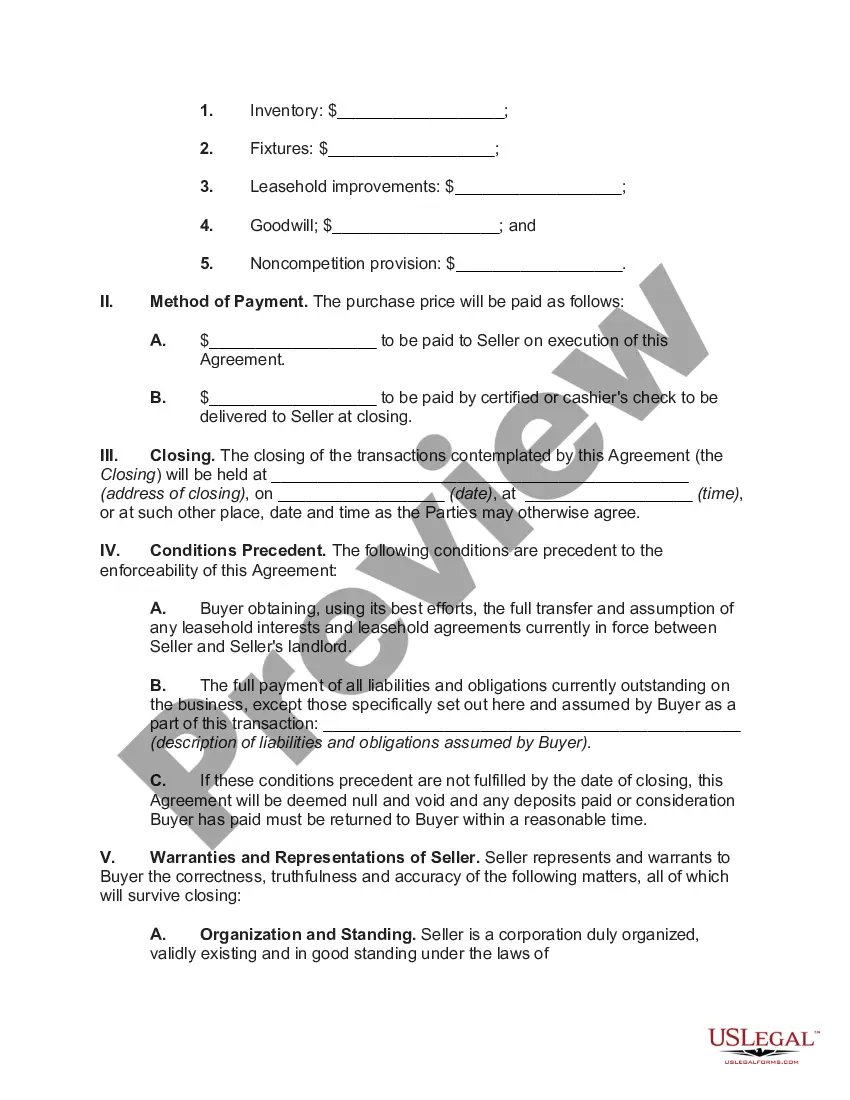
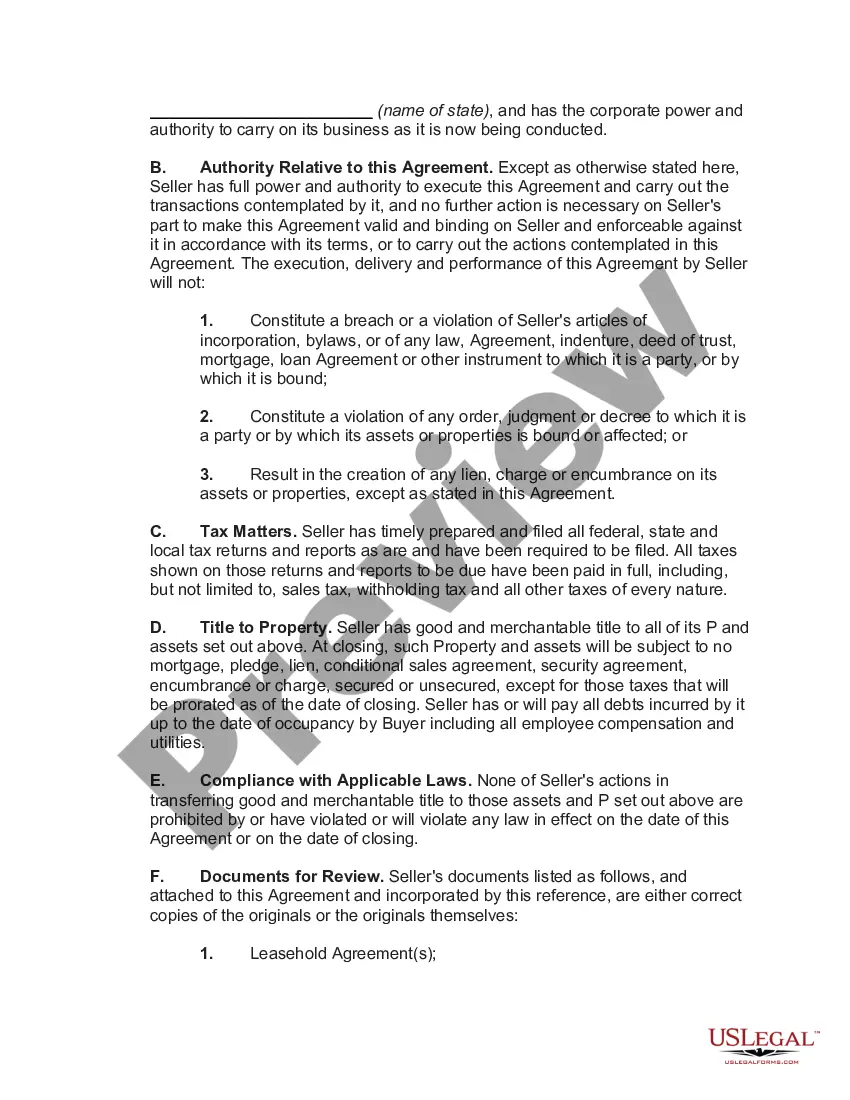
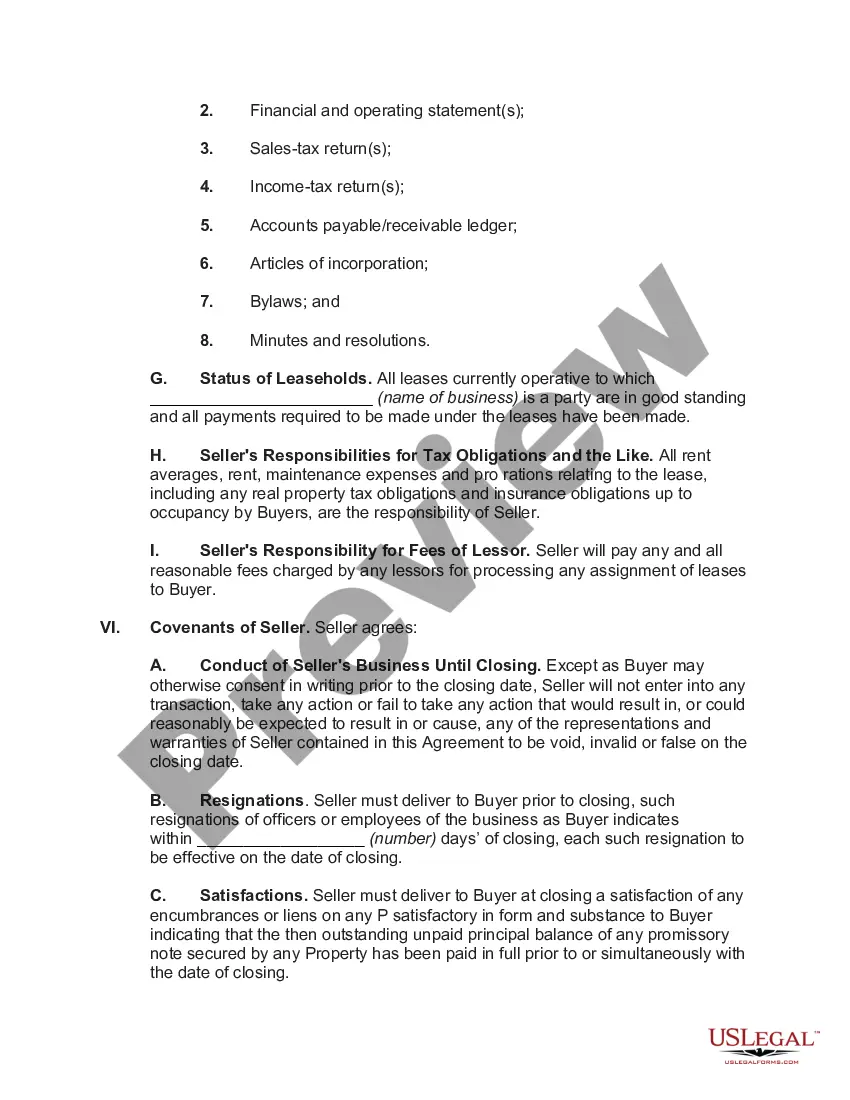
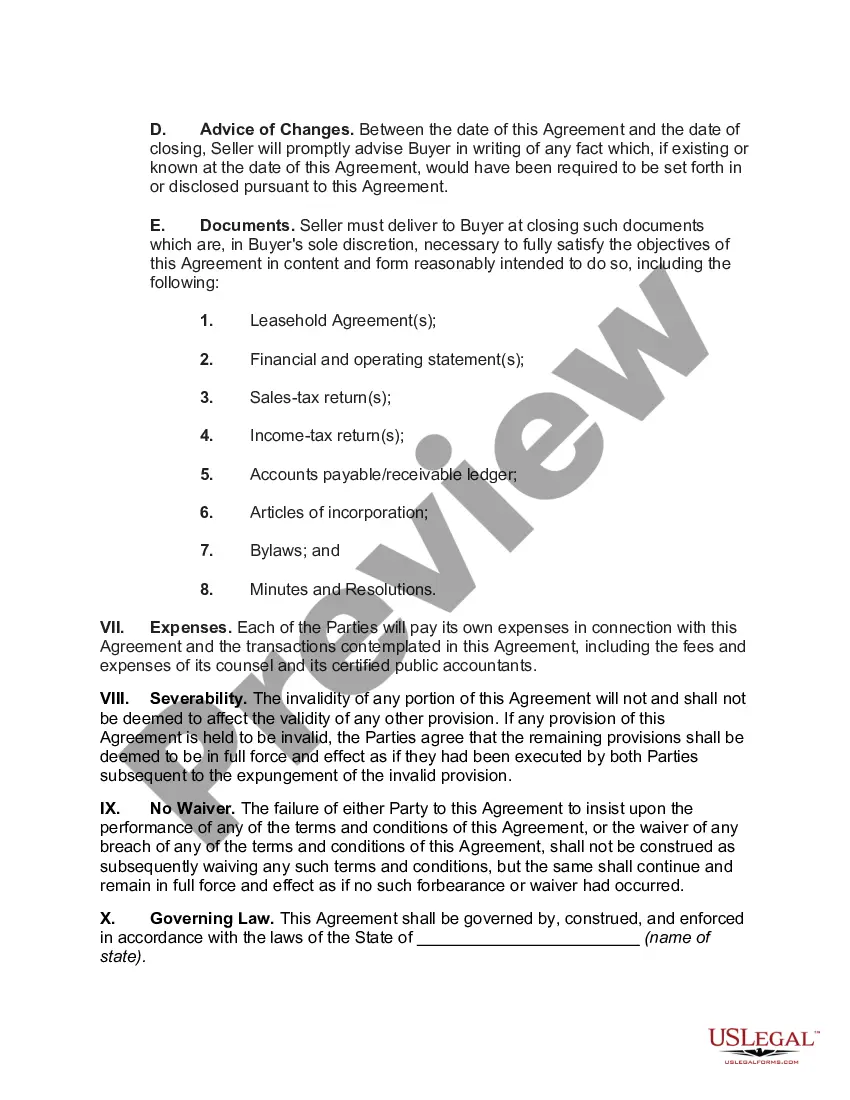
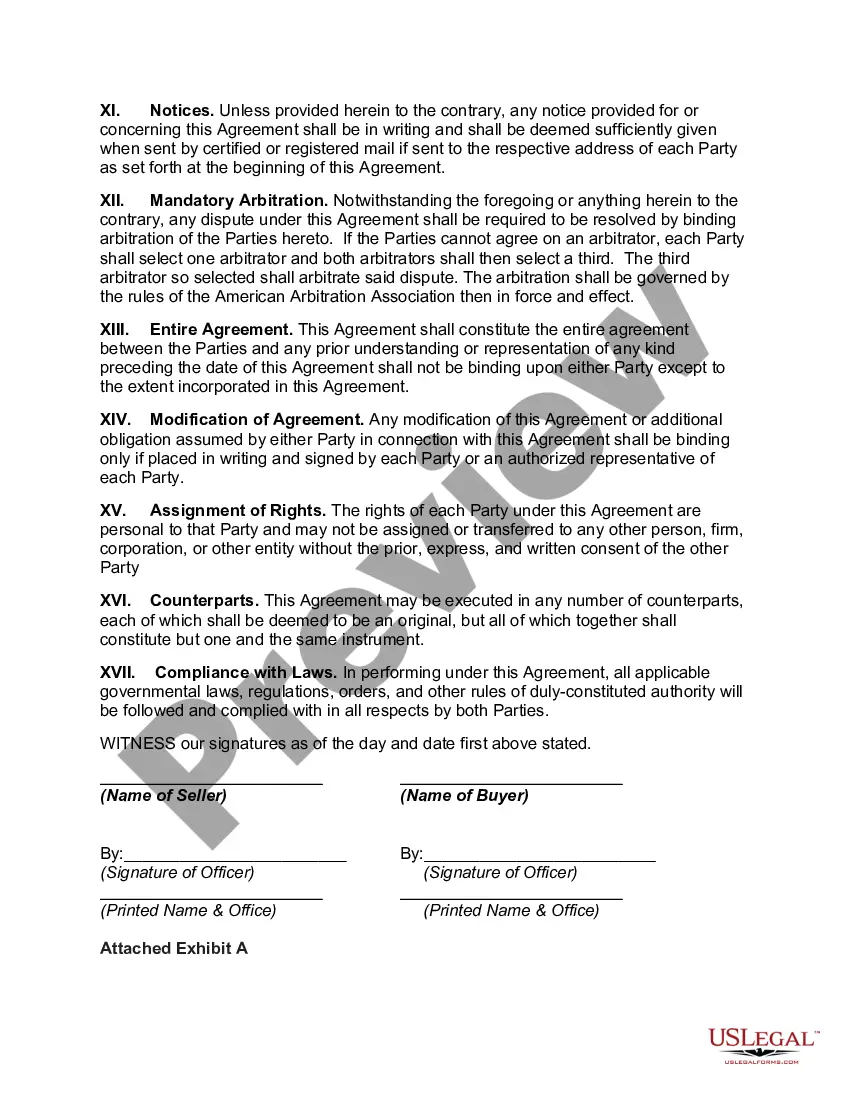
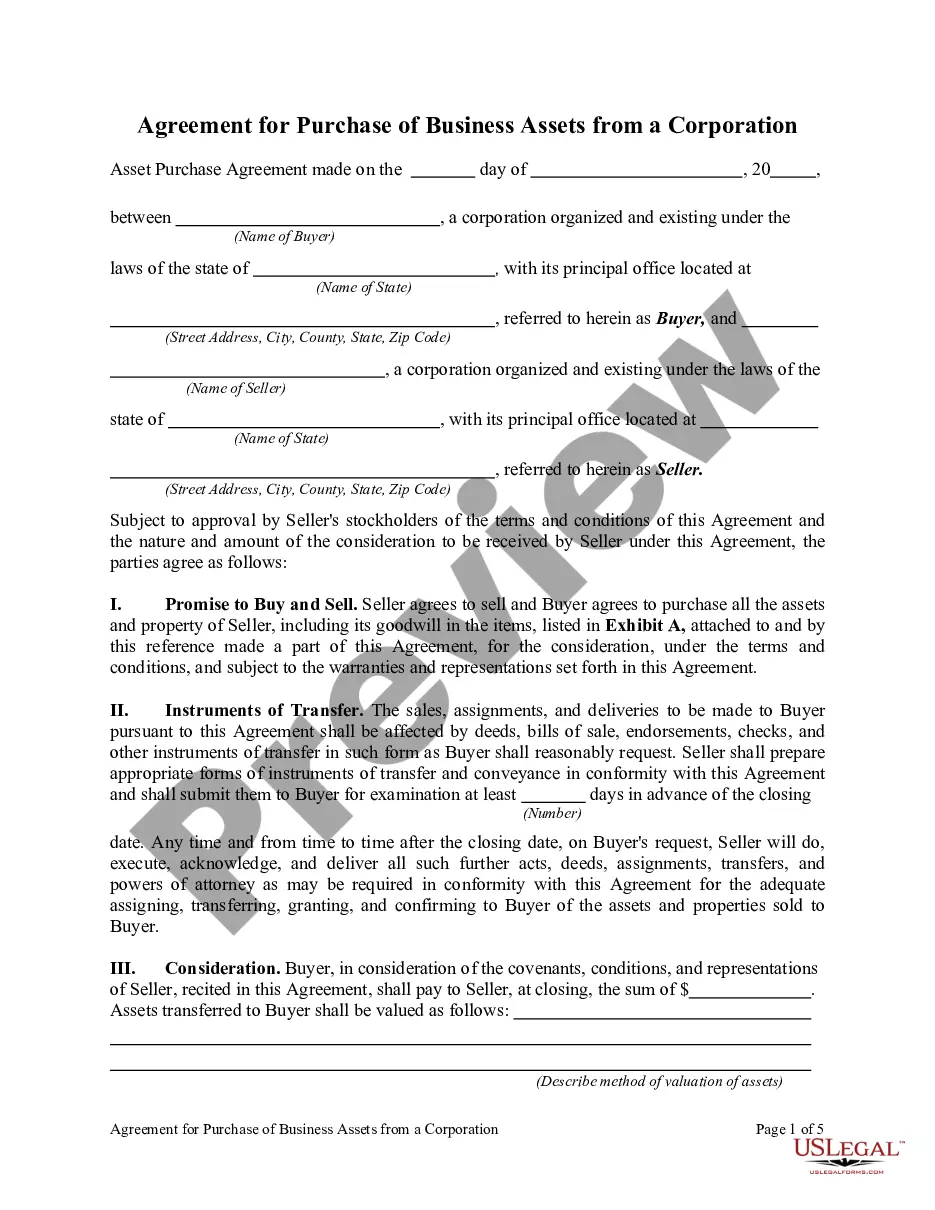
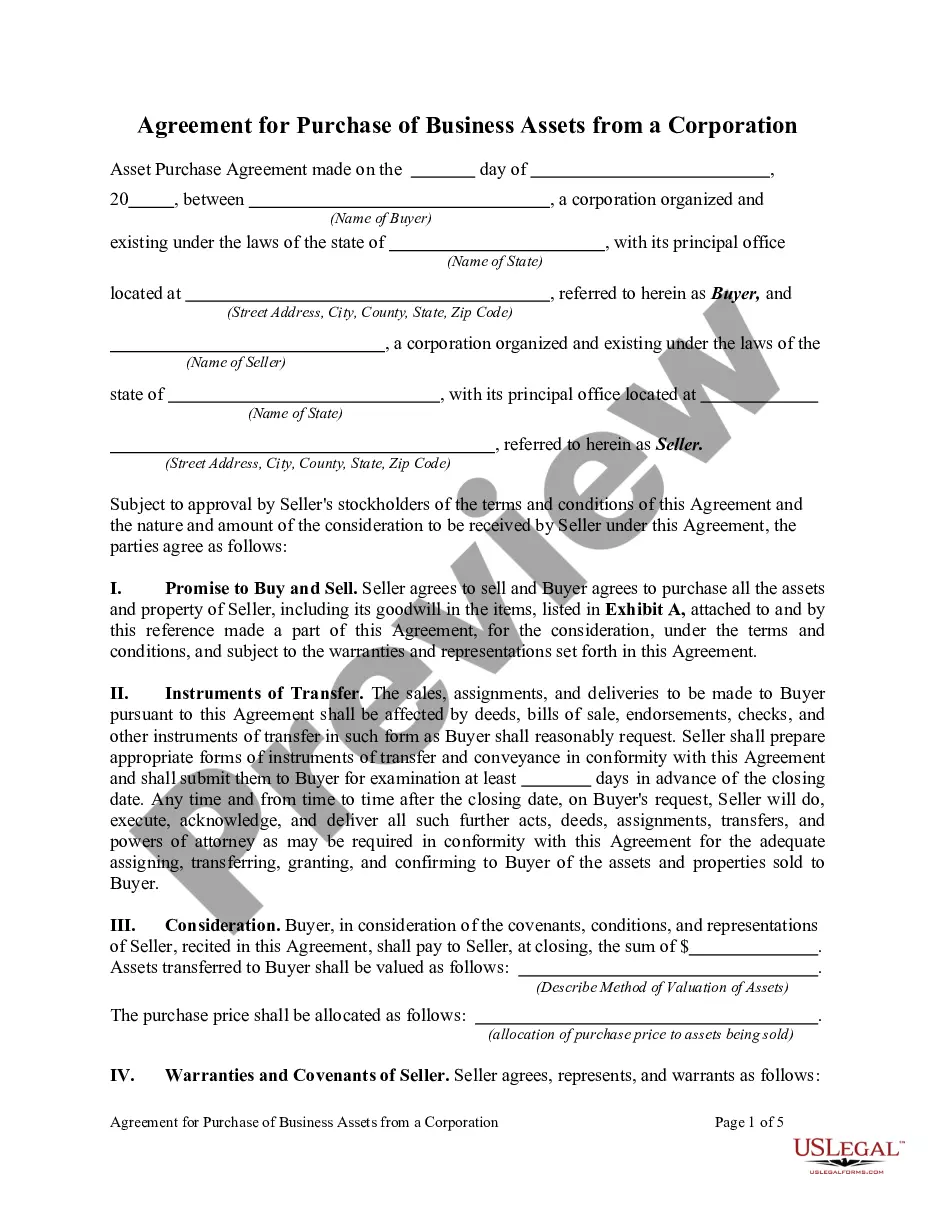
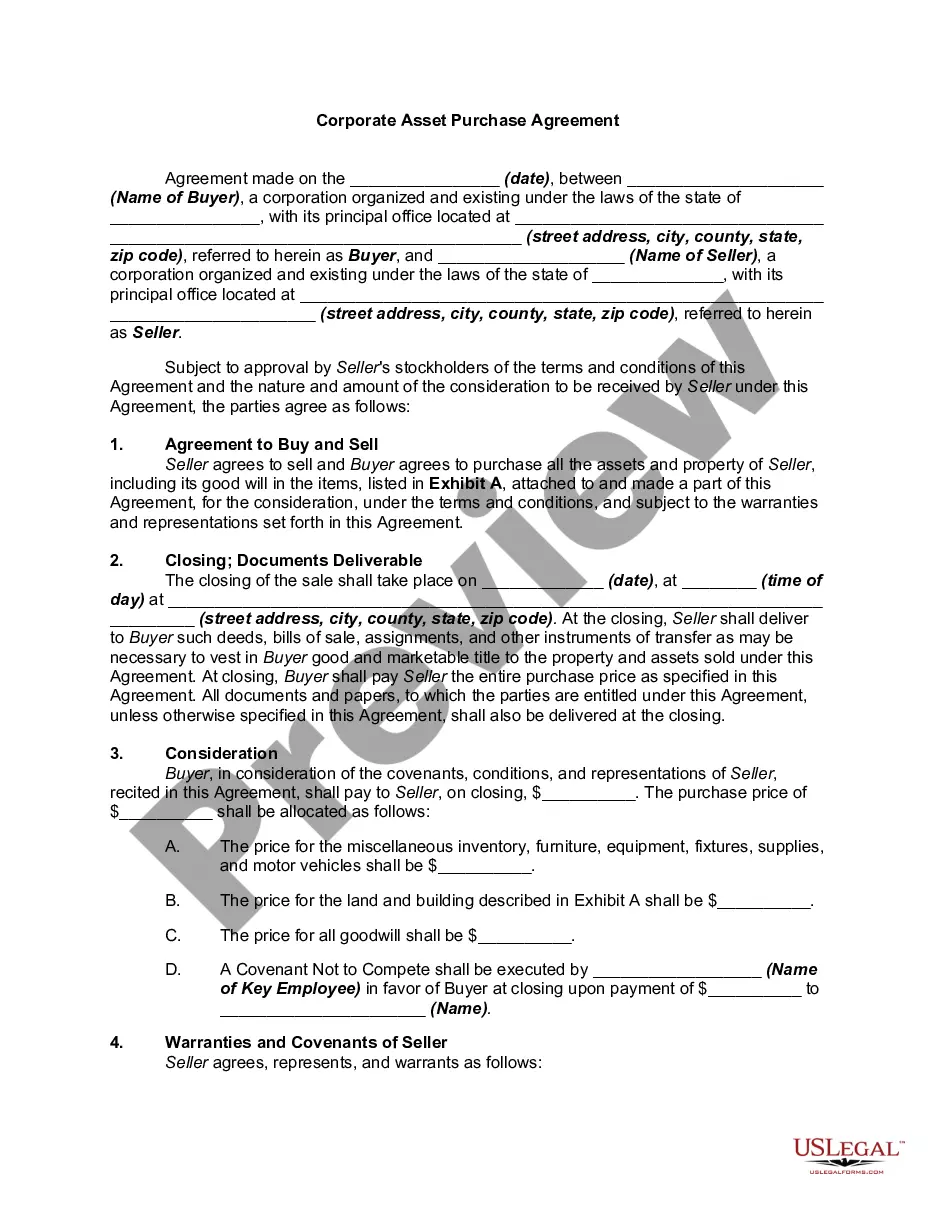
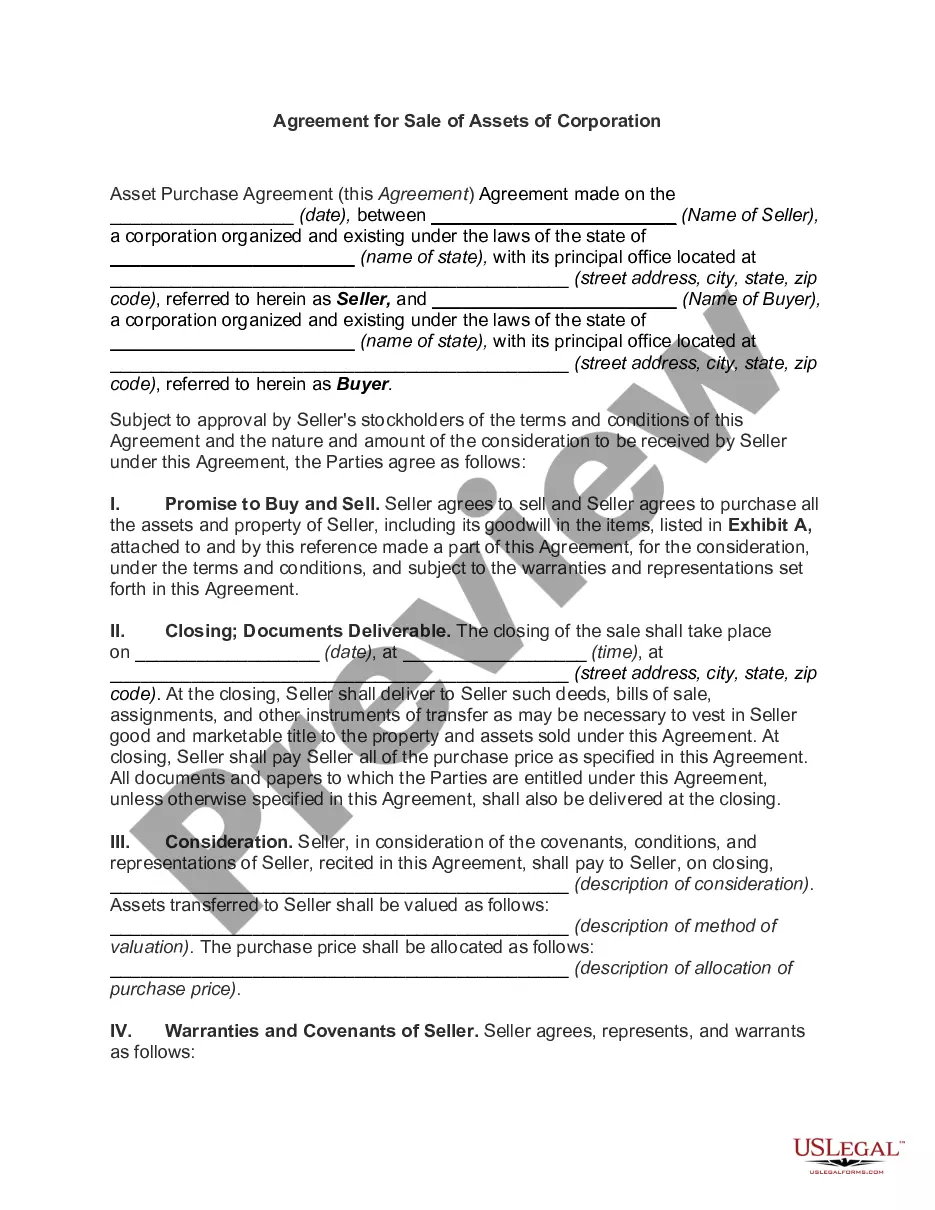
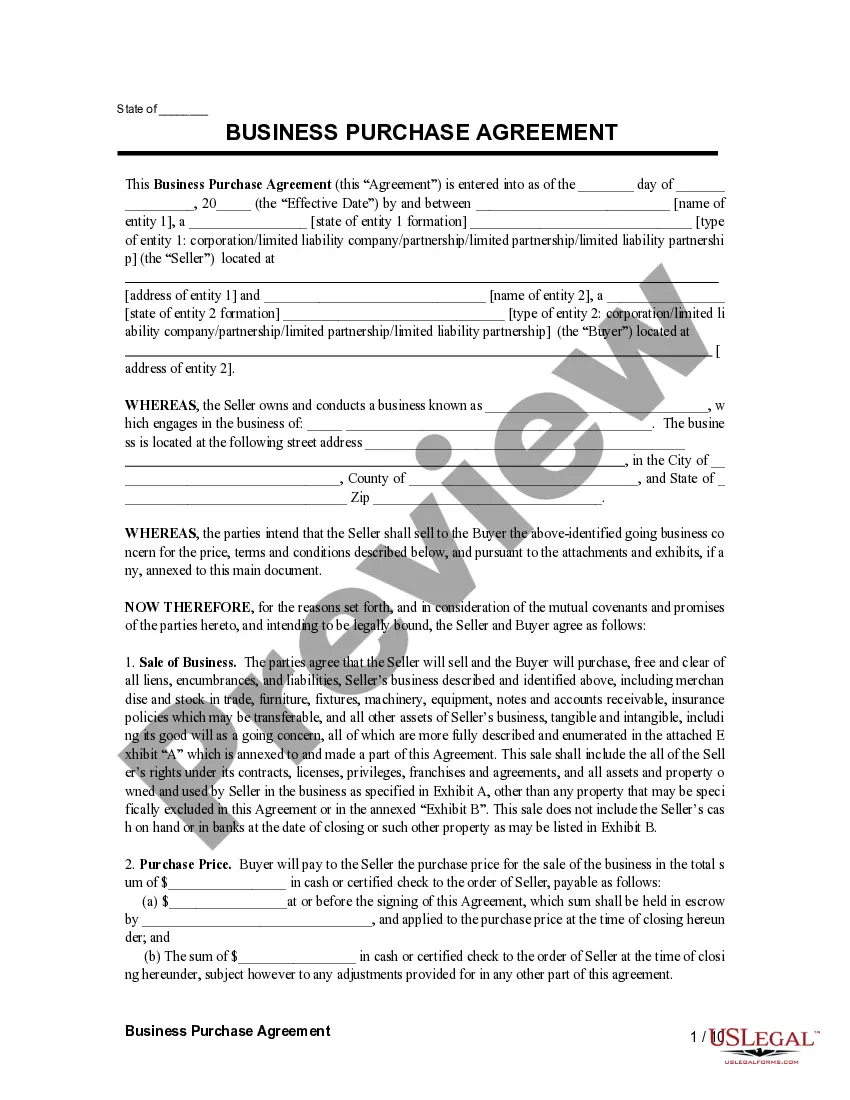
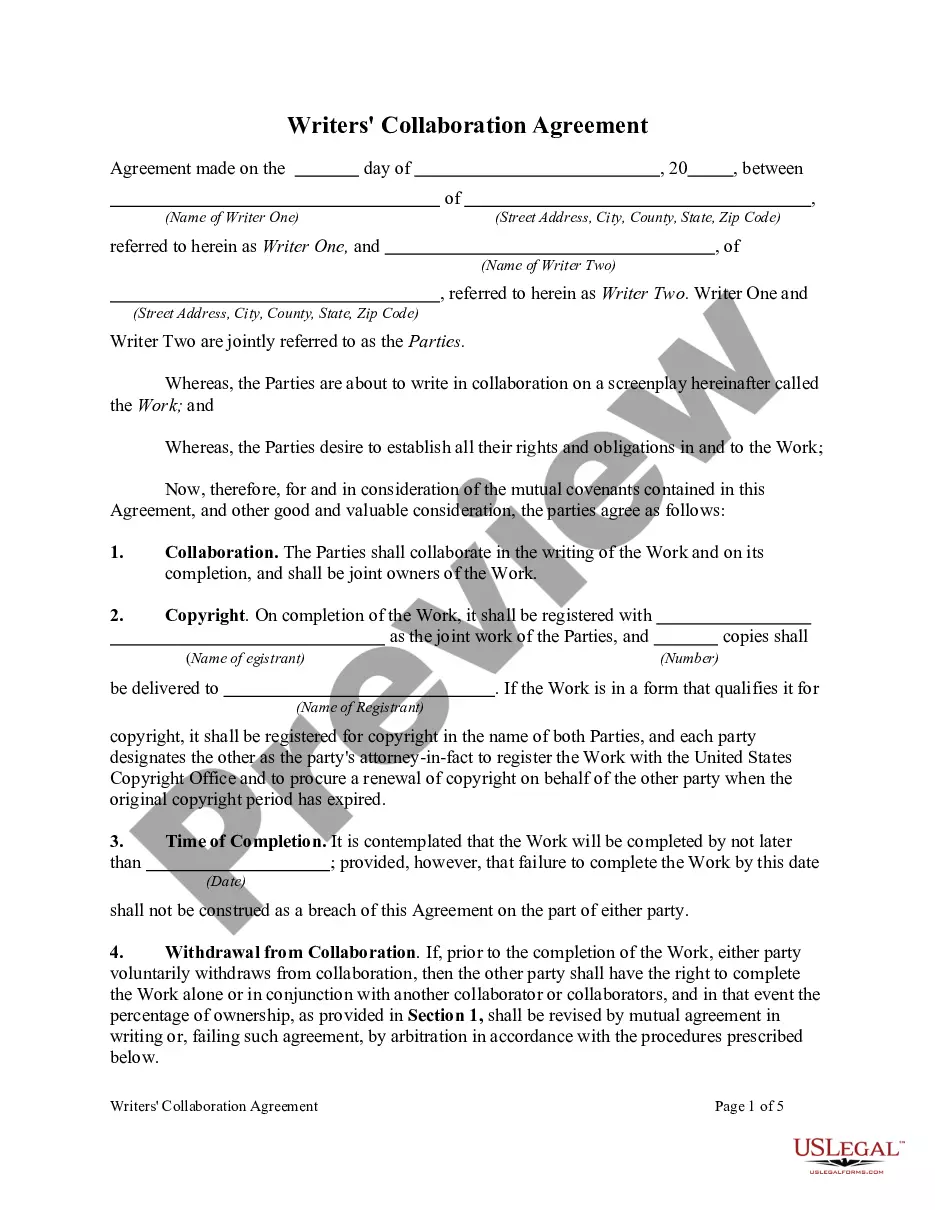

How to fill out Agreement For Sale Of All Assets Of A Corporation With Allocation Of Purchase Price To Tangible And Intangible Business Assets?
Finding the appropriate legal documents template can be a challenge.
Indeed, there are numerous templates accessible online, but how can you obtain the legal form you require? Utilize the US Legal Forms website.
The platform offers a vast array of templates, such as the South Carolina Agreement for Sale of all Assets of a Corporation with Allocation of Purchase Price to Tangible and Intangible Business Assets, which can be utilized for both business and personal purposes.
If the form does not meet your needs, use the Search box to find the right form. Once you are convinced that the form is suitable, click the Get now button to access the form. Select the pricing plan you need and enter the required information. Create your account and pay for the order using your PayPal account or credit card. Choose the file format and download the legal document template onto your device. Complete, edit, print, and sign the acquired South Carolina Agreement for Sale of all Assets of a Corporation with Allocation of Purchase Price to Tangible and Intangible Business Assets. US Legal Forms is the largest library of legal forms where you can find a variety of document templates. Utilize the service to download professionally-crafted documents that adhere to state requirements.
- All of the forms are verified by professionals and comply with federal and state regulations.
- If you are already registered, Log In to your account and click the Acquire button to find the South Carolina Agreement for Sale of all Assets of a Corporation with Allocation of Purchase Price to Tangible and Intangible Business Assets.
- Use your account to search through the legal forms you have previously obtained.
- Go to the My documents section of your account and download another copy of the document you require.
- If you are a new user of US Legal Forms, here are some simple instructions you should follow.
- First, make sure you have selected the correct form for your region/state. You can review the form using the Review option and examine the form outline to confirm it is appropriate for you.
Form popularity
FAQ
A South Carolina Agreement for Sale of all Assets of a Corporation with Allocation of Purchase Price to Tangible and Intangible Business Assets must include specific details such as the names of the buyer and seller, a description of the assets being sold, and the total purchase price. Additionally, it should outline how the purchase price is allocated between tangible and intangible assets, ensuring clarity and compliance. This agreement must also address any liabilities, terms of payment, and the closing date. Utilizing a reliable platform like uslegalforms can help you create a comprehensive agreement tailored to your needs.
The South Carolina Agreement for Sale of all Assets of a Corporation with Allocation of Purchase Price to Tangible and Intangible Business Assets, often referred to as an Asset Purchase Agreement (APA), differs significantly from a Stock Purchase Agreement (SPA). An APA involves the purchase of individual assets and liabilities, allowing for more precise allocation. In contrast, an SPA entails the purchase of stock in a company, transferring ownership without dissecting individual assets. Understanding these differences can help you choose the right route for your acquisition strategy.
When engaging in a South Carolina Agreement for Sale of all Assets of a Corporation with Allocation of Purchase Price to Tangible and Intangible Business Assets, it is essential to consider tax implications. Generally, asset acquisitions can lead to different tax responsibilities compared to stock purchases. You might face immediate tax liabilities on the sale and depreciation benefits on tangible assets. Consulting a tax professional can help you navigate these complexities to optimize your financial outcome.
Typically, it is a three-step process:Determining the purchase price (total consideration paid)Identifying the correct assets acquired and liabilities assumed.Calculating the fair market value of those assets and liabilities.
Writing a real estate purchase agreement.Identify the address of the property being purchased, including all required legal descriptions.Identify the names and addresses of both the buyer and the seller.Detail the price of the property and the terms of the purchase.Set the closing date and closing costs.More items...
In a non-stock sale, the usual principle is that the purchase price of the company's assets should be allocated based on fair market value. The buyer and the seller will negotiate the allocation of purchase price for these assets so that neither party is disadvantaged by the sale.
In an asset sale, sellers are subject to potentially higher taxes than in a stock sale. While intangible assets, such as goodwill, are taxed at capital gains rates, other hard assets may be taxed at higher ordinary income tax rates. Currently, federal capital gains rates are around 20%, while state rates vary.
The steps involved in completing a PPA include:Identify the acquirer. Confirm the acquisition date. Confirm the cost of the acquisition. Identify all assets (both tangible and intangible) acquired and liabilities assumed (including contingent liabilities).
Typically, it is a three-step process:Determining the purchase price (total consideration paid)Identifying the correct assets acquired and liabilities assumed.Calculating the fair market value of those assets and liabilities.
Your sale and purchase agreement should include the following:Your name(s) and the names of the seller(s).The address of the property.The type of title (for example, freehold or leasehold).The price.Any deposit you must pay.Any chattels being sold with the property (for example, whiteware or curtains).More items...