South Carolina Weed Spraying Agreement
Description
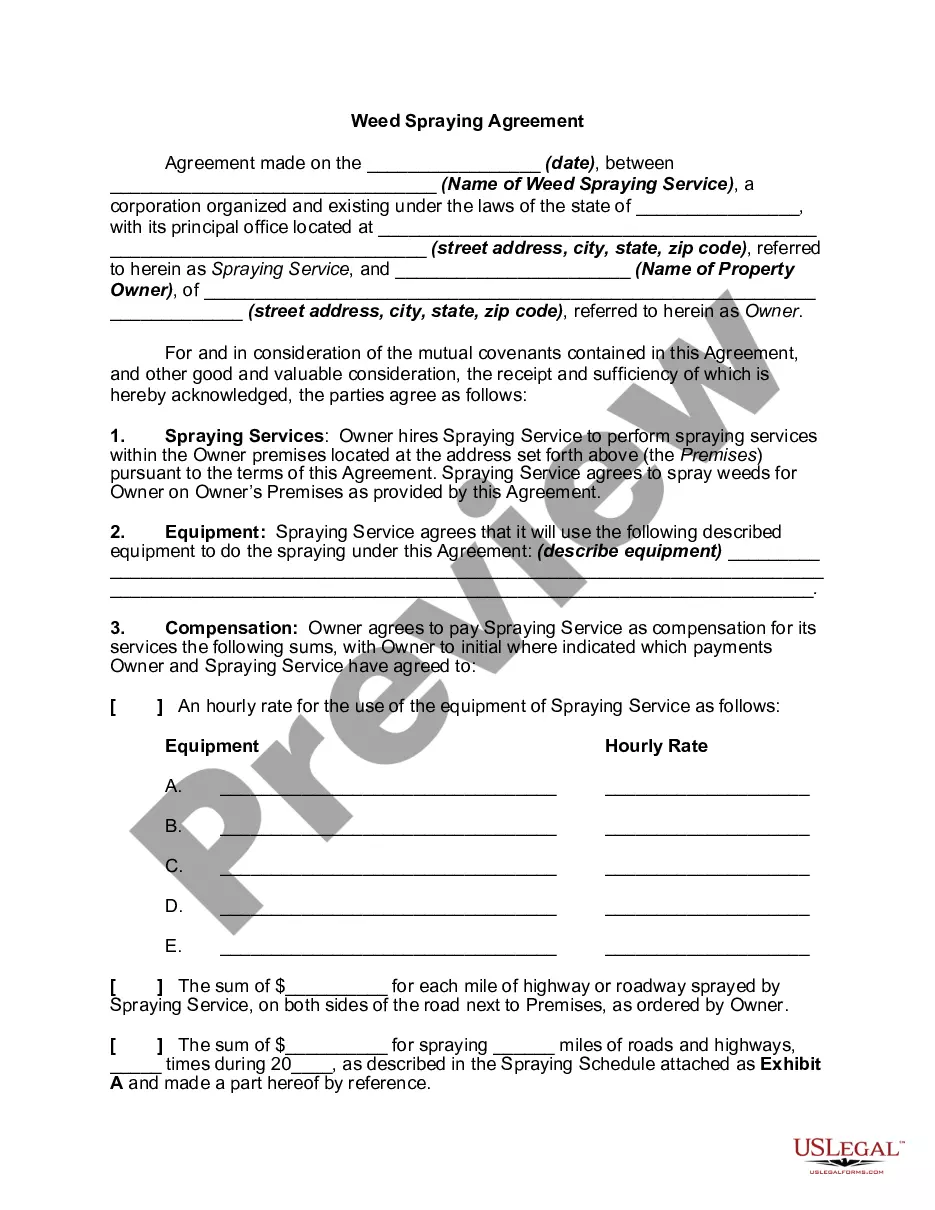
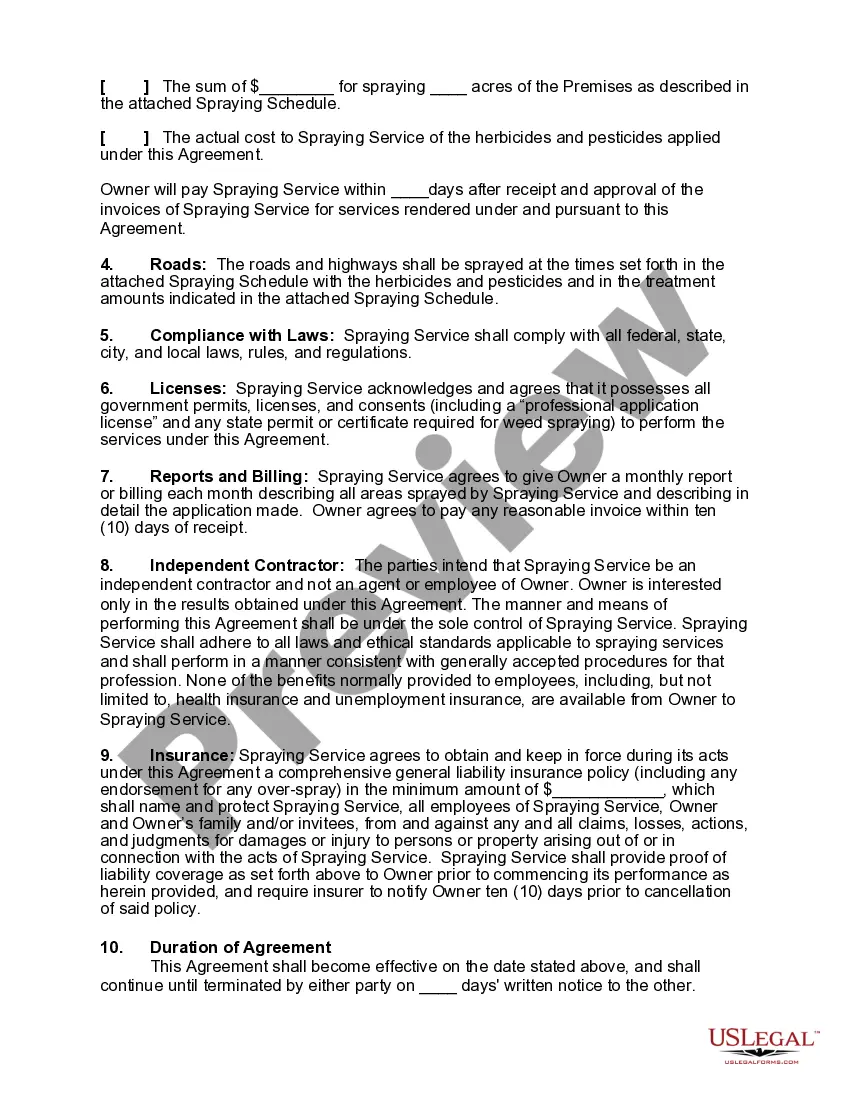
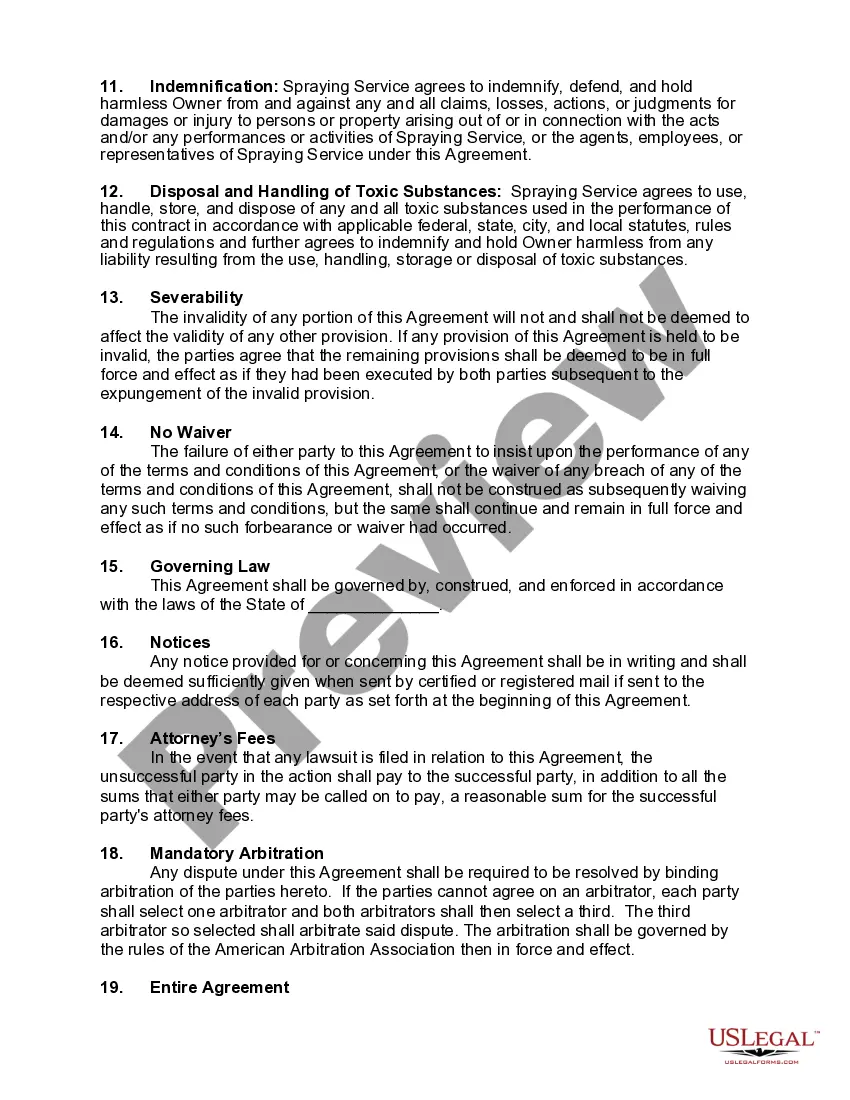
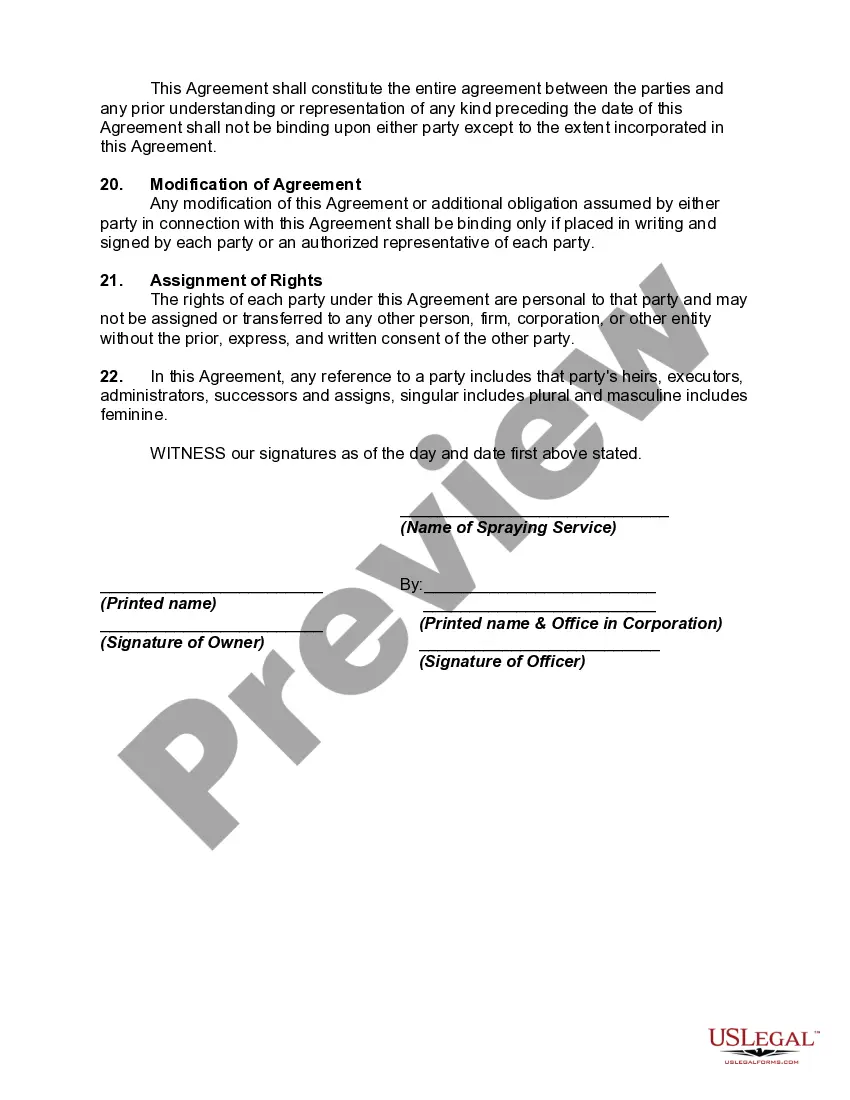
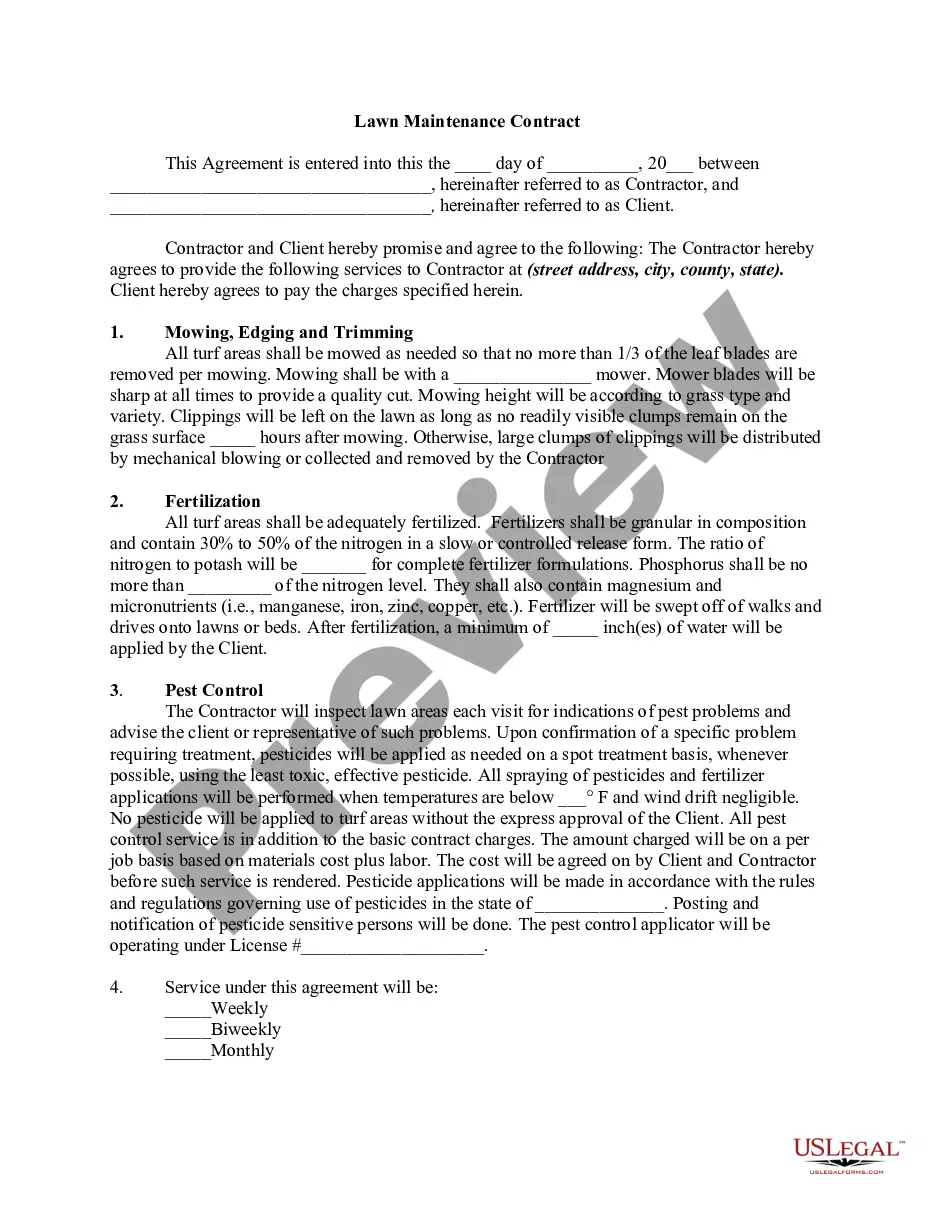
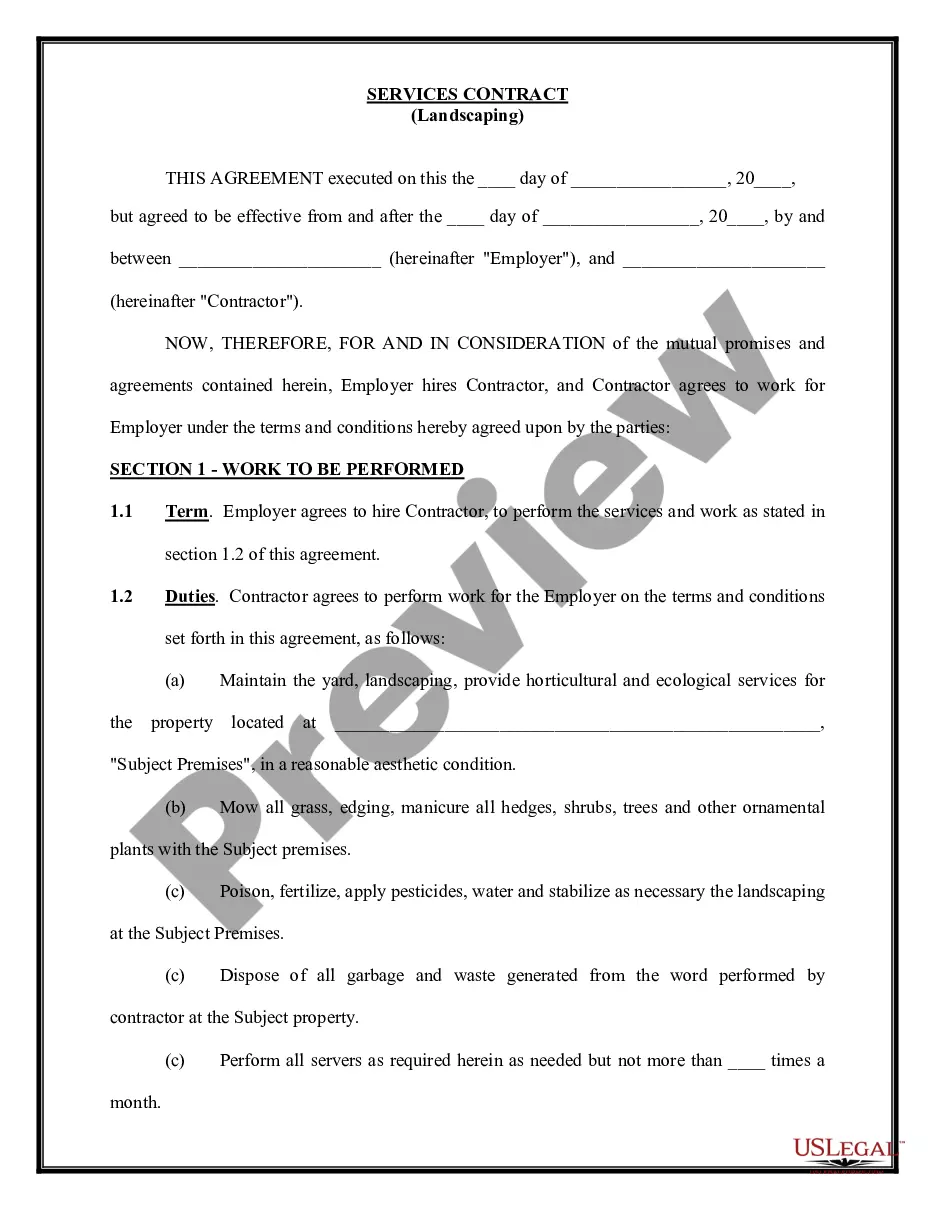
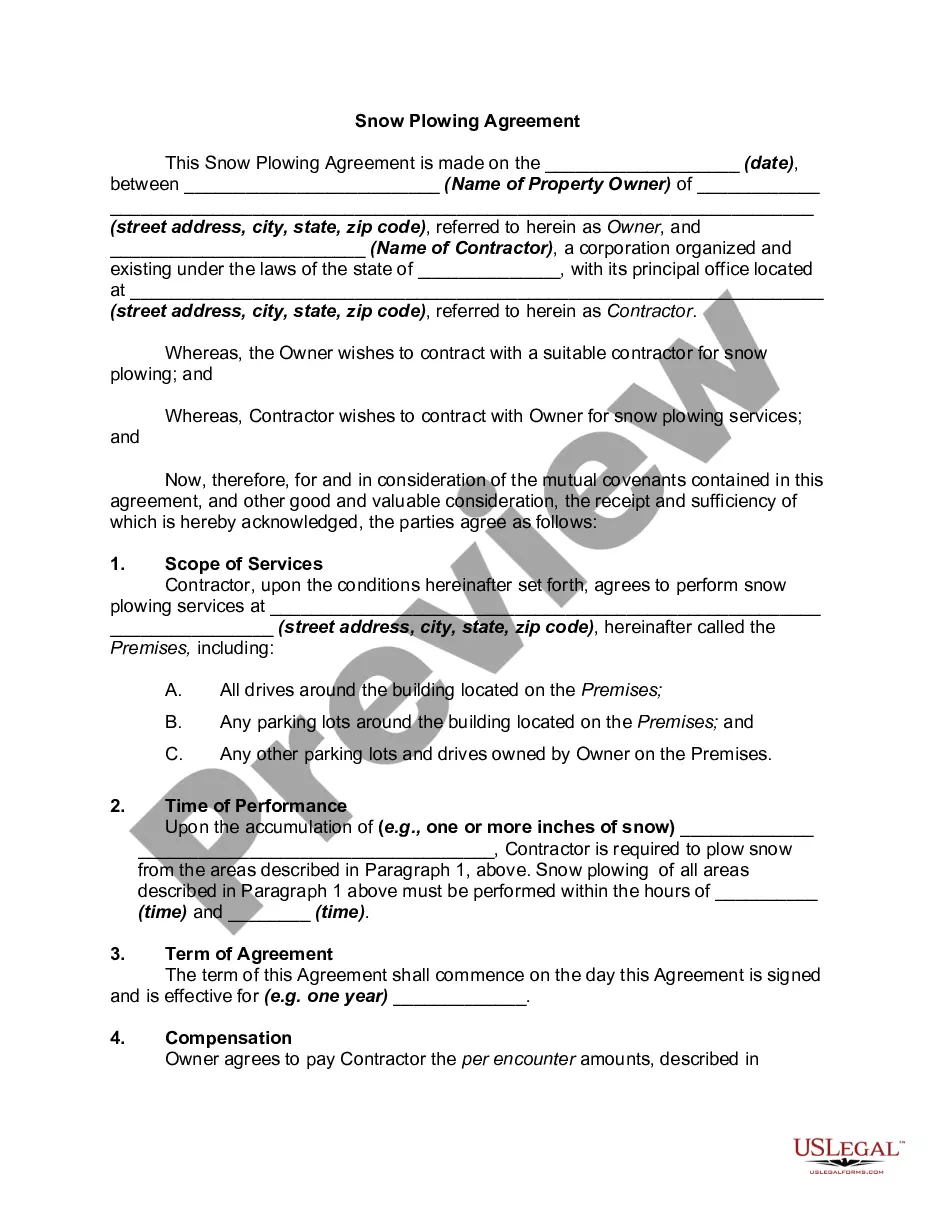
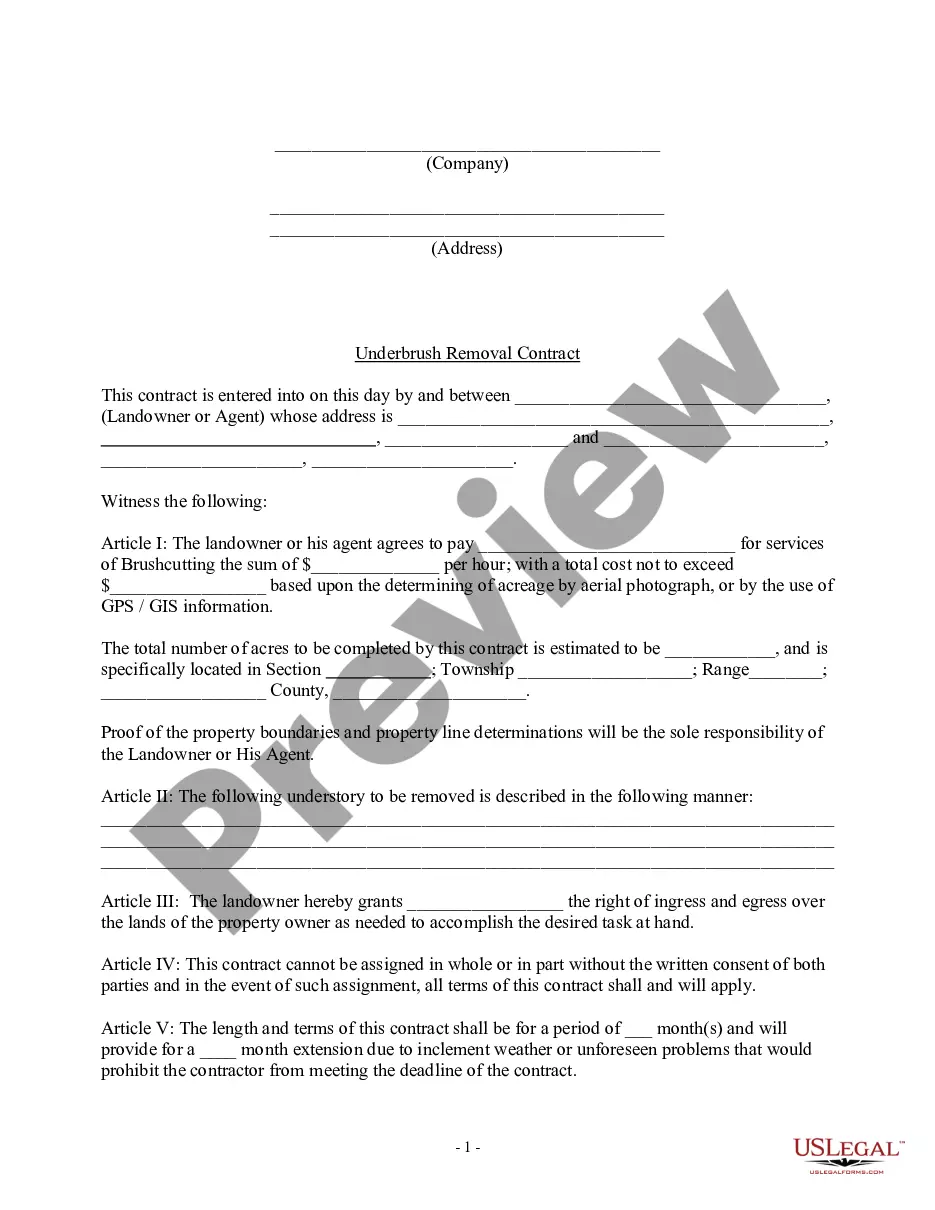






How to fill out Weed Spraying Agreement?
Locating the appropriate legal document template can be a challenge.
Certainly, there are numerous templates available online, but how can you acquire the legal form you need.
Utilize the US Legal Forms website. The service offers a vast selection of templates, including the South Carolina Weed Spraying Agreement, which you can use for business and personal purposes.
You can preview the form using the Preview button and read the description to confirm it is the right one for you. If the form does not meet your needs, use the Search section to find the appropriate form.
- All of the forms are vetted by experts and comply with federal and state regulations.
- If you are currently registered, Log In to your account and click on the Download button to obtain the South Carolina Weed Spraying Agreement.
- Use your account to browse through the legal forms you have previously acquired.
- Visit the My documents tab of your account and retrieve another copy of the document you need.
- If you are a new user of US Legal Forms, here are simple steps for you to follow.
- Firstly, ensure that you have selected the correct form for your city/state.
Form popularity
FAQ
Yes, in South Carolina, you generally need a license to spray herbicides commercially. This requirement helps ensure that individuals applying these chemicals understand the regulations and safety protocols involved. Private individuals applying herbicides on their own property may not need a license, but it's wise to check local regulations. Using a South Carolina Weed Spraying Agreement can also clarify your responsibilities and ensure proper application.
Deciding whether to pull weeds or spray them depends on the situation and type of weeds you are dealing with. Pulling weeds can be effective for smaller patches and allows you to remove the entire root system, but it can be labor-intensive. On the other hand, using herbicide can cover larger areas more quickly and may be more efficient for dealing with extensive infestations. A well-documented South Carolina Weed Spraying Agreement can help guide your herbicide application effectively.
Applying herbicide correctly is crucial for effective weed control and safety. Begin by reading the label on the herbicide product for specific instructions regarding dilution rates, application methods, and weather conditions. Always wear protective gear and ensure that you target the specific weeds while minimizing contact with desirable plants. For a formal agreement to ensure compliance, consider using a South Carolina Weed Spraying Agreement.
The United States Department of Agriculture (USDA) plays a supportive role in regulating pesticides but does not directly regulate their use. Instead, the USDA focuses on agricultural practices, including the promotion of safe pesticide usage in farming. For those considering a South Carolina Weed Spraying Agreement, understanding the relationship between the USDA and state regulations is crucial for compliance.
Several government agencies take part in pesticide regulation. The EPA at the federal level, the South Carolina Department of Pesticide Regulation at the state level, and even local health and environmental departments contribute to oversight. A South Carolina Weed Spraying Agreement helps clarify these regulations, allowing you to navigate compliance requirements more easily.
Control of pesticides is a shared responsibility involving federal, state, and local agencies, as well as pesticide applicators. Each party plays a role in ensuring safe and effective use. When you enter into a South Carolina Weed Spraying Agreement, you align with these legal obligations, promoting responsible pesticide management.
South Carolina laws regarding pesticides aim to protect the environment and safeguard public health. These laws include requirements for pesticide licensing, labeling, and application methods. A South Carolina Weed Spraying Agreement should reflect compliance with these laws, ensuring all practices meet the established standards set forth by local and federal authorities.
The South Carolina Department of Pesticide Regulation (DPR) oversees pesticide usage in the state. They enforce laws that govern the sale, distribution, and application of pesticides. If you enter into a South Carolina Weed Spraying Agreement, you can feel secure knowing that the DPR mandates compliance with state laws for safe pesticide application.
In the United States, pesticides are primarily regulated by the Environmental Protection Agency (EPA). They set the standards for pesticide usage and safety. In South Carolina, compliance with these federal regulations is essential for any South Carolina Weed Spraying Agreement. Using certified pesticide applicators ensures adherence to these regulations and protects both public health and the environment.
Starting a pest control business in South Carolina requires thorough planning and compliance with regulations. First, you must secure a South Carolina Weed Spraying Agreement to understand the legal requirements for spraying herbicides. Next, develop a business plan, obtain the necessary licenses, and ensure that you have trained personnel. US Legal Forms can assist you in obtaining the required documents to ensure a smooth startup process.