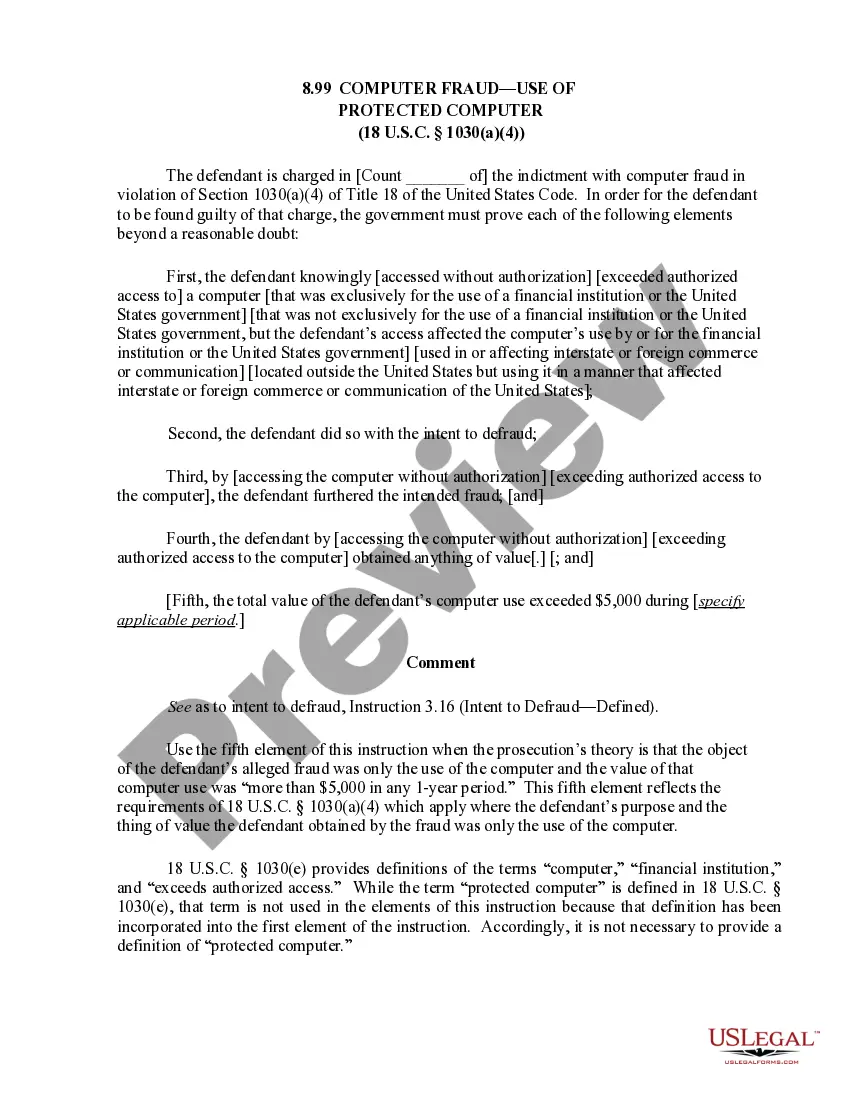
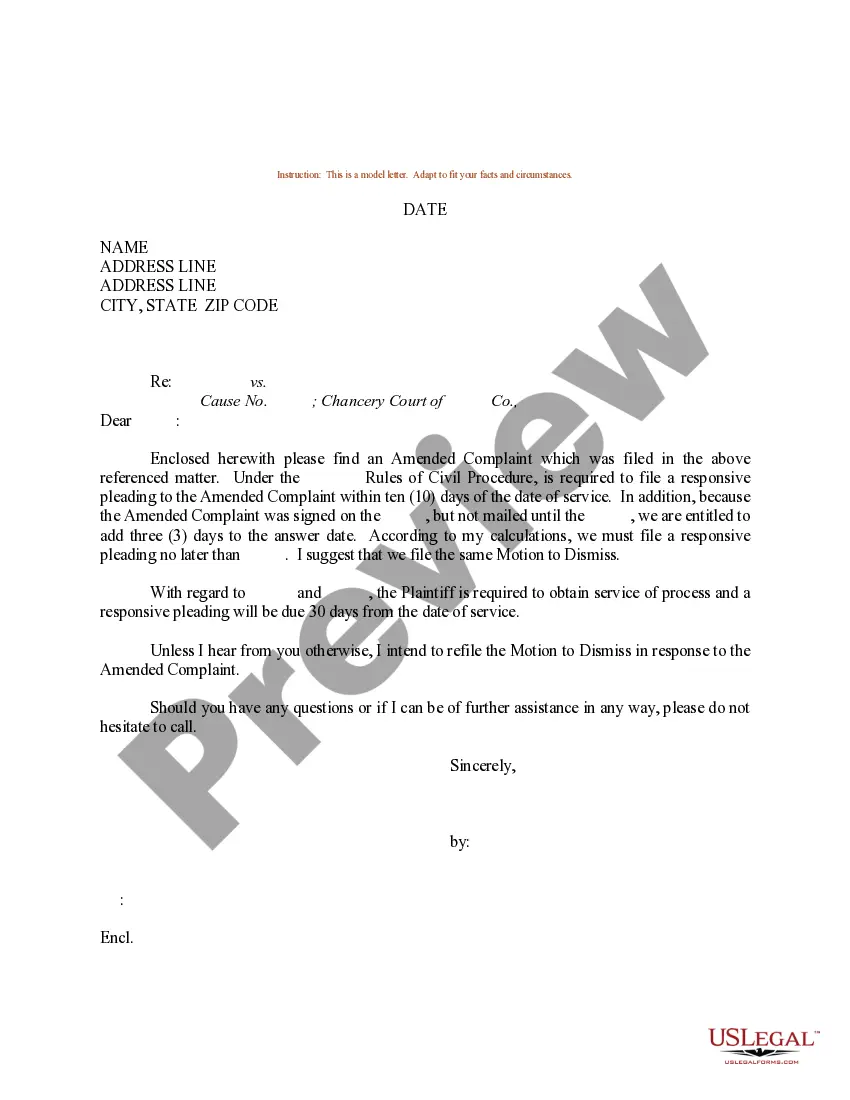
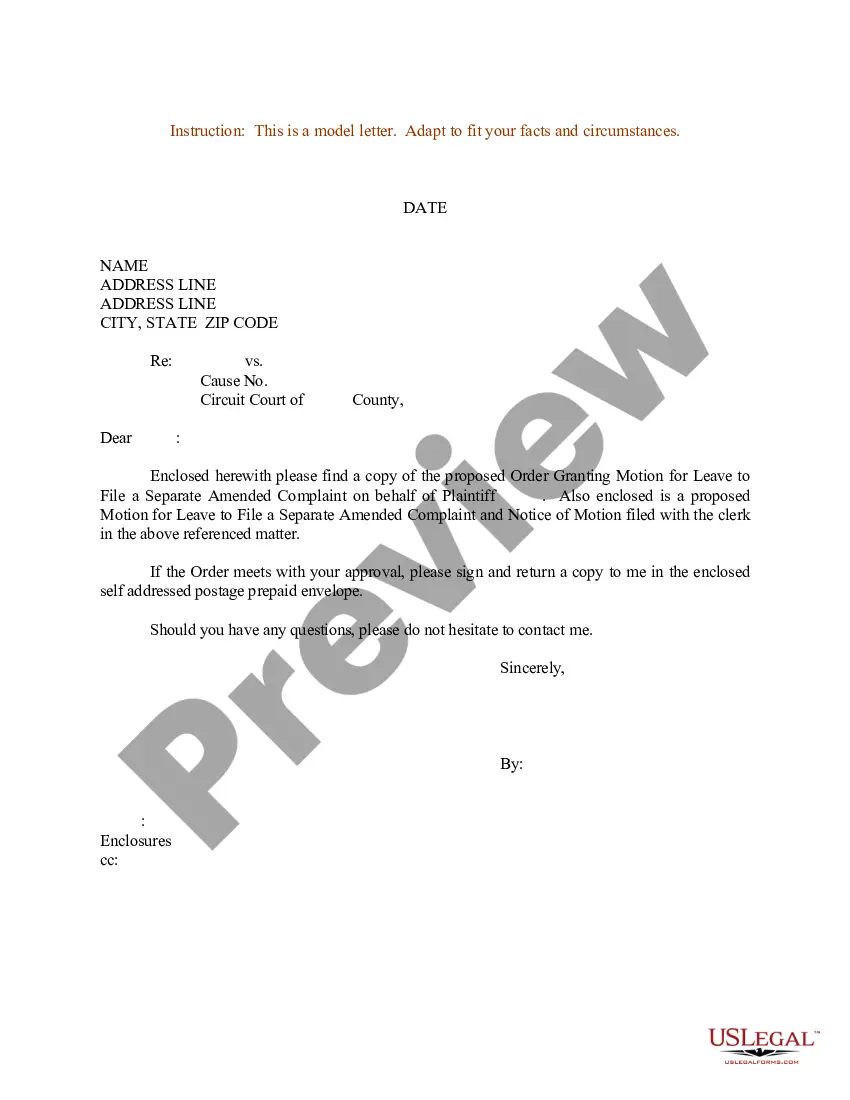
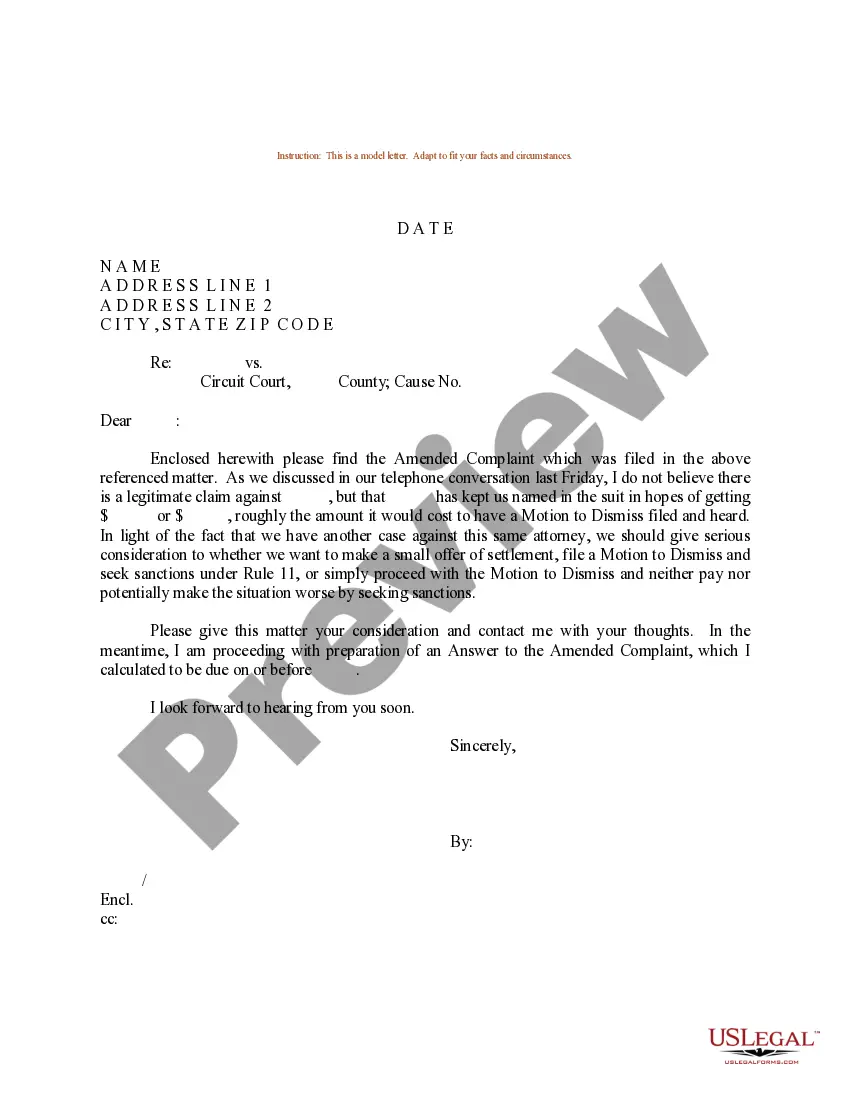
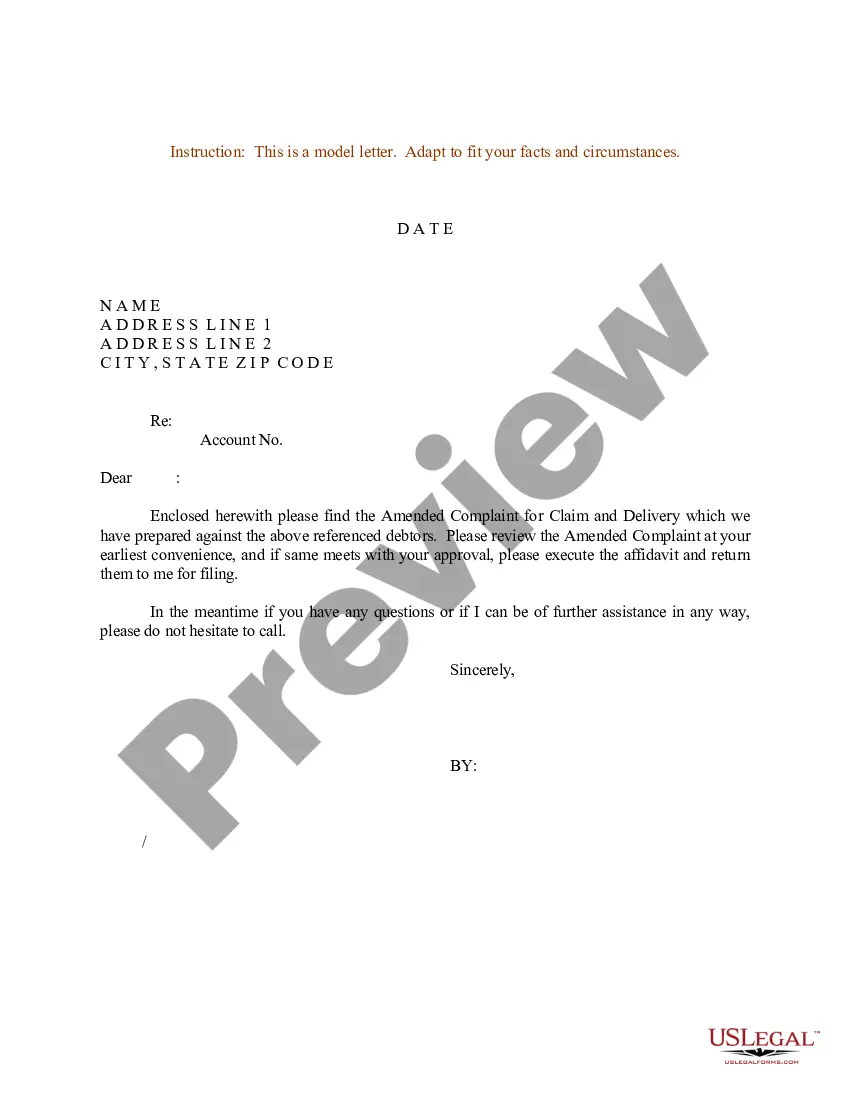
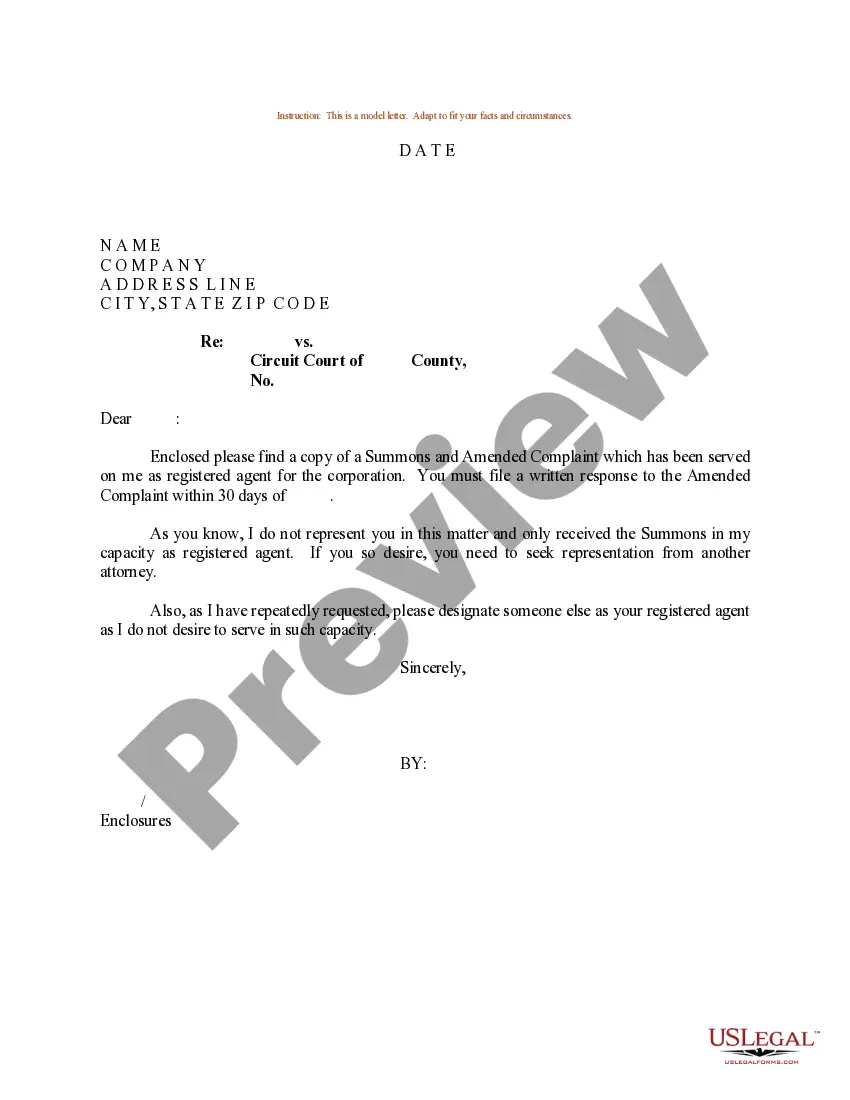
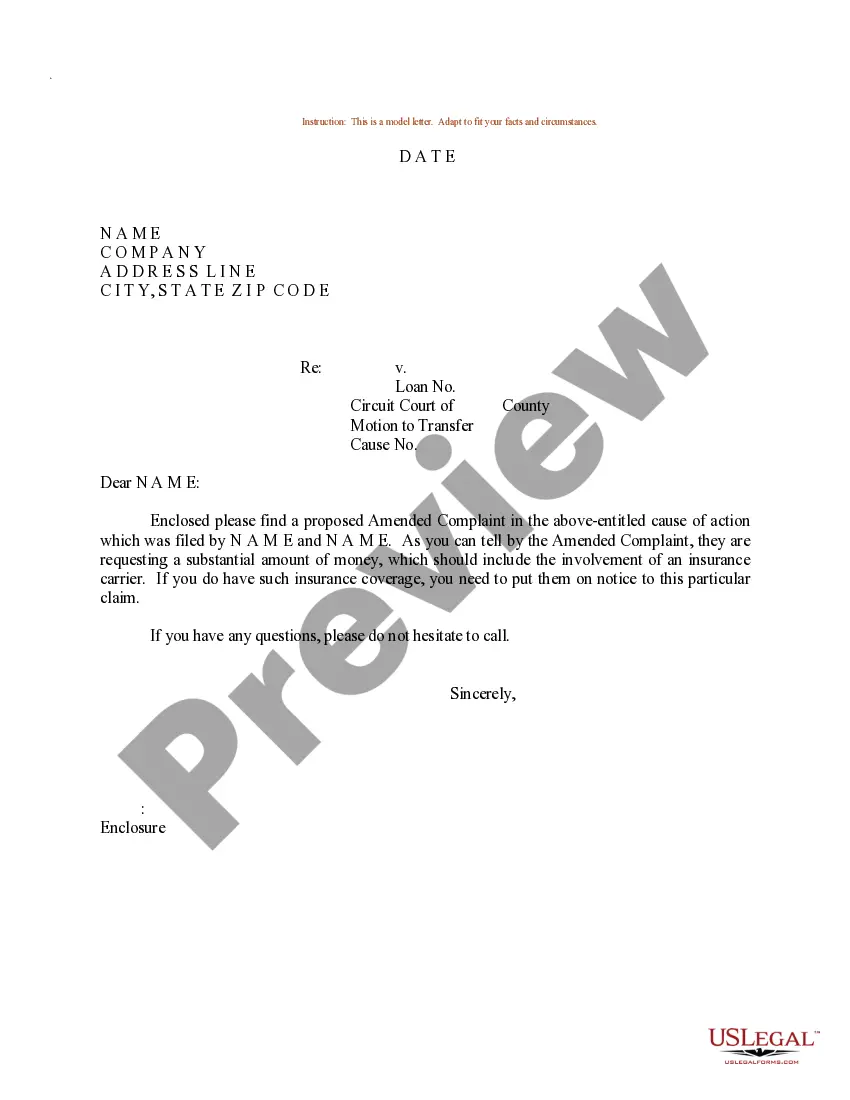
South Carolina Sample Letter to Include Amended Complaint
Description
Get your form ready online
Our built-in tools help you complete, sign, share, and store your documents in one place.
Make edits, fill in missing information, and update formatting in US Legal Forms—just like you would in MS Word.
Download a copy, print it, send it by email, or mail it via USPS—whatever works best for your next step.
Sign and collect signatures with our SignNow integration. Send to multiple recipients, set reminders, and more. Go Premium to unlock E-Sign.
If this form requires notarization, complete it online through a secure video call—no need to meet a notary in person or wait for an appointment.
We protect your documents and personal data by following strict security and privacy standards.

Make edits, fill in missing information, and update formatting in US Legal Forms—just like you would in MS Word.

Download a copy, print it, send it by email, or mail it via USPS—whatever works best for your next step.

Sign and collect signatures with our SignNow integration. Send to multiple recipients, set reminders, and more. Go Premium to unlock E-Sign.

If this form requires notarization, complete it online through a secure video call—no need to meet a notary in person or wait for an appointment.

We protect your documents and personal data by following strict security and privacy standards.
Looking for another form?



How to fill out Sample Letter To Include Amended Complaint?
It is feasible to spend numerous hours online looking for the official document template that meets the state and federal requirements you need.
US Legal Forms offers a vast array of legal forms that can be reviewed by professionals.
You can easily acquire or create the South Carolina Sample Letter to Include Amended Complaint from the services.
If available, use the Preview button to look through the document template as well.
- If you already have a US Legal Forms account, you can sign in and click the Download button.
- Afterward, you can complete, modify, print, or sign the South Carolina Sample Letter to Include Amended Complaint.
- Every legal document template you obtain is yours permanently.
- To get another copy of any purchased form, visit the My documents tab and click the corresponding button.
- If you are using the US Legal Forms site for the first time, follow the simple instructions below.
- First, ensure that you have selected the correct document template for your area/town that you choose.
- Check the form description to ensure you have selected the appropriate form.
Form popularity
FAQ
This important Rule 12(b) enables a party to: (1) raise by motion or answer all of the defenses now raised by demurrer, and (2) eliminates the necessity of the awkward "special appearance to object to jurisdiction" under present State practice.
Rule 12(b)(6) allows a court to dismiss a complaint before the de- velopment of the proceeding. The problem is when and how a Rule 12(b)(6) motion is to be granted.
There are, however, key differences between a Rule 12(b)(6) and a Rule 12(c) motion. First, Rule 12(c) permits any party to file the motion. While a motion under Rule 12(b)(6) is brought by a party against whom a claim is asserted, a motion under Rule 12(c) may be brought by any party.
If an issue arises during trial and the opposing party objects to that issue as being outside of the pleadings, FRCP 15(b)(1) provides that ?the court may permit the pleadings to be amended.? To do so, the court should evaluate whether adding the issue to the pleading would prejudice the opposing party.
FRCP Rule 12(b) pertains to pretrial motions, and 12(b)(6) specifically deals with motions to dismiss for failure to state a claim upon which relief can be granted. As a practical matter, Rule 12(b)(6) motions are rarely successful, and when they are, their success usually has more to do with the judge than the law.
Amendment By Noticed Motion After the expiration of the time to amend as a matter of course, a party may amend its pleading only with the opposing party's written consent or the court's leave. The court should freely give leave when justice so requires. FRCP 15(a).
Rule 15 provides that the court should allow the plaintiff to amend the complaint when justice requires it. Once the defendant receives the amended complaint, they are given the opportunity to send a responsive pleading.
FRCP Rule 12(b) pertains to pretrial motions, and 12(b)(6) specifically deals with motions to dismiss for failure to state a claim upon which relief can be granted. As a practical matter, Rule 12(b)(6) motions are rarely successful, and when they are, their success usually has more to do with the judge than the law.