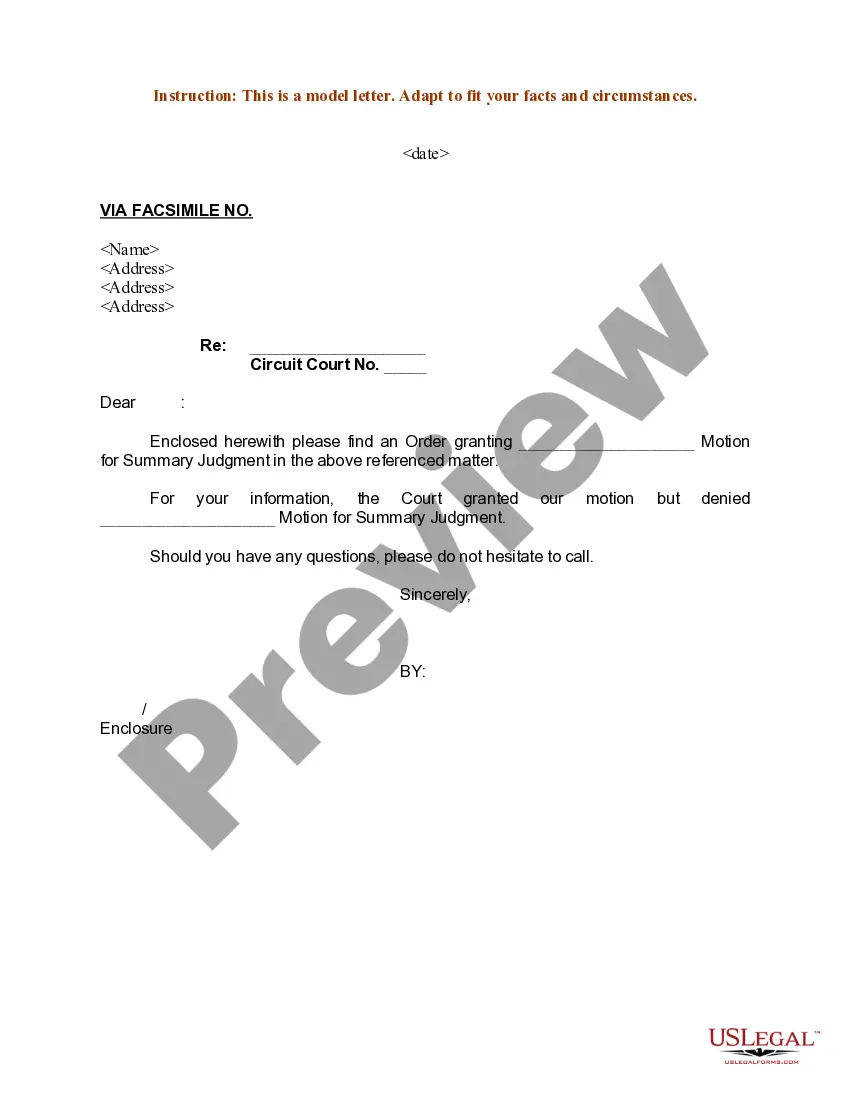
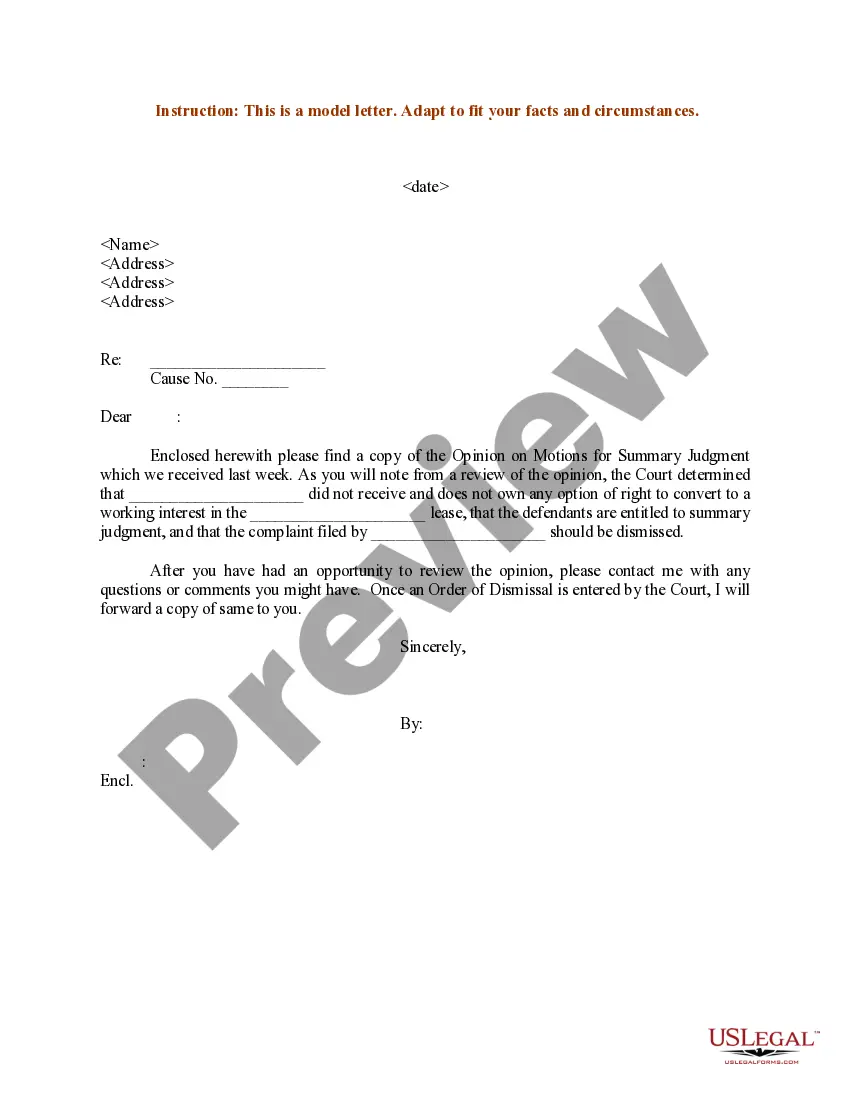
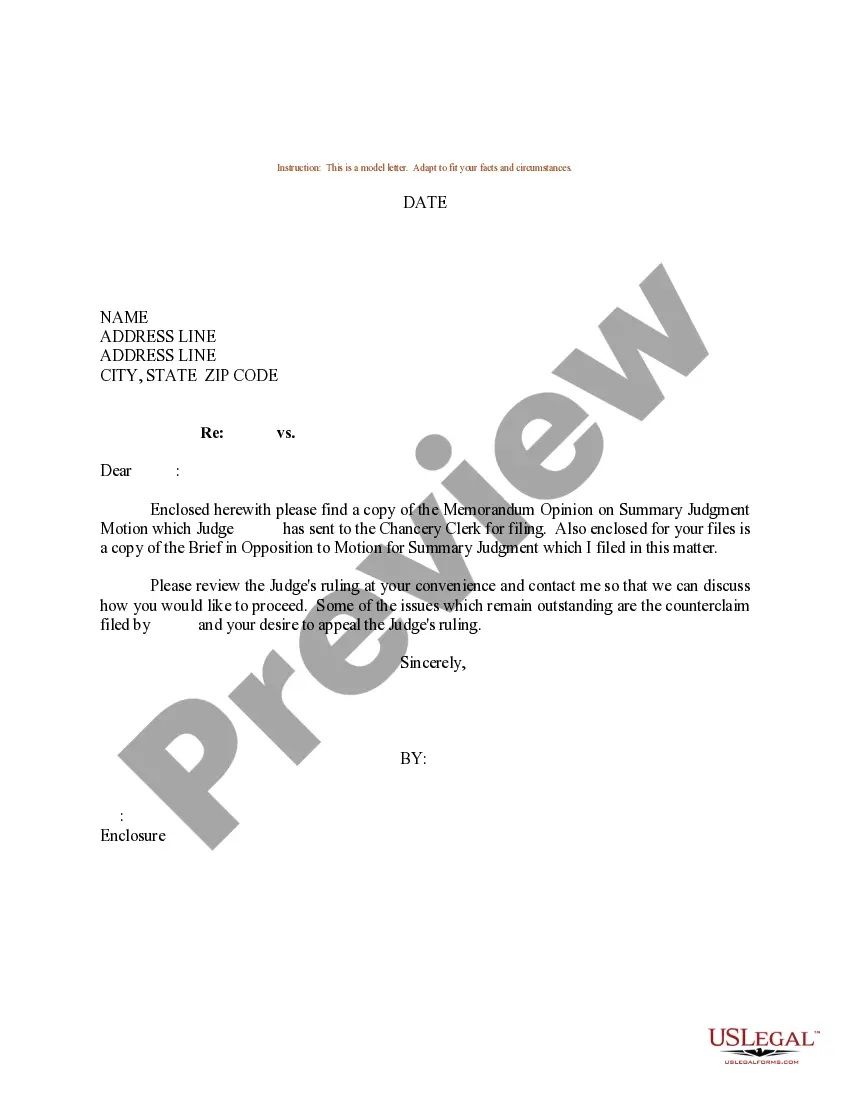
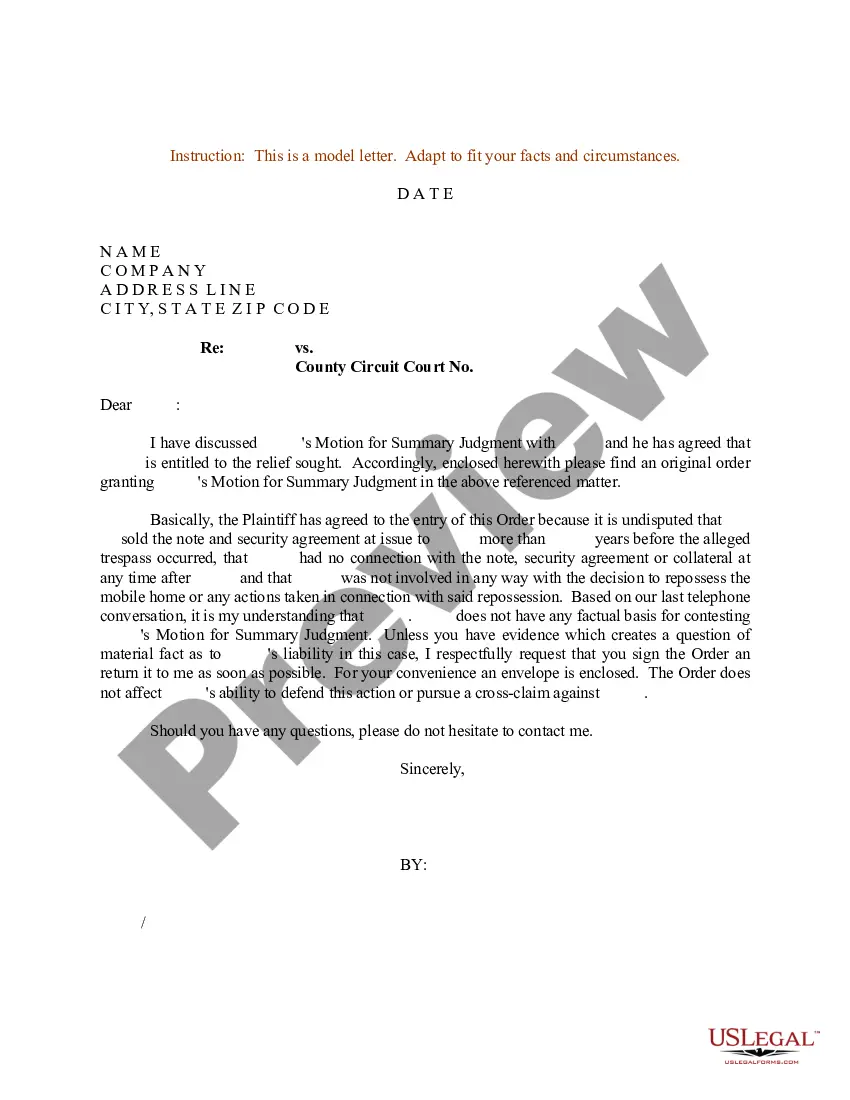
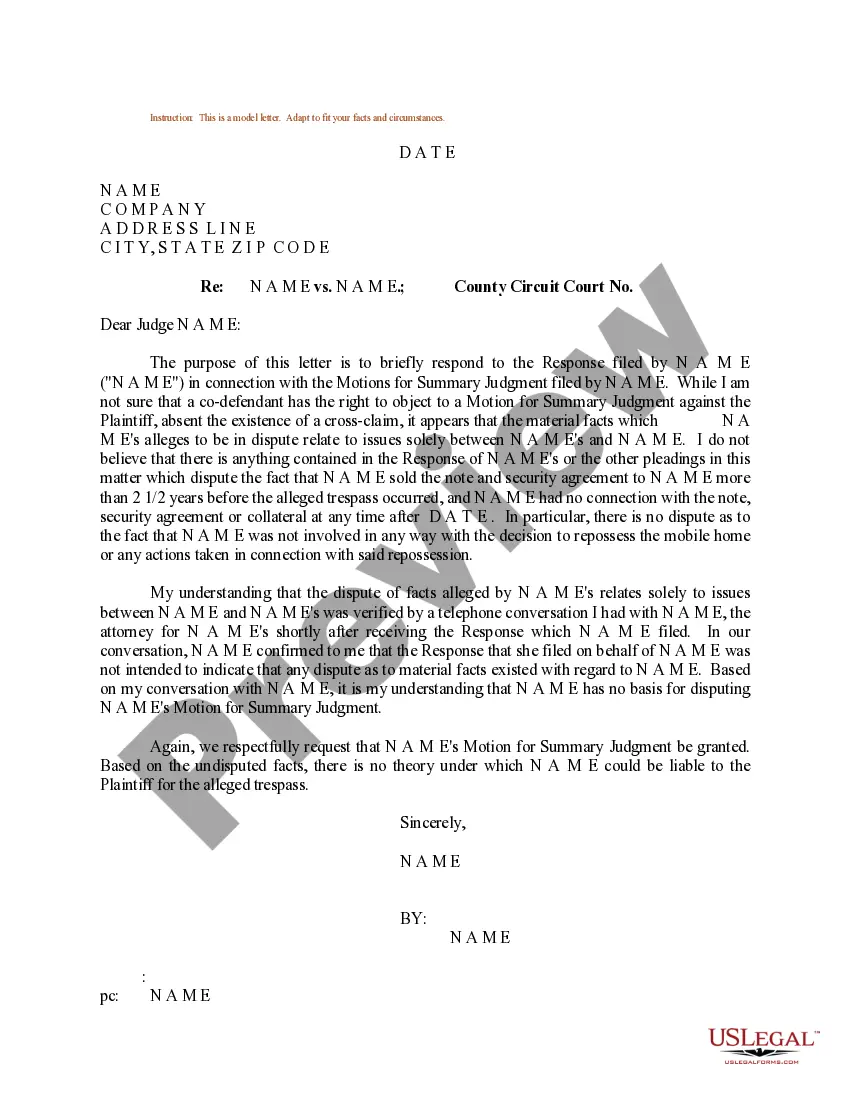
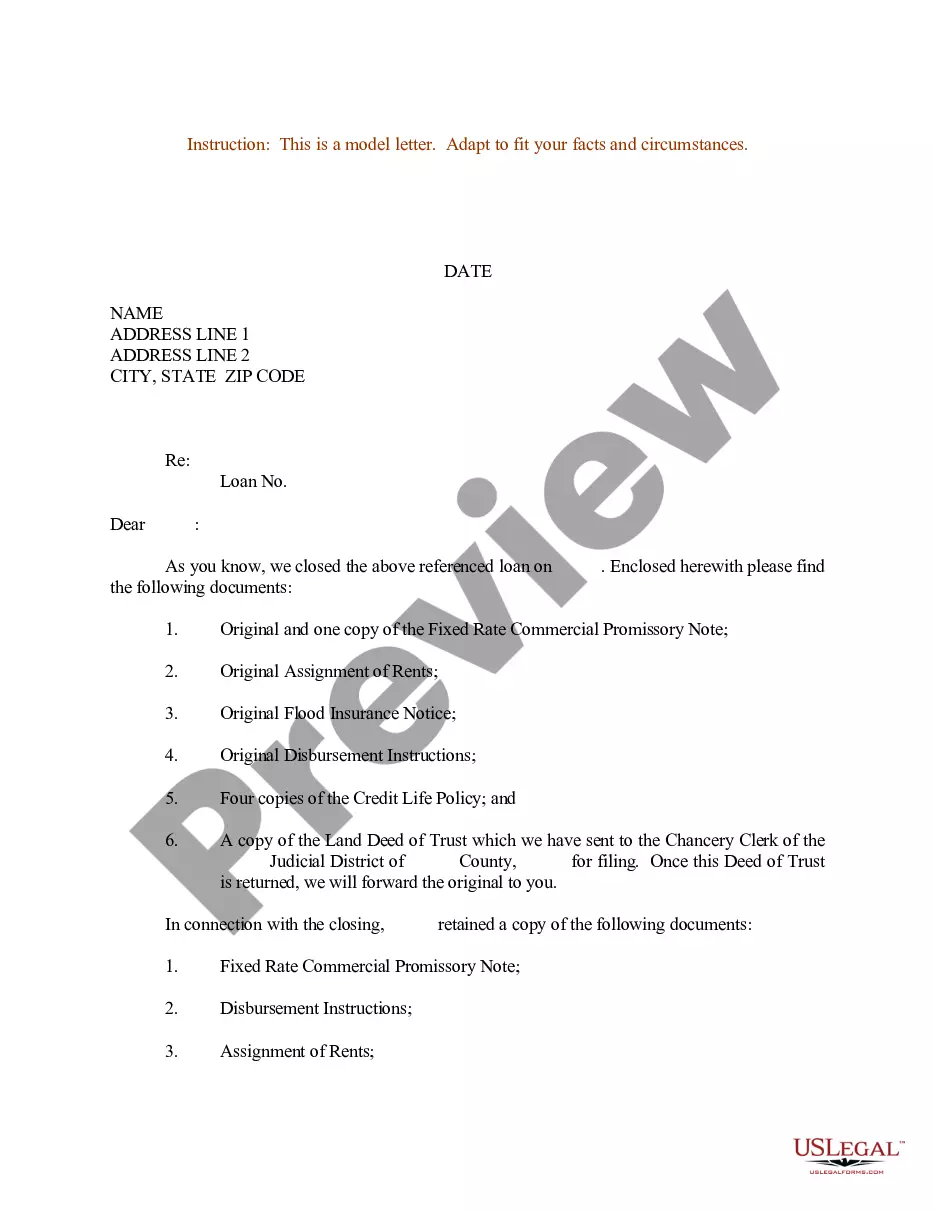
South Carolina Sample Letter for Order Granting Motion for Summary Judgment
Description
Get your form ready online
Our built-in tools help you complete, sign, share, and store your documents in one place.
Make edits, fill in missing information, and update formatting in US Legal Forms—just like you would in MS Word.
Download a copy, print it, send it by email, or mail it via USPS—whatever works best for your next step.
Sign and collect signatures with our SignNow integration. Send to multiple recipients, set reminders, and more. Go Premium to unlock E-Sign.
If this form requires notarization, complete it online through a secure video call—no need to meet a notary in person or wait for an appointment.
We protect your documents and personal data by following strict security and privacy standards.

Make edits, fill in missing information, and update formatting in US Legal Forms—just like you would in MS Word.

Download a copy, print it, send it by email, or mail it via USPS—whatever works best for your next step.

Sign and collect signatures with our SignNow integration. Send to multiple recipients, set reminders, and more. Go Premium to unlock E-Sign.

If this form requires notarization, complete it online through a secure video call—no need to meet a notary in person or wait for an appointment.

We protect your documents and personal data by following strict security and privacy standards.
Looking for another form?

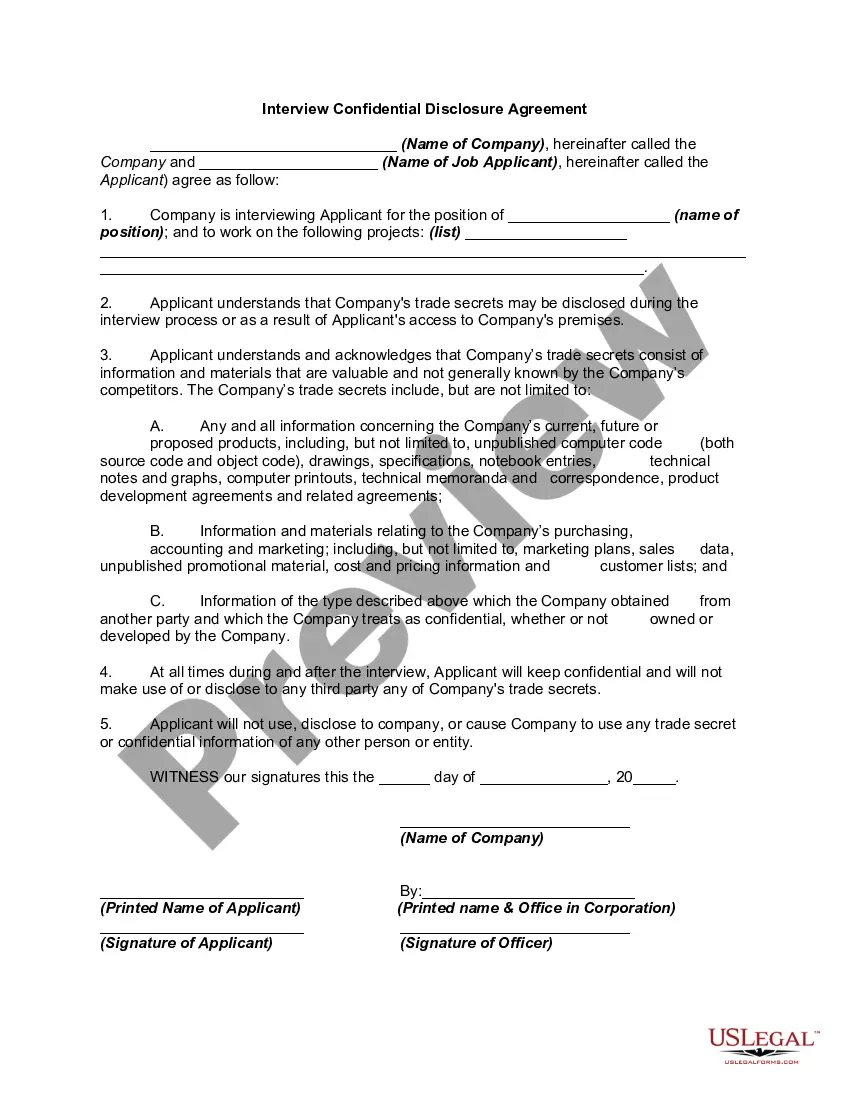


How to fill out Sample Letter For Order Granting Motion For Summary Judgment?
Selecting the optimal legal document template can be challenging. Clearly, there are numerous templates accessible online, but how do you find the legal form you require.
Utilize the US Legal Forms website. The platform offers thousands of templates, including the South Carolina Sample Letter for Order Granting Motion for Summary Judgment, which you can utilize for both business and personal needs. All documents are reviewed by professionals and comply with state and federal regulations.
If you are already registered, Log In to your account and click the Obtain button to download the South Carolina Sample Letter for Order Granting Motion for Summary Judgment. Use your account to browse the legal forms you may have purchased previously. Visit the My documents section of your account and get another copy of the document you require.
Complete, edit, print, and sign the acquired South Carolina Sample Letter for Order Granting Motion for Summary Judgment. US Legal Forms is the largest repository of legal documents where you will find various record templates. Use the service to obtain professionally crafted papers that adhere to state requirements.
- If you are a new user of US Legal Forms, here are simple steps you can follow.
- First, make sure you have selected the correct form for your locality/county. You can review the form using the Preview button and examine the form details to confirm it is the right one for you.
- If the form does not meet your requirements, use the Search field to find the suitable form.
- Once you are certain that the form is appropriate, click the Acquire now button to obtain the form.
- Select the payment plan you want and enter the necessary information. Create your account and complete the transaction using your PayPal account or credit card.
- Choose the file format and download the legal document template for your use.
Form popularity
FAQ
Summary judgment is proper when, after reviewing the motion, supporting affidavits, and the pleadings, there is no genuine issue as to any material fact and the moving party is entitled to judgment as a matter of law.
SCRFC Rule 14 outlines the procedural requirements of a Rule to Show Cause. A petition for a Rule to Show Cause must identify the Order that has been violated and the specific acts performed/not performed by the respondent that violate the Order.
Show that the law does not support judgment on the undisputed facts. Your legal research may reveal case law that shows judgment isn't warranted in your case, even when no facts are in dispute. Show that discovery is incomplete and could raise a disputed material fact when completed.
The chance of success in these cases is less than 10% [1]. Another study found that summary judgment is mostly granted in Title VII cases, for example, cases involving equal pay or employment discrimination [2]. When it comes to federal cases, summary judgments are filed in 17% of total cases.
Rule 56 of the Federal Rules of Civil Procedure governs summary judgment for federal courts. Under Rule 56, in order to succeed in a motion for summary judgment, a movant must show 1) that there is no genuine dispute as to any material fact, and 2) that the movant is entitled to judgment as a matter of law.
Replies should be succinctly stated. If the response to a fact is ?undisputed,? the reply should also state ?undisputed.? If you contend that despite a response of ?disputed,? the non-moving party has failed to raise a genuine dispute of material fact, you should succinctly state why.
In a summary judgment, one party may contend there are no facts that need to be decided, or the parties may agree on what the facts are. Either side (and sometimes both sides) may bring a motion for summary judgment arguing that they are entitled to a judgment in their favor without a trial.