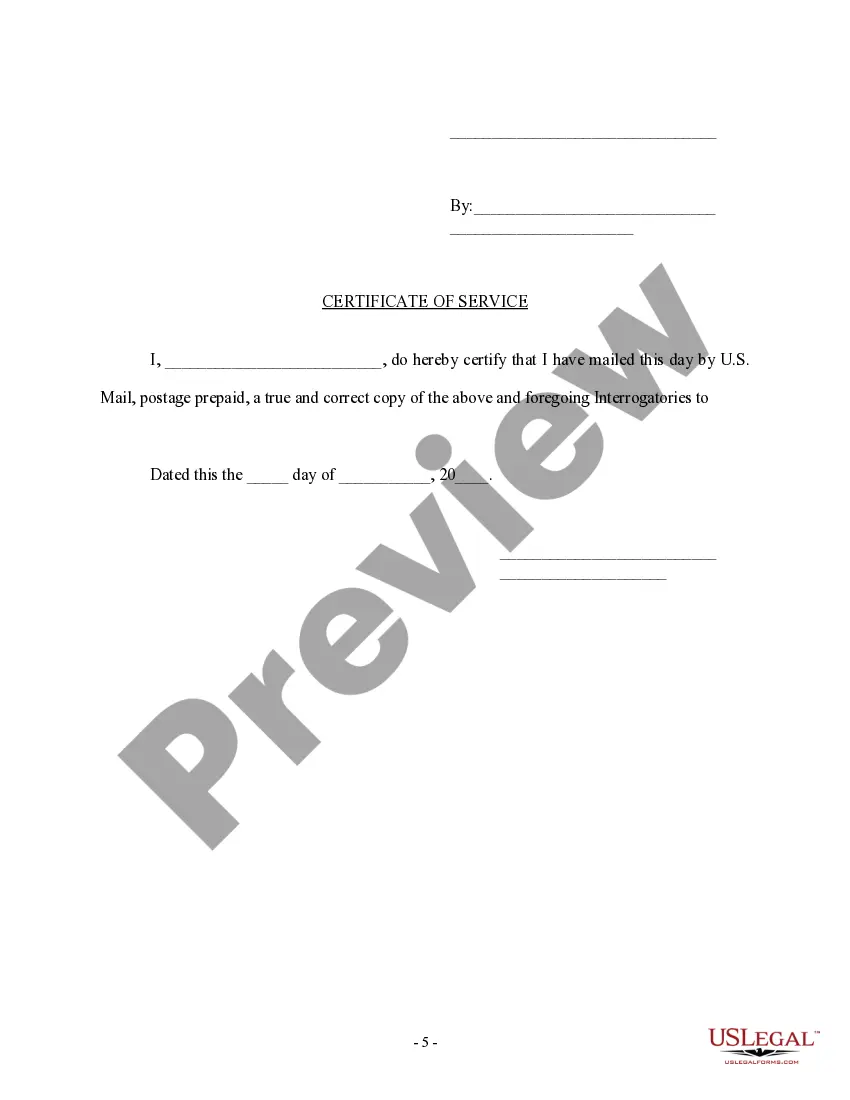
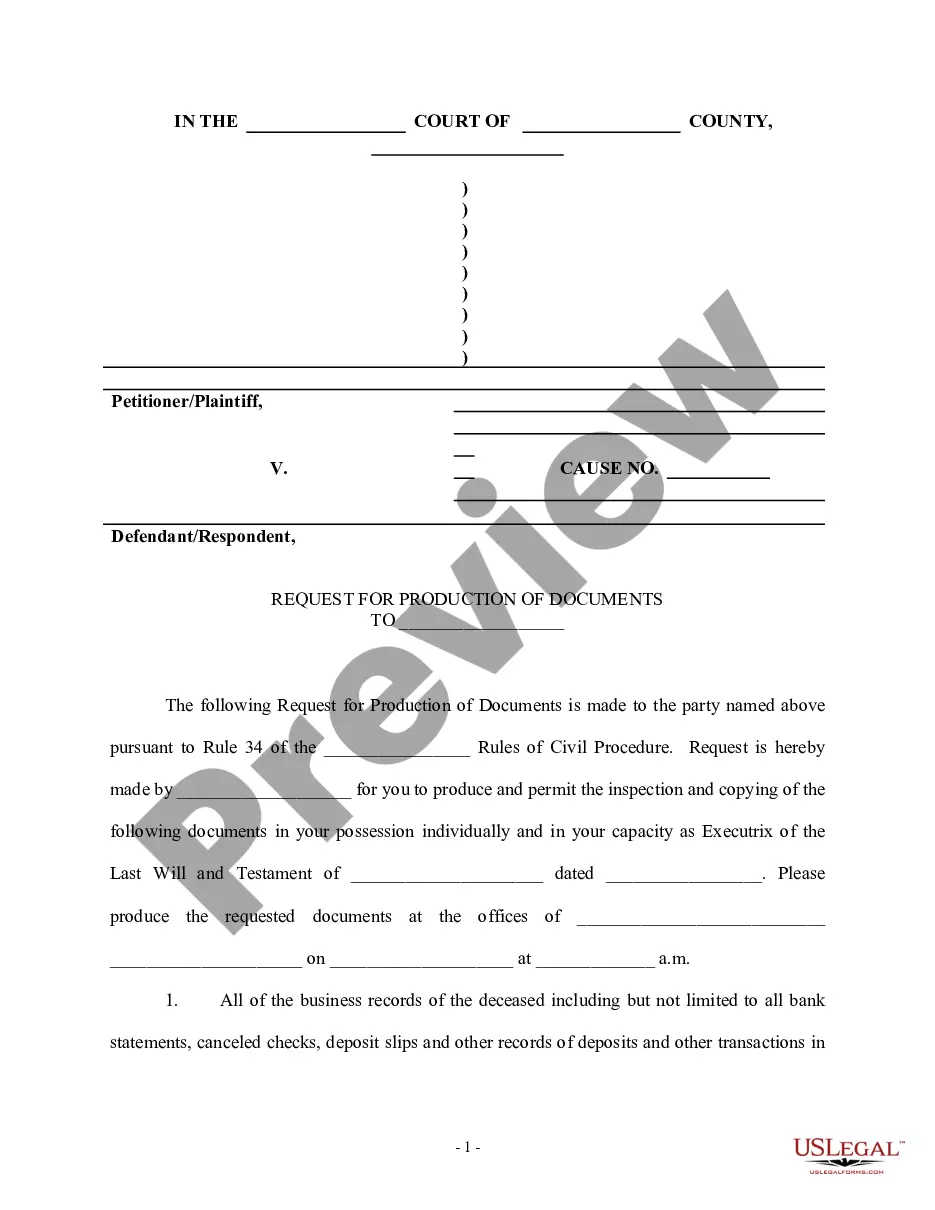
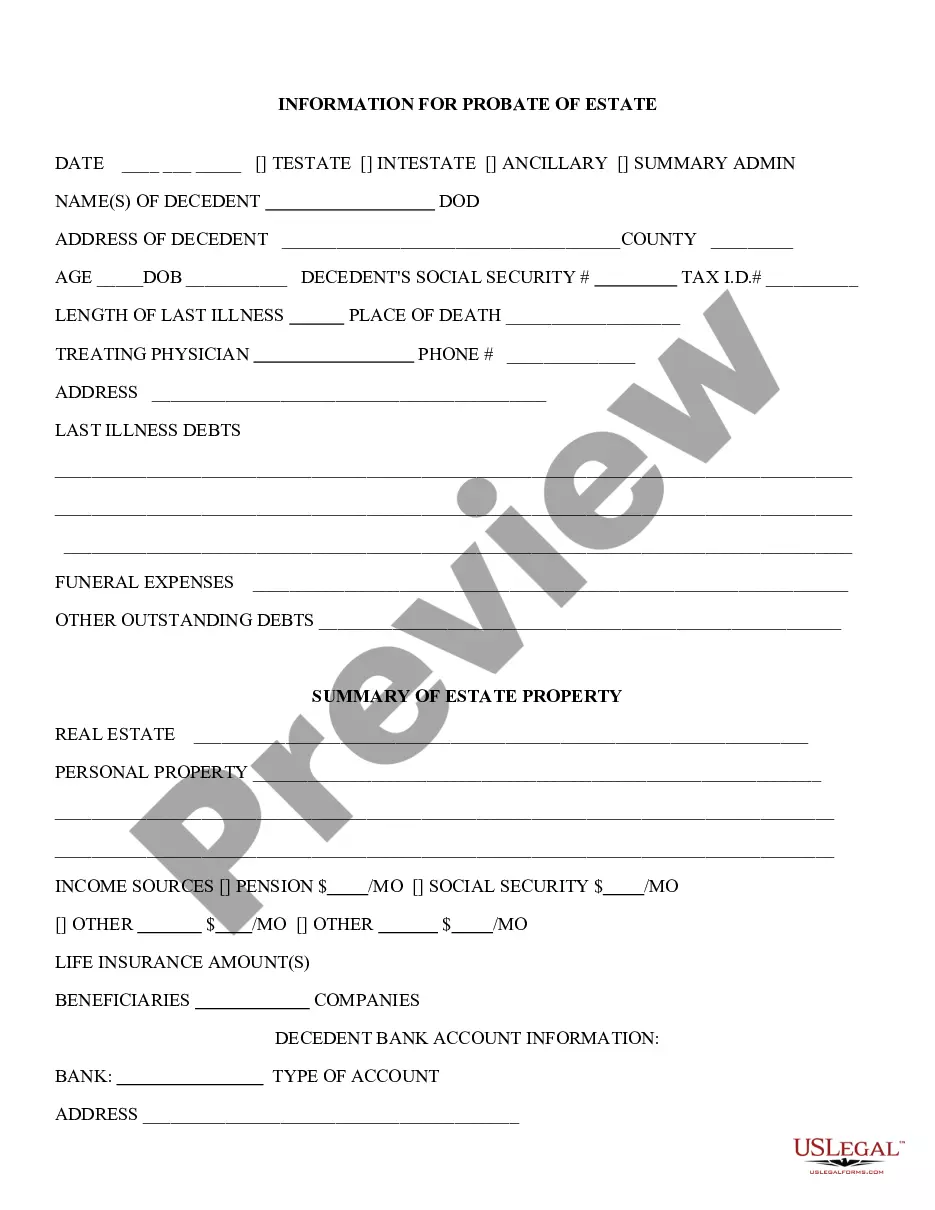
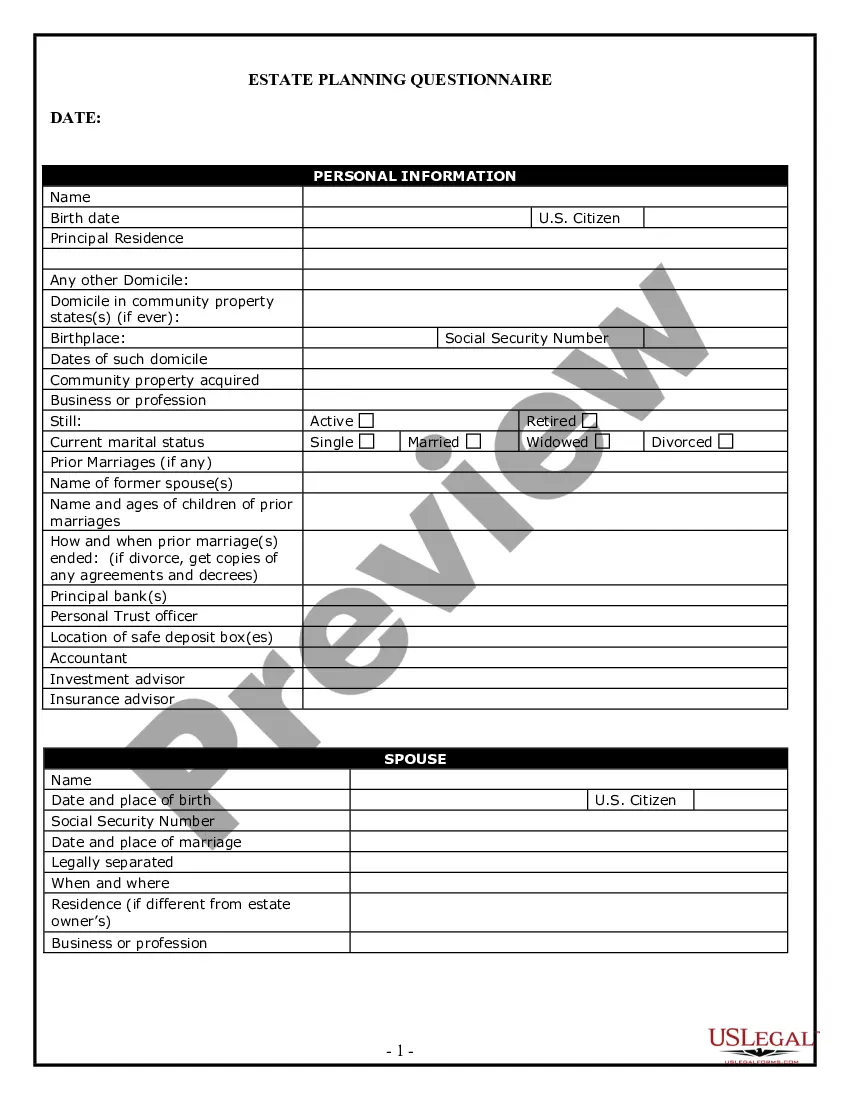
South Carolina Interrogatories
Description
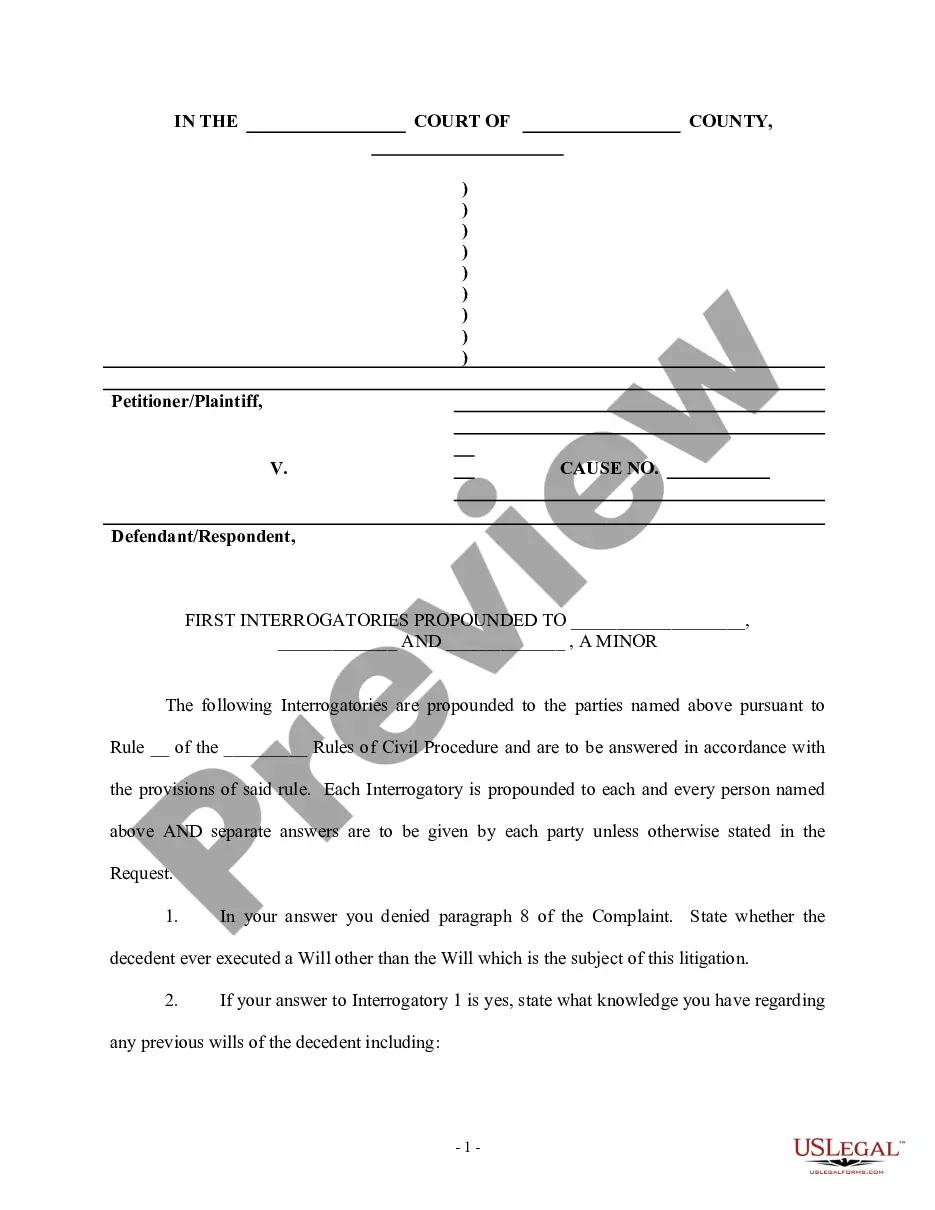
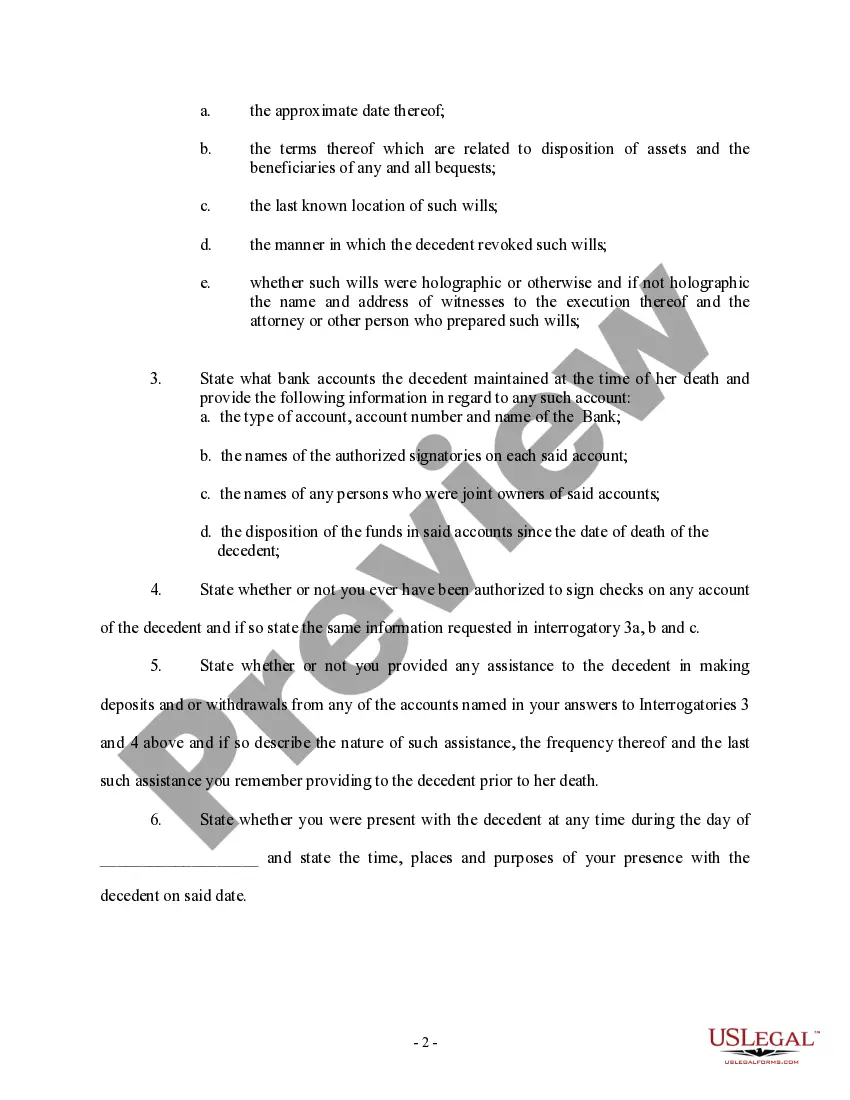
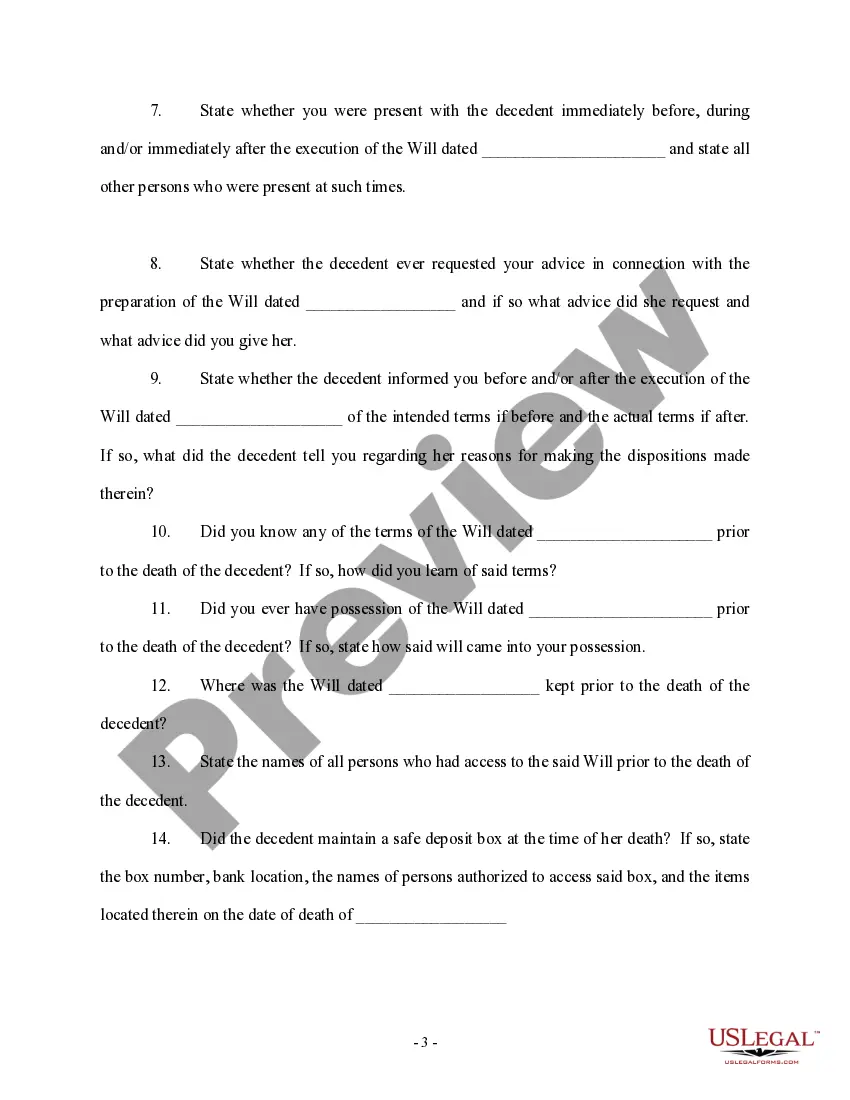
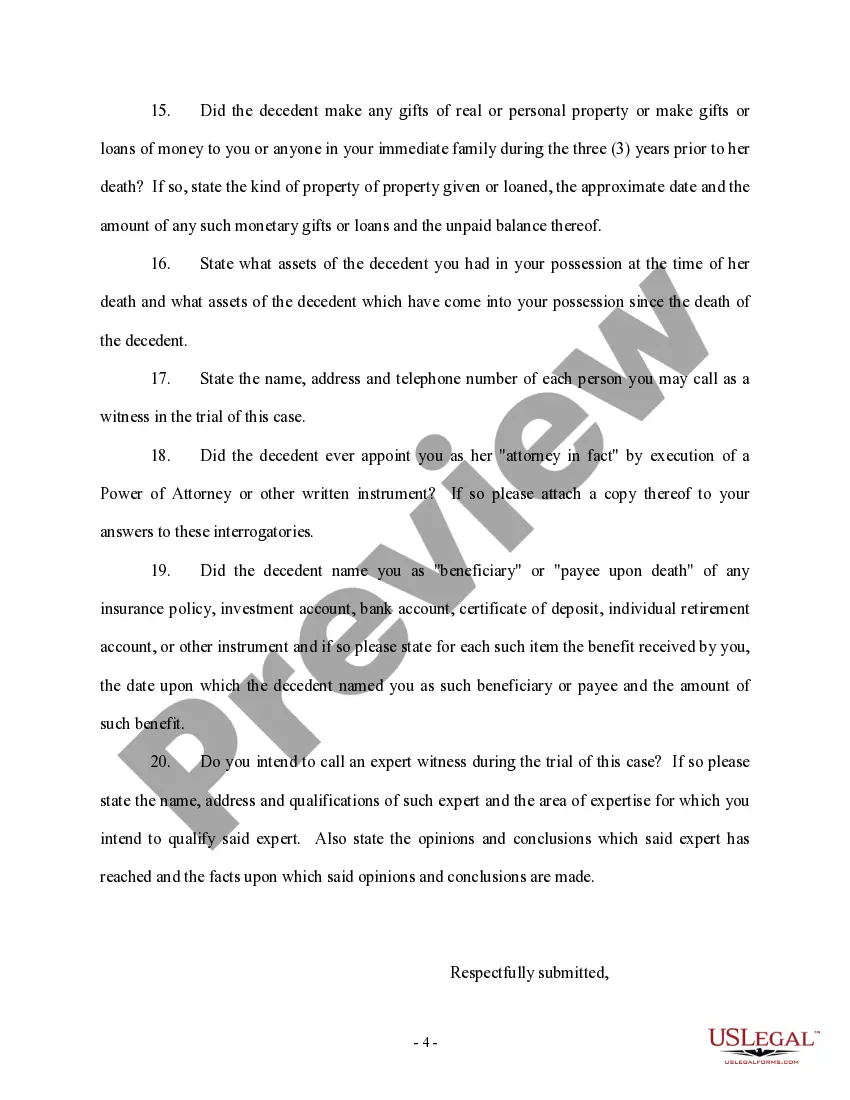
Get your form ready online
Our built-in tools help you complete, sign, share, and store your documents in one place.
Make edits, fill in missing information, and update formatting in US Legal Forms—just like you would in MS Word.
Download a copy, print it, send it by email, or mail it via USPS—whatever works best for your next step.
Sign and collect signatures with our SignNow integration. Send to multiple recipients, set reminders, and more. Go Premium to unlock E-Sign.
If this form requires notarization, complete it online through a secure video call—no need to meet a notary in person or wait for an appointment.
We protect your documents and personal data by following strict security and privacy standards.

Make edits, fill in missing information, and update formatting in US Legal Forms—just like you would in MS Word.

Download a copy, print it, send it by email, or mail it via USPS—whatever works best for your next step.

Sign and collect signatures with our SignNow integration. Send to multiple recipients, set reminders, and more. Go Premium to unlock E-Sign.

If this form requires notarization, complete it online through a secure video call—no need to meet a notary in person or wait for an appointment.

We protect your documents and personal data by following strict security and privacy standards.
Looking for another form?
How to fill out Interrogatories?
US Legal Forms - one of the largest collections of legal templates in the United States - offers a diverse selection of legal document templates that you can download or print. By utilizing the website, you can access thousands of forms for business and personal purposes, organized by categories, states, or keywords. You can find the most recent versions of forms such as the South Carolina Interrogatories in just a few minutes.
If you already have a subscription, Log In and download South Carolina Interrogatories from your US Legal Forms library. The Download button will be visible on each document you view. You have access to all previously downloaded forms in the My documents section of your account.
If you are using US Legal Forms for the first time, here are simple instructions to get started: Ensure you have selected the correct form for your city/region. Click the Preview button to review the document's content. Check the document details to confirm you have chosen the right form. If the form does not meet your requirements, use the Search field at the top of the screen to find one that does. If you are satisfied with the form, confirm your choice by clicking the Buy now button. Then, choose the pricing plan you prefer and provide your information to register for an account. Process the transaction. Use a Visa or Mastercard or PayPal account to complete the transaction. Select the format and download the form onto your device. Make modifications. Fill out, edit, and print and sign the downloaded South Carolina Interrogatories. Every template you add to your account has no expiration date and is yours indefinitely. Therefore, to download or print another copy, simply go to the My documents section and click on the form you need.
- Access the South Carolina Interrogatories with US Legal Forms, one of the most extensive collections of legal document templates.
- Utilize thousands of professional and state-specific templates that meet your business or personal requirements and specifications.
Form popularity
FAQ
If, prior to or during trial, a party discovers additional evidence or material previously requested or ordered, which is subject to discovery or inspection under this rule, he shall promptly notify the other party or his attorney or the court of the existence of the additional evidence or material.
If you are unable to answer an interrogatory because it is too vague, ambiguous, or somehow objectionable, you can state an objection and the reason for your objection. You must then answer to the extent the interrogatory is not objectionable.
You have to respond to interrogatories in writing to the best of your ability. If you do not answer an interrogatory question, and then the other side learns that you did in fact know the answer, it could have a negative impact on your case at trial.
Discovery Rule specifics in South Carolina As noted, the discovery rule provides that any statute of limitations does not begin to run until the victim learns of his or her injury/injuries OR until he or she reasonably should have learned of the injury.
Interrogatories are often preferable to depositions for identi- fying such things as witnesses, documents, the dates and sub- stance of transactions and conversations,3 since a deponent may easily forget or overlook relevant information when an- swering such questions.
You can use interrogatories to find out facts about a case but they cannot be used for questions that draw a legal conclusion.
The interrogatories might ask for detailed information about the collision, where you received medical treatment, your wounds, and any ongoing problems you are experiencing from your injuries.
What types of questions can I ask in interrogatories? Questions about the other party's position or arguments in the case. Questions about the facts of the case. Questions about the other party's knowledge or understanding of relevant events or circumstances. Questions about the other party's witnesses or experts.