South Carolina Complaint for Past Due Promissory Note

State:
Multi-State
Control #:
US-01126BG
Format:
Word; 
Rich Text
Instant download

This form is part of a form package!

Get all related documents in one bundle, so you don’t have to search separately.

Description

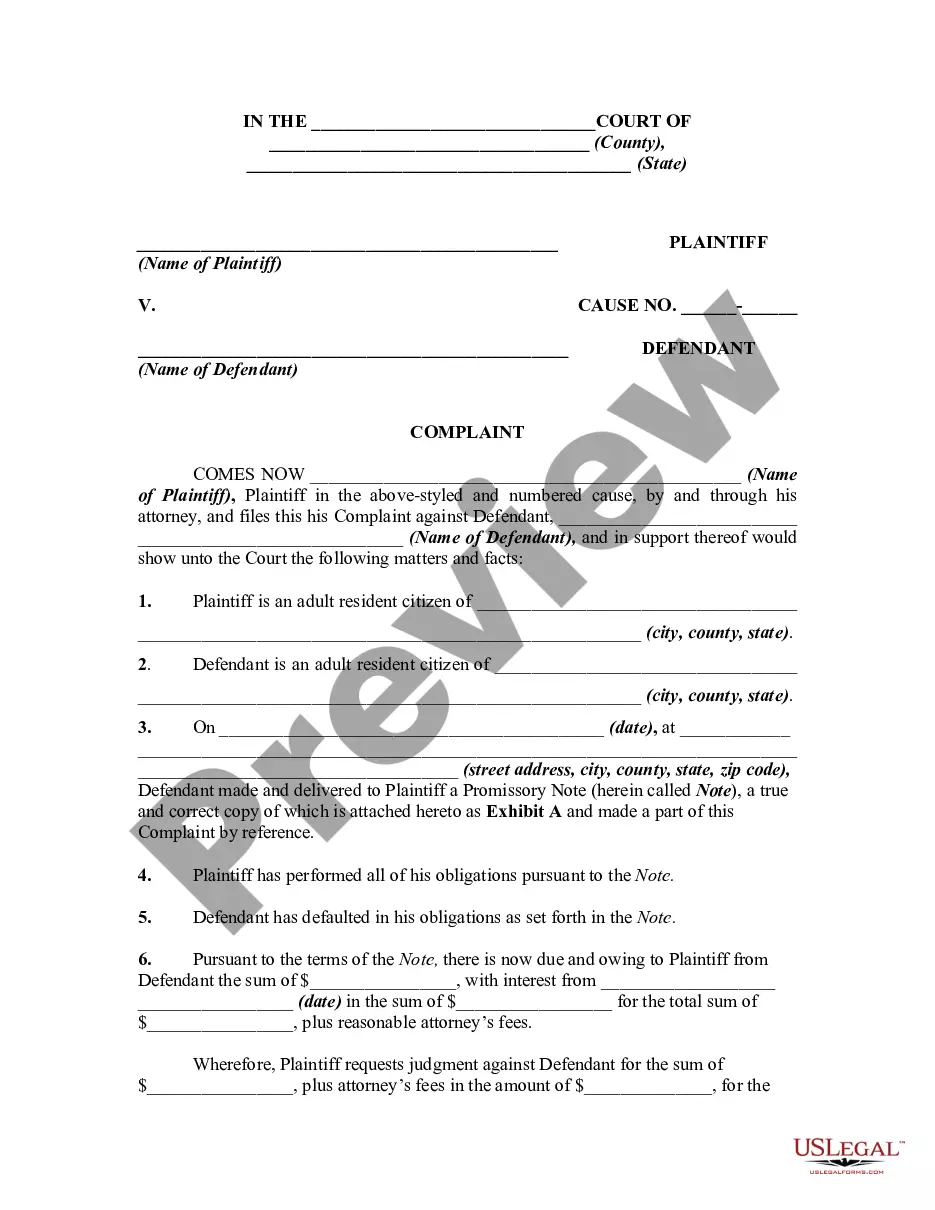
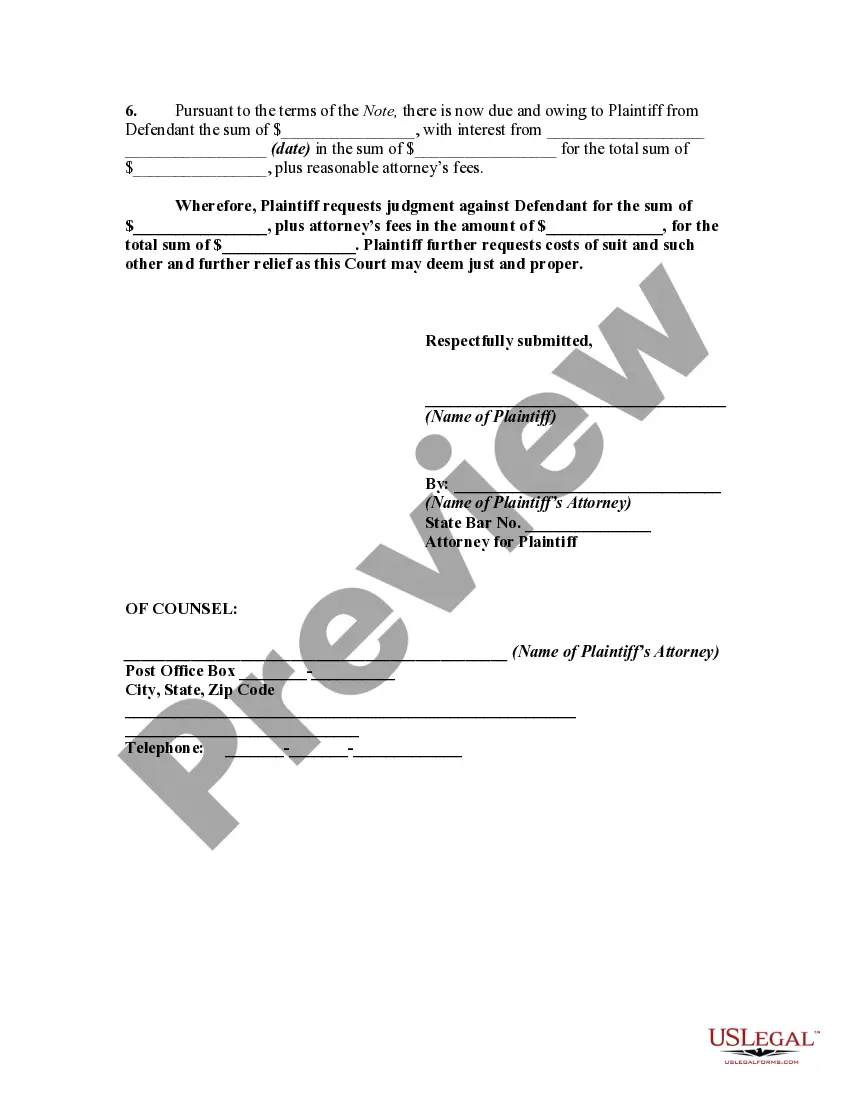
The form is a complaint for a default on payments due pursuant to a promissory note. The complaint adopts the "notice pleadings" format of the Federal Rules of Civil Procedure, which have been adopted by most states in one form or another.


This form is a generic example that may be referred to when preparing such a form for your particular state. It is for illustrative purposes only. Local laws should be consulted to determine any specific requirements for such a form in a particular jurisdiction.
Free preview
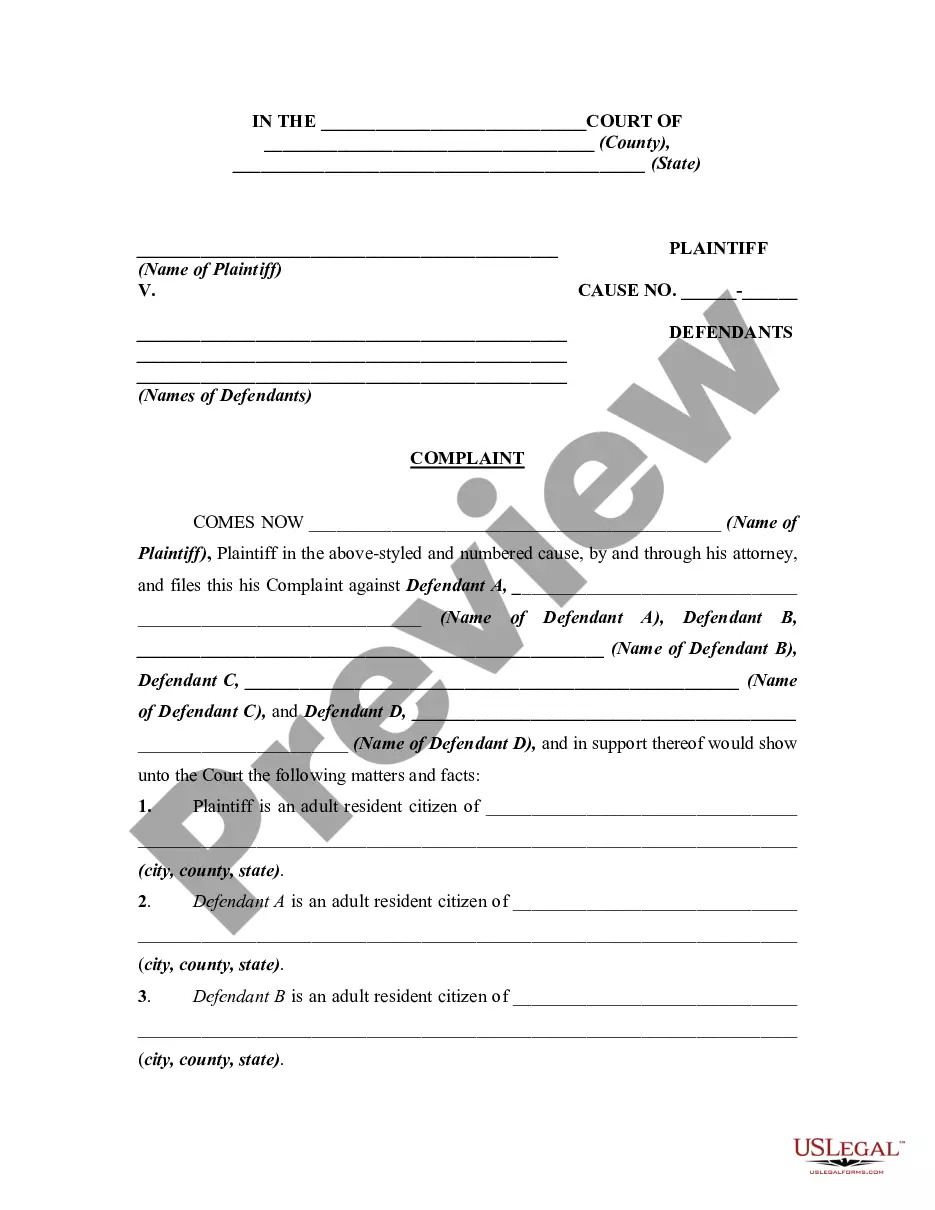
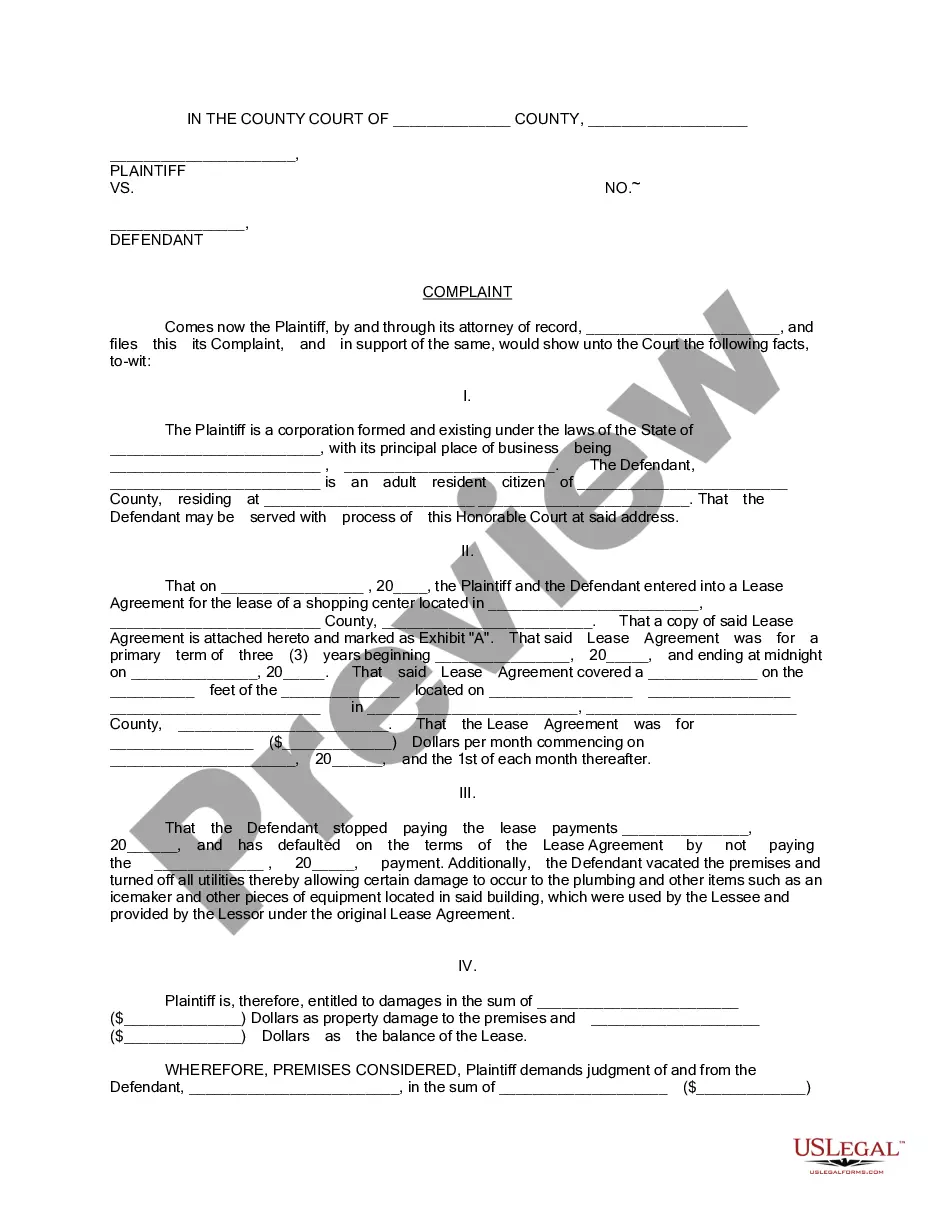
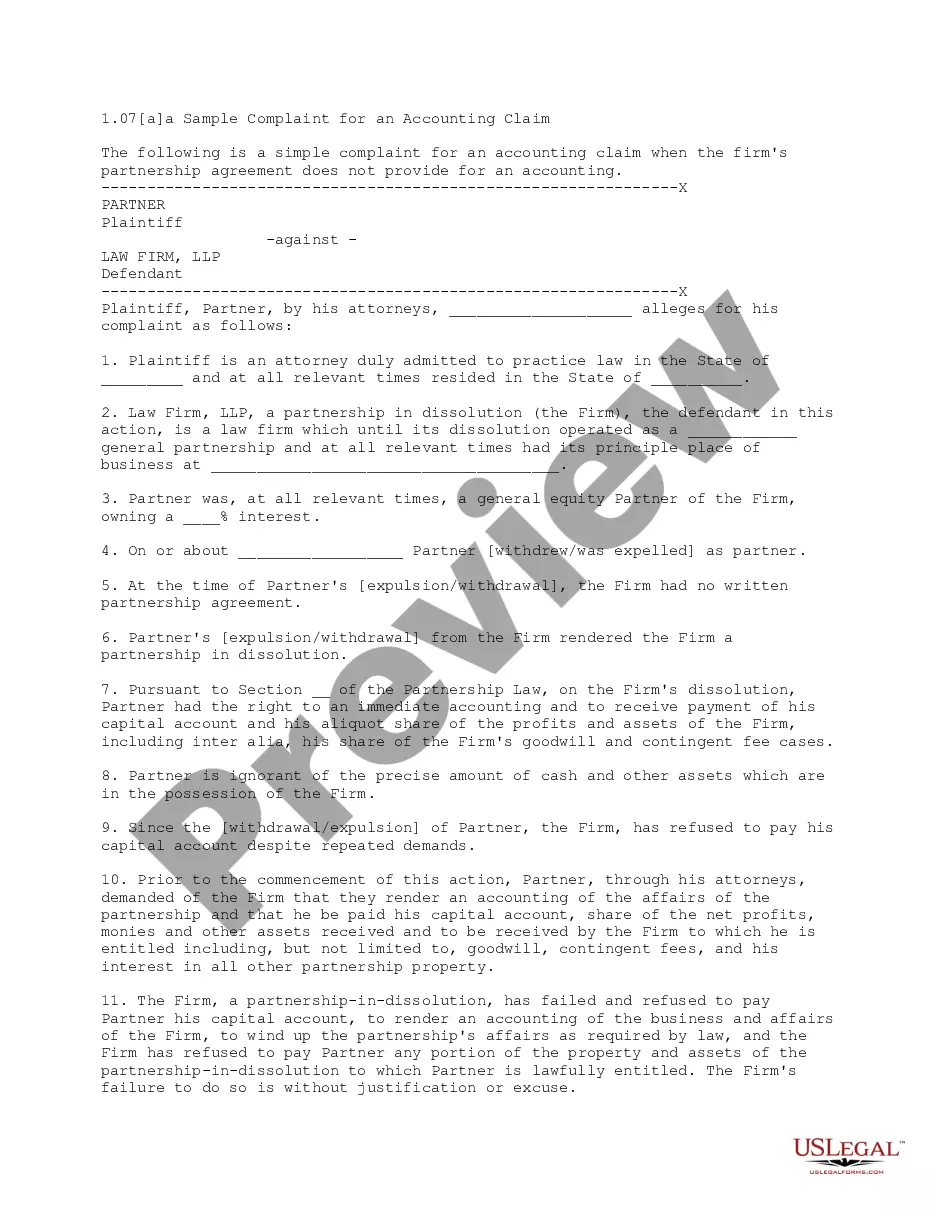
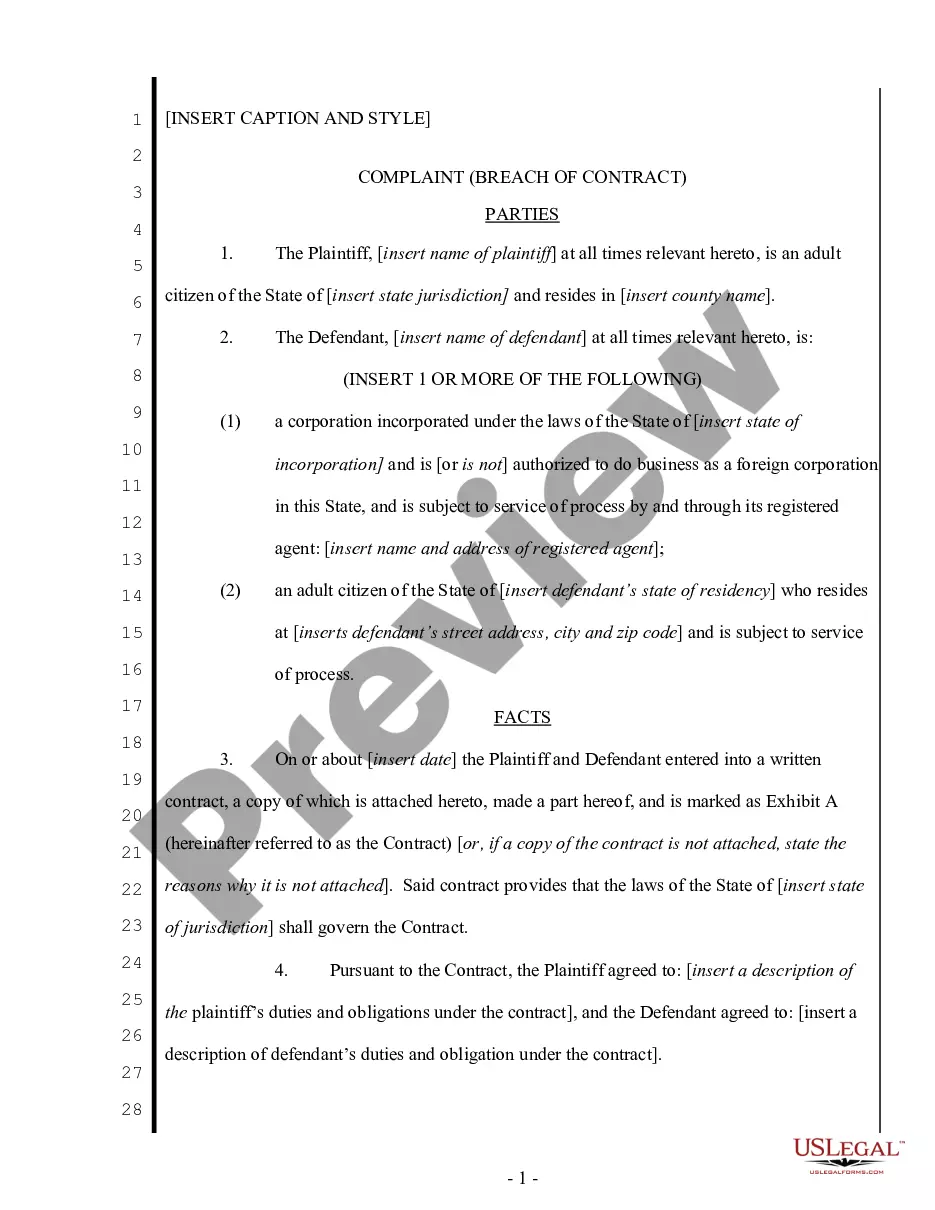
  • Preview Complaint for Past Due Promissory Note
  • Preview Complaint for Past Due Promissory Note

How to fill out Complaint For Past Due Promissory Note?

Are you currently in a circumstance where you need documents for either business or personal purposes almost every day.

There are numerous legal document templates accessible online, but finding reliable ones is not straightforward.

US Legal Forms offers a vast array of form templates, such as the South Carolina Complaint for Past Due Promissory Note, that are designed to meet federal and state requirements.

Once you find the appropriate form, click Buy now.

Choose the pricing plan you want, provide the necessary information to create your account, and complete the transaction using your PayPal or Visa or MasterCard.

  1. If you are already familiar with the US Legal Forms website and have an account, simply Log In.
  2. After that, you can download the South Carolina Complaint for Past Due Promissory Note template.
  3. If you do not have an account and wish to start using US Legal Forms, follow these steps.
  4. Obtain the form you need and ensure it is for the correct area/state.
  5. Utilize the Preview feature to examine the form.
  6. Review the details to confirm you have selected the right form.
  7. If the form isn’t what you’re looking for, use the Lookup field to find the form that fits your needs and requirements.

Form popularity

FAQ

However, partisan political activity in the workplace is treated differently than other personal use activities. Since partisan political activity in the workplace is prohibited by the Hatch Act, employees may not use the Internet or any other government equipment to engage in partisan political activities.

With a few exceptions, after Election Day the Hatch Act does not prohibit employees from wearing campaign items, like t-shirts or hats, and displaying candidate photographs while they are on duty, in the federal workplace, wearing an official uniform or insignia, or using a government vehicle.

SECTION 22-3-710. Proceedings commenced on information. All proceedings before magistrates in criminal cases shall be commenced on information under oath, plainly and substantially setting forth the offense charged, upon which, and only which, shall a warrant of arrest issue.

Employees shall not knowingly make unauthorized commitments or promises of any kind purporting to bind the Government. Employees shall not use public office for private gain.

These violations include: using official authority to interfere with an election result; soliciting, accepting or receiving political contributions; soliciting or discouraging political activity of persons before the employing agency; and running for public office in a partisan political election.

SECTION 33-44-303. Liability of members and managers. (a) Except as otherwise provided in subsection (c), the debts, obligations, and liabilities of a limited liability company, whether arising in contract, tort, or otherwise, are solely the debts, obligations, and liabilities of the company.

?The Hatch Act restricts the political activity of individuals principally employed by state, District of Columbia, or local executive agencies and who work in connection with programs financed in whole or in part by federal loans or grants.

South Carolina's comparative negligence law, section 15-38-15 of the Code of Laws, states that as long as the plaintiff is less than 51% responsible for an accident, he or she will be eligible for financial recovery from the defendant.

Trusted and secure by over 3 million people of the world’s leading companies

South Carolina Complaint for Past Due Promissory Note