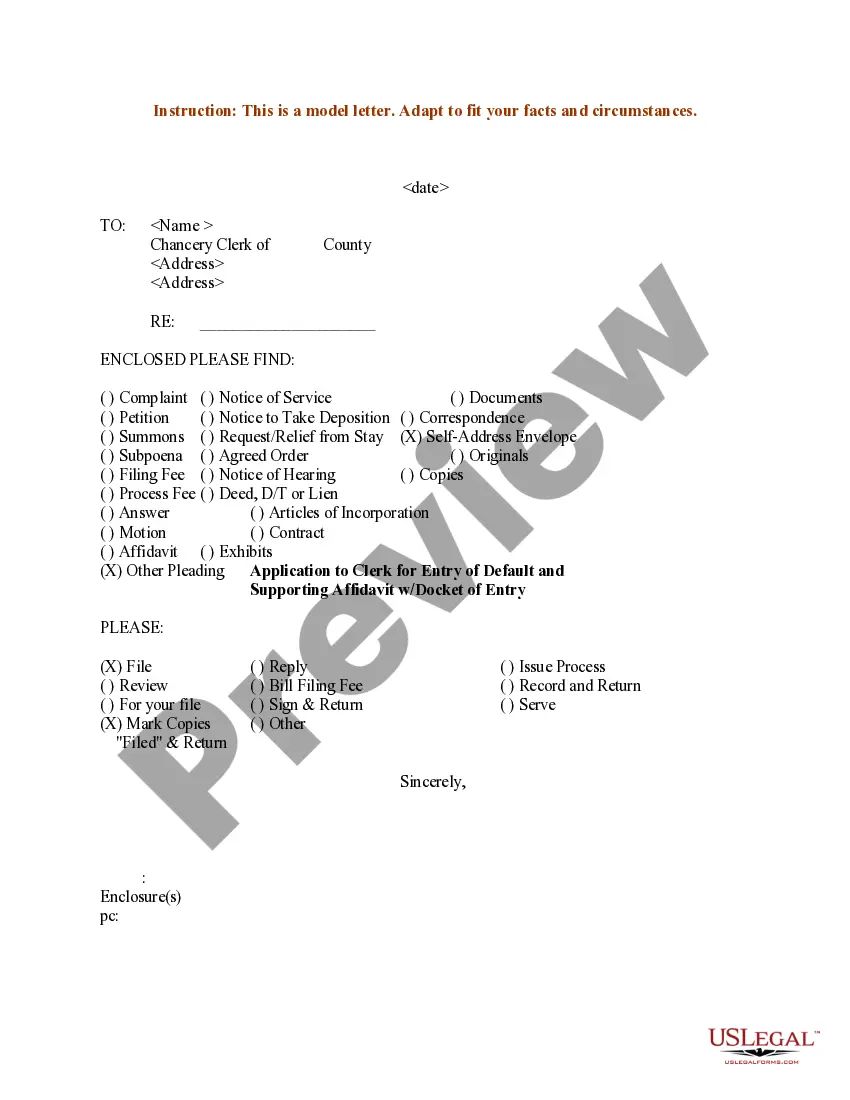
South Carolina Sample Letter to Chancery Clerk with Checklist for Enclosed Pleadings and Filing Instructions
Description
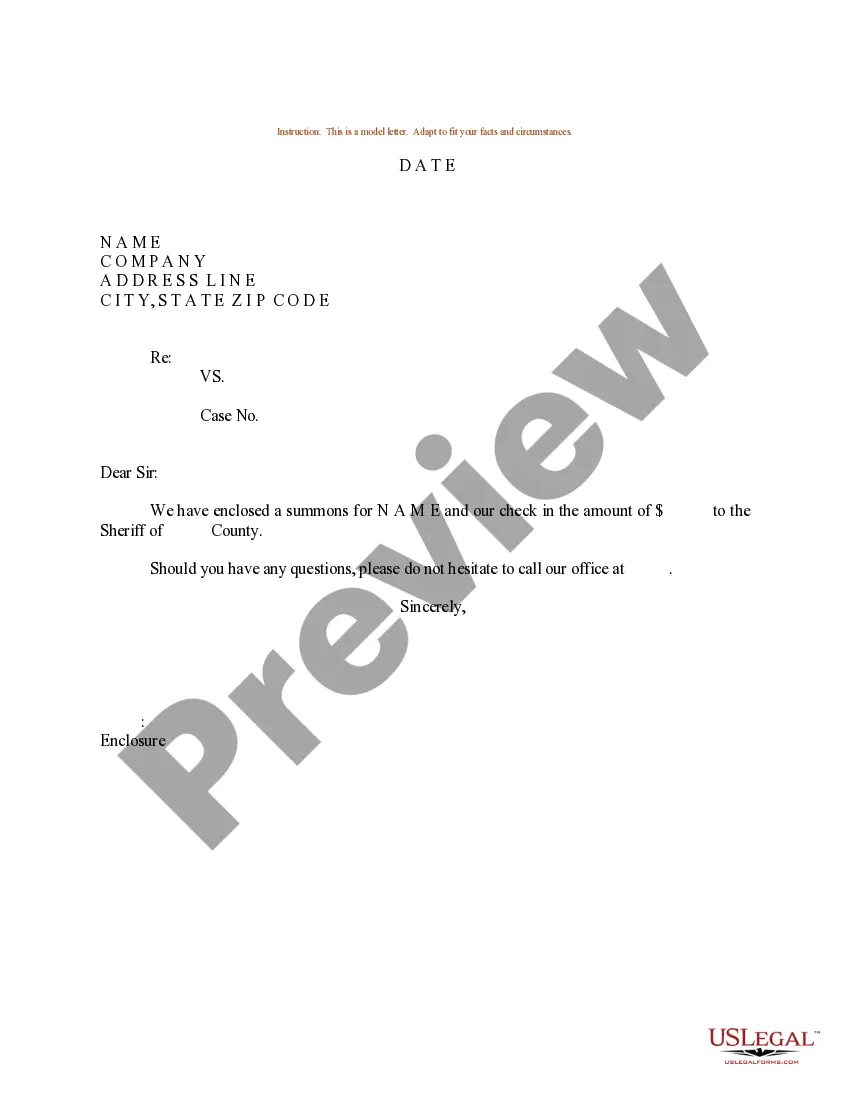
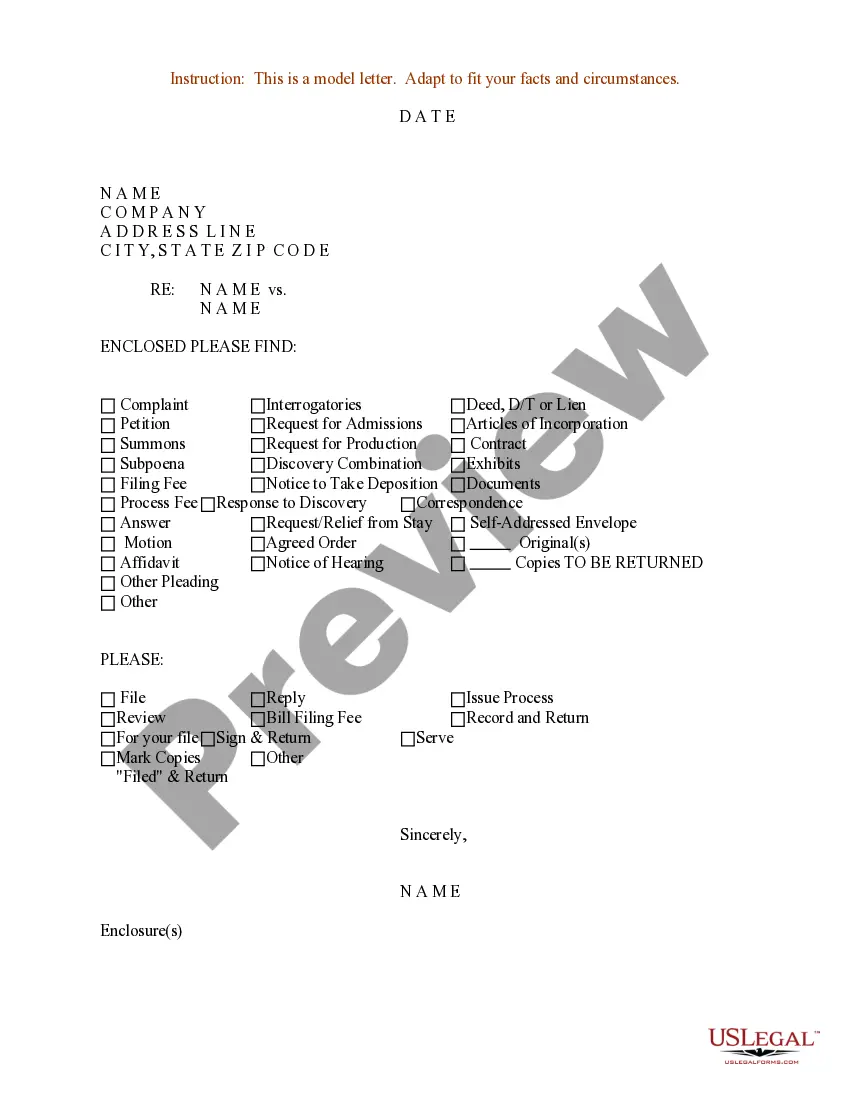
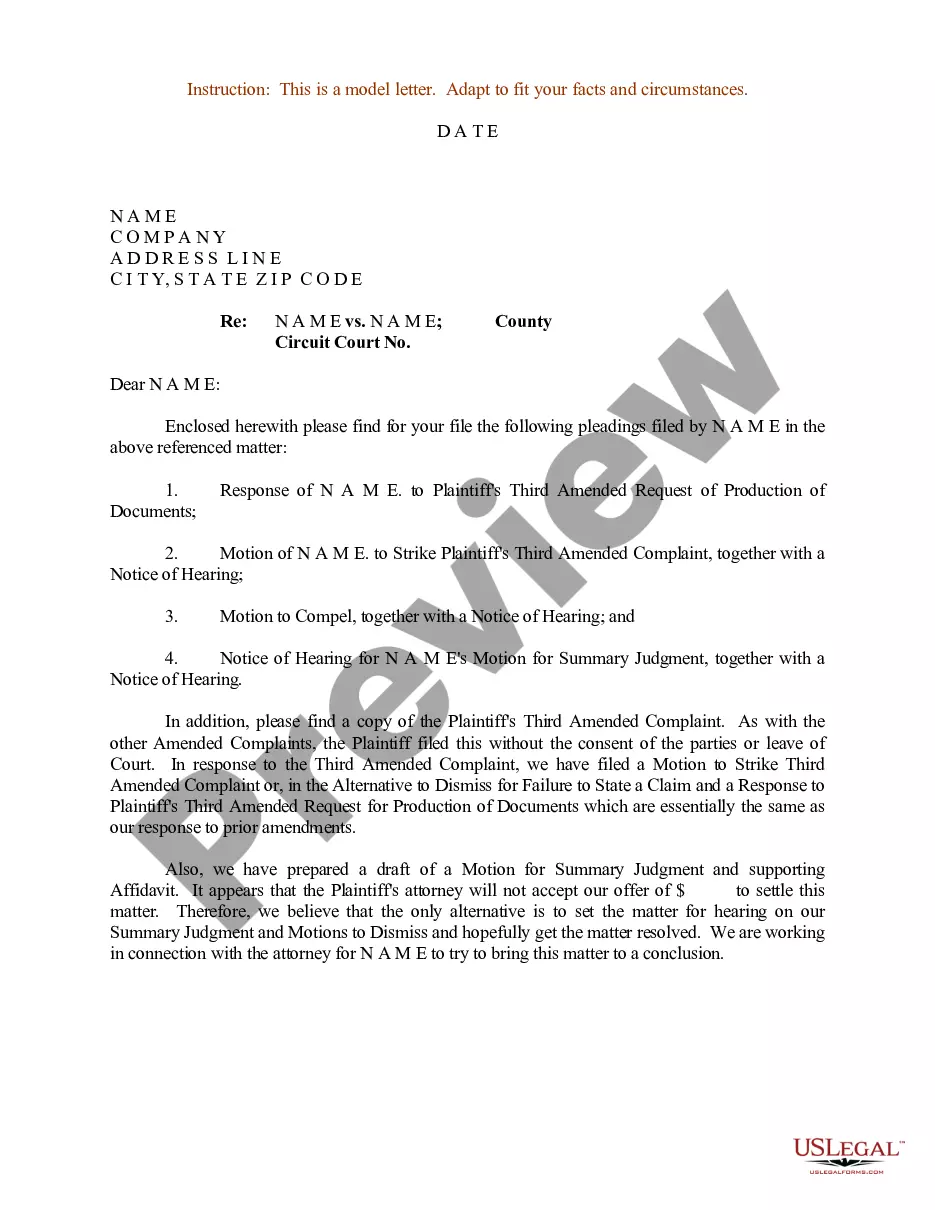

How to fill out Sample Letter To Chancery Clerk With Checklist For Enclosed Pleadings And Filing Instructions?
Are you presently in a situation where you require documents for both business or particular objectives almost daily.
There are numerous legal document templates accessible online, but finding ones you can trust is challenging.
US Legal Forms offers thousands of form templates, including the South Carolina Sample Letter to Chancery Clerk with Checklist for Enclosed Pleadings and Filing Instructions, designed to meet federal and state requirements.
When you find the right form, click Get now.
Select the payment plan you prefer, complete the required information to create your account, and pay for your order using your PayPal or credit card.
- If you are already familiar with the US Legal Forms website and have an account, simply Log In.
- Then, you can download the South Carolina Sample Letter to Chancery Clerk with Checklist for Enclosed Pleadings and Filing Instructions template.
- If you do not have an account and wish to start using US Legal Forms, follow these steps.
- Locate the form you need and ensure it is for the correct city/region.
- Use the Preview button to review the form.
- Check the description to confirm that you have chosen the correct document.
- If the form is not what you are looking for, use the Search field to find the form that meets your needs and requirements.
Form popularity
FAQ
To write a letter to the clerk of courts, start with the court's name and address. Clearly outline your request or the purpose of the letter, and include any relevant case details. Utilizing a South Carolina Sample Letter to Chancery Clerk with Checklist for Enclosed Pleadings and Filing Instructions can provide a useful format and ensure you include all necessary information.
A Rule 59 motion in South Carolina allows a party to request the court to amend its judgment or order based on specific grounds like error or new evidence. This motion must be filed within ten days after the judgment is served. Understanding how to effectively communicate this in writing can be aided by using a South Carolina Sample Letter to Chancery Clerk with Checklist for Enclosed Pleadings and Filing Instructions.
The 365 rule in South Carolina family court refers to the timeline for filing certain motions. It mandates that motions related to custody and visitation must be filed within a year of the last order. Familiarizing yourself with this rule is important, especially when preparing documents with a South Carolina Sample Letter to Chancery Clerk with Checklist for Enclosed Pleadings and Filing Instructions.
When addressing a letter to the local court, use the full name of the court and include its address. Ensure to include case numbers if applicable, as this helps in processing your letter efficiently. For a clear format, refer to a South Carolina Sample Letter to Chancery Clerk with Checklist for Enclosed Pleadings and Filing Instructions to guide you.
To write a letter to the clerk of court, start by addressing the letter to the specific clerk and including your contact information. Clearly state your purpose for writing, whether it’s to submit documents or ask for information. Following a South Carolina Sample Letter to Chancery Clerk with Checklist for Enclosed Pleadings and Filing Instructions can help you present your letter correctly.
Writing a letter to the local court involves addressing it correctly and including your case information. Begin with a polite salutation, clearly state your request or concern, and conclude with your signature. For a structured approach, consider using a South Carolina Sample Letter to Chancery Clerk with Checklist for Enclosed Pleadings and Filing Instructions to ensure you include all necessary elements.
Rule 7 in South Carolina Family Court pertains to the requirements for filing motions and other documents. It outlines how parties must serve documents to the opposing party and file them with the court. Understanding this rule is crucial for compliance, especially when using a South Carolina Sample Letter to Chancery Clerk with Checklist for Enclosed Pleadings and Filing Instructions.
To write a letter to the court, start with a clear subject line and address it to the appropriate court. Include your name, contact information, and case details at the top. Use a respectful tone throughout the letter and clearly state your purpose. For guidance, you can refer to a South Carolina Sample Letter to Chancery Clerk with Checklist for Enclosed Pleadings and Filing Instructions.