South Carolina CHEMICAL WEAPONS
What this document covers
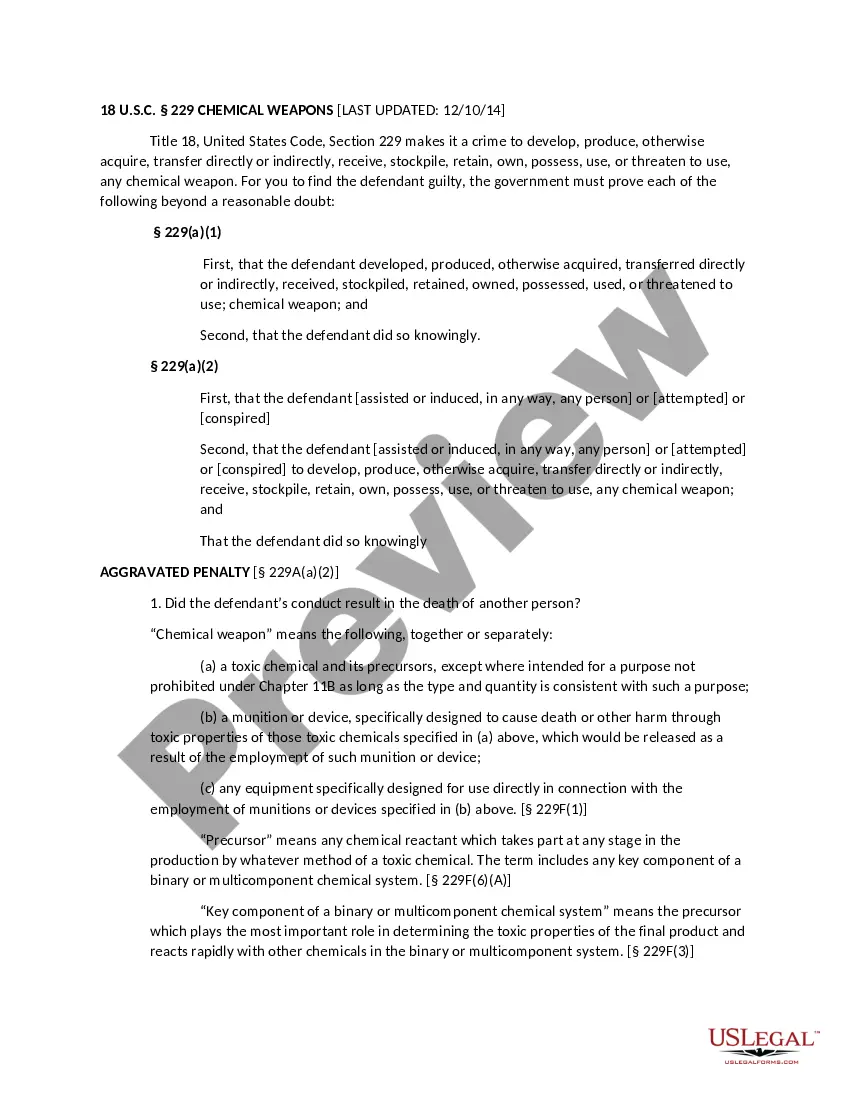
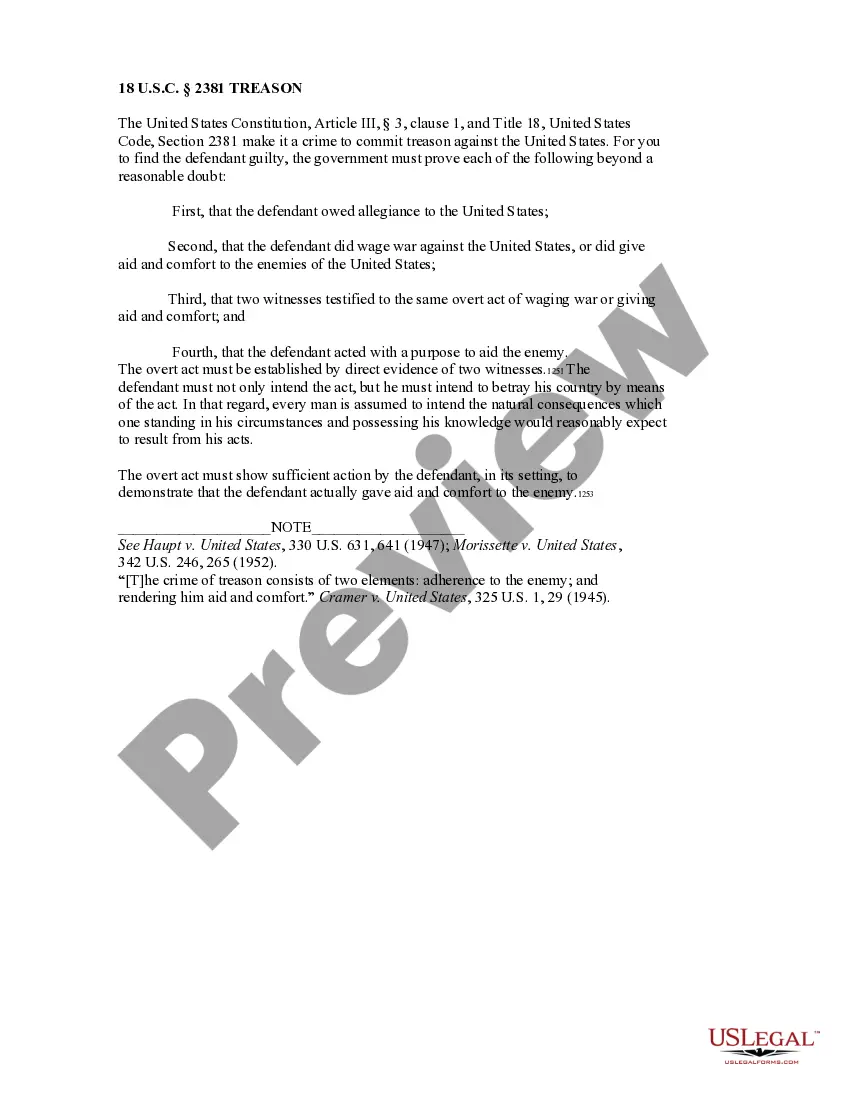
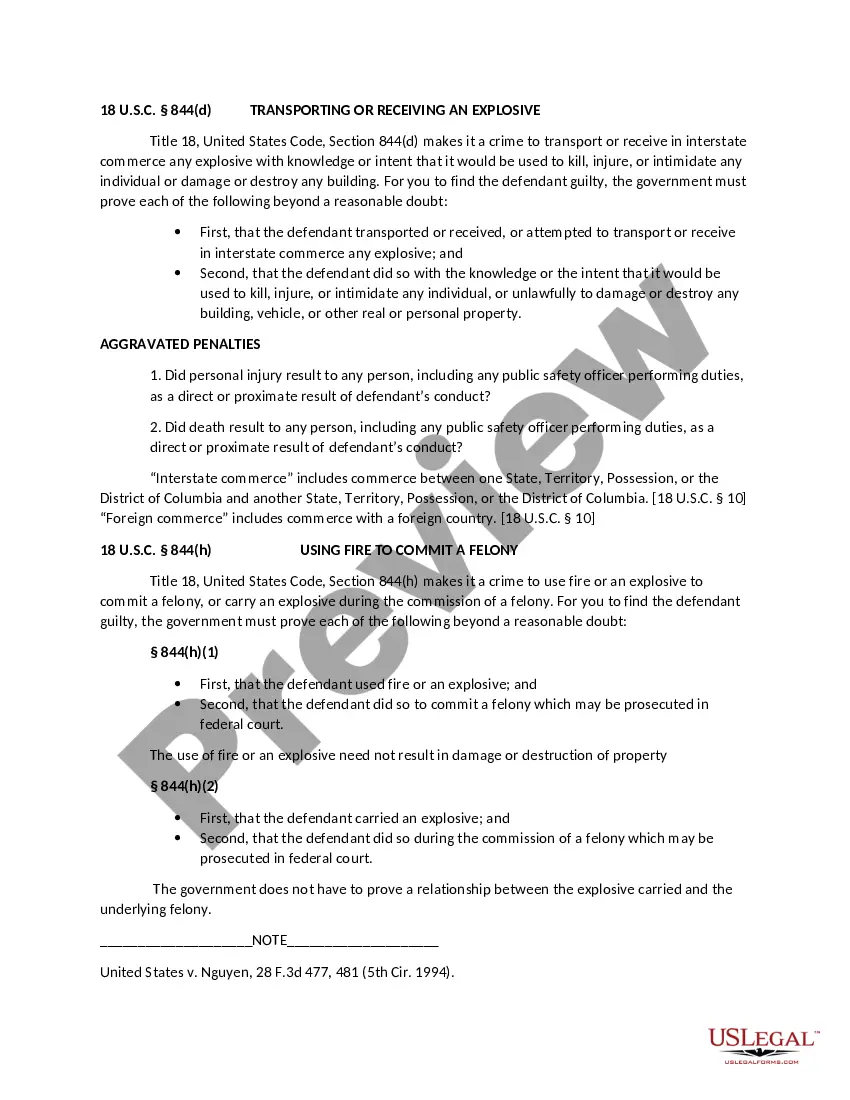
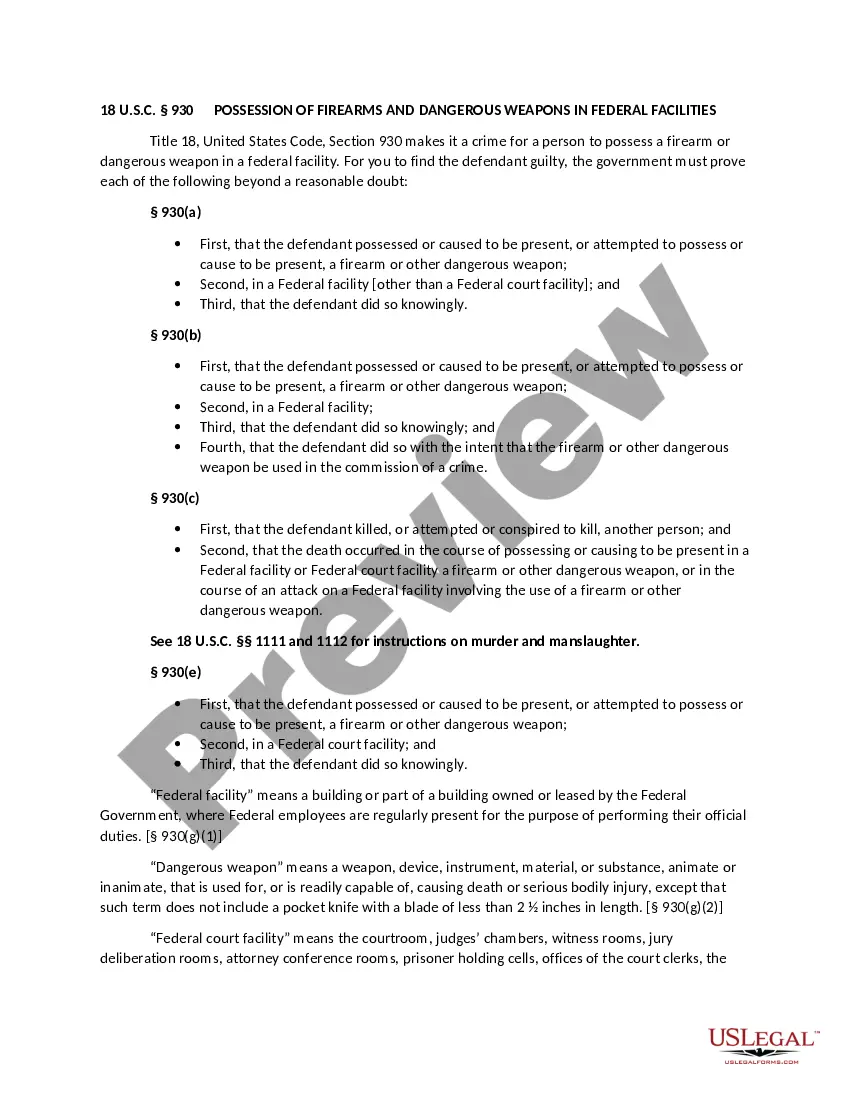
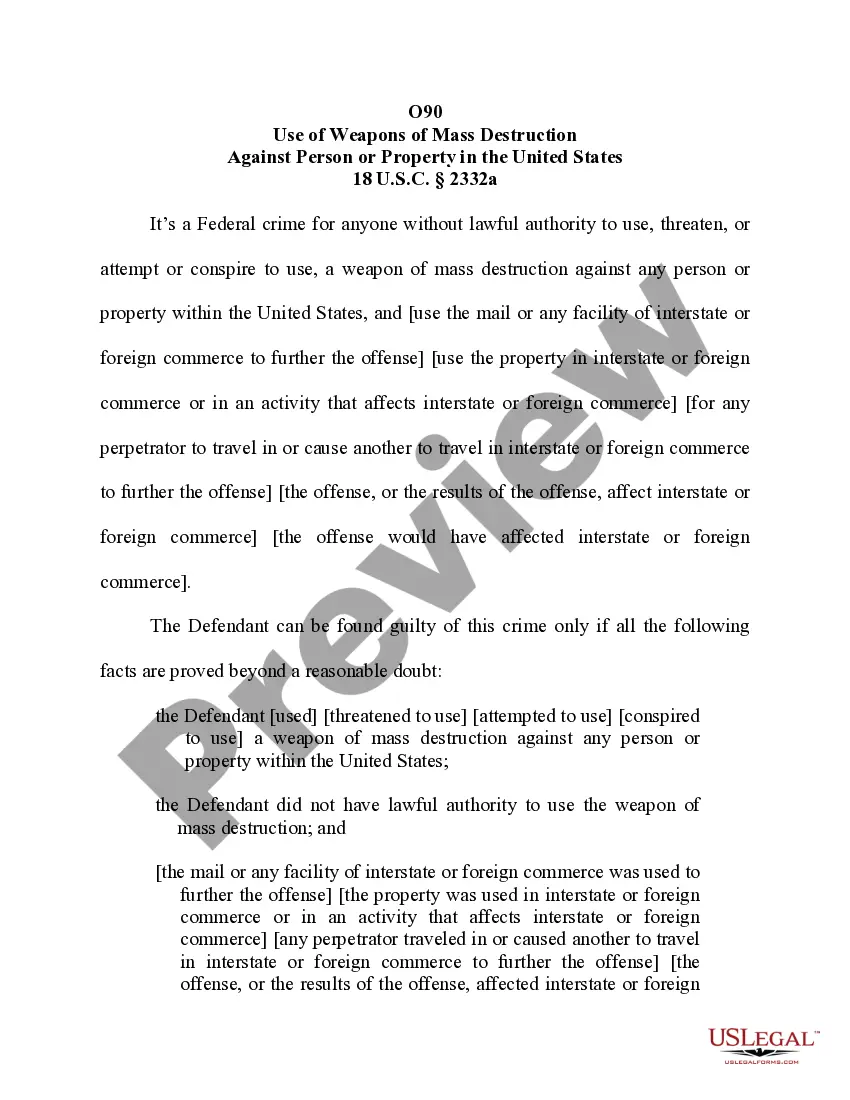
The Chemical Weapons form consists of the Official Pattern Jury Instructions used in federal criminal cases in South Carolina regarding violations of Title 18, United States Code, Section 229. This form clarifies the definitions and legal standards that must be met for prosecuting offenses related to chemical weapons, differentiating it from other criminal procedures by its specific focus on chemical weapons offenses.
What’s included in this form
- Definitions of chemical weapons and their components, including toxic chemicals and their precursors.
- Legal standards for determining guilt, including requirements that actions must be done knowingly.
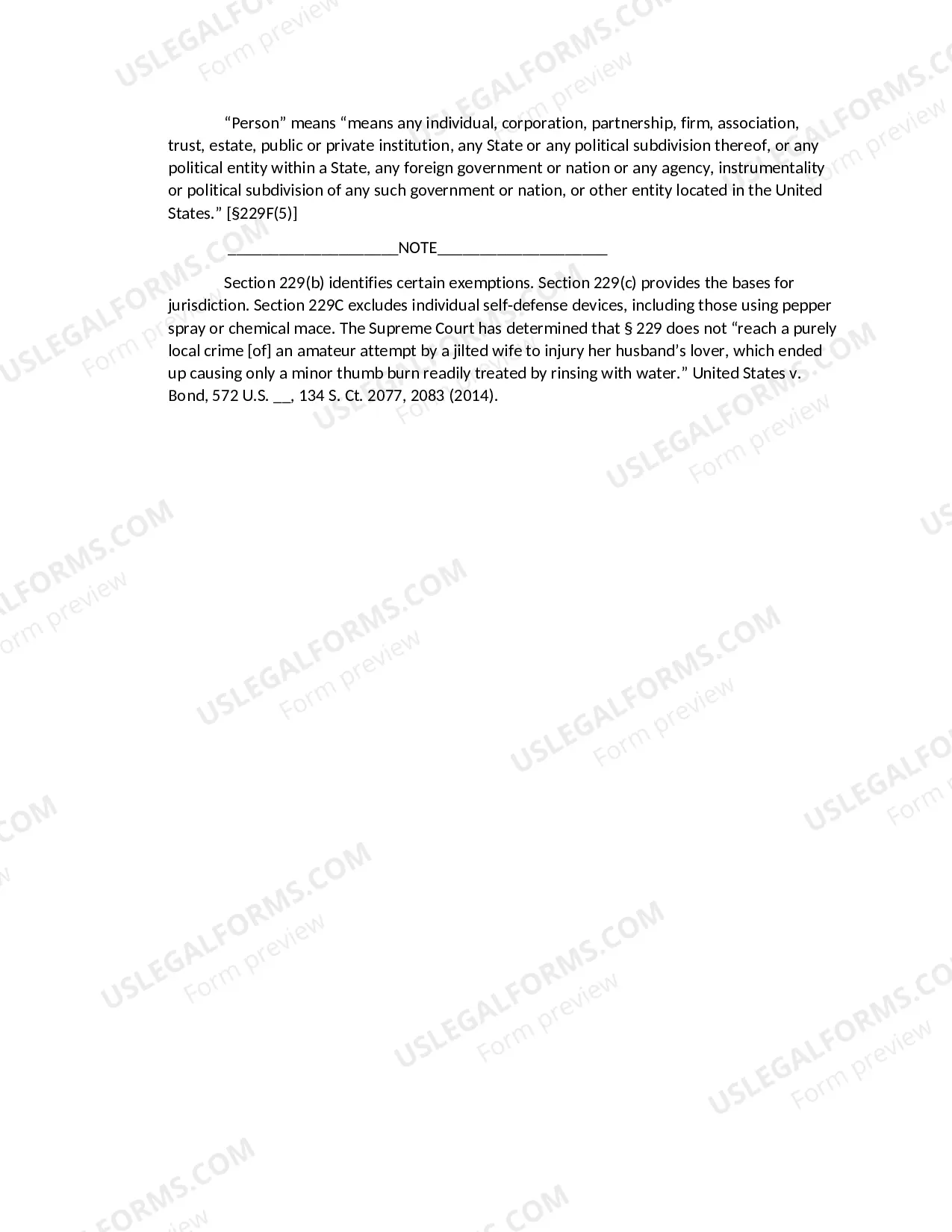
- Exemptions and limitations on what constitutes a chemical weapon under specific circumstances.
- Clarification on who qualifies as a 'person' under the law, encompassing a wide range of entities.
- Information on potential penalties, including aggravated penalties if actions result in death.
When to use this document
This form should be used when prosecuting or defending against allegations of chemical weapon offenses. It is relevant in scenarios where an individual or entity is accused of developing, possessing, or using chemical weapons unlawfully. Legal practitioners may refer to this during jury instructions in federal criminal cases in South Carolina involving such charges.
Intended users of this form
- Prosecutors presenting cases related to violations of chemical weapon laws.
- Defense attorneys representing clients accused of chemical weapon offenses.
- Judges needing to provide legal instructions during jury trials involving these charges.
- Legal clerks and court officers working with federal criminal cases.
Steps to complete this form
- Review the definitions of 'chemical weapons' and 'person' to ensure comprehension of the terms.
- Determine the elements of the charges that need to be established based on the law.
- Prepare jury instructions based on the provided patterns and tailor them to the specifics of the case.
- Include any relevant exemptions or limitations as noted in the law.
- Ensure the instructions align with current legal standards and precedents.
Does this document require notarization?
In most cases, this form does not require notarization. However, some jurisdictions or signing circumstances might. US Legal Forms offers online notarization powered by Notarize, accessible 24/7 for a quick, remote process.
Get your form ready online
Our built-in tools help you complete, sign, share, and store your documents in one place.
Make edits, fill in missing information, and update formatting in US Legal Forms—just like you would in MS Word.
Download a copy, print it, send it by email, or mail it via USPS—whatever works best for your next step.
Sign and collect signatures with our SignNow integration. Send to multiple recipients, set reminders, and more. Go Premium to unlock E-Sign.
If this form requires notarization, complete it online through a secure video call—no need to meet a notary in person or wait for an appointment.
We protect your documents and personal data by following strict security and privacy standards.

Make edits, fill in missing information, and update formatting in US Legal Forms—just like you would in MS Word.

Download a copy, print it, send it by email, or mail it via USPS—whatever works best for your next step.

Sign and collect signatures with our SignNow integration. Send to multiple recipients, set reminders, and more. Go Premium to unlock E-Sign.

If this form requires notarization, complete it online through a secure video call—no need to meet a notary in person or wait for an appointment.

We protect your documents and personal data by following strict security and privacy standards.
Common mistakes to avoid
- Failing to clearly differentiate between types of chemical weapons and permissible uses.
- Not establishing the required mental state (knowledge) for the charge.
- Overlooking exemptions that may apply based on specific circumstances.
- Misinterpreting federal jurisdiction in relation to local incidents.
Benefits of completing this form online
- Convenience of accessing the form anytime, allowing for quick review and application.
- Editability to tailor specific jury instructions to suit case particulars.
- Reliability in using standardized legal instructions drafted by licensed attorneys.
Legal use & context
- This form is legally applicable within federal criminal proceedings based on the chemical weapons statute.
- Enforcement and prosecution rely on adherence to the definitions and guidelines provided in this form.
- It is essential for ensuring that juries understand the complexities surrounding chemical weapon charges.
Looking for another form?
Form popularity
FAQ
Unlawfully carrying of a handgun is a Misdemeanor offense defined by SC Code § 16-23-50(A)(2). If convicted, a defendant may face up to 1 year in prison, a fine up to $2,000.00, or both. Additionally, the handgun must be confiscated by Law Enforcement.
(B) A person who violates the provisions of this section is guilty of a felony and, upon conviction, must be fined not more than two thousand dollars or imprisoned not more than five years, or both.
South Carolina generally requires a person to obtain a concealable weapons permit prior to carrying a handgun in most public spaces, whether carrying the handgun concealed or openly.
Fine of not more than $500 nor less than $200, or imprisonment for not more than 90 days nor less than 30 days. Also, the concealed weapon must be forfeited to the county (or city).
To legally transport a firearm in your vehicle, it must be: Unloaded; Locked in the trunk of the vehicle or in a locked container inside of the car (other than the glove box); and. Apparent and not concealed.
Has been convicted of a ?crime of violence? in any court (?crime of violence? includes murder; manslaughter (except negligent manslaughter arising out of traffic accidents); rape; mayhem; kidnapping; burglary; robbery; housebreaking; assault with intent to kill, commit rape, or rob; assault with a dangerous weapon; or
If you are found carrying your concealed weapon without a permit in South Carolina, you could receive a fine of up to $500 or up to 90 days in jail. Individuals who choose to carry a gun or firearm concealed should be cautious, even with a permit.
While you do not need a permit to own a handgun in South Carolina, you do need a concealed weapons permit (CWP) to carry a concealable weapon on your person or in your vehicle.