South Carolina Paternity Law and Procedure Handbook
Overview of this form
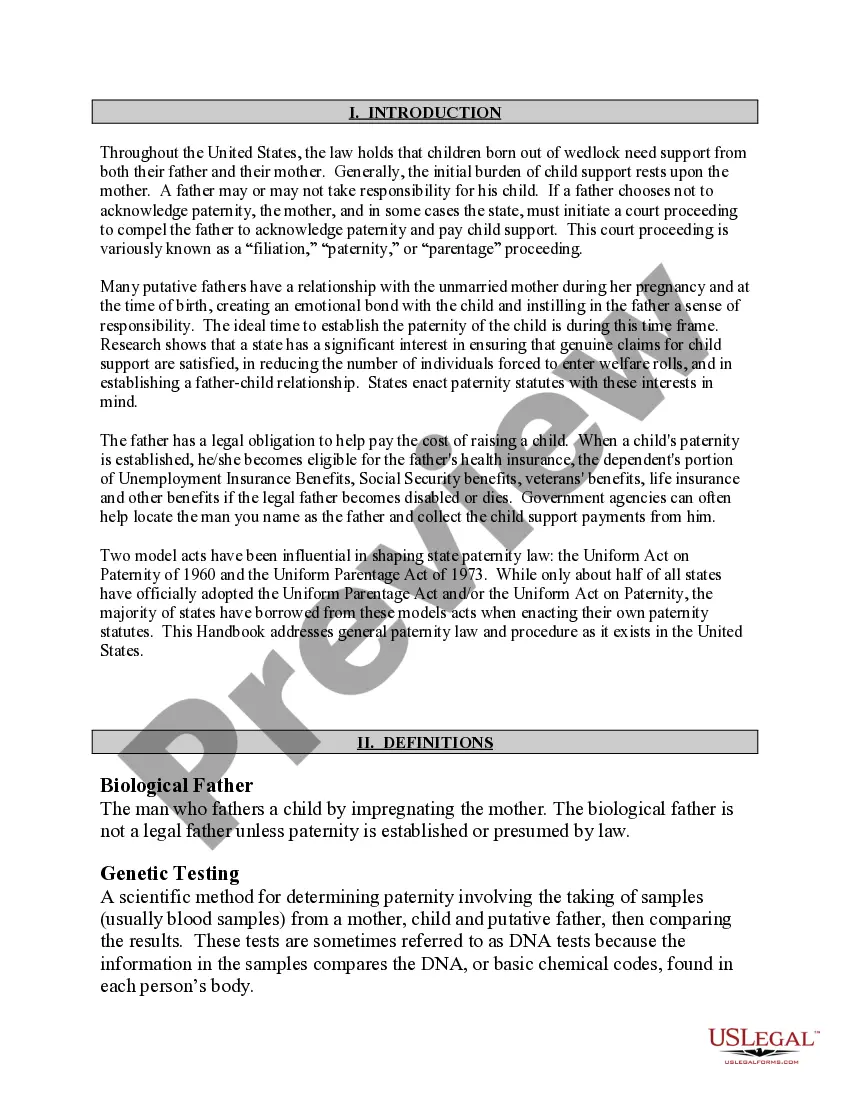
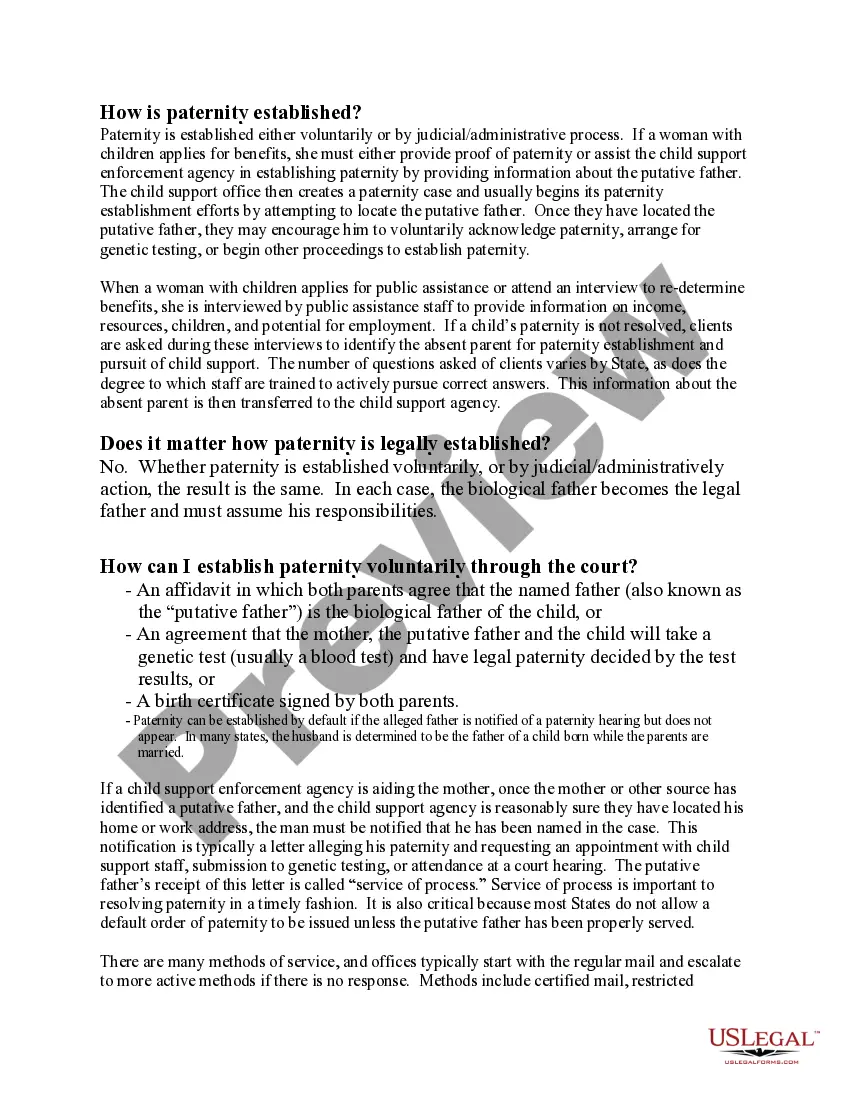
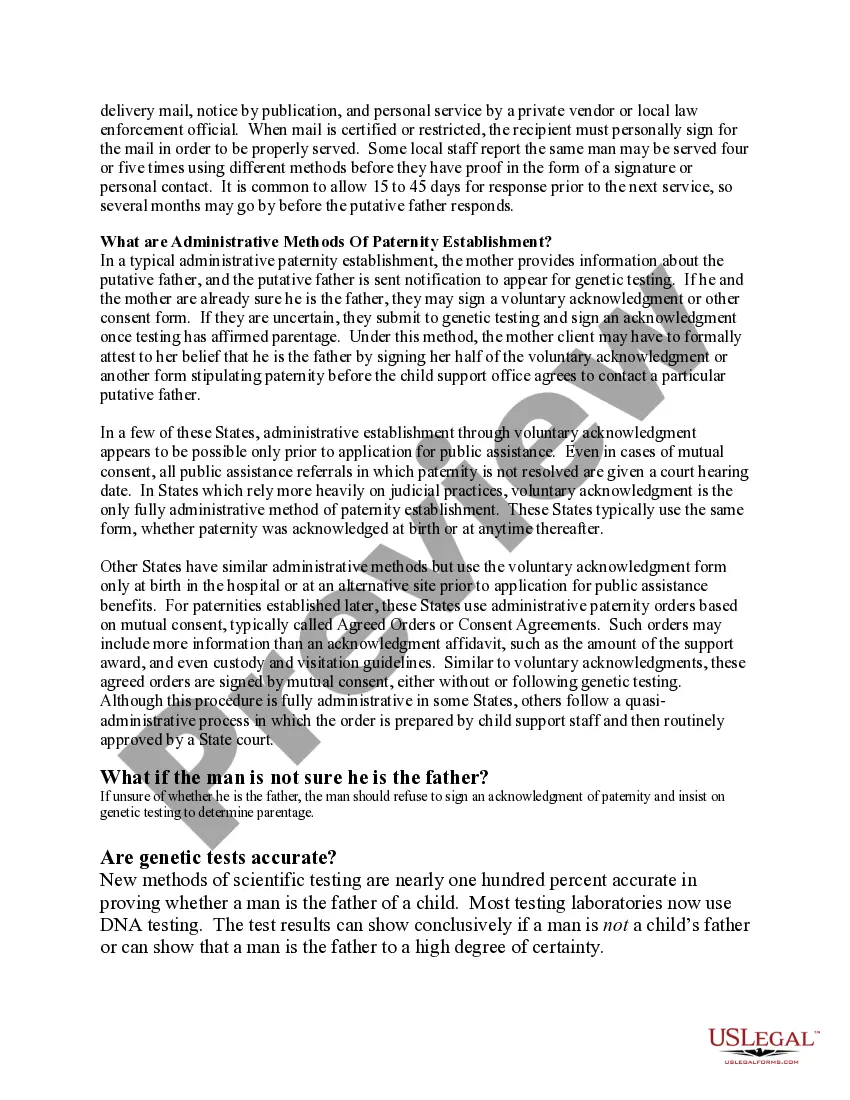
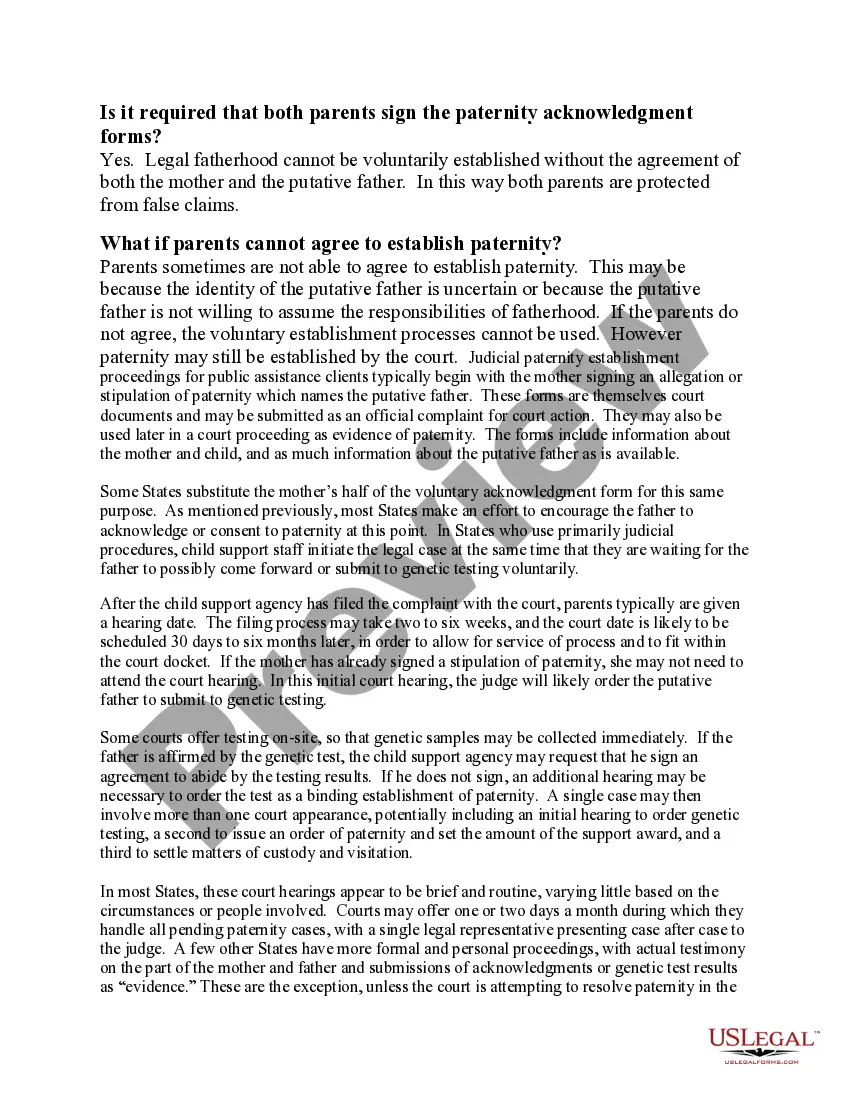
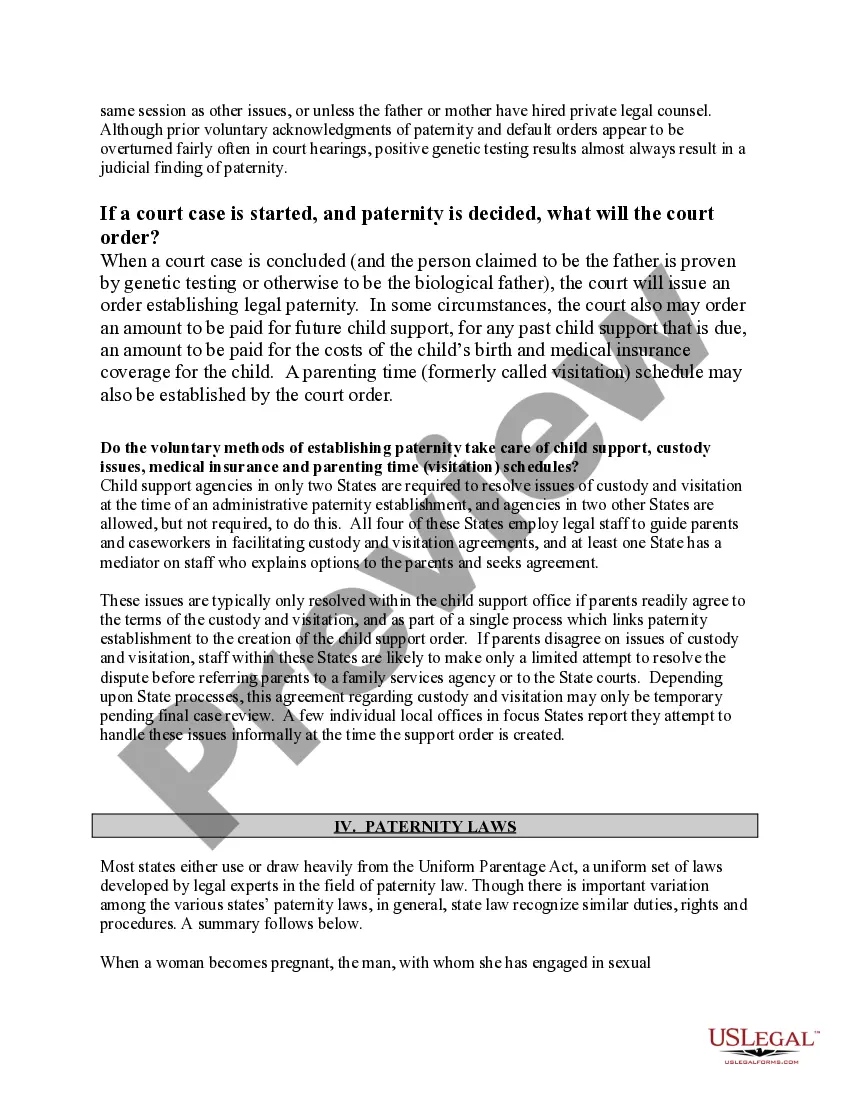
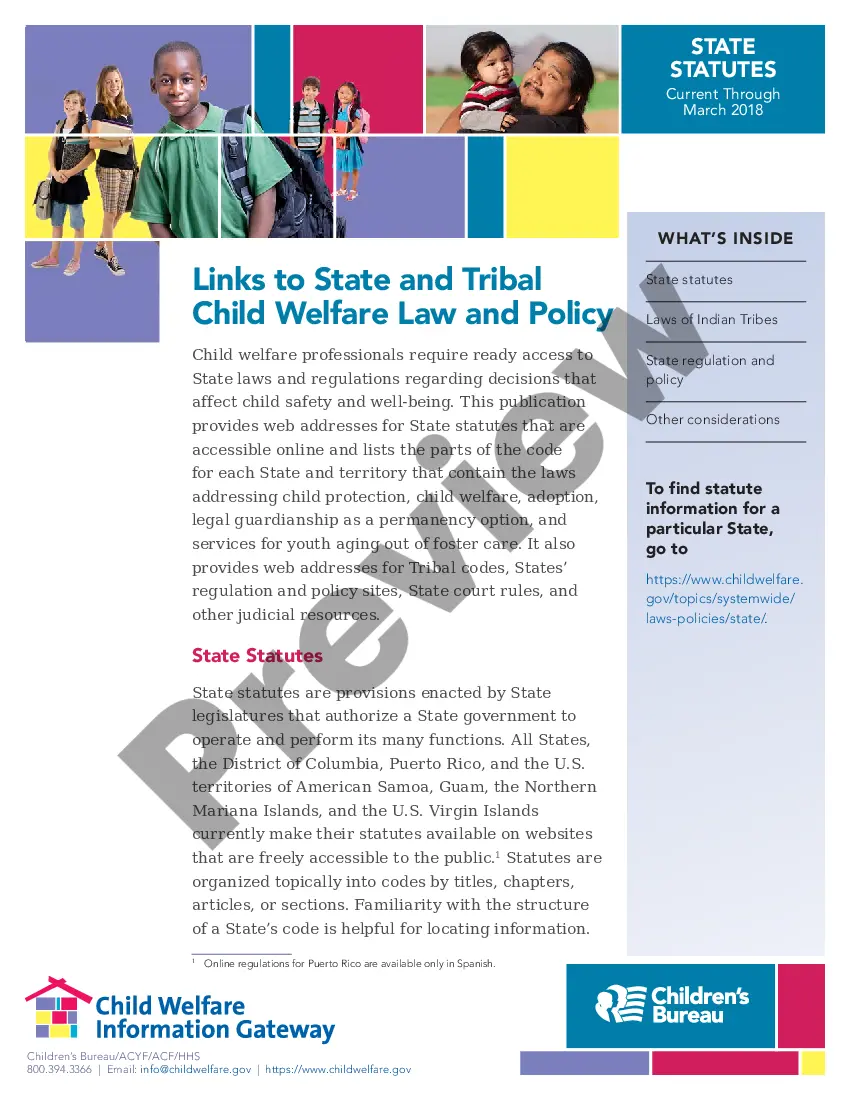
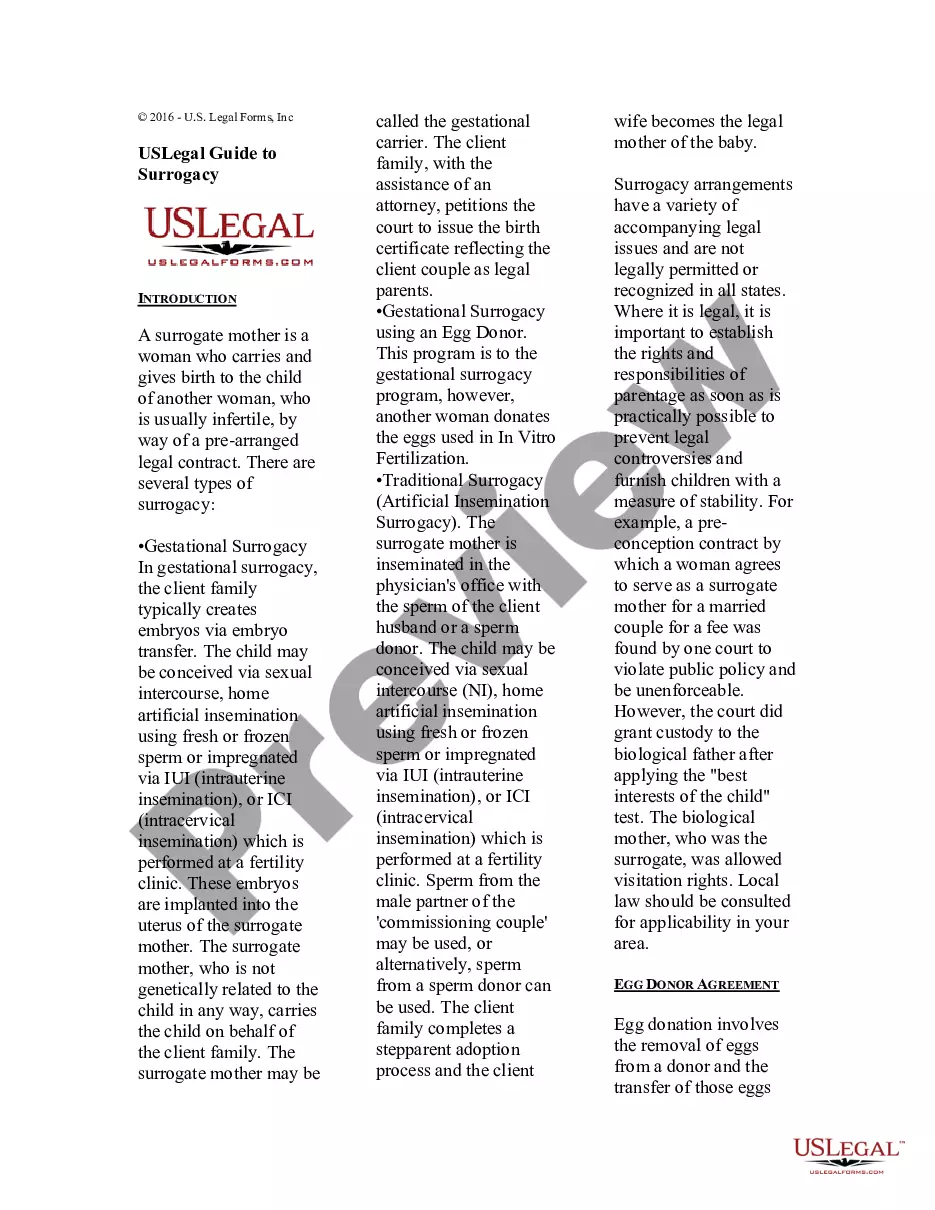
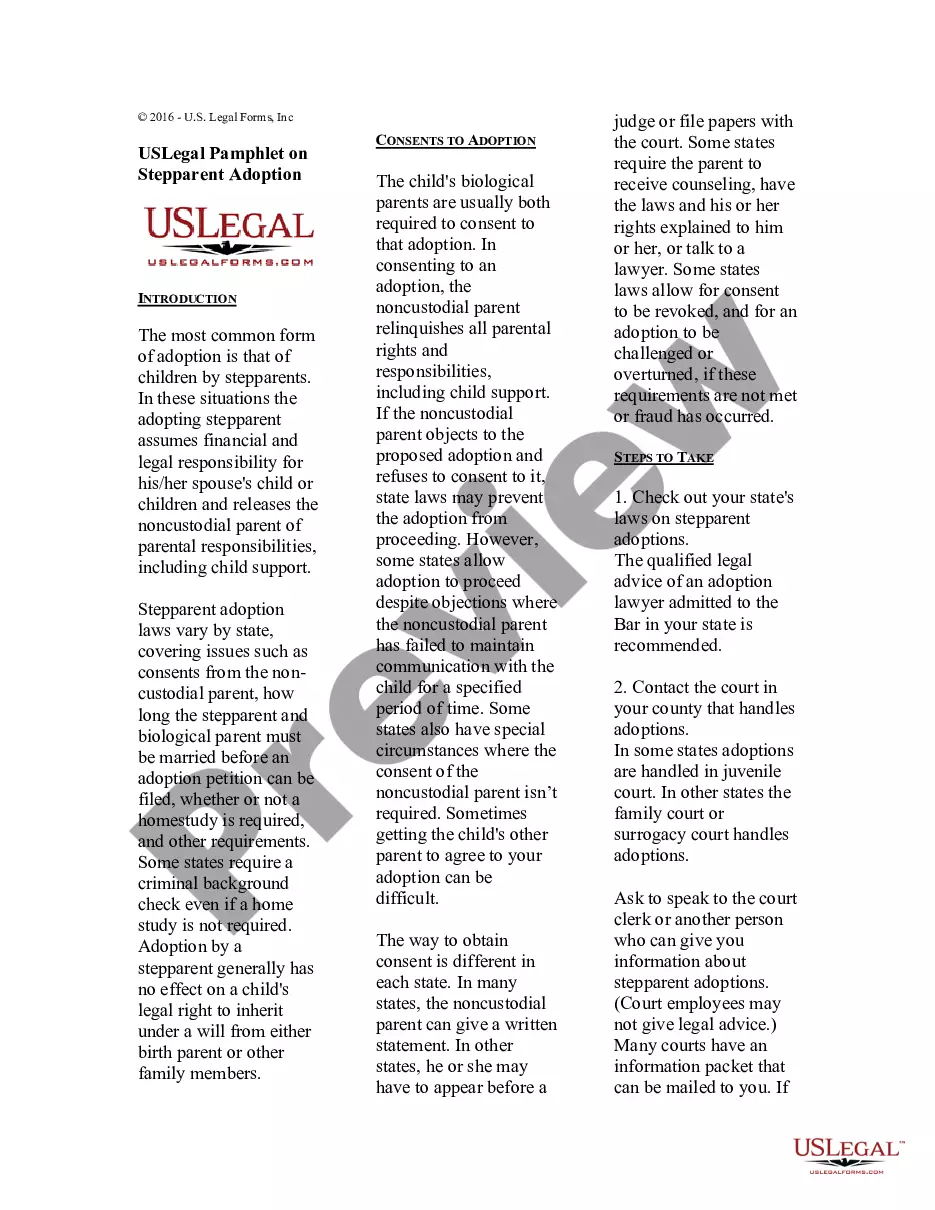
The Paternity Law and Procedure Handbook serves as a comprehensive guide to understanding the laws and procedures related to establishing paternity in the United States. It outlines the rights and responsibilities of both parents, as well as the legal processes involved in paternity establishment, whether voluntary or through court action. This handbook is essential for unmarried parents navigating the complexities of paternity, and it is tailored to provide clarity in a straightforward manner, unlike other legal documents that may be more generalized.
Key parts of this document
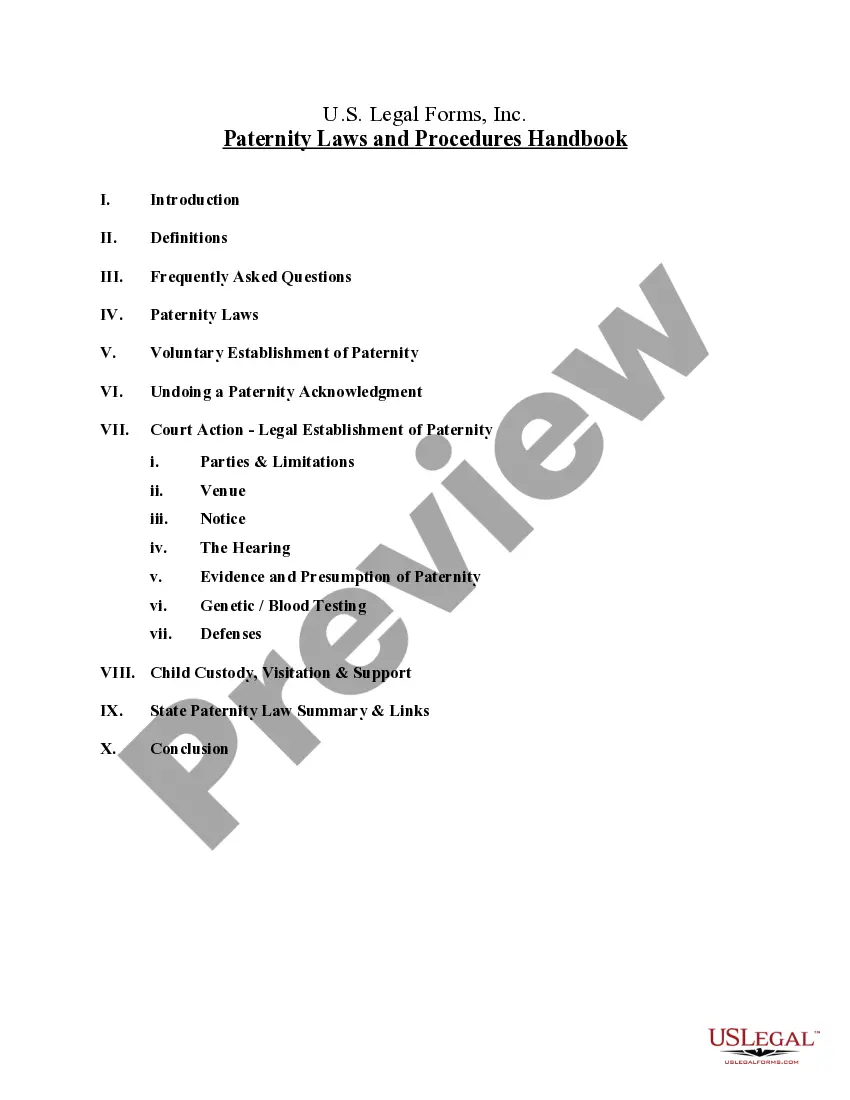
- Introduction to paternity laws and their significance
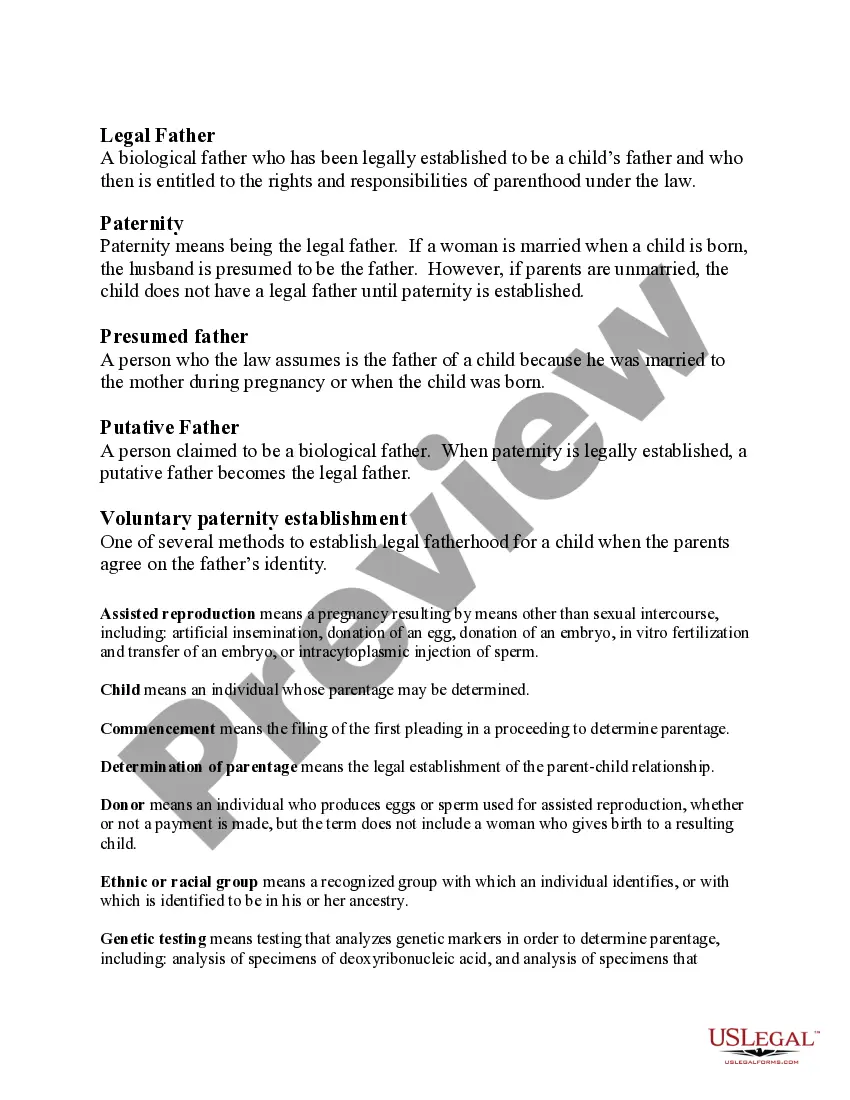
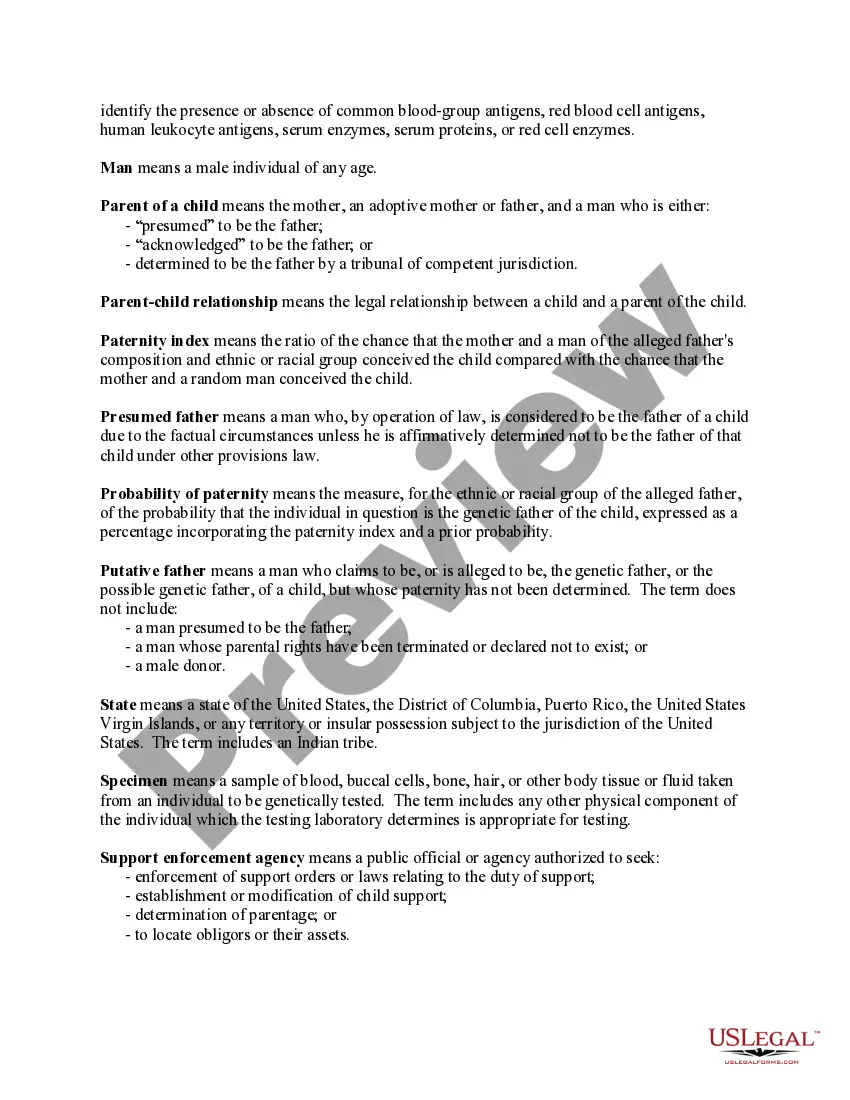
- Definitions of key terms such as biological father, legal father, and paternity
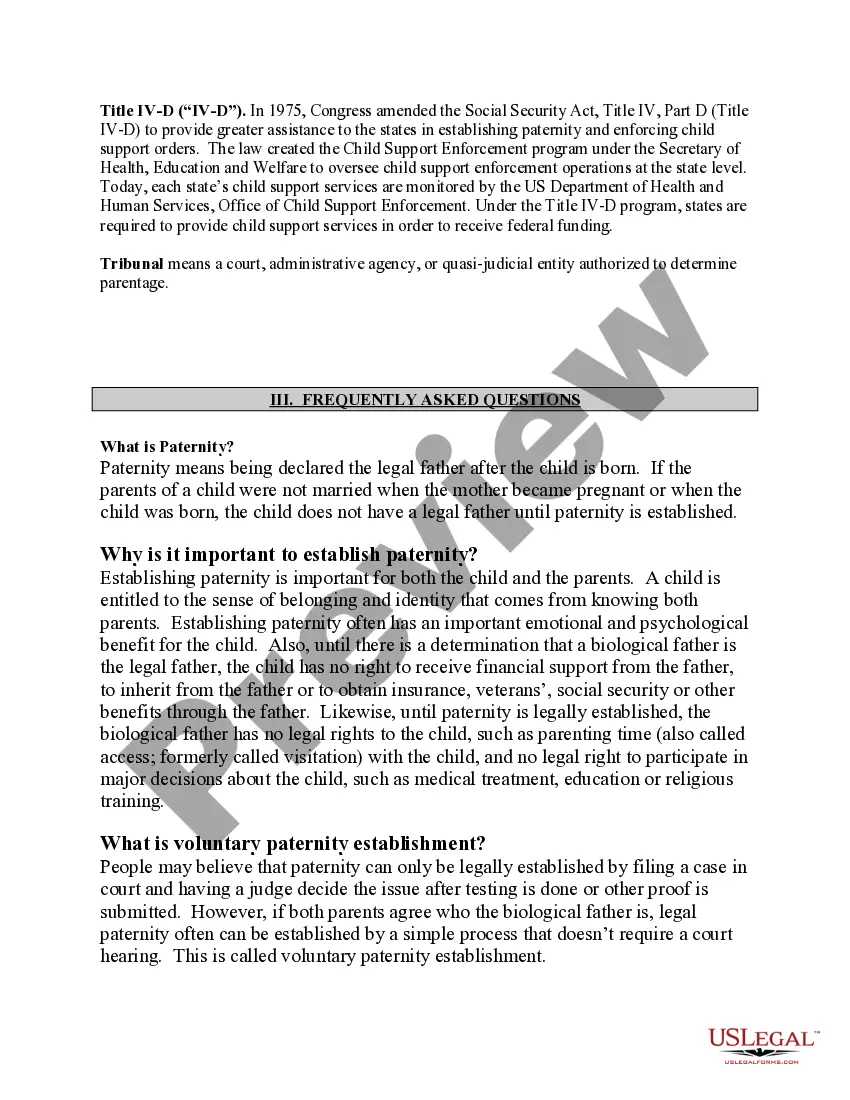
- Guidance on voluntary paternity establishment methods
- Procedures for legal establishment of paternity through court action
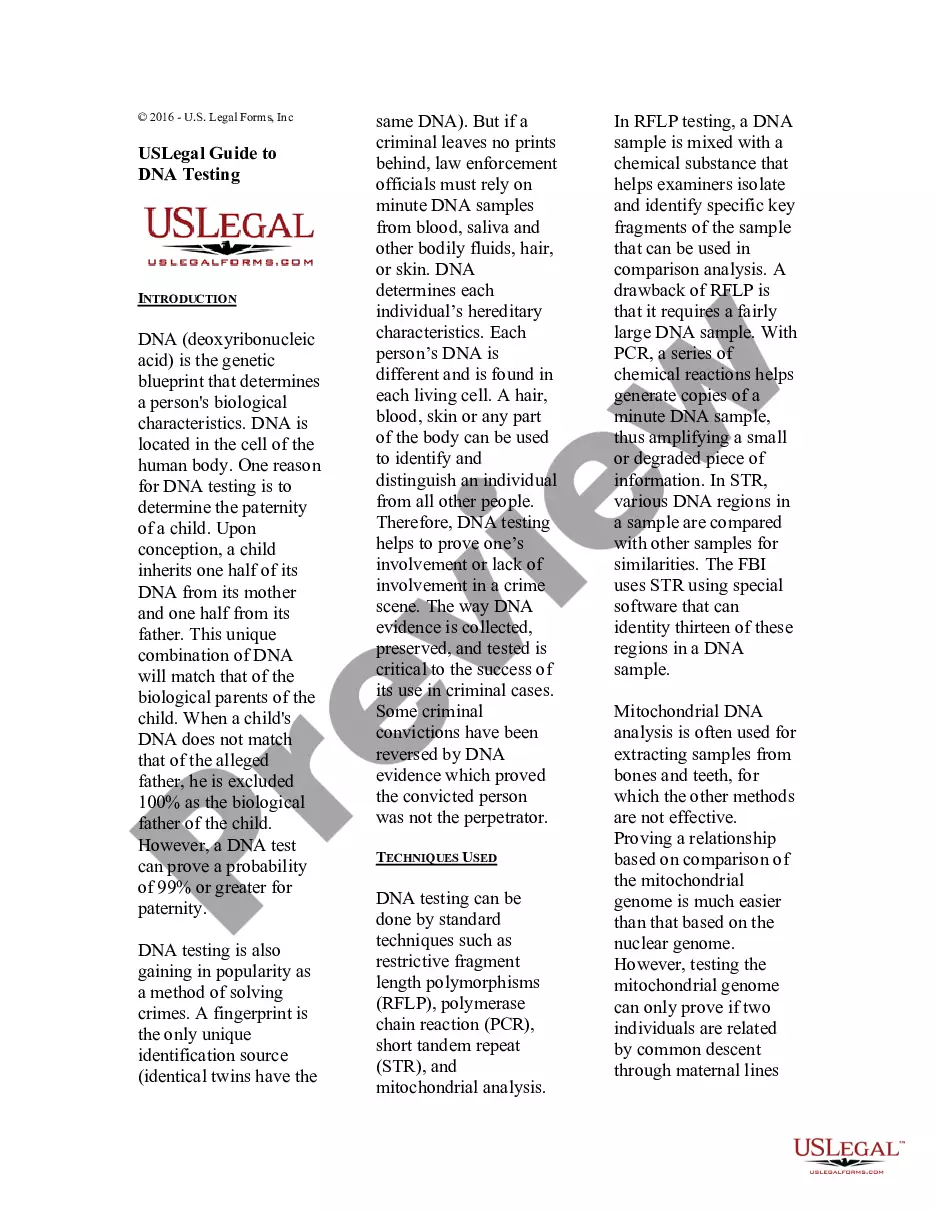
- Information on genetic testing requirements and implications
- Summary of state-specific paternity laws and resources


When to use this form
This handbook is particularly useful for situations where paternity establishment is required, such as when an unmarried couple has a child and the father is reluctant to acknowledge paternity. It is also applicable when a legal determination is needed for child support, health insurance, and other benefits connected to the father-child relationship. Use this form if you are in the process of asserting rights or responsibilities regarding a child born out of wedlock.
Intended users of this form
- Unmarried mothers seeking to establish paternity for child support purposes
- Unmarried fathers looking to assert their paternity rights
- Legal professionals working with paternity cases
- Social services agencies involved in child welfare and support
Instructions for completing this form
- Identify all parties involved, including the child, mother, and putative father.
- Review the definitions and processes outlined to ensure understanding of paternity establishment.
- Determine if voluntary acknowledgment of paternity is possible between the parents.
- If court action is required, file a petition with the appropriate court or agency.
- Gather necessary evidence, including genetic testing results if needed.
- Complete any forms for paternity acknowledgment as outlined in the handbook.
Is notarization required?
Notarization is not commonly needed for this form. However, certain documents or local rules may make it necessary. Our notarization service, powered by Notarize, allows you to finalize it securely online anytime, day or night.
Get your form ready online
Our built-in tools help you complete, sign, share, and store your documents in one place.
Make edits, fill in missing information, and update formatting in US Legal Forms—just like you would in MS Word.
Download a copy, print it, send it by email, or mail it via USPS—whatever works best for your next step.
Sign and collect signatures with our SignNow integration. Send to multiple recipients, set reminders, and more. Go Premium to unlock E-Sign.
If this form requires notarization, complete it online through a secure video call—no need to meet a notary in person or wait for an appointment.
We protect your documents and personal data by following strict security and privacy standards.

Make edits, fill in missing information, and update formatting in US Legal Forms—just like you would in MS Word.

Download a copy, print it, send it by email, or mail it via USPS—whatever works best for your next step.

Sign and collect signatures with our SignNow integration. Send to multiple recipients, set reminders, and more. Go Premium to unlock E-Sign.

If this form requires notarization, complete it online through a secure video call—no need to meet a notary in person or wait for an appointment.

We protect your documents and personal data by following strict security and privacy standards.
Avoid these common issues
- Failing to complete all required paperwork accurately
- Not understanding state-specific laws related to paternity acknowledgment
- Overlooking the importance of genetic testing if paternity is disputed
- Assuming that verbal acknowledgement is sufficient without legal documentation
Why complete this form online
- Convenient access to important legal information at any time
- Easy navigation through complex legal topics with user-friendly language
- Immediate availability of necessary forms for download and use
- Support for a clearer understanding of rights and responsibilities as parents
Key takeaways
- Establishing paternity is crucial for both legal rights and responsibilities of parents.
- The process can be done voluntarily or through court procedures.
- Understanding state-specific laws is essential for successful paternity establishment.
- Using this handbook can streamline the complex legal processes involved in asserting paternity.
Key terms explained
- Biological Father: The man who fathers a child biologically.
- Legal Father: A biological father who has been legally recognized as the child's father.
- Paternity: The state of being a father; the legal acknowledgment of fatherhood.
- Putative Father: A man who is claimed to be the biological father of a child but whose paternity has not yet been recognized.
- Genetic Testing: A scientific method used to determine biological relationships, often through DNA analysis.
Looking for another form?




Form popularity
FAQ
When the Child is Younger than 12 In most instances, South Carolina is not going to allow children under the age of 12 to voice their preference about which parent they would like to live with. Most courts will see the child too young to make the decision.
Section 63-17-20(B) states that the natural mother has sole custody in the case of a child born out of wedlock.
For married parents, paternity is assumed at birth. For unmarried parents, paternity can be established through a paternity acknowledgement at the hospital or at DHEC Vital Records (or any county health department) after leaving the hospital.
Section 63-17-20(B) states that the natural mother has sole custody in the case of a child born out of wedlock.
In marriage, parents in South Carolina have equal power, rights, and duties regarding their children. However, under South Carolina child custody law, divorce can drastically change that. In addition, if the parents were never married, then custody is solely with the mother unless the father goes to court.
50% of children born in South Carolina are born to unmarried parents. When a child is born out-of-wedlock in South Carolina, the biological father has no legal rights or connection to the child until he establishes legal paternity.
Once you establish legal paternity, the mother cannot move away with the child over the father's objection without leave of court. However, if you do not establish paternity, the mother can move away or deny visitation rights, regardless of the father's objections.
To voluntarily establish paternity, both the father and mother must sign what's called a Voluntary Paternity Acknowledgment. This is often done at the hospital or birthing center when the child is born. Completing the Voluntary Paternity Acknowledgment at the hospital is free.
The legal definition of an unfit parent is when the parent through their conduct fails to provide proper guidance, care, or support. Also, if there is abuse, neglect, or substance abuse issues, that parent will be deemed unfit.