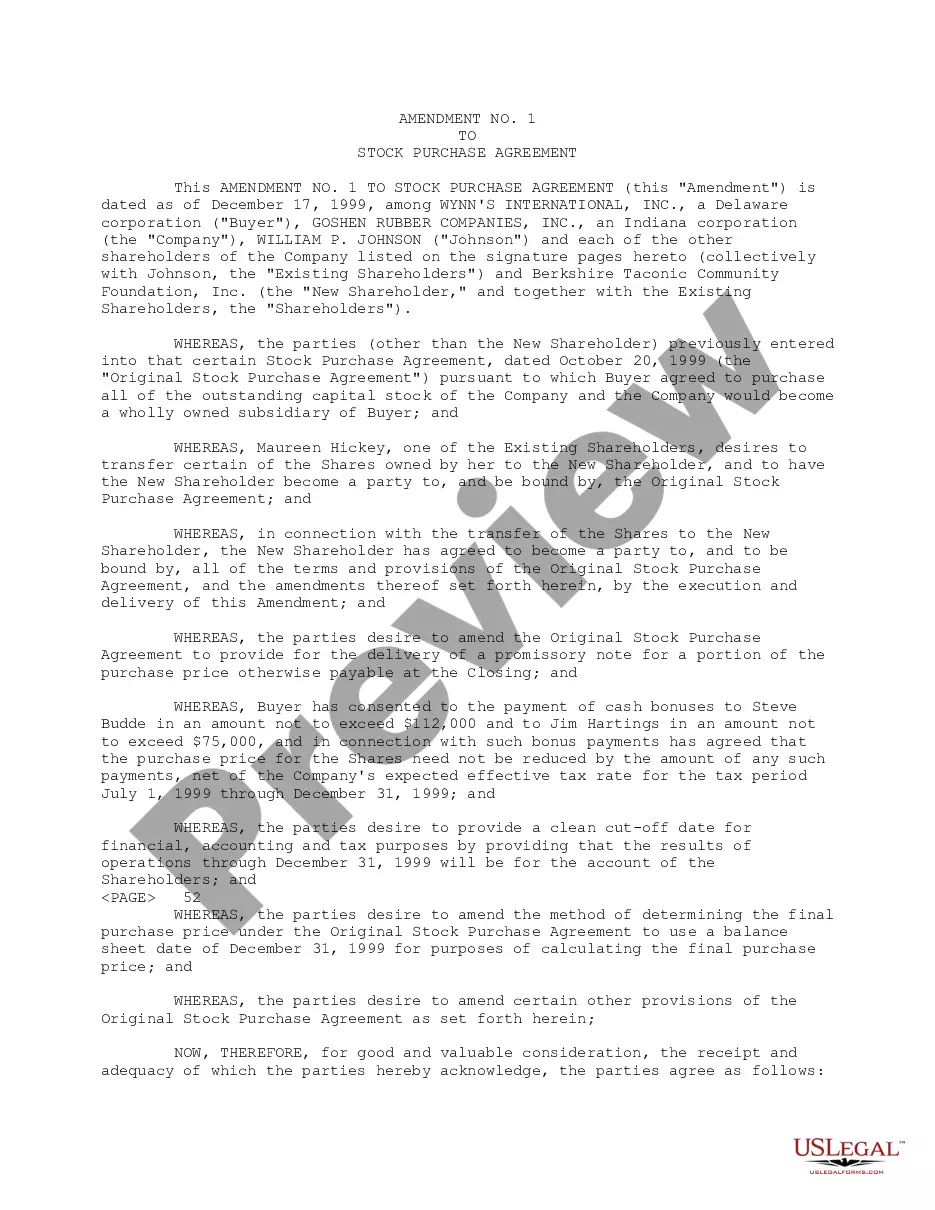
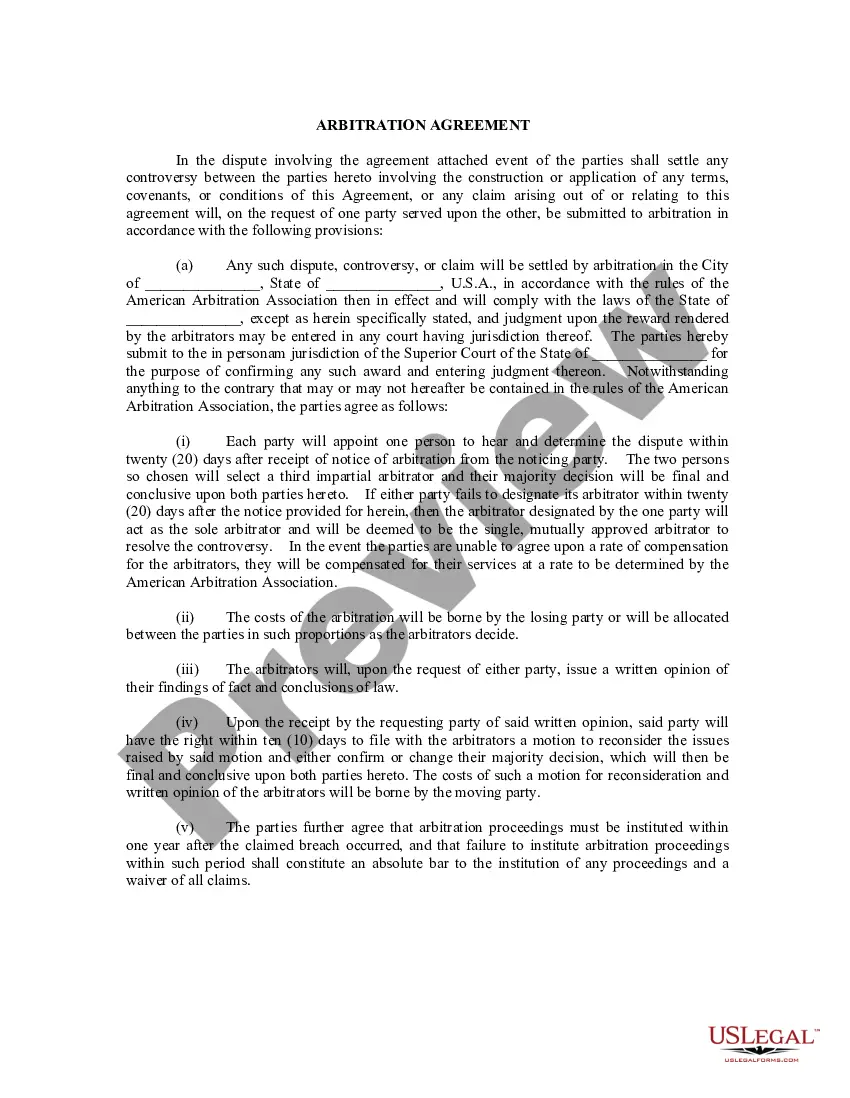
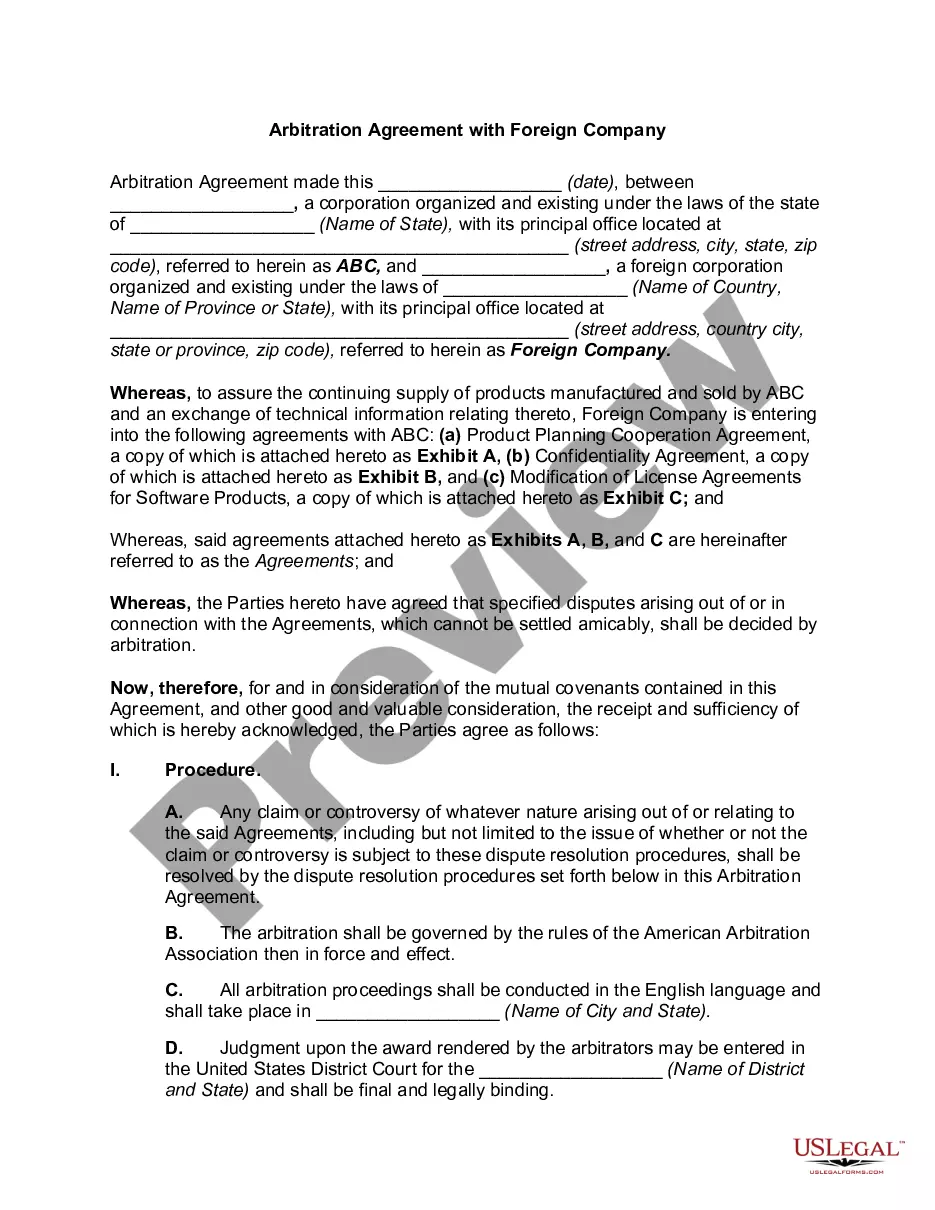
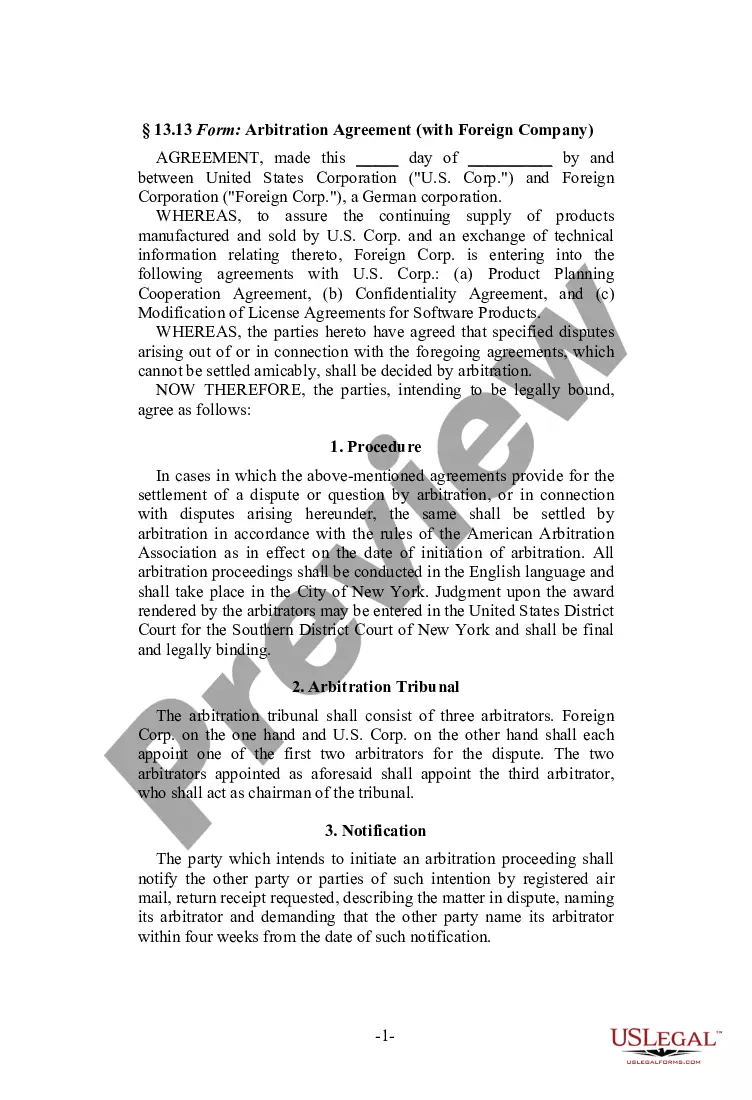
This form is an Arbitration Agreement. The form provides that each party will appoint one person to hear and determine the dispute within twenty days after receipt of notice of arbitration from the noticing party. The costs of the arbitration will be absorbed by the losing party or will be allocated between the parties in such proportions as the arbitrators decide.
Rhode Island OEM Arbitration Agreement
Category:
State:
Multi-State
Control #:
US-KWP-0046
Format:
Word;
Rich Text
Instant download
Description

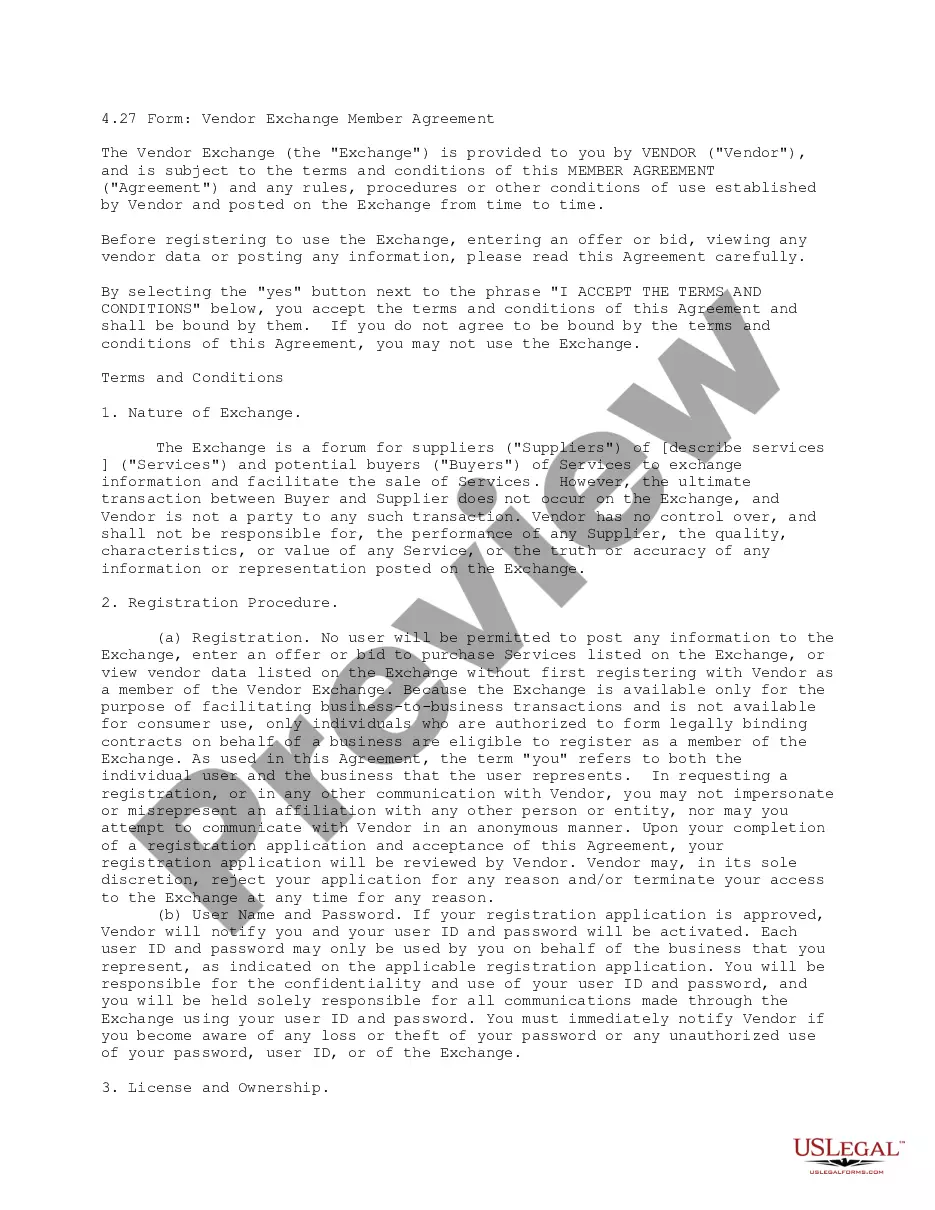
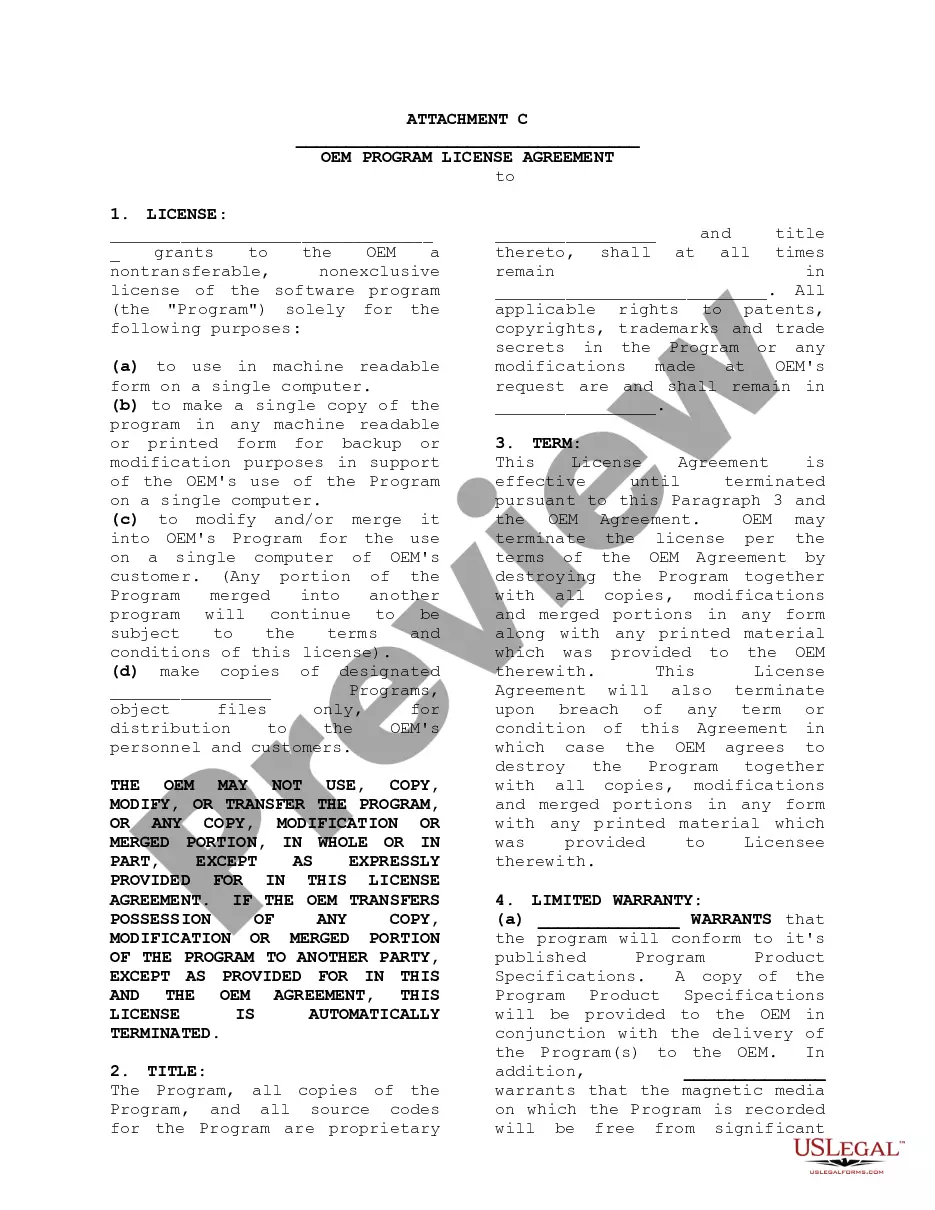
Get your form ready online
Our built-in tools help you complete, sign, share, and store your documents in one place.
Built-in online Word editor
Make edits, fill in missing information, and update formatting in US Legal Forms—just like you would in MS Word.
Export easily
Download a copy, print it, send it by email, or mail it via USPS—whatever works best for your next step.
E-sign your document
Sign and collect signatures with our SignNow integration. Send to multiple recipients, set reminders, and more. Go Premium to unlock E-Sign.
Notarize online 24/7
If this form requires notarization, complete it online through a secure video call—no need to meet a notary in person or wait for an appointment.
Store your document securely
We protect your documents and personal data by following strict security and privacy standards.

Make edits, fill in missing information, and update formatting in US Legal Forms—just like you would in MS Word.

Download a copy, print it, send it by email, or mail it via USPS—whatever works best for your next step.

Sign and collect signatures with our SignNow integration. Send to multiple recipients, set reminders, and more. Go Premium to unlock E-Sign.

If this form requires notarization, complete it online through a secure video call—no need to meet a notary in person or wait for an appointment.

We protect your documents and personal data by following strict security and privacy standards.
Looking for another form?

How to fill out OEM Arbitration Agreement?
It is feasible to allocate time online trying to locate the appropriate legal document format that complies with the federal and state requirements you need.
US Legal Forms offers a vast array of legal documents that can be reviewed by experts.
You can download or print the Rhode Island OEM Arbitration Agreement from their service.
If available, use the Preview button to view the document format as well.
- If you already have a US Legal Forms account, you can Log In and click the Acquire button.
- Then, you can complete, alter, print, or sign the Rhode Island OEM Arbitration Agreement.
- Each legal document format you purchase is yours permanently.
- To obtain an additional copy of any acquired form, go to the My documents tab and click the corresponding button.
- If you're visiting the US Legal Forms website for the first time, follow the simple instructions below.
- First, ensure you have selected the correct document format for the state/region of your choice.
- Review the form details to confirm you have chosen the correct form.
Form popularity
FAQ
The main types of arbitration include binding and non-binding arbitration, as well as expedited arbitration. Binding arbitration requires parties to comply with the arbitrator's ruling, while non-binding arbitration allows parties to reject the decision. Expedited arbitration is designed for quicker resolutions. Understanding these types can help you choose the right approach, especially when establishing a Rhode Island OEM Arbitration Agreement through our USLegalForms platform.
An arbitration agreement is typically binding, meaning that the parties involved must adhere to the arbitrator's decision. This binding nature limits the ability to appeal the decision in court, providing a final resolution to the dispute. It's essential that both parties fully understand the implications of signing an arbitration agreement. If you are drafting a Rhode Island OEM Arbitration Agreement, clarity is key, and our USLegalForms can help ensure the agreement meets legal standards.
Both JAMS and the American Arbitration Association (AAA) offer effective arbitration services, but the choice depends on your specific needs. JAMS often provides a more flexible and streamlined process, while AAA has a larger claim volume and more established guidelines. Each organization has its strengths, so consider your unique situation when choosing between JAMS and AAA for your Rhode Island OEM Arbitration Agreement.
Arbitration can be categorized into three main types: voluntary arbitration, mandatory arbitration, and binding arbitration. Voluntary arbitration occurs when both parties agree to resolve a dispute outside of court. Mandatory arbitration is often required by certain contracts, while binding arbitration requires parties to accept the arbitrator’s decision as final. If you are exploring a Rhode Island OEM Arbitration Agreement, these distinctions are crucial to understand.
annexed arbitration refers to a process where a court refers a dispute to arbitration rather than requiring a traditional court trial. This type of arbitration is often designed to expedite the resolution of cases. It's an efficient method to handle disputes while still being governed by legal standards. If you need assistance with a Rhode Island OEM Arbitration Agreement, consider utilizing our USLegalForms platform for guidance.
To create an effective arbitration agreement, clearly outline each party's rights and responsibilities, define applicable law, and specify the arbitration process. Focus on clarity to avoid misunderstandings and ensure compliance with the Rhode Island OEM Arbitration Agreement. Using standard templates from platforms like US Legal Forms can help you ensure that your document is both legally sound and comprehensive.
In arbitration, there is no clear 'winner' as outcomes depend on the specific details of each case. However, parties that present strong, factual evidence and adhere to the agreement terms often fare better. It's crucial to understand that even with a solid case, results can vary, making it essential to prepare thoroughly under the Rhode Island OEM Arbitration Agreement framework.
To write an arbitration agreement, start with a clear introduction of the parties involved and define the nature of the disputes covered. Include essential elements such as the method of selecting an arbitrator, the location of arbitration, and any specific rules to be followed in line with the Rhode Island OEM Arbitration Agreement. Reviewing templates available on platforms like US Legal Forms can also streamline the process.
A standard arbitration agreement outlines the terms under which arbitration will take place, including the rules governing the process and the authority of the arbitrator. In a Rhode Island OEM Arbitration Agreement, the document typically clarifies the scope of disputes covered and the procedures to be followed. This helps ensure both parties understand their rights and responsibilities.
The three main types of arbitration include binding arbitration, non-binding arbitration, and advisory arbitration. Binding arbitration means both parties must accept the arbitrator's decision, while non-binding arbitration allows for further legal action if either party is unsatisfied. Advisory arbitration provides expert advice but does not impose a decision, offering a different path for dispute resolution.