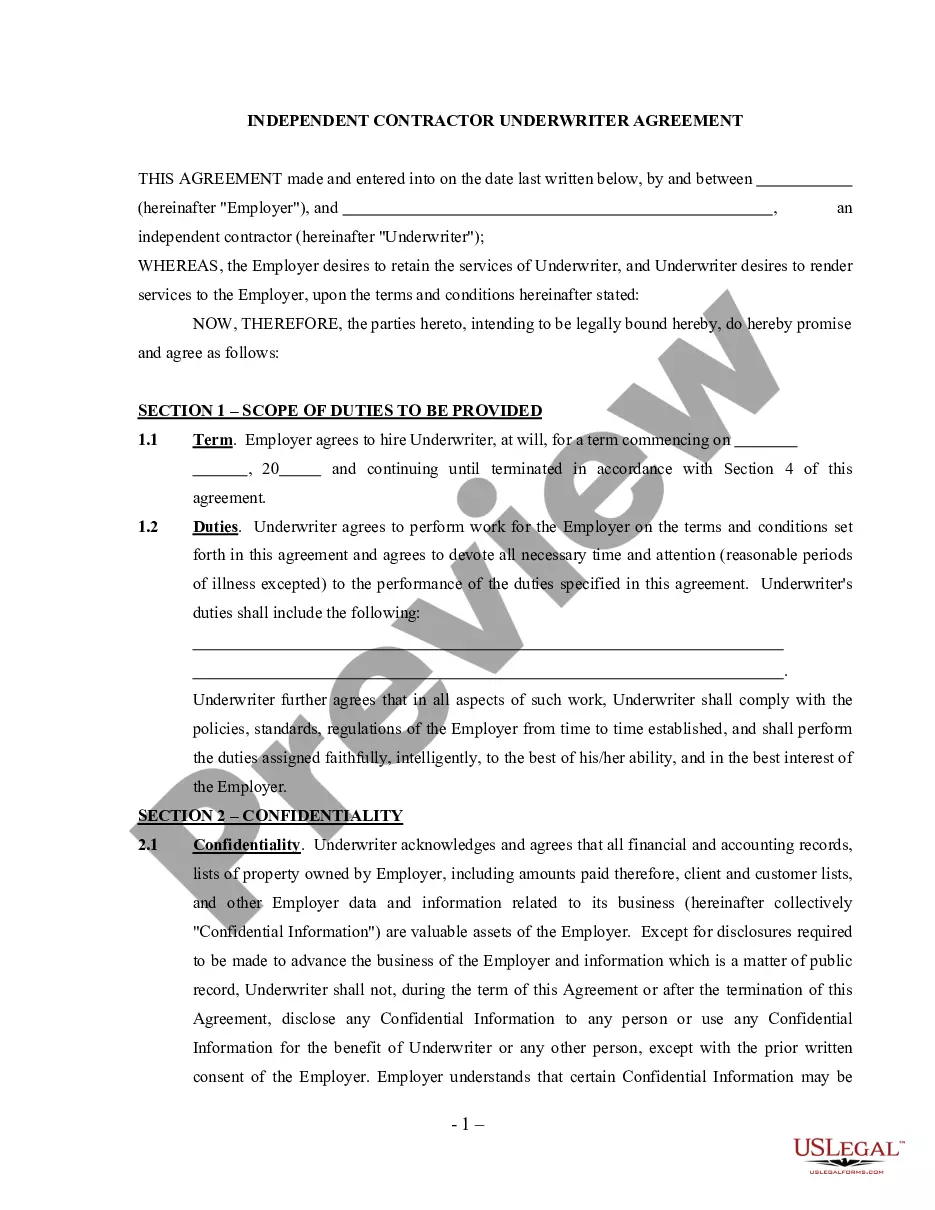
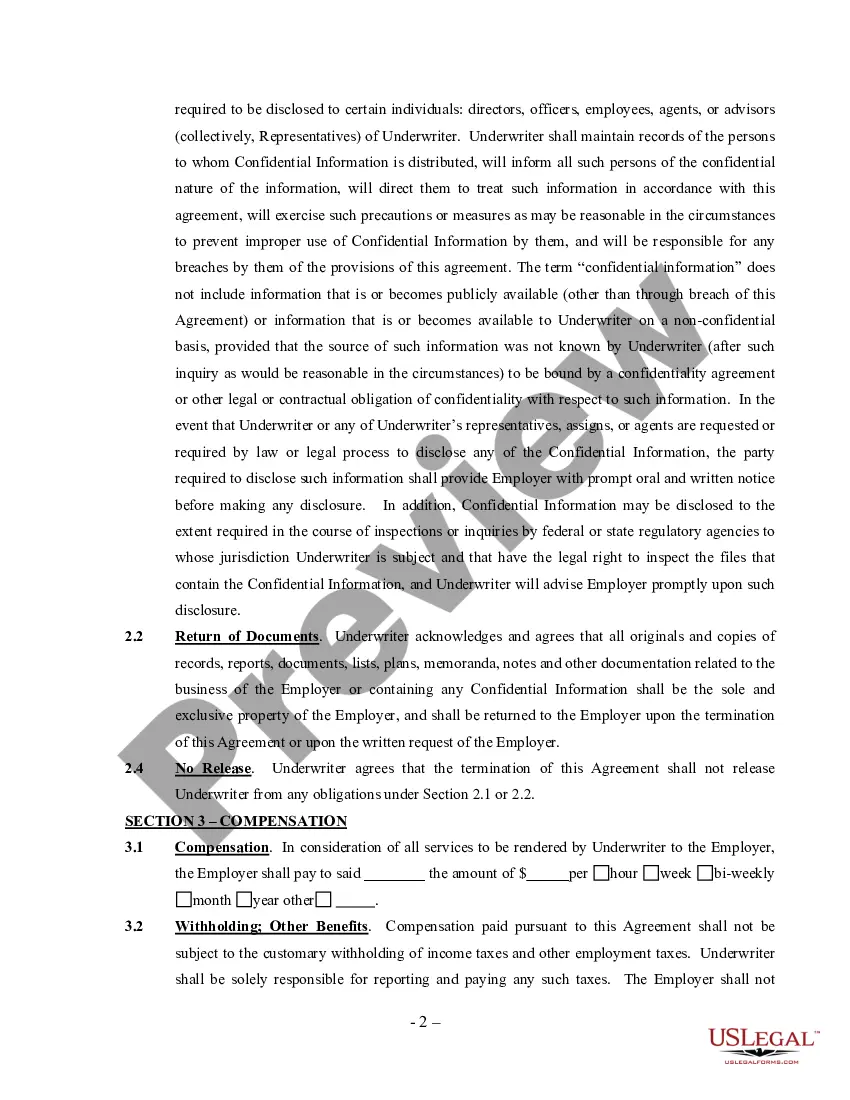
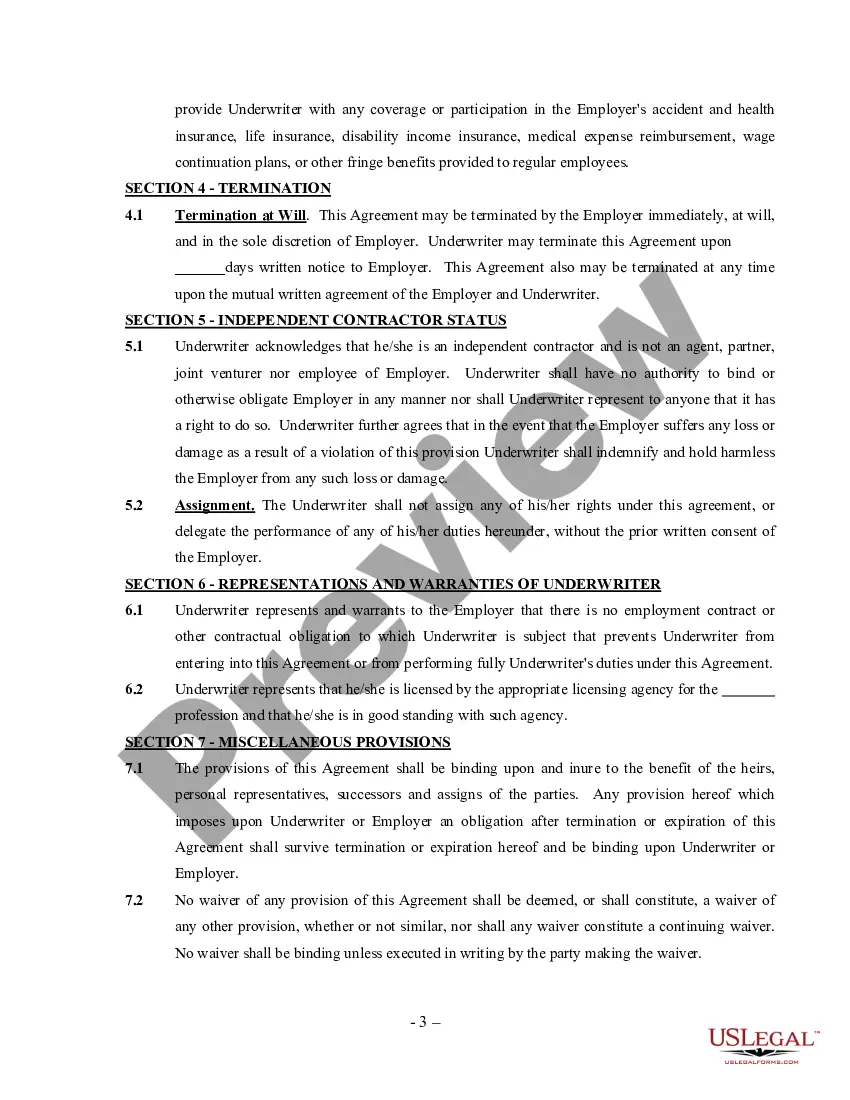
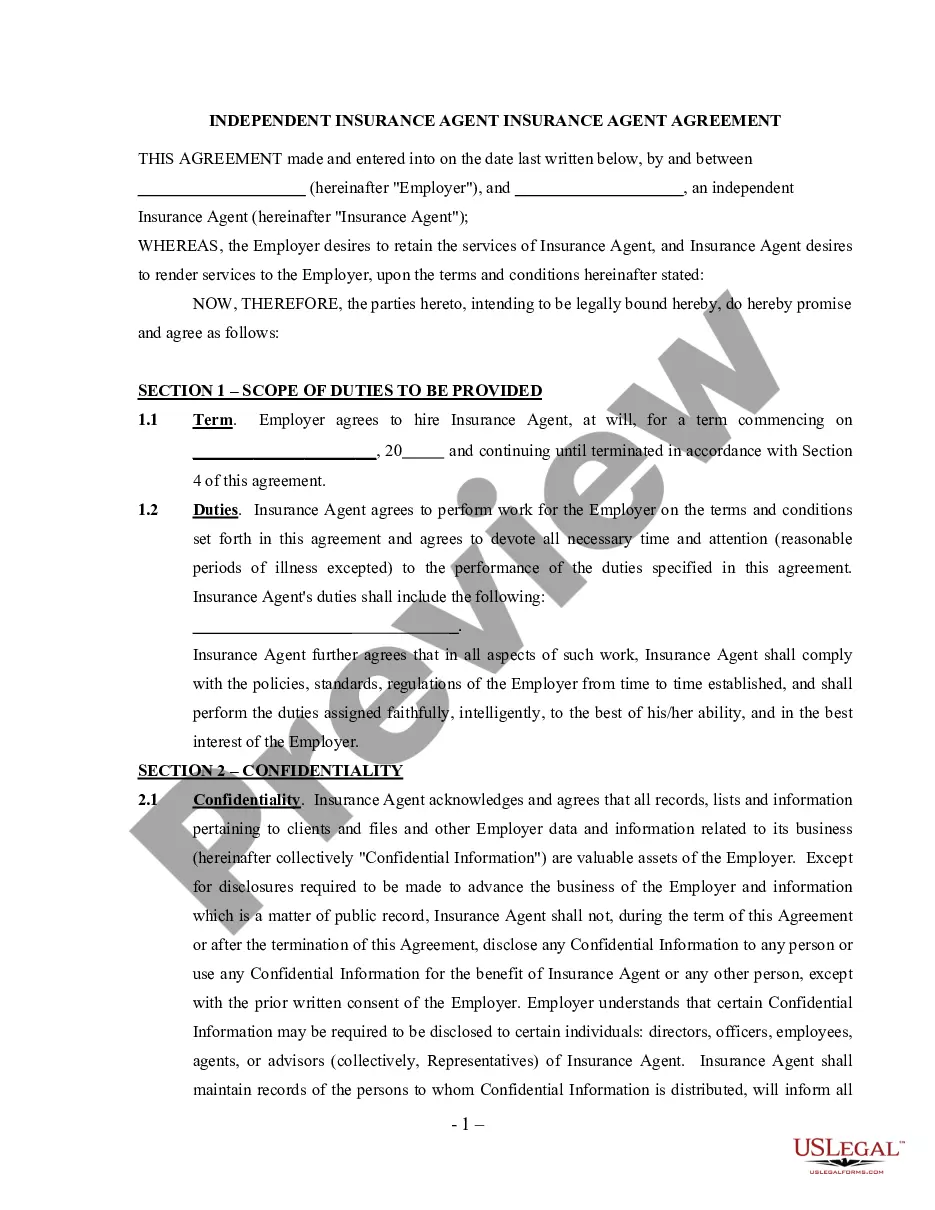
Employer hires an underwriter as an independent contractor to provide underwriting services for third parties as specified in the Agreement.
Rhode Island Underwriter Agreement - Self-Employed Independent Contractor
State:
Multi-State
Control #:
US-INDC-191
Format:
Word;
Rich Text
Instant download
Description
Free preview
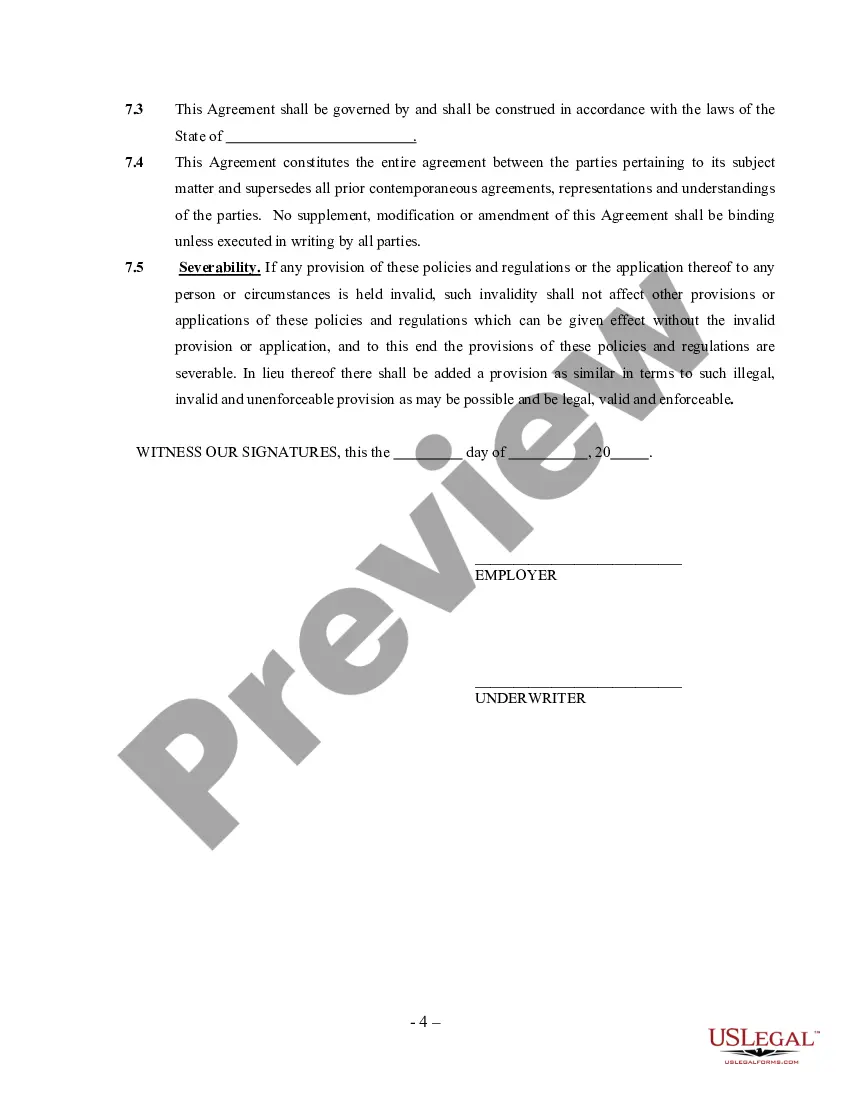
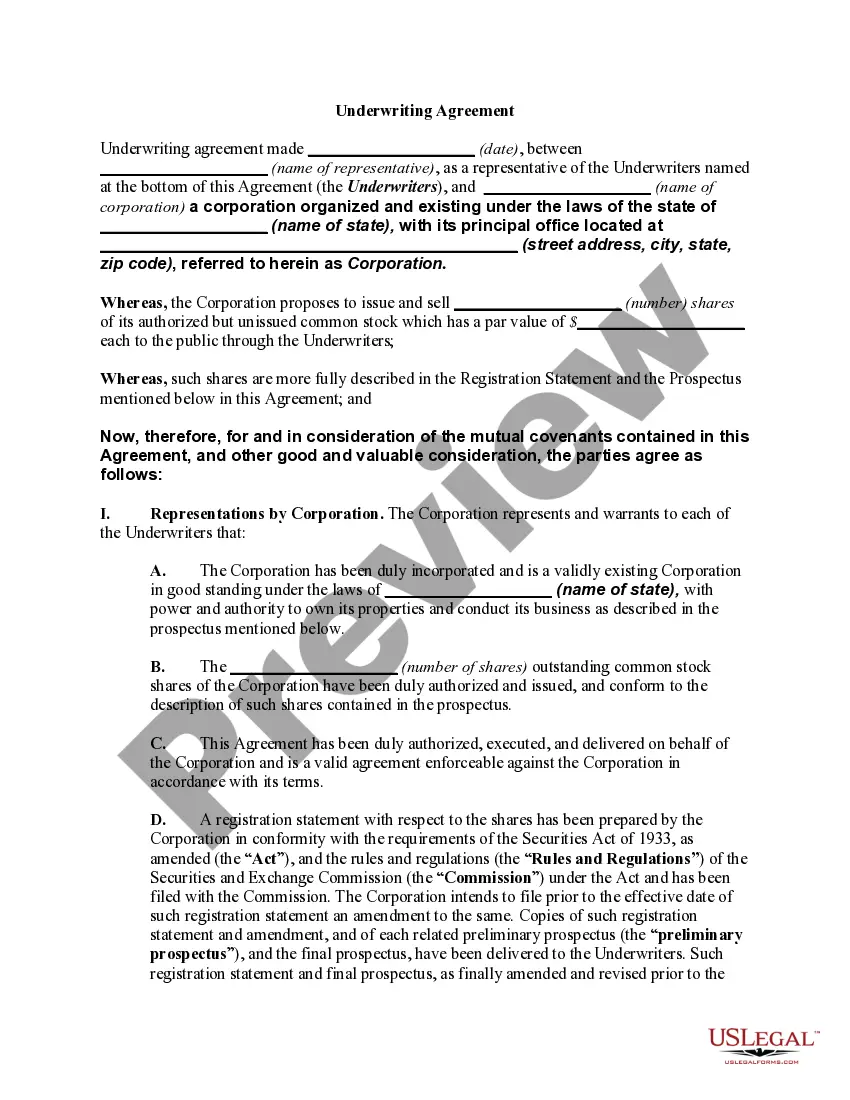
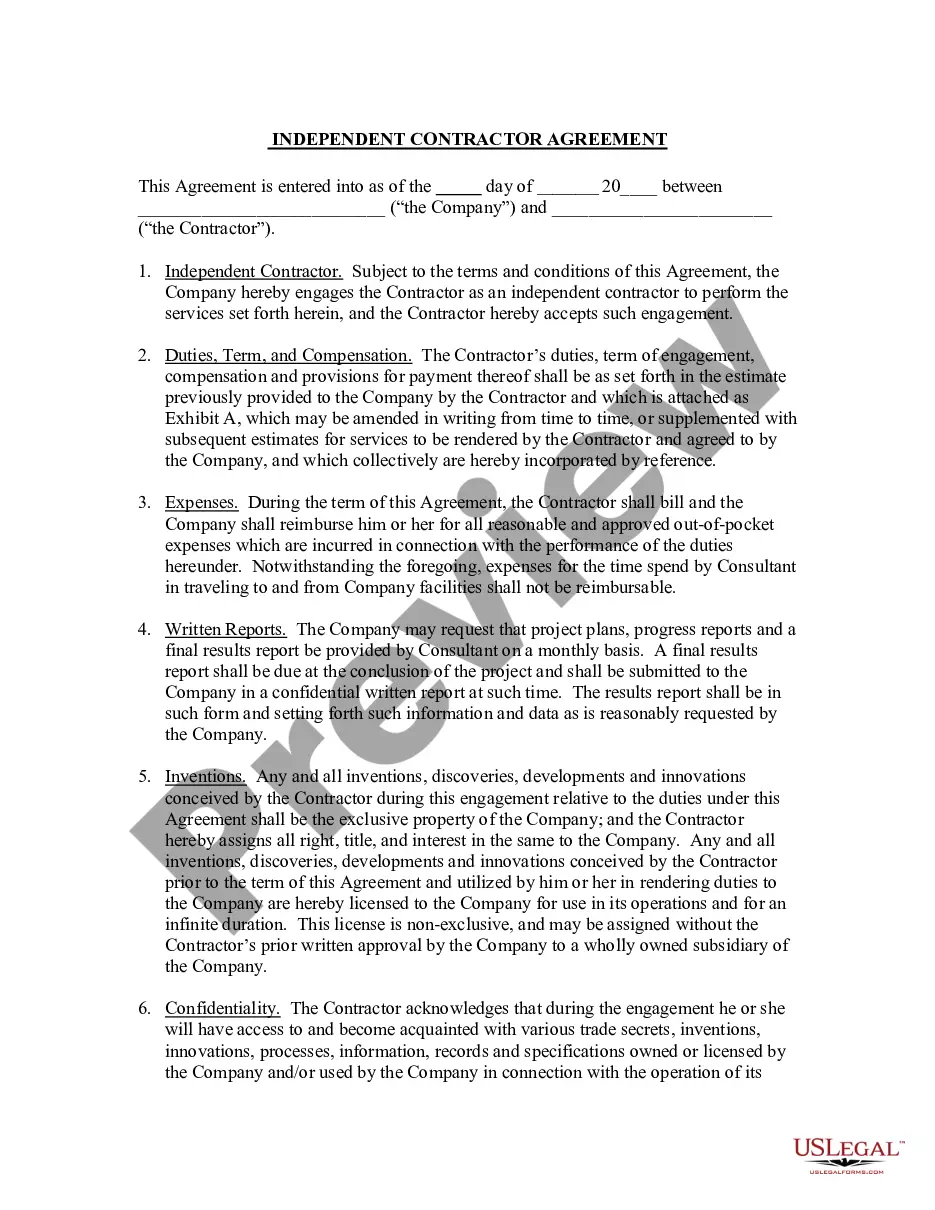
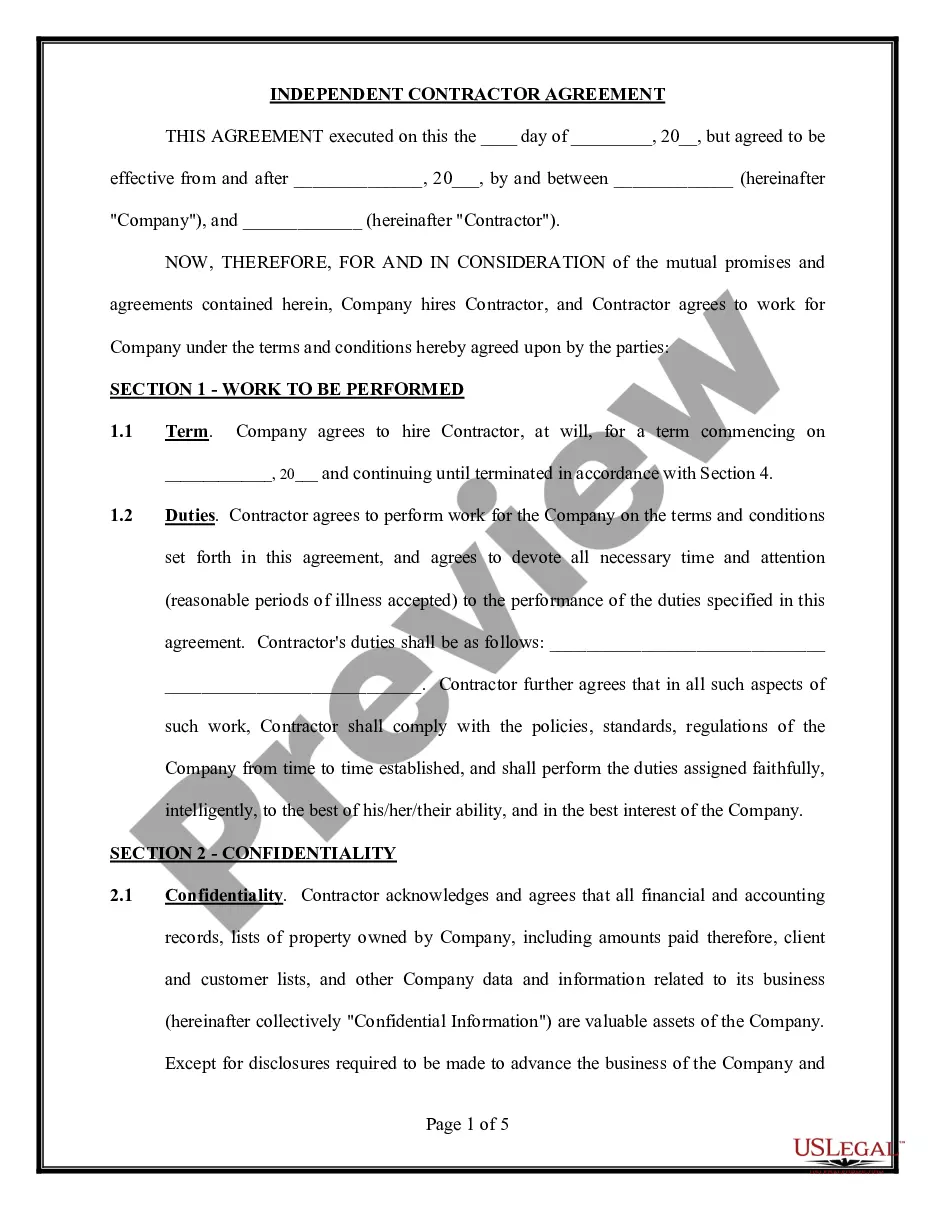
How to fill out Underwriter Agreement - Self-Employed Independent Contractor?
Are you currently in a location where you frequently require documents for either business or personal purposes? There are numerous legal document templates available online, but locating ones you can rely on is not simple. US Legal Forms offers thousands of form templates, such as the Rhode Island Underwriter Agreement - Self-Employed Independent Contractor, which are designed to comply with state and federal regulations.
If you are already acquainted with the US Legal Forms website and possess an account, simply Log In. After that, you can download the Rhode Island Underwriter Agreement - Self-Employed Independent Contractor template.
If you do not have an account and wish to start using US Legal Forms, follow these steps: Obtain the form you need and make sure it is for the correct area/state. Use the Preview button to review the document. Read the description to confirm that you have selected the correct form. If the form is not what you are looking for, utilize the Search field to find the form that fits your needs and requirements. Once you find the right form, click Get now. Choose the pricing plan you want, fill in the necessary information to create your account, and pay for the transaction using your PayPal or credit card. Select a convenient file format and download your copy.
Avoid altering or removing any HTML tags. Only synonymize plain text outside of the HTML tags.
- Locate all of the document templates you have purchased in the My documents section.
- You can acquire an additional copy of the Rhode Island Underwriter Agreement - Self-Employed Independent Contractor at any time, if necessary.
- Simply select the required form to download or print the document template.
- Utilize US Legal Forms, the most extensive collection of legal forms, to save time and avoid mistakes.
- The service provides properly crafted legal document templates that can be used for various purposes.
- Create an account on US Legal Forms and start making your life easier.
Form popularity
FAQ
To create an independent contractor agreement, start by gathering all necessary information, including the contractor's name, address, and services provided. Clearly outline the terms of the relationship, including payment details and project timelines. Additionally, incorporate clauses relevant to termination and confidentiality. For individuals seeking a reliable template, the Rhode Island Underwriter Agreement - Self-Employed Independent Contractor available on USLegalForms can simplify the process and ensure you cover all essential aspects.
Filling out an independent contractor agreement is essential for effective communication. Begin by entering your details and those of the contractor. Outline the services provided, payment details, and any expectations regarding timelines. Referring to the Rhode Island Underwriter Agreement - Self-Employed Independent Contractor can help ensure you cover all necessary points. After completing the form, both parties should review and sign it.
Writing an independent contractor agreement involves several key components. Start with both parties' names and contact information. Clearly define the scope of work, payment terms, and any deadlines. Incorporate elements from the Rhode Island Underwriter Agreement - Self-Employed Independent Contractor for additional clarity and protection.
To fill out an independent contractor form, first gather your personal details and information about your business. Specify the services you will provide and the payment terms. Don't forget to reference the Rhode Island Underwriter Agreement - Self-Employed Independent Contractor, as it sets the framework for your work relationship. Finally, review the form for accuracy before submitting it.
Filling out a declaration of independent contractor status form is straightforward. Start by providing your personal information, including your name and address. Next, indicate the nature of your work and how it aligns with the requirements of the Rhode Island Underwriter Agreement - Self-Employed Independent Contractor. Make sure to sign the form to validate it.
As a self-employed independent contractor in Rhode Island, you will need to complete various forms. This includes tax forms like the W-9 to provide your taxpayer identification number. Additionally, you should have your Rhode Island Underwriter Agreement ready to outline the terms of your work. Be sure to keep copies of these documents for your records.
Becoming an independent contractor usually involves registering your business with state authorities and obtaining any necessary licenses. You should review the Rhode Island Underwriter Agreement - Self-Employed Independent Contractor and ensure you understand the legal obligations tied to your status. Utilize platforms like USLegalForms for guidance on the requirements specific to your industry.
As an independent contractor, you need to gather your income records, such as 1099 forms and any invoices you've issued. You’ll also need information about business expenses, as they can help reduce your taxable income. Consider using resources like the Rhode Island Underwriter Agreement - Self-Employed Independent Contractor from USLegalForms to assist in organizing your filing correctly.
Yes, independent contractors are considered self-employed. They have more control over their work schedules, project selection, and financial matters compared to traditional employees. If you’re engaging in business under the Rhode Island Underwriter Agreement - Self-Employed Independent Contractor, you are indeed classified as self-employed.
Independent contractors must report their income to the IRS, usually by filing a Form 1040 along with a Schedule C. They should also calculate their self-employment tax using Schedule SE. The Rhode Island Underwriter Agreement - Self-Employed Independent Contractor requires you to track your earnings carefully, so maintaining accurate records will help during tax season.