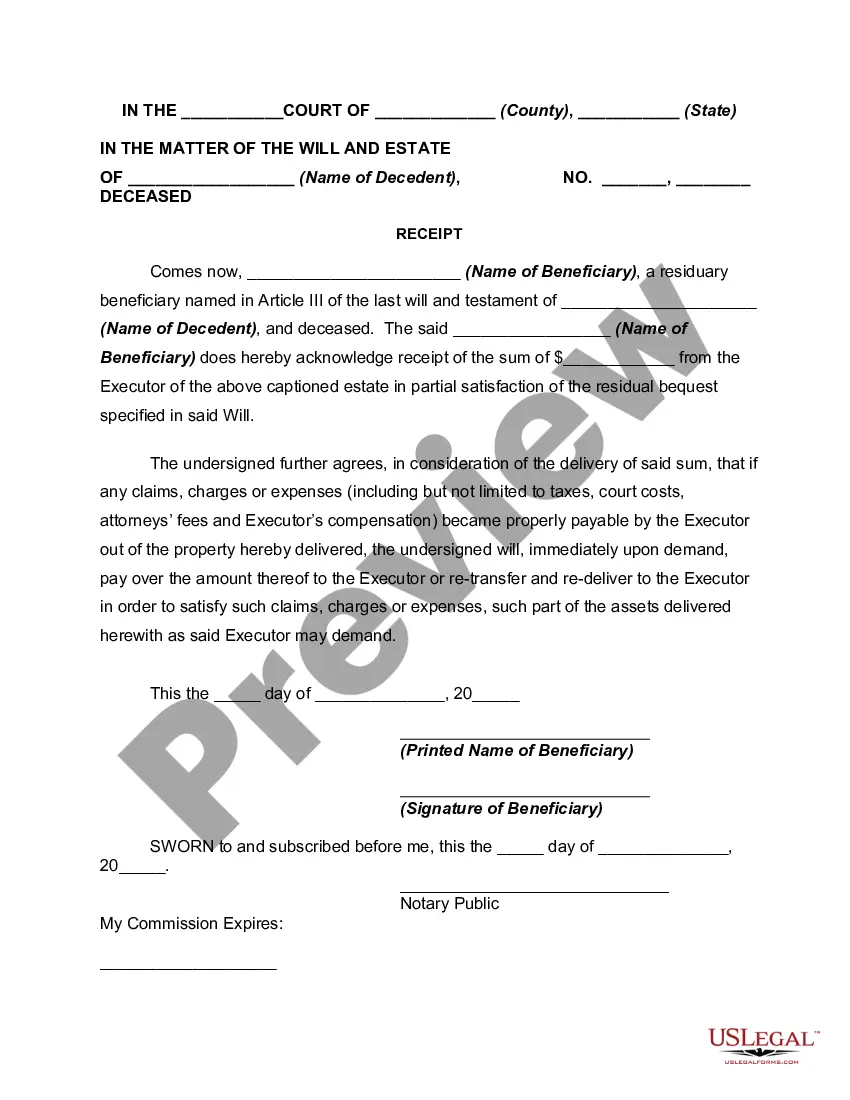
Rhode Island Exit Interview Checklist - Involuntary Termination
Description
Get your form ready online
Our built-in tools help you complete, sign, share, and store your documents in one place.
Make edits, fill in missing information, and update formatting in US Legal Forms—just like you would in MS Word.
Download a copy, print it, send it by email, or mail it via USPS—whatever works best for your next step.
Sign and collect signatures with our SignNow integration. Send to multiple recipients, set reminders, and more. Go Premium to unlock E-Sign.
If this form requires notarization, complete it online through a secure video call—no need to meet a notary in person or wait for an appointment.
We protect your documents and personal data by following strict security and privacy standards.

Make edits, fill in missing information, and update formatting in US Legal Forms—just like you would in MS Word.

Download a copy, print it, send it by email, or mail it via USPS—whatever works best for your next step.

Sign and collect signatures with our SignNow integration. Send to multiple recipients, set reminders, and more. Go Premium to unlock E-Sign.

If this form requires notarization, complete it online through a secure video call—no need to meet a notary in person or wait for an appointment.

We protect your documents and personal data by following strict security and privacy standards.
Looking for another form?


How to fill out Exit Interview Checklist - Involuntary Termination?
US Legal Forms - one of the largest collections of legal documents in the United States - offers a broad selection of legal form templates that you can download or print.
Through the website, you can access thousands of forms for business and personal purposes, organized by categories, states, or keywords.
You can find the latest editions of forms such as the Rhode Island Exit Interview Checklist - Involuntary Termination in just a few minutes.
If the form doesn't meet your requirements, utilize the Search box at the top of the page to find one that does.
Once you are satisfied with the form, confirm your choice by clicking the Purchase now button. Then select your preferred pricing plan and provide your details to register for an account.
- If you hold a membership, Log In to access the Rhode Island Exit Interview Checklist - Involuntary Termination from your US Legal Forms library.
- The Download button will appear on every form you view.
- You can access all previously acquired forms in the My documents section of your account.
- If you're using US Legal Forms for the first time, here are straightforward steps to help you get started.
- Ensure that you have chosen the correct form for your city/state.
- Click the Review button to check the form's content.
Form popularity
FAQ
Who Should Conduct the Interview? The most common choice is to have an internal HR person do it. They should both understand the dynamics of your organization and know the people involved. This means that he or she can dig deeper into issues and ask more pointed questions.
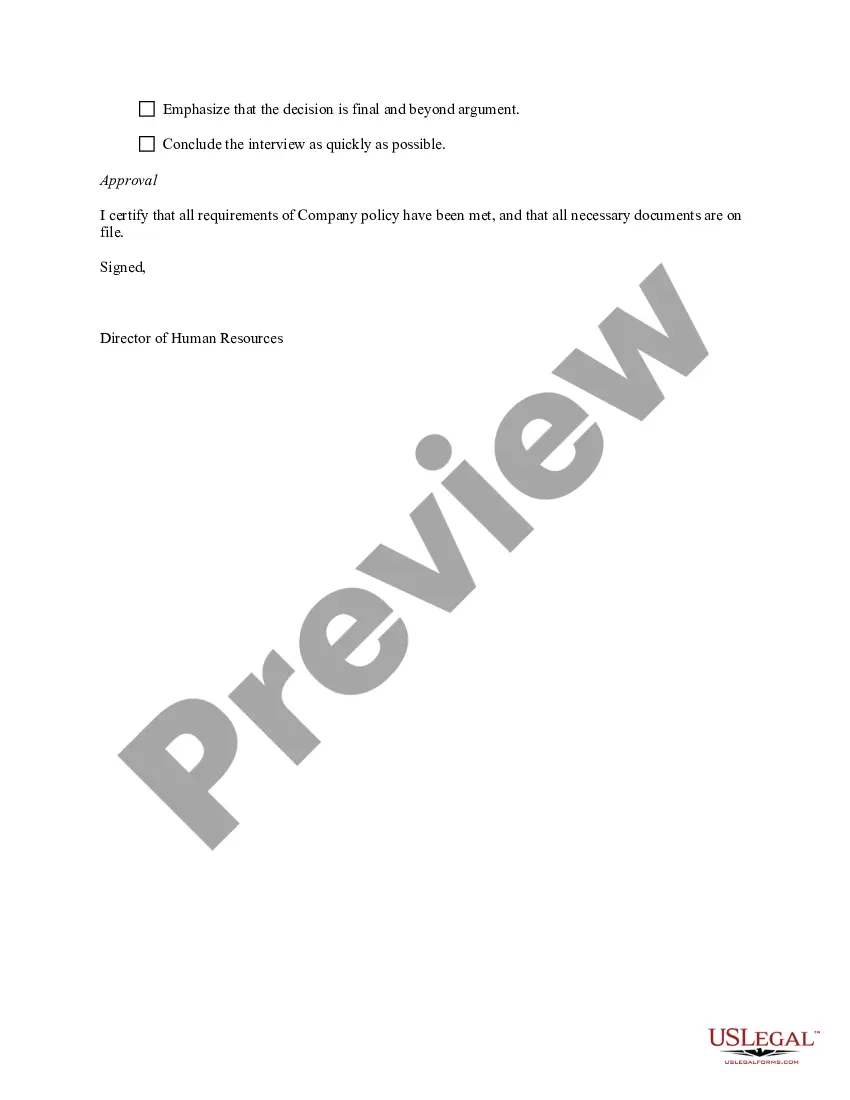
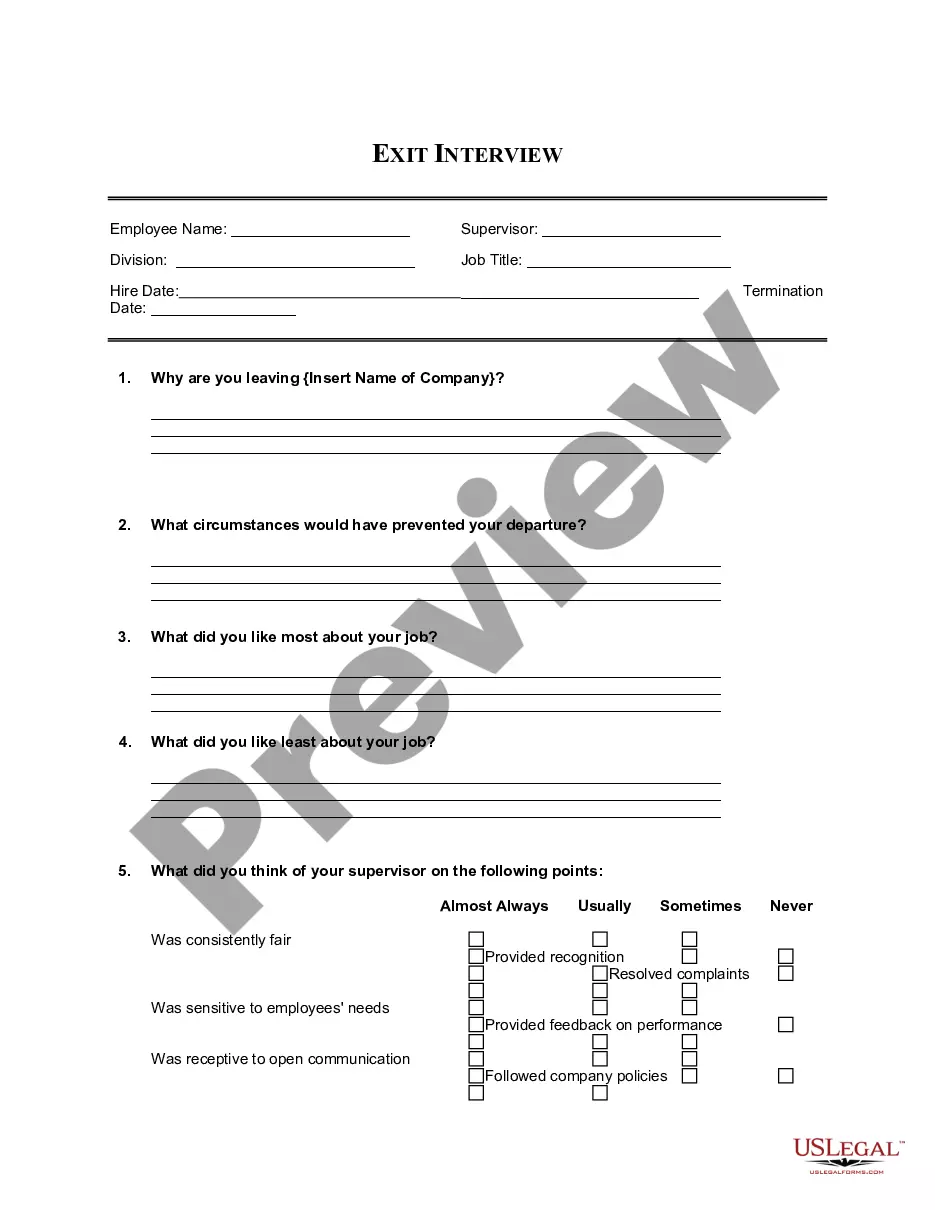
An exit interview (also known as termination or separation interview) is simply an interview conducted with an employee who is leaving a company. The purpose of this interview is to learn.
A termination letter is a letter from an employer to an employee containing pertinent details surrounding their termination. It is typically used as a formal notice to the employee and an official record of the fact they have been terminated.
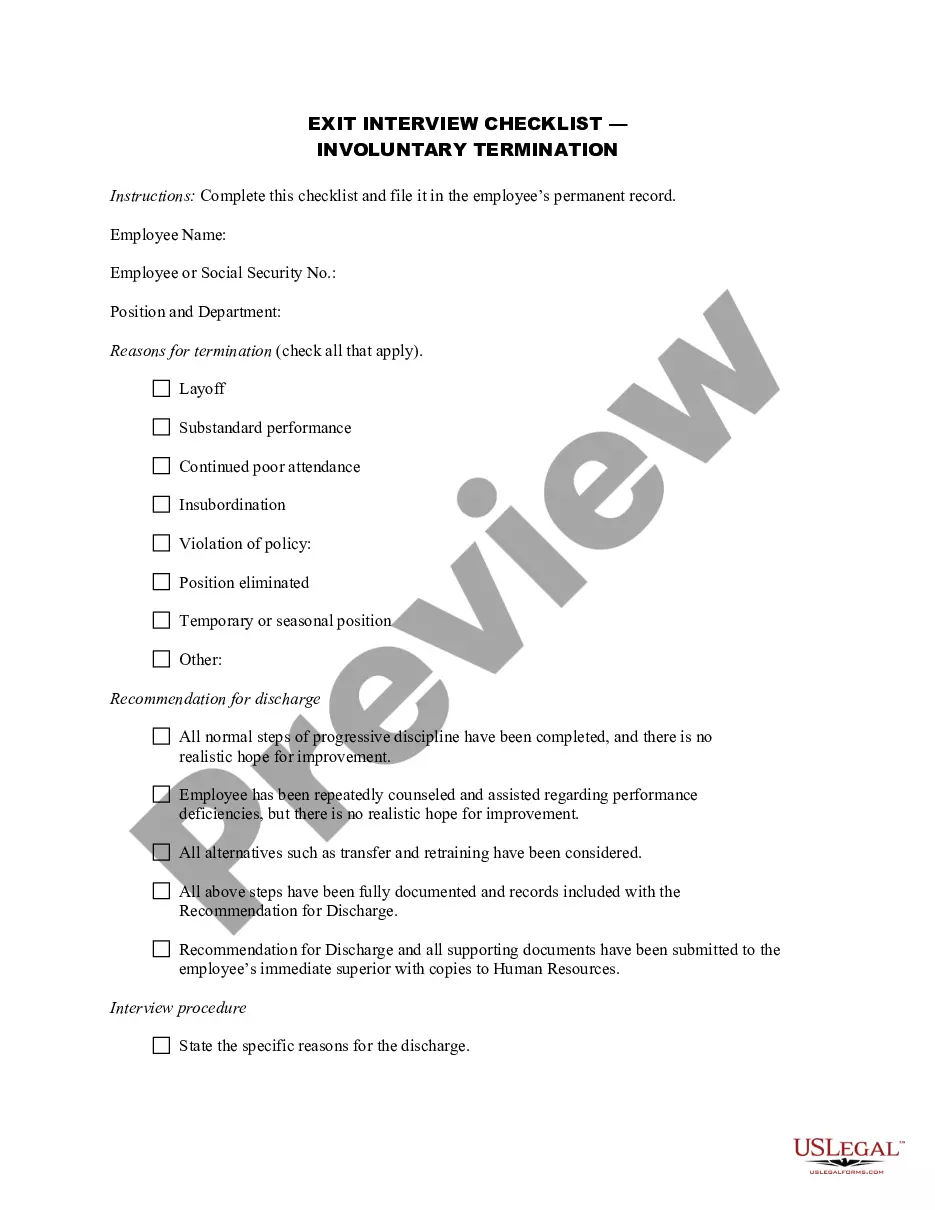
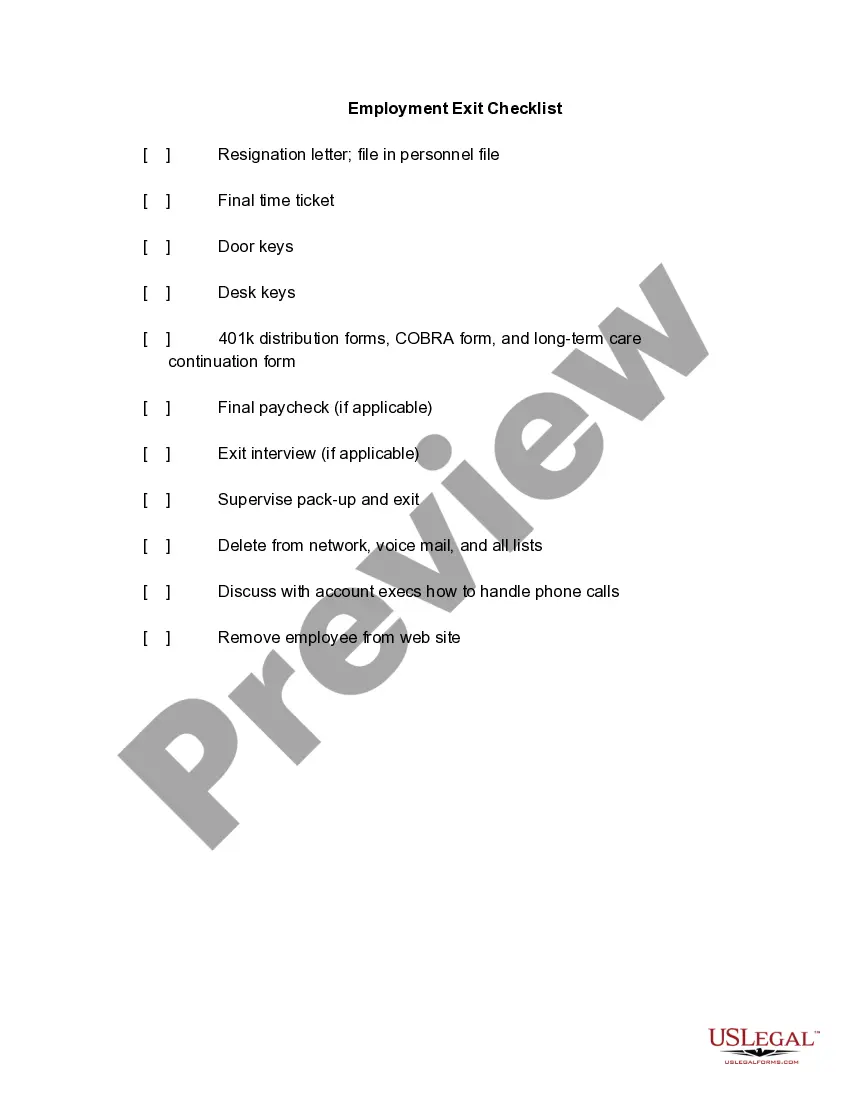
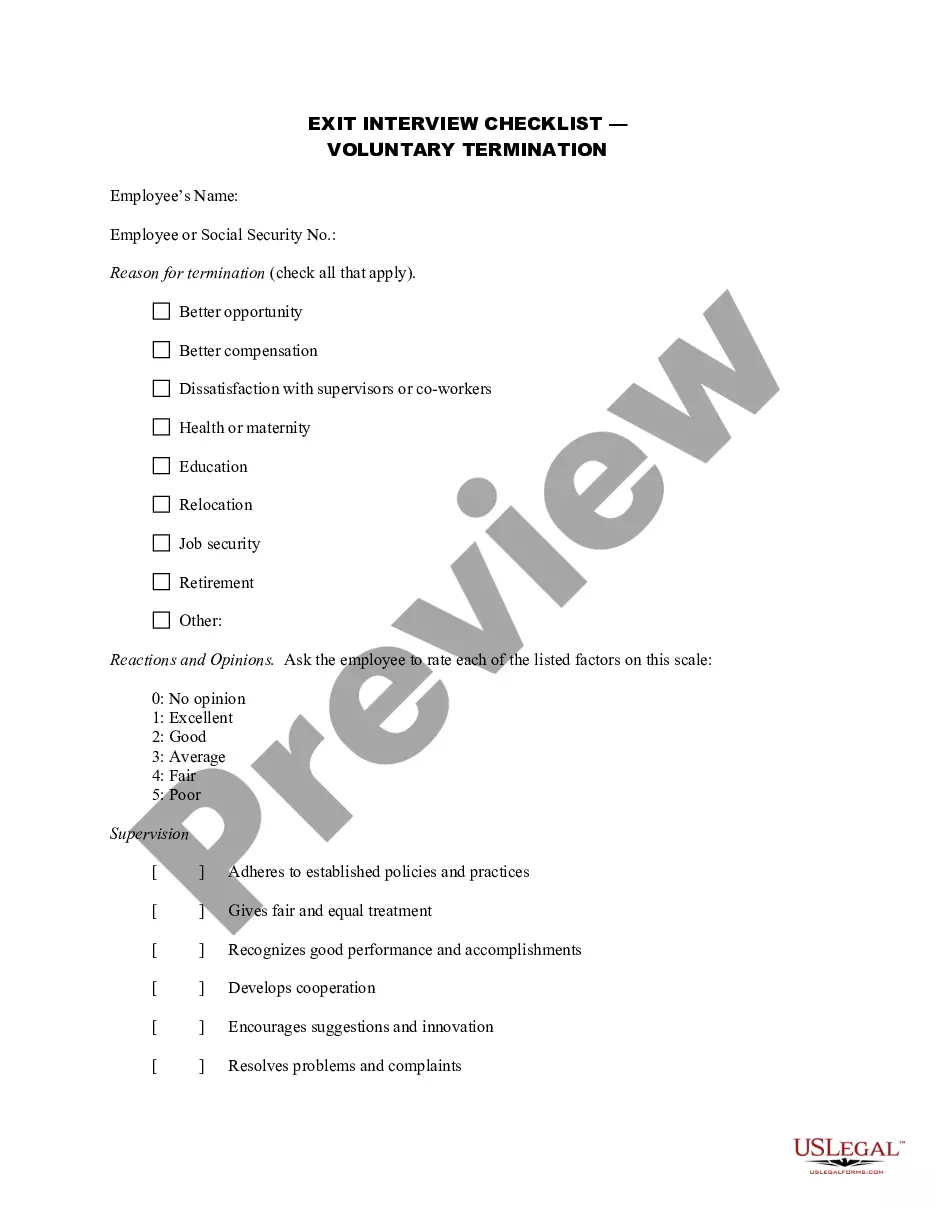
A termination checklist is an outline, master list if you wish, that lists what needs to be done at what stage when an employee is leaving your employ.
You should conduct an employee exit interview regardless of whether the employee resigned or was terminated. Even if the employee had no reason to leave, they will likely still be able to come up with some constructive feedback that your team can use.
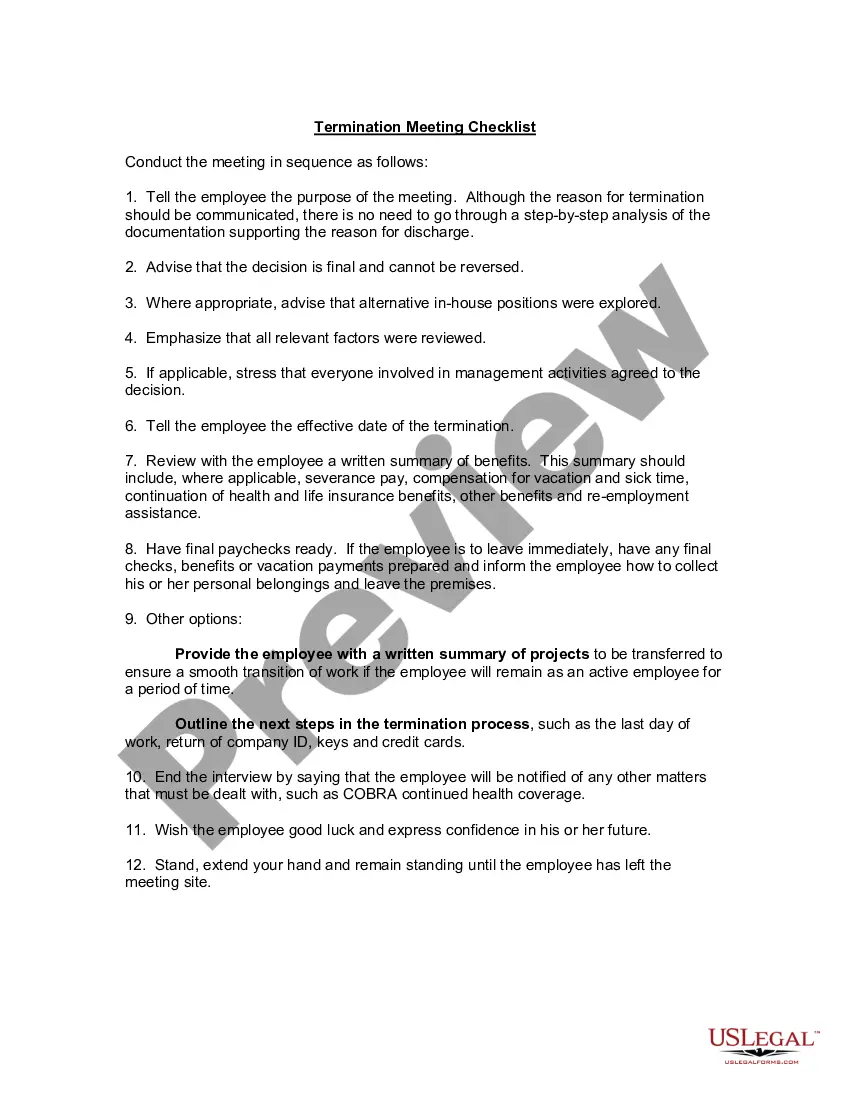
If the separation results from an involuntary termination, the exit interview will be the meeting at which the Employee is informed that he or she is being terminated. At that time all of the reasons which figured in the decision to terminate should be communicated to the Employee verbally and in writing.
Dissatisfied with your current employment or your superiors, Because of personal circumstances. You not feeling well. Make sure you're clear about why you're leaving.
Involuntary termination. Voluntary termination. Wrongful termination. End of a work contract or temporary employment.
Dear Name, This letter is to inform you that as of date, we will no longer require your services. We've enjoyed working with name of company but due to reasons, we have decided to terminate our contract. All outstanding deliverables should be completed before our contract is officially terminated.
Termination of employment refers to the end of an employee's work with a company. Termination may be voluntary, as when a worker leaves of their own accord. Involuntary termination occurs when a company downsizes, makes layoffs, or fires an employee.