Rhode Island Stockholder derivative actions
Description
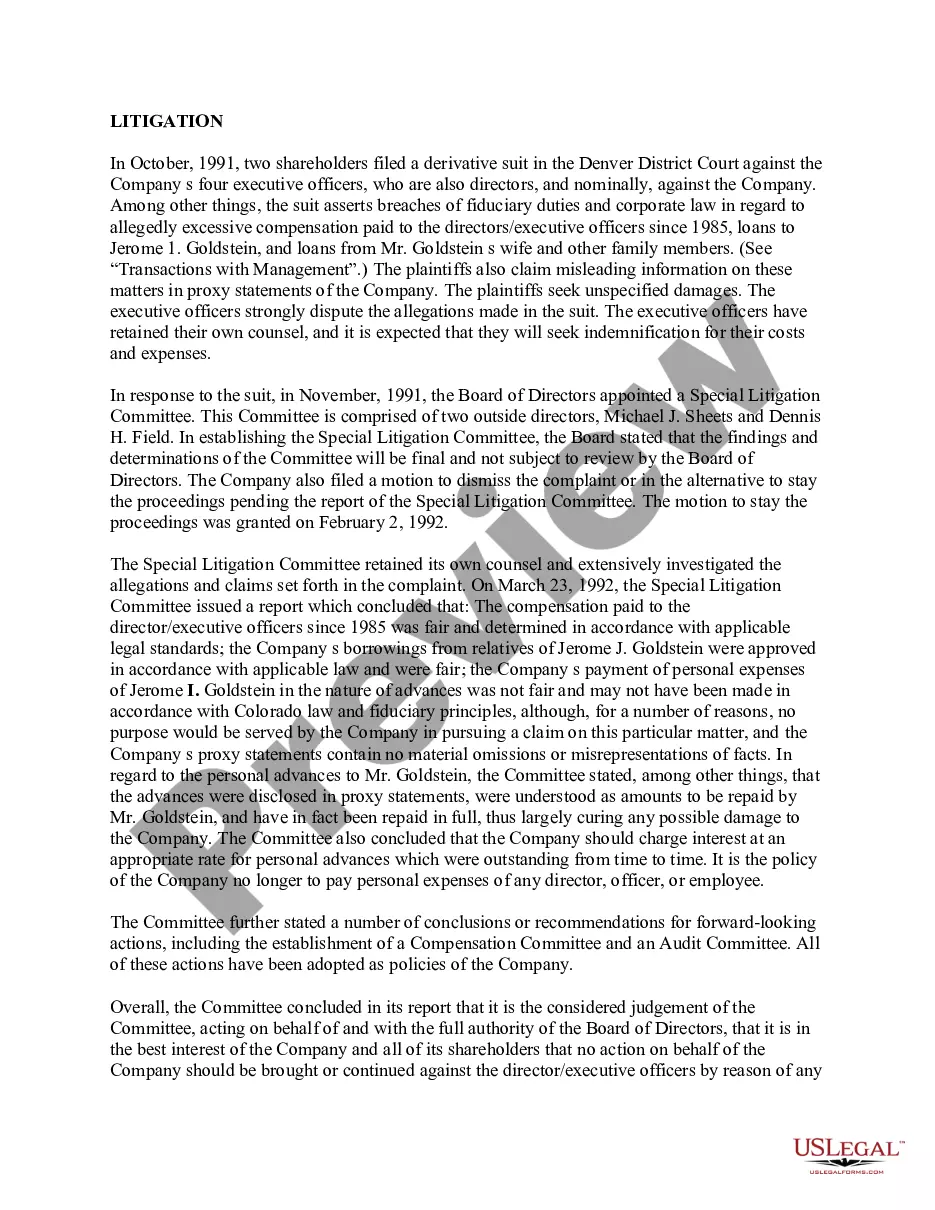
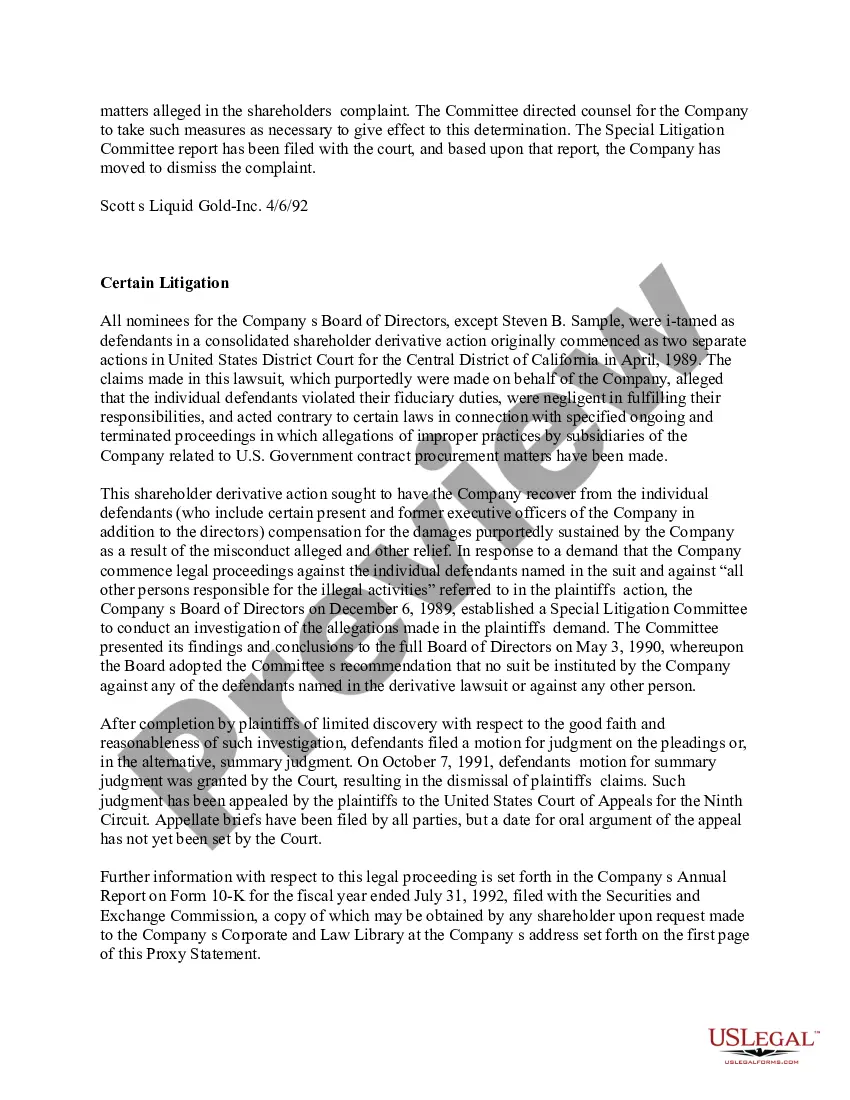
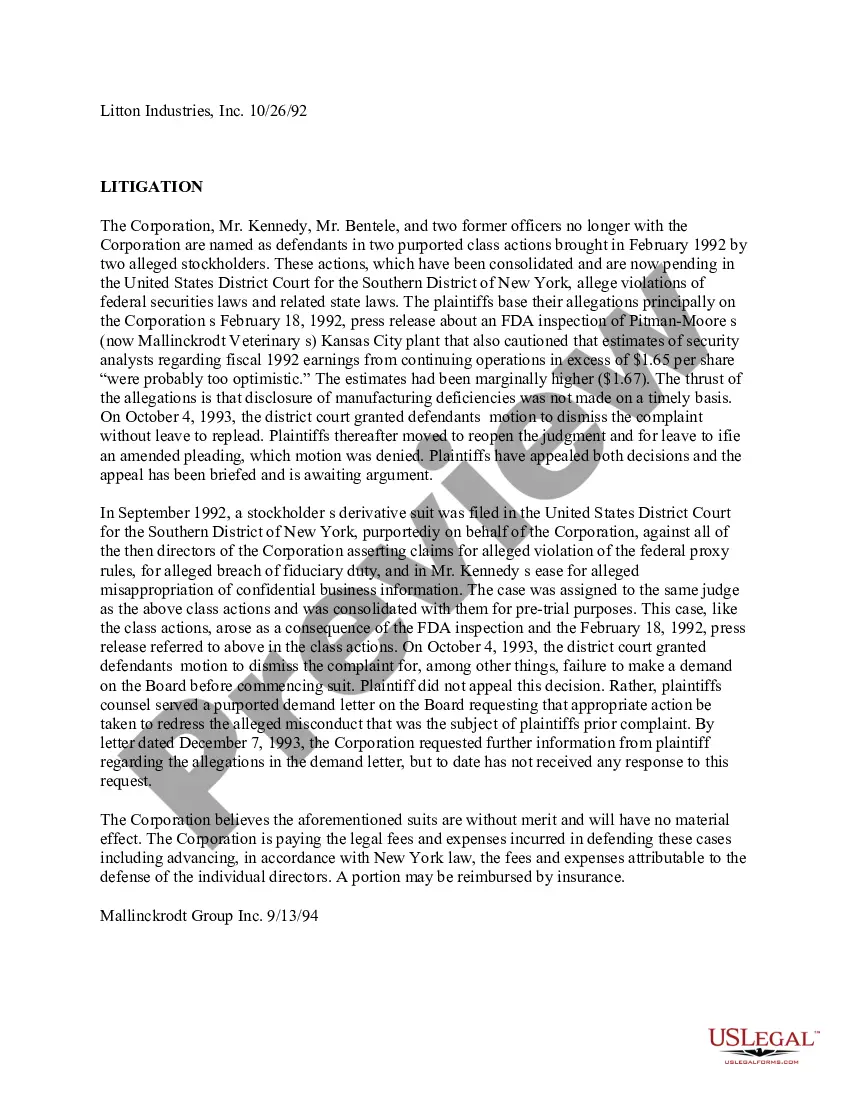


How to fill out Stockholder Derivative Actions?
It is possible to devote time on-line looking for the legitimate papers format which fits the federal and state demands you require. US Legal Forms offers a huge number of legitimate varieties that happen to be examined by specialists. It is simple to obtain or print out the Rhode Island Stockholder derivative actions from our assistance.
If you already have a US Legal Forms accounts, you may log in and then click the Acquire option. Next, you may total, modify, print out, or indication the Rhode Island Stockholder derivative actions. Each legitimate papers format you get is your own property forever. To acquire yet another copy of any acquired develop, check out the My Forms tab and then click the corresponding option.
If you use the US Legal Forms website for the first time, keep to the basic recommendations under:
- Initial, make certain you have chosen the proper papers format for the county/metropolis of your choice. Read the develop information to make sure you have selected the correct develop. If readily available, use the Preview option to check with the papers format also.
- If you wish to discover yet another variation in the develop, use the Research field to find the format that fits your needs and demands.
- Upon having identified the format you would like, simply click Buy now to continue.
- Select the pricing prepare you would like, key in your references, and sign up for a merchant account on US Legal Forms.
- Comprehensive the financial transaction. You should use your credit card or PayPal accounts to fund the legitimate develop.
- Select the structure in the papers and obtain it to your product.
- Make changes to your papers if required. It is possible to total, modify and indication and print out Rhode Island Stockholder derivative actions.
Acquire and print out a huge number of papers web templates utilizing the US Legal Forms website, that offers the most important collection of legitimate varieties. Use professional and express-distinct web templates to deal with your small business or individual requires.
Form popularity
FAQ
Failure by any person without adequate excuse to obey a subpoena served upon that person may be deemed a contempt of the court in which the action is pending.
Rule 37 - Failure to Make or Cooperate in Discovery: Sanctions. (a)Motion for Order Compelling Discovery. A party, upon reasonable notice to other parties and all persons affected thereby, may apply for an order compelling discovery as follows: (1)Appropriate Court.
A shareholder (stockholder) derivative suit is a lawsuit brought by a shareholder or group of shareholders on behalf of the corporation against the corporation's directors, officers, or other third parties who breach their duties. The claim of the suit is not personal but belongs to the corporation.
A shareholder (stockholder) derivative suit is a lawsuit brought by a shareholder or group of shareholders on behalf of the corporation against the corporation's directors, officers, or other third parties who breach their duties. The claim of the suit is not personal but belongs to the corporation.
A derivative action may be settled, voluntarily dismissed, or compromised only with the court's approval. Notice of a proposed settlement, voluntary dismissal, or compromise must be given to shareholders or members in the manner that the court orders.
What is the difference between a stockholder's derivative suit and a class action? A derivative lawsuit is brought by a shareholder of a corporation for the benefit of the corporation. A shareholder's class action lawsuit is brought by a shareholder for the benefit of themselves and the other shareholders.
The derivative action is the route by which shareholders, usually minority shareholders, are able to enforce the company's rights where directors have breached their duties (since in these circumstances it is unlikely that the directors, who usually act on behalf of the company, will want to take action).
Examples of successful derivative actions may include lawsuits against directors or officers for mismanagement of funds, failure to divulge material information, or breach of fiduciary duty.