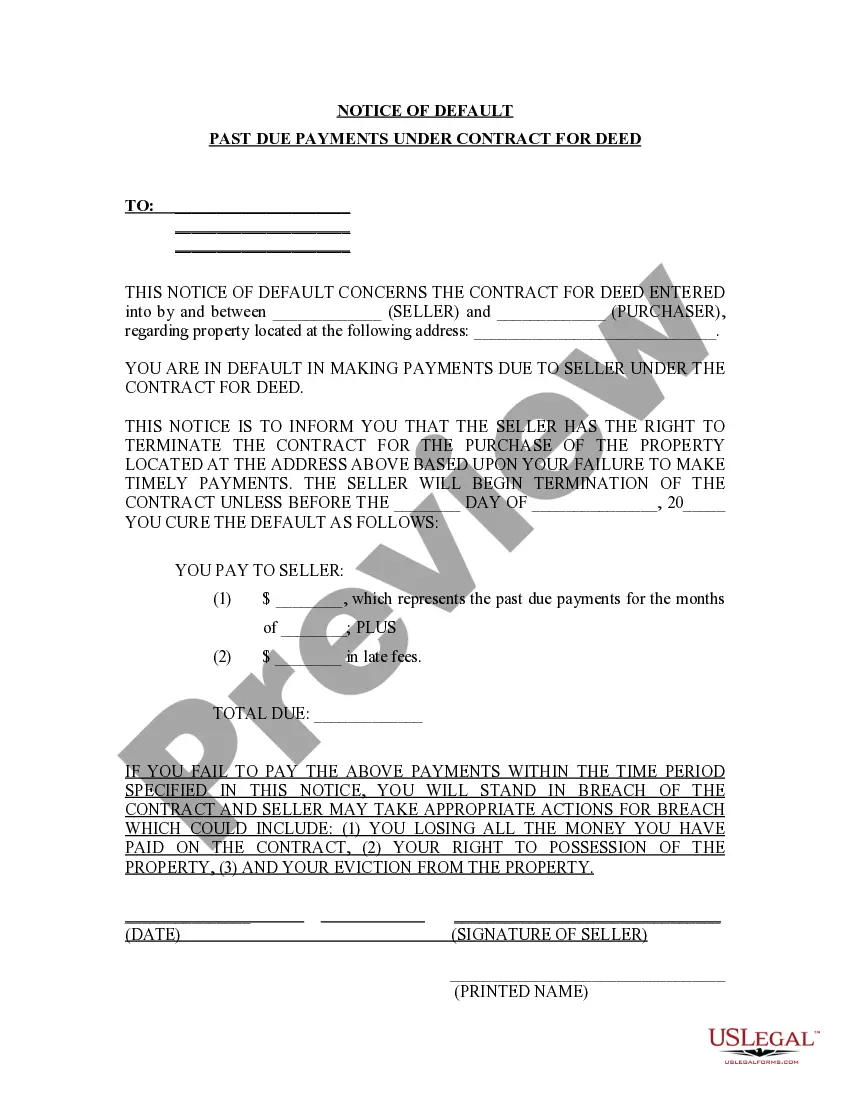
Rhode Island Performance Horse Lease Agreement
What is this form?
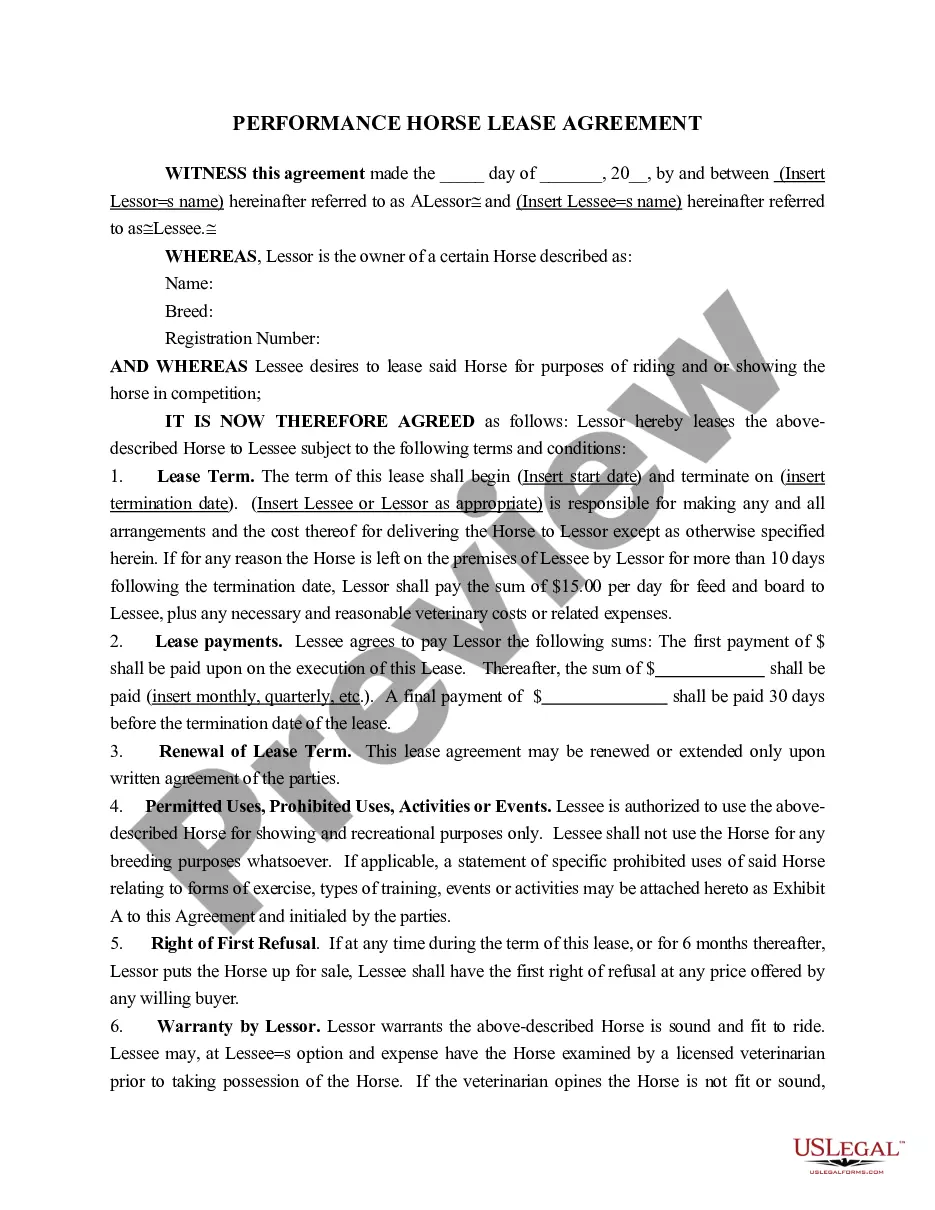
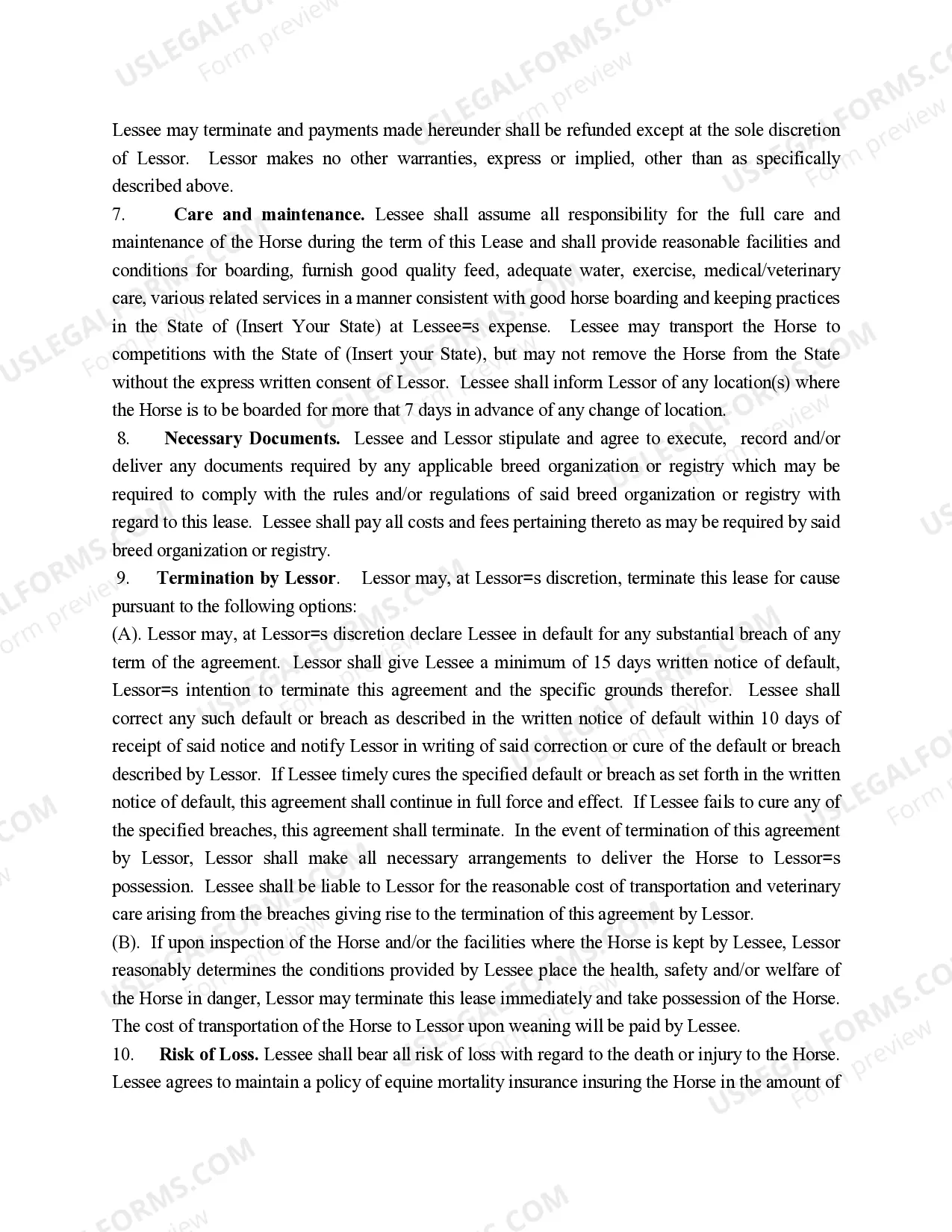
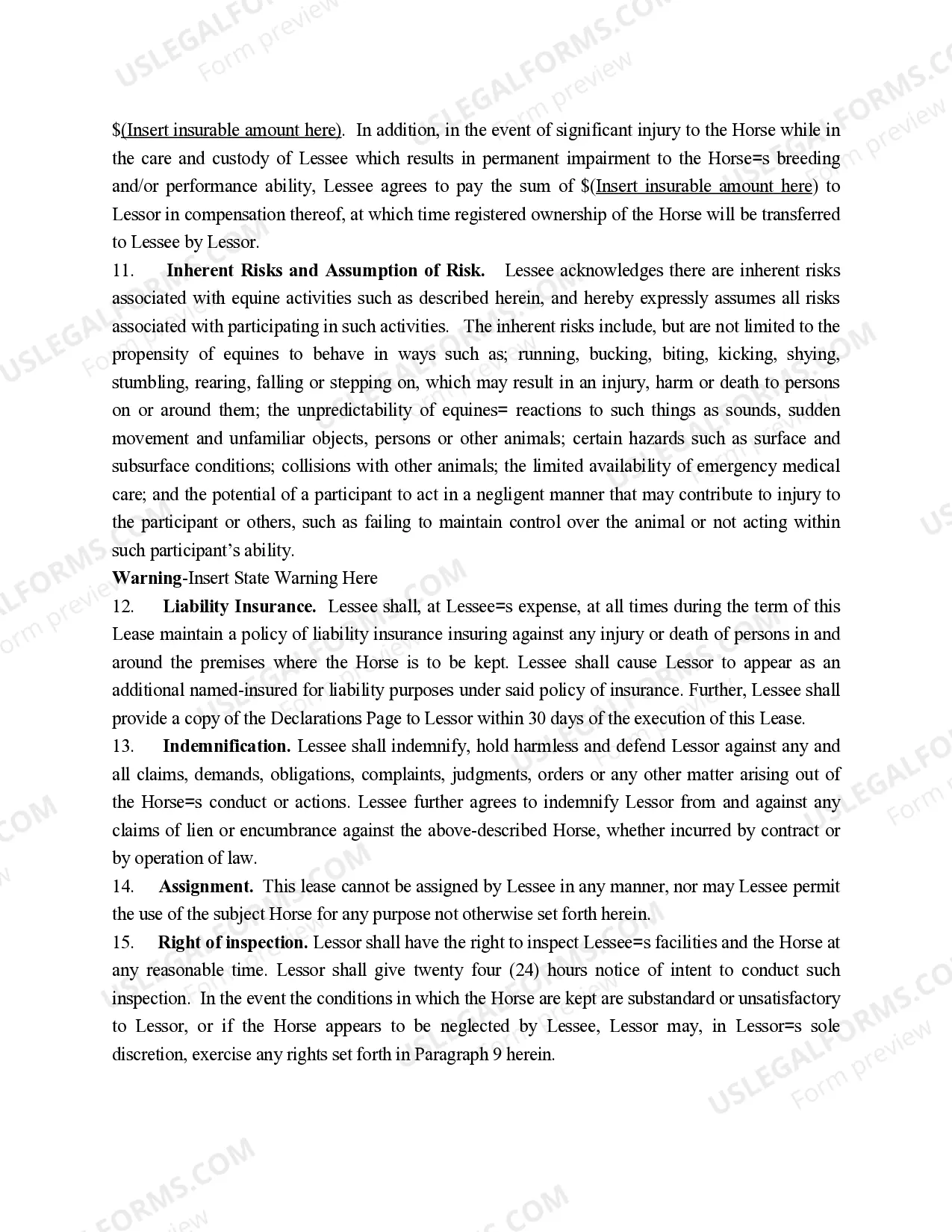
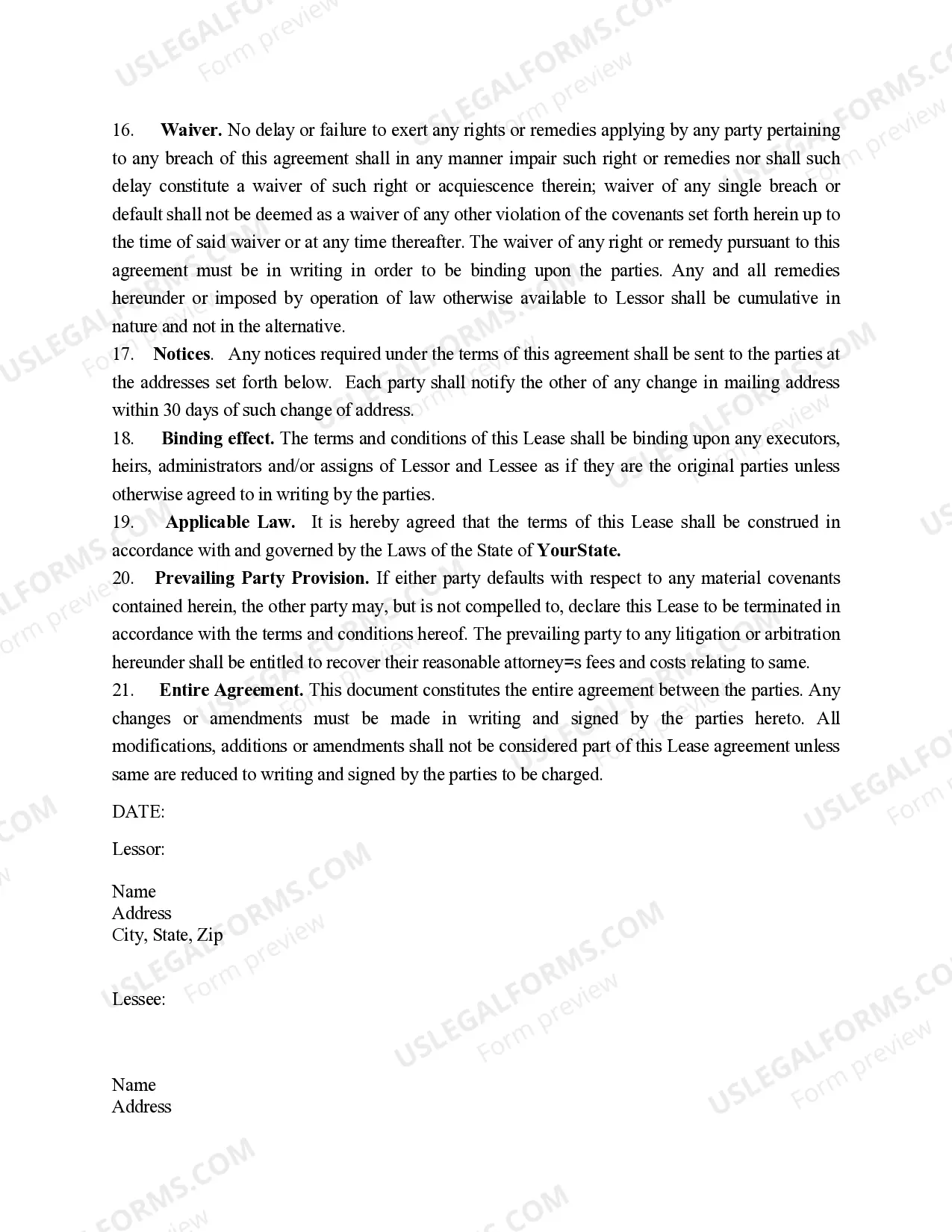
The Performance Horse Lease Agreement is a legal document that outlines the terms under which one party (the lessor) leases their horse to another party (the lessee) for riding or showing purposes. This agreement specifies lease payments, permitted uses of the horse, and responsibilities for care and maintenance. It is essential for anyone looking to lease a horse, as it provides protections for both the lessor and the lessee, differentiating it from general horse rental agreements which may not include detailed terms of use or care responsibilities.
Main sections of this form
- Lease term, including start and end dates.
- Details on lease payments and payment schedule.
- Permitted uses of the horse, including restrictions on breeding.
- Right of first refusal for lessee if the horse is sold.
- Responsibilities for care, maintenance, and veterinary costs.
- Termination conditions and notice requirements.

When to use this form
This Performance Horse Lease Agreement should be used when a lessee wishes to lease a horse for riding or competition. It is particularly relevant in scenarios such as preparing for shows, entering competitions, or engaging in recreational riding. This form ensures that all parties understand their rights and responsibilities during the lease, protecting both the horse's welfare and the interests of the parties involved.
Who needs this form
This agreement is suitable for:
- Individuals or organizations looking to lease a horse for performance or recreational purposes.
- Horse owners who wish to lease their horse temporarily.
- Competitive riders needing a horse for specific events.
- Equestrians and trainers looking for a structured lease arrangement.
Instructions for completing this form
- Identify the parties involved by entering the lessor's and lessee's names and addresses.
- Specify the horse details, including breed and registration number.
- Fill in the lease term with the start and termination dates.
- Enter the lease payment amounts and payment schedule.
- Outline any permitted and prohibited uses of the horse in the appropriate section.
- Ensure both parties sign and date the agreement to finalize the lease terms.
Does this document require notarization?
Notarization is not commonly needed for this form. However, certain documents or local rules may make it necessary. Our notarization service, powered by Notarize, allows you to finalize it securely online anytime, day or night.
Get your form ready online
Our built-in tools help you complete, sign, share, and store your documents in one place.
Make edits, fill in missing information, and update formatting in US Legal Forms—just like you would in MS Word.
Download a copy, print it, send it by email, or mail it via USPS—whatever works best for your next step.
Sign and collect signatures with our SignNow integration. Send to multiple recipients, set reminders, and more. Go Premium to unlock E-Sign.
If this form requires notarization, complete it online through a secure video call—no need to meet a notary in person or wait for an appointment.
We protect your documents and personal data by following strict security and privacy standards.

Make edits, fill in missing information, and update formatting in US Legal Forms—just like you would in MS Word.

Download a copy, print it, send it by email, or mail it via USPS—whatever works best for your next step.

Sign and collect signatures with our SignNow integration. Send to multiple recipients, set reminders, and more. Go Premium to unlock E-Sign.

If this form requires notarization, complete it online through a secure video call—no need to meet a notary in person or wait for an appointment.

We protect your documents and personal data by following strict security and privacy standards.
Mistakes to watch out for
- Failing to clearly specify the duration of the lease.
- Not detailing the responsibilities for the horse's care and maintenance.
- Omitting the lease payment schedule or amounts.
- Using vague language about permitted and prohibited uses.
- Neglecting to include terms regarding renewal or termination.
Why complete this form online
- Convenient access to professionally drafted legal templates.
- Editable format allows for customization according to individual needs.
- Immediate download and use, saving time compared to traditional methods.
- Reliable legal framework designed by licensed attorneys, ensuring compliance.
Summary of main points
- The Performance Horse Lease Agreement is essential for outlining the terms of leasing a horse for competitive purposes.
- Be precise with payment details to avoid misunderstandings.
- Ensure all permitted uses are clearly stated to prevent conflicts.
Looking for another form?
Form popularity
FAQ
The Half-Lease Contract.In this type of agreement, the owner of the horse or lessor splits the horse's care expenses and riding time with a lessee. It can be a beneficial way to save money on board, feed, vet bills, etc., and it can be great for your horse if your own saddle time is limited.
Option #1: The person leasing the horse is responsible for all of the horse's expenses (board, feed, veterinary, farrier, etc). The person leasing the horse may ride or use the horse any time they'd like. Full leases rarely restrict riding days, times, or horse-related events, like attending a horse show.
FULL LEASE: For $400 per month, you will have full, exclusive use of the horse. Full-leases require that you also pay to the costs of routine farrier and health care, which will vary according to the horse's needs.
Full Leasing a Horse When you full lease a horse you pay an agreed upon fee for exclusive access to the horse. This means you are the only one riding the horse.
Lease-to-Buy Equine Contract To purchase the horse, the buyer will pay the full purchase price during the lease term. During this time, the buyer will continue making lease payments per the parties' agreement, which will potentially go toward the total purchase price of the horse.
A free lease means that the horse is leased to someone without any payment to the owner. When you have a free lease you retain ownership and control of your horse but your horse, in best case scenarios, is still cared for and loved. Everyone wins. The owner has good care for the horse they love.
The arrangement, essentially a formal rental agreement between an owner and a rider for a horse's use, has shown signs of gaining ground in these economically challenging times. At its most basic, leasing a horse is a way for an owner to reduce the cost of her horse's care without selling him or taking him out of work.
When you full lease a horse you pay an agreed upon fee for exclusive access to the horse. This means you are the only one riding the horse. It won't be used for lessons, the owner will not ride it, and you'll be responsible for making sure the horse gets the attention & exercise it deserves.