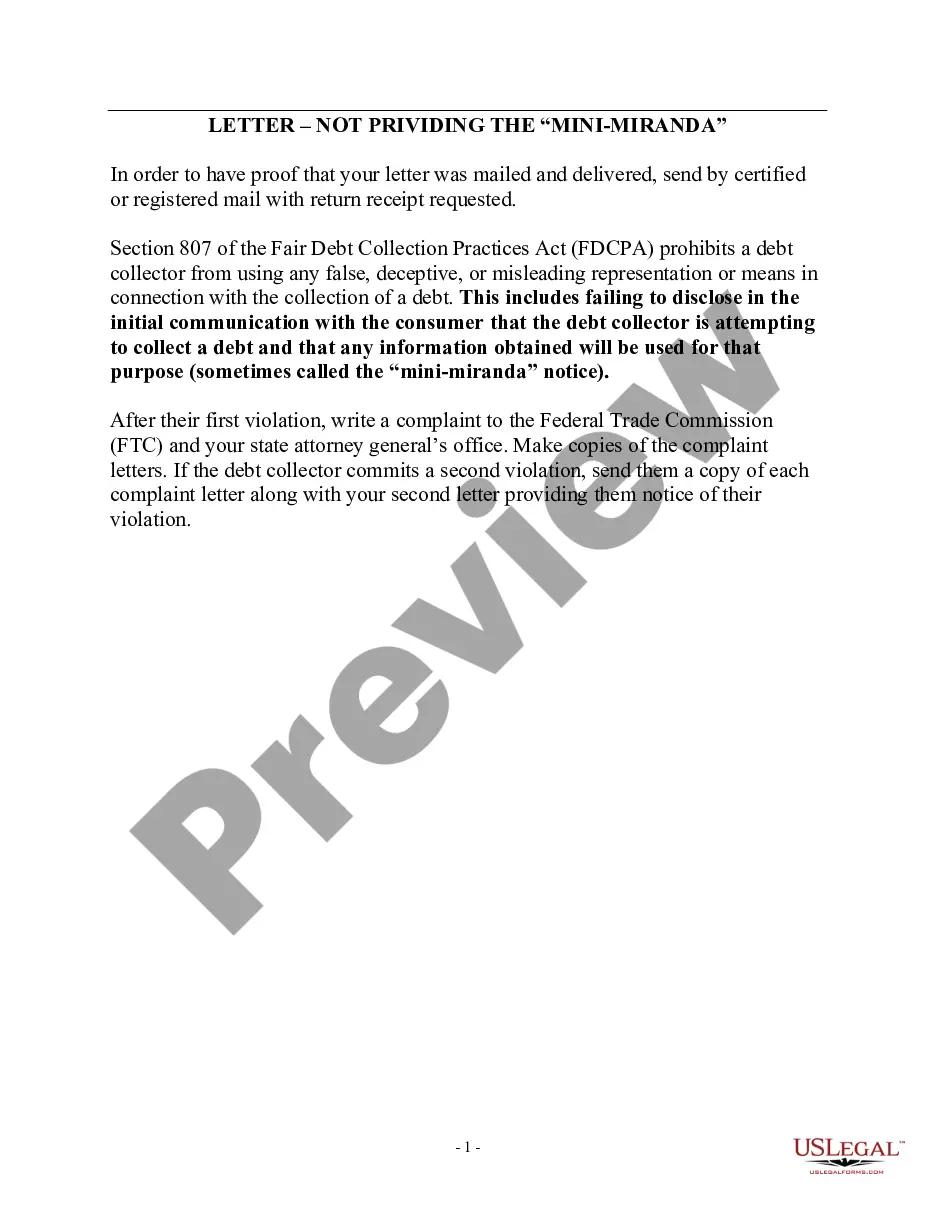
Section 806 of the Fair Debt Collection Practices Act says a debt collector may not harass, oppress, or abuse any person in connection with the collection of a debt. This includes placing telephone calls without meaningful disclosure of the caller's identity.
Puerto Rico Notice to Debt Collector - Not Disclosing the Caller's Identity
Category:
State:
Multi-State
Control #:
US-DCPA-33
Format:
Word;
Rich Text
Instant download
Description
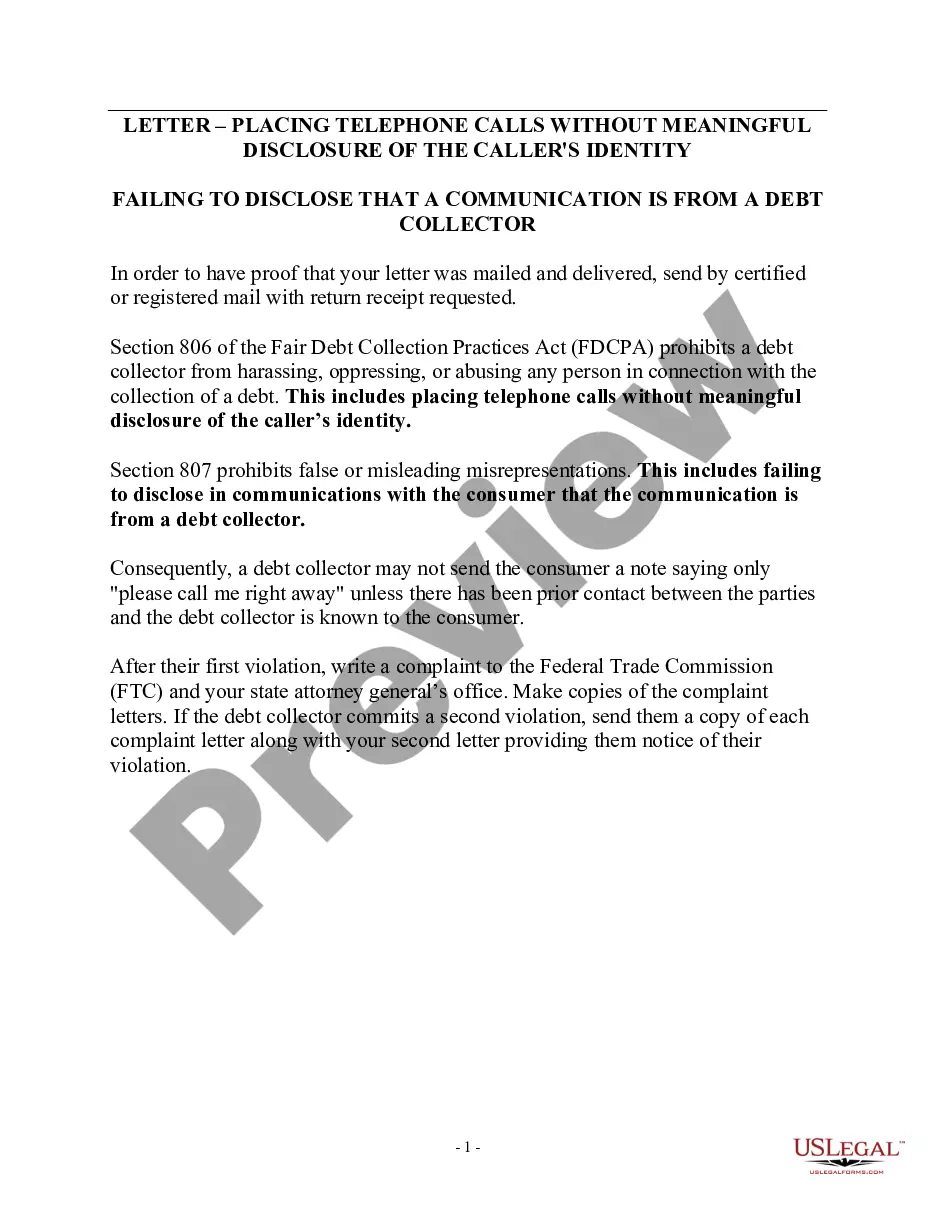
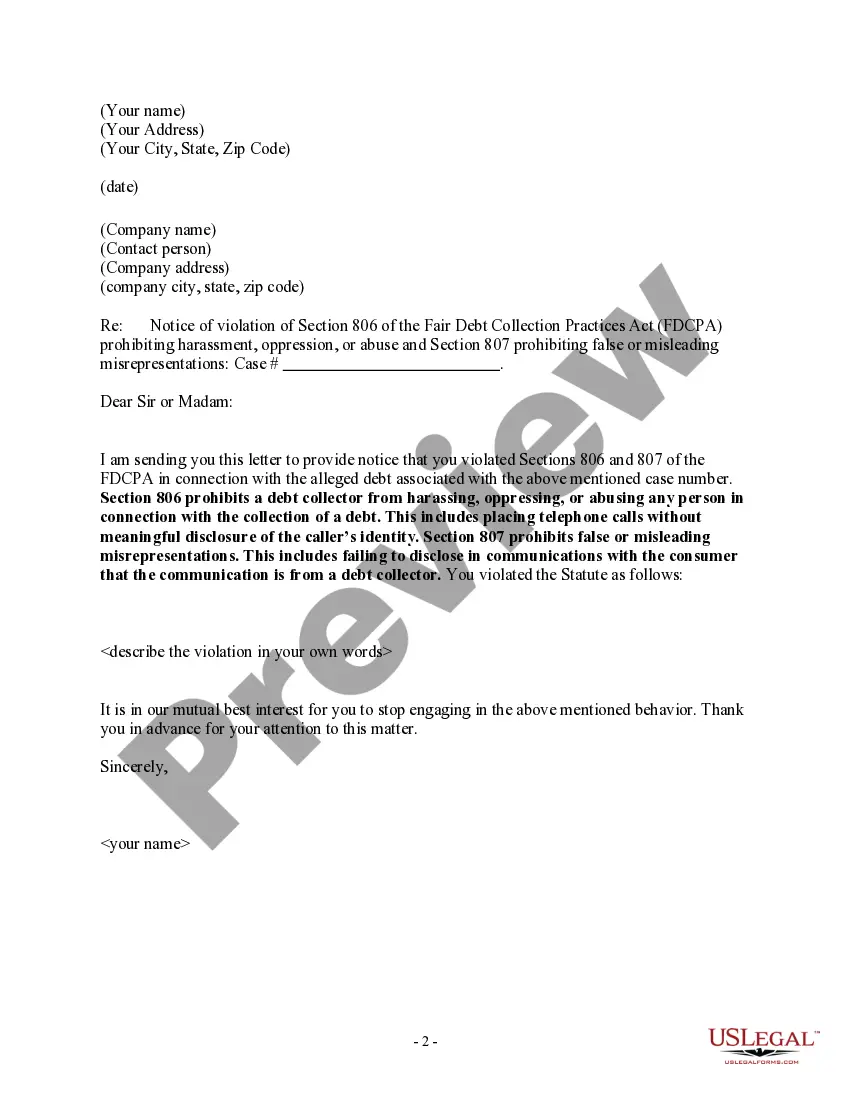
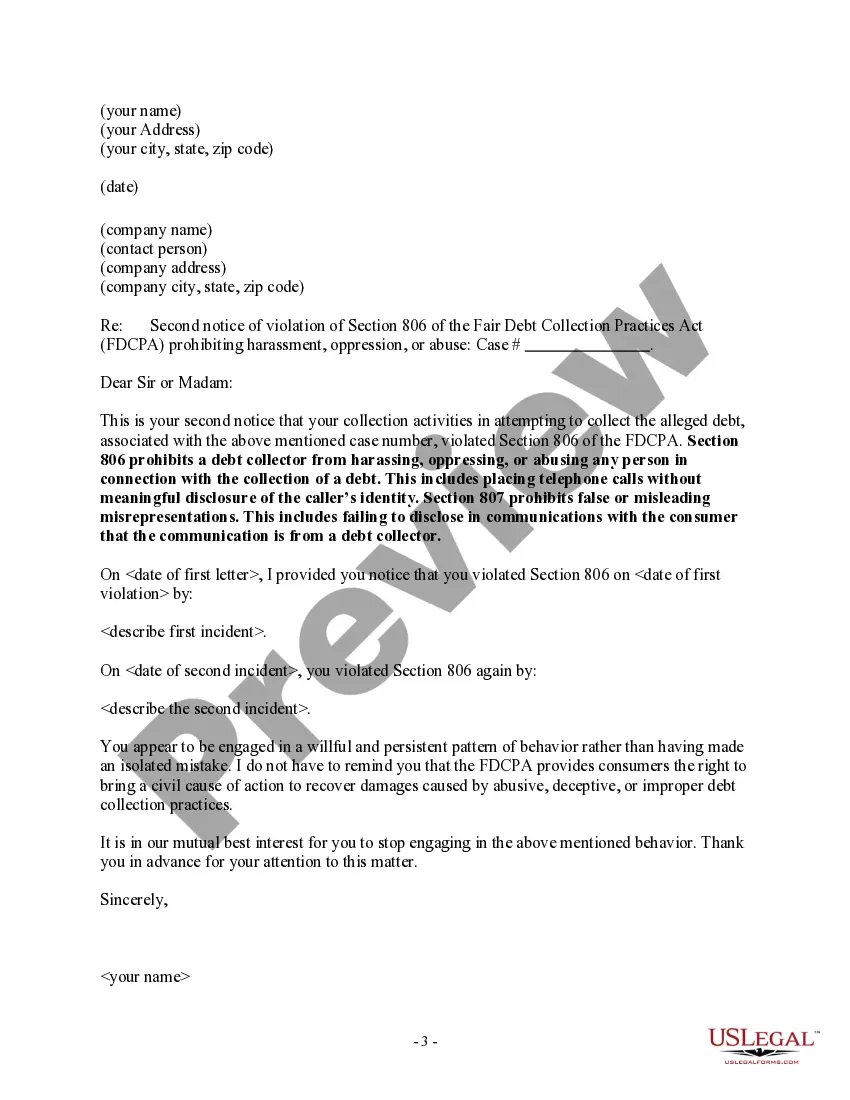
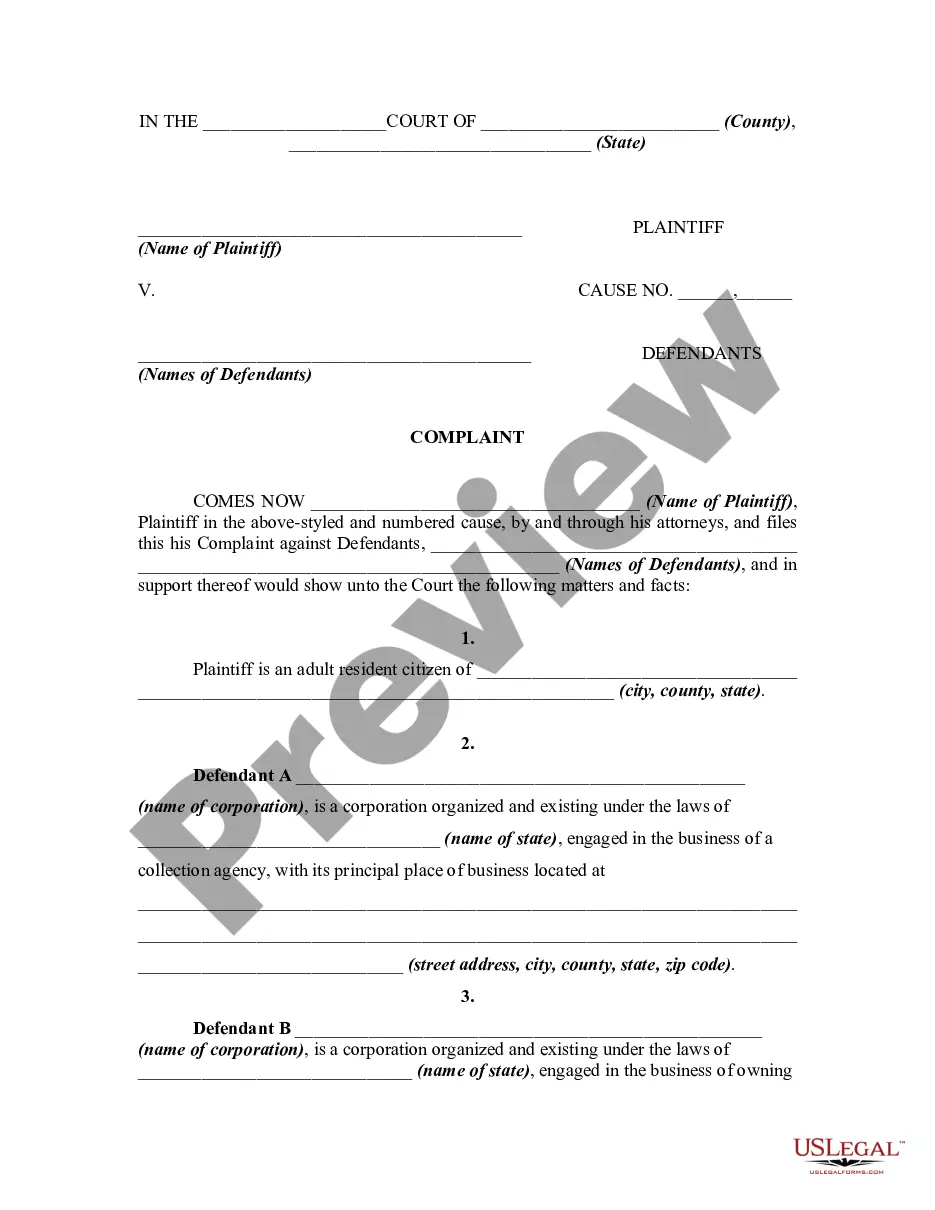
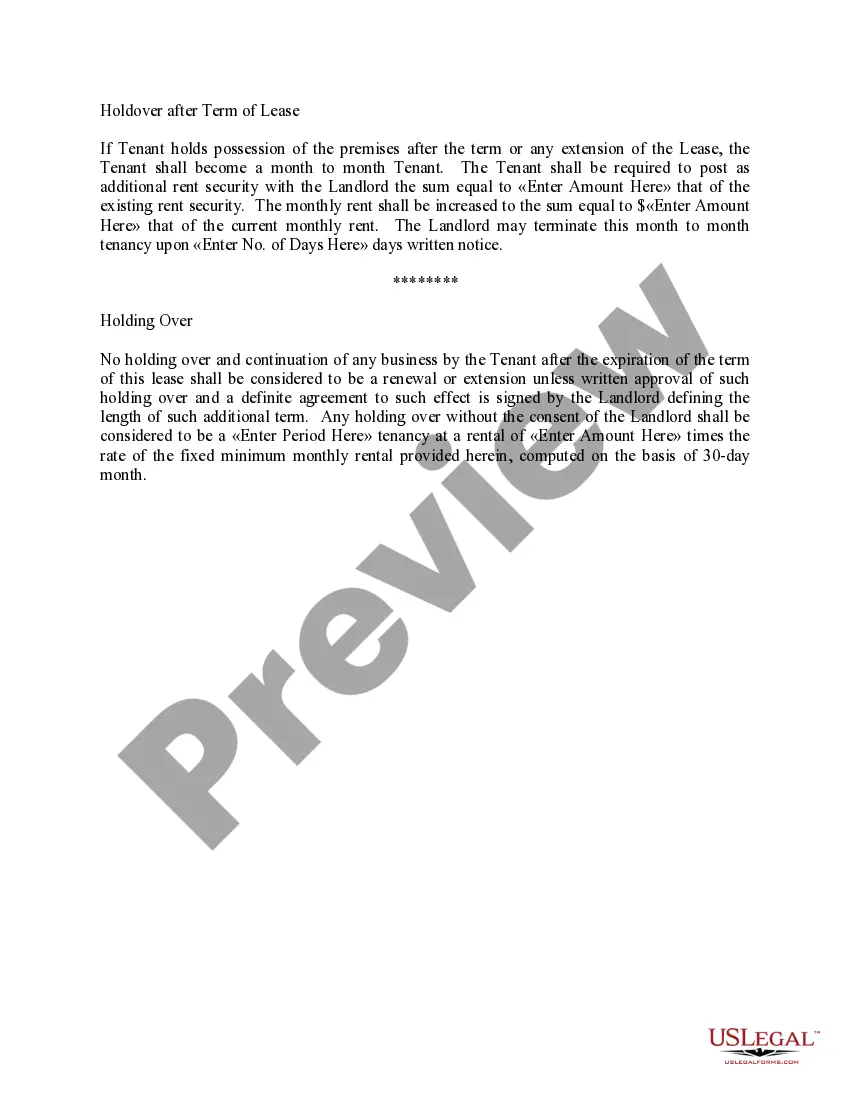
Use this form to notify a debt collector they violated the Fair Debt Collection Practices Act (FDCPA). Receiving notice from a consumer makes it more likely a debt collector will comply with the FDCPA. If they don't comply after receiving notice, your notice letter may help prove that their actions were intentional.
Free preview

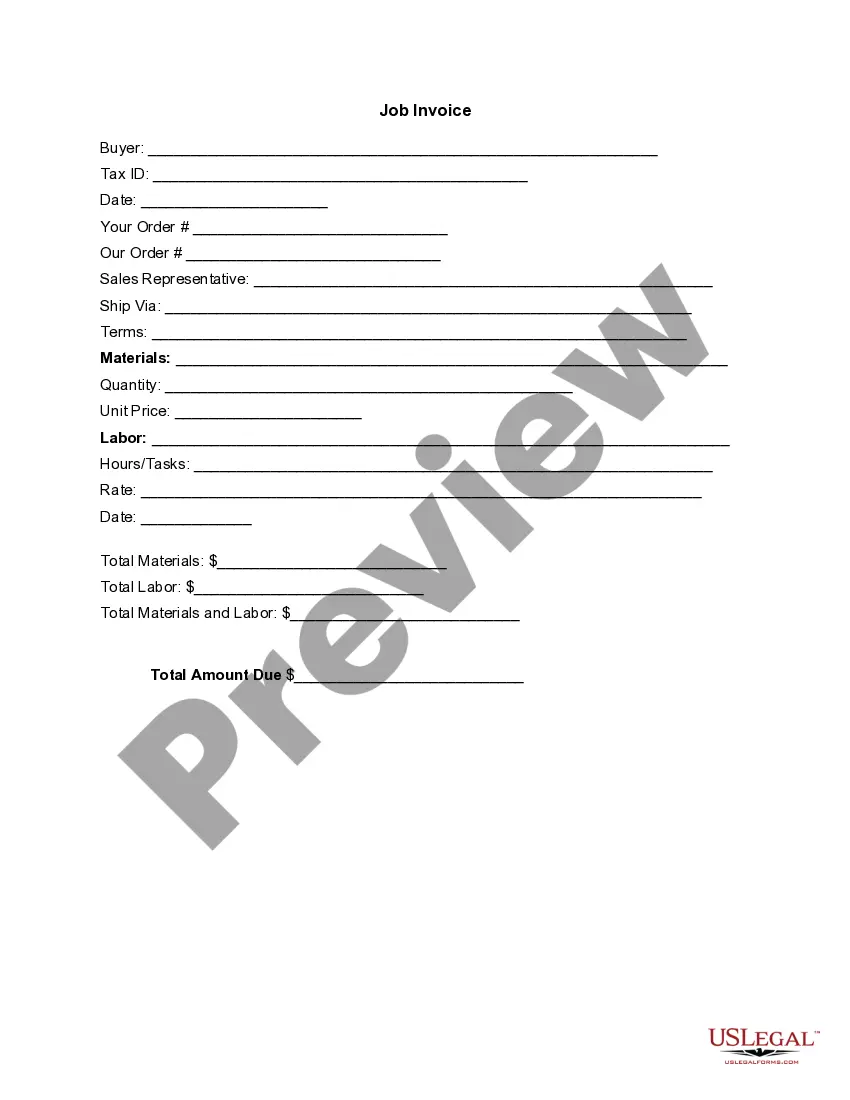
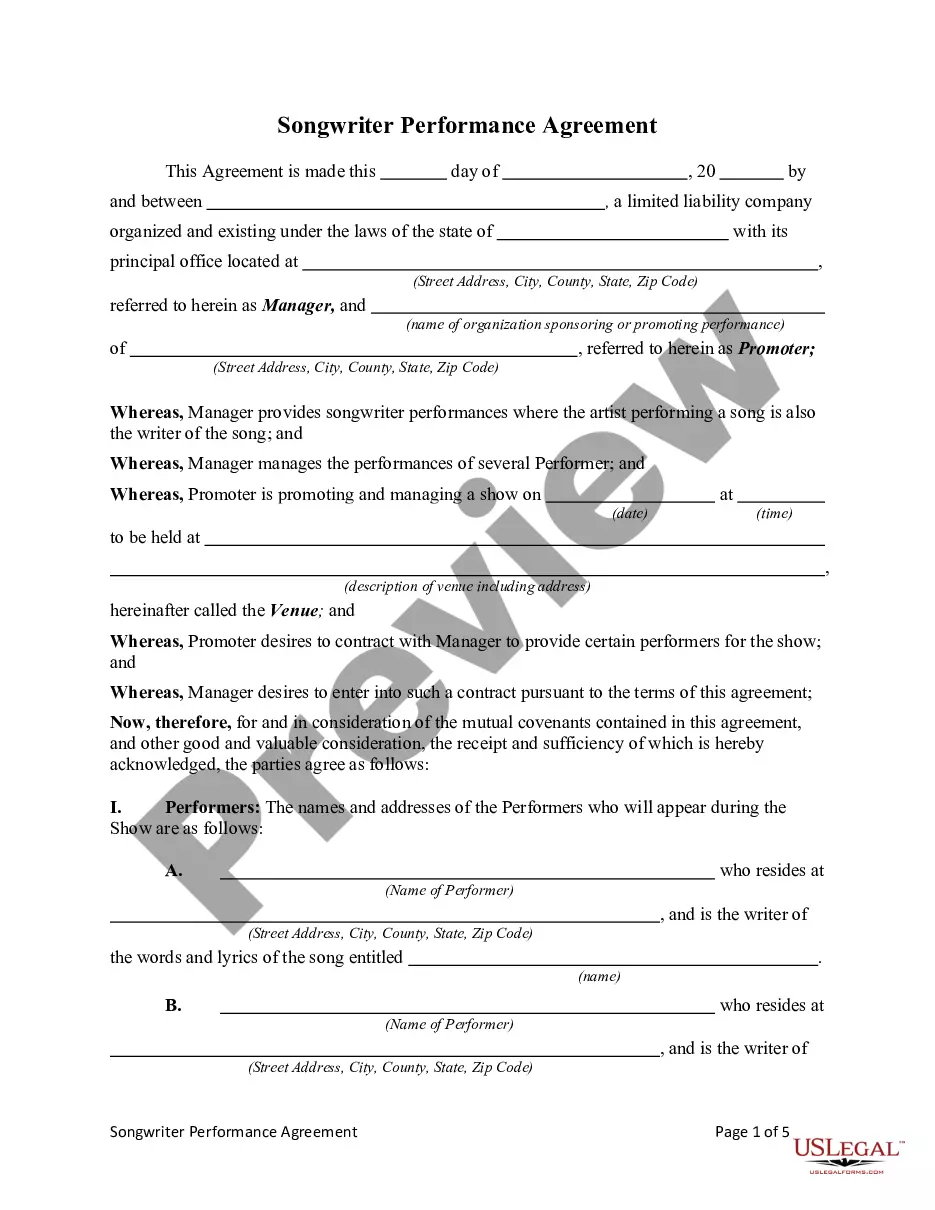
How to fill out Notice To Debt Collector - Not Disclosing The Caller's Identity?
Selecting the finest authentic document template can be challenging.
Of course, there are numerous templates accessible online, but how do you find the authentic form you need.
Utilize the US Legal Forms website.
If you are a new user of US Legal Forms, here are simple instructions to follow: First, ensure you have selected the correct form for your city/state.
- The service provides thousands of templates, including the Puerto Rico Notice to Debt Collector - Not Disclosing the Caller’s Identity, which can be used for both business and personal purposes.
- All of the forms are reviewed by experts and comply with federal and state requirements.
- If you are already a registered user, Log In to your account and click the Acquire button to obtain the Puerto Rico Notice to Debt Collector - Not Disclosing the Caller’s Identity.
- Use your account to browse through the legal forms you have previously purchased.
- Go to the My documents tab of your account to download an additional copy of the document you need.
Form popularity
FAQ
7 Most Common FDCPA ViolationsContinued attempts to collect debt not owed.Illegal or unethical communication tactics.Disclosure verification of debt.Taking or threatening illegal action.False statements or false representation.Improper contact or sharing of info.Excessive phone calls.
Since the voicemail message in Zortman is not a limited-content message, it does not receive a safe harbor from the prohibition against third party communications under the Rule, discussed in Debt Collection Limited-Content Messages Question 2. 12 CFR § 1006.2(j).
Debt collectors often ask for Social Security numbers, birth dates or other personal information to ensure they have reached the correct debtor.
While these procedures may vary by company and whether the call is inbound or outbound, there is a common thread: generally debt collectors ask the consumer to verify some piece of personal information, such as the last four digits of the consumer's social security number or the consumer's birth date, to ensure they
The Fair Debt Collection Practices Act (FDCPA) It is always your choice whether to provide any information to a debt collector, even a legitimate one, including whether to verify your identity.
Do not give the caller personal financial or other sensitive information. Never give out or confirm personal financial or other sensitive information like your bank account, credit card, or Social Security number unless you know the company or person you are talking with is a real debt collector.
If the consumer notifies the debt collector in writing within the thirty-day period described in subsection (a) of this section that the debt, or any portion thereof, is disputed, or that the consumer requests the name and address of the original creditor, the debt collector shall cease collection of the debt, or any
Your personal information can never be disclosed to a third party as stated by the FDCPA. The only person to who your debt may be disclosed is your spouse. This means that debt collectors may not leave a voicemail message if it is shared with your employer, roommates, or even your children.
At a minimum, proper debt validation should include an account balance along with an explanation of how the amount was derived. But most debt collectors respond with an account statement from the original creditor as debt validation and that's generally considered sufficient.
Among the insider tips, Ulzheimer shared with the audience was this: if you are being pursued by debt collectors, you can stop them from calling you ever again by telling them '11-word phrase'. This simple idea was later advertised as an '11-word phrase to stop debt collectors'.