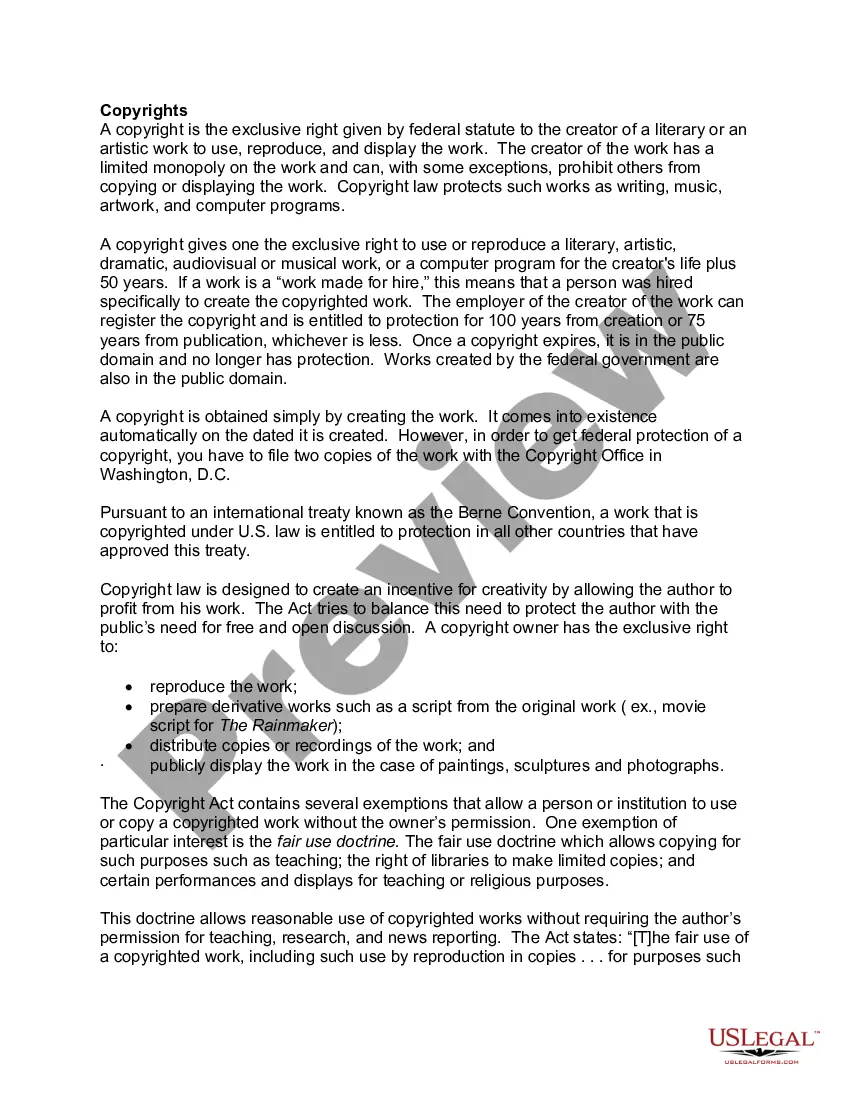
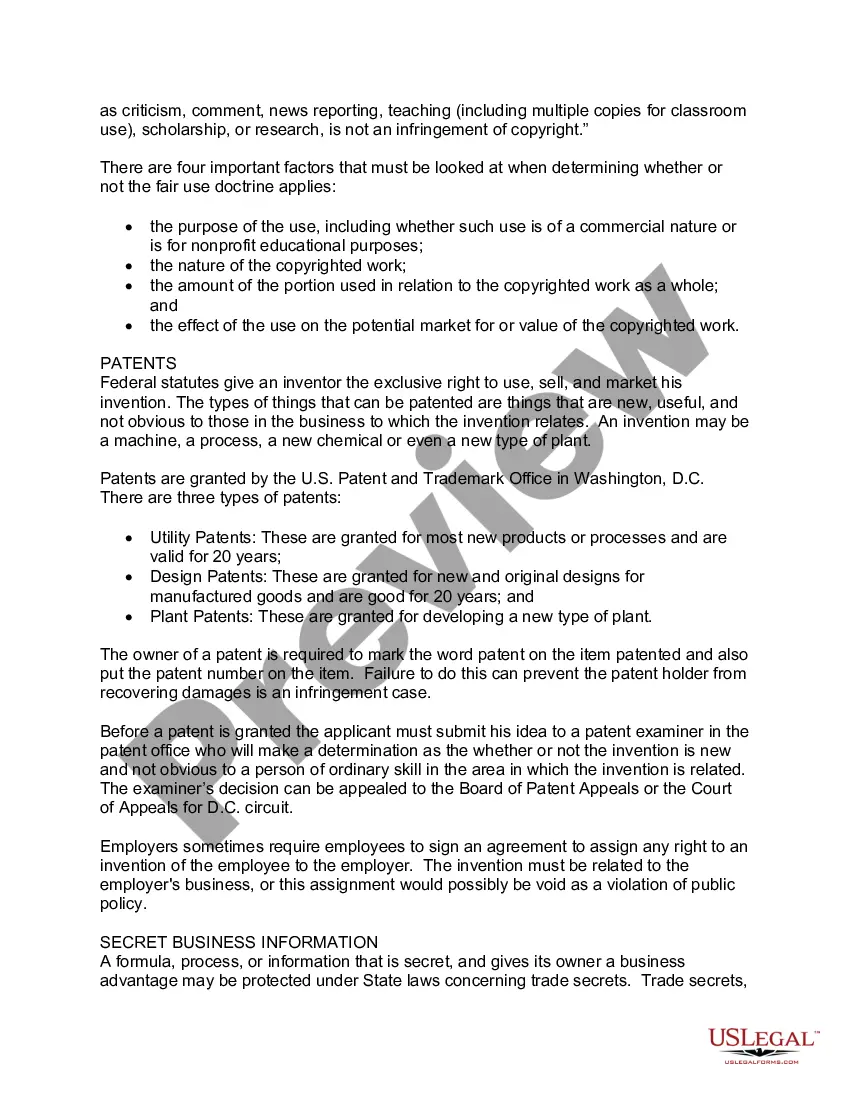
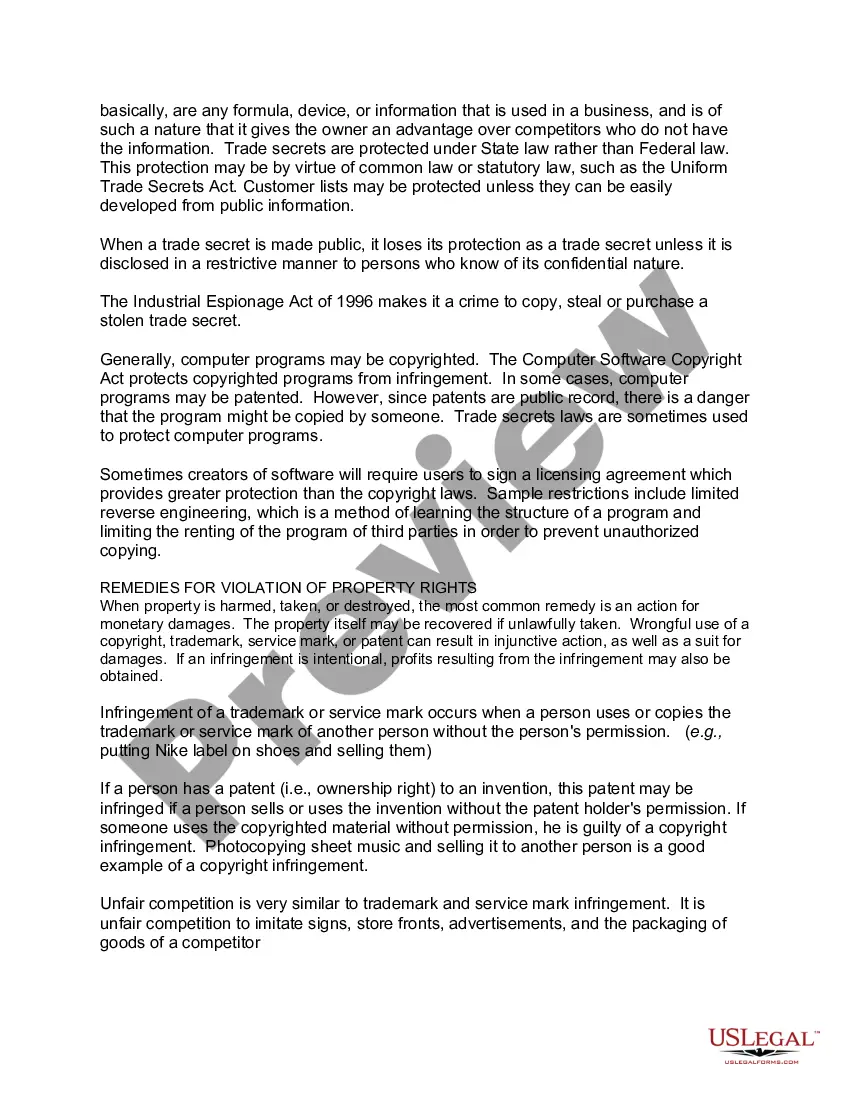
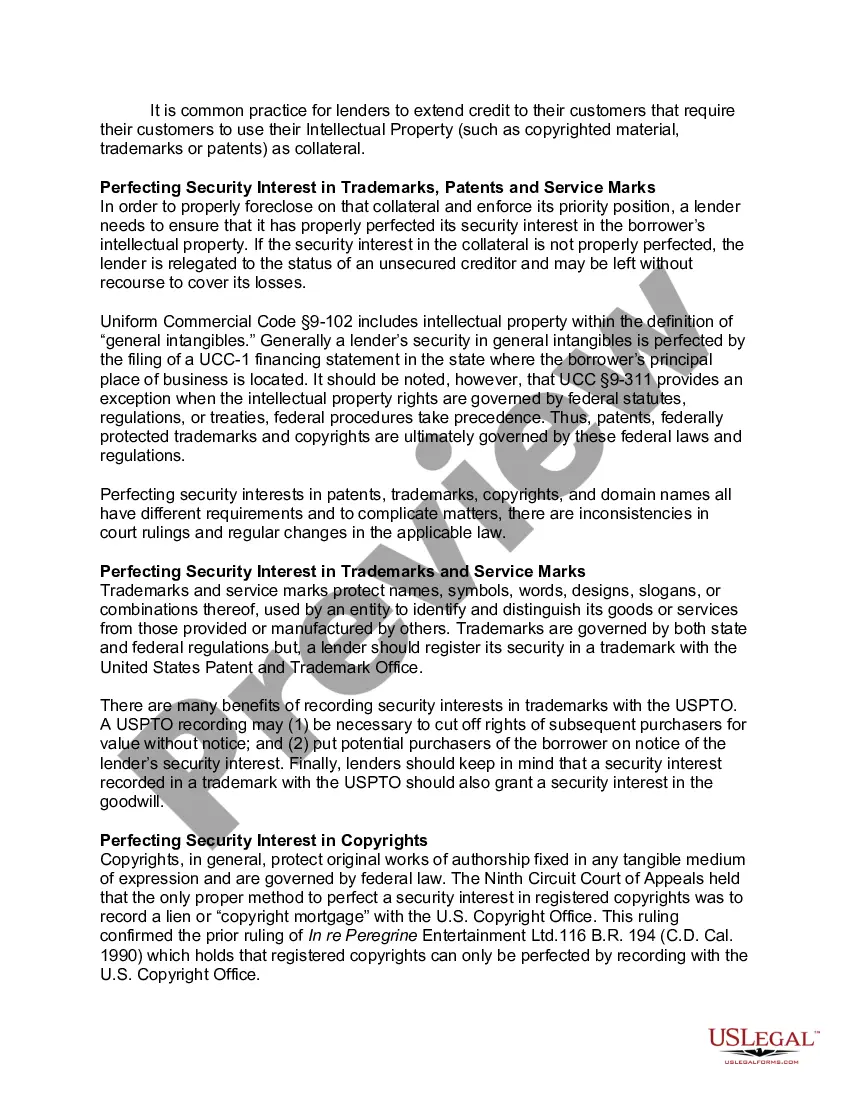
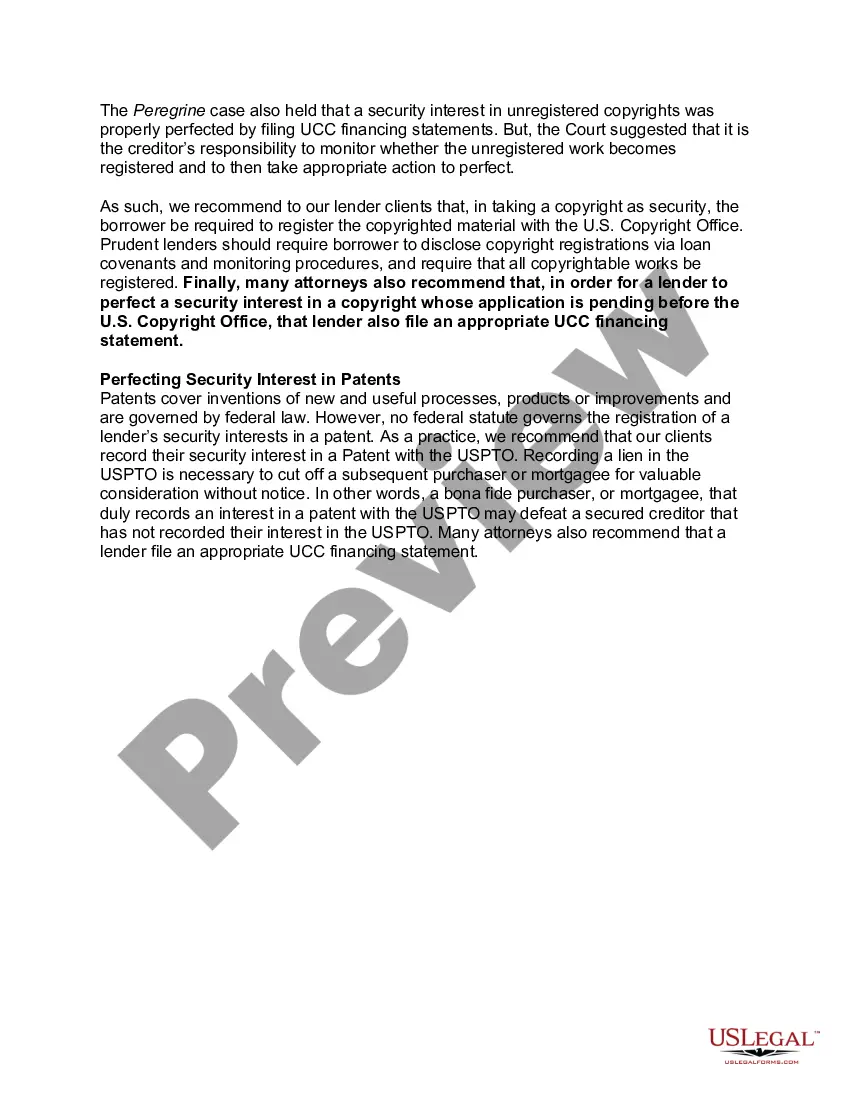
This guide provides an overview of intellectual property rights. Topics included cover trademarks, service marks, copyrights, patents, and trade secrets. Information on remedies for infringement is also provided.
Pennsylvania USLegal Guide to Intellectual Property Rights
State:
Multi-State
Control #:
US-GDE-22
Format:
Word;
Rich Text
Instant download
Description
Free preview



How to fill out USLegal Guide To Intellectual Property Rights?
Are you currently in a situation where you require documents for either professional or personal purposes almost every day.
There are many legal document templates accessible online, but finding reliable versions is not simple.
US Legal Forms offers thousands of form templates, such as the Pennsylvania USLegal Guide to Intellectual Property Rights, that are created to meet federal and state regulations.
When you find the correct form, click Purchase now.
Select the pricing plan you want, fill in the required information to set up your account, and pay for the order using your PayPal or credit card.
- If you are already acquainted with the US Legal Forms website and have an account, simply sign in.
- Then, you can download the Pennsylvania USLegal Guide to Intellectual Property Rights template.
- If you do not have an account and want to start using US Legal Forms, follow these steps.
- Find the form you need and make sure it is for the correct area/region.
- Use the Review button to view the form.
- Read the description to ensure you have selected the correct form.
- If the form isn’t what you need, use the Search field to locate the form that suits your requirements.
Form popularity
FAQ
An intellectual property disclaimer should clearly state which rights you are reserving and what unauthorized use is prohibited. Utilizing the Pennsylvania USLegal Guide to Intellectual Property Rights can guide you in drafting a comprehensive disclaimer that communicates the scope of your rights. Ensure it covers all forms of intellectual property applicable to your work, helping to prevent misuse.
To write an effective intellectual property statement, begin by identifying the specific intellectual property you own, including patents, trademarks, and copyrights. Incorporate insights from the Pennsylvania USLegal Guide to Intellectual Property Rights to define how each asset is protected and utilized. This will provide clarity and direction for your organization's IP management strategy.
Writing an intellectual property statement involves outlining the types of intellectual property your organization generates and how those assets are protected. Following guidelines from the Pennsylvania USLegal Guide to Intellectual Property Rights can help structure your statement effectively. This document serves as an internal roadmap for managing and safeguarding your creative assets.
A good example of intellectual property is a trademark, which protects brands and logos that distinguish products or services. The Pennsylvania USLegal Guide to Intellectual Property Rights provides insight into how trademarks prevent others from using similar marks that could confuse consumers. By registering a trademark, you can help ensure your brand’s identity remains unique in a competitive market.
Intellectual property encompasses creations of the mind, such as inventions, literary works, and designs. For example, the Pennsylvania USLegal Guide to Intellectual Property Rights explains how individuals and businesses can protect their unique ideas from unauthorized use. Understanding these rights is crucial for fostering creativity and innovation, empowering you to secure your work.
The seven types of intellectual property rights include copyright, trademarks, patents, trade secrets, industrial designs, integrated circuit topographies, and geographical indications. Each type serves a specific purpose and offers varying levels of protection for different forms of intellectual property. To explore these rights in more depth and how to secure them, the Pennsylvania USLegal Guide to Intellectual Property Rights is an invaluable resource.
The new Power of Attorney (POA) law in Pennsylvania updates requirements for creating and executing POA documents, emphasizing the need for clear language and specific wording. This law aims to enhance consumer protections while ensuring that individuals can still effectively manage their financial and health-related decisions. To fully understand the implications of this law in relation to intellectual property, consult the Pennsylvania USLegal Guide to Intellectual Property Rights for comprehensive guidance.
To obtain intellectual property rights, you must file the appropriate applications with the relevant government agencies, depending on the type of protection you seek. For copyrights, you typically register your work with the U.S. Copyright Office, while patents require filing with the U.S. Patent and Trademark Office. The Pennsylvania USLegal Guide to Intellectual Property Rights can help you navigate these processes and ensure that your rights are effectively protected.
The four main types of intellectual property law are copyright, trademark, patent, and trade secret law. Copyright protects original works of authorship, trademarks safeguard brands and logos, patents cover inventions and innovations, and trade secrets protect confidential business information. For more detailed insights on these types and how they are applied in Pennsylvania, refer to the Pennsylvania USLegal Guide to Intellectual Property Rights.
Intellectual property lawyers in the USA typically earn salaries ranging from $80,000 to over $200,000 annually, depending on their experience, location, and the complexity of the cases they handle. In Pennsylvania, you can find resources in the Pennsylvania USLegal Guide to Intellectual Property Rights to understand salary ranges and factors impacting earnings in this legal sector. Salary negotiation skills can also play a crucial role in determining your compensation.