Pennsylvania Acknowledgment for Verification on Oath or Affirmation
Overview of this form
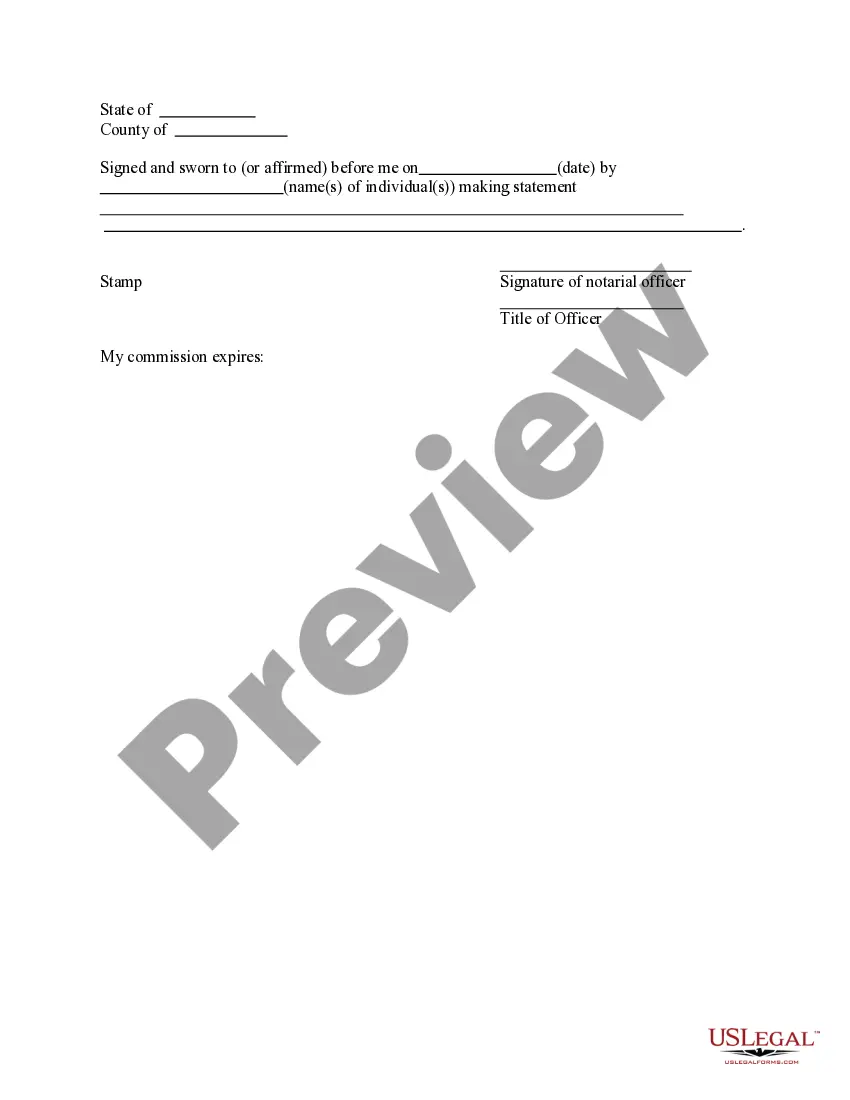
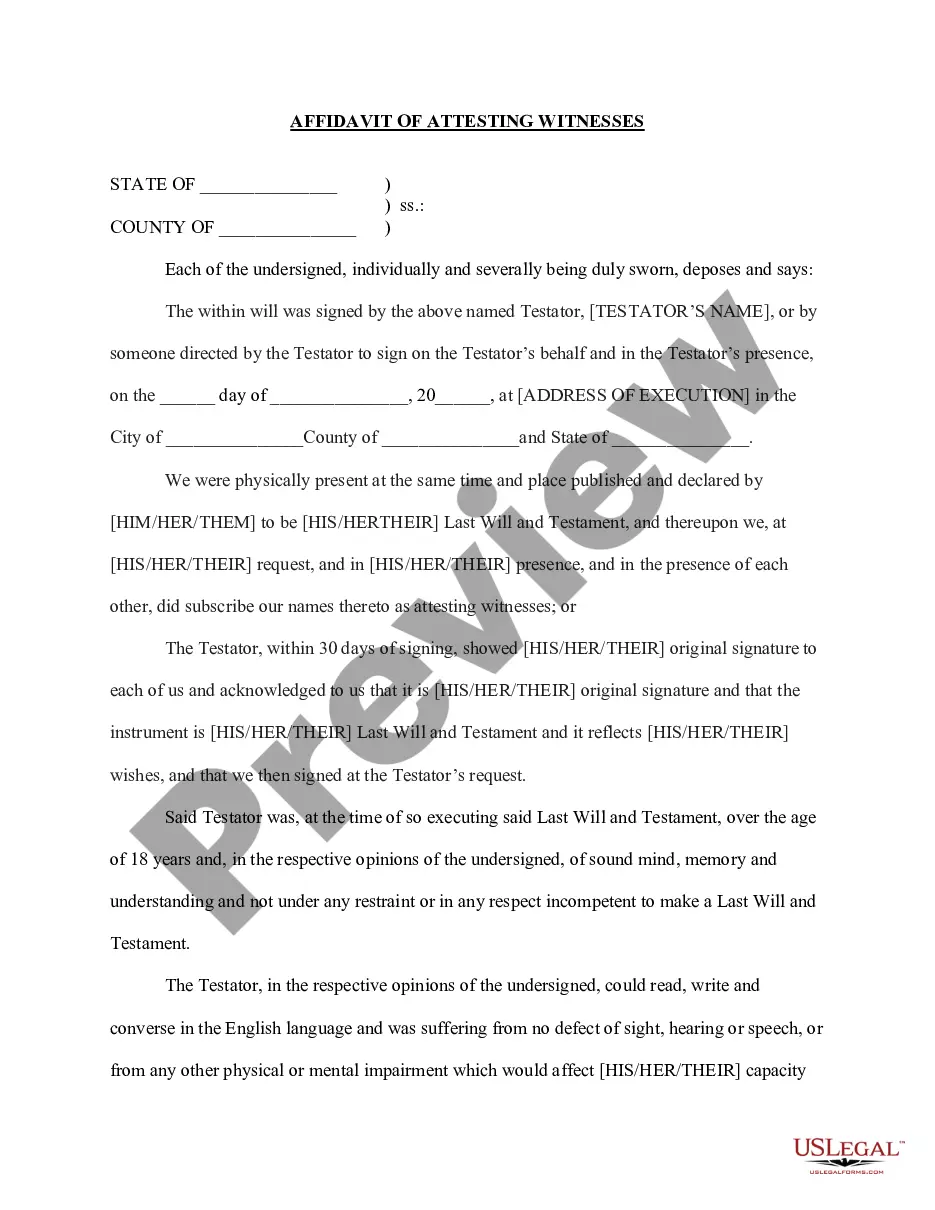
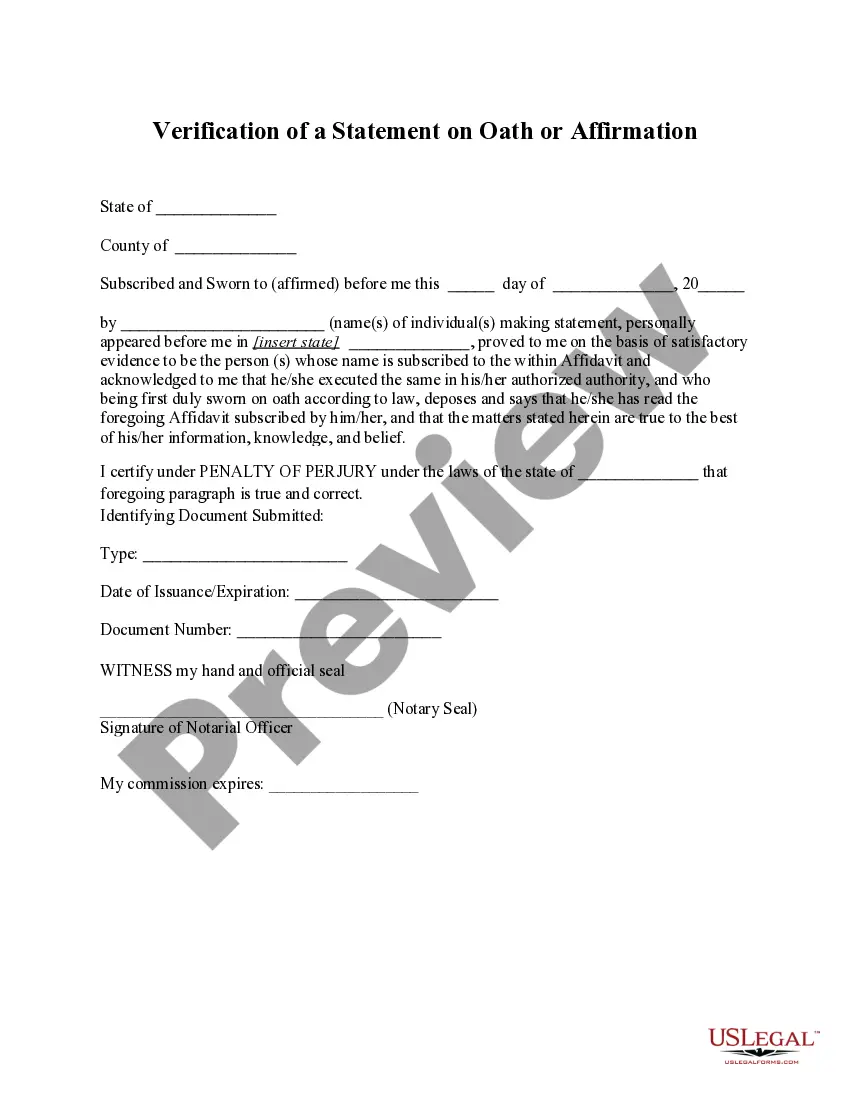
The Acknowledgment for Verification on Oath or Affirmation is a legal document used to confirm that an individual has sworn or affirmed the truth of a statement before a notary public or another authorized officer. This form is essential for ensuring that declarations made in legal documents are validated through an official process, distinguishing it from less formal affirmations or acknowledgments that may not carry the same legal weight.
Main sections of this form
- Identifies the individual making the statement.
- Includes the date the statement was sworn or affirmed.
- Notes the title and name of the notary public or authorized officer.
- Contains the signature of the notary public or authorized officer, along with their seal if applicable.
- Specifies any expiration date of the officer's commission, if required.

Common use cases
This form is used when an individual needs to formally affirm the truthfulness of a sworn statement in a legal context. It may be required for court filings, applications for licenses, or other official documents that necessitate a sworn declaration under penalty of perjury. Using this form ensures that the statement is legally recognized.
Who can use this document
- Individuals who need to make a sworn statement or declaration.
- Parties involved in legal proceedings requiring verification of facts.
- Professionals who ensure compliance with legal requirements, such as attorneys and notaries public.
How to prepare this document
- Enter the name(s) of the individual(s) making the statement in the designated field.
- Fill in the date on which the statement is sworn or affirmed.
- Have the notary public or authorized officer review the statement for accuracy.
- Collect the signature of the notary public or officer along with their title.
- Ensure that the notary's commission expiration date is noted if required.
Does this form need to be notarized?
Yes, this form must be notarized to be legally valid. Having a notary public confirm the identity of the individual making the sworn statement adds a layer of authenticity and protects against fraud. US Legal Forms offers integrated online notarization, available 24/7 via secure video calls, ensuring you can complete this legal process from anywhere.
Get your form ready online
Our built-in tools help you complete, sign, share, and store your documents in one place.
Make edits, fill in missing information, and update formatting in US Legal Forms—just like you would in MS Word.
Download a copy, print it, send it by email, or mail it via USPS—whatever works best for your next step.
Sign and collect signatures with our SignNow integration. Send to multiple recipients, set reminders, and more. Go Premium to unlock E-Sign.
If this form requires notarization, complete it online through a secure video call—no need to meet a notary in person or wait for an appointment.
We protect your documents and personal data by following strict security and privacy standards.

Make edits, fill in missing information, and update formatting in US Legal Forms—just like you would in MS Word.

Download a copy, print it, send it by email, or mail it via USPS—whatever works best for your next step.

Sign and collect signatures with our SignNow integration. Send to multiple recipients, set reminders, and more. Go Premium to unlock E-Sign.

If this form requires notarization, complete it online through a secure video call—no need to meet a notary in person or wait for an appointment.

We protect your documents and personal data by following strict security and privacy standards.
Common mistakes
- Failing to sign the form in the presence of the notary.
- Leaving fields blank, such as date or name of the officer.
- Not using the correct notary seal when required.
- Confusing affirmation with affirmation; each has distinct legal implications.
Benefits of completing this form online
- Convenient access and download of the form from anywhere.
- Editability allows for customization to suit specific needs.
- Ease and reliability of properly configured legal templates drafted by licensed attorneys.
Legal use & context
- The form serves as a formal declaration in legal proceedings.
- It can be used in various legal contexts, including court cases and administrative hearings.
- Failure to properly complete this form may result in legal challenges regarding the sworn statement.
Quick recap
- The Acknowledgment for Verification on Oath or Affirmation is essential for confirming the truth of statements.
- Proper completion and notarization are vital for legal validity.
- Utilizing this form can simplify legal processes and ensure compliance.
Looking for another form?


Form popularity
FAQ
When you see (here insert the name and character of the officer) next to a blank as shown below, it means you should insert Your name, Notary Public in the blank.
Personal knowledge, which means that you personally know the signer. Identity documents, such as driver's licenses, passports and other government-issued IDs. Credible identifying witnesses who know the signer and can vouch for his or her identity.
What Is An Acknowledgment? The purpose of an acknowledgment is for a signer, whose identity has been verified, to declare to a Notary or notarial officer that he or she has willingly signed a document.The signer may either sign the document before appearing before you, or in your presence.
Step 1: Require Personal Appearance. Step 2: Check Over The Document. Step 3: Carefully Identify The Signer. Step 4: Record Your Journal Entry. Step 5: Complete The Notarial Certificate. A Last Note: Never Give Advice.
When taking an acknowledgment, the notary must ask the signer in a verbal ceremony the following questions: (1) Are you acknowledging to me that this is your signature?; (2) Are you acknowledging to me that you signed this document for the purposes stated therein?; (3) Are you acknowledging to me that you signed this
For an acknowledgment, the signer must always: Be positively identified by the Notary. The Notary must always identify the signer for an acknowledgement; whether the signer personally knows the Notary, presents an ID document, or is identified by a credible witness depends on the circumstances.
With a few exceptions, notarized documents contain five notary-specific elements: venue, the notary certificate, commission expiration date, notary signature, and notary seal. This article covers the venue.