Pennsylvania Acknowledgment for Corporation
About this form
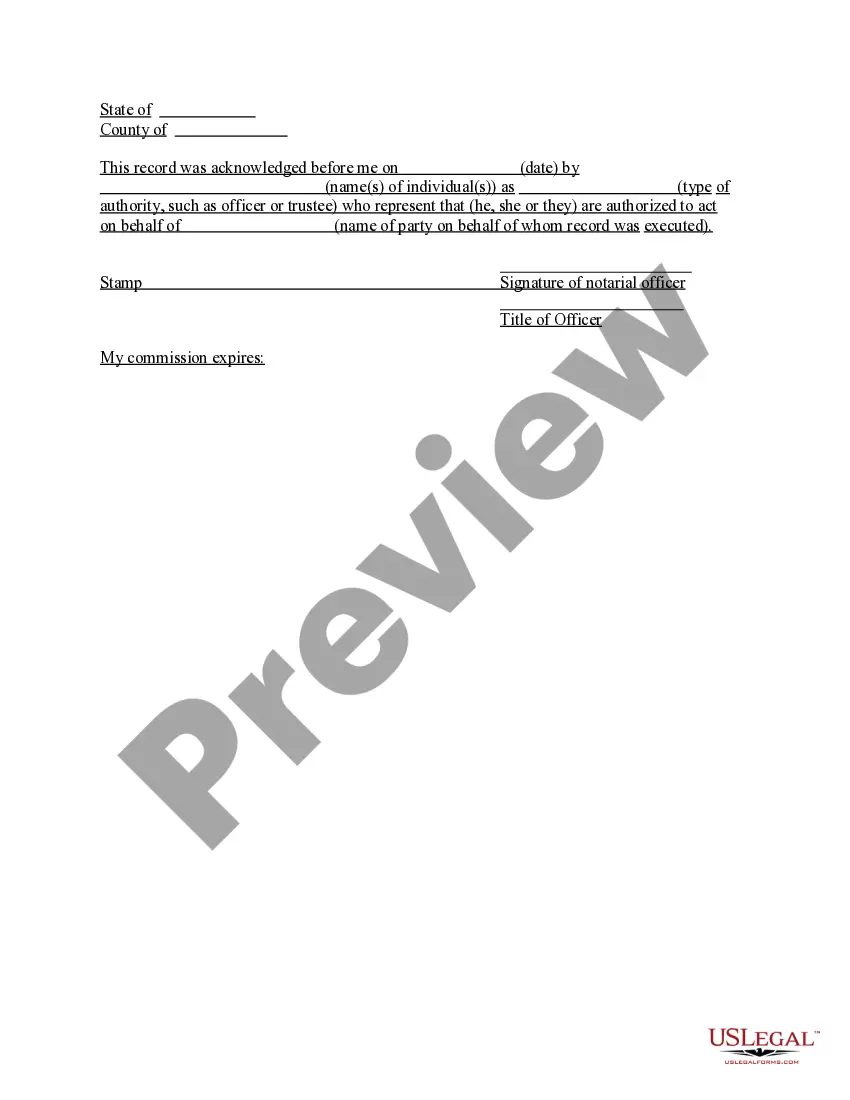
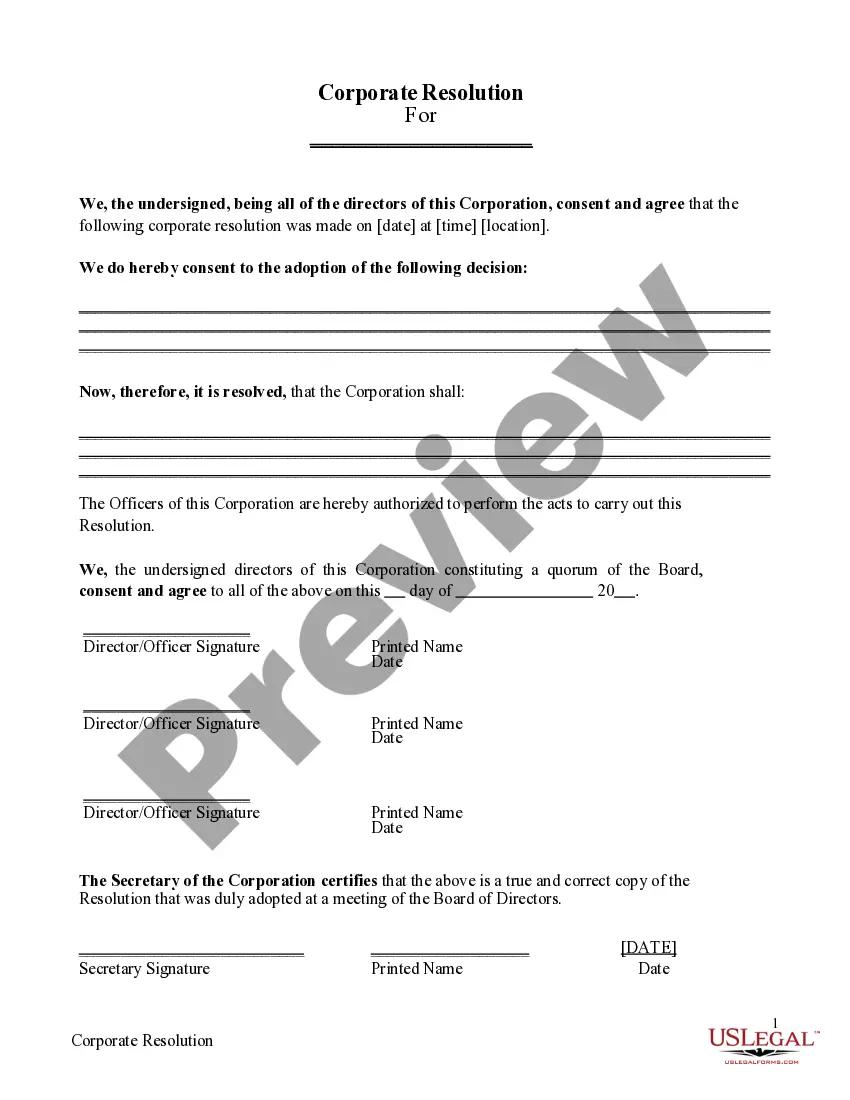
The Acknowledgment for Corporation is a legal document used to confirm that a corporate record has been duly acknowledged by authorized individuals of the corporation. This form serves to verify that those signing on behalf of a corporation have the proper authority, distinguishing it from other acknowledgment forms meant for individuals or non-corporate entities. It ensures compliance with corporate governance requirements and is an essential part of maintaining accurate corporate documentation.
Key components of this form
- Date of acknowledgment
- Names of individuals authorized to act on behalf of the corporation
- Type of authority, such as officer or trustee
- Name of the corporation represented
- Signature of the notarial officer
Common use cases
This form should be used when a corporation needs to formally acknowledge the execution of a document, such as contracts, agreements, or other records requiring confirmation of authority. It is particularly useful during corporate transactions, legal filings, or when creating official records to ensure that all actions taken are valid and recognized.
Who needs this form
- Corporate officers or trustees authorized to act on behalf of the corporation
- Legal representatives conducting corporate affairs
- Individuals responsible for maintaining corporate records
How to complete this form
- Identify the date when the acknowledgment occurs.
- Enter the names of the individuals who have the authority to act for the corporation.
- Specify the type of authority for each individual (e.g., officer, trustee).
- Provide the name of the corporation being represented.
- Ensure the document is signed by the notarial officer with relevant credentials.
Is notarization required?
This document requires notarization to meet legal standards. US Legal Forms provides secure online notarization powered by Notarize, allowing you to complete the process through a verified video call, available 24/7.
Get your form ready online
Our built-in tools help you complete, sign, share, and store your documents in one place.
Make edits, fill in missing information, and update formatting in US Legal Forms—just like you would in MS Word.
Download a copy, print it, send it by email, or mail it via USPS—whatever works best for your next step.
Sign and collect signatures with our SignNow integration. Send to multiple recipients, set reminders, and more. Go Premium to unlock E-Sign.
If this form requires notarization, complete it online through a secure video call—no need to meet a notary in person or wait for an appointment.
We protect your documents and personal data by following strict security and privacy standards.

Make edits, fill in missing information, and update formatting in US Legal Forms—just like you would in MS Word.

Download a copy, print it, send it by email, or mail it via USPS—whatever works best for your next step.

Sign and collect signatures with our SignNow integration. Send to multiple recipients, set reminders, and more. Go Premium to unlock E-Sign.

If this form requires notarization, complete it online through a secure video call—no need to meet a notary in person or wait for an appointment.

We protect your documents and personal data by following strict security and privacy standards.
Common mistakes to avoid
- Failing to include the correct names of individuals authorized to act.
- Not specifying the type of authority held by the signatories.
- Omitting the date of acknowledgment.
- Neglecting to secure the required notarial signature.
Advantages of online completion
- Easy accessibility and convenience of downloading and completing the form at any time.
- Editability allows customization based on specific corporate needs.
- Reliability of professionally drafted legal templates ensures accuracy and compliance.
Looking for another form?


Form popularity
FAQ
The purpose of an acknowledgment is for a signer, whose identity has been verified, to declare to a Notary or notarial officer that he or she has willingly signed a document. Click to expand.The signer must declare (acknowledge) signing the document for its intended purpose.
The certificate of a notary public, justice of the peace, or other authorized officer, attached to a deed, mortgage, or other instrument, setting forth that the parties thereto personally appeared before him on such a date and acknowledged the instrument to be their free and voluntary act and deed. Read v.
Require Personal Appearance. Review The Document. Screen The Signer And Verify The Facts. Record The Notarization. Complete The Notarization.
An acknowledgment is a formal declaration before an authorized official such as a notary, by a person who has signed a document, that the document is his or her act. Acknowledgments are governed by the Uniform Acknowledgment Act. The person acknowledging the document must personally appear before the notary.
A witness is brought in during the signing of a document to physically observe the parties sign it. Witnesses should be able to confirm the identity of both parties. They then sign the document as a witness to confirm that they saw each party sign.
They key difference is that for a signature witnessing, the signer must always sign the document in the Notary's presence.An acknowledgment, on the other hand, does not require the Notary to witness the signature in most states (one exception is Maryland).
Step 1: Require Personal Appearance. Step 2: Check Over The Document. Step 3: Carefully Identify The Signer. Step 4: Record Your Journal Entry. Step 5: Complete The Notarial Certificate. A Last Note: Never Give Advice.
This is a form that shows that a notary public has established the identity of the signer(s) and witnessed the signature of a document. It only demonstrates that the document has been signed and does not make any claims about the information in the document.
Unlike jurats, an acknowledgment does not need to be signed in the presence of a notary. However, the affiant does need to swear or affirm that they signed under their own free will.