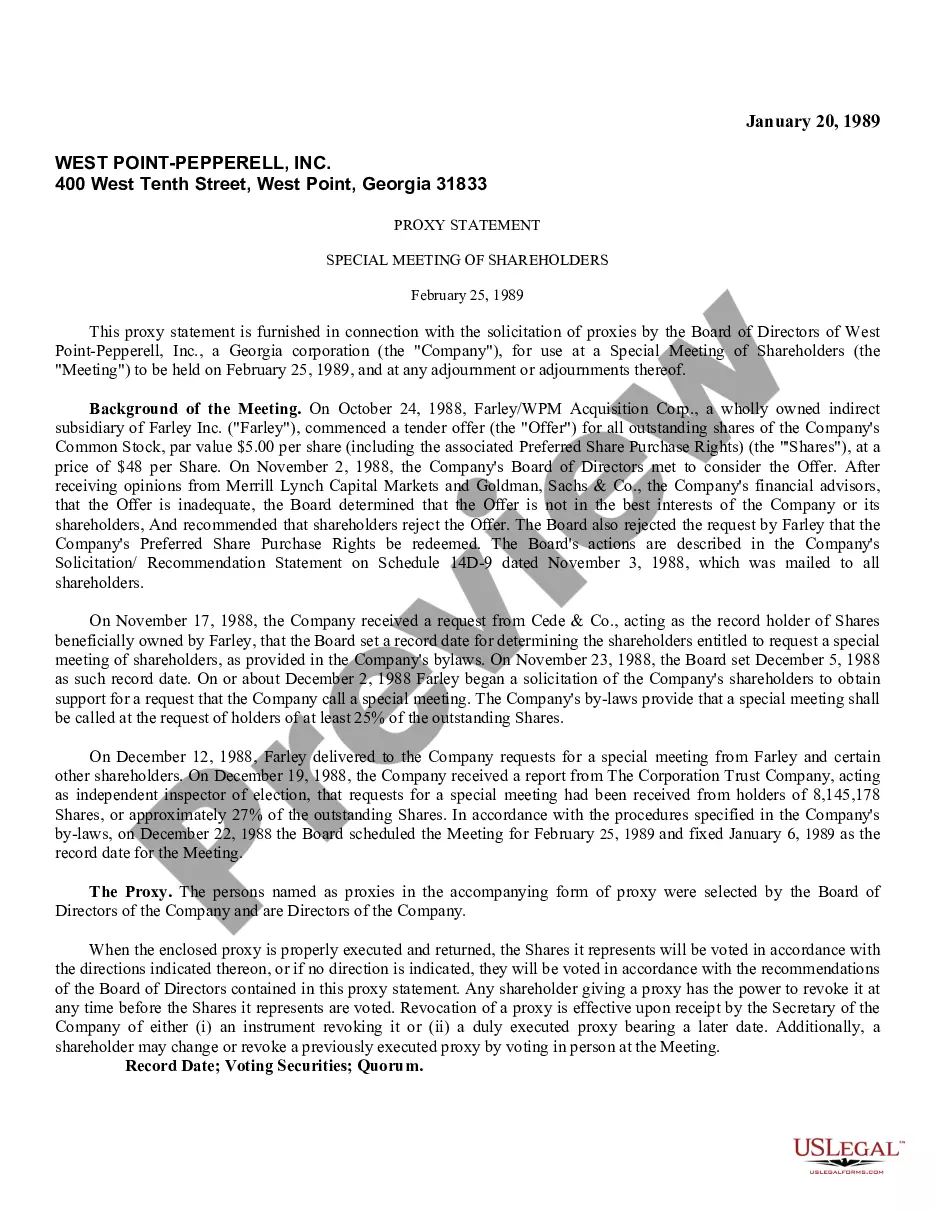
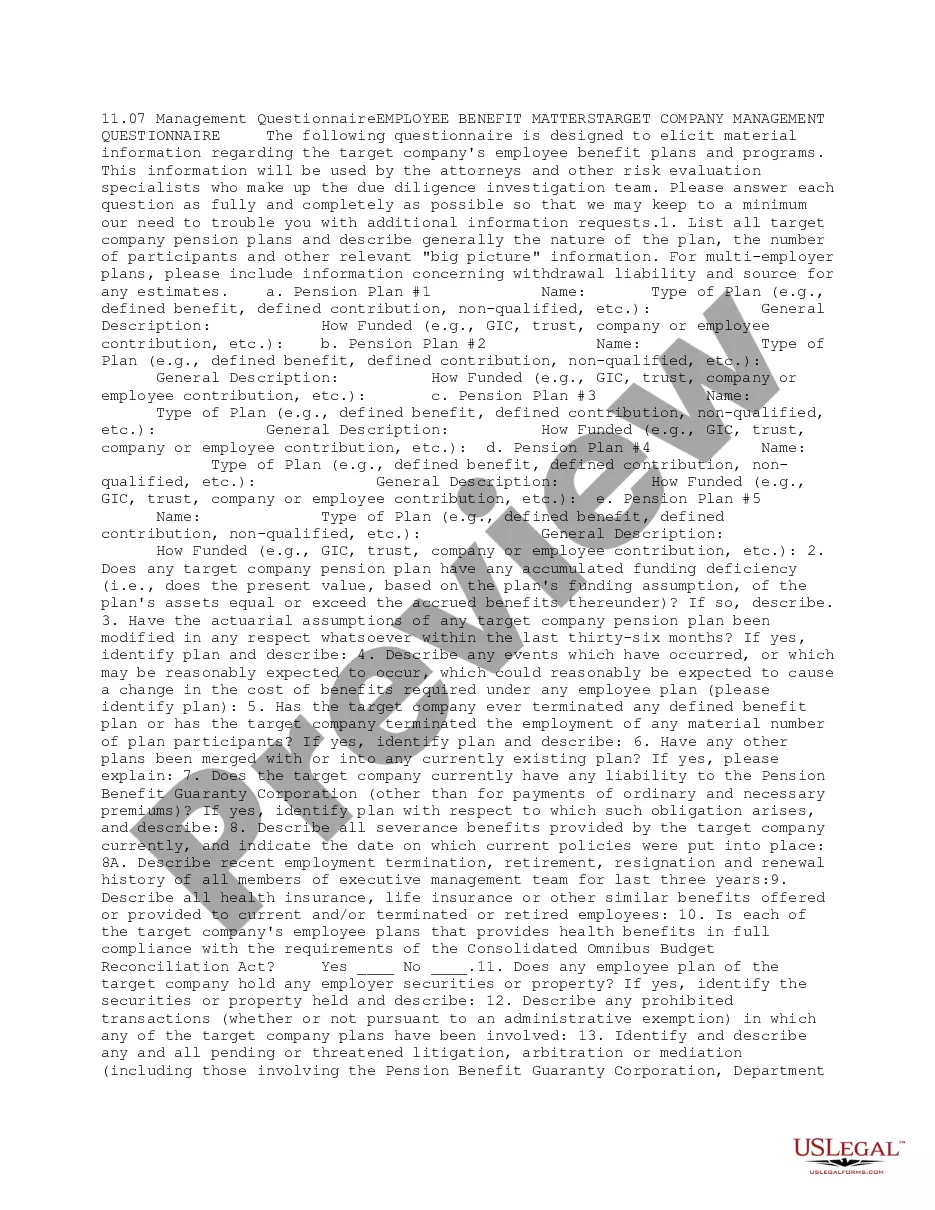
Oregon Management Questionnaire Employee Benefit Matters
Description
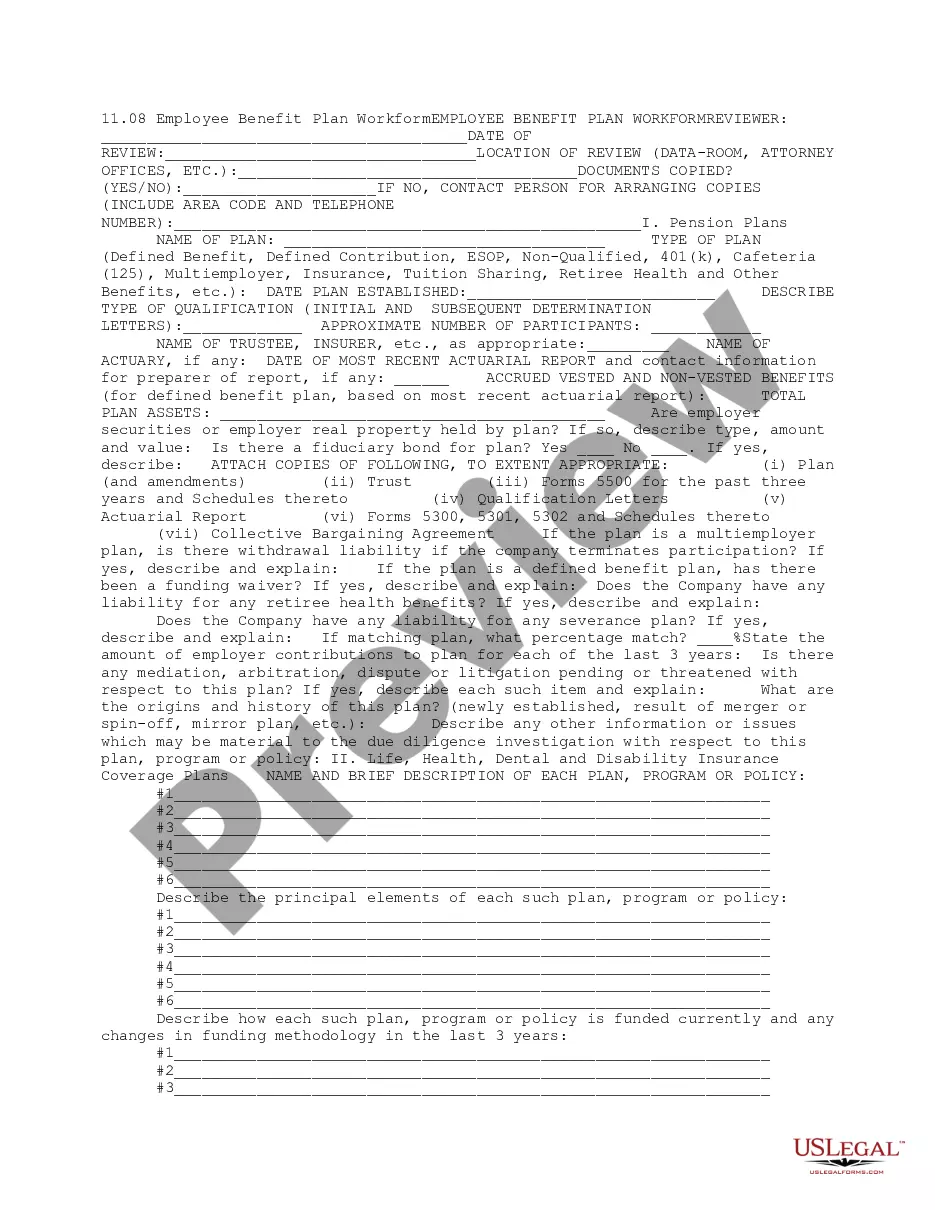
Get your form ready online
Our built-in tools help you complete, sign, share, and store your documents in one place.
Make edits, fill in missing information, and update formatting in US Legal Forms—just like you would in MS Word.
Download a copy, print it, send it by email, or mail it via USPS—whatever works best for your next step.
Sign and collect signatures with our SignNow integration. Send to multiple recipients, set reminders, and more. Go Premium to unlock E-Sign.
If this form requires notarization, complete it online through a secure video call—no need to meet a notary in person or wait for an appointment.
We protect your documents and personal data by following strict security and privacy standards.

Make edits, fill in missing information, and update formatting in US Legal Forms—just like you would in MS Word.

Download a copy, print it, send it by email, or mail it via USPS—whatever works best for your next step.

Sign and collect signatures with our SignNow integration. Send to multiple recipients, set reminders, and more. Go Premium to unlock E-Sign.

If this form requires notarization, complete it online through a secure video call—no need to meet a notary in person or wait for an appointment.

We protect your documents and personal data by following strict security and privacy standards.
Looking for another form?
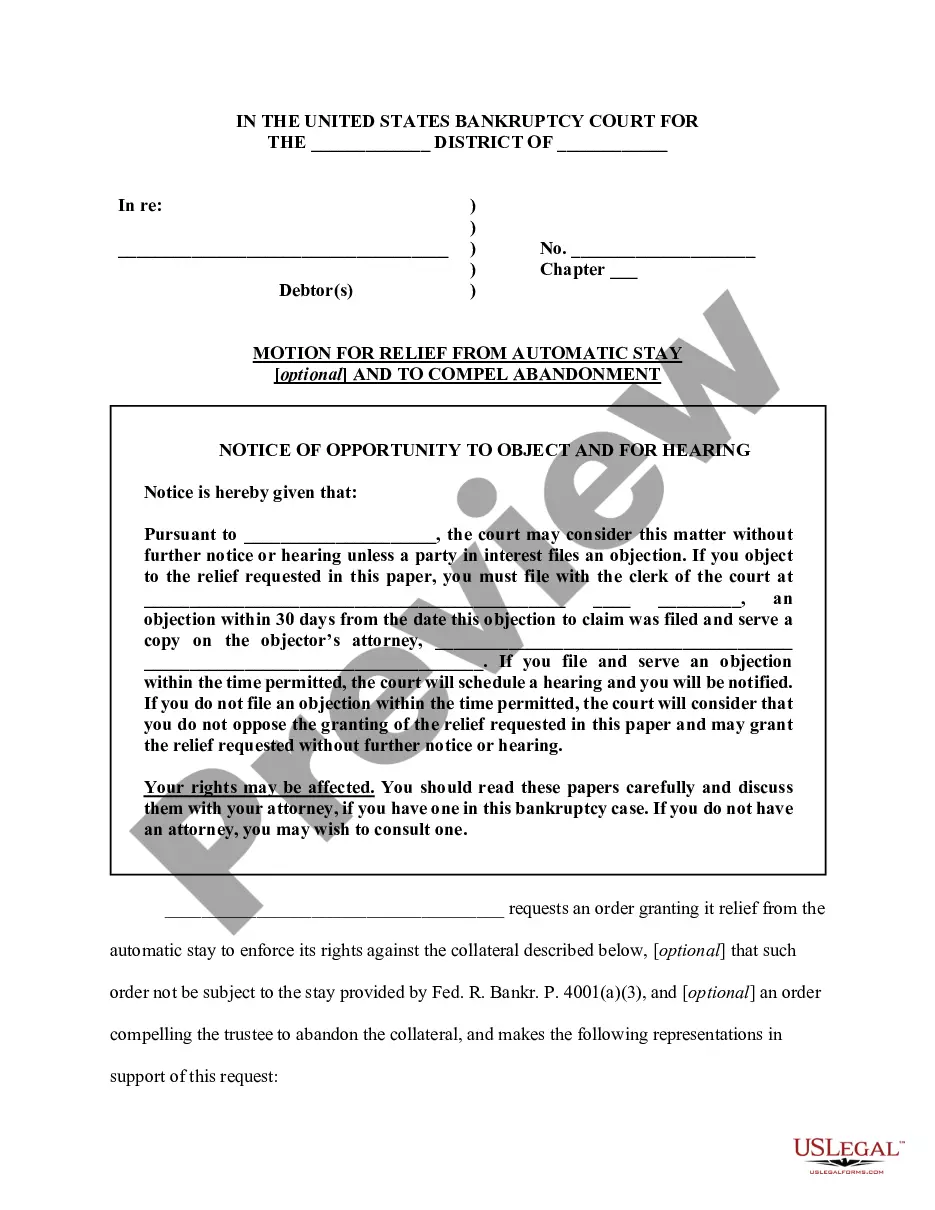


How to fill out Management Questionnaire Employee Benefit Matters?
You can spend hours online trying to locate the legal document template that complies with the state and federal standards you require.
US Legal Forms offers thousands of legal templates that have been validated by professionals.
You can conveniently acquire or print the Oregon Management Questionnaire Employee Benefit Matters using my service.
If available, use the Review button to view the document template as well.
- If you already have a US Legal Forms account, you can sign in and click the Download button.
- After that, you can complete, modify, print, or sign the Oregon Management Questionnaire Employee Benefit Matters.
- Each legal document template you obtain is yours indefinitely.
- To download another copy of any purchased form, go to the My documents section and click the appropriate button.
- If you are visiting the US Legal Forms website for the first time, follow the simple instructions below.
- First, ensure that you have selected the correct document template for the state/city of your choice.
- Review the document information to confirm you have chosen the right form.
Form popularity
FAQ
What's your benefits package? This question is fair gamebut only after you receive the job offer. Employers want to hire people who are passionate about the job, the work and the organization, Templin explains. When questions about benefits are asked too early, you're not giving off that perception.
10 Most Commonly Offered Employee BenefitsHealth Insurance Benefits. This one is a no-brainer.Life Insurance.Dental Insurance.Retirement Accounts.Flexible Spending Accounts (FSAs) or Health Savings Accounts (HSAs)Paid Vacation and Sick Time.Paid Holidays.Paid Medical Leave.More items...?
Benefits currently required by law include social security, unemployment insurance, and workers' compensation insurance. The Social Security Act established the Social Security Administration.
How to answer "What are your total compensation expectations?"Research the industry and geographic area.Emphasize your flexibility.State a range rather than a fixed amount.Consider offering high compensation.Be honest.Focus on why you expect the amount.Prepare for price negotiation.
10 Most Commonly Offered Employee BenefitsHealth Insurance Benefits. This one is a no-brainer.Life Insurance.Dental Insurance.Retirement Accounts.Flexible Spending Accounts (FSAs) or Health Savings Accounts (HSAs)Paid Vacation and Sick Time.Paid Holidays.Paid Medical Leave.More items...?
Questions to Ask About Employee BenefitsDoes the company offer health insurance?Will it cover members or my family as well as myself?How much of the premium costs do I have to pay for myself?Can I choose different levels of coverage?What kind of coverage is there for dental, vision and disability insurance?More items...
Form 132 is filed with Form OQ on a quarterly basis. Oregon Combined Quarterly Report- Form OQUse this form to determine how much tax is due each quarter for state unemployment insurance, withholding, Tri-Met & Lane Transit excise taxes, and the Workers' Benefit Fund.
Better health, dental, and vision insurance topped the list, with 88% of respondents saying that they would give this benefit some consideration (34%) or heavy consideration (54%) when choosing a job.
Benefits are any perks offered to employees in addition to salary. The most common benefits are medical, disability, and life insurance; retirement benefits; paid time off; and fringe benefits.
Three employee benefits are mandated by either the state or federal government: workers' compensation (state), unemployment insurance (federal), and social security (federal).