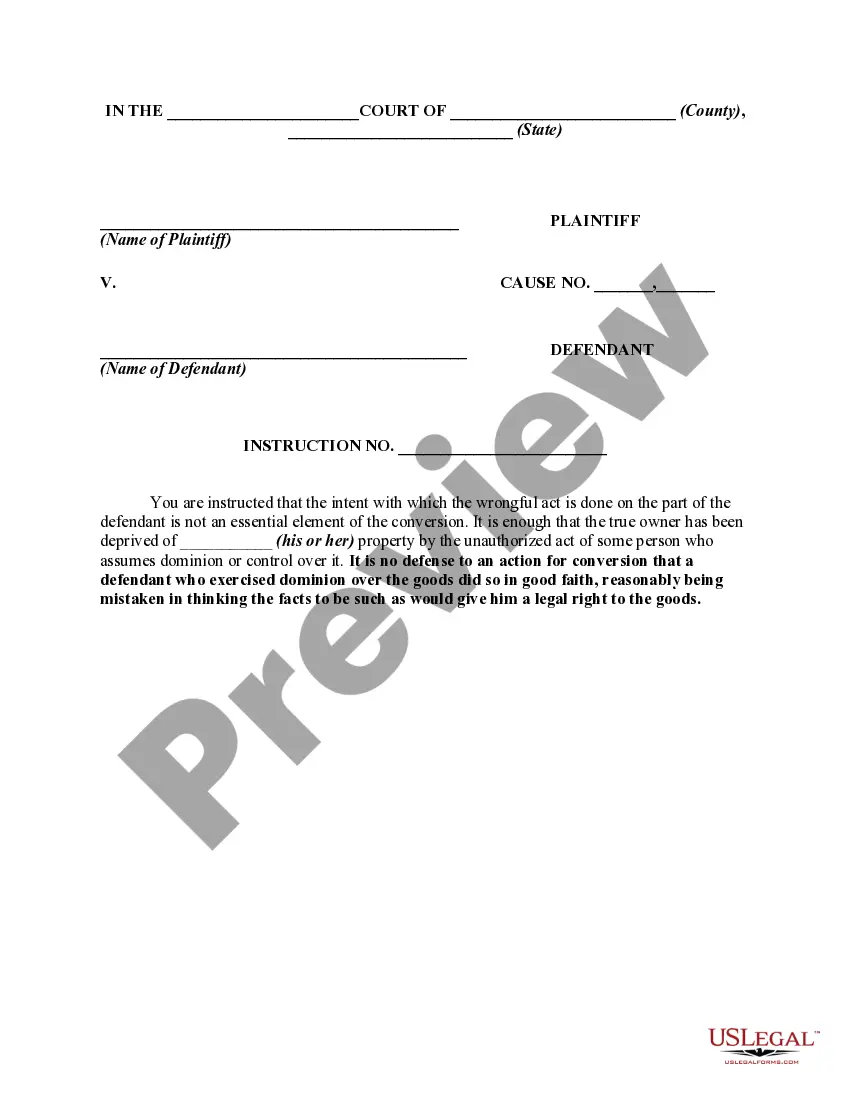
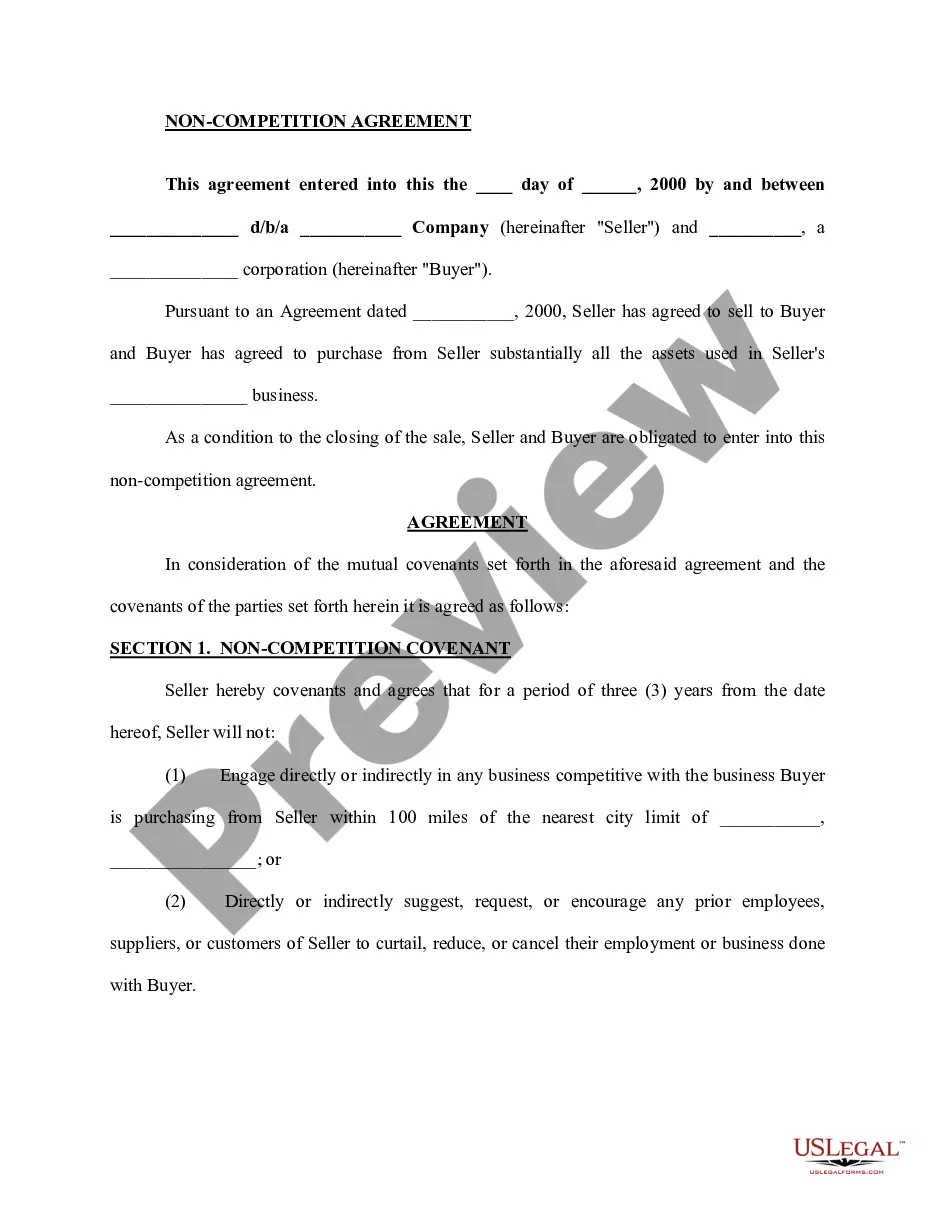
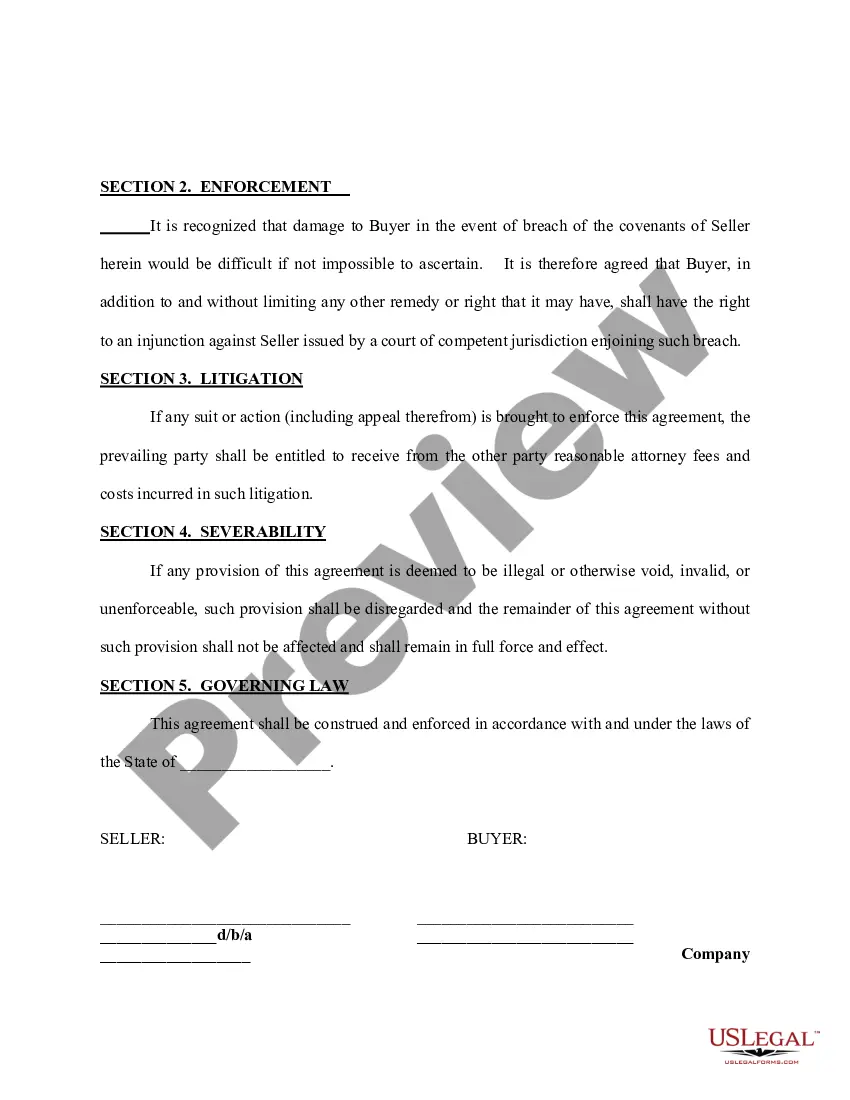
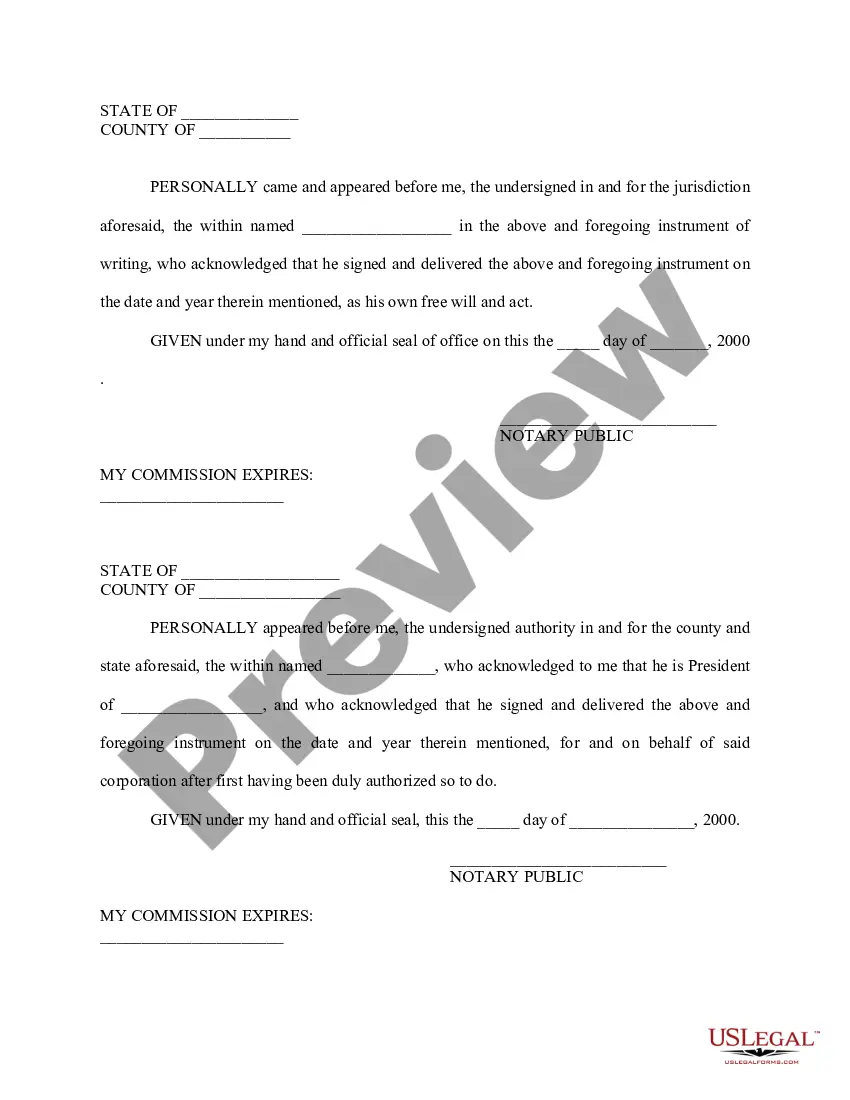
Oregon Noncompetition Agreement - Small Business
Description

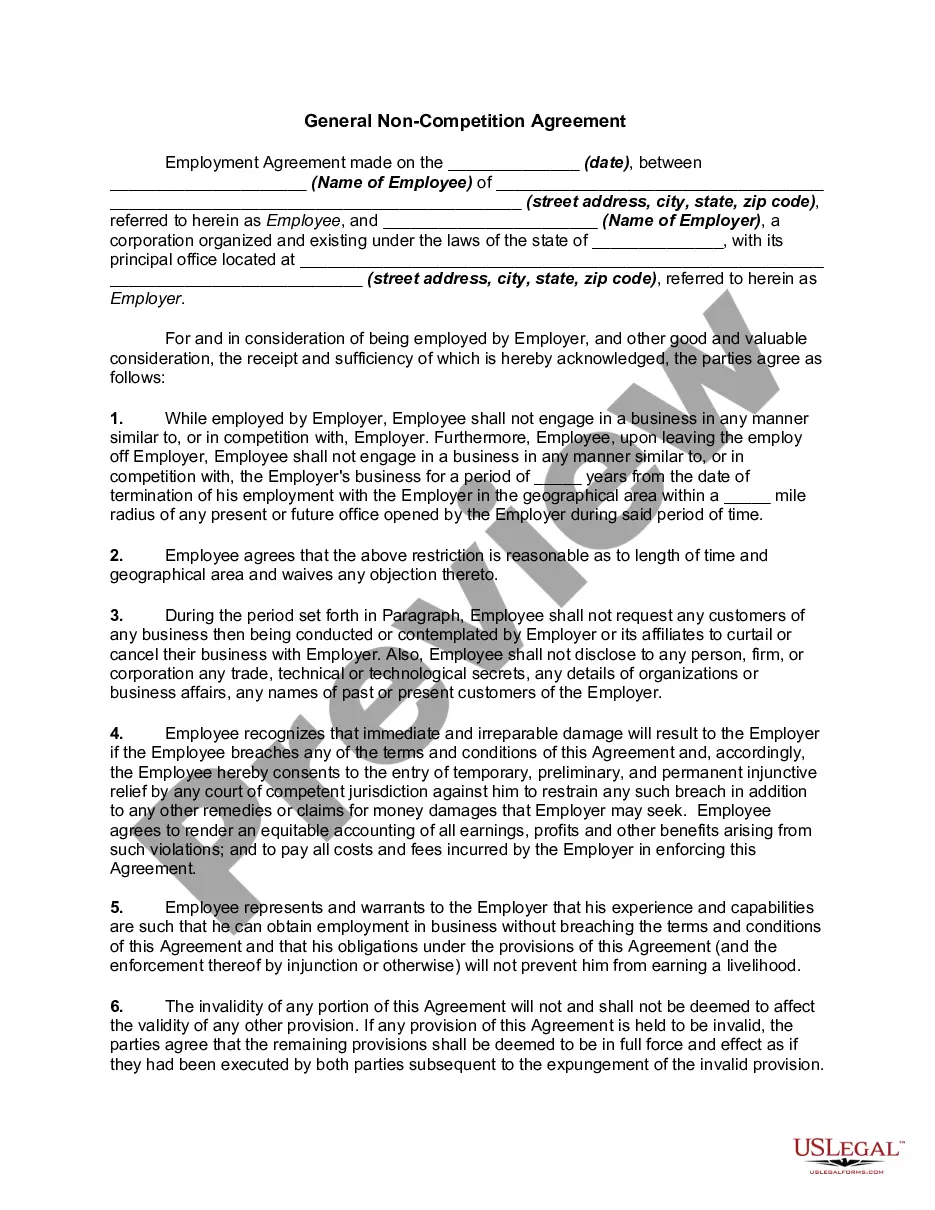
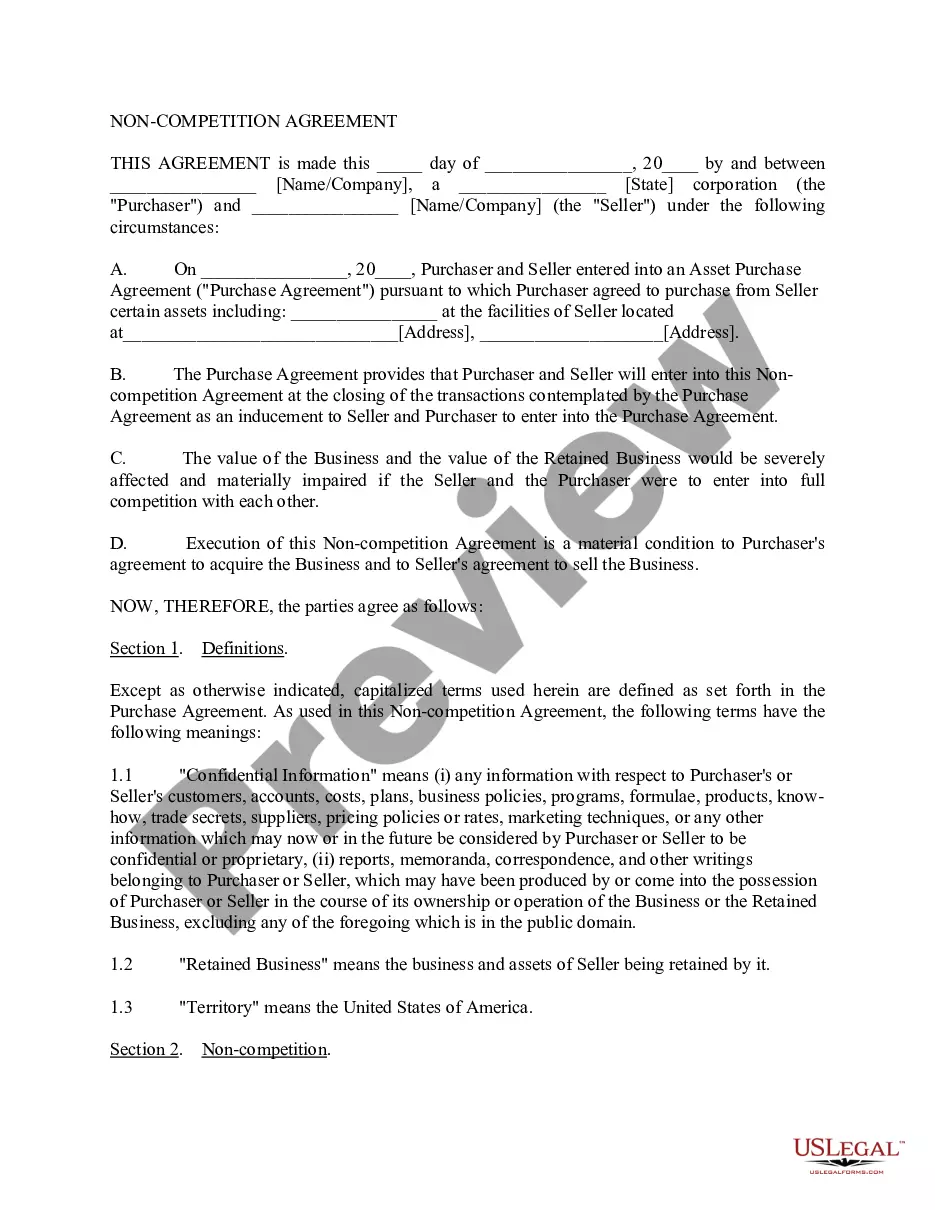
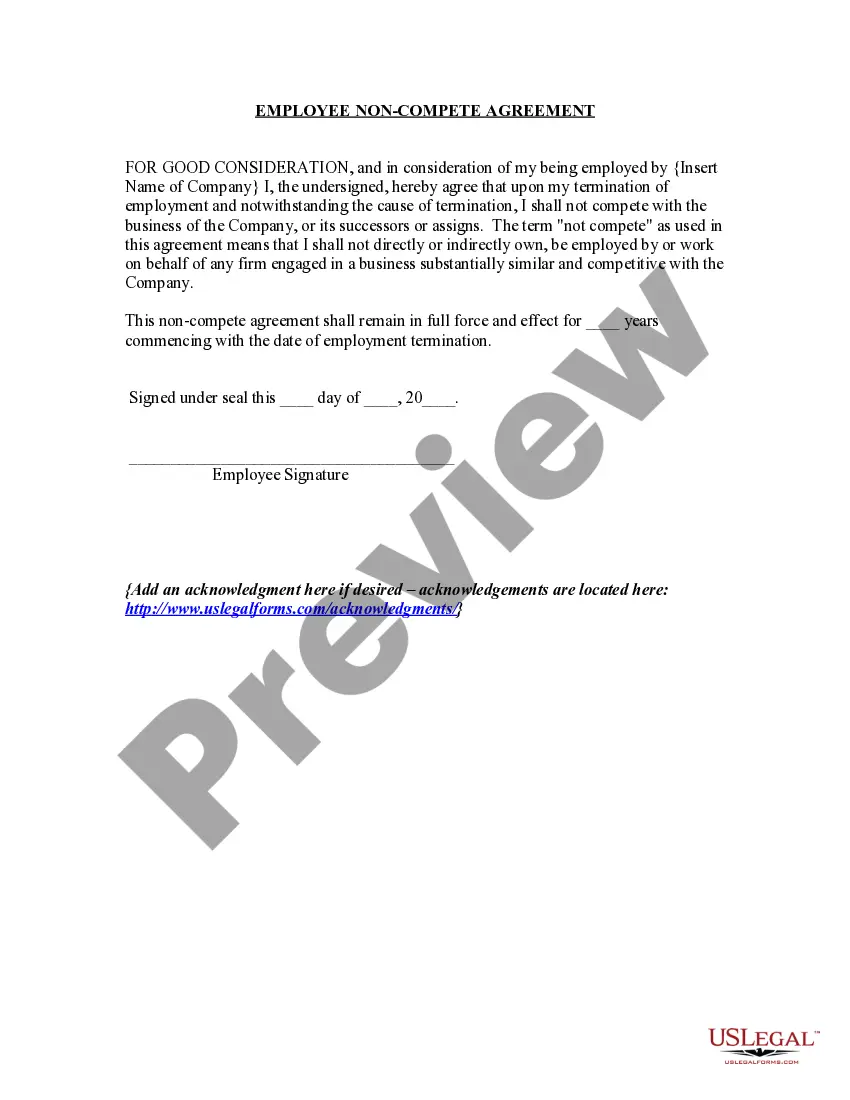
Get your form ready online
Our built-in tools help you complete, sign, share, and store your documents in one place.
Make edits, fill in missing information, and update formatting in US Legal Forms—just like you would in MS Word.
Download a copy, print it, send it by email, or mail it via USPS—whatever works best for your next step.
Sign and collect signatures with our SignNow integration. Send to multiple recipients, set reminders, and more. Go Premium to unlock E-Sign.
If this form requires notarization, complete it online through a secure video call—no need to meet a notary in person or wait for an appointment.
We protect your documents and personal data by following strict security and privacy standards.

Make edits, fill in missing information, and update formatting in US Legal Forms—just like you would in MS Word.

Download a copy, print it, send it by email, or mail it via USPS—whatever works best for your next step.

Sign and collect signatures with our SignNow integration. Send to multiple recipients, set reminders, and more. Go Premium to unlock E-Sign.

If this form requires notarization, complete it online through a secure video call—no need to meet a notary in person or wait for an appointment.

We protect your documents and personal data by following strict security and privacy standards.
Looking for another form?

How to fill out Noncompetition Agreement - Small Business?
If you need to compile, download, or print validated document templates, utilize US Legal Forms, the most extensive selection of legal forms available online.
Make use of the site’s simple and convenient search to find the documents you need.
Various templates for business and personal purposes are organized by categories and states, or keywords.
Step 4. Once you’ve found the form you need, click the Buy now button. Choose the pricing plan you wish and enter your details to register for an account.
Step 5. Process the transaction. You can use your credit card or PayPal account to complete the payment. Step 6. Select the format of the legal form and download it to your device. Step 7. Complete, modify, and print or sign the Oregon Noncompetition Agreement - Small Business.
- Utilize US Legal Forms to locate the Oregon Noncompetition Agreement - Small Business in just a few clicks.
- If you are already a US Legal Forms customer, sign in to your account and click on the Download button to obtain the Oregon Noncompetition Agreement - Small Business.
- You can also access forms you previously downloaded in the My documents tab of your account.
- If you are using US Legal Forms for the first time, follow these instructions.
- Step 1. Ensure you have selected the form for your appropriate region/country.
- Step 2. Use the Preview option to review the content of the form. Be sure to read the details.
- Step 3. If you are not satisfied with the form, use the Search field at the top of the display to find other variations of the legal form template.
Form popularity
FAQ
When employers obtain Non-Competes with long-standing employees without providing anything of value in return, they are obtaining an unenforceable agreement. In many cases, the business is in a worse predicament than not having a Non-Compete, since it is relying on an agreement that is not legally enforceable.
Non-solicitation clauses that are clear, carefully drafted, and suitably retrained in temporal and spatial terms, are often enforceable.
Noncompete agreements are traditionally disfavored for two reasons: (1) the policy that an employee should be free to sell his or her own labor at will; and (2) the public interest in unimpeded trade.
Escaping Nonsolicitation AgreementsDon't sign.Build your book independently.Carve out pre-existing relationships.Require for cause termination as the trigger.Provide for a payoff.Turn clients into friends.Don't treat clients as trade secrets.Invest in your own business.
Since non-solicitation agreements are generally more specific than non-compete agreements, they are more readily enforced by courts. To be enforceable, non-solicitation agreements must abide by certain rules: Valid business reason.
Non-Solicitation of Clients Agreements and Oregon Law What this means is that often times savvy employers will include these agreements in contracts rather than including a non-compete agreement, because non-solicitation agreements are much more enforceable and often achieve the same goals of the employer.
You Can Void a Non-Compete by Proving Its Terms Go Too Far or Last Too Long. Whether a non-compete is unenforceable because it covers too large of a geographical area or it lasts too long can depend on many factors. Enforceability can depend on your industry, skills, location, etc.
Maximum length of an Oregon non-compete agreement Under the existing Oregon law, non-competition agreements cannot exceed 18 months. The amendments reduce the maximum term to 12 months.
Generally speaking, non-compete agreements (also sometimes called non-competition agreements, or simply non-competes) are not enforceable in California against former employees.
Under Oregon law, in order for a non-compete to be enforceable, the non-compete must be entered into upon a subsequent bona fide advancement. This means that the no-compete either needs to be entered into either at the start of employment, or with additional consideration, such as a promotion or pay increase.