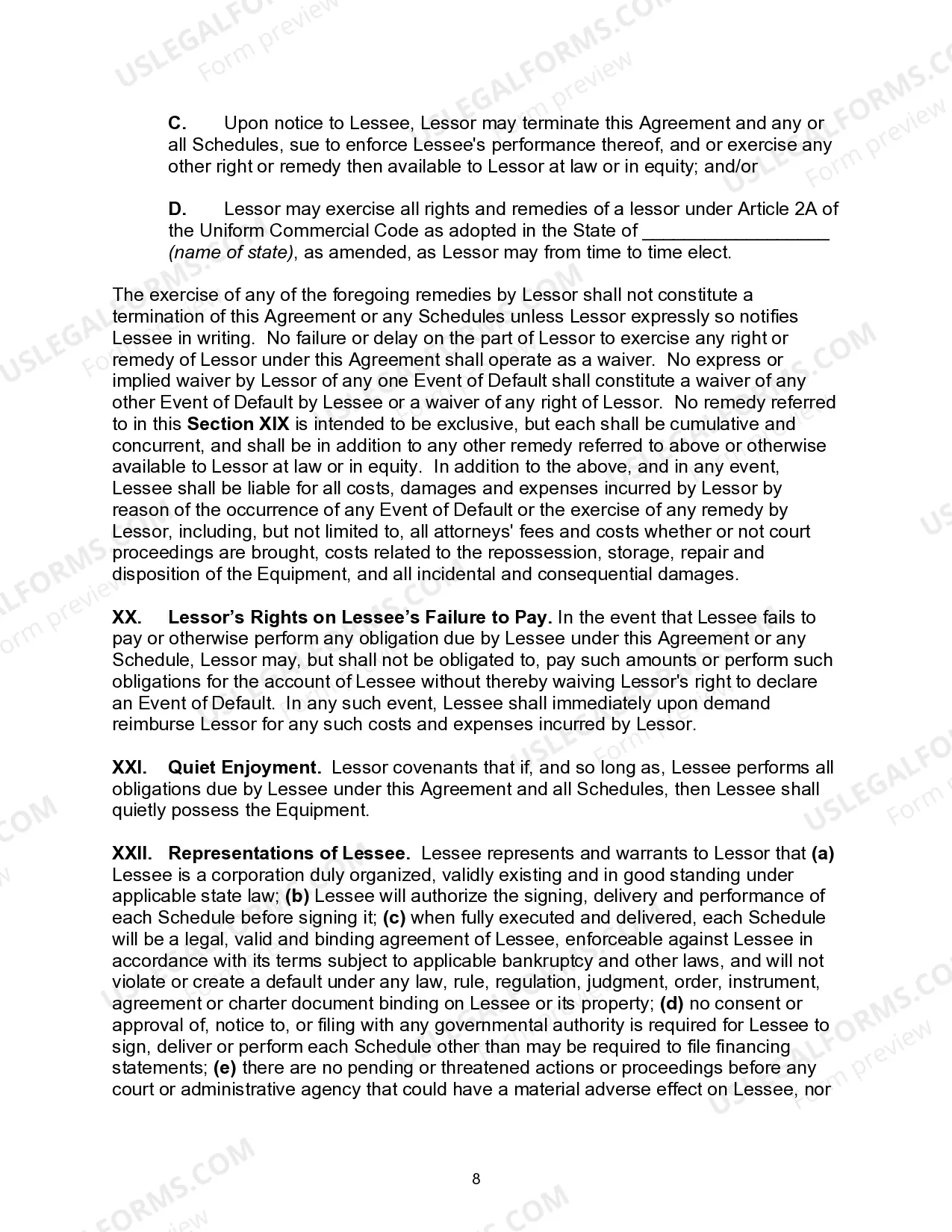
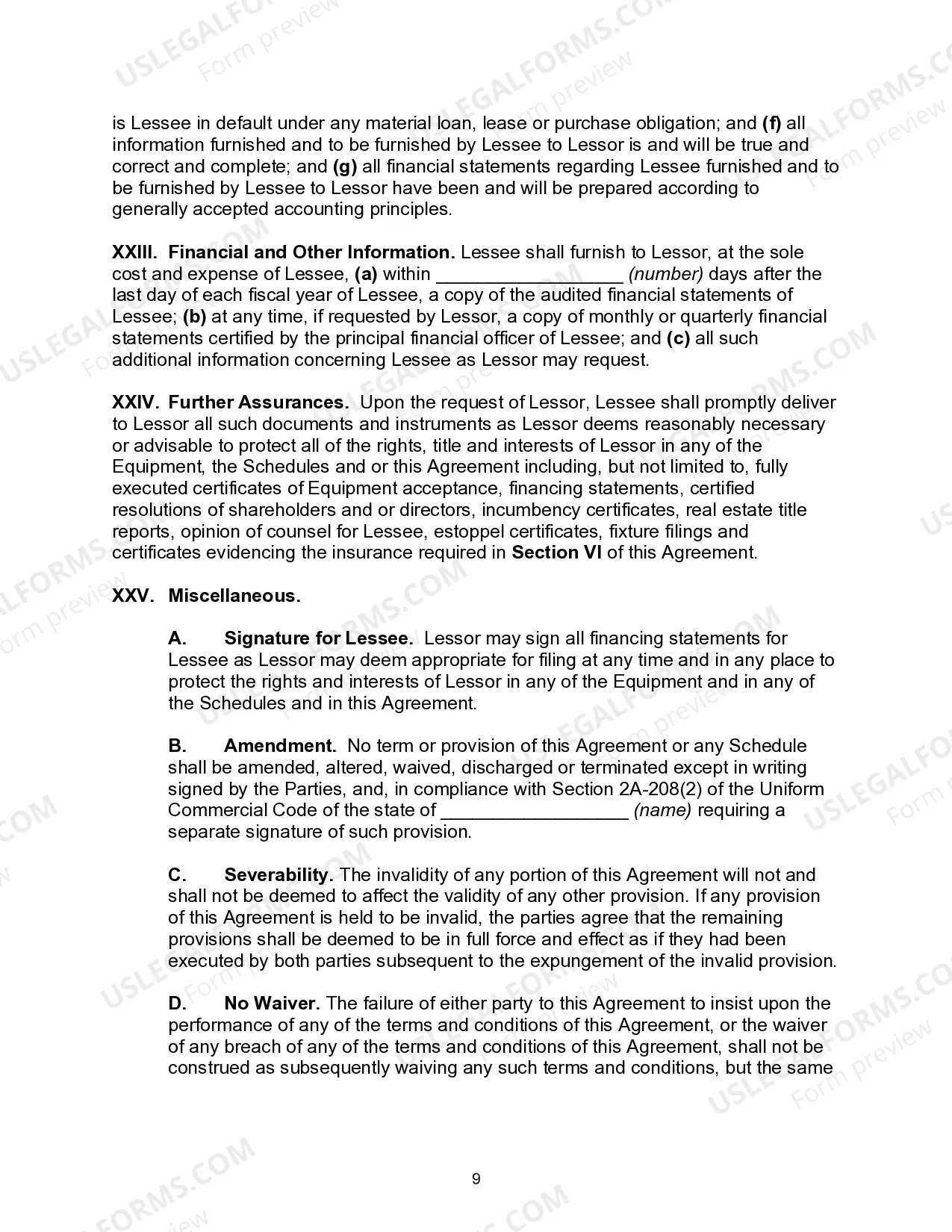
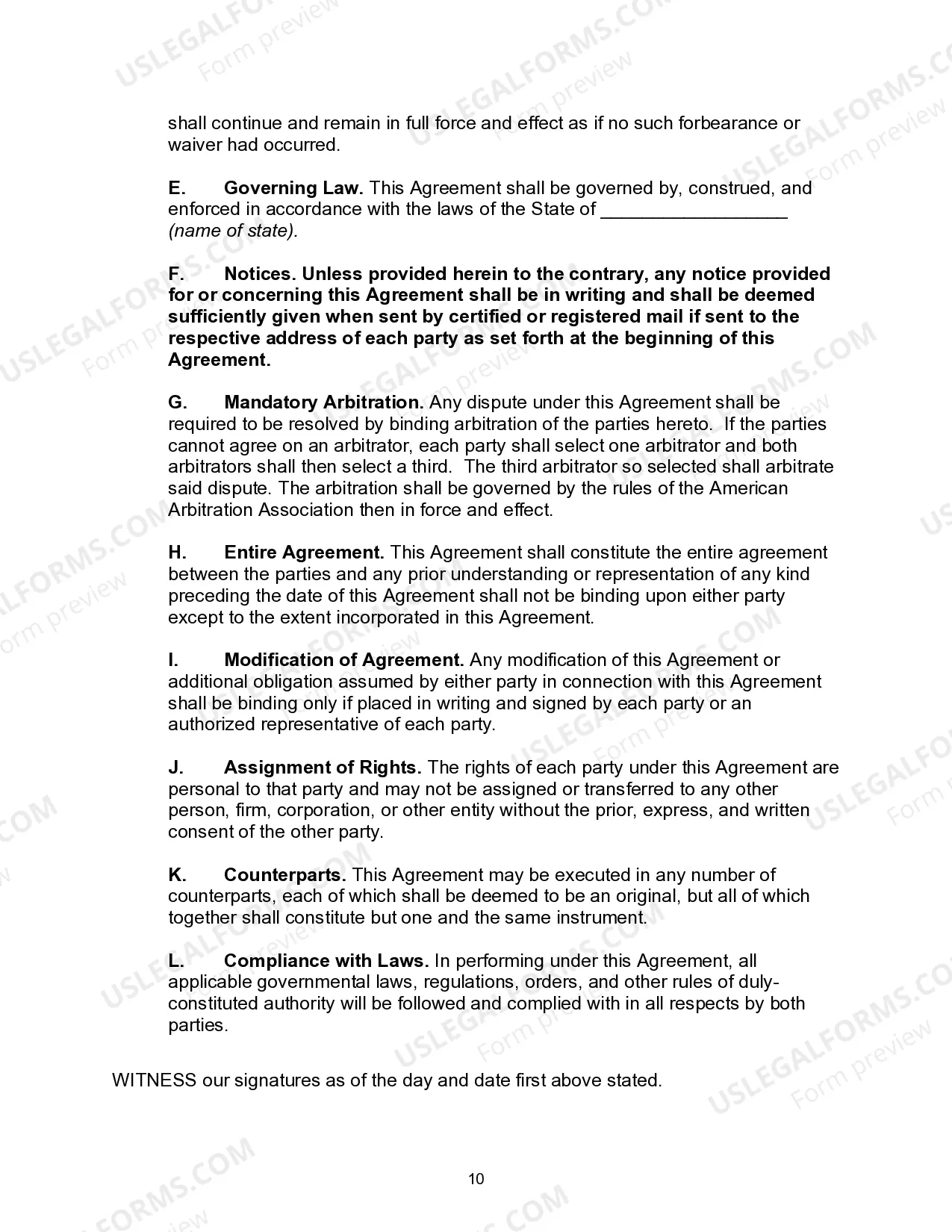
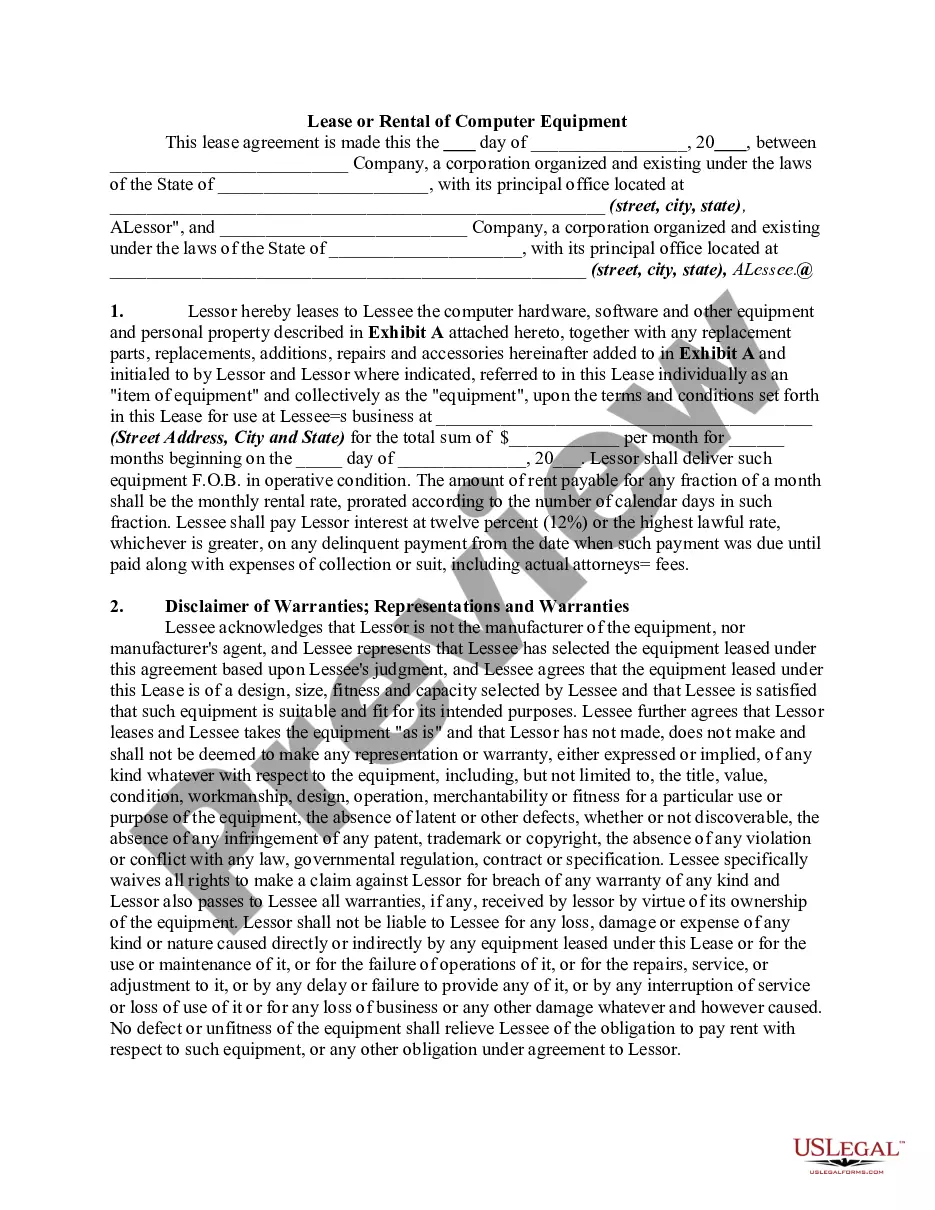
Oregon Master Equipment Lease Agreement
Description

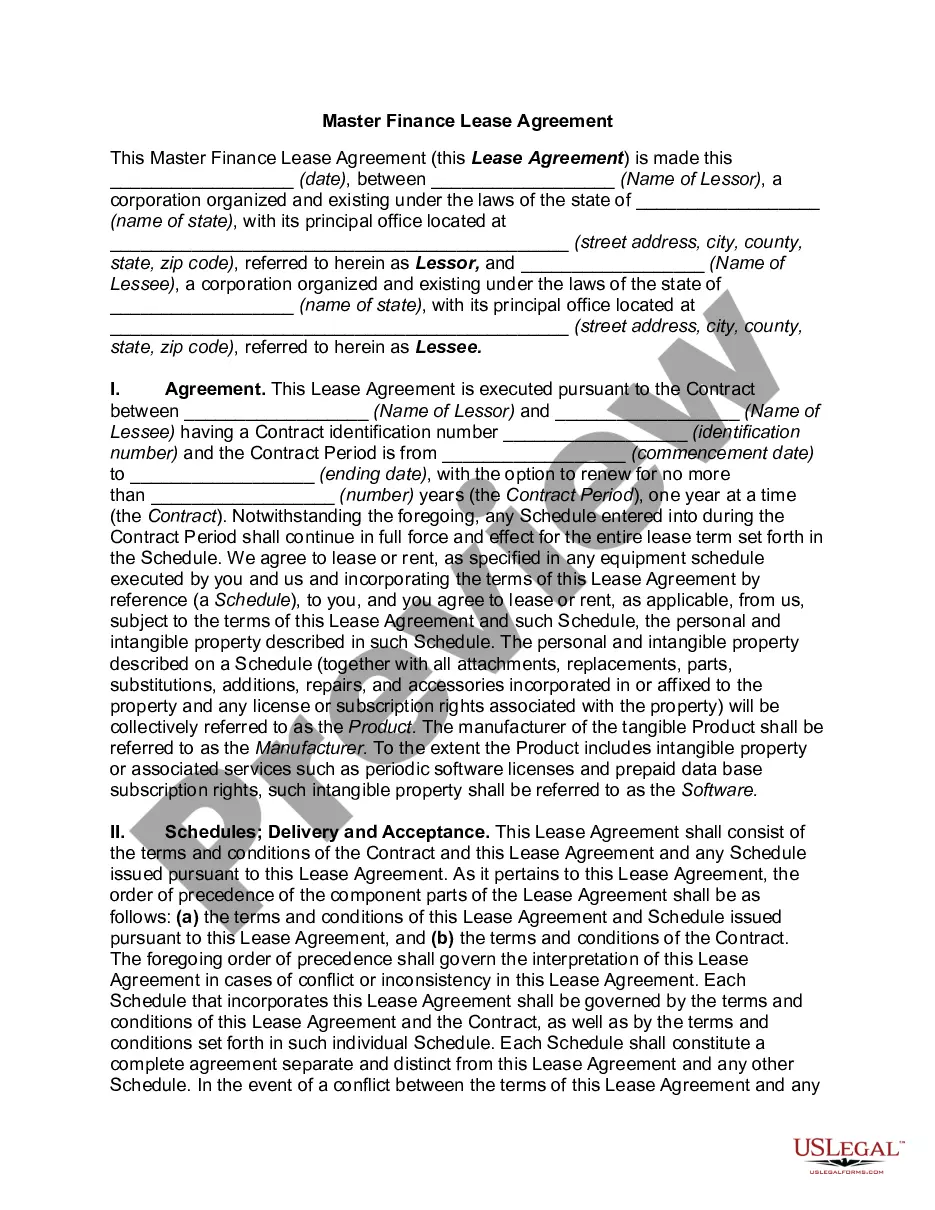
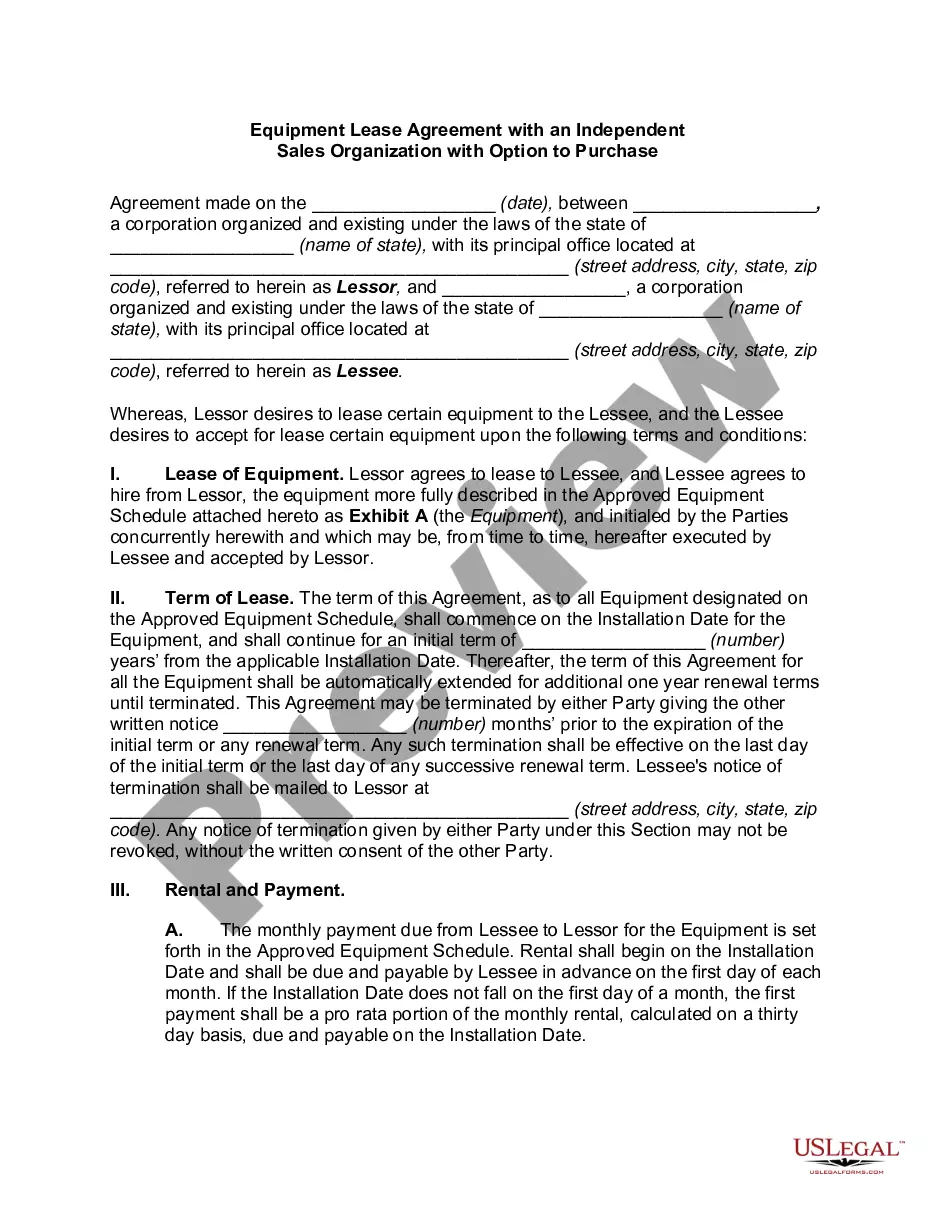
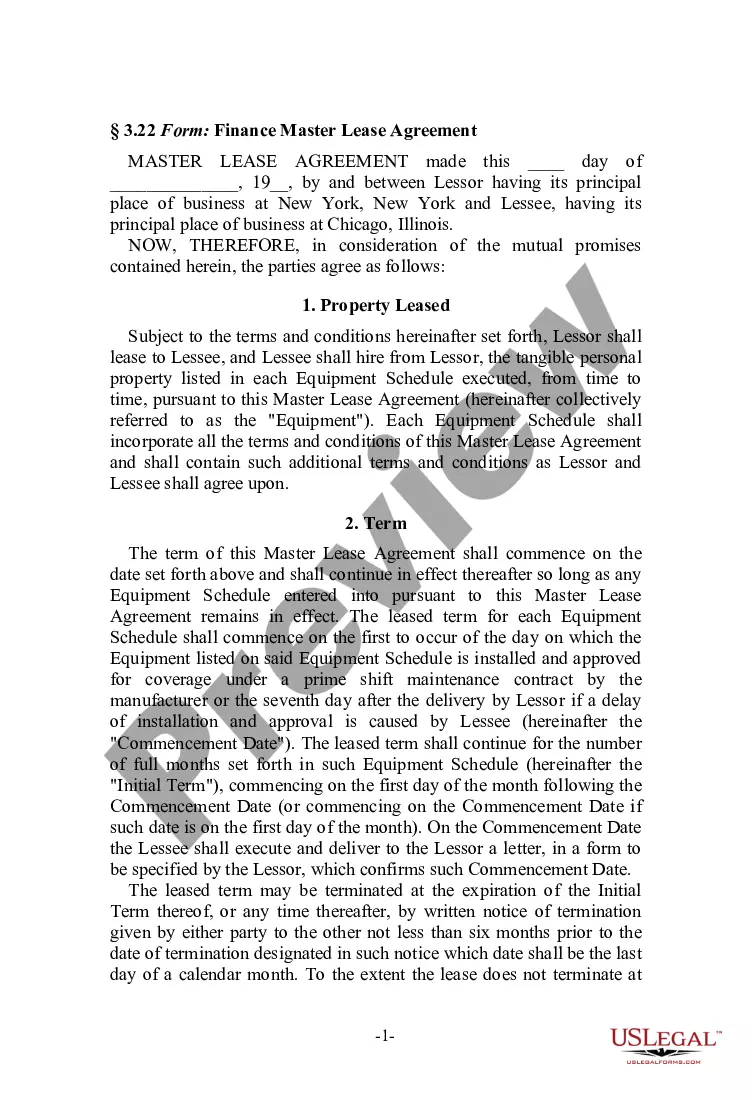
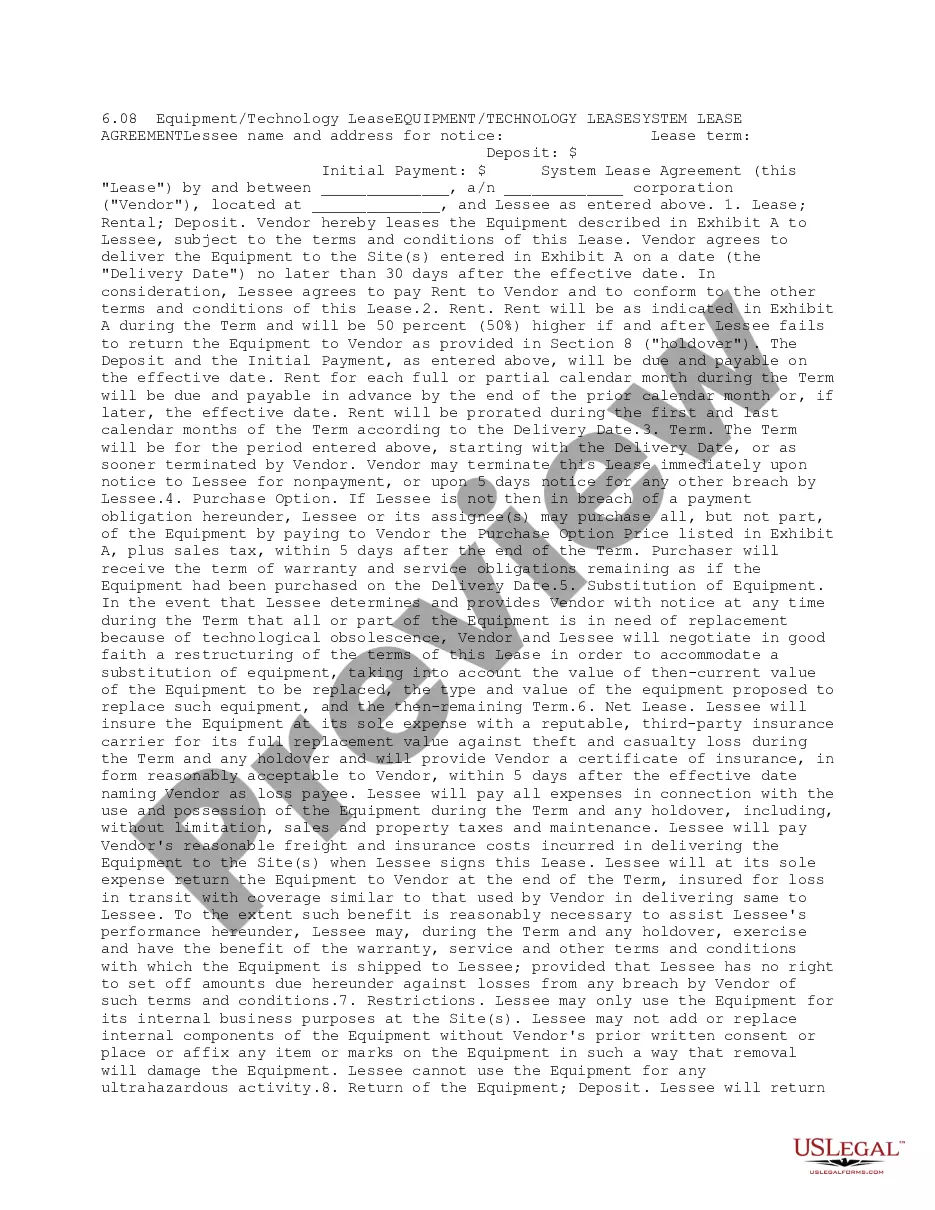
Get your form ready online
Our built-in tools help you complete, sign, share, and store your documents in one place.
Make edits, fill in missing information, and update formatting in US Legal Forms—just like you would in MS Word.
Download a copy, print it, send it by email, or mail it via USPS—whatever works best for your next step.
Sign and collect signatures with our SignNow integration. Send to multiple recipients, set reminders, and more. Go Premium to unlock E-Sign.
If this form requires notarization, complete it online through a secure video call—no need to meet a notary in person or wait for an appointment.
We protect your documents and personal data by following strict security and privacy standards.

Make edits, fill in missing information, and update formatting in US Legal Forms—just like you would in MS Word.

Download a copy, print it, send it by email, or mail it via USPS—whatever works best for your next step.

Sign and collect signatures with our SignNow integration. Send to multiple recipients, set reminders, and more. Go Premium to unlock E-Sign.

If this form requires notarization, complete it online through a secure video call—no need to meet a notary in person or wait for an appointment.

We protect your documents and personal data by following strict security and privacy standards.
Looking for another form?
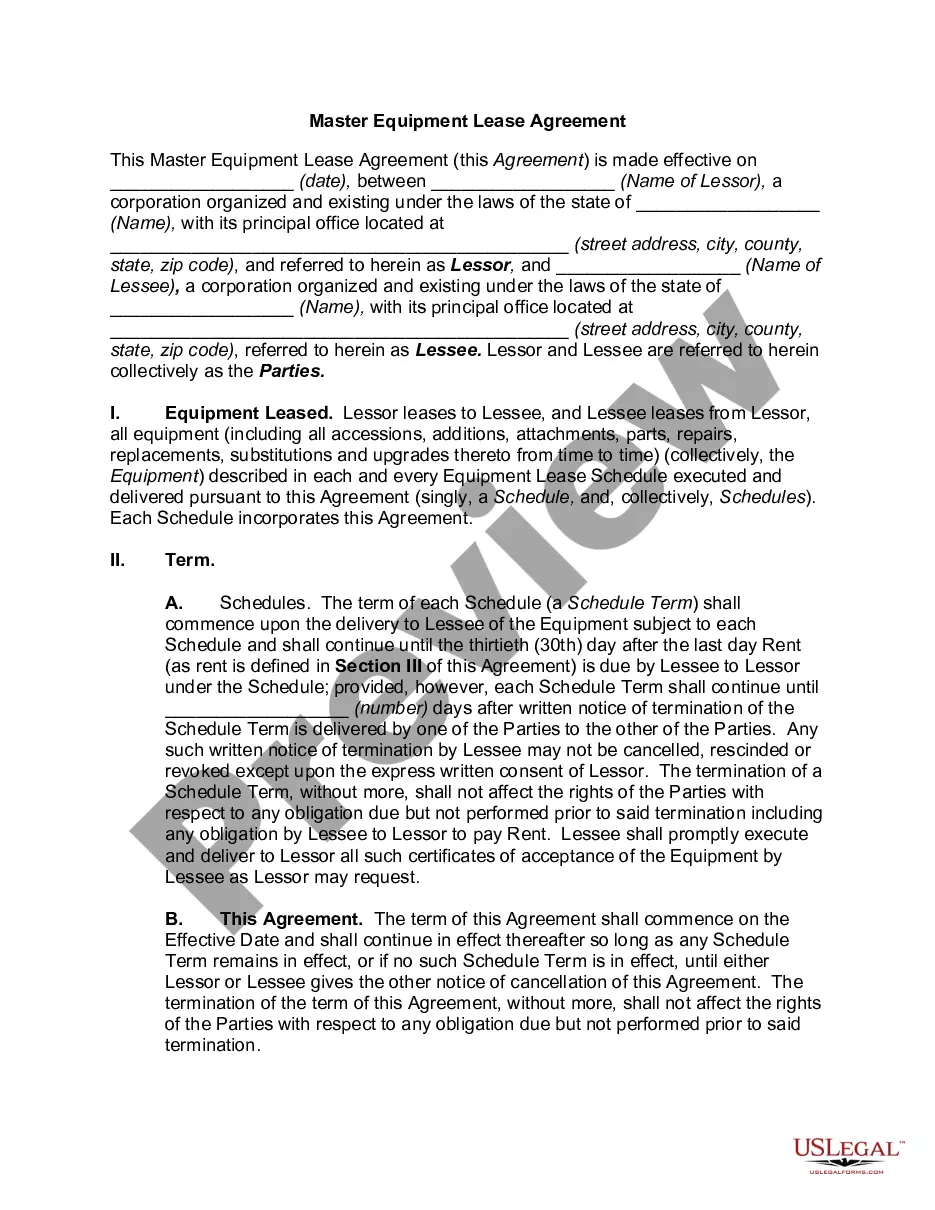
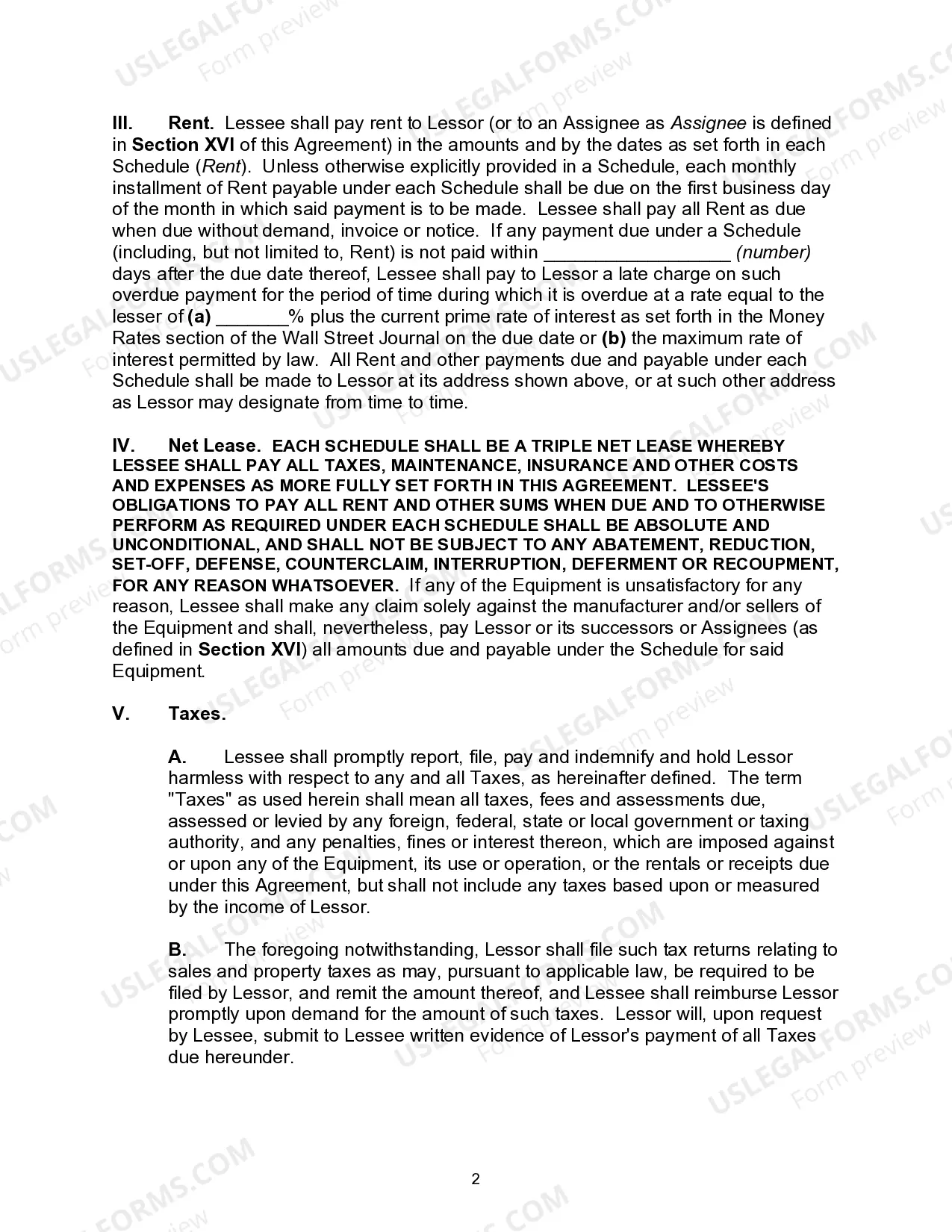
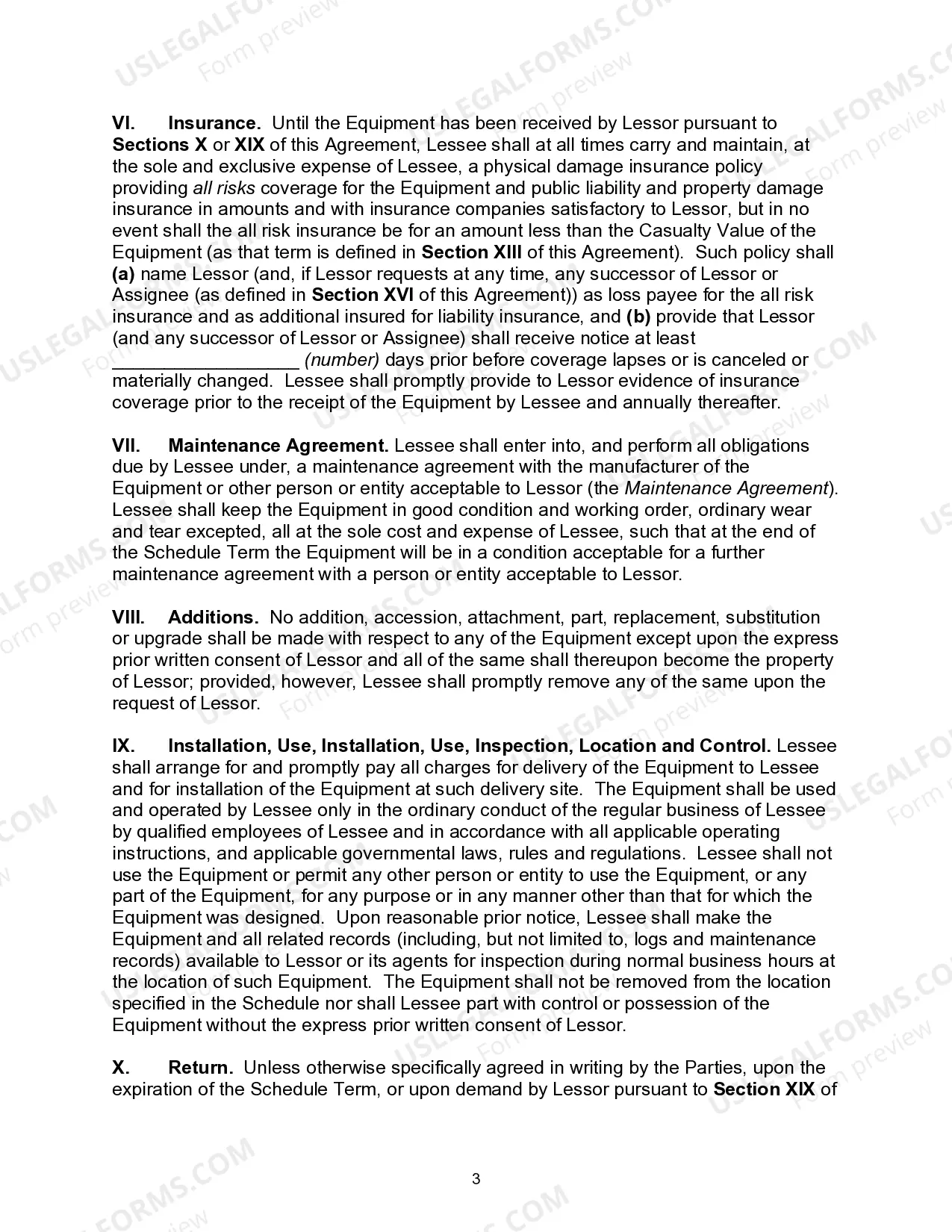
How to fill out Master Equipment Lease Agreement?
Locating the appropriate legal document format can be challenging.
Clearly, there are numerous templates accessible online, but how do you acquire the legal template you require.
Utilize the US Legal Forms site.
If you are a new user of US Legal Forms, here are some straightforward instructions that you should follow: First, ensure you have selected the correct document for your city/state. You can preview the form using the Preview button and review the form details to confirm this is indeed the correct one for you. If the form does not meet your requirements, utilize the Search field to find the appropriate document. Once you are confident that the form is accurate, click the Buy now button to acquire the document. Select the pricing plan you wish and enter the necessary information. Create your account and complete your purchase using your PayPal account or Visa or Mastercard. Choose the file format and download the legal document to your device. Finally, complete, edit, and print, and sign the obtained Oregon Master Equipment Lease Agreement. US Legal Forms is the largest collection of legal templates from which you can access numerous document templates. Utilize the service to download legally compliant documents that meet state regulations.
- The service offers a vast array of templates, such as the Oregon Master Equipment Lease Agreement, which you can use for business and personal purposes.
- All documents are reviewed by experts and comply with state and federal regulations.
- If you are already registered, sign in to your account and click the Get button to access the Oregon Master Equipment Lease Agreement.
- Use your account to browse the legal forms you have previously purchased.
- Visit the My documents section of your account to obtain another copy of the document you need.
Form popularity
FAQ
A Capital Lease is treated like a purchase for tax and depreciation purposes. The leased equipment is shown as an asset and/or a liability on the lessee's balance sheet, and the tax benefits of ownership may be realized, including Section 179 deductions.
Because they are both a form of lease, they have one thing in common. That is, the owner of the equipment (the lessor) provides to the user (the lessee) the authority to use the equipment and then returns it at the end of a set period.
The three main types of leasing are finance leasing, operating leasing and contract hire.
Standard rates come in around 7%-9% for good credit on leases under $100,000. Rates between 9%-13% are common from less competitive lessors, or if you are dealing with bad credit.
What is equipment leasing? Equipment leasing is a type of financing in which you rent equipment rather than purchase it outright. You can lease expensive equipment for your business, such as machinery, vehicles or computers.
8 Steps to Negotiate Your Business Equipment Lease.Step 1: Know the difference between want and need.Step 2: Know where you stand as a business.Step 3: Know where you stand as a consumer.Step 4: Initiate contact with leasing companies.Step 5: Comparison shop.Step 6: Get approved.More items...
A $1 Buyout Lease, also called a capital lease, is similar to purchasing equipment with a loan. With this type of lease, there is a higher monthly payment compared with an FMV lease, but at the end of the lease term, the lessee purchases the equipment for $1.
When you lease equipment, the lessor is effectively putting up a lump sum of money on your behalf, which you will pay off with interest over time. The effective interest rate on a lease can be anywhere from the low single digits to more than 30%, with the average is around 6% to16%.
Most equipment leases will provide that if a default exists and the lessee has not yet filed for bankruptcy, the lessor is permitted to terminate the lease and recover its equipment.
Key takeaway: With an operating lease, you have access to the equipment for a time but don't own it. The lease period tends to be shorter than the life of the equipment. With a finance lease, you own the equipment at the end of the term. Big companies typically use this type of lease.