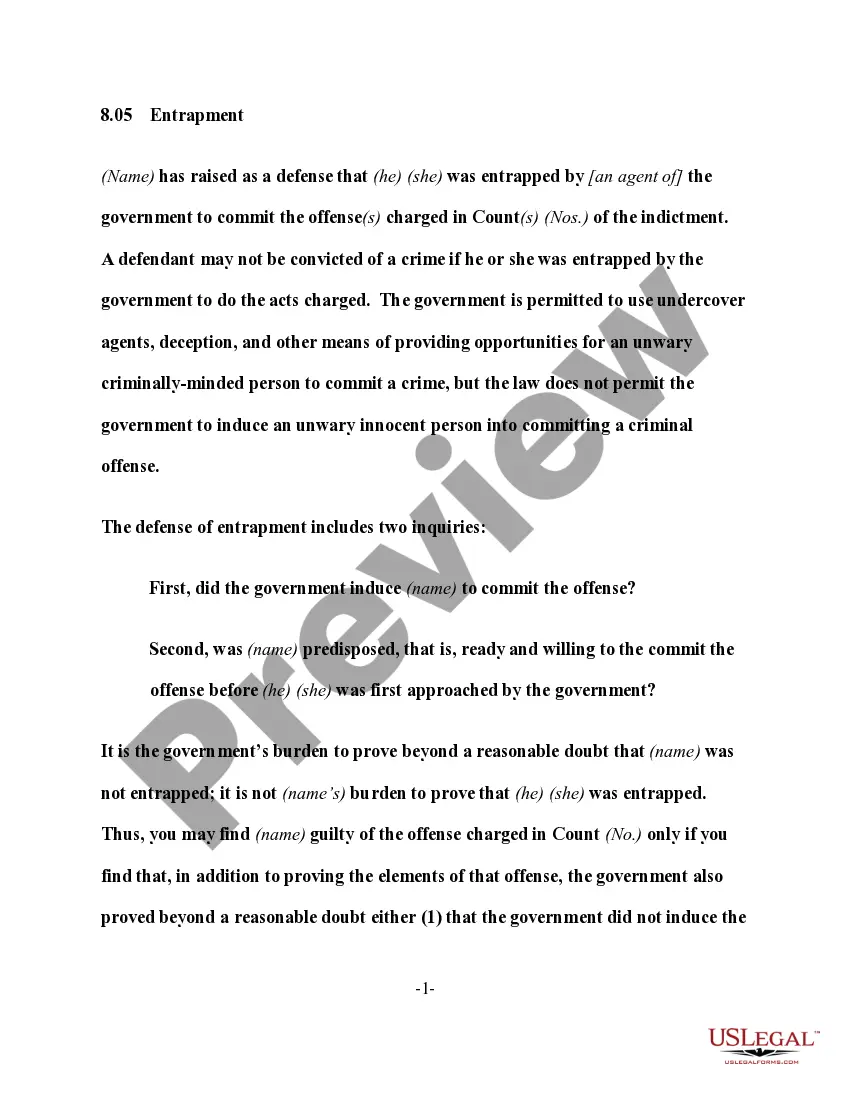
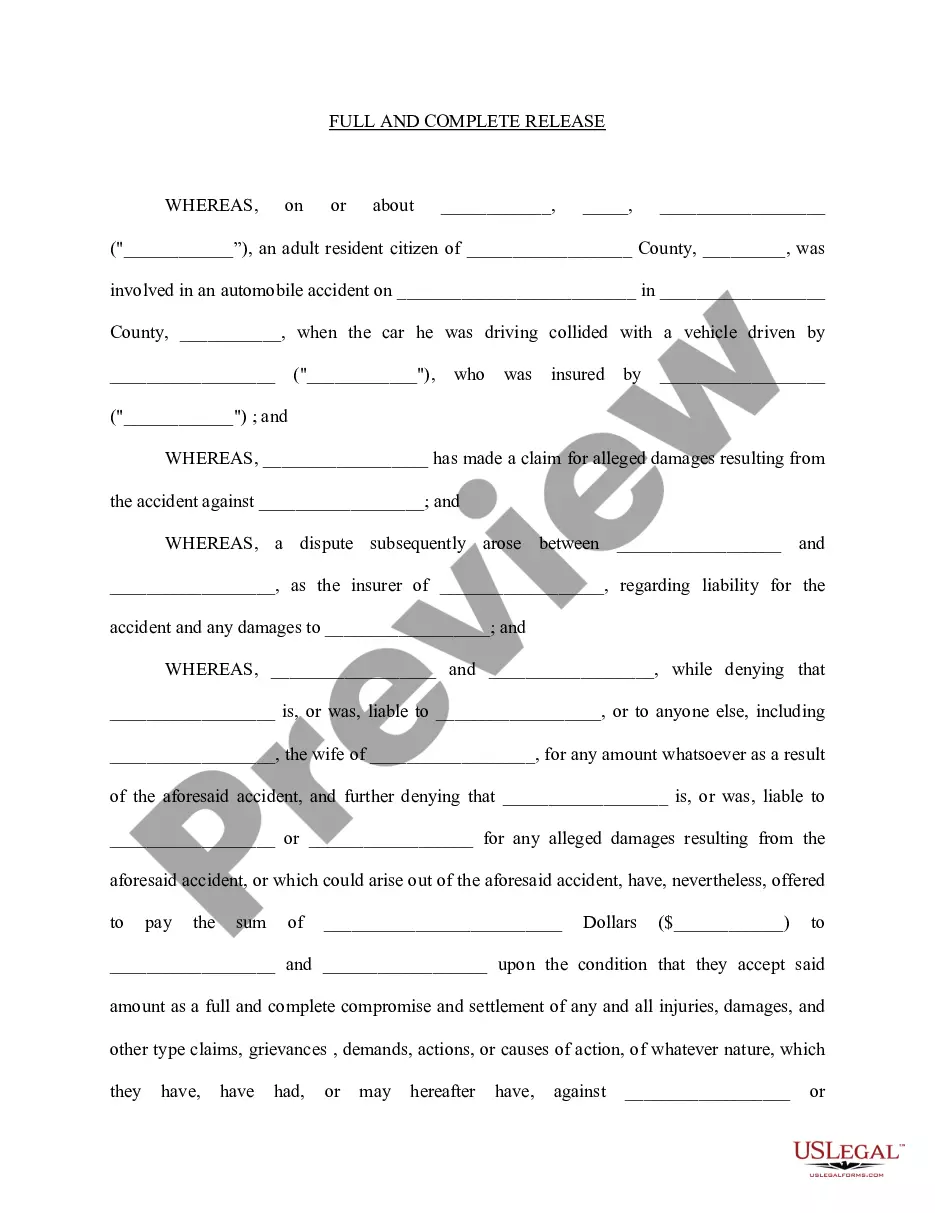
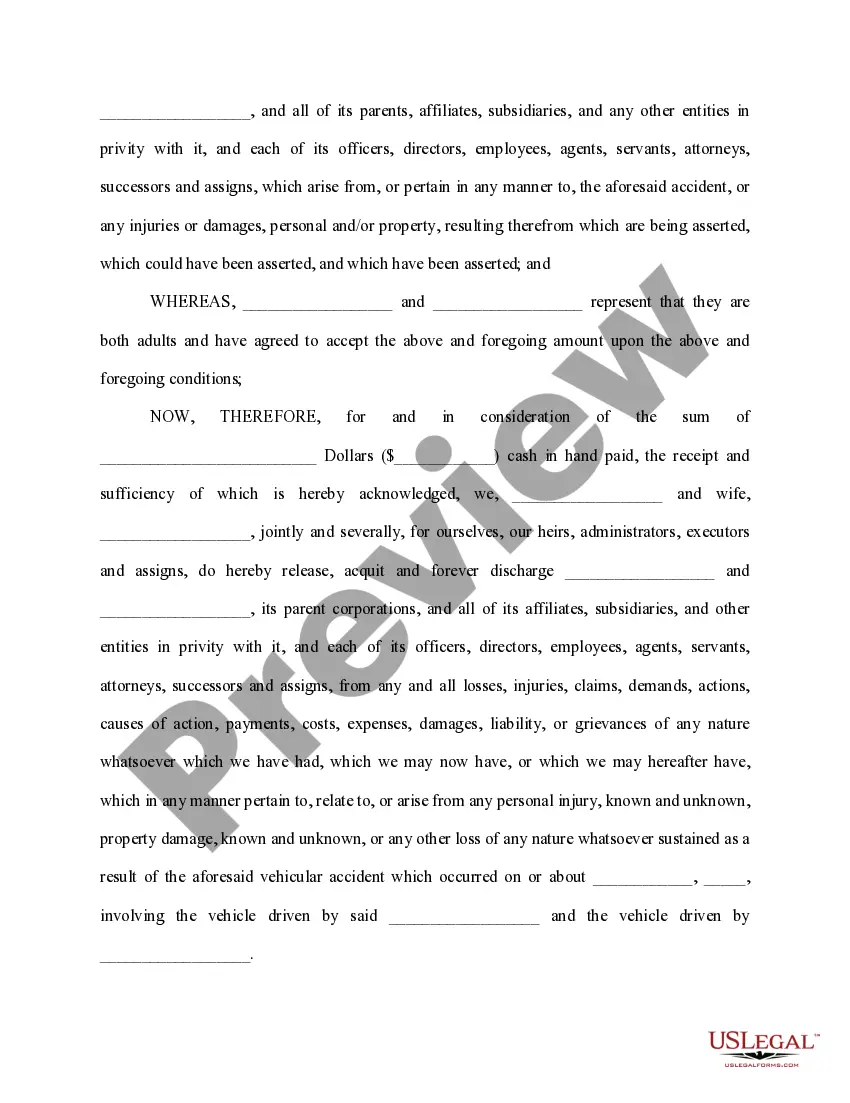
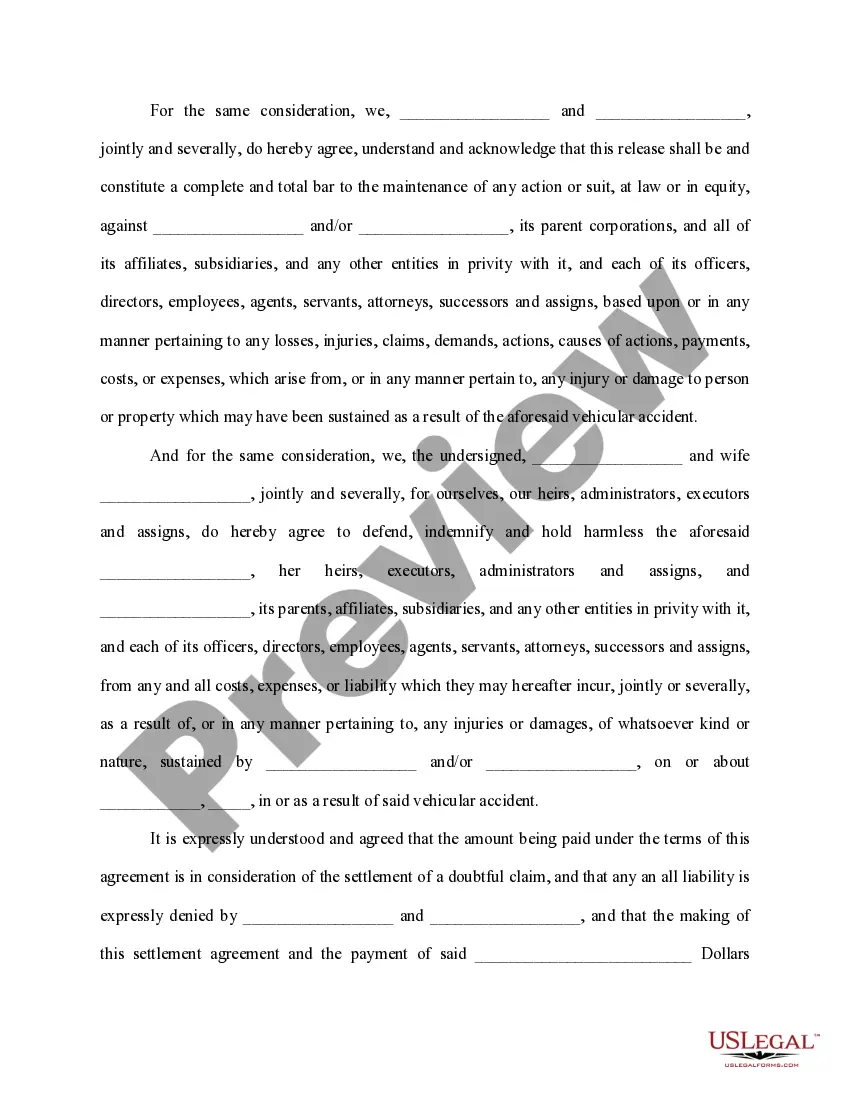
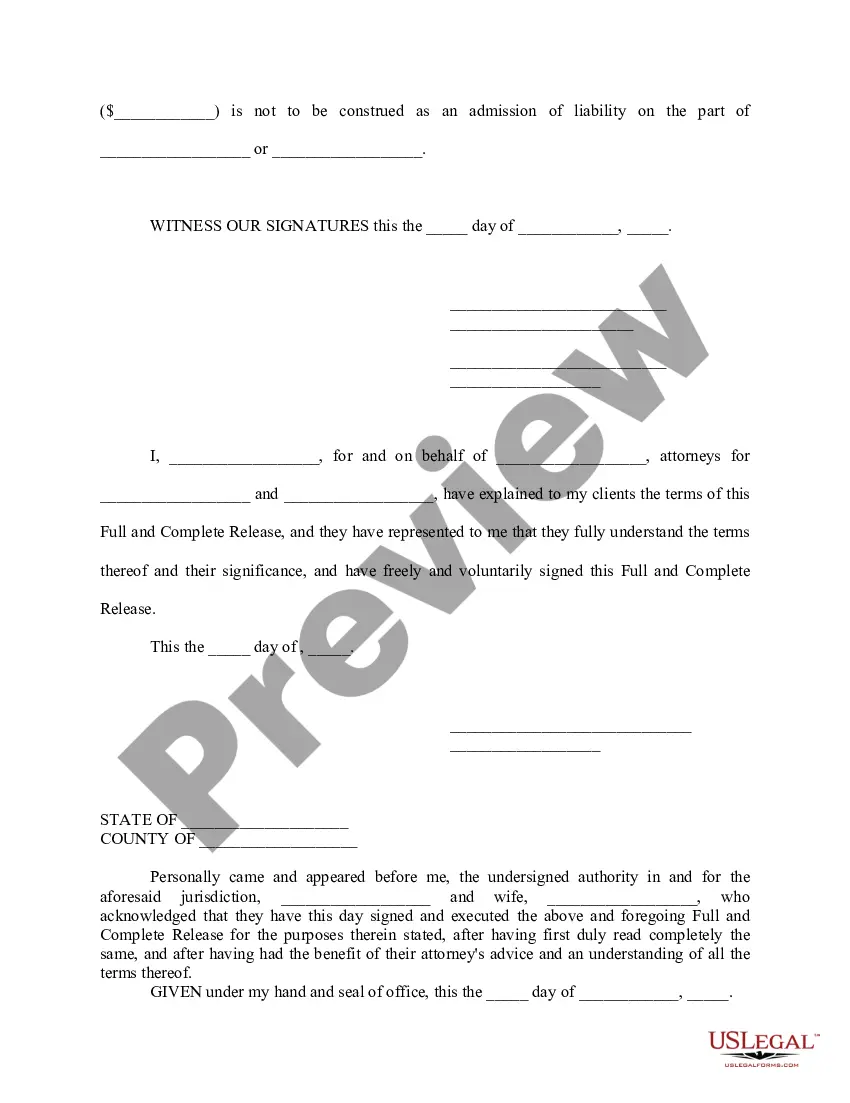
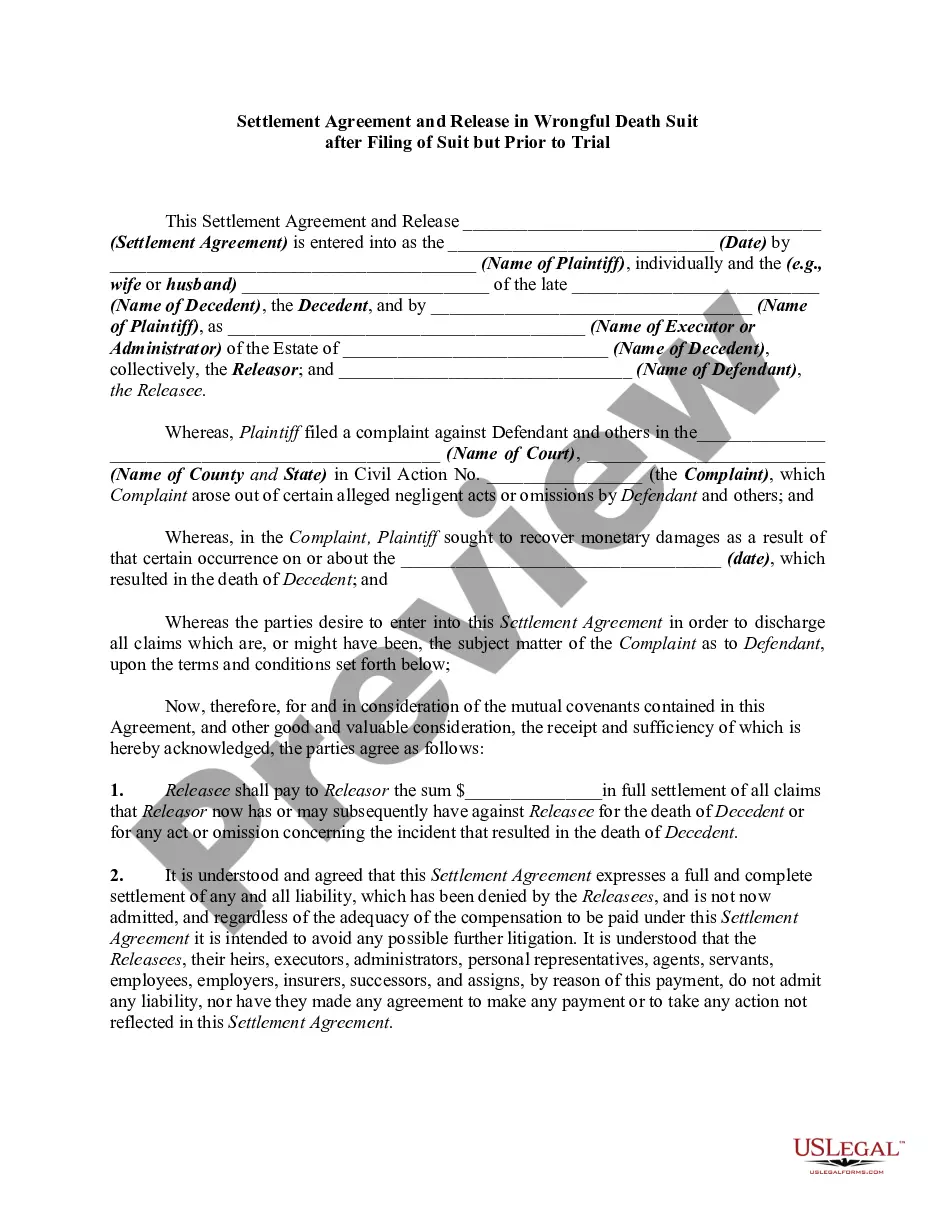
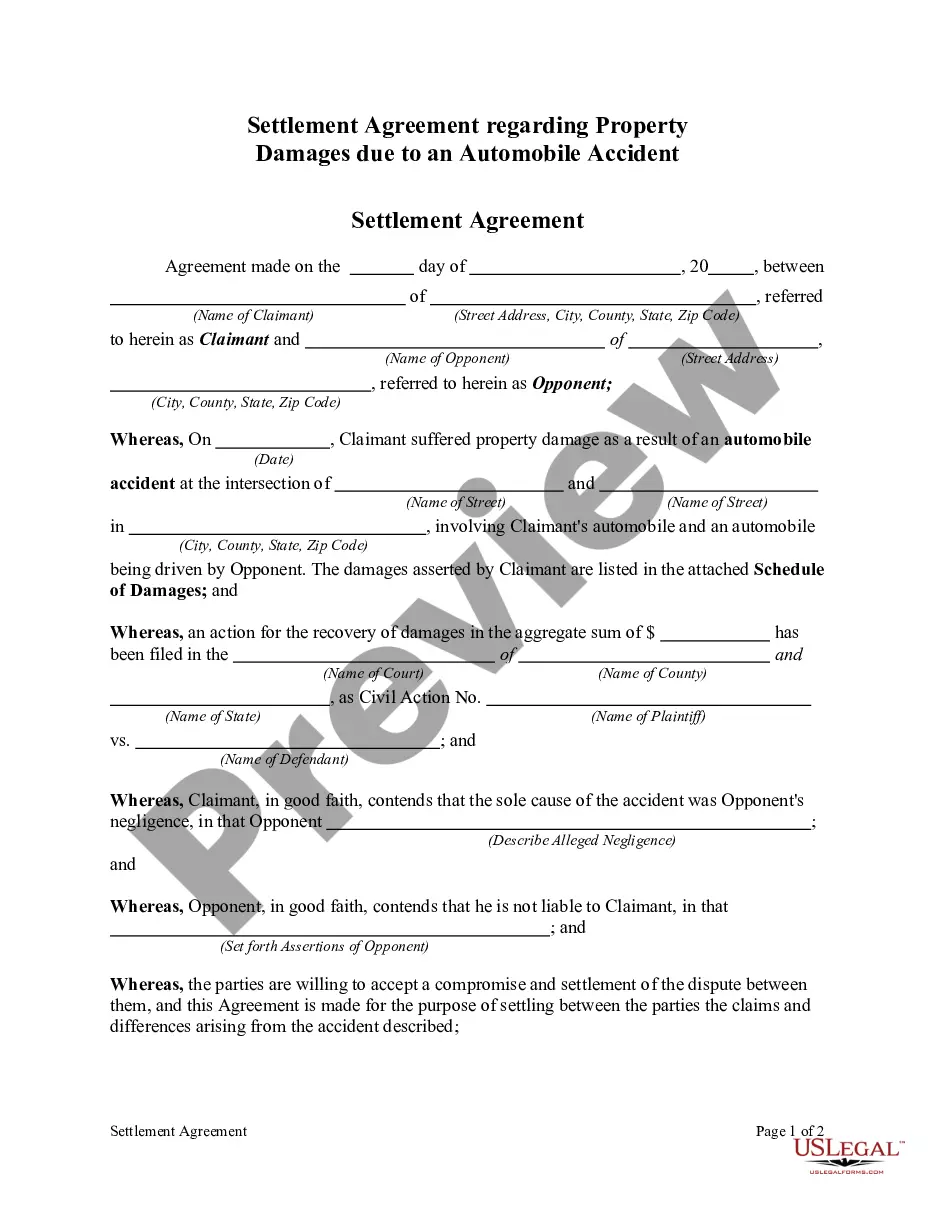
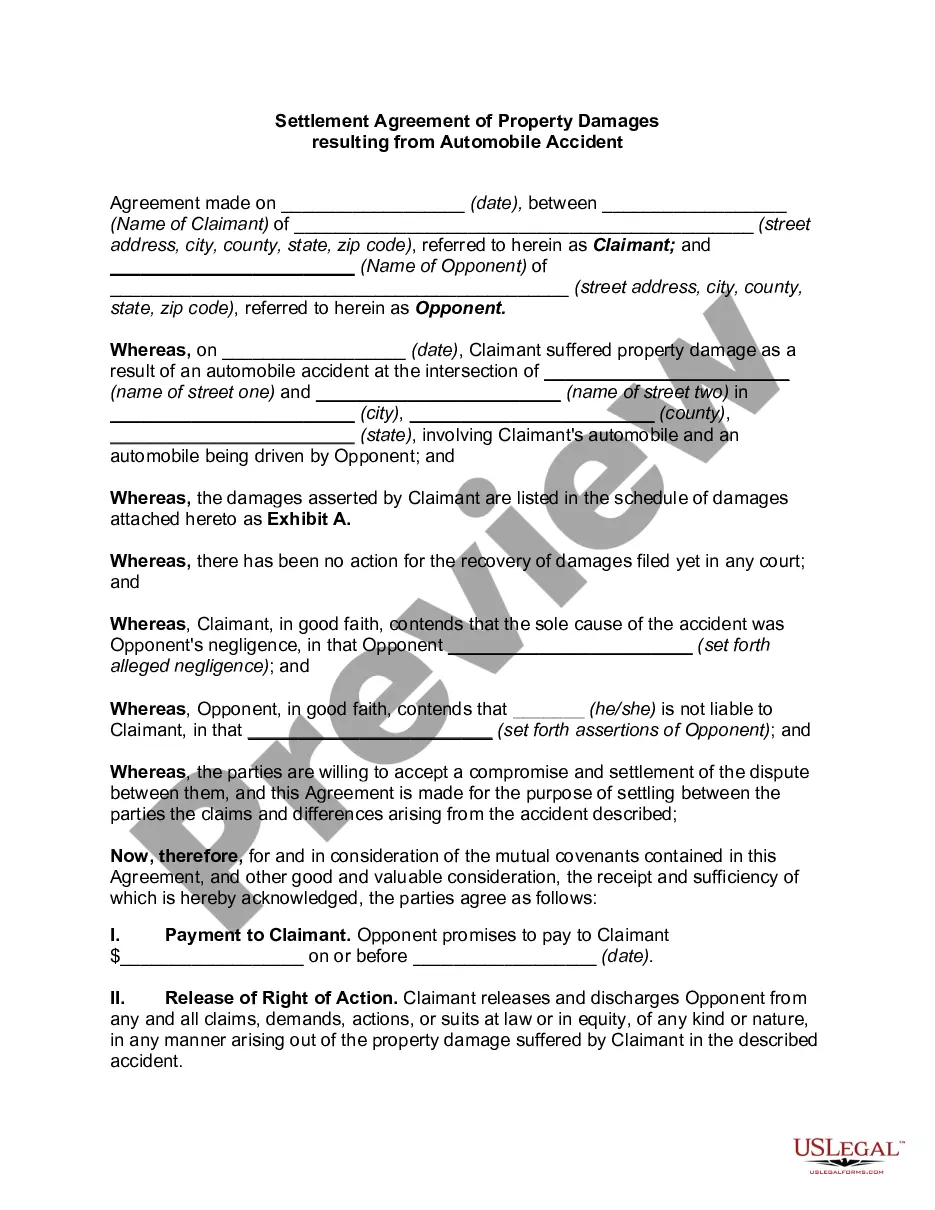
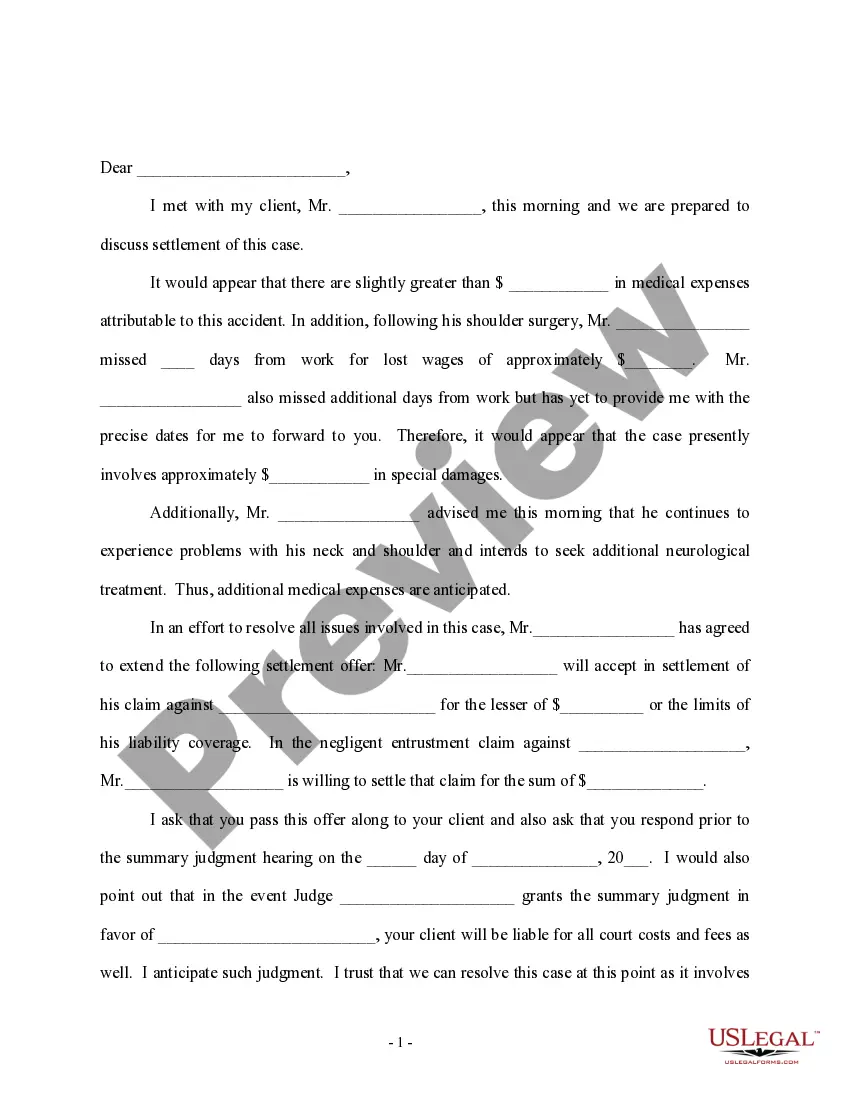
Oregon Settlement Agreement Auto Accident
Description

Get your form ready online
Our built-in tools help you complete, sign, share, and store your documents in one place.
Make edits, fill in missing information, and update formatting in US Legal Forms—just like you would in MS Word.
Download a copy, print it, send it by email, or mail it via USPS—whatever works best for your next step.
Sign and collect signatures with our SignNow integration. Send to multiple recipients, set reminders, and more. Go Premium to unlock E-Sign.
If this form requires notarization, complete it online through a secure video call—no need to meet a notary in person or wait for an appointment.
We protect your documents and personal data by following strict security and privacy standards.

Make edits, fill in missing information, and update formatting in US Legal Forms—just like you would in MS Word.

Download a copy, print it, send it by email, or mail it via USPS—whatever works best for your next step.

Sign and collect signatures with our SignNow integration. Send to multiple recipients, set reminders, and more. Go Premium to unlock E-Sign.

If this form requires notarization, complete it online through a secure video call—no need to meet a notary in person or wait for an appointment.

We protect your documents and personal data by following strict security and privacy standards.
Looking for another form?
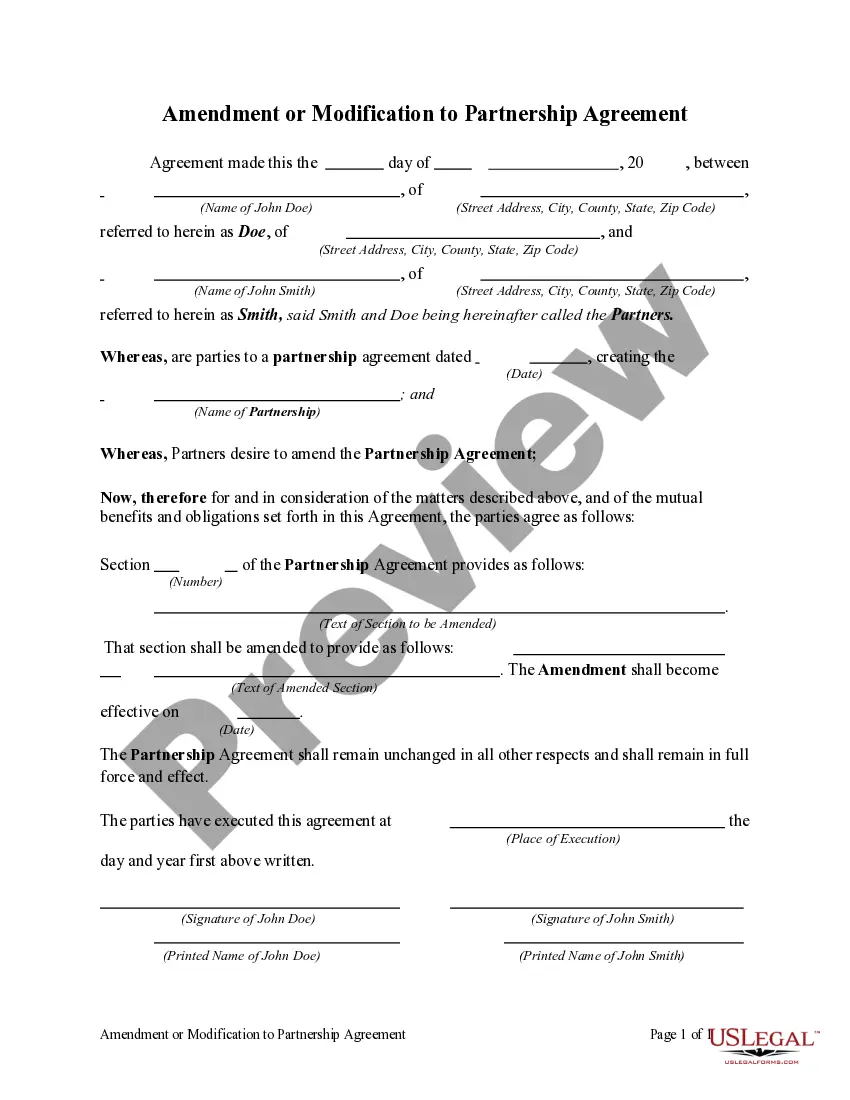

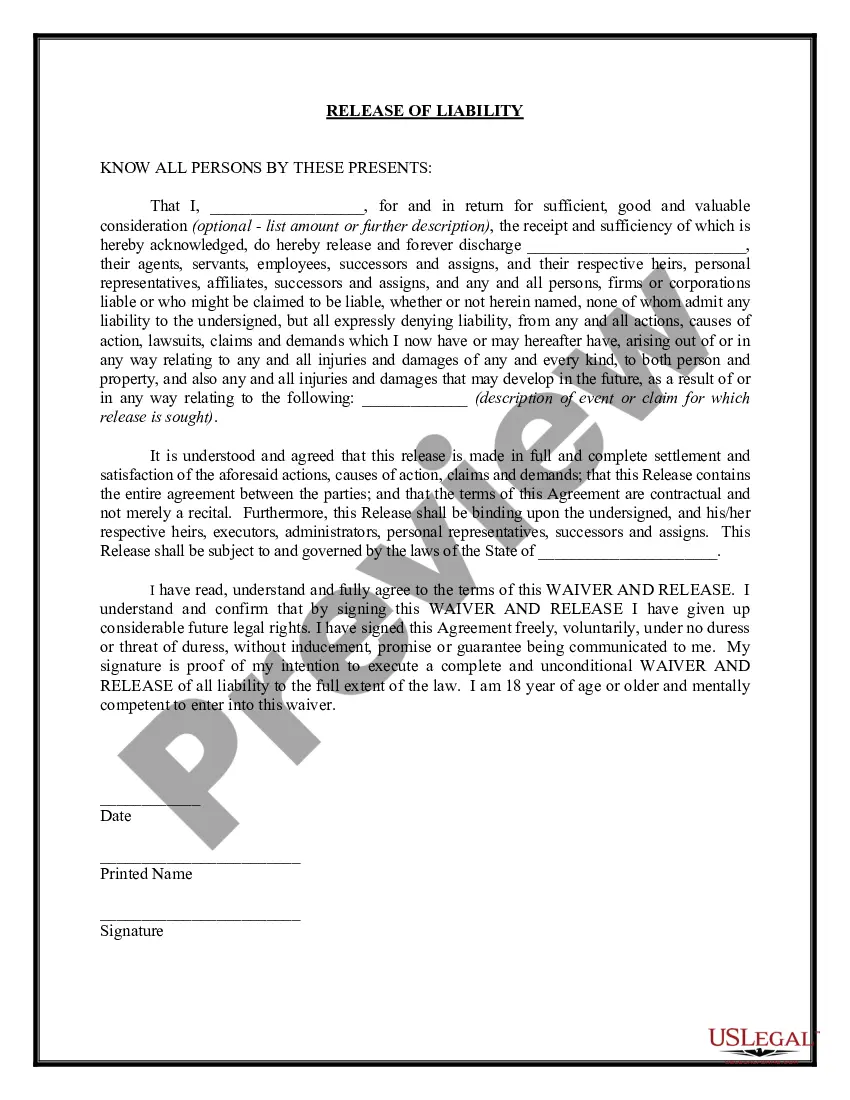




How to fill out Settlement Agreement Auto Accident?
Are you presently in a situation where you require documents for either business or personal purposes almost every workday.
There are numerous legal document templates available online, but locating ones you can trust is not simple.
US Legal Forms offers a vast array of form templates, including the Oregon Settlement Agreement Auto Accident, which can be tailored to meet federal and state requirements.
- If you are already acquainted with the US Legal Forms website and have an account, simply Log In.
- Then, you can download the Oregon Settlement Agreement Auto Accident template.
- If you do not have an account and wish to start using US Legal Forms, follow these steps.
- Obtain the form you need and ensure it is for the correct city/region.
- Utilize the Preview button to review the form.
- Examine the description to confirm you have selected the right document.
- If the form is not what you are looking for, use the Search box to find the document that suits your needs.
- Once you find the correct form, click Purchase now.
- Choose the pricing plan you prefer, enter the necessary information to create your account, and complete the transaction using your PayPal or credit card.
- Select a convenient format and download your copy.
- Locate all the document templates you have purchased in the My documents list. You can obtain an additional copy of the Oregon Settlement Agreement Auto Accident anytime, if necessary. Just click the desired form to download or print the document template.
- Utilize US Legal Forms, the most extensive collection of legal forms, to save time and avoid mistakes. The service provides well-crafted legal document templates that can be utilized for a variety of purposes. Create an account on US Legal Forms and start making your life a bit easier.
Form popularity
FAQ
Generally, some auto accident settlements are taxable, while benefits that compensate for your medical expenses, property damages, and pain and suffering are not taxable. However, your auto accident insurance settlement is taxable when you receive compensation for emotional distress or lost income.
No-Fault. No-fault doesn't recognize a party to be at fault for an accident. Instead, both parties in a crash will go through their own insurance company to get compensation. There are some exceptions to this, however, such as when: One party suffers significant property damage totaling over a specific amount of money.
Oregon is what is called a ?modified comparative negligence? state. This means that you can recover damages in a car accident, but only ing to your level of negligence. If your negligence is greater than that of the other parties, however, you will be barred from recovering compensation.
No, Oregon is not a no-fault state for auto insurance. Oregon is an "at-fault" or "tort" state, which means the person who is at fault for a car accident is responsible for paying for other people's injuries and property damage resulting from the accident.
Proving fault after an Oregon car accident To prove that a motor vehicle driver was negligent, you must establish that: The driver owed you a duty. All drivers have a duty to exercise reasonable care to avoid harming others on the road. The driver breached their duty.
The average car accident settlement for a moderate injury claim in Oregon is $33,996. Average payouts range from $5,971 for minor injuries to $373,940 for severe injuries.
Insurance companies in Oregon have at least 60 days to acknowledge a claim and decide whether or not to pay it. Oregon does not have a specific time frame in which the final payment must be made.
If the injuries and damage are minimal, auto insurance may pay for the total damages. But if the injuries are severe, the defendant may owe more money than their auto insurance covers. Any of the defendant's personal assets, including a house, vehicle and savings, are at risk when they reach their insurance limit.