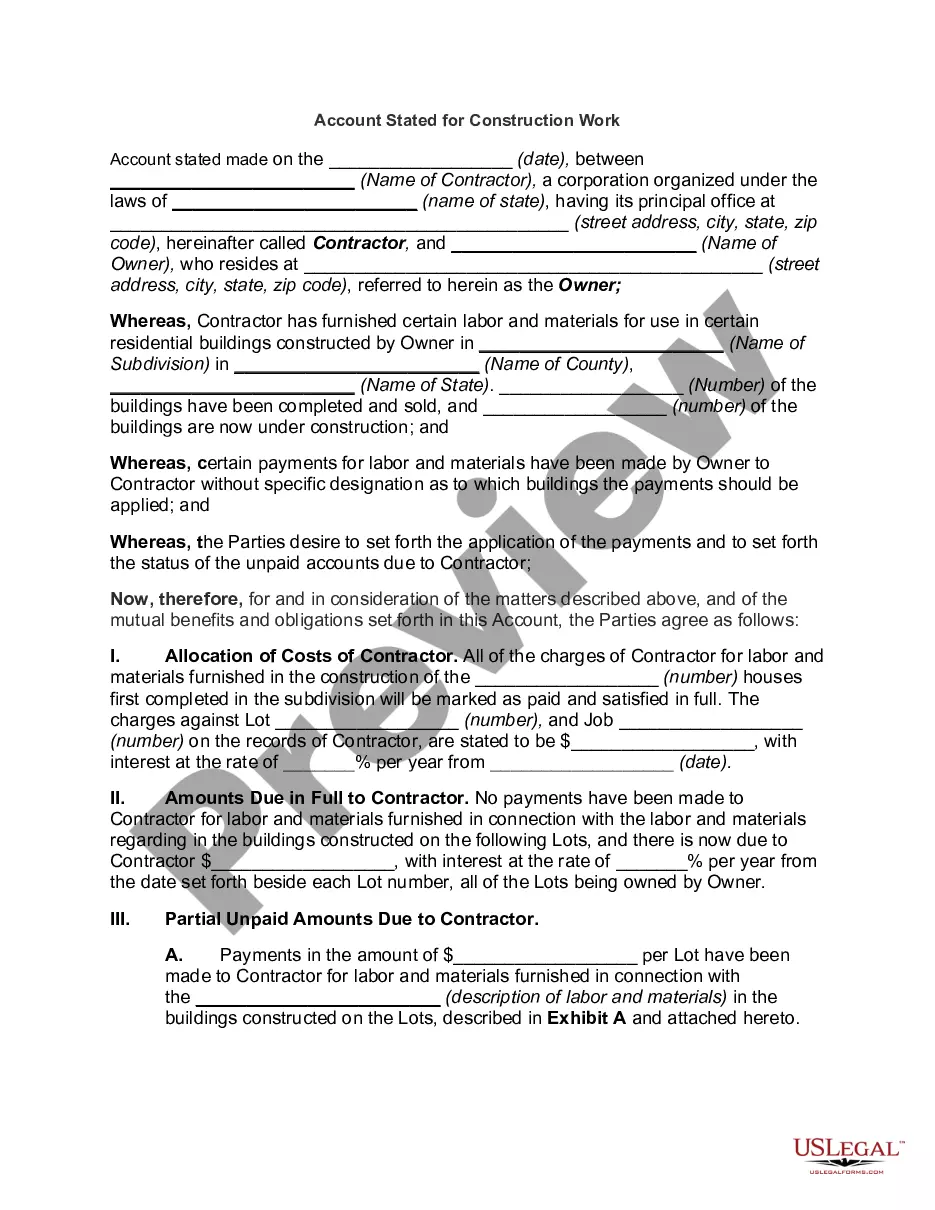
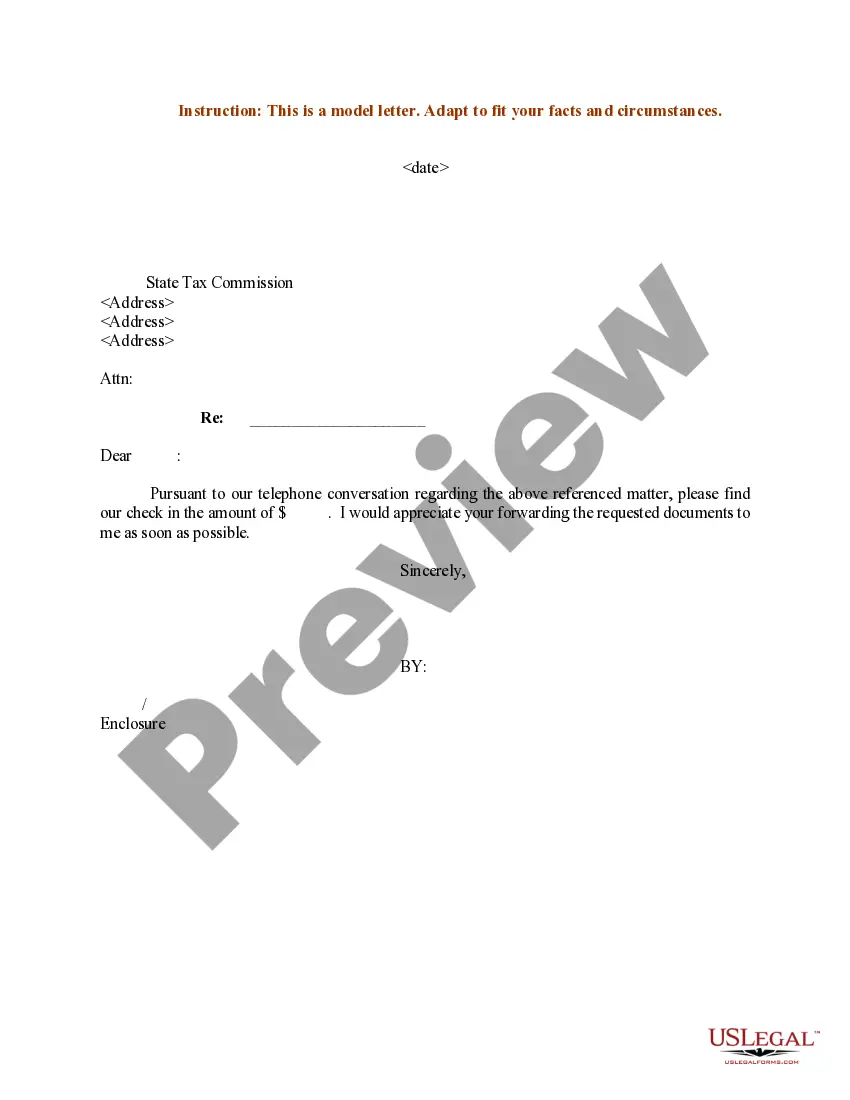
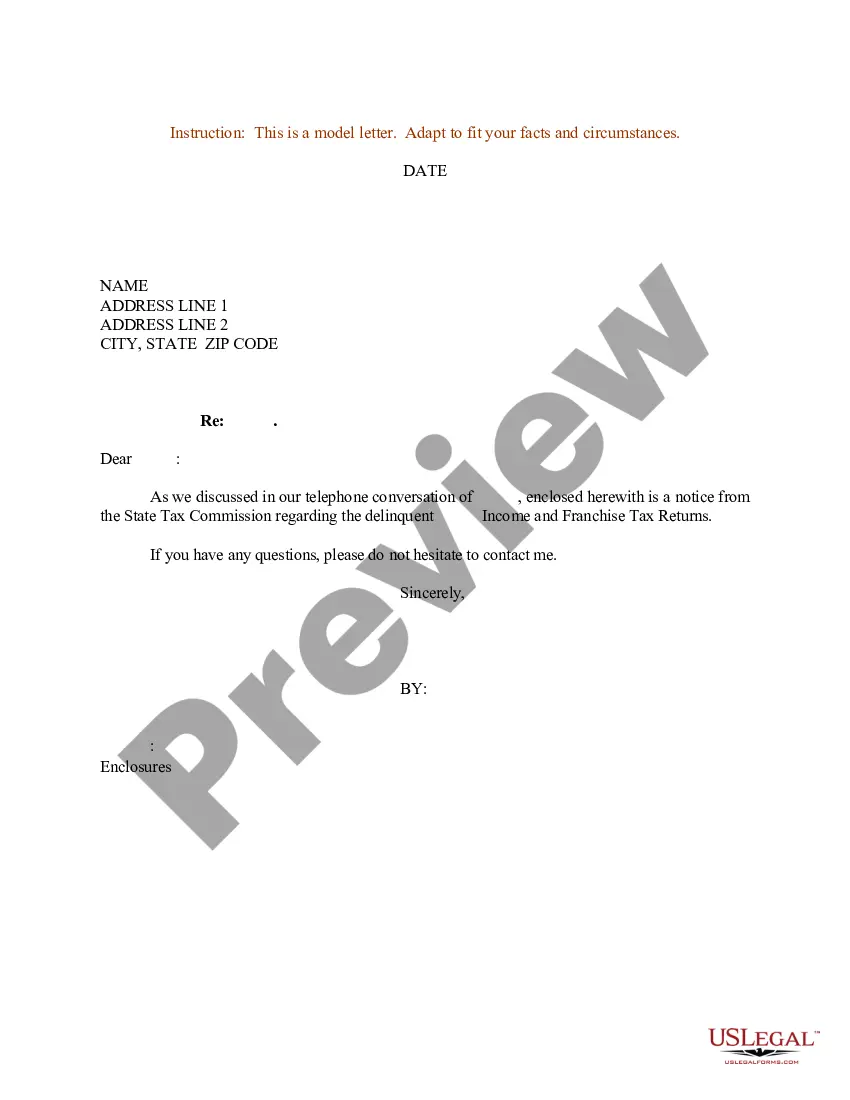
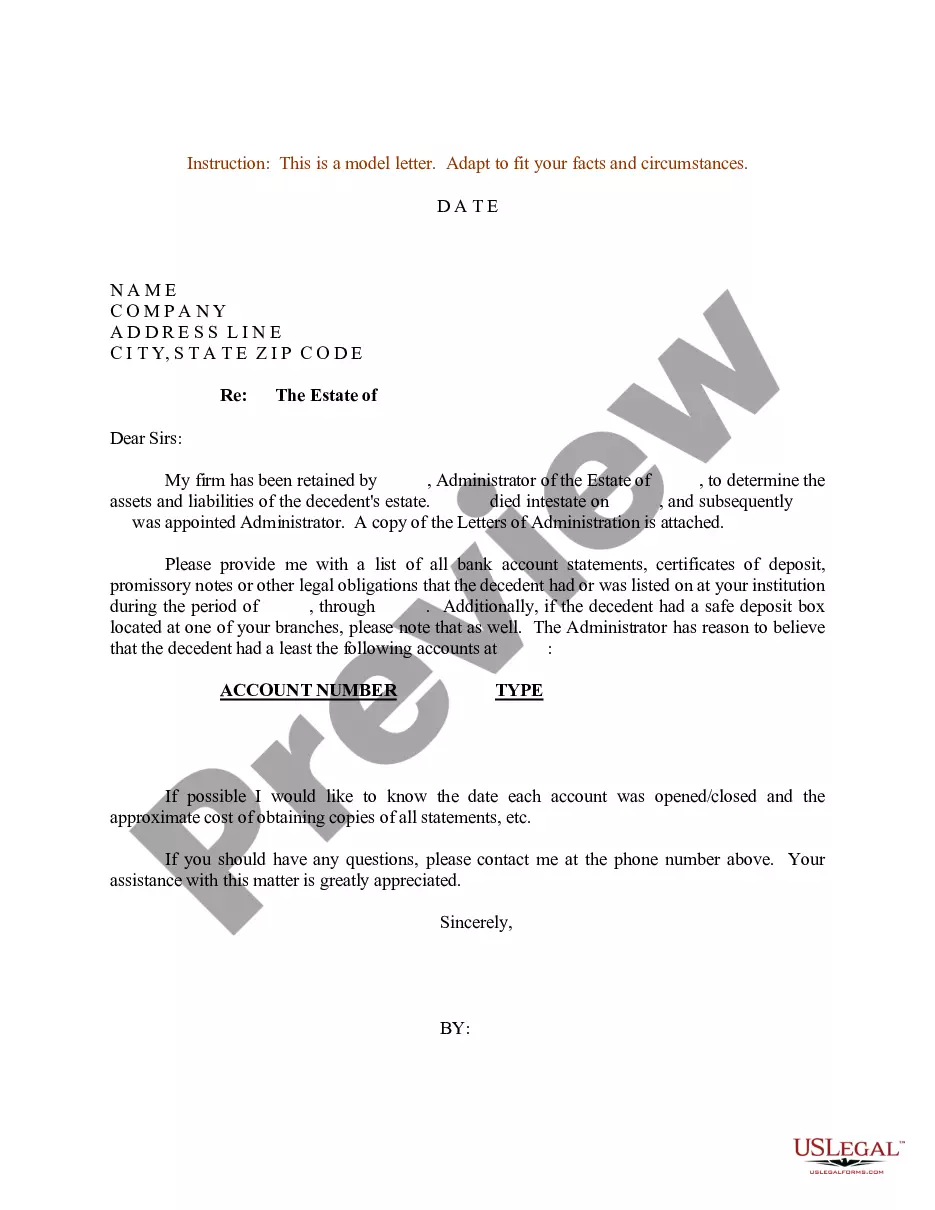
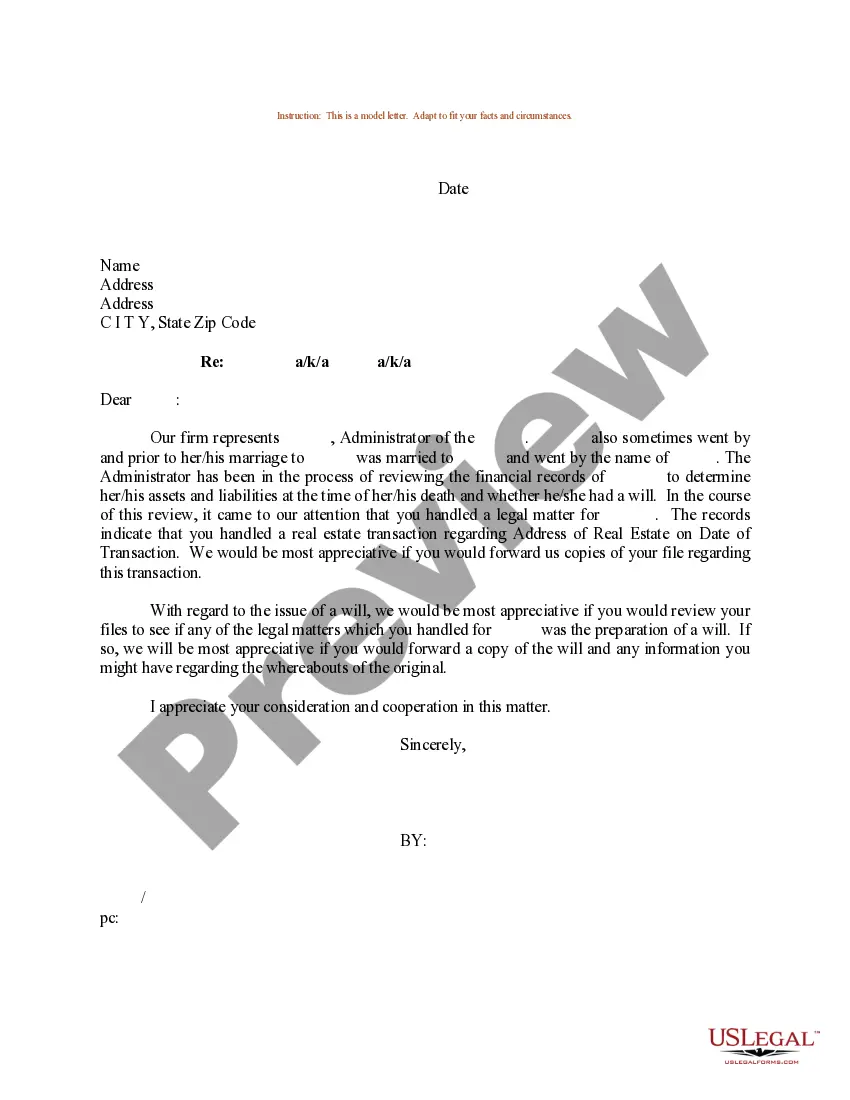
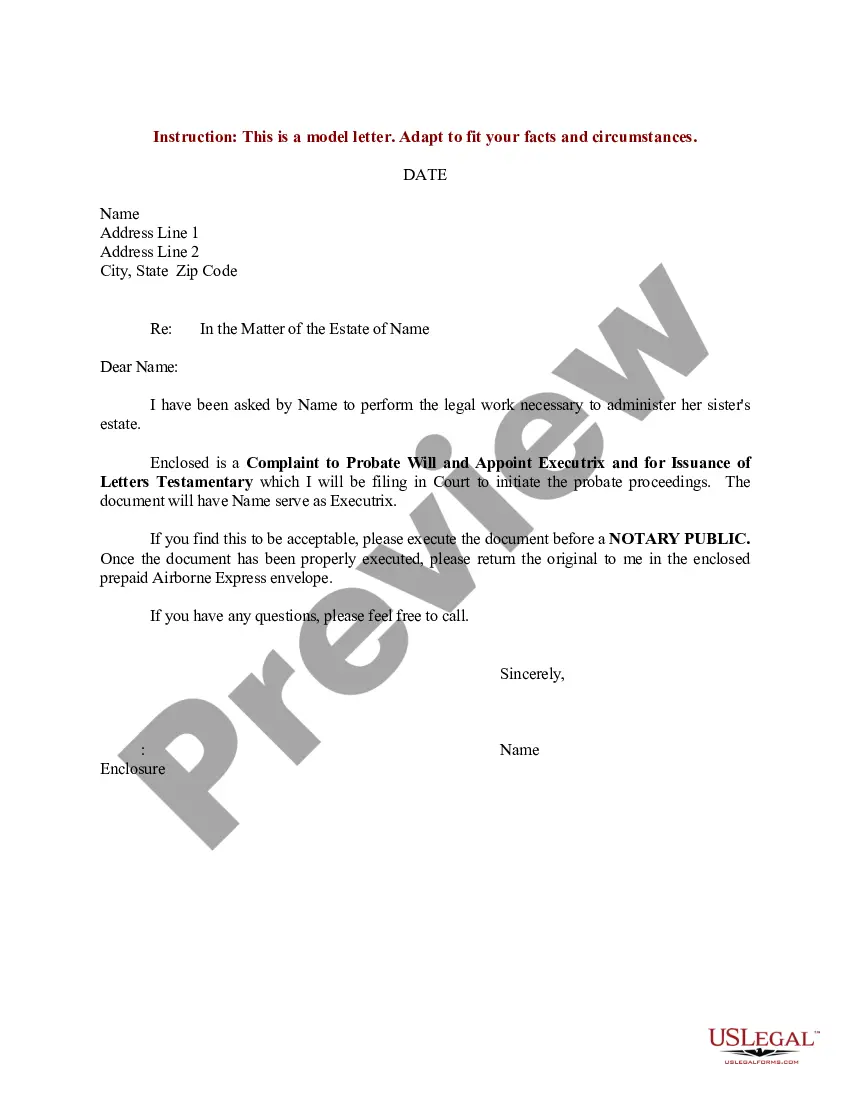
Oregon Sample Letter to State Tax Commission concerning Decedent's Estate
Description
Get your form ready online
Our built-in tools help you complete, sign, share, and store your documents in one place.
Make edits, fill in missing information, and update formatting in US Legal Forms—just like you would in MS Word.
Download a copy, print it, send it by email, or mail it via USPS—whatever works best for your next step.
Sign and collect signatures with our SignNow integration. Send to multiple recipients, set reminders, and more. Go Premium to unlock E-Sign.
If this form requires notarization, complete it online through a secure video call—no need to meet a notary in person or wait for an appointment.
We protect your documents and personal data by following strict security and privacy standards.

Make edits, fill in missing information, and update formatting in US Legal Forms—just like you would in MS Word.

Download a copy, print it, send it by email, or mail it via USPS—whatever works best for your next step.

Sign and collect signatures with our SignNow integration. Send to multiple recipients, set reminders, and more. Go Premium to unlock E-Sign.

If this form requires notarization, complete it online through a secure video call—no need to meet a notary in person or wait for an appointment.

We protect your documents and personal data by following strict security and privacy standards.
Looking for another form?
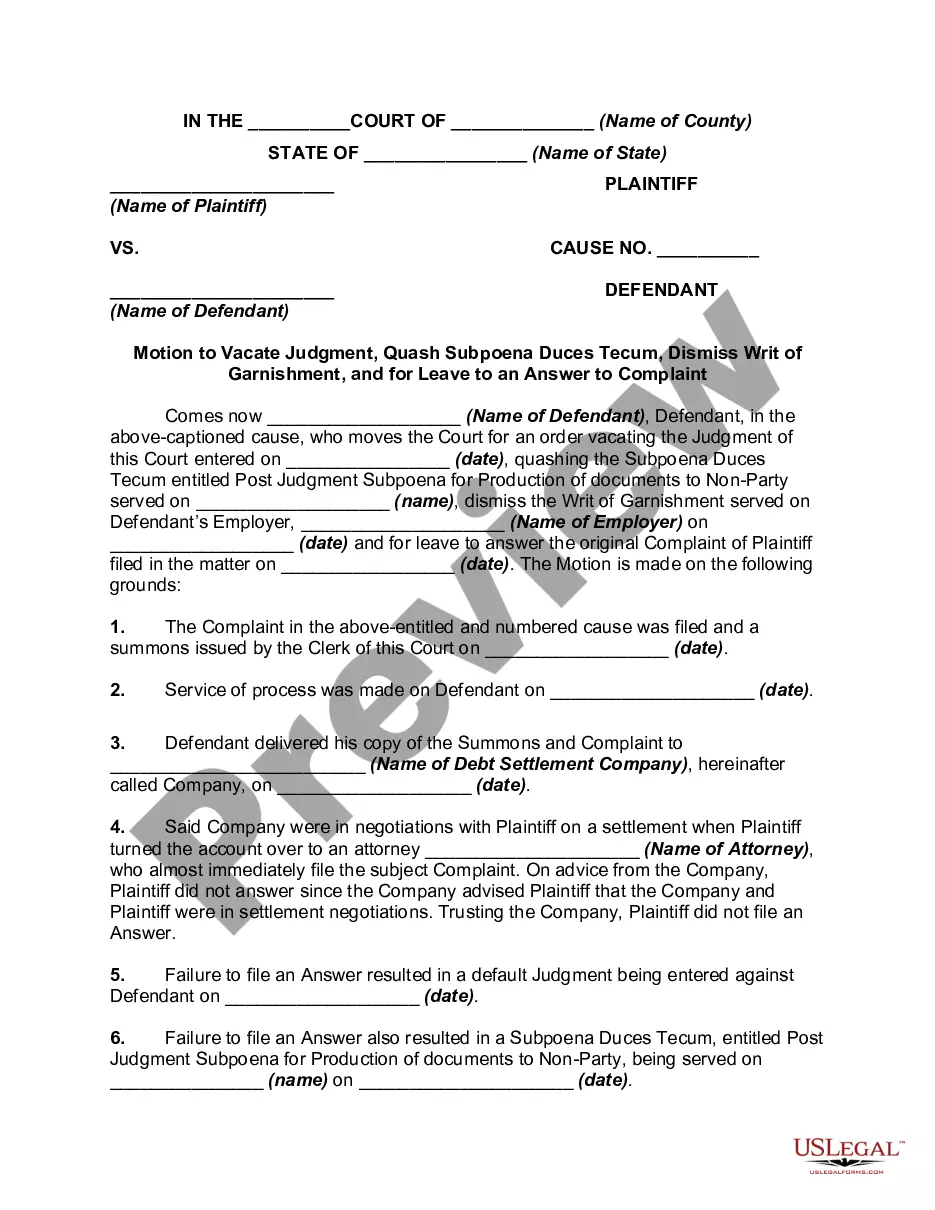
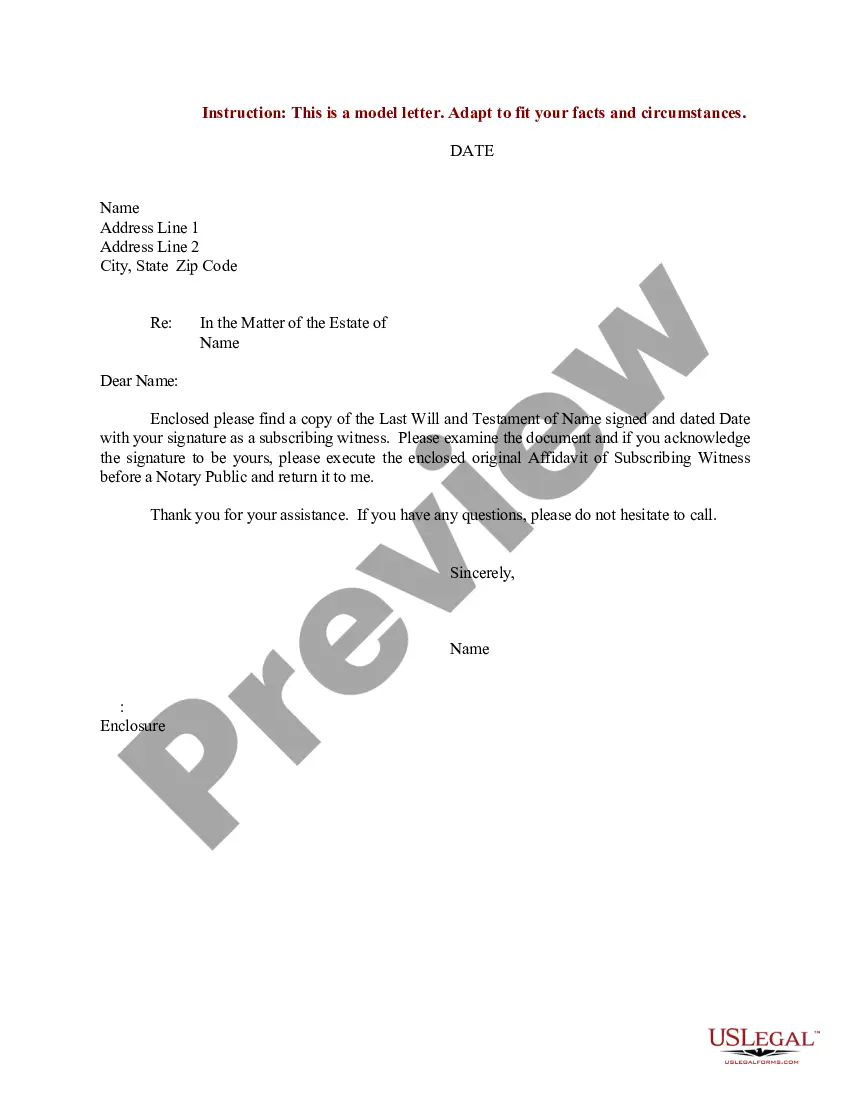
How to fill out Sample Letter To State Tax Commission Concerning Decedent's Estate?
Are you currently in a situation where you require documents for both business or specific objectives almost every working day.
There are numerous legitimate document templates available online, but finding ones you can rely on isn't straightforward.
US Legal Forms offers thousands of form templates, including the Oregon Sample Letter to State Tax Commission regarding Decedent's Estate, that are designed to meet state and federal regulations.
Once you find the correct form, click Get now.
Select the pricing plan you want, complete the required information to create your account, and purchase the order using your PayPal or credit card.
- If you are already familiar with the US Legal Forms website and have an account, simply Log In.
- Then, you can download the Oregon Sample Letter to State Tax Commission regarding Decedent's Estate template.
- If you do not have an account and wish to start using US Legal Forms, follow these steps.
- Obtain the form you need and ensure it is for your correct city/region.
- Use the Review button to examine the form.
- Read the description to confirm that you have selected the appropriate form.
- If the form isn’t what you’re looking for, utilize the Search field to find the form that meets your needs and requirements.
Form popularity
FAQ
The Oregon estate tax is a tax that is levied on the transfer of the estate of a deceased person. It is separate from the federal estate tax, which is a tax on the transfer of the estate of a deceased person at the federal level. The Oregon estate tax applies to estates with a value of more than $1 million.
Oregon does not have an inheritance tax. The state's estate tax used to be called an inheritance tax, but was still an estate tax in practice. If you're inheriting property or money from someone who lives out of state, make sure to check local laws.
Estate planning, including Living Trusts, Payment on Death Accounts, and Transfer on Death Deeds, may help avoid Probate.
Living trusts in Oregon An Oregon living trust is established by the grantor. As the grantor, you determine all the terms of the trust and move your assets into control of the trust. You'll want to place as many assets as possible into the trust to maximize it.
In Oregon, if someone dies and their estate, which can be thought of as their ?net worth,? is over one million dollars, the amount over one million is taxed by the state as an estate tax. The first million dollars is called the ?exemption? because the first million dollars is exempt from being taxed.
The Oregon estate tax rate starts at 10% and can be as high as 16% of the value of the estate exceeding $1,000,000. By itself, a revocable living trust does not avoid estate taxes. However, a trust can be drafted to include tax-saving provisions.
If the gross estate of an Oregon resident has a value of more than $1 million, the personal representative or executor of the estate must file a state estate tax return. (Smaller estates won't need to file a return.)
The income deductible as a distribution deduction on the return of an estate or trust is included in the net income of the beneficiary and is taxed in the same manner as if it had been received directly by the beneficiary without the intervention of the estate or trust.