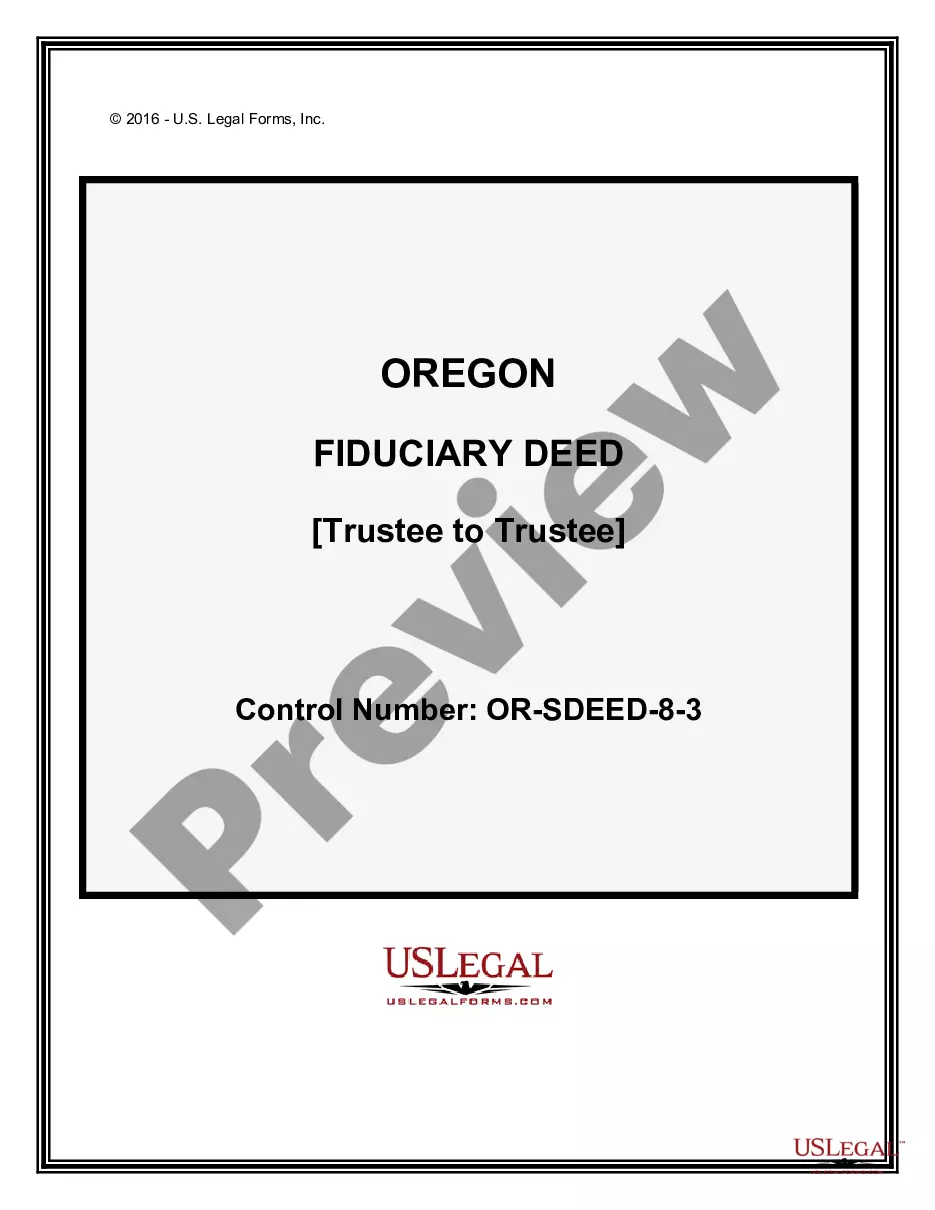
Oregon Fiduciary Deed for Trustee to Trustee
What is this form?
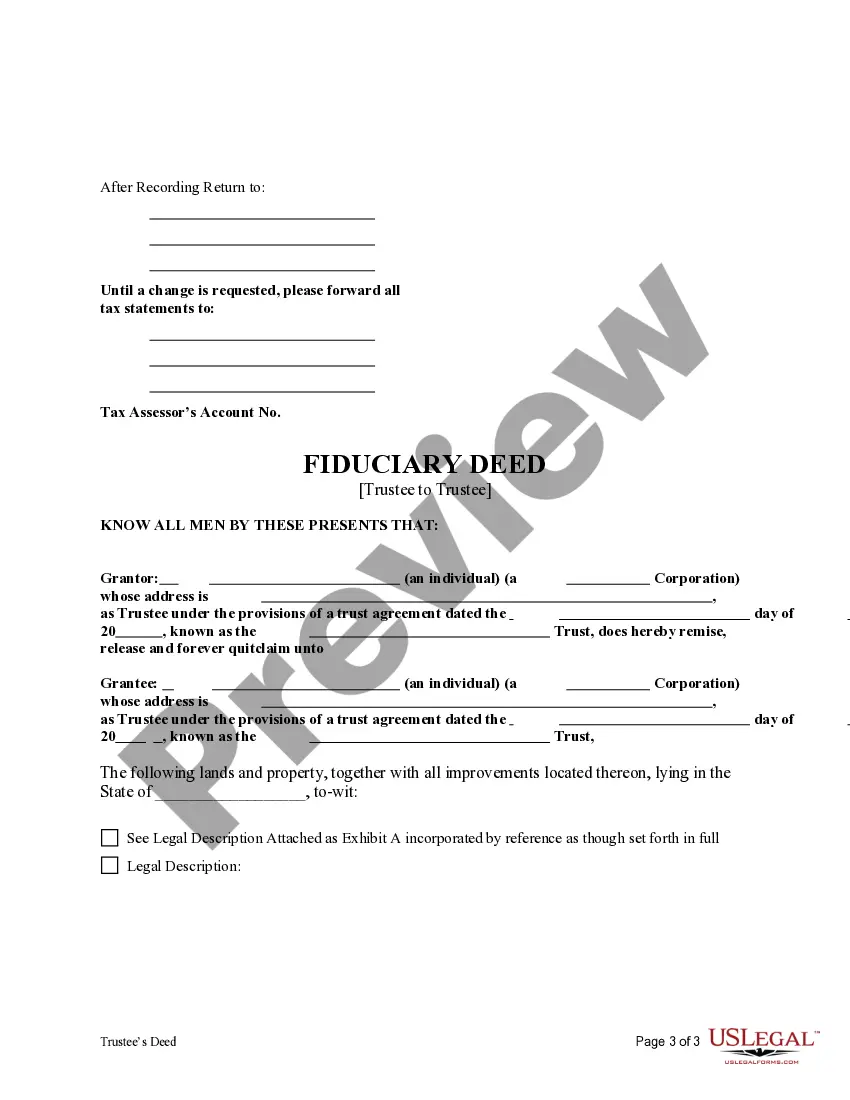
The Fiduciary Deed for Trustee to Trustee is a legal document used when a property is transferred from one trustee to another. This form is specifically designed for situations where both the grantor and grantee are trustees, making it distinct from other types of deeds. It helps formalize the transfer of property held in a trust, ensuring that the new trustee can manage the property according to the terms of the trust agreement.
Main sections of this form
- Identification of the grantor and grantee as trustees.
- Description of the property being transferred.
- Legal description of the property, usually attached as an exhibit.
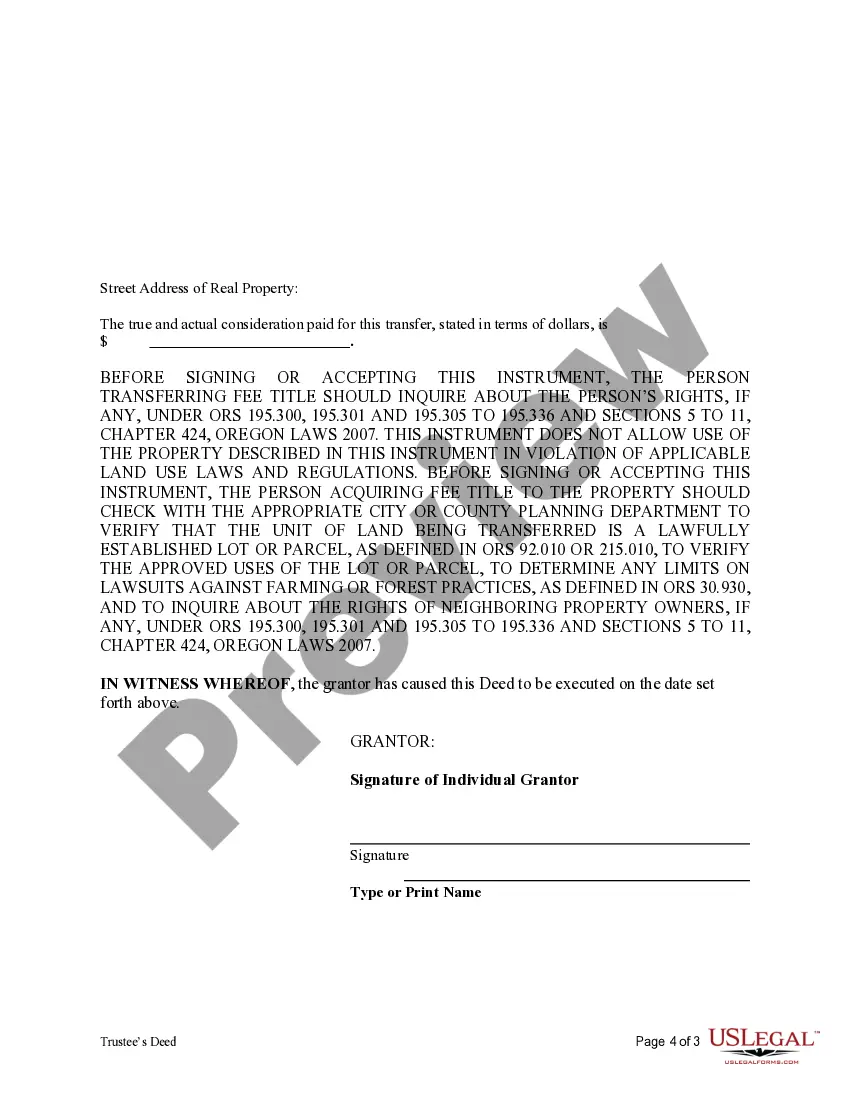
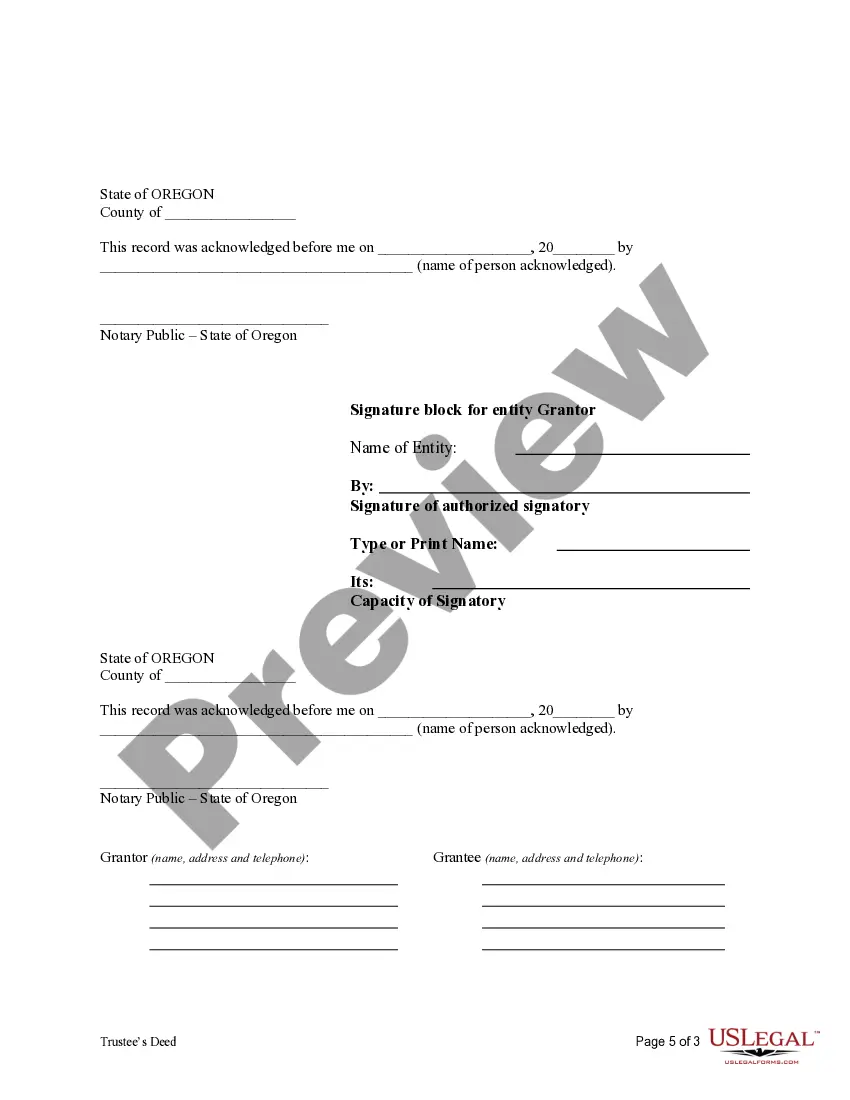
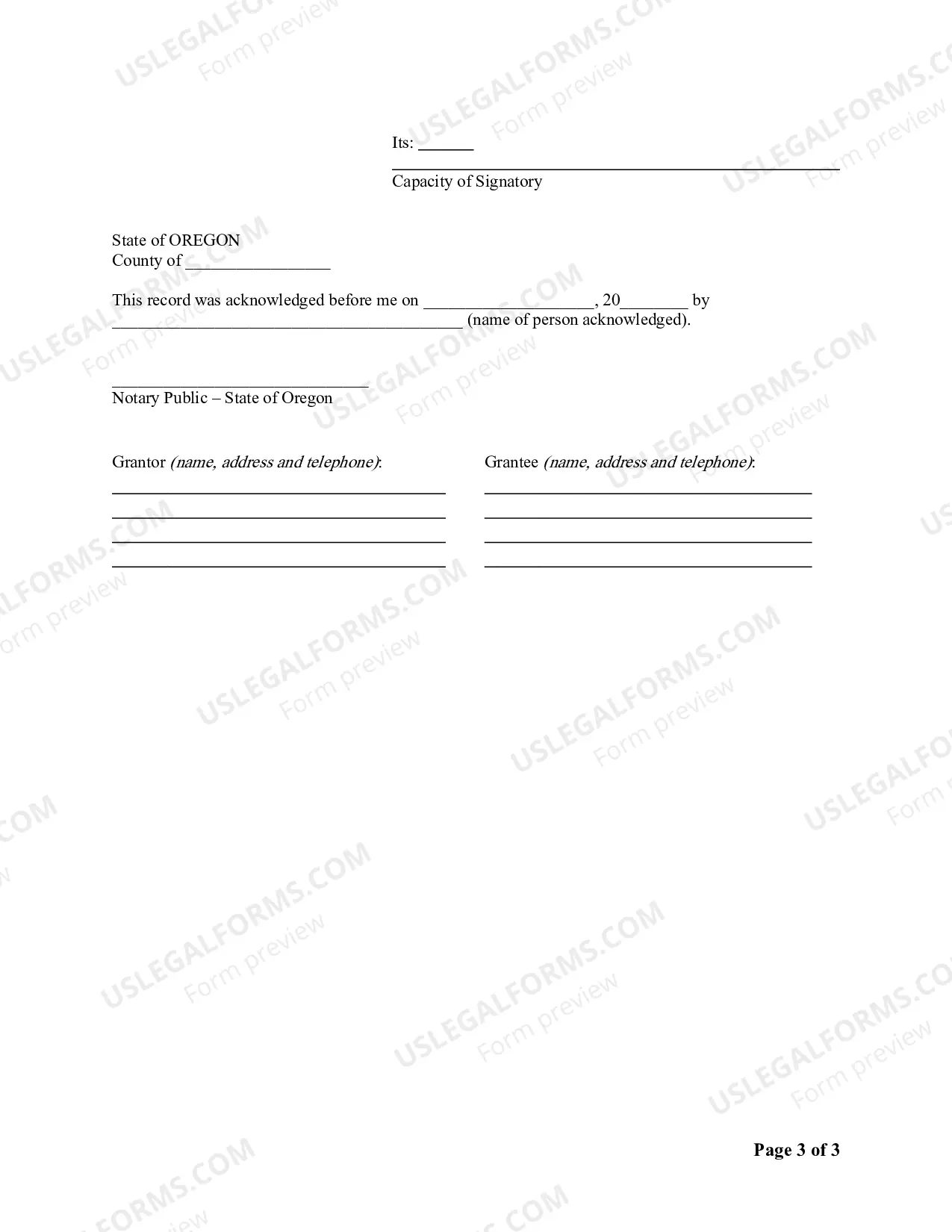
- Signature lines for both trustees to validate the deed.
- Date of execution of the fiduciary deed.





When to use this document
This form should be used when a trustee needs to transfer property to another trustee. Common scenarios include changes in trust management, the retirement or resignation of a trustee, or during the alteration of trust terms that necessitate a change in property stewardship. It is crucial for maintaining clear ownership records and ensuring legal compliance in trust administration.
Who can use this document
This form is intended for:
- Trustees wishing to transfer property held in trust.
- Trust beneficiaries involved in property management changes.
- Legal professionals assisting clients with trust management and property transfers.
How to complete this form
- Identify the parties involved as grantor and grantee (both must be trustees).
- Specify the property being transferred by including a clear description.
- Attach a legal description of the property as Exhibit A.
- Ensure both trustees sign the form to validate the transfer.
- Enter the date of execution at the designated section.
Notarization requirements for this form
This document requires notarization to meet legal standards. US Legal Forms provides secure online notarization powered by Notarize, allowing you to complete the process through a verified video call, available 24/7.
Get your form ready online
Our built-in tools help you complete, sign, share, and store your documents in one place.
Make edits, fill in missing information, and update formatting in US Legal Forms—just like you would in MS Word.
Download a copy, print it, send it by email, or mail it via USPS—whatever works best for your next step.
Sign and collect signatures with our SignNow integration. Send to multiple recipients, set reminders, and more. Go Premium to unlock E-Sign.
If this form requires notarization, complete it online through a secure video call—no need to meet a notary in person or wait for an appointment.
We protect your documents and personal data by following strict security and privacy standards.

Make edits, fill in missing information, and update formatting in US Legal Forms—just like you would in MS Word.

Download a copy, print it, send it by email, or mail it via USPS—whatever works best for your next step.

Sign and collect signatures with our SignNow integration. Send to multiple recipients, set reminders, and more. Go Premium to unlock E-Sign.

If this form requires notarization, complete it online through a secure video call—no need to meet a notary in person or wait for an appointment.

We protect your documents and personal data by following strict security and privacy standards.
Typical mistakes to avoid
- Failing to provide a complete legal description of the property.
- Not having both trustees sign the form.
- Incorrectly identifying the roles of the grantor and grantee.
- Omitting the date of execution.
Advantages of online completion
- Convenience: Download the form at any time and complete it at your own pace.
- Editability: Use your computer to fill in the necessary fields, ensuring accuracy.
- Reliability: Forms are drafted based on current legal standards and reviewed by licensed attorneys.
Looking for another form?


Form popularity
FAQ
Quitclaim Deed. Deed of Trust. Warranty Deed. Grant Deed. Bargain and Sale Deed. Mortgage Deed.
The trustee holds legal title to the property and the beneficiaries hold equitable title. Since the trustee holds legal title to the property, the property is always held in the trustee's name.Instead, it is simply a name denoting the legal relationship between a grantor and a trustee.
A trust is created by a settlor, who transfers title to some or all of his or her property to a trustee, who then holds title to that property in trust for the benefit of the beneficiaries.
(2) Beneficiary means a person named or otherwise designated in a trust deed as the person for whose benefit a trust deed is given, or the person's successor in interest, and who is not the trustee unless the beneficiary is qualified to be a trustee under ORS 86.713 (Qualifications of trustee) (1)(b)(D).
Locate your current deed. Use the proper deed. Check with your title insurance company and lender. Prepare a new deed. Sign in the presence of a notary. Record the deed in the county clerk's office. Locate the deed that's in trust. Use the proper deed.
The different types of real estate title are joint tenancy, tenancy in common, tenants by entirety, sole ownership, and community property. Other, less common types of property ownership are corporate ownership, partnership ownership, and trust ownership.
A trustee deedsometimes called a deed of trust or a trust deedis a legal document created when someone purchases real estate in a trust deed state, such as California (check your local laws to see what is required in your state). A trust deed is used in place of a mortgage.
The trustee holds legal title to the property and the beneficiaries hold equitable title. Because the trustee holds legal title to the property, that property must be held in the trustee's name.
A warranty deed protects property owners from future claims that someone else actually owns a portion (or all) of their property, while trustee deeds protect lenders when borrowers default on their mortgage loans.