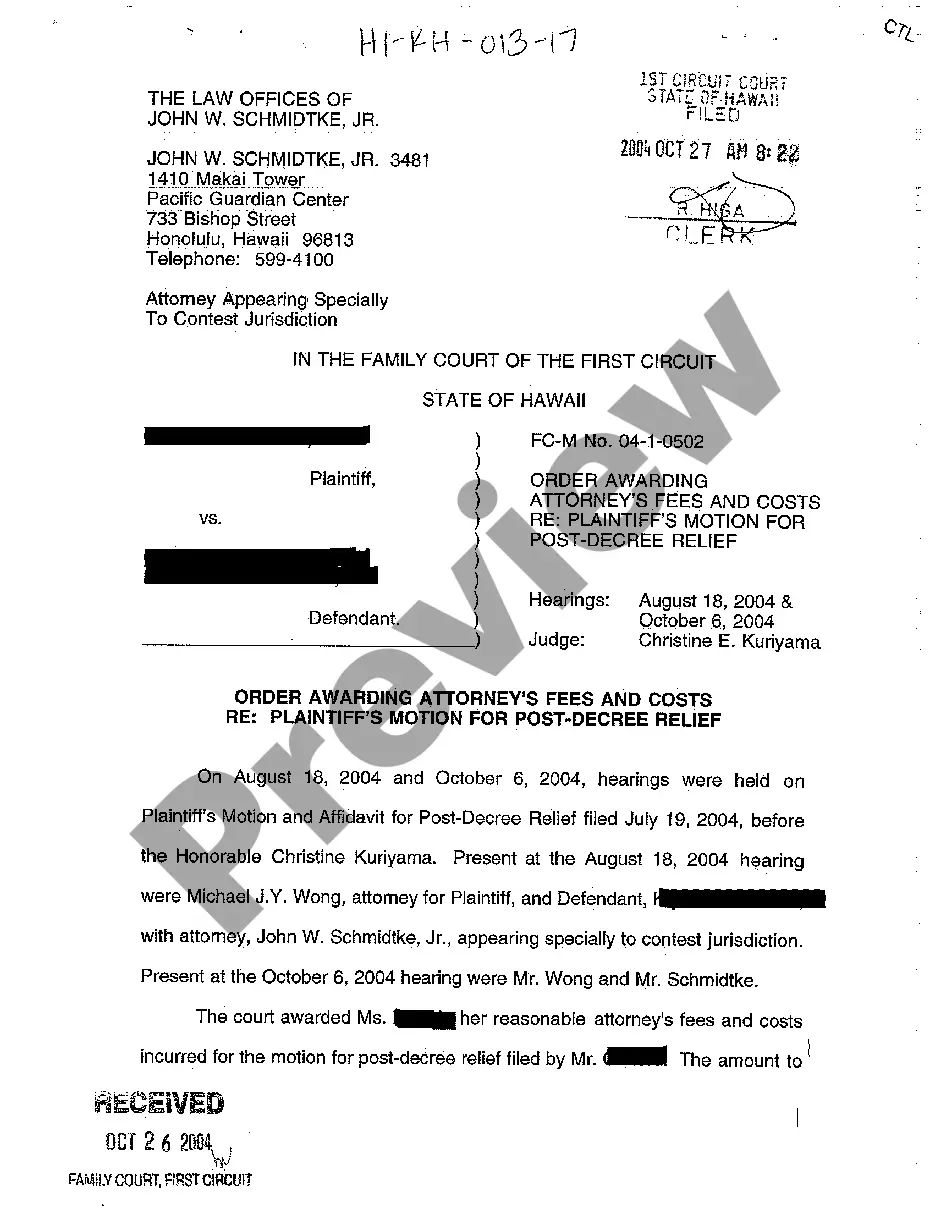
Oregon Response to Motion - Affidavit for Waiver of Mediation
About this form
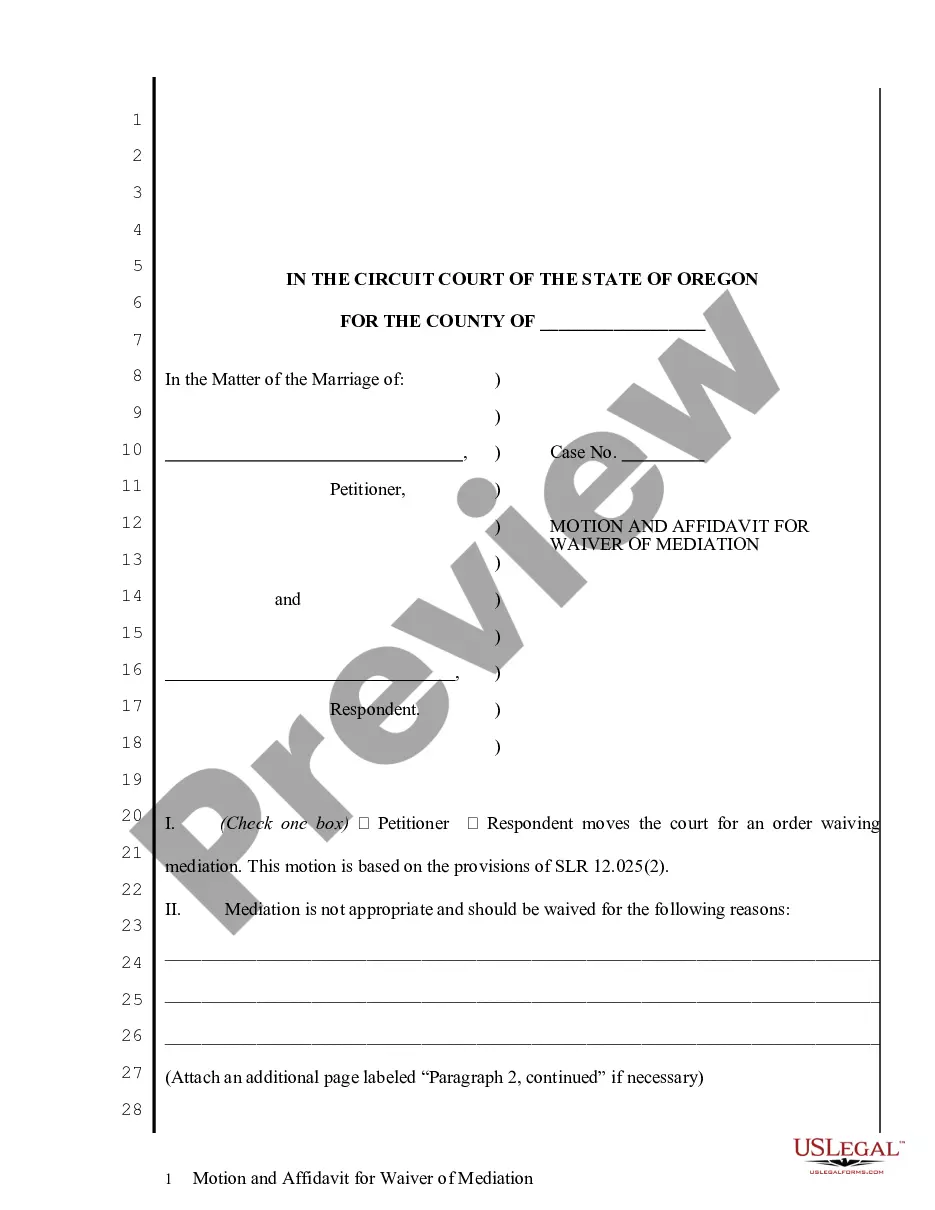
The Response to Motion - Affidavit for Waiver of Mediation is a legal document used in Oregon family law cases. This form allows a party (either the petitioner or respondent) to formally respond to a request for mediation and provide reasons for objecting to the waiver of this process. It is essential for ensuring that disputes are addressed in a structured manner if mediation is requested by the other party.
What’s included in this form
- Case information section to identify the parties involved and the case number.
- Option to check if the petitioner or respondent is objecting to the motion for waiver of mediation.
- Space to outline the reasons for objection, allowing for additional documentation if necessary.
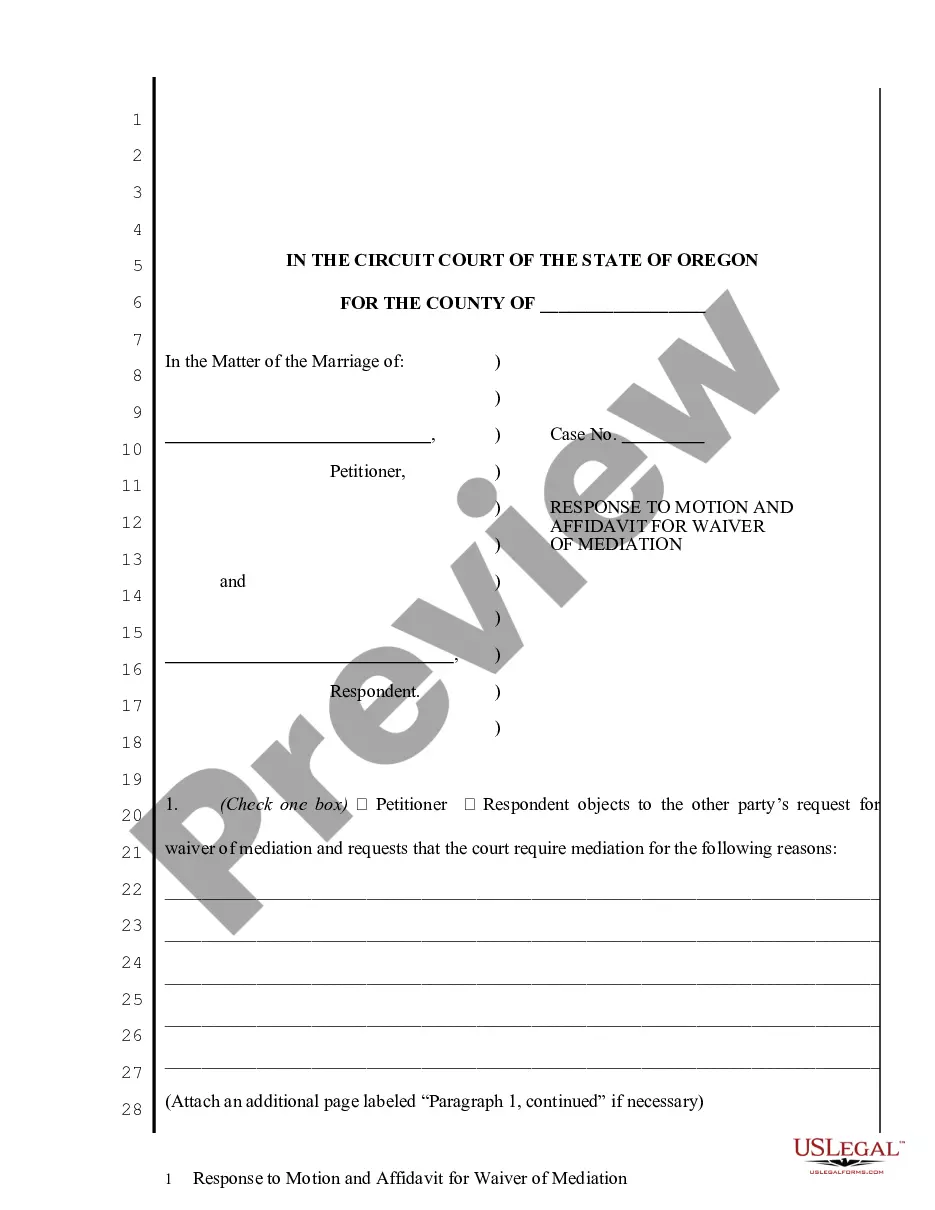
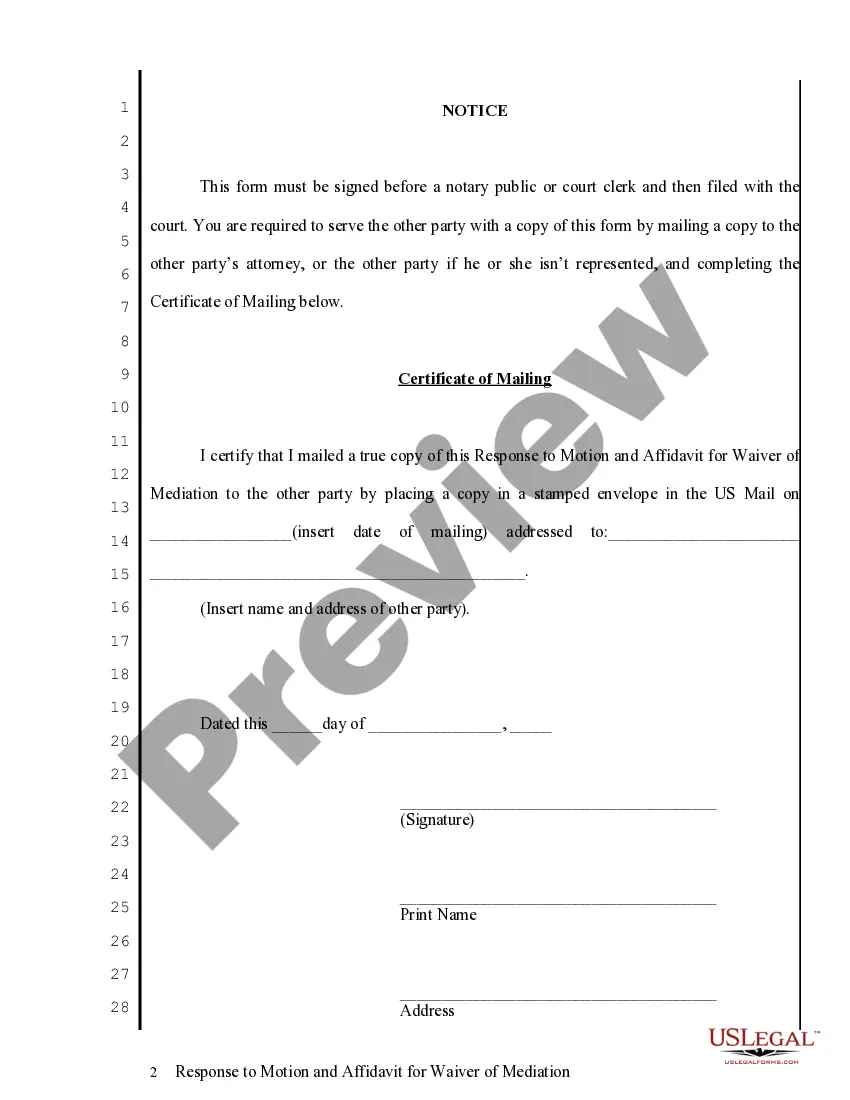
- Certificate of mailing to confirm that the other party has been served a copy of the response.
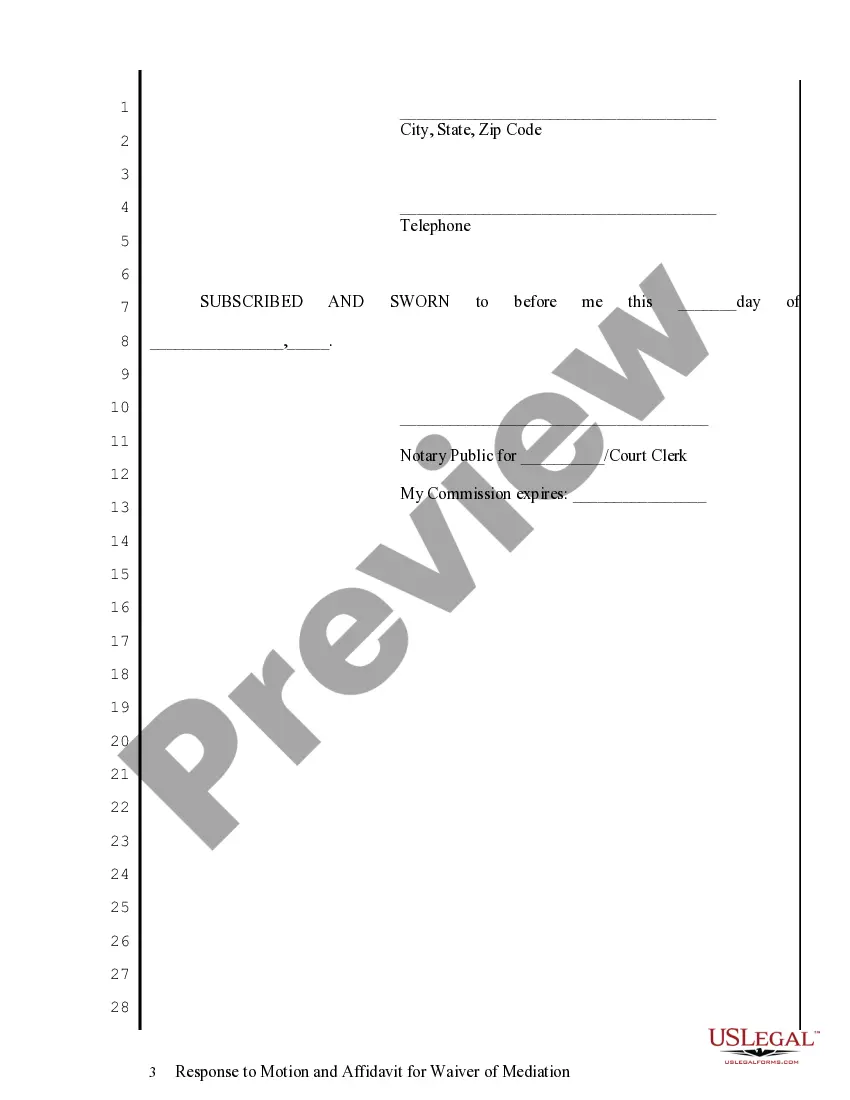
- Signature and notary section to validate the document's authenticity.

Situations where this form applies
This form should be used when one party in a domestic litigation case wishes to formally object to another party's request for a waiver of mediation. Common scenarios for its use include cases where mediation is seen as essential for resolving disputes related to child custody, property division, or any other contested issues in a divorce proceeding.
Who can use this document
- Individuals involved in domestic litigation in Oregon who have received a request for a waiver of mediation.
- Either the petitioner or respondent in a family law case where mediation is typically required.
- Parties seeking to ensure that their reasons for objection to the waiver are documented and considered by the court.
How to complete this form
- Identify the parties involved in the case, ensuring the correct case number is included.
- Select whether you are the petitioner or respondent and check the appropriate box.
- Provide a detailed explanation of your reasons for objecting to the waiver of mediation in the designated section.
- Complete the Certificate of Mailing section to document how and when the other party was notified.
- Sign the form in the presence of a notary public or court clerk to ensure legal validity.
Notarization requirements for this form
Yes, this form must be notarized to be legally valid. It should be signed in the presence of a notary public or a court clerk to ensure compliance with Oregon law. US Legal Forms provides integrated online notarization services, allowing users to complete this requirement conveniently and securely.
Get your form ready online
Our built-in tools help you complete, sign, share, and store your documents in one place.
Make edits, fill in missing information, and update formatting in US Legal Forms—just like you would in MS Word.
Download a copy, print it, send it by email, or mail it via USPS—whatever works best for your next step.
Sign and collect signatures with our SignNow integration. Send to multiple recipients, set reminders, and more. Go Premium to unlock E-Sign.
If this form requires notarization, complete it online through a secure video call—no need to meet a notary in person or wait for an appointment.
We protect your documents and personal data by following strict security and privacy standards.

Make edits, fill in missing information, and update formatting in US Legal Forms—just like you would in MS Word.

Download a copy, print it, send it by email, or mail it via USPS—whatever works best for your next step.

Sign and collect signatures with our SignNow integration. Send to multiple recipients, set reminders, and more. Go Premium to unlock E-Sign.

If this form requires notarization, complete it online through a secure video call—no need to meet a notary in person or wait for an appointment.

We protect your documents and personal data by following strict security and privacy standards.
Common mistakes to avoid
- Failing to provide detailed reasons for the objection, which can weaken your case.
- Not signing the form in front of a notary, making it invalid.
- Neglecting to complete the Certificate of Mailing, which is required for proper service.
- Using incorrect case information, which could delay the process.
Advantages of online completion
- Convenient access allows for easy form completion from home without the need to visit a lawyer's office.
- Editable templates enable users to fill in specific details relevant to their case before downloading.
- Reliability of the forms drafted by licensed attorneys ensures legal compliance with state requirements.
Looking for another form?
Form popularity
FAQ
In California, approximately 95% of civil cases settle out of court. Many of these settle at a mediation. Others settle outside of mediation. (Parties are always free to discuss settlement...
Mediation is a procedure in which the parties discuss their disputes with the assistance of a trained impartial third person(s) who assists them in reaching a settlement. It may be an informal meeting among the parties or a scheduled settlement conference.
First, the mediator will make his opening statements. He will probably introduce himself, talk about the confidentiality of the process, and talk about how he will run the mediation. Next, he might ask for opening statements from the parties.
There are essentially 5 steps to a successful mediation. They are comprised of the introduction; statement of the problem; information gathering; identification of the problems; bargaining; and finally, settlement.
Planning. Mediator's introduction. Opening remarks. Joint discussion. Caucuses. Negotiation. What do you think is most valuable to the mediation process?
What Is Mediation? Mediation is when a neutral third party called a mediator works with each party in a lawsuit to reach a compromise before going to trial. The mediator helps the parties to reach a compromise.The mediator points out issues in the case or areas of weakness and benefits of settling.
Mediation is a structured, interactive process where an impartial third party assists disputing parties in resolving conflict through the use of specialized communication and negotiation techniques. All participants in mediation are encouraged to actively participate in the process.
Mediation is a private process where a neutral third person called a mediator helps the parties discuss and try to resolve the dispute.While courts can mandate that certain cases go to mediation, the process remains "voluntary" in that the parties are not required to come to agreement.