Oregon Ex Parte Motion for Order of Assistance
Overview of this form
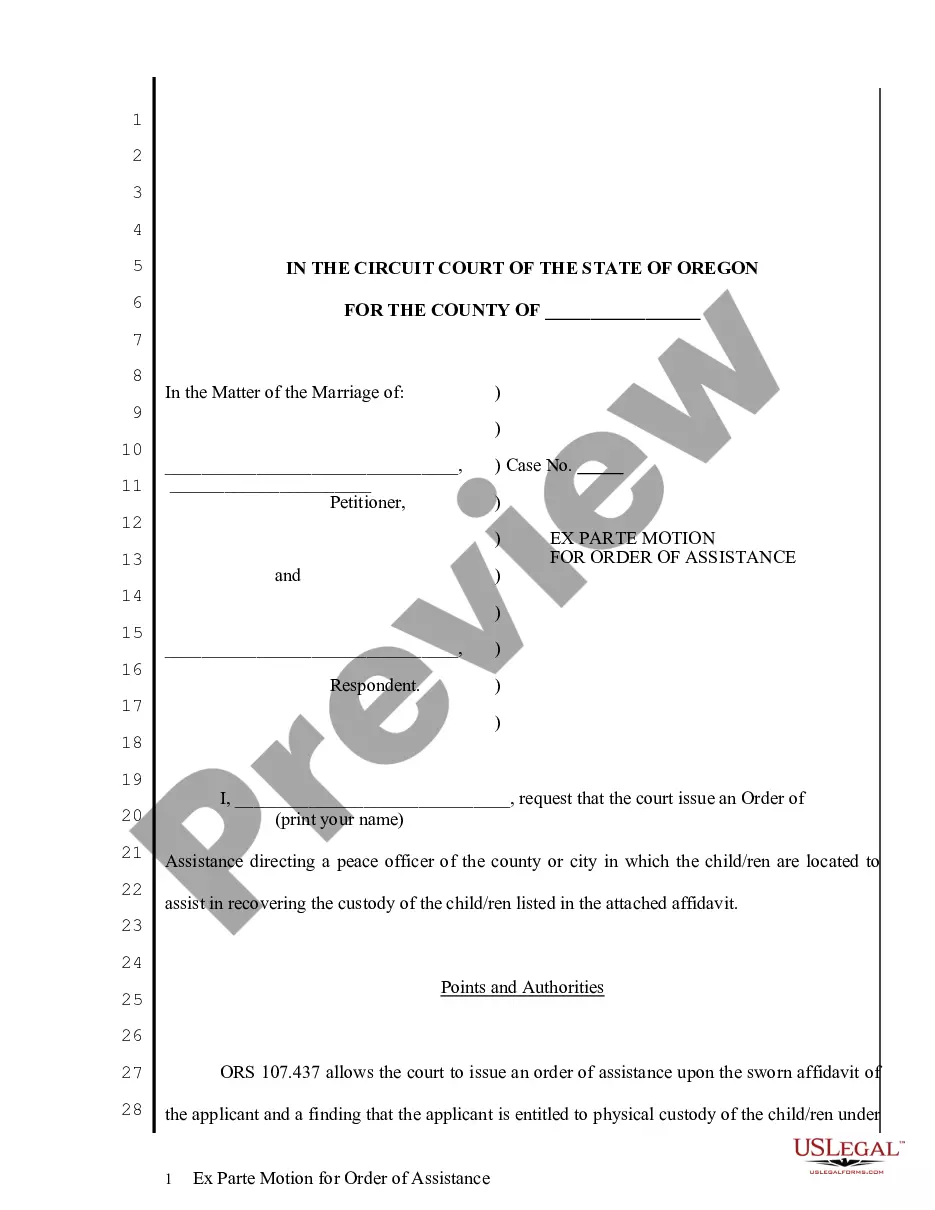
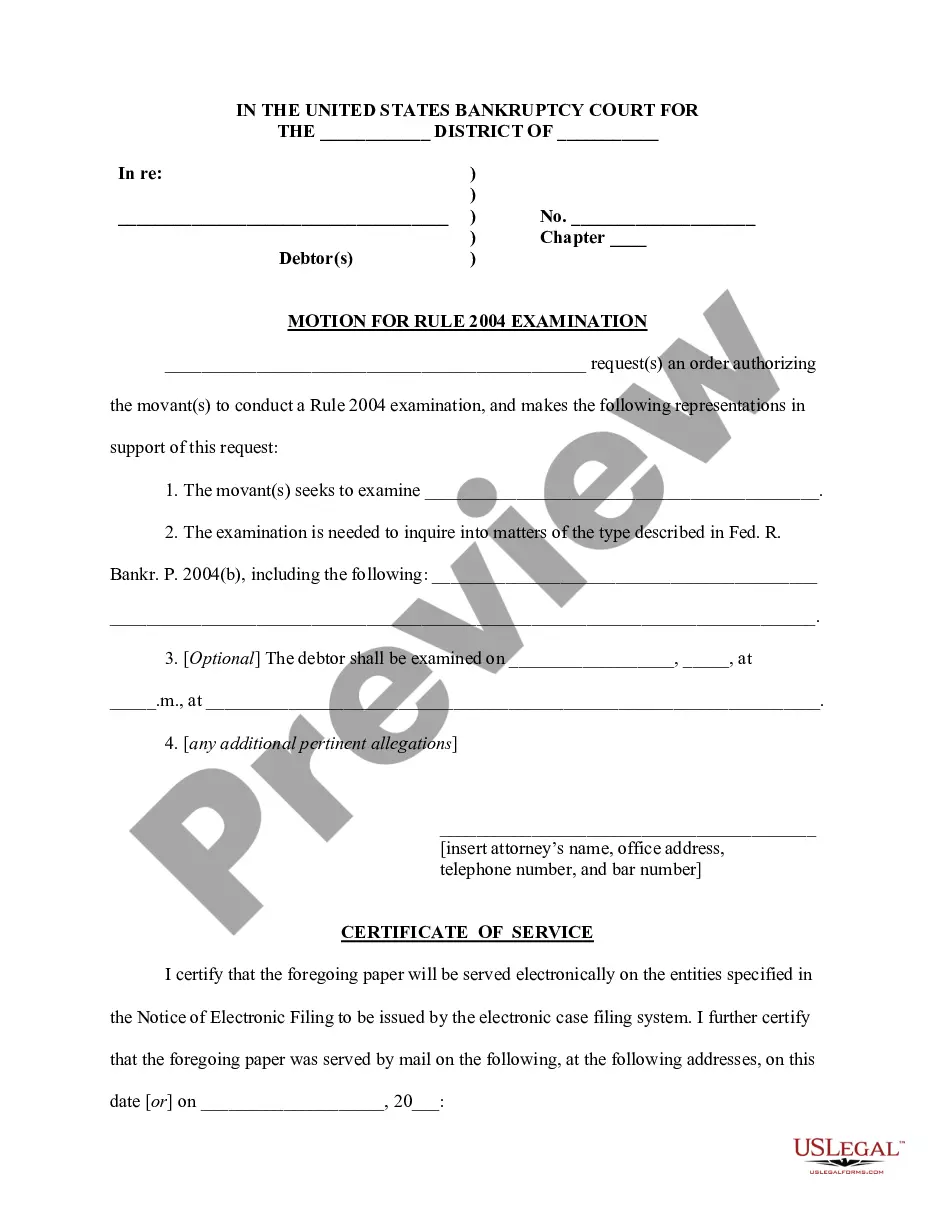
The Ex Parte Motion for Order of Assistance is a legal document used in domestic litigation in the state of Oregon. This form allows a petitioner to request the court to issue an order that directs a peace officer to assist in enforcing a custody order by retrieving children wrongfully held by another party. It differs from regular custody motions as it requires urgent action, presenting the need for immediate law enforcement intervention based on a documented violation of custody rights.
Key components of this form
- Petitioner and Respondent Information: Names of the individuals involved in the custody case.
- Request for Order: A clear statement requesting the court issue an order for assistance.
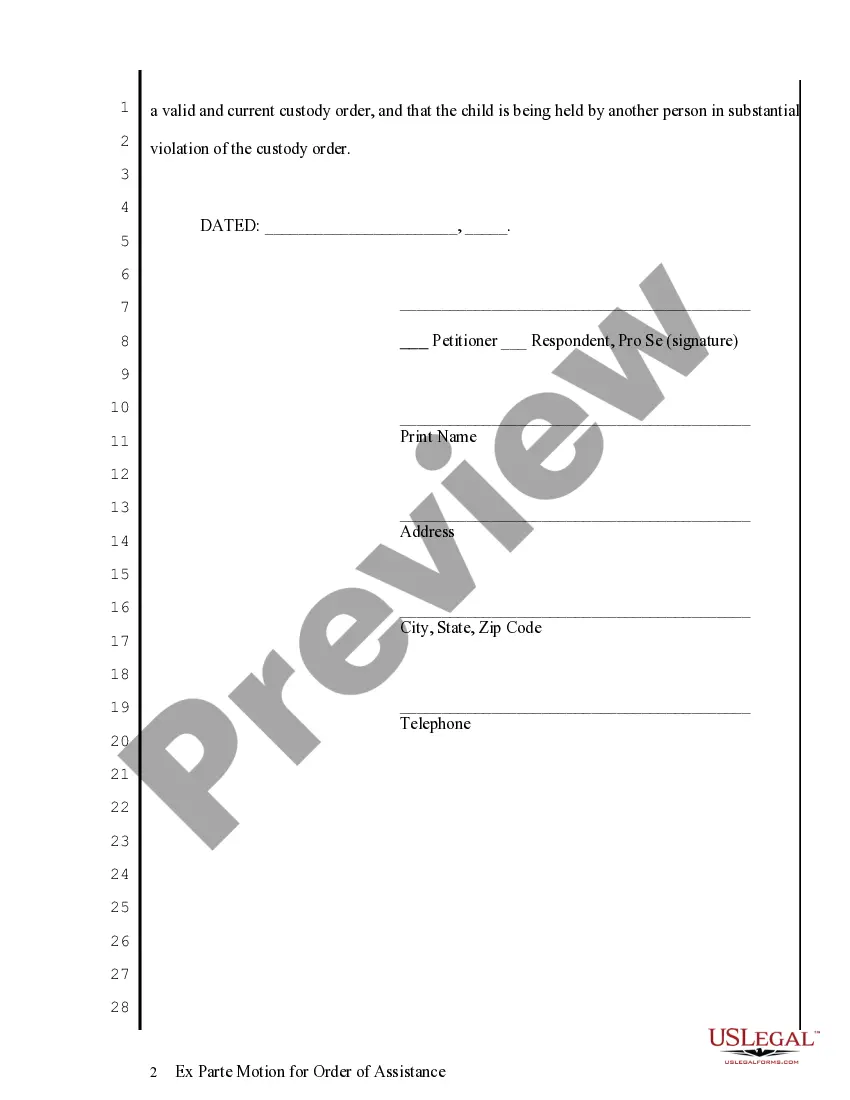
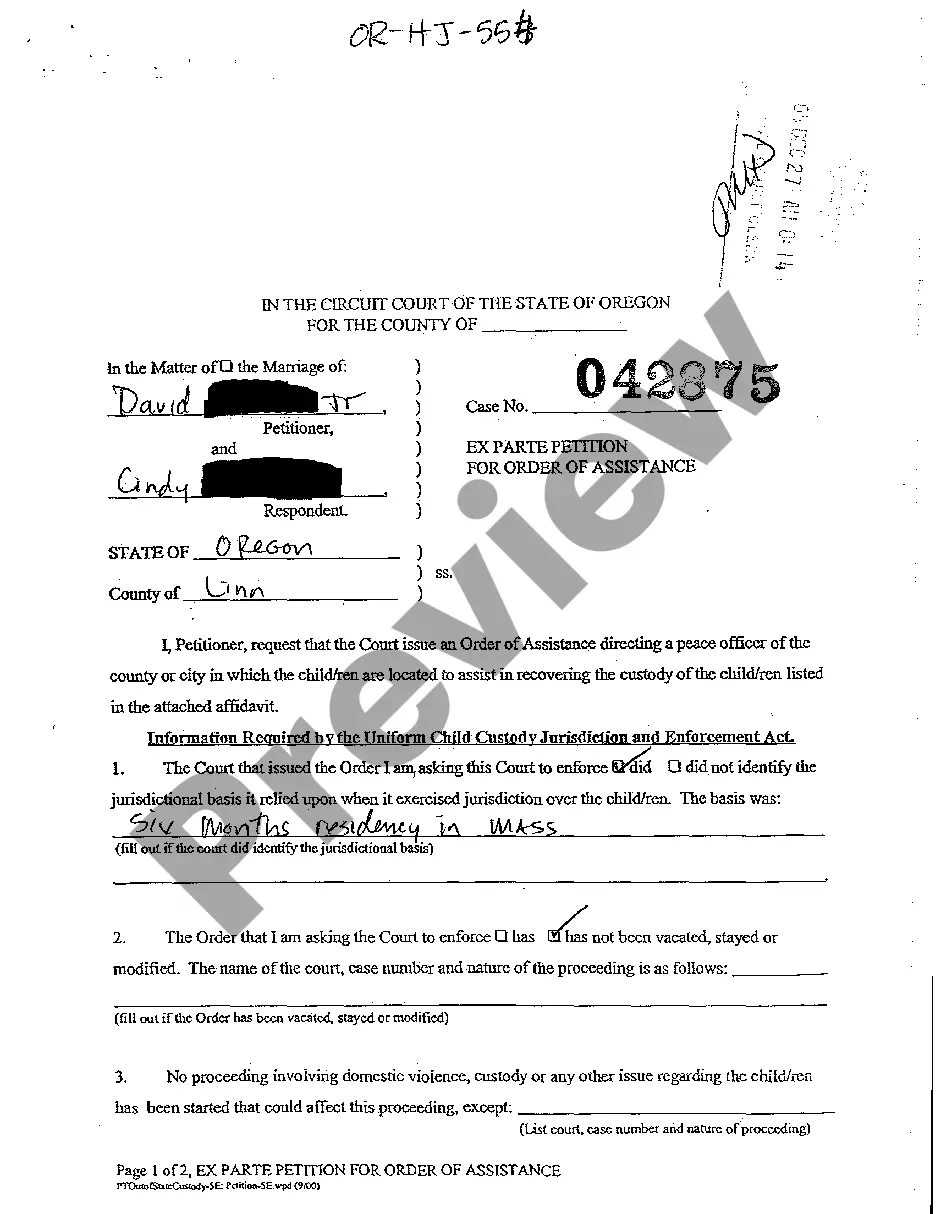
- Affidavit Attachment: The form requires an attached affidavit that supports the request for assistance by detailing the circumstances of the custody violation.
- Legal References: Citations to relevant Oregon statutes, specifically ORS 107.437, outlining the basis for this motion.
- Signature and Date: Spaces for the petitionerâs signature and the date of the request, confirming the information is accurate.
When to use this document
This form is typically used when a custodial parent or guardian believes that their child has been taken or is being held in violation of a current court custody order. Situations may include a non-custodial parent refusing to return a child after visitation or when a family member unlawfully keeps the child. The urgency of needing law enforcement's assistance makes this form necessary to quickly resolve custody disputes and ensure the child's safe return.
Who this form is for
- Petitioners who have legal custody rights over the child/ren in question.
- Individuals representing themselves in court (Pro Se litigants) without the need for an attorney.
- Persons needing immediate law enforcement involvement due to violations of custody orders.
How to prepare this document
- Identify the parties: Enter the names of the petitioner and respondent at the beginning of the form.
- State the request: Clearly indicate your request for an order of assistance for custody recovery.
- Attach necessary documents: Include an affidavit detailing the circumstances of the custody violation.
- Sign and date the form: Ensure the petitionerâs signature is included, along with the date of submission.
- File with the court: Submit the completed form to the appropriate circuit court for processing.
Notarization guidance
This form does not typically require notarization unless specified by local law. Always check specific court requirements to ensure compliance when submitting.
Get your form ready online
Our built-in tools help you complete, sign, share, and store your documents in one place.
Make edits, fill in missing information, and update formatting in US Legal Forms—just like you would in MS Word.
Download a copy, print it, send it by email, or mail it via USPS—whatever works best for your next step.
Sign and collect signatures with our SignNow integration. Send to multiple recipients, set reminders, and more. Go Premium to unlock E-Sign.
If this form requires notarization, complete it online through a secure video call—no need to meet a notary in person or wait for an appointment.
We protect your documents and personal data by following strict security and privacy standards.

Make edits, fill in missing information, and update formatting in US Legal Forms—just like you would in MS Word.

Download a copy, print it, send it by email, or mail it via USPS—whatever works best for your next step.

Sign and collect signatures with our SignNow integration. Send to multiple recipients, set reminders, and more. Go Premium to unlock E-Sign.

If this form requires notarization, complete it online through a secure video call—no need to meet a notary in person or wait for an appointment.

We protect your documents and personal data by following strict security and privacy standards.
Common mistakes to avoid
- Neglecting to attach the required affidavit.
- Incomplete information about the petitioner or respondent.
- Failing to sign and date the form before submission.
Why complete this form online
- Convenience: Download the form instantly and fill it out at your own pace.
- Editability: Make necessary changes easily before finalizing the document.
- Reliability: Utilize templates drafted by licensed attorneys to ensure legal compliance.
Looking for another form?
Form popularity
FAQ
What Is an Ex Parte Order? An ex parte order is one that is made without the other party being made aware of it. They often provide instant relief, albeit on a temporary basis. They are issued when immediate relief is needed and when scheduling a regular hearing and providing notice to the other party is not feasible.
Ex parte hails from the latin language which means 'by or for one party' or 'by one side'. An ex parte decree is a decree which is passed in the non-appearance of the opposition.
Exparte pfoceedings means the legal proceedings conducted by the court for one party when the other party fails to appear before the court or give its say.
In civil procedure, ex parte is used to refer to motions for orders that can be granted without waiting for a response from the other side. Generally, these are orders that are only in place until further hearings can be held, such as a temporary restraining order.
How Long Does an Ex Parte Order Last? These types of orders are often temporary. Typically, they're only good for 21 days they last until the next hearing, which has to be scheduled within 21 days after filing for an ex parte order. At the next hearing, the judge will decide whether the order should become permanent.
In civil procedure, ex parte is used to refer to motions for orders that can be granted without waiting for a response from the other side. Generally, these are orders that are only in place until further hearings can be held, such as a temporary restraining order.
An ex parte order of protection is a temporary measure that can be filed quickly. A full protection order, or restraining order, is granted after a court hearing and lasts for a longer period of time than the ex parte order.
The phrase to describe such hearings without a party on notice is ex parte. It refers to a court application brought by one person in the absence of and without representation by, or notification to, other parties.Ex parte applications will, generally, be based on evidence presented in, say, affidavit form.
Exparte pfoceedings means the legal proceedings conducted by the court for one party when the other party fails to appear before the court or give its say. Once the case is disposed off ex-parte, the party against whom the ex-parte order is passed can go for appeal against the order in the higher court.