Oregon Affidavit in Support of Motion to Set Aside Records of Arrest after Acquittal
About this form
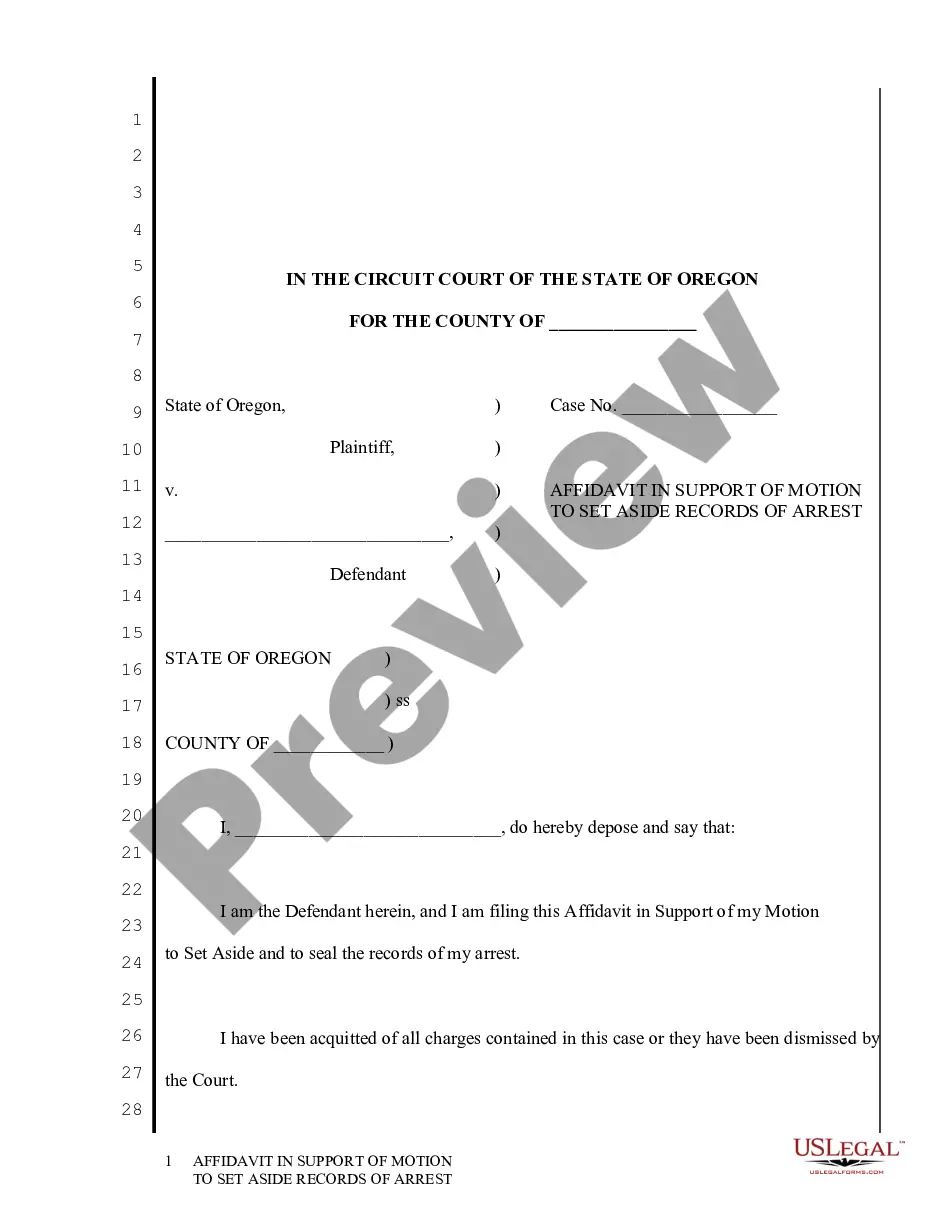
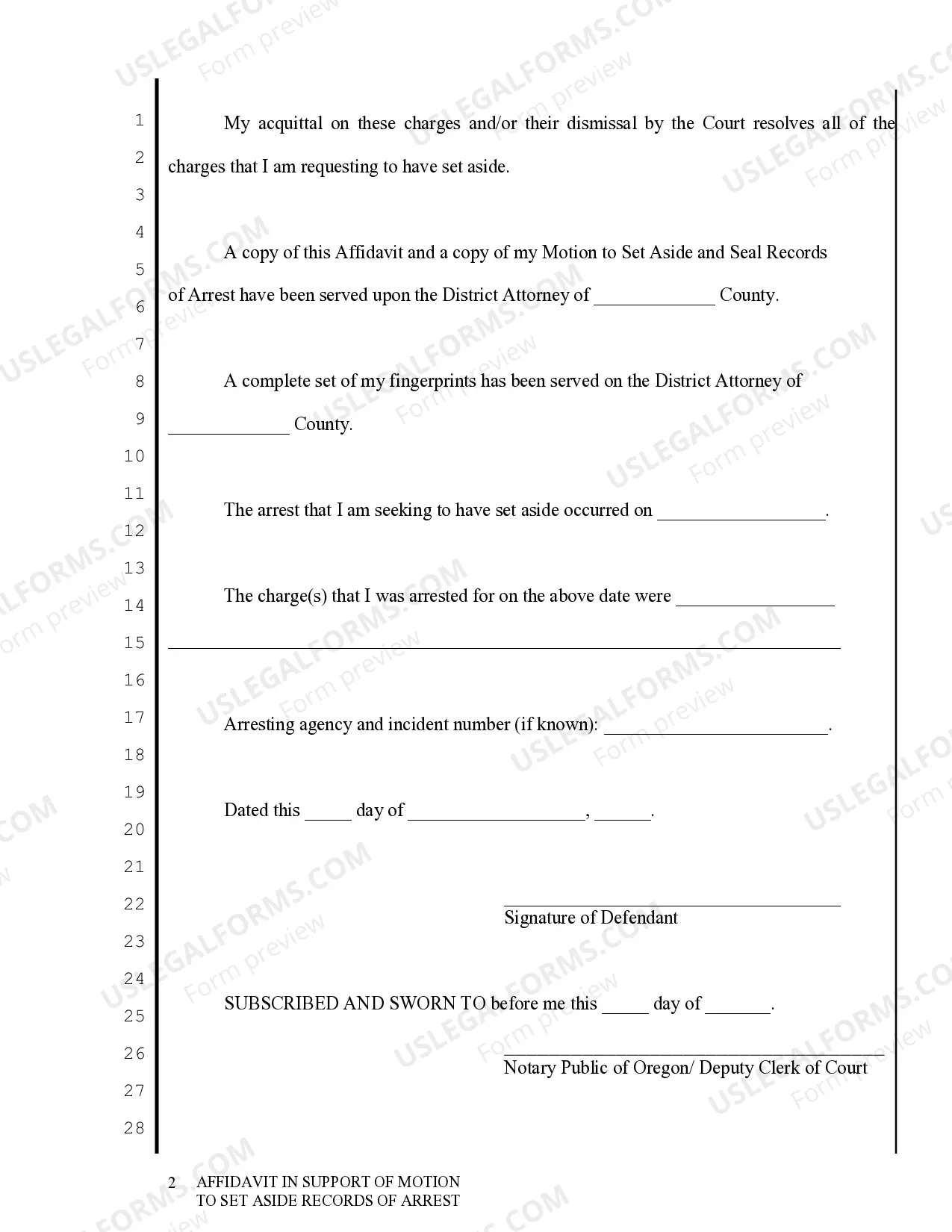
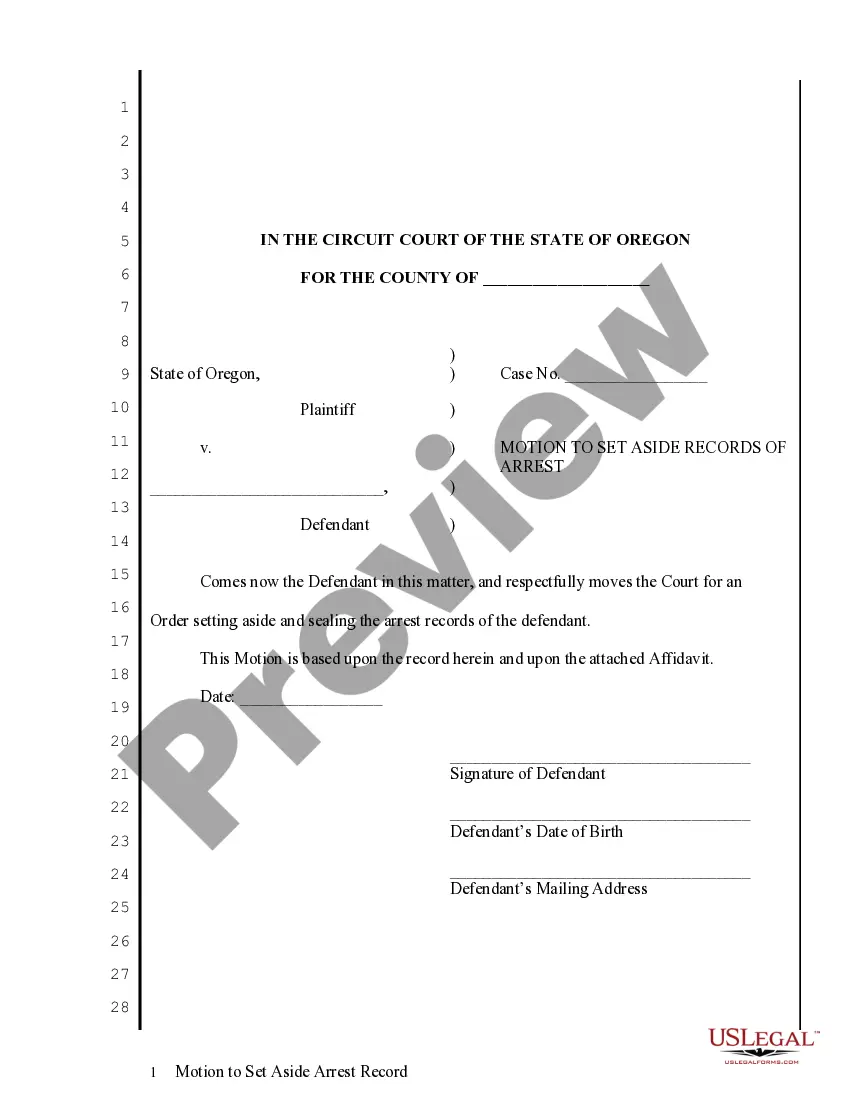
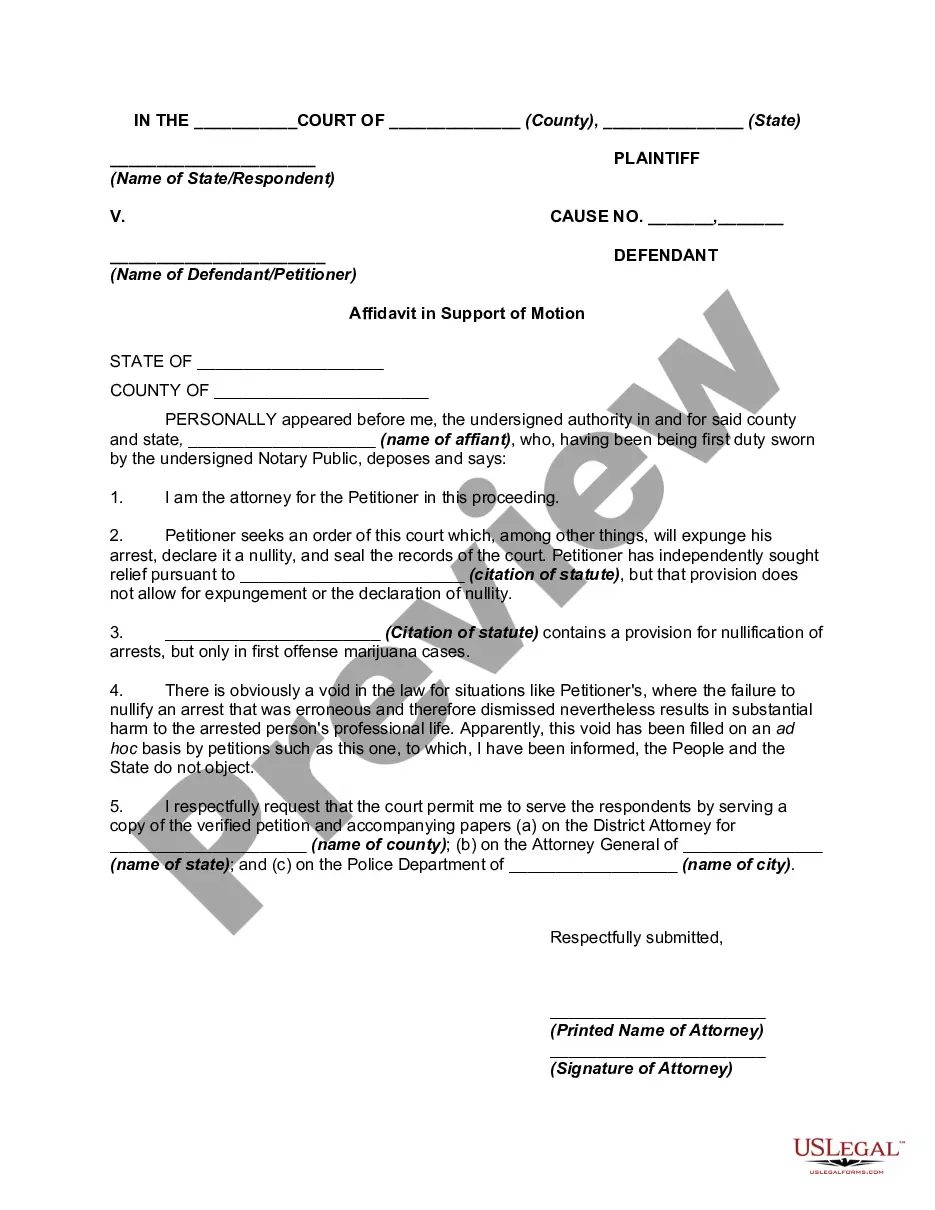
The Affidavit in Support of Motion to Set Aside Records of Arrest is a legal document used to request the removal of an arrest record after being acquitted or having charges dismissed. This form allows defendants to affirm that they have been cleared of allegations, thereby seeking to seal their arrest records. It is distinct from other forms related to expungement, as it specifically addresses situations involving acquittals or dismissals.
Form components explained
- The defendant's personal information, including name and case number.
- A declaration of acquittal or dismissal of charges by the court.
- Details about the arrest date and charges involved.
- Notification that copies of the affidavit and motion have been served to the District Attorney.
- Signature of the defendant and notarization statement.

Situations where this form applies
This form is suitable for individuals who have faced criminal charges but were acquitted or had the charges dismissed in court. If you wish to set aside your arrest record to clear your name, improve future employment prospects, or regain your privacy, this affidavit is the appropriate document to file in conjunction with a motion to seal your records.
Intended users of this form
This form is intended for:
- Individuals acquitted of criminal charges.
- Defendants whose charges were dismissed by the court.
- Anyone seeking to clear their arrest record from public view to improve their quality of life.
Steps to complete this form
- Begin by filling in your personal information, including your name and the case number.
- Clearly state that you have been acquitted or that your charges have been dismissed.
- Provide the date of arrest and details about the charges you are seeking to have set aside.
- Indicate that copies of this affidavit have been served to the District Attorney.
- Sign the affidavit in the presence of a notary public.
Notarization guidance
Notarization is required for this form to take effect. Our online notarization service, powered by Notarize, lets you verify and sign documents remotely through an encrypted video session, available 24/7.
Get your form ready online
Our built-in tools help you complete, sign, share, and store your documents in one place.
Make edits, fill in missing information, and update formatting in US Legal Forms—just like you would in MS Word.
Download a copy, print it, send it by email, or mail it via USPS—whatever works best for your next step.
Sign and collect signatures with our SignNow integration. Send to multiple recipients, set reminders, and more. Go Premium to unlock E-Sign.
If this form requires notarization, complete it online through a secure video call—no need to meet a notary in person or wait for an appointment.
We protect your documents and personal data by following strict security and privacy standards.

Make edits, fill in missing information, and update formatting in US Legal Forms—just like you would in MS Word.

Download a copy, print it, send it by email, or mail it via USPS—whatever works best for your next step.

Sign and collect signatures with our SignNow integration. Send to multiple recipients, set reminders, and more. Go Premium to unlock E-Sign.

If this form requires notarization, complete it online through a secure video call—no need to meet a notary in person or wait for an appointment.

We protect your documents and personal data by following strict security and privacy standards.
Common mistakes
- Not including all required personal information.
- Failing to serve copies of the affidavit to the District Attorney.
- Omitting dates or details about the arrest.
- Not having the form notarized before submission.
- Incorrectly stating the status of the charges (acquitted vs. dismissed).
Advantages of online completion
- Convenient access to legal templates without needing to visit a law office.
- Edit and fill the form at your own pace.
- Reliable templates created by licensed attorneys ensure legal accuracy.
- Downloadable forms for immediate use, saving time during the legal process.
What to keep in mind
- The Affidavit in Support of Motion to Set Aside Records of Arrest after Acquittal is essential for individuals seeking to clear their arrest records after acquittal.
- Proper completion and notarization of the form are crucial for legal effectiveness.
- This document supports your motion in court, potentially enhancing future opportunities for employment and housing.
Looking for another form?
Form popularity
FAQ
If you were convicted of a qualifying violation or crime, you may apply to set the record aside after three years. If you have been convicted of any other offense, other than traffic violations, you must wait 10 years.
How Long Does it take to Set Aside or Expunge a Conviction in Oregon? It takes four to six months after the paperwork is filed to set aside or expunge most convictions in Oregon. Some counties are faster than others.
When a court sets aside a conviction it dismisses the conviction, the penalties are dismissed and disabilities are vacated. The record of the prior conviction remains but the court record will also note that the conviction has been set aside.
Oregon law prohibits the expungement of DUI conviction, even when such convictions have been dismissed after completing a diversion program.If you have a DUII conviction on your record, it will stay there for life.
Obtain and complete a legal fingerprint card. Complete and notarize an affidavit. All documents will go through the process of an OSP background check, District Attorney review, and signature approvals. 3-4 months later, your signed expungement order (and your cleared record) will be official.
In Oregon, you may expunge arrest records, misdemeanors, and felony convictions under certain circumstances. An expungement removes a criminal offense from your record for most purposesmaking it easier to get a job, housing or an education.
How Much Does An Expungement Cost? If you were convicted of an offense, it costs roughly $1000 to expunge each offense, including a $265 filing fee and an $80 fee to the State Police. If your case was dismissed, the costs are around $600.
Expungement vs. Record Sealing. The key difference between expunging a person's criminal record and sealing it is that a sealed record still exists in both a legal and physical sense, while expungement results in the deletion of any record that an arrest or criminal charge ever occurred.
Online expungement is only available through Maryland expungement.com and not offered by a State or government website. This legal expungement service is particularly convenient for individuals who don't want to have to travel to the courthouse, obtain all the paperwork, drive home.