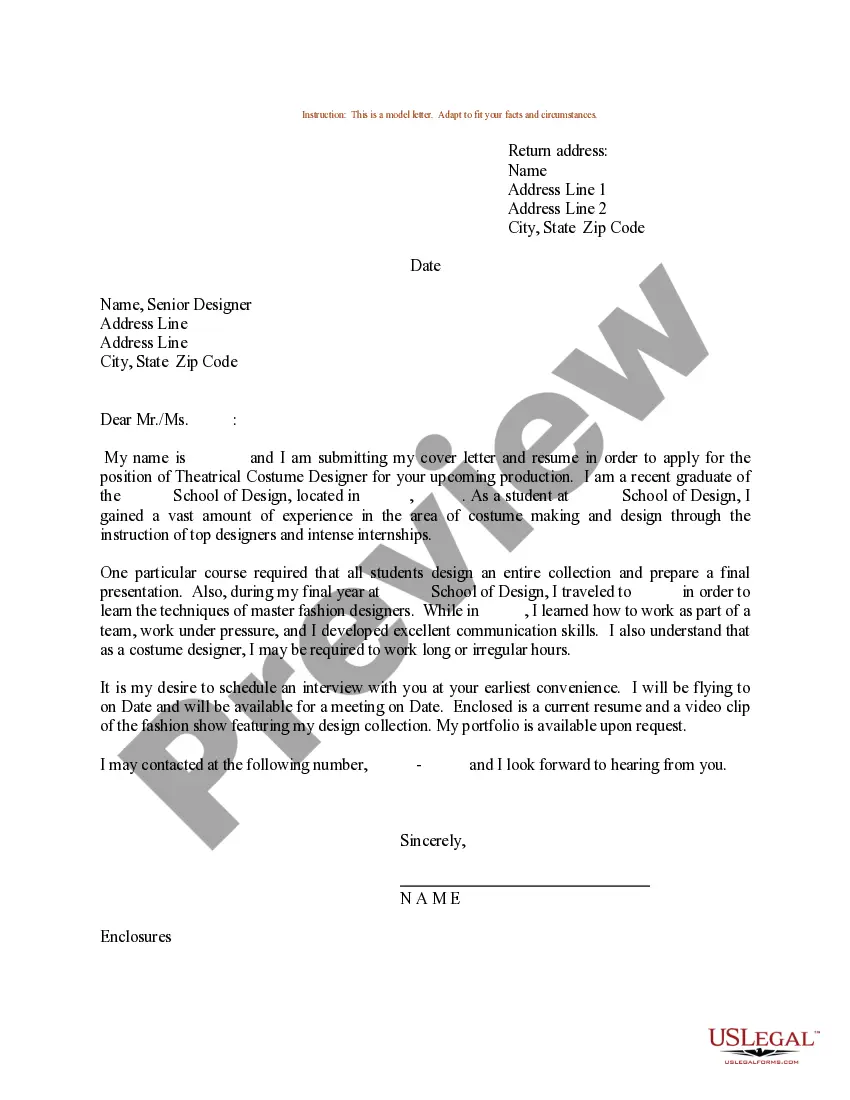
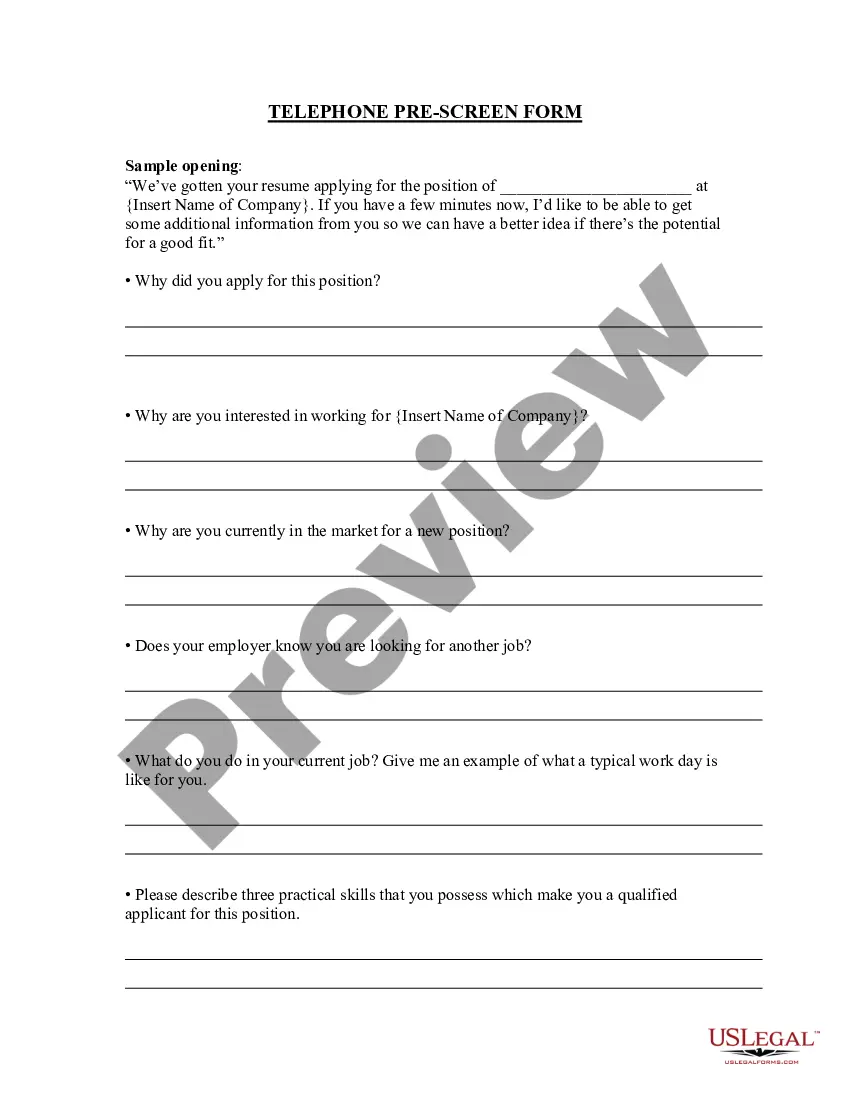
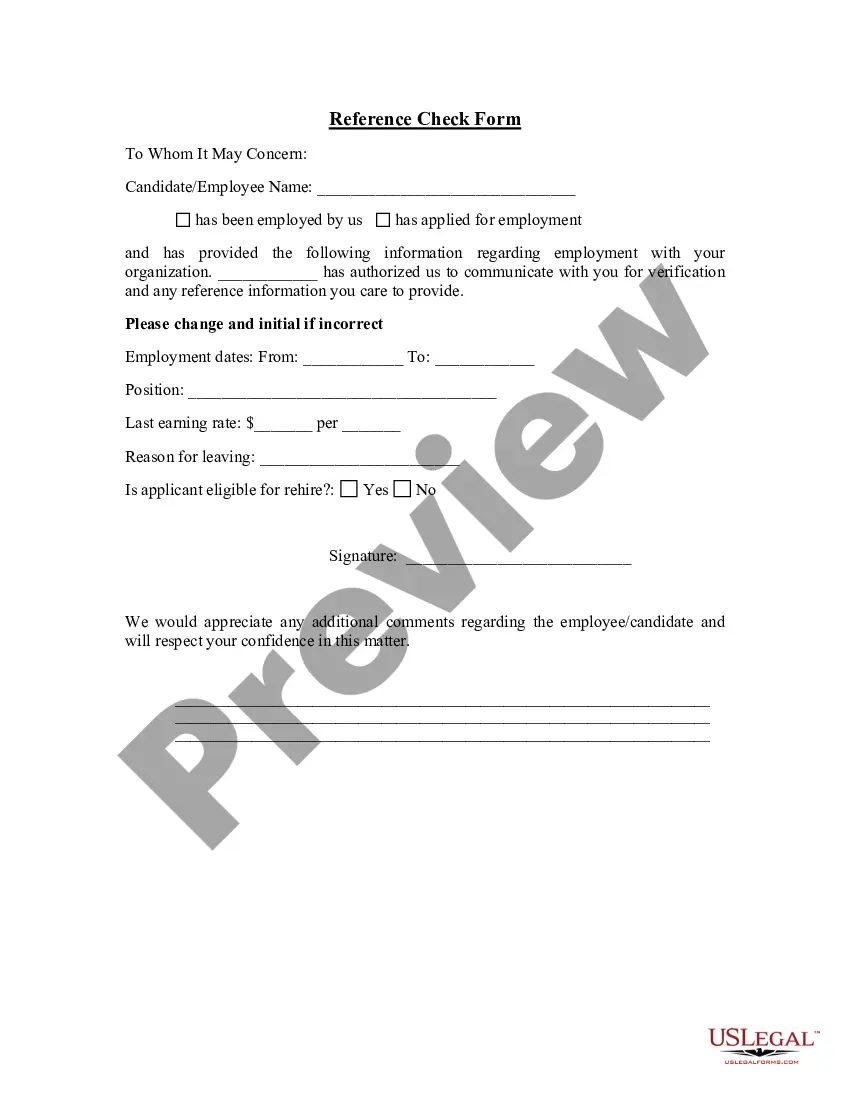
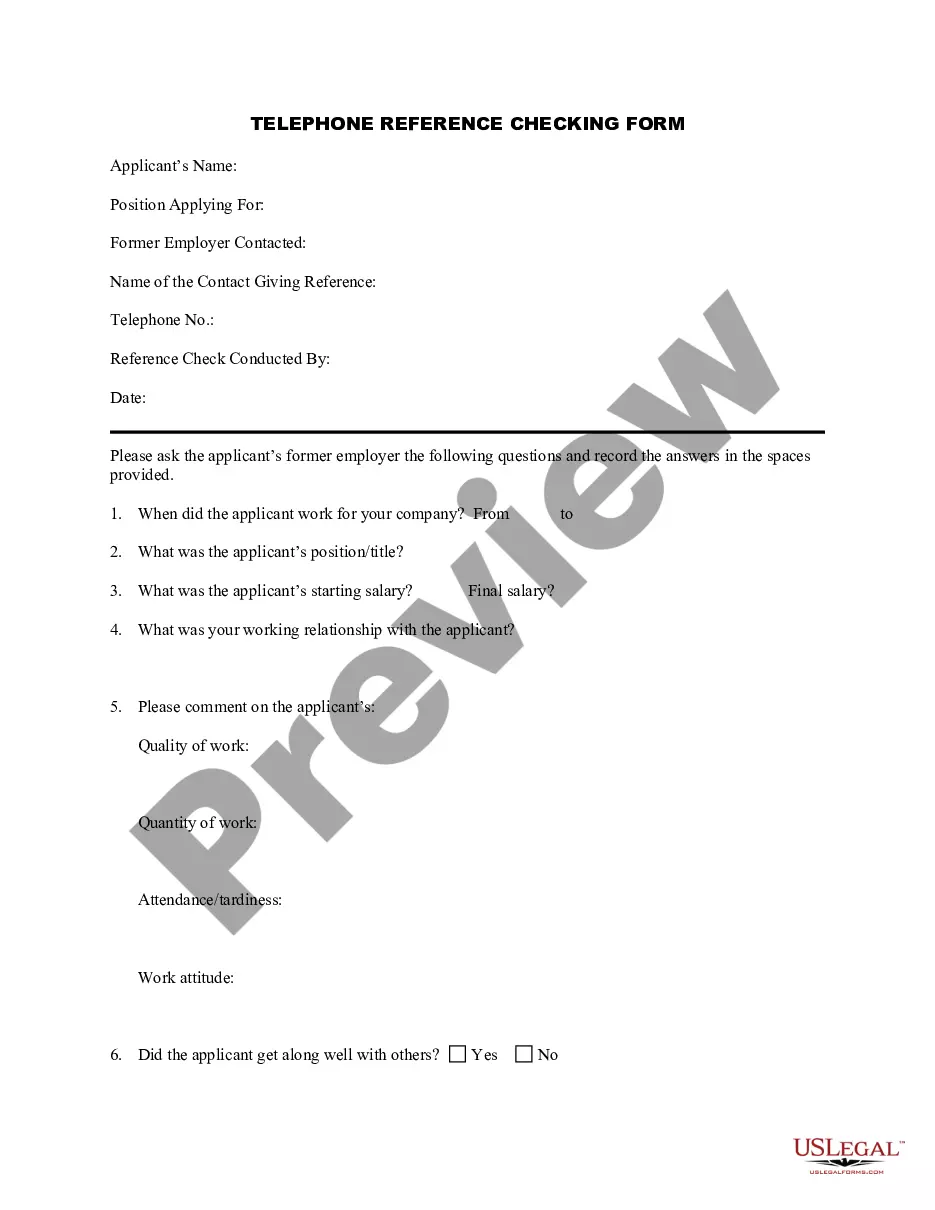
Oklahoma Telephone Reference Check
Description

Get your form ready online
Our built-in tools help you complete, sign, share, and store your documents in one place.
Make edits, fill in missing information, and update formatting in US Legal Forms—just like you would in MS Word.
Download a copy, print it, send it by email, or mail it via USPS—whatever works best for your next step.
Sign and collect signatures with our SignNow integration. Send to multiple recipients, set reminders, and more. Go Premium to unlock E-Sign.
If this form requires notarization, complete it online through a secure video call—no need to meet a notary in person or wait for an appointment.
We protect your documents and personal data by following strict security and privacy standards.

Make edits, fill in missing information, and update formatting in US Legal Forms—just like you would in MS Word.

Download a copy, print it, send it by email, or mail it via USPS—whatever works best for your next step.

Sign and collect signatures with our SignNow integration. Send to multiple recipients, set reminders, and more. Go Premium to unlock E-Sign.

If this form requires notarization, complete it online through a secure video call—no need to meet a notary in person or wait for an appointment.

We protect your documents and personal data by following strict security and privacy standards.
Looking for another form?



How to fill out Telephone Reference Check?
You can dedicate numerous hours online searching for the approved document template that satisfies the federal and state requirements you need.
US Legal Forms offers thousands of official forms that are verified by experts.
You can effortlessly download or print the Oklahoma Telephone Reference Check from my services.
If available, use the Preview button to view the document template simultaneously.
- If you already possess a US Legal Forms account, you can Log In and then hit the Download button.
- After that, you can complete, modify, print, or sign the Oklahoma Telephone Reference Check.
- Every official document template you purchase is yours permanently.
- To obtain an additional copy of any acquired form, navigate to the My documents tab and click the relevant button.
- If you are accessing the US Legal Forms website for the first time, follow the simple steps below.
- First, ensure that you have chosen the correct document template for your state/region of choice.
- Review the form description to make sure you have selected the right form.
Form popularity
FAQ
Do employers always check references? Essentially, yes. While it's true that not 100% of Human Resources (HR) departments will call your references during pre-employment screening, many do. If you're about to begin a job search, you should expect to have your references checked.
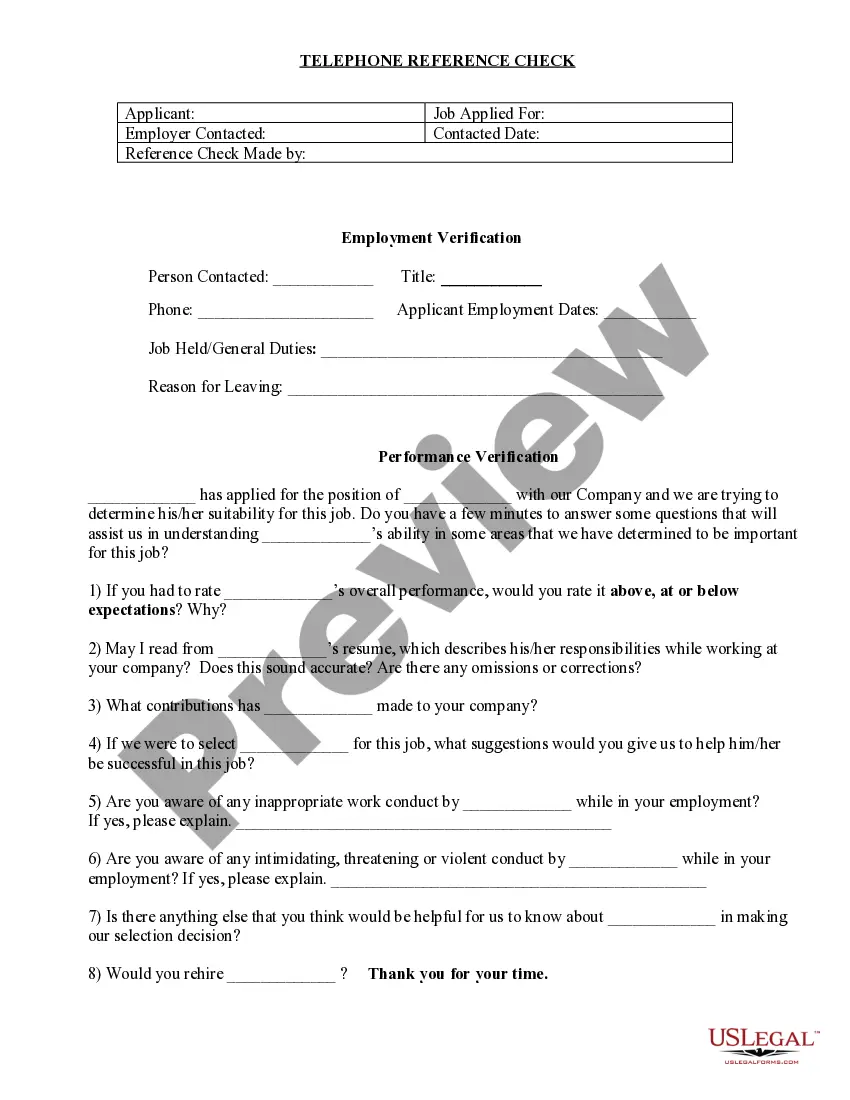
HOW TO CONDUCT REFERENCE CHECKSIdentify yourself, your title, organization name and tell them you are calling about a reference for a candidate you are considering.Ask if now is a good time to talk or whether they would rather schedule a call at a later time.More items...
Remember this: When a hiring company makes a call to your references, it's almost always a good signso you can breathe easy. A reference check typically means a hiring manager is near-ready to extend an offer to a candidate, and they want one final confirmation that you are the right fit for their team, Foss says.
Most hiring personnel choose to conduct a reference check over the phone so they can ask follow-up questions or request clarification. However, calling references can be time-consuming, so recruiters often resort to contacting references by email.
HOW TO CONDUCT REFERENCE CHECKSIdentify yourself, your title, organization name and tell them you are calling about a reference for a candidate you are considering.Ask if now is a good time to talk or whether they would rather schedule a call at a later time.More items...
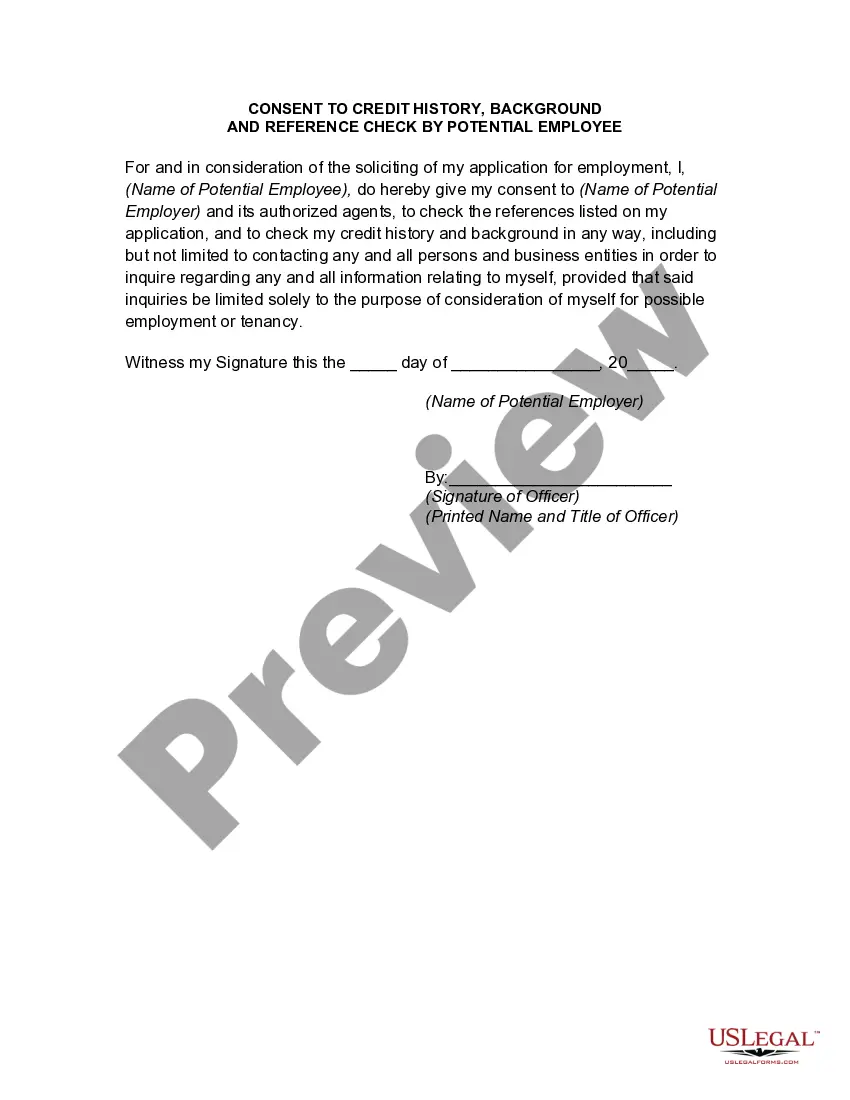
Candidates should have given permission, generally, for reference checking to be conducted. Reference checkers should not reach out to anyone the candidate has expressly asked not be contacted. Reference checkers should not contact references from a candidate's current employer without express permission.
Most employers ask for references by phone. But some candidates may request a letter of reference or recommendation. You may want to provide a reference letter if you're retiring or if you or the job seeker have moved.
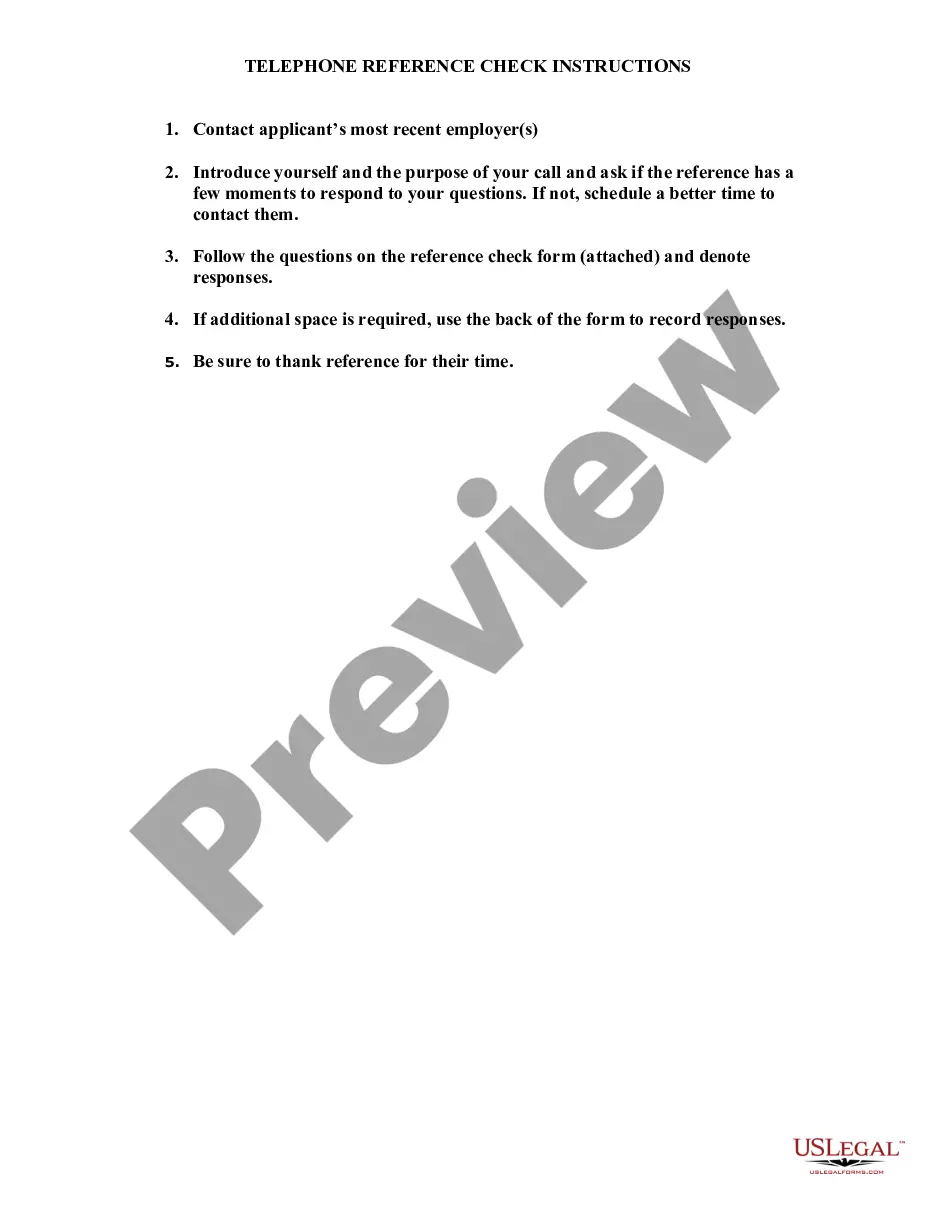
Purpose: A reference check is a valuable tool in the recruitment process to verify facts and obtain additional information about the candidate. All sections should be completed to be considered a valid reference. Indicate N/A if the question is not applicable.
Candidates should have given permission, generally, for reference checking to be conducted. Reference checkers should not reach out to anyone the candidate has expressly asked not be contacted. Reference checkers should not contact references from a candidate's current employer without express permission.