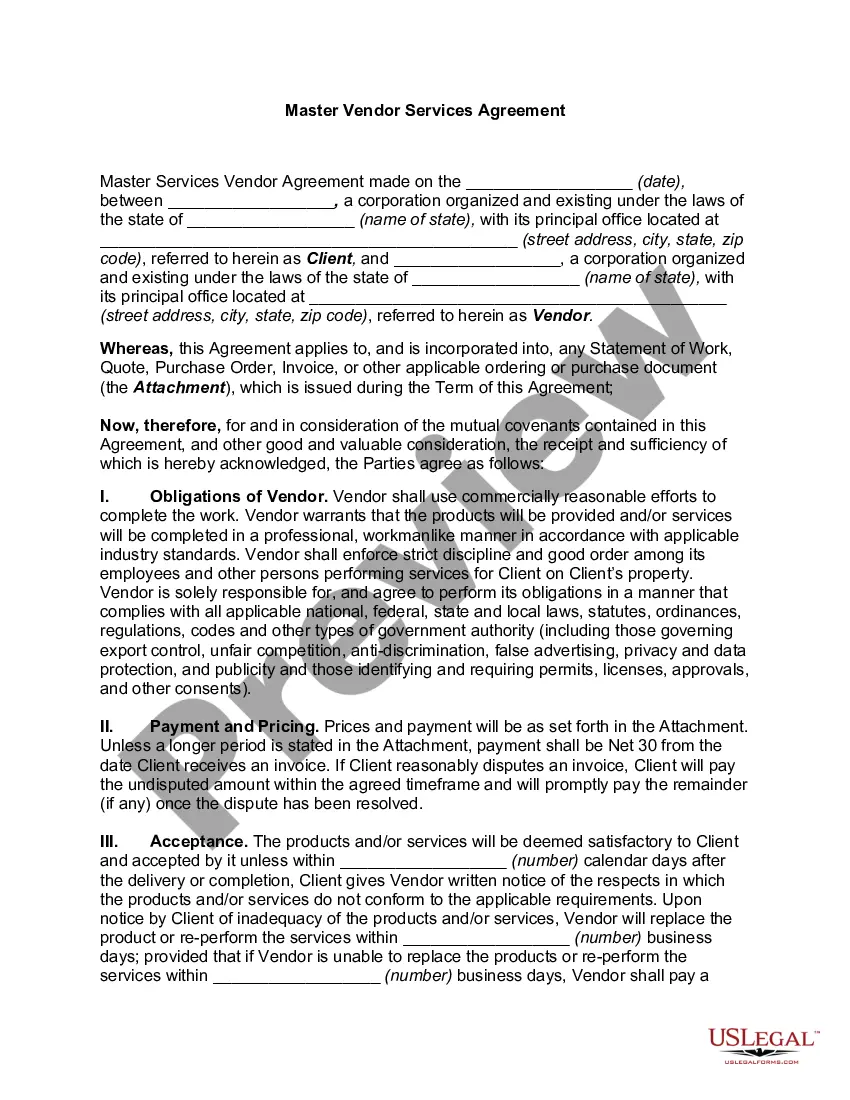
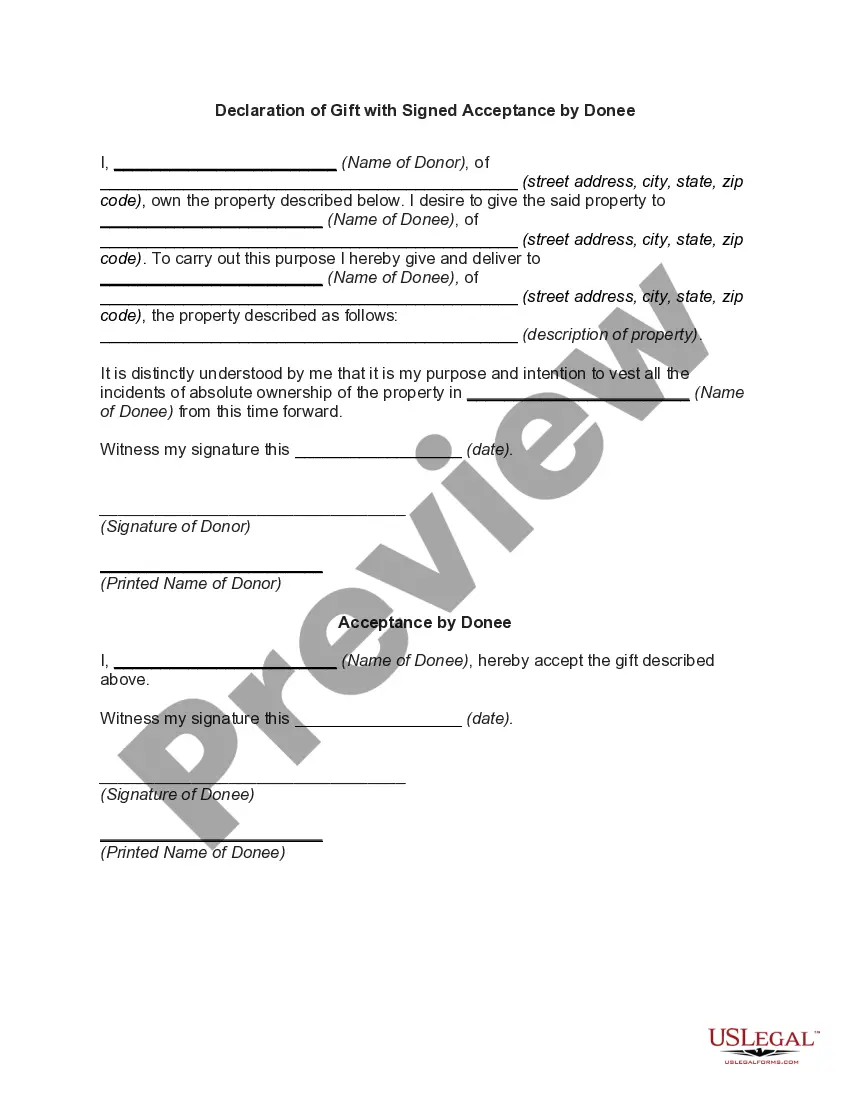
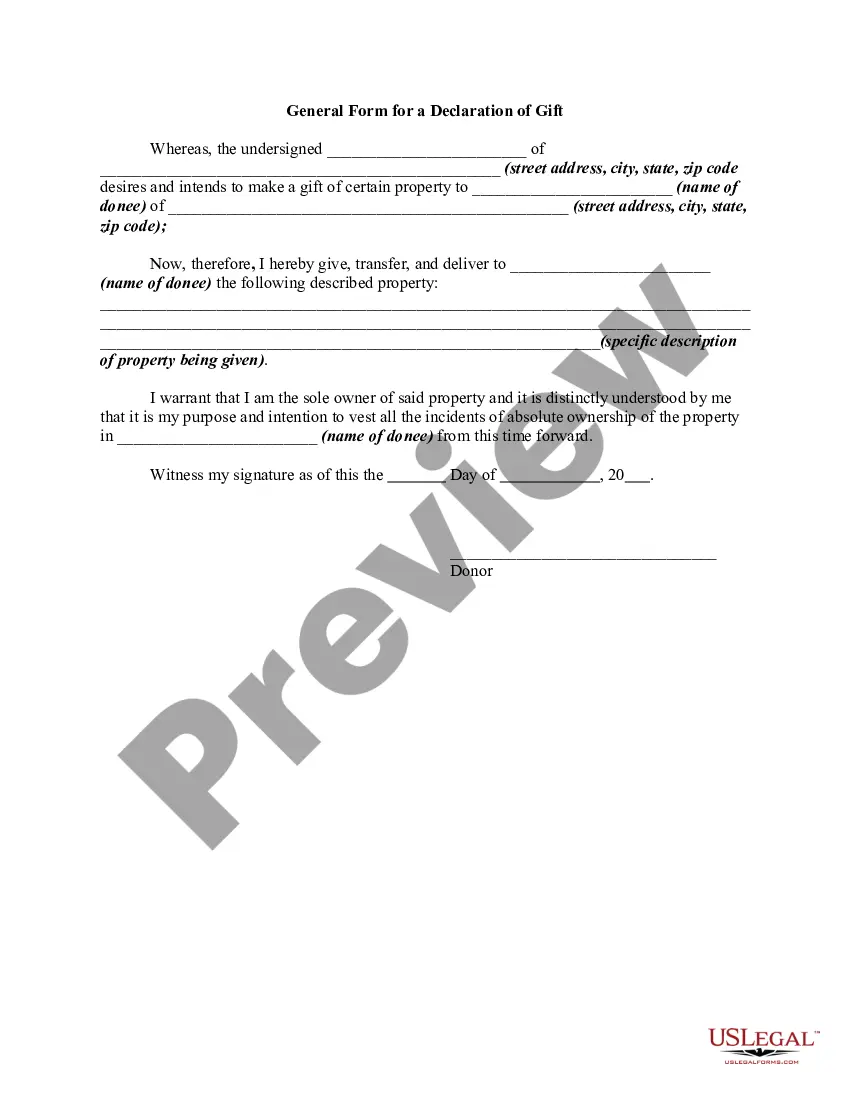
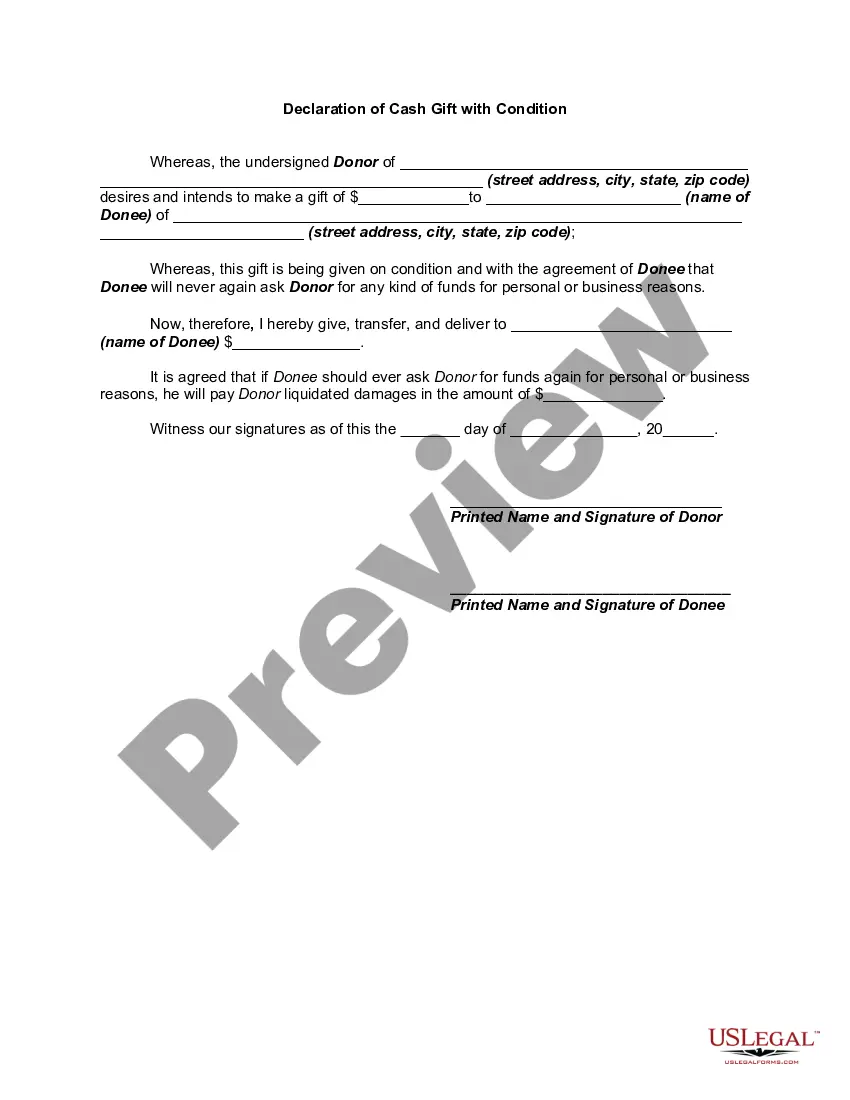
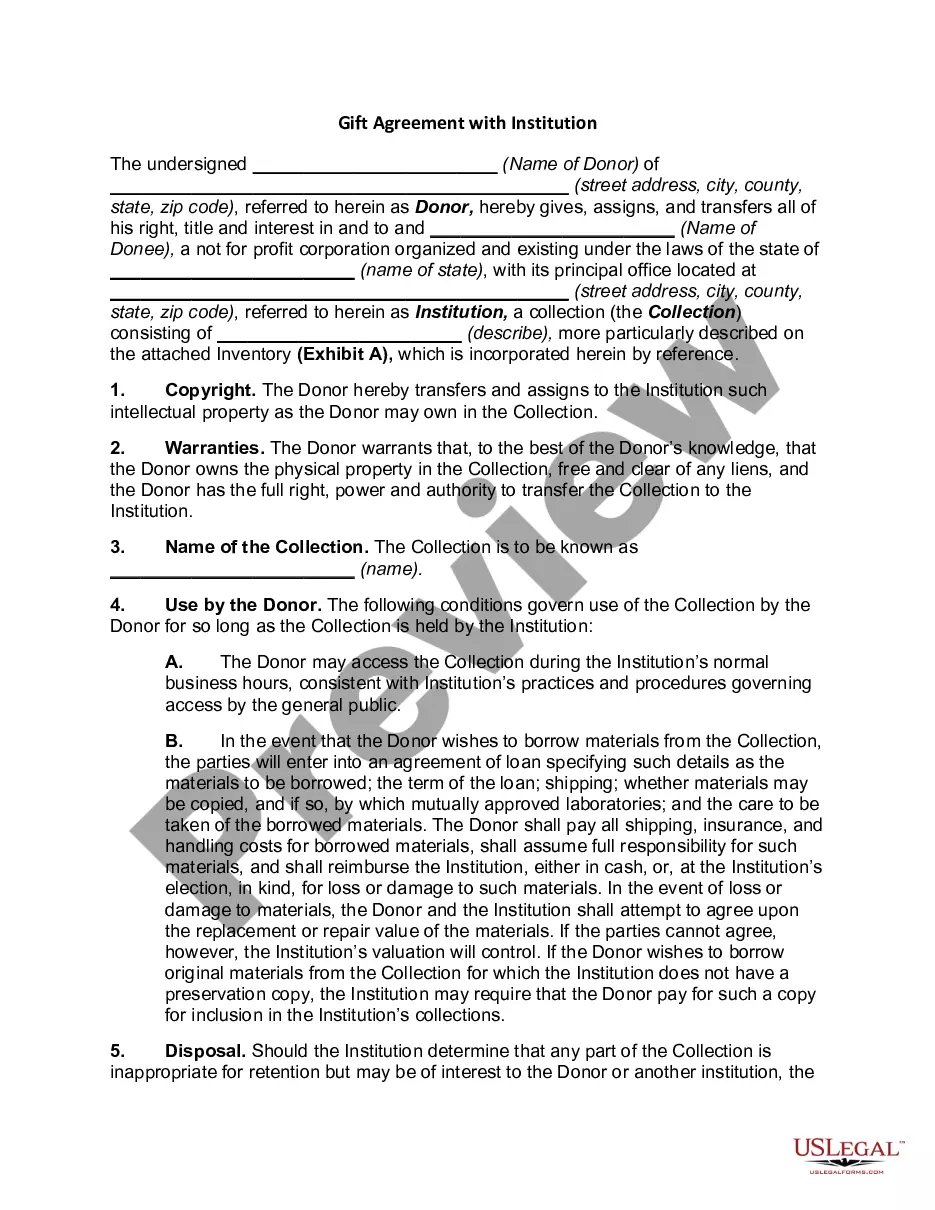
Oklahoma Declaration of Gift with Signed Acceptance by Donee
Description
Get your form ready online
Our built-in tools help you complete, sign, share, and store your documents in one place.
Make edits, fill in missing information, and update formatting in US Legal Forms—just like you would in MS Word.
Download a copy, print it, send it by email, or mail it via USPS—whatever works best for your next step.
Sign and collect signatures with our SignNow integration. Send to multiple recipients, set reminders, and more. Go Premium to unlock E-Sign.
If this form requires notarization, complete it online through a secure video call—no need to meet a notary in person or wait for an appointment.
We protect your documents and personal data by following strict security and privacy standards.

Make edits, fill in missing information, and update formatting in US Legal Forms—just like you would in MS Word.

Download a copy, print it, send it by email, or mail it via USPS—whatever works best for your next step.

Sign and collect signatures with our SignNow integration. Send to multiple recipients, set reminders, and more. Go Premium to unlock E-Sign.

If this form requires notarization, complete it online through a secure video call—no need to meet a notary in person or wait for an appointment.

We protect your documents and personal data by following strict security and privacy standards.
Looking for another form?



How to fill out Declaration Of Gift With Signed Acceptance By Donee?
If you need to comprehensive, obtain, or print legal document templates, use US Legal Forms, the largest collection of legal forms available online.
Utilize the site's straightforward and convenient search feature to find the documents you require.
Various templates for commercial and personal use are organized by categories and states, or keywords.
Step 4. Once you have located the form you need, click the Get Now button. Choose the pricing plan you prefer and provide your information to register for an account.
Step 5. Process the transaction. You can use your credit card or PayPal account to complete the payment.
- Use US Legal Forms to locate the Oklahoma Declaration of Gift with Signed Acceptance by Donee in just a few clicks.
- If you are already a US Legal Forms member, Log Into your account and click the Download button to access the Oklahoma Declaration of Gift with Signed Acceptance by Donee.
- You can also access forms you previously downloaded in the My documents section of your account.
- If you are using US Legal Forms for the first time, follow the steps outlined below.
- Step 1. Ensure that you have selected the correct form for your city/state.
- Step 2. Use the Review option to examine the content of the form. Be sure to read the description.
- Step 3. If you are not satisfied with the form, use the Search field at the top of the page to find other templates in the legal form library.
Form popularity
FAQ
Include the property address and its legal description, and identify by name the grantor(s) and the grantee(s). Make copies of the deed and record the deed transfer with the assessor's office in the county where the property is located.
Who pays the gift tax? The donor is generally responsible for paying the gift tax. Under special arrangements the donee may agree to pay the tax instead.
An Oklahoma deed is a legal form that can be used to transfer interests in real property, or land and buildings, from one owner to another. Deeds are required to list the seller (grantor) and the buyer (grantee), legal description of the property, and a notary acknowledgment.
A valid gift requires: (1) a competent donor; (2) an eligible donee; (3) an existing identifiable thing or interest; (4) an intention to donate; (5) delivery; i.e., a transfer of possession to or for the donee and a relinquishment by the donor of ownership, control, and power to revoke (except in gifts mortis causa;
You make a gift if you give property (including money), or the use of or income from property, without expecting to receive something of at least equal value in return. If you sell something at less than its full value or if you make an interest-free or reduced-interest loan, you may be making a gift.
A gift, if valid, is a legally enforceable transfer under general contract law. That means, if a gift meets all of the legal elements of a valid gift, then the gift is enforceable and cannot generally be rescinded and revoked.
Title transfer fees in Oklahoma are relatively affordable compared to other states. You'll need to pay a $17.00 ownership transfer fee to successfully have your title transferred.
The person who makes a gift is known as the donor. The person who receives a gift is known as the donee. There are three basic time periods during which a person can make a gift.
A gift, if valid, is a legally enforceable transfer under general contract law. That means, if a gift meets all of the legal elements of a valid gift, then the gift is enforceable and cannot generally be rescinded and revoked.
A donee may also be a person who is unable to express acceptance. A gift can be made to a child and could be accepted on the child's behalf. The donee must be an ascertainable person. A gift involves the process of giving and taking which are two simultaneous and reciprocal acts.