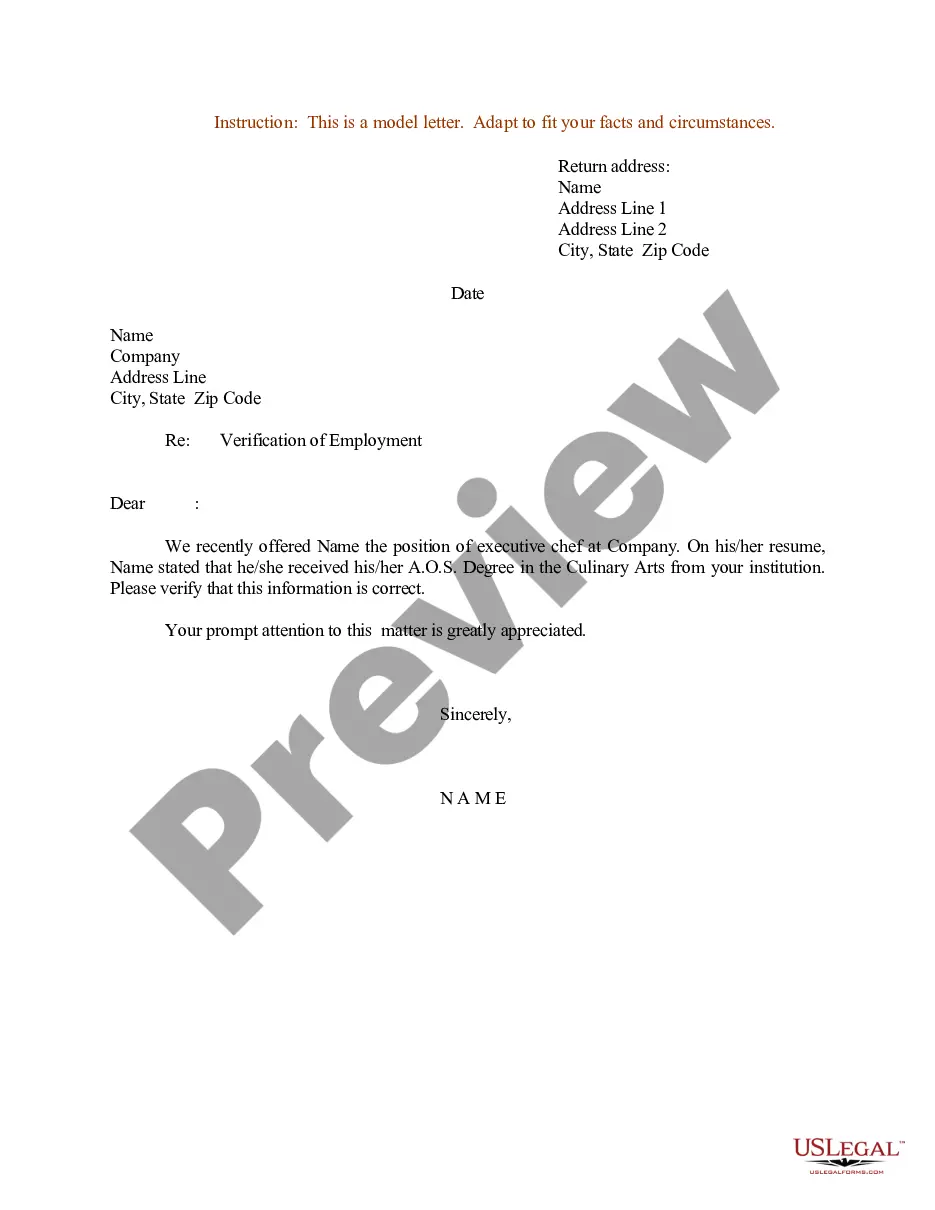
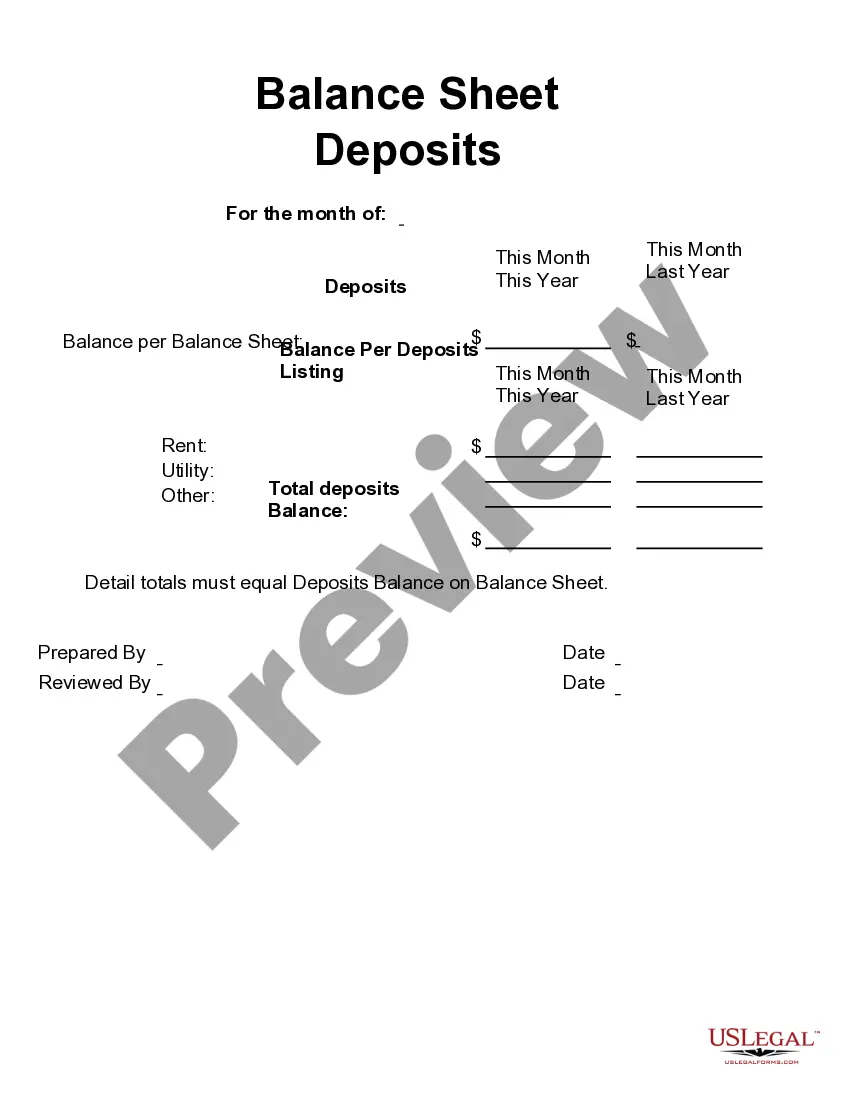
This form is a business type form that is formatted to allow you to complete the form using Adobe Acrobat or Word. The word files have been formatted to allow completion by entry into fields. Some of the forms under this category are rather simple while others are more complex. The formatting is worth the small cost.
Oklahoma Balance Sheet Deposits
Category:
State:
Multi-State
Control #:
US-122-AZ
Format:
Word;
PDF;
Rich Text
Instant download
Description
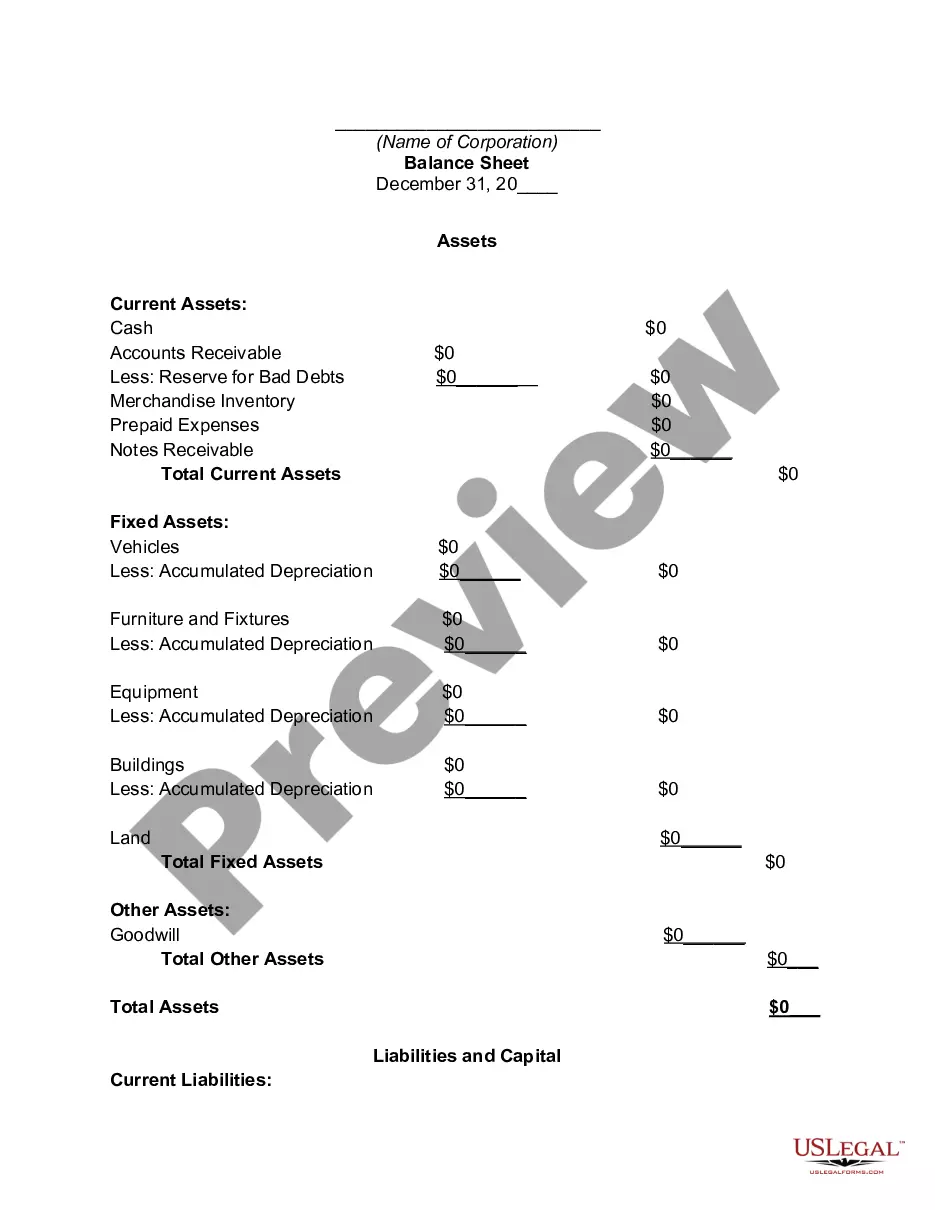
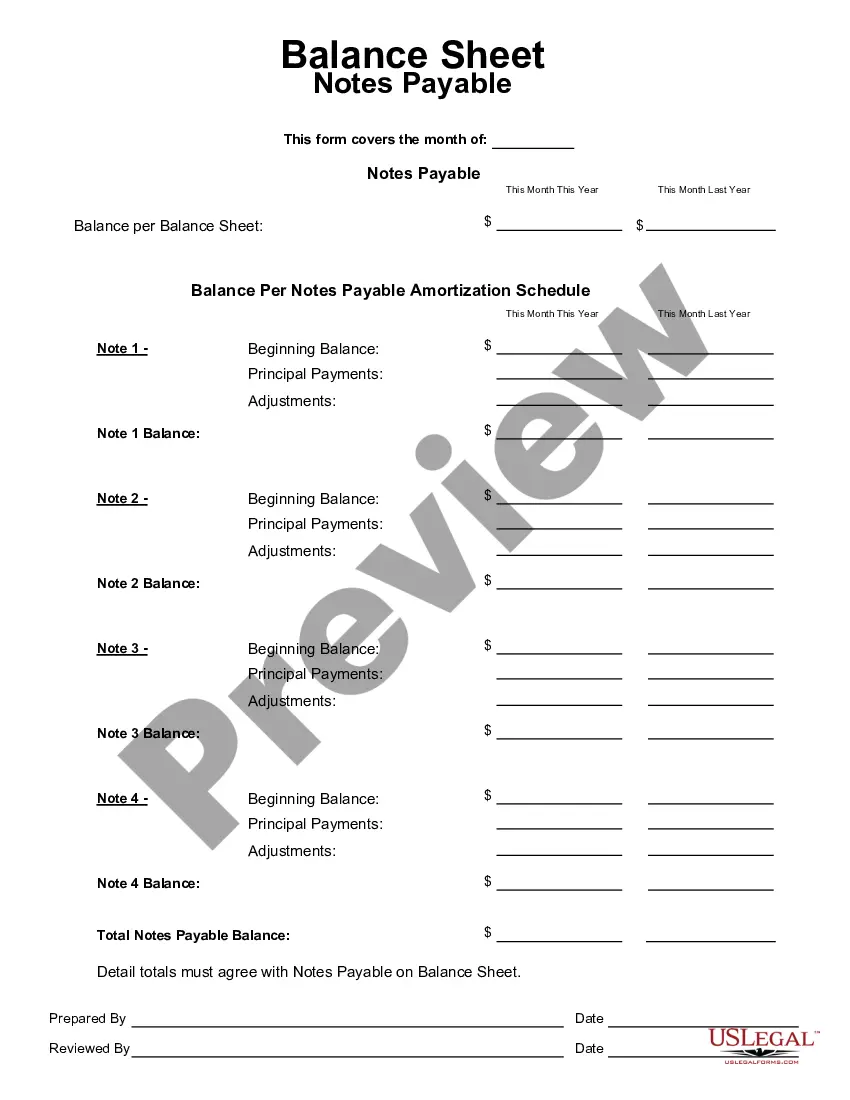
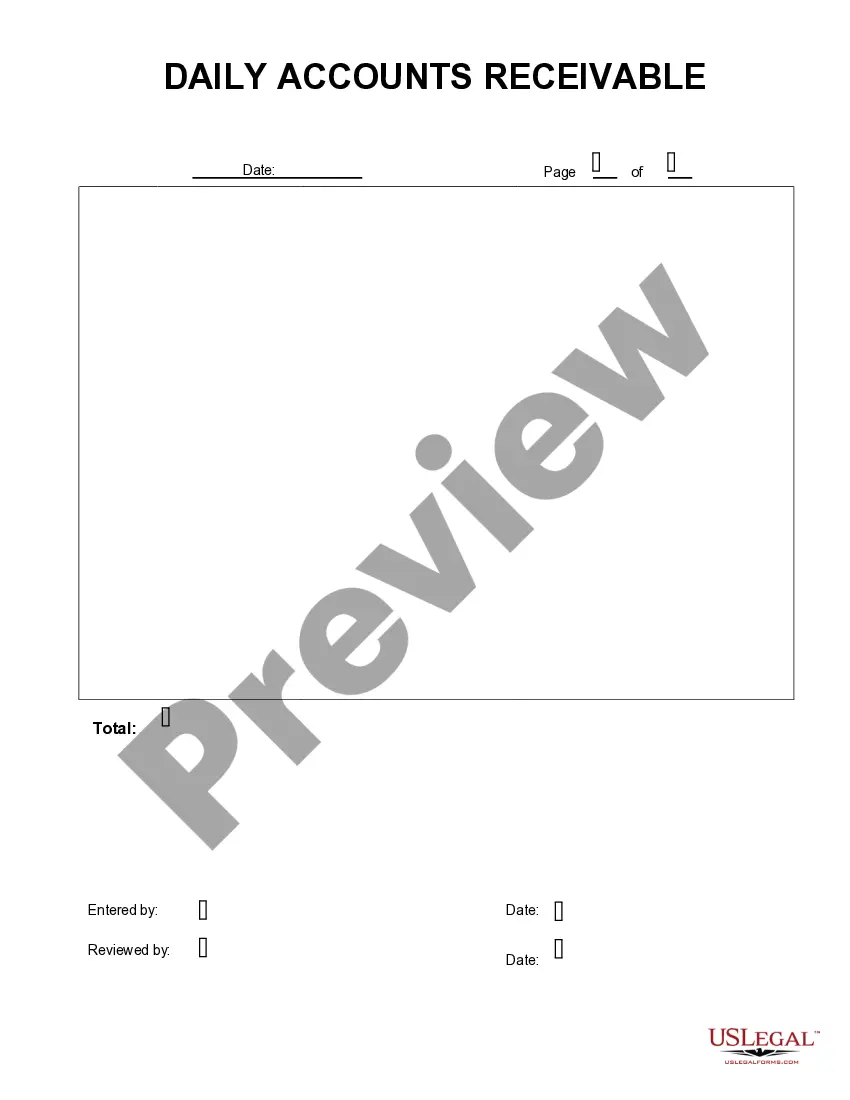
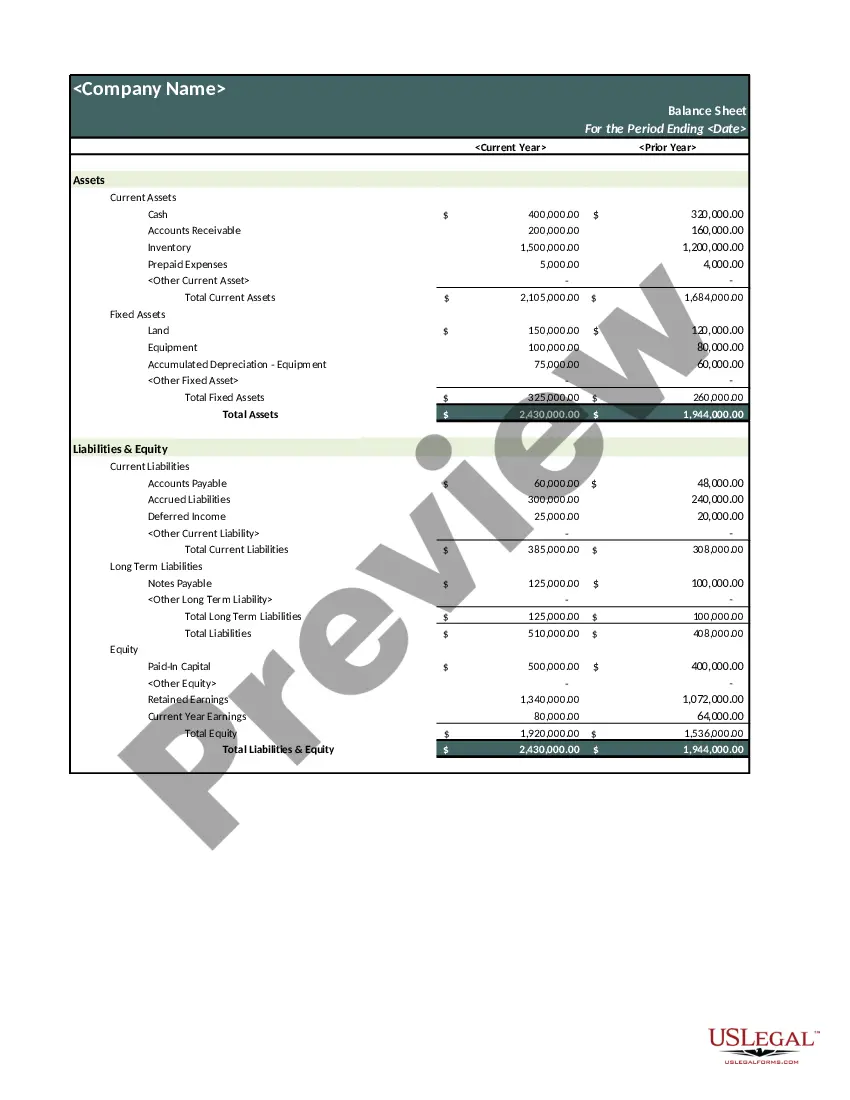
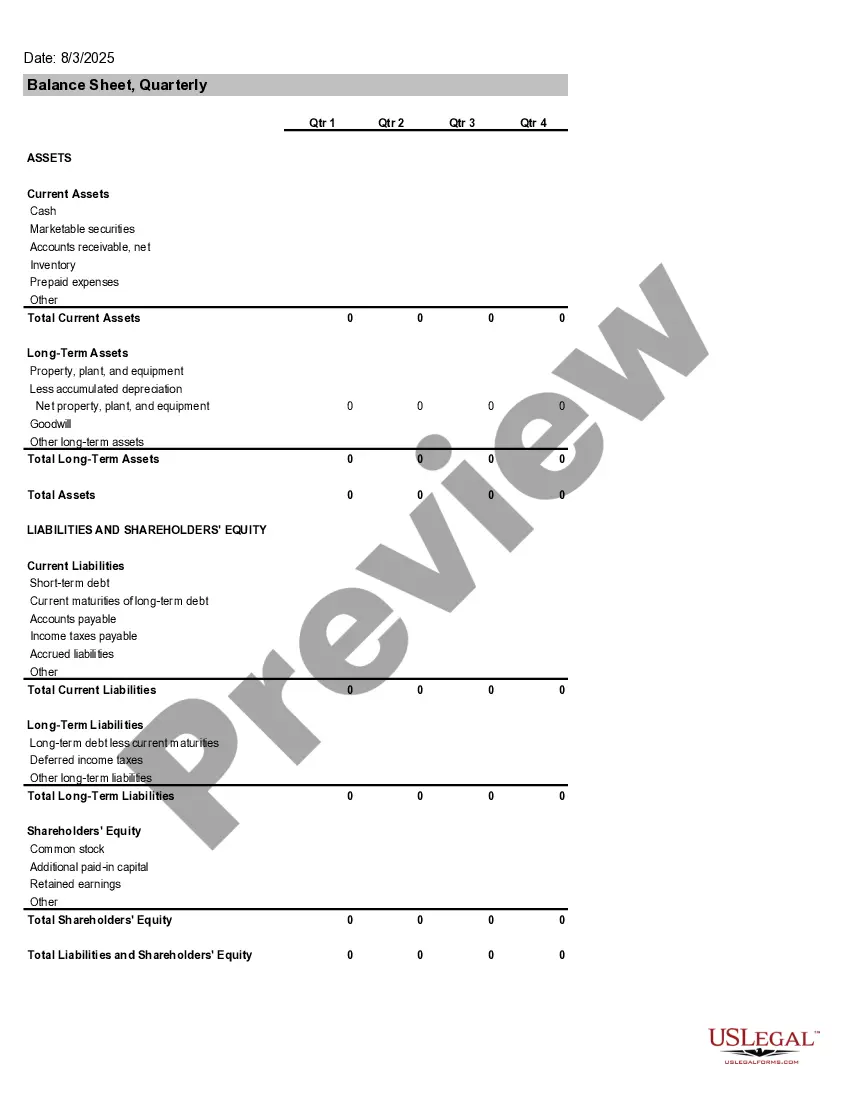

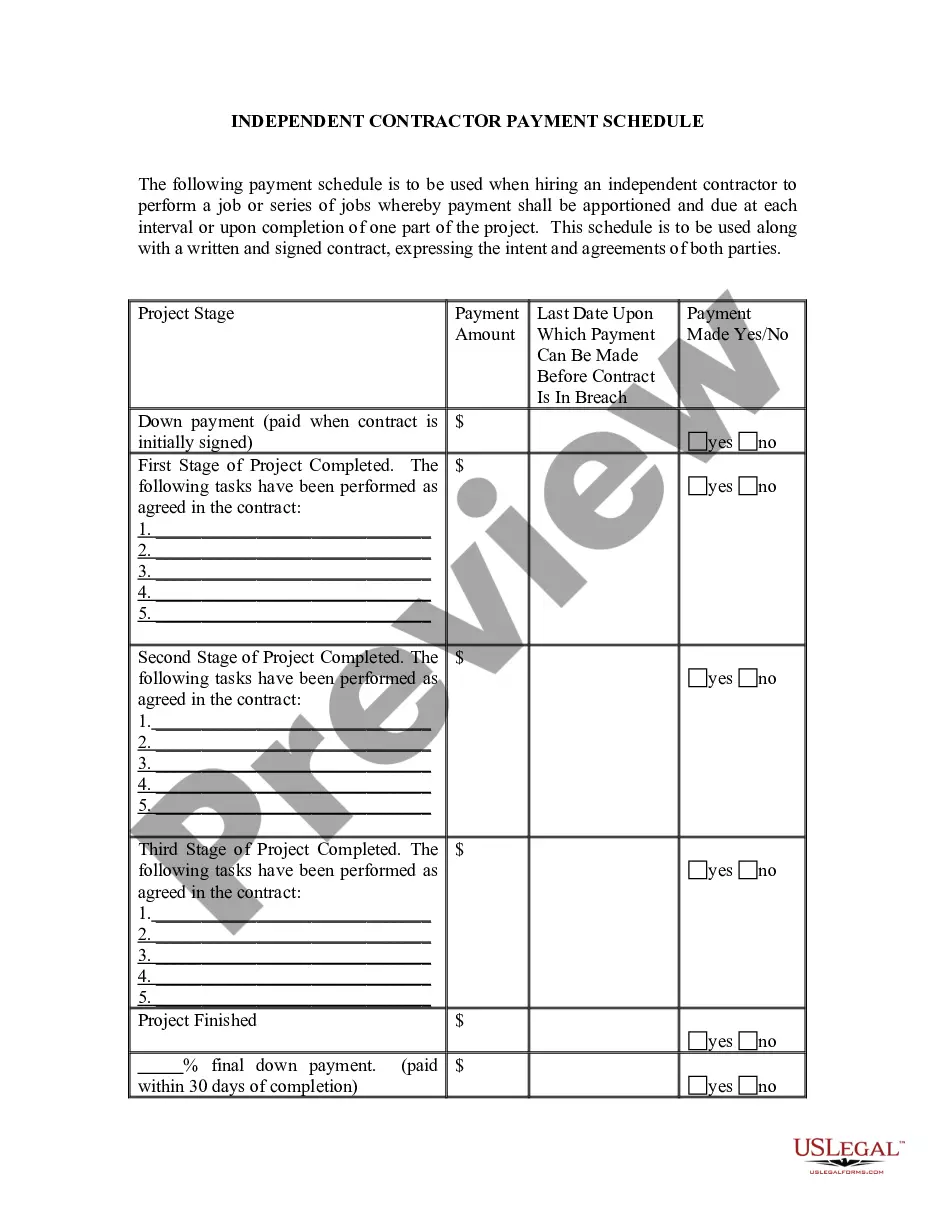



How to fill out Balance Sheet Deposits?
Have you been in a situation where you require documents for either business or personal purposes on a daily basis.
There are numerous document templates accessible online, but locating trustworthy ones can be challenging.
US Legal Forms provides a vast array of form templates, including the Oklahoma Balance Sheet Deposits, which can be customized to meet state and federal requirements.
Use US Legal Forms, one of the most extensive collections of legal forms, to save time and avoid mistakes.
The service offers professionally designed legal document templates that can be used for various purposes. Create an account on US Legal Forms and start simplifying your life.
- If you are already familiar with the US Legal Forms website and have an account, simply Log In.
- After that, you can download the Oklahoma Balance Sheet Deposits template.
- If you do not have an account and wish to use US Legal Forms, follow these steps.
- Find the form you need and ensure it is for the correct city/state.
- Utilize the Preview button to review the form.
- Check the description to confirm you have selected the correct form.
- If the form is not what you're looking for, use the Search field to find a form that meets your needs.
- Once you find the correct form, click Get now.
- Choose the pricing plan you prefer, fill in the required information to create your account, and pay for your order using your PayPal or credit card.
- Select a convenient file format and download your copy.
- You can find all the document templates you have purchased in the My documents menu. You can access an extra copy of the Oklahoma Balance Sheet Deposits whenever necessary. Simply select the required form to download or print the document template.
Form popularity
FAQ
Deposits should be placed in the liabilities section of your balance sheet. They can be categorized based on their nature, either as current or long-term liabilities. Properly recording Oklahoma Balance Sheet Deposits ensures accurate financial representation and assists in evaluating business liquidity.
The Accounting Process Involving Customer Deposits When a customer walks into a business entity, it will receive the customer deposit and record it as a liability. After delivery, you need to record on the balance sheet by debiting the liability to eliminate it.
Debit the cash account for the total amount of the deposit. Credit the applicable sales or service revenue account for the total amount of the deposit. Specify the bank account to which the deposit is being made in the "Name" section of the transaction if using accounting software.
Accounting for a Customer DepositThe company receiving a customer deposit initially records the deposit as a liability. Once the company performs under its contract with the customer, it debits the liability account to eliminate the liability, and credits a revenue account to record the sale.
Cost basis or book values are necessary for estimating depreciation and for calculating income while market values are necessary to determine owner's equity, collateral availability, and deferred tax liability.
Deposits is a current liability account in the general ledger, in which is stored the amount of funds paid by customers in advance of a product or service delivery. These funds are essentially down payments.
The deposit itself is a liability owed by the bank to the depositor. Bank deposits refer to this liability rather than to the actual funds that have been deposited. When someone opens a bank account and makes a cash deposit, he surrenders the legal title to the cash, and it becomes an asset of the bank.
In your accounting journal, debit the Cash account and credit the Customer Deposits account in the same amount. Send an invoice to the customer for the work after it has been completed. Note on the invoice the amount of the deposit previously paid and subtract it from the total amount owed.
The short answer is yes a term deposit is, indeed, an asset. Regardless that the funds are locked away for a fixed period, when it comes to the balance sheet, it's considered an asset.
However, for a bank, a deposit is a liability on its balance sheet whereas loans are assets because the bank pays depositors interest, but earns interest income from loans.