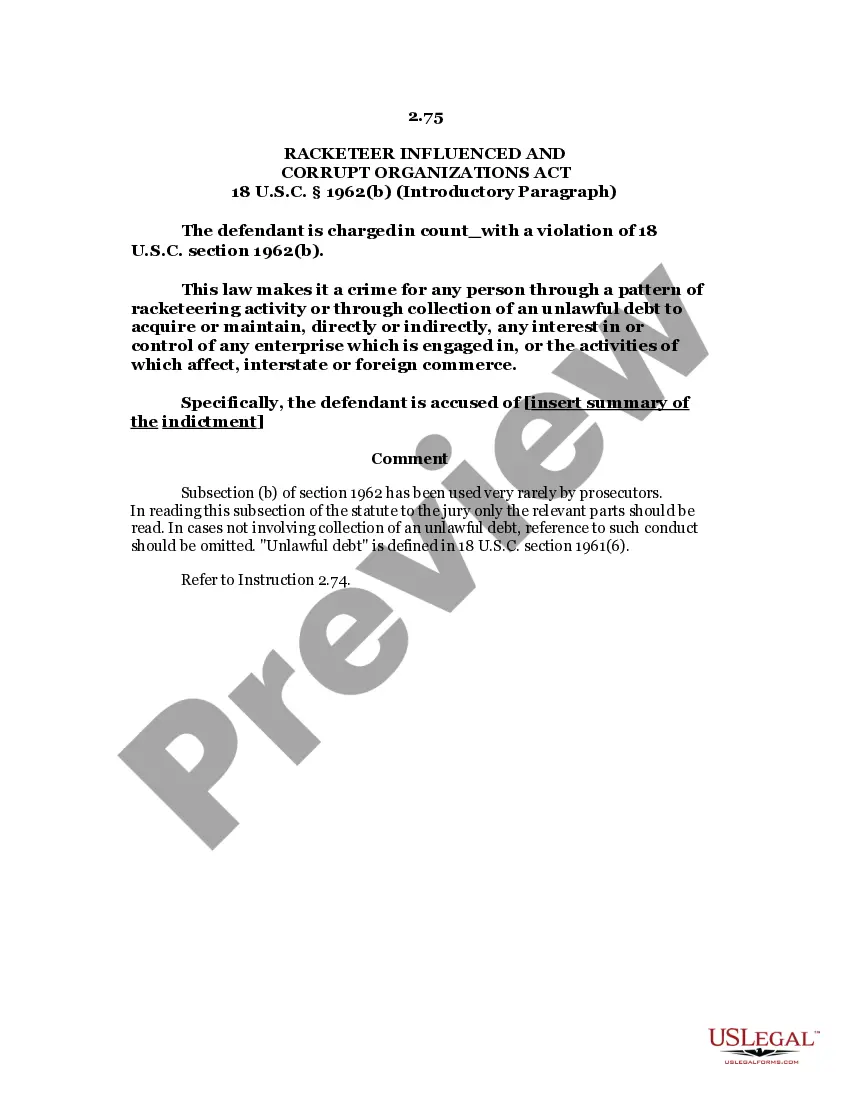
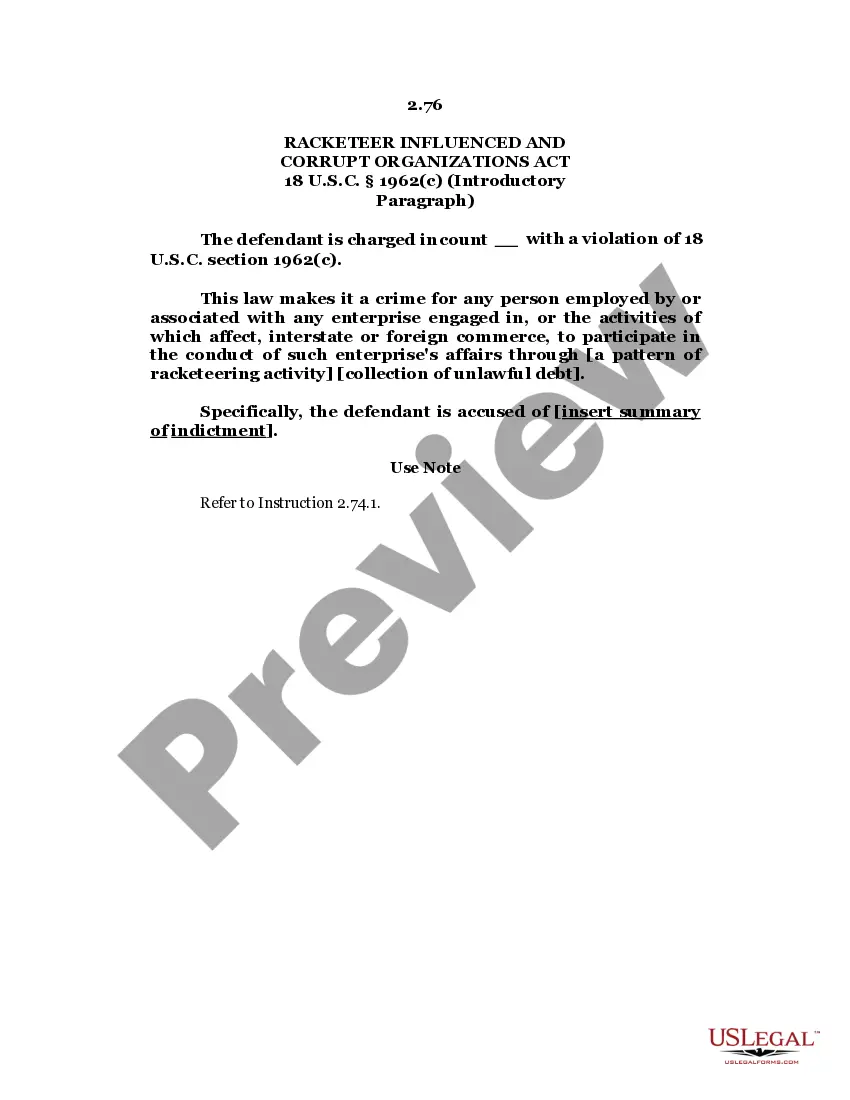
The decree of the bankruptcy court which terminates the bankruptcy proceedings is generally a discharge that releases the debtor from most debts. A bankruptcy court may refuse to grant a discharge under certain conditions.
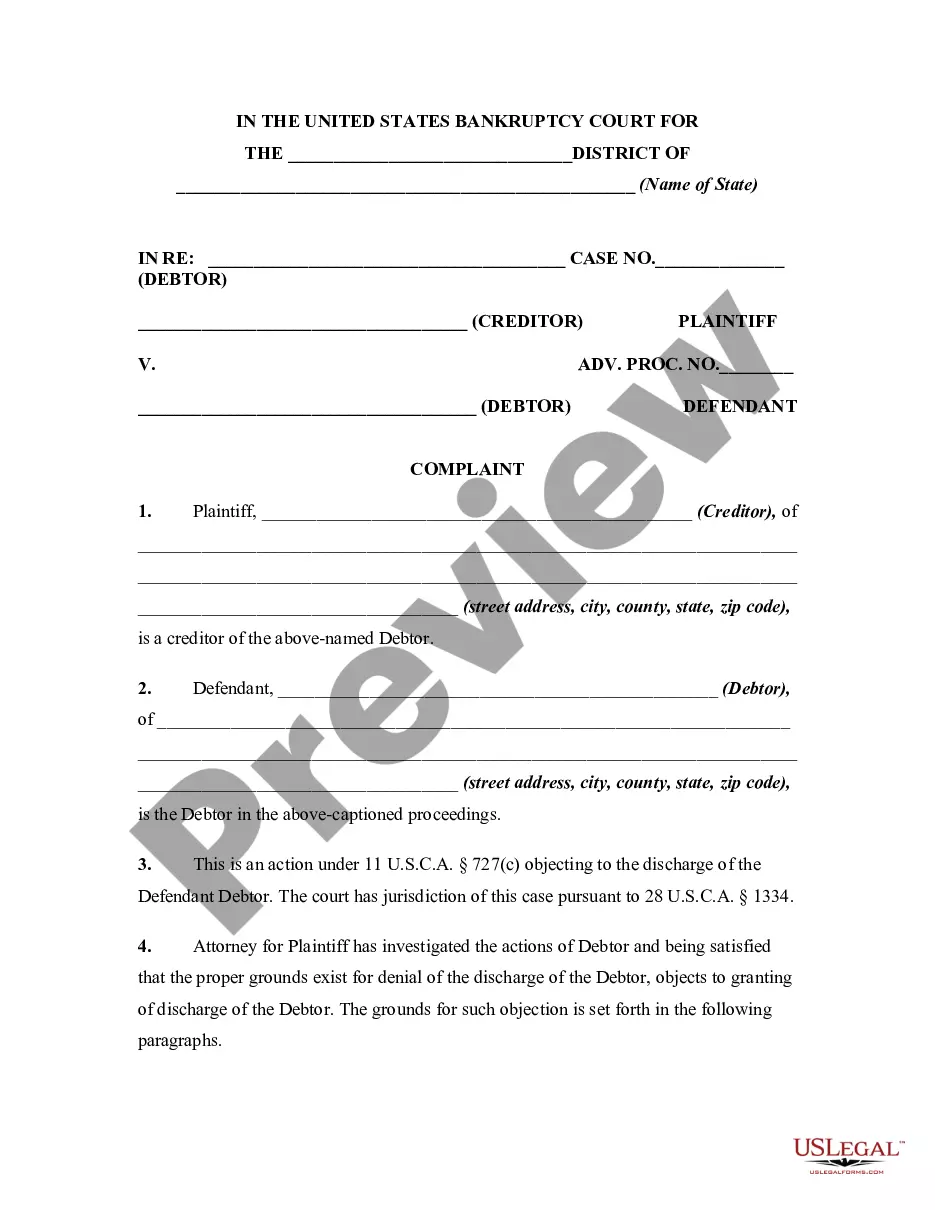
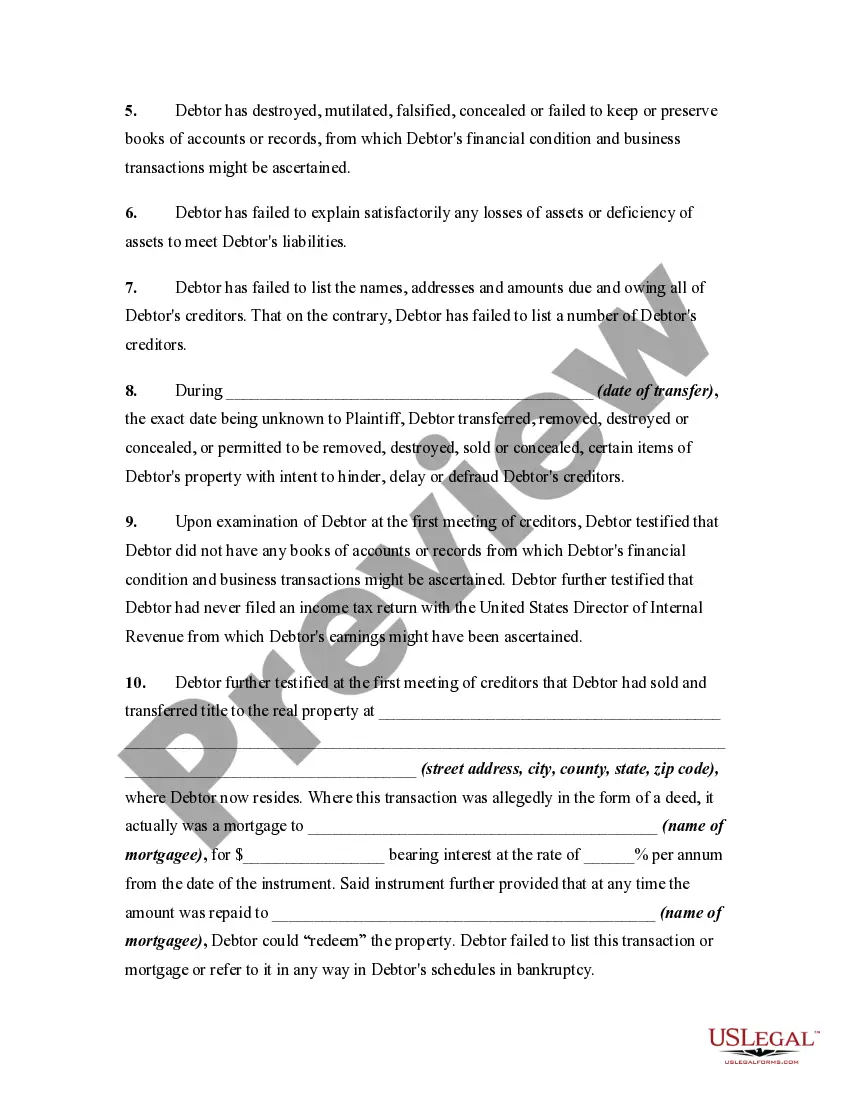
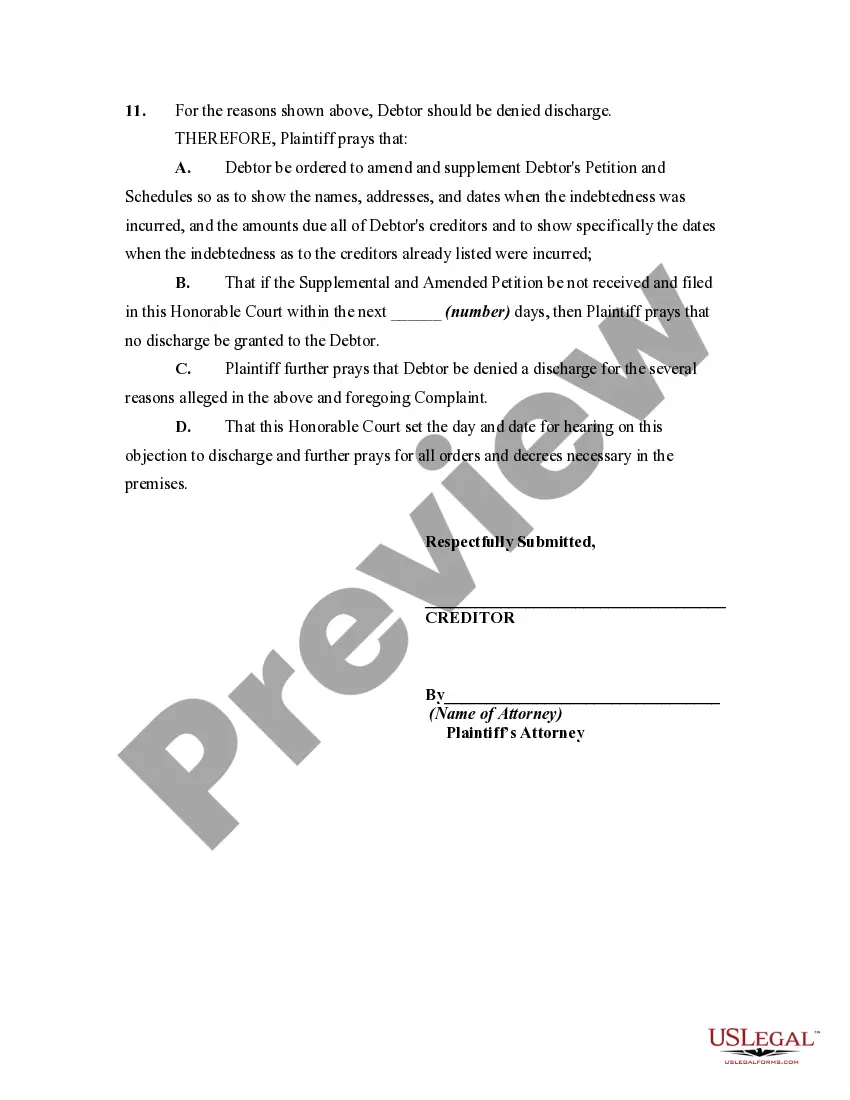
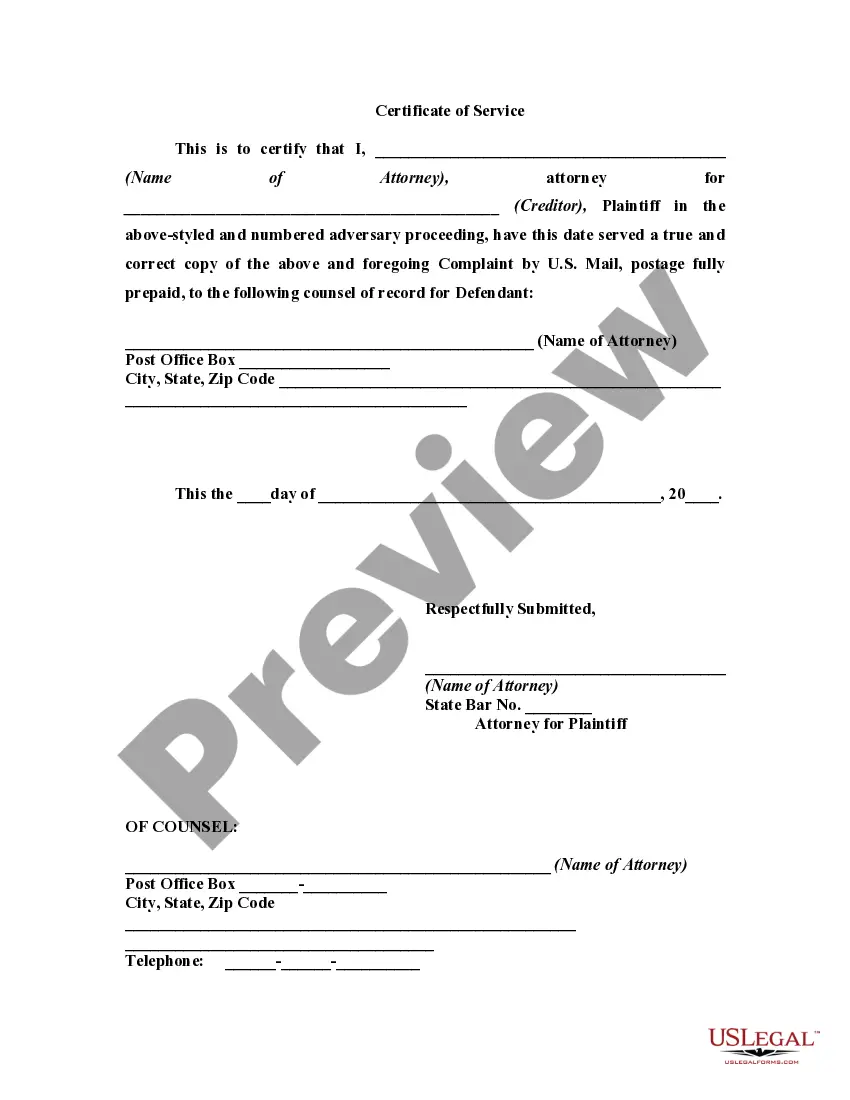
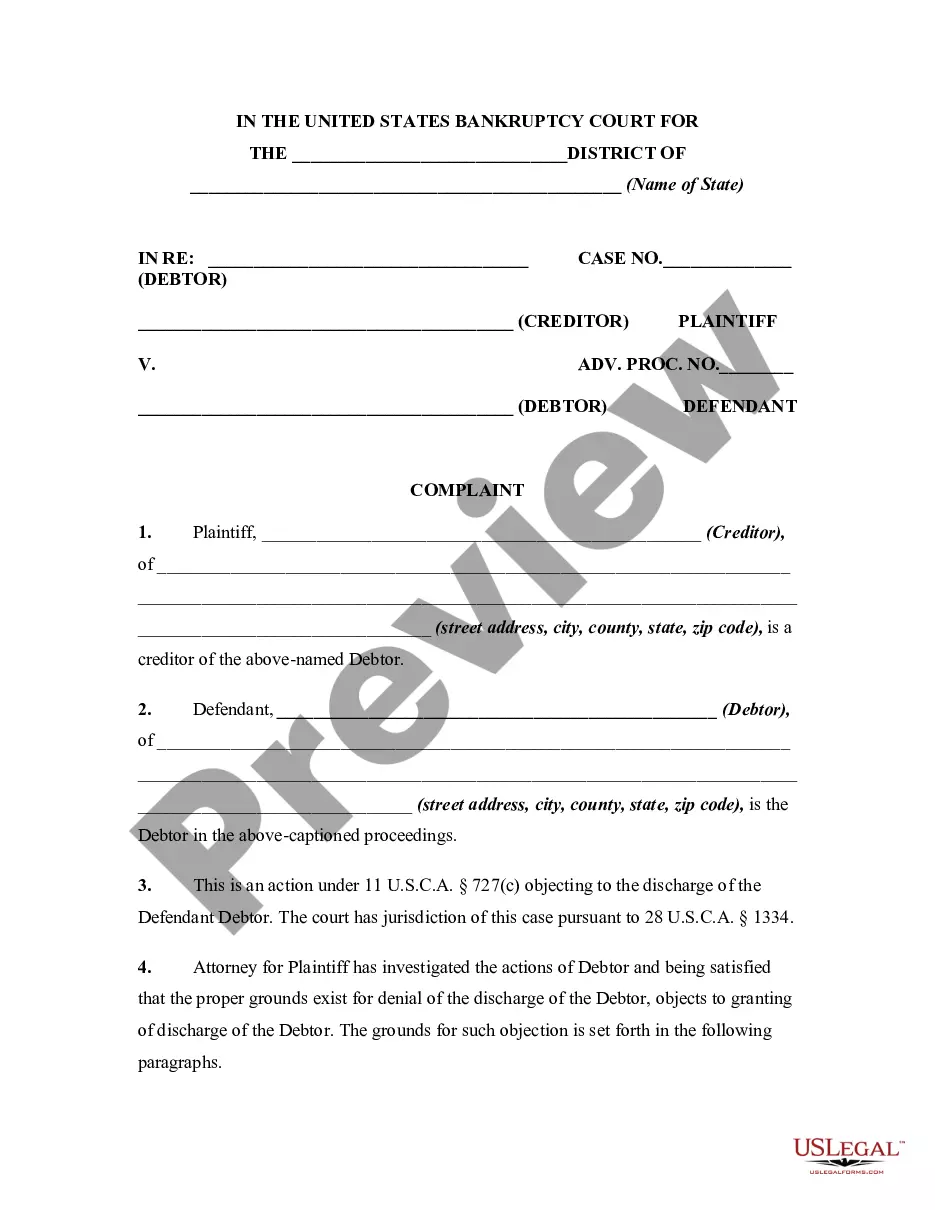
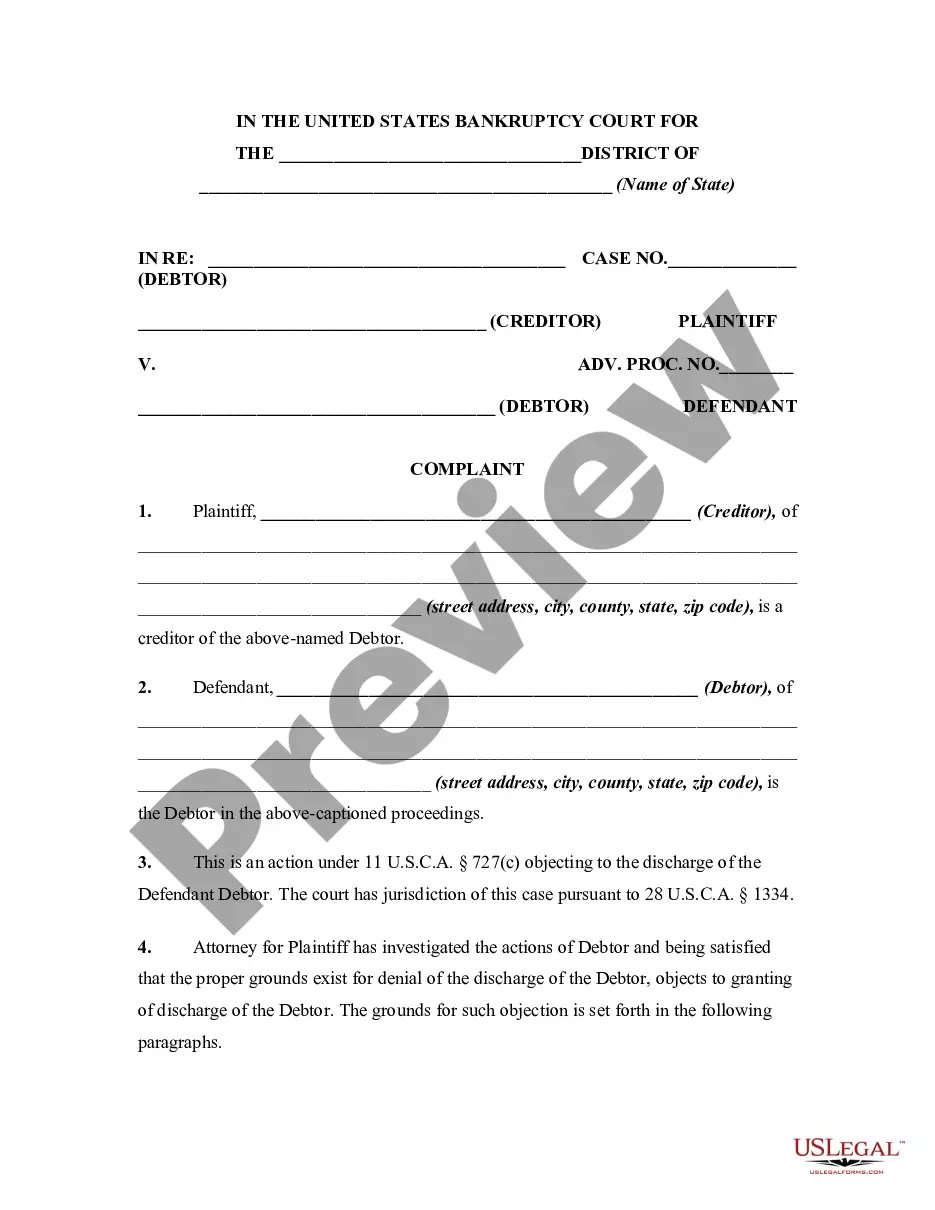
Oklahoma Complaint Objecting to Discharge in Bankruptcy Proceeding for Failure to Keep or Preserve Books or Records that Explains Loss or Deficiency in Assets,
State:
Multi-State
Control #:
US-01085BG
Format:
Word;
Rich Text
Instant download
Description
Free preview
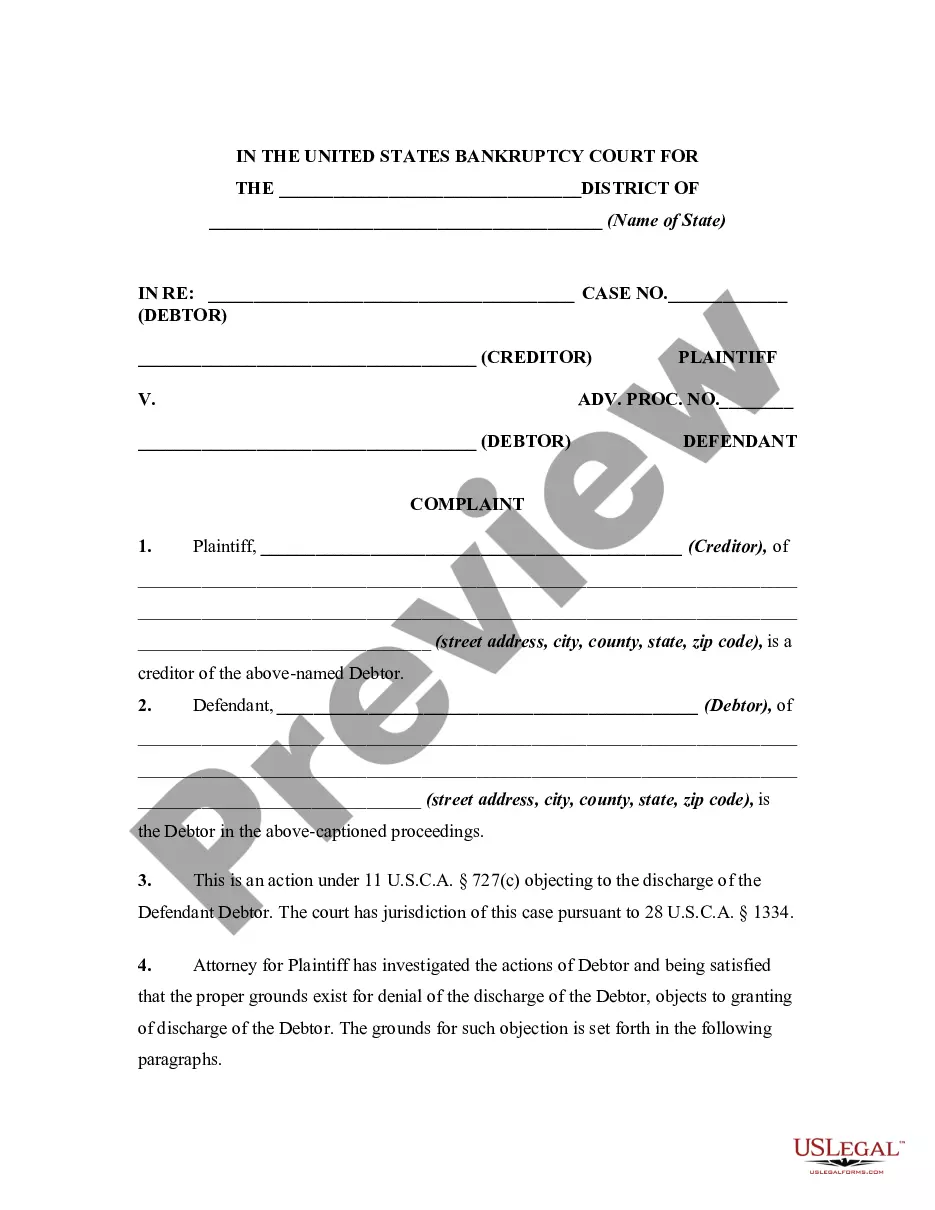
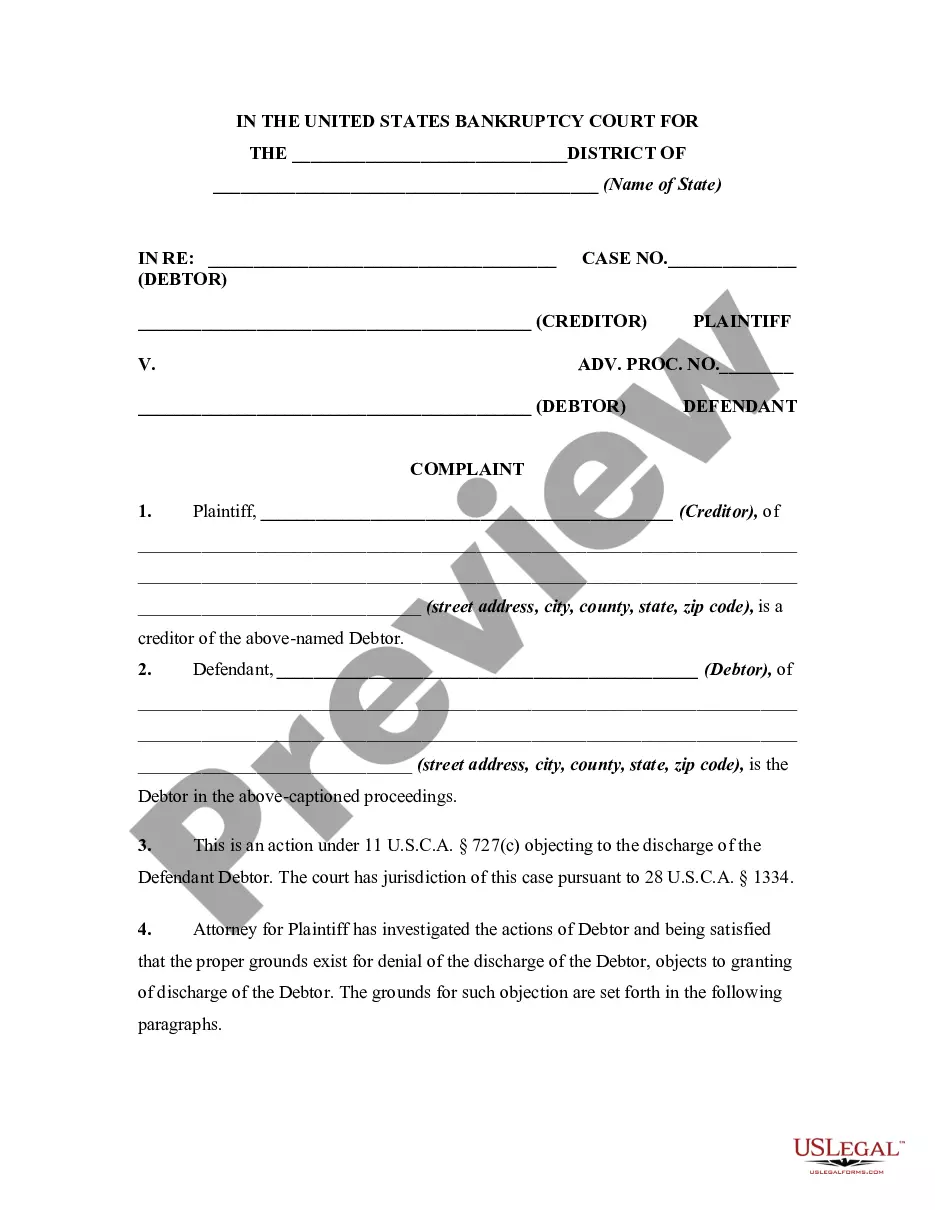
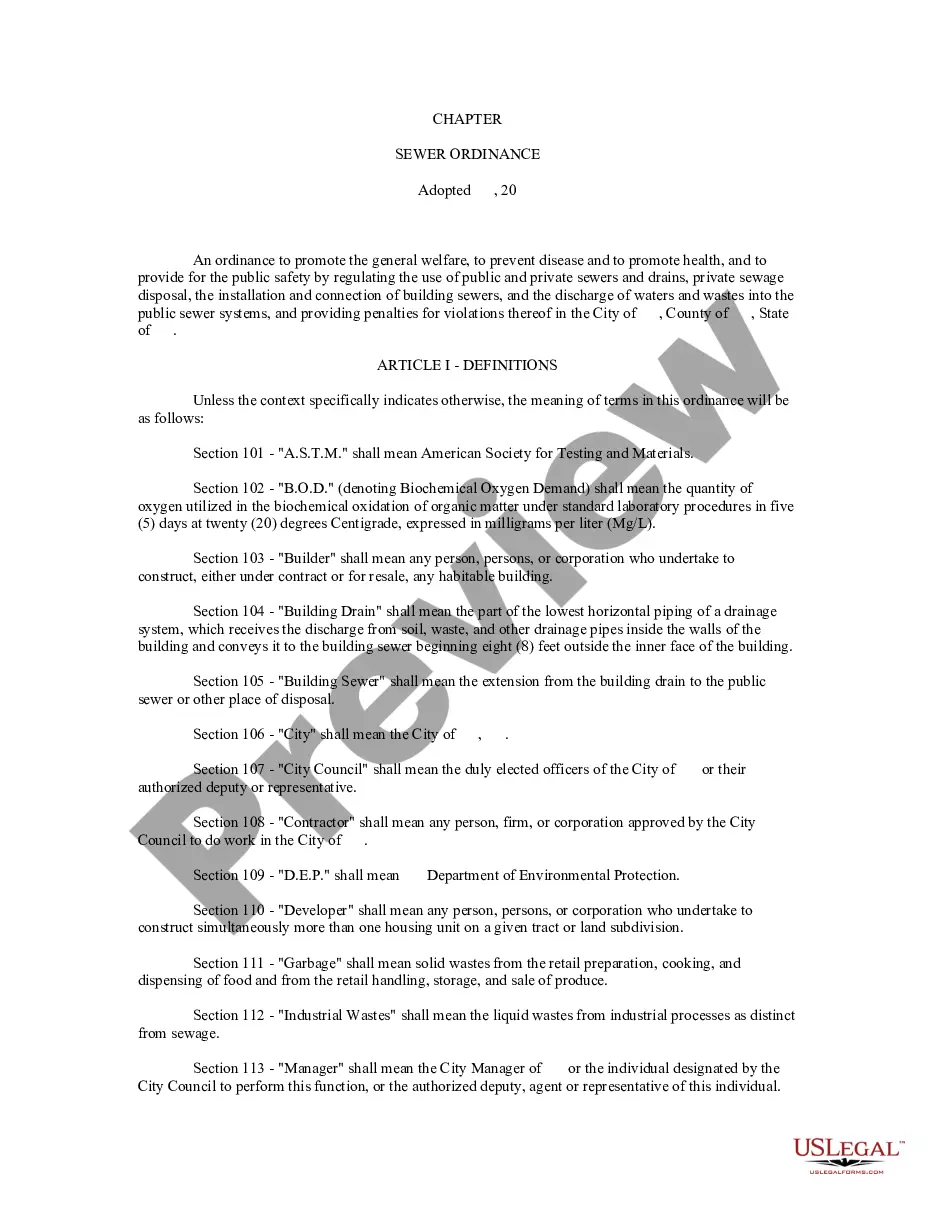
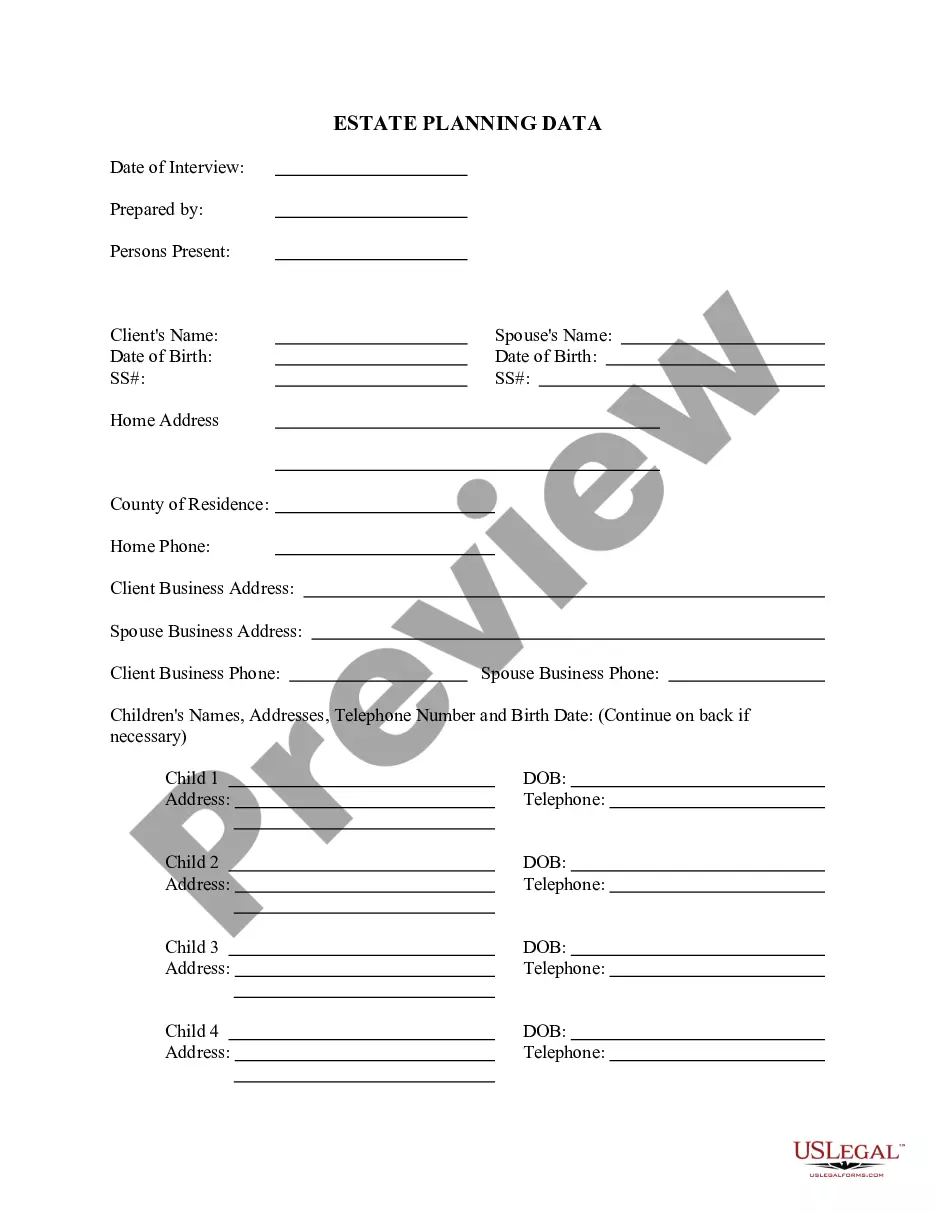

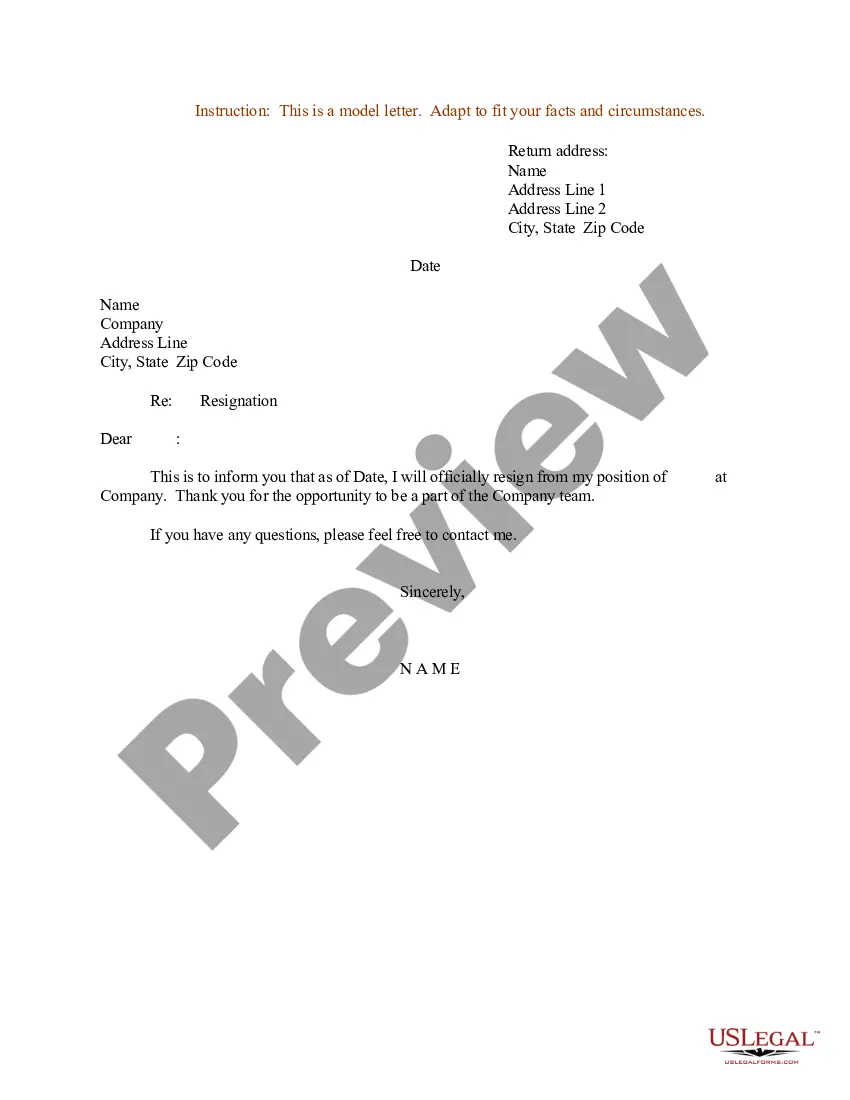
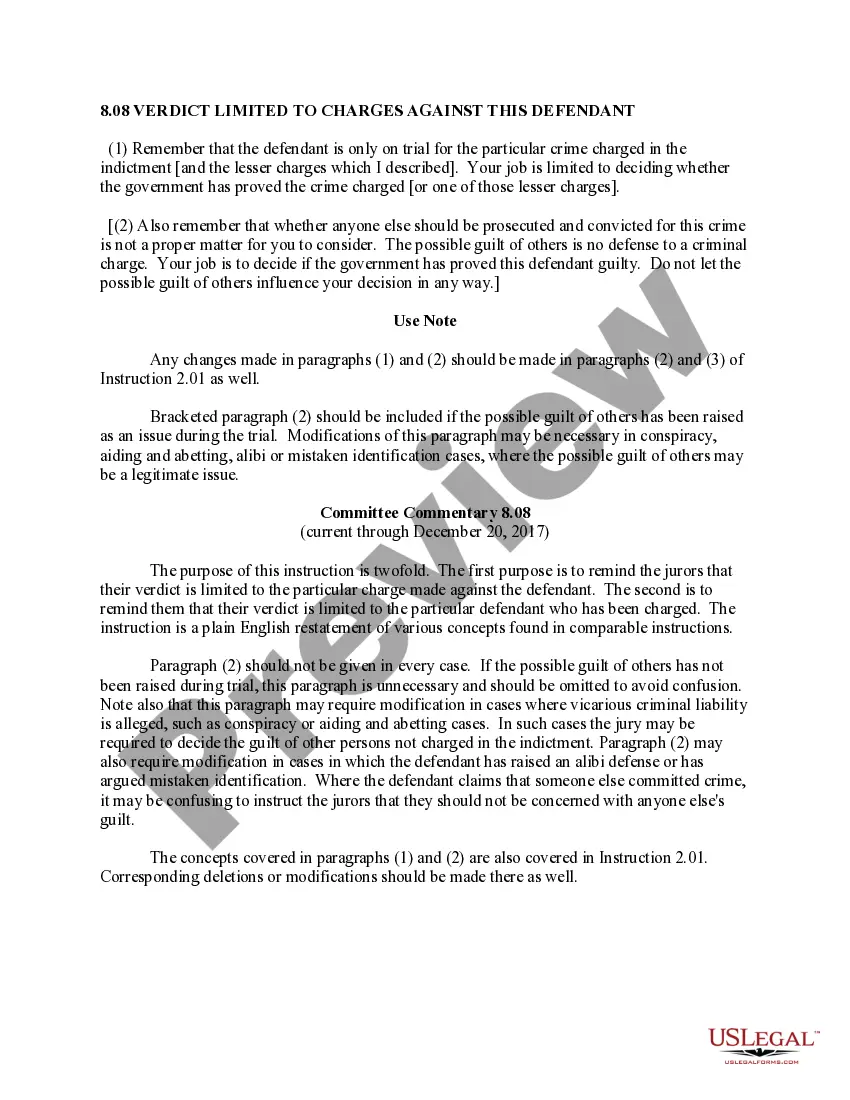
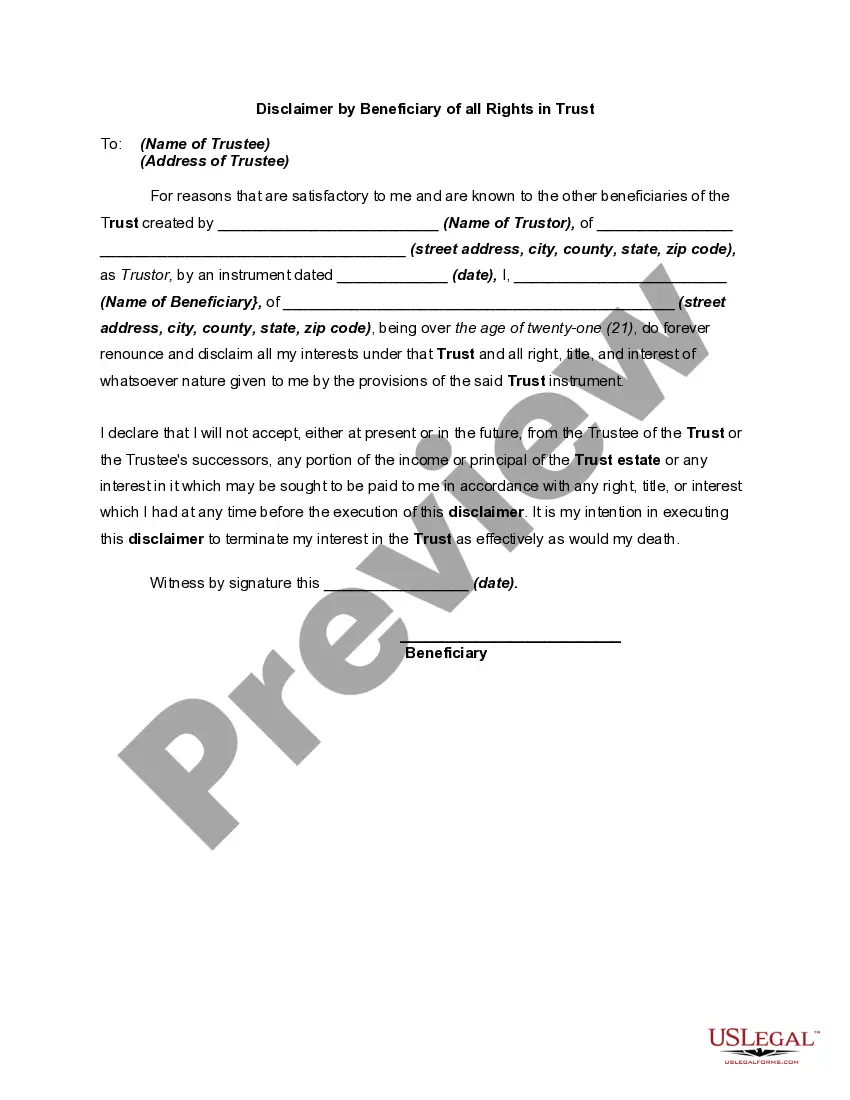
How to fill out Complaint Objecting To Discharge In Bankruptcy Proceeding For Failure To Keep Or Preserve Books Or Records That Explains Loss Or Deficiency In Assets,?
Are you presently in the placement in which you need to have papers for possibly business or personal reasons just about every time? There are a variety of authorized document templates available on the Internet, but finding kinds you can trust isn`t easy. US Legal Forms delivers 1000s of kind templates, like the Oklahoma Complaint Objecting to Discharge in Bankruptcy Proceeding for Failure to Keep or Preserve Books or Records that Explains, that happen to be composed to meet state and federal specifications.
In case you are currently familiar with US Legal Forms internet site and possess your account, just log in. Afterward, it is possible to obtain the Oklahoma Complaint Objecting to Discharge in Bankruptcy Proceeding for Failure to Keep or Preserve Books or Records that Explains format.
Should you not provide an accounts and want to start using US Legal Forms, abide by these steps:
- Obtain the kind you want and make sure it is for your proper area/area.
- Utilize the Review button to analyze the form.
- Look at the explanation to ensure that you have selected the correct kind.
- In case the kind isn`t what you`re searching for, take advantage of the Search discipline to discover the kind that fits your needs and specifications.
- When you discover the proper kind, simply click Buy now.
- Choose the costs program you want, complete the desired information and facts to generate your bank account, and pay for the transaction using your PayPal or credit card.
- Select a convenient paper formatting and obtain your version.
Locate every one of the document templates you might have purchased in the My Forms food selection. You can obtain a additional version of Oklahoma Complaint Objecting to Discharge in Bankruptcy Proceeding for Failure to Keep or Preserve Books or Records that Explains whenever, if necessary. Just click the required kind to obtain or print out the document format.
Use US Legal Forms, the most extensive selection of authorized forms, in order to save some time and avoid mistakes. The service delivers professionally produced authorized document templates which you can use for a range of reasons. Generate your account on US Legal Forms and start creating your daily life easier.
Form popularity
FAQ
The court may deny a chapter 7 discharge for any of the reasons described in section 727(a) of the Bankruptcy Code, including failure to provide requested tax documents; failure to complete a course on personal financial management; transfer or concealment of property with intent to hinder, delay, or defraud creditors; ...
Debts not discharged include debts for alimony and child support, certain taxes, debts for certain educational benefit overpayments or loans made or guaranteed by a governmental unit, debts for willful and malicious injury by the debtor to another entity or to the property of another entity, debts for death or personal ...
Key Takeaways. Types of debt that cannot be discharged in bankruptcy include alimony, child support, and certain unpaid taxes. Other types of debt that cannot be alleviated in bankruptcy include debts for willful and malicious injury to another person or property.
In fact, the federal courts (which handle bankruptcy cases) list 19 different types of debt that are not eligible for discharge. 2 The most common ones are child support, alimony payments, and debts for willful and malicious injuries to a person or property.
Nondischargeable debt is a type of debt that cannot be eliminated through a bankruptcy proceeding. Such debts include, but are not limited to, student loans; most federal, state, and local taxes; money borrowed on a credit card to pay those taxes; and child support and alimony.
If a debt arose from the debtor's intentional wrongdoing, the creditor can object to discharging it. This might involve damages related to a drunk driving accident, for example, or costs caused by intentional damage to an apartment or other property.
The debtor knowingly made a false oath or account, presented a false claim, etc. Failure to comply with a bankruptcy court order.
Debts not discharged Some debts are not dischargeable in bankruptcy. See 11 U.S.C. 523 for the list of non dischargeable debts. Non dischargeable debts are unaltered by the bankruptcy discharge and remain just as valid as they were before the bankruptcy. The debtor's personal liability continues.