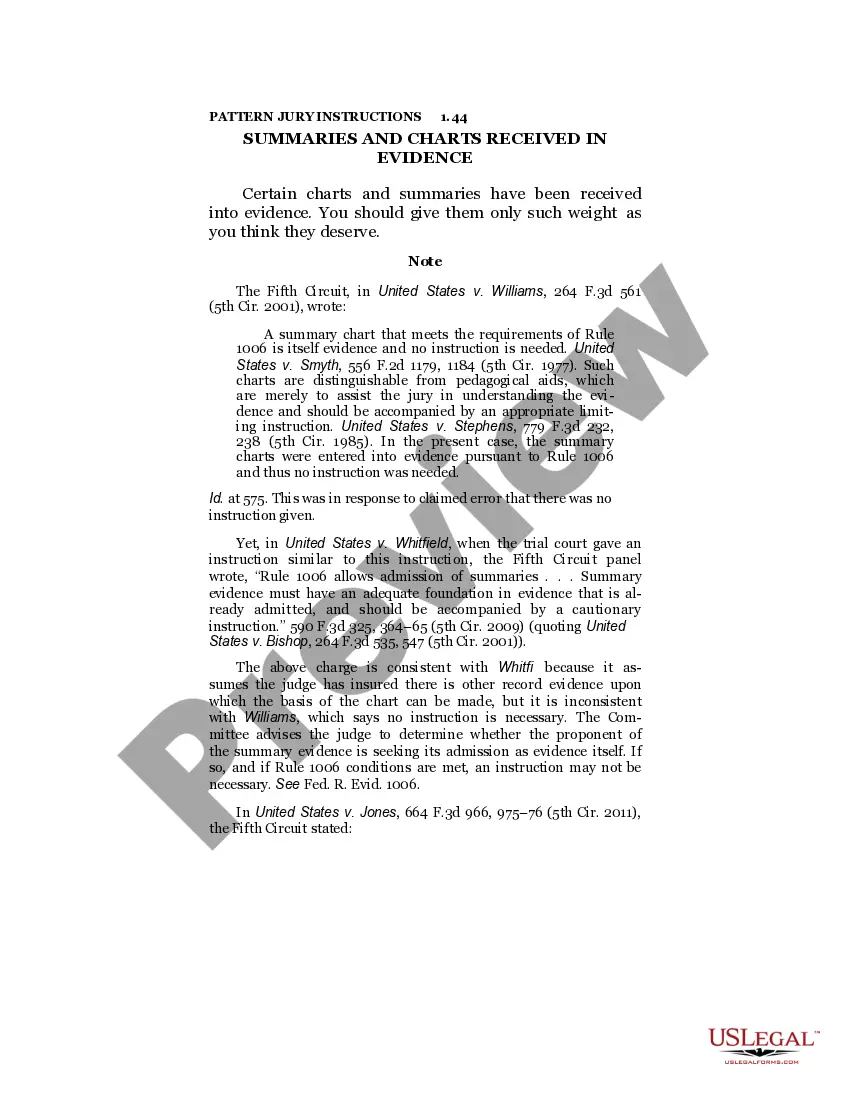
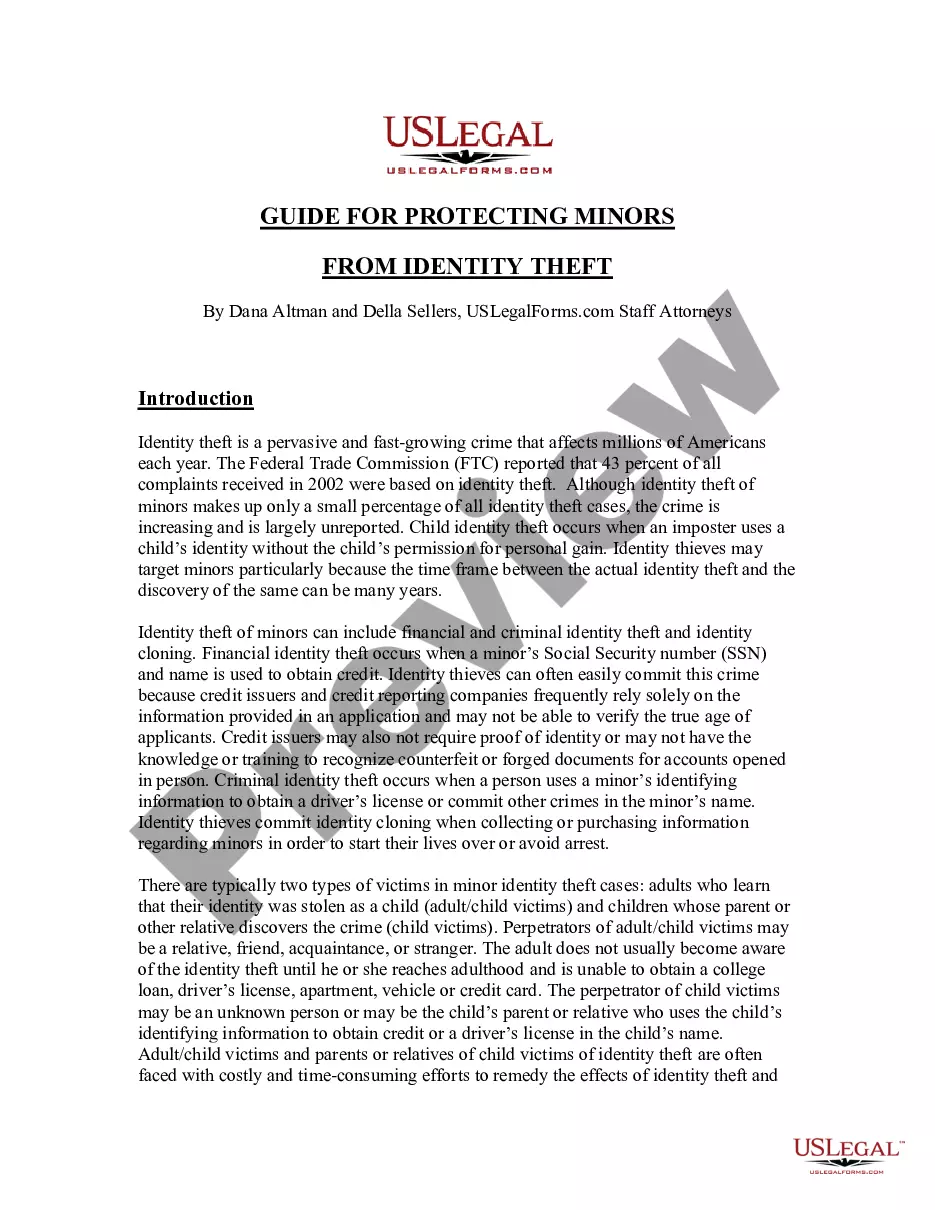
Identity theft is a pervasive and fast-growing crime that affects millions of Americans each year. With this Identity Theft Protection Guide, you will learn how to effectively deal with creditors and government agencies after your identification is lost or stolen. This guide is designed to help clear your name, and reduce your time and expense in dealing with identity thieves. The information in this guide is essential to assist in remedying and protecting your credit, financial assets, and job opportunities, as well as preventing misuse of benefits, false arrests, and other fraudulent uses of your identification. Helpful tips on preventing identity theft, useful links, and more, are also included.
Oklahoma Identity Theft Protection Guide
Instant download
Description
Free preview
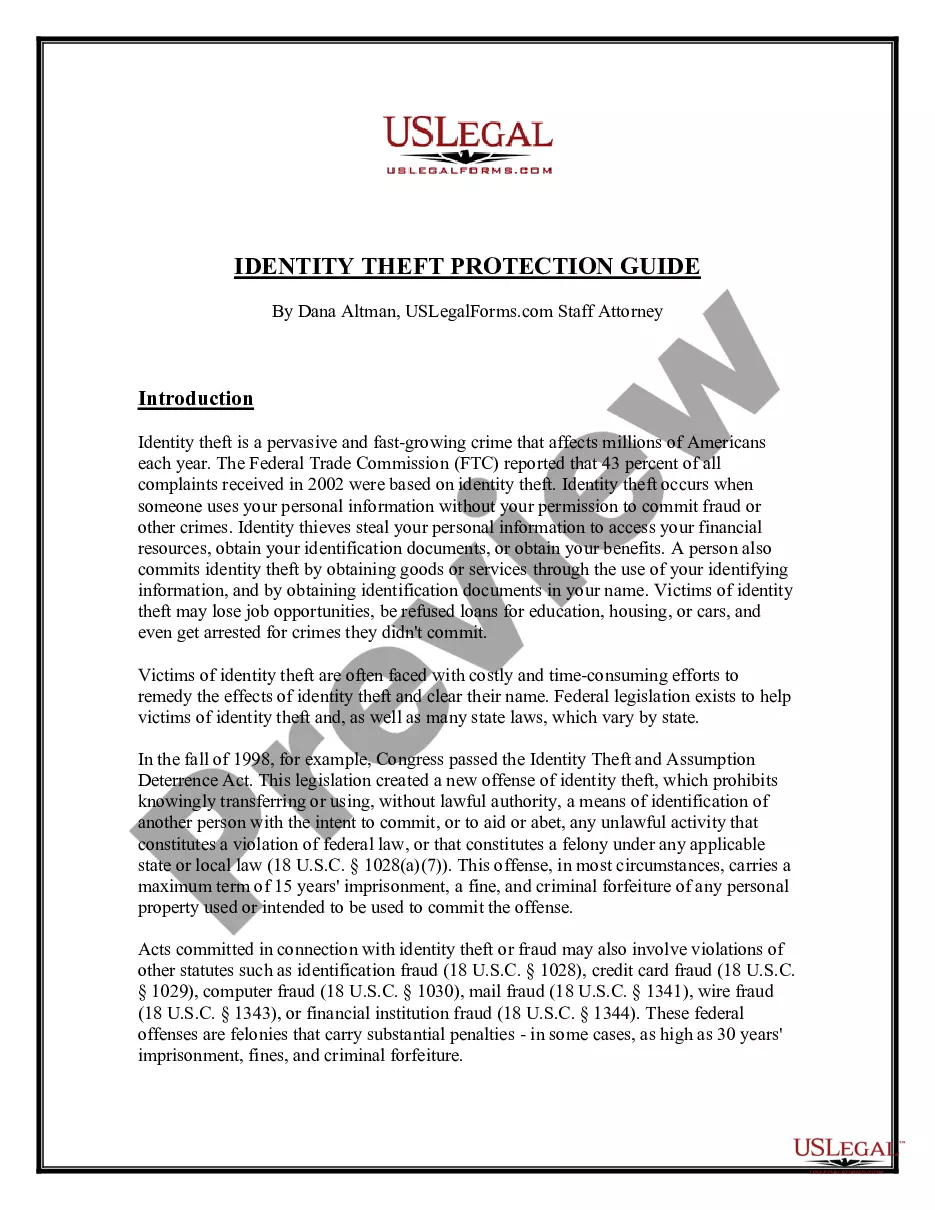
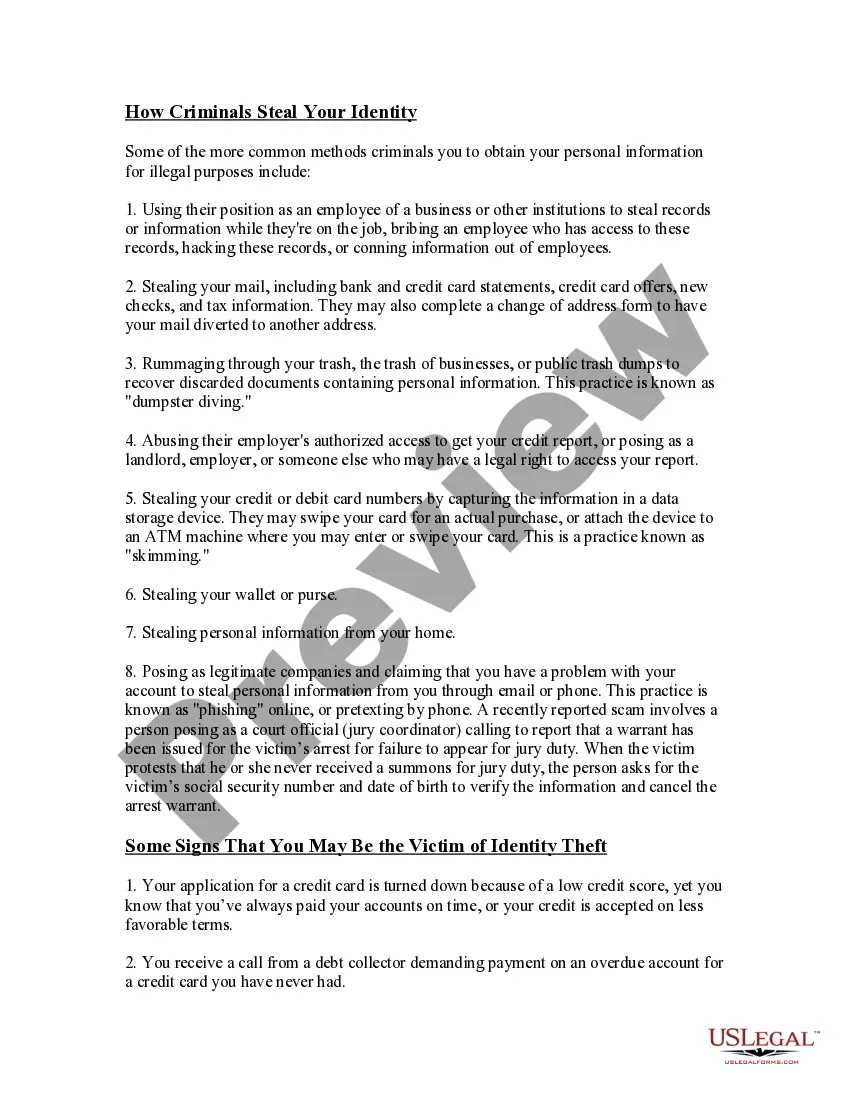
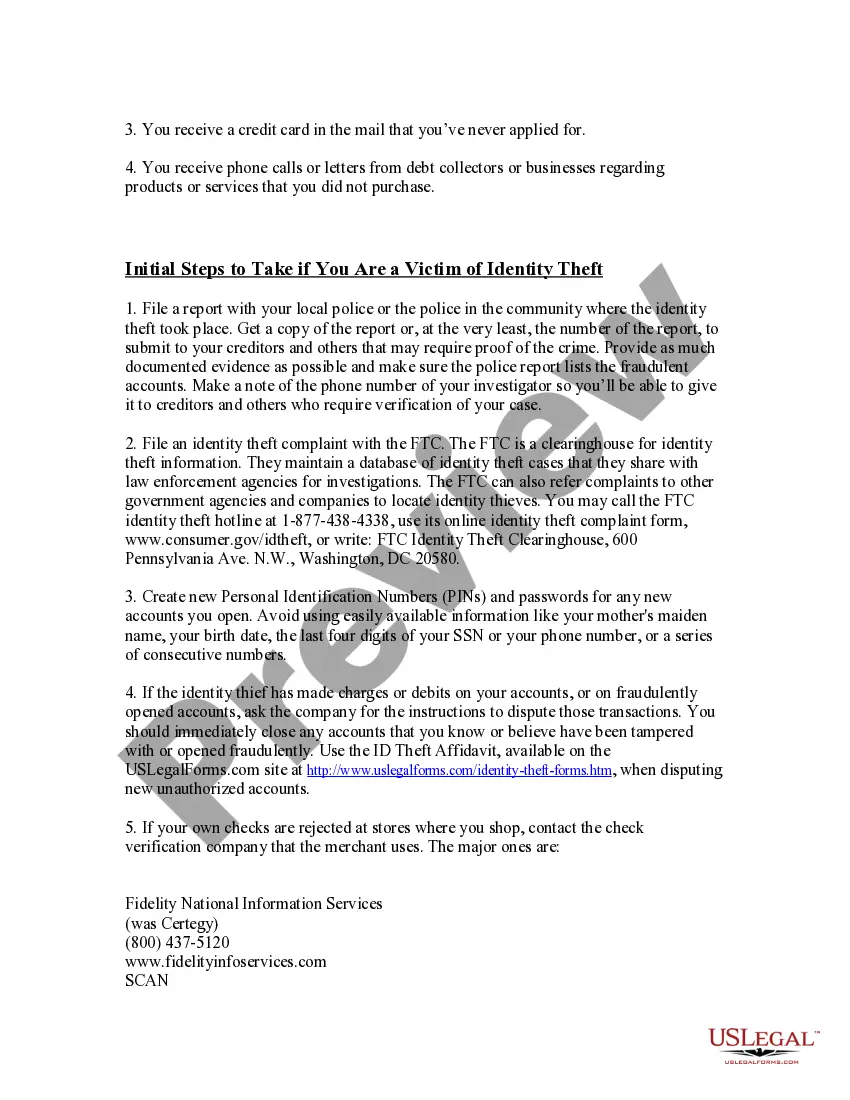
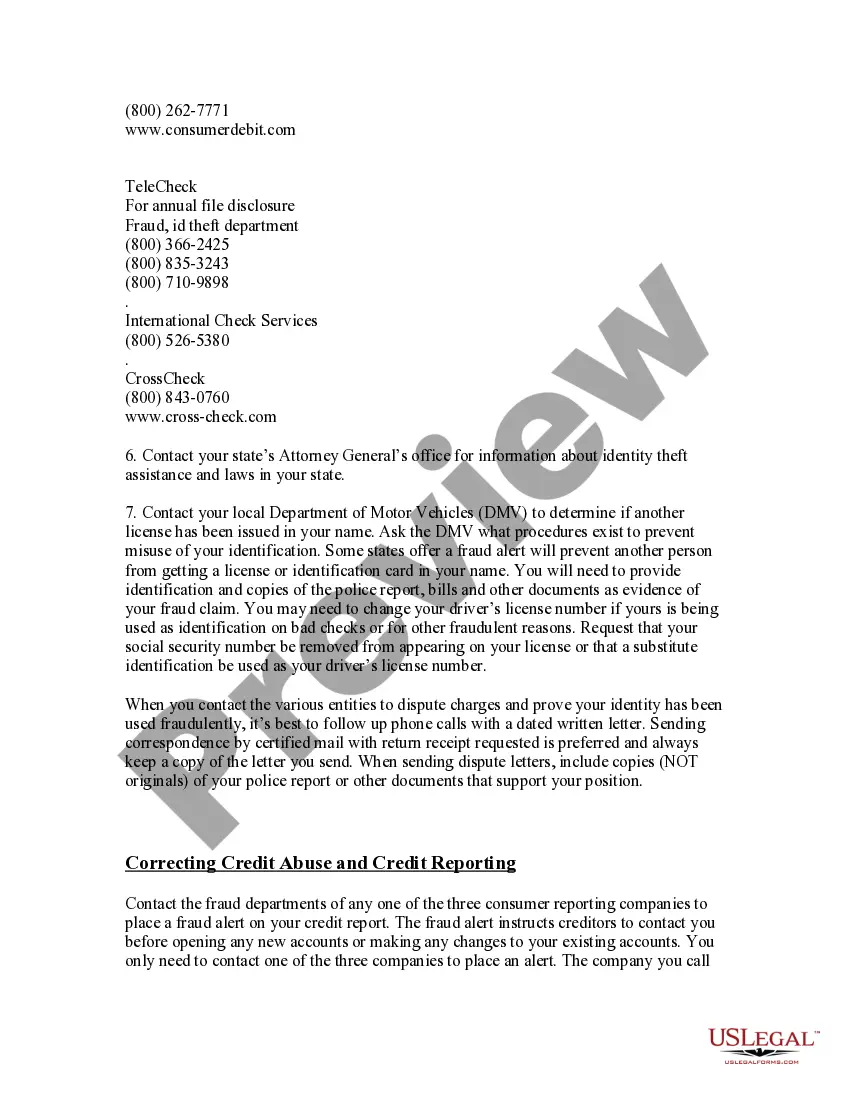
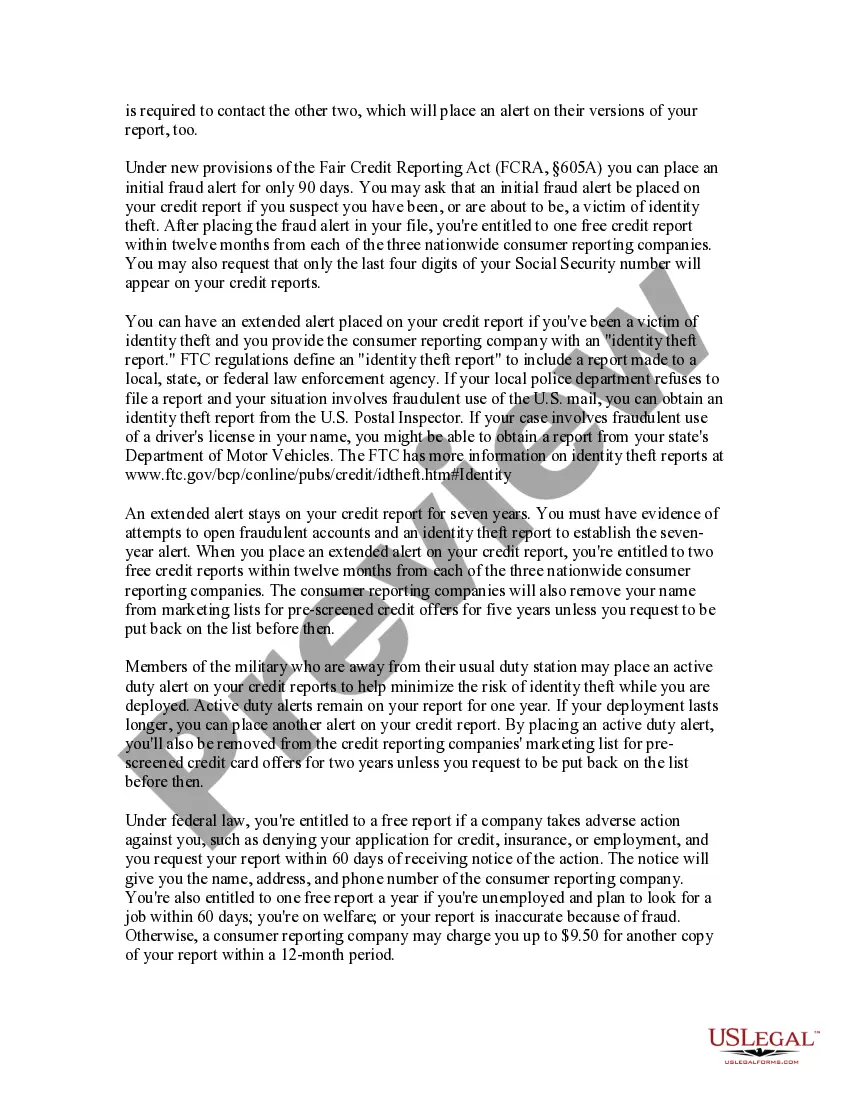
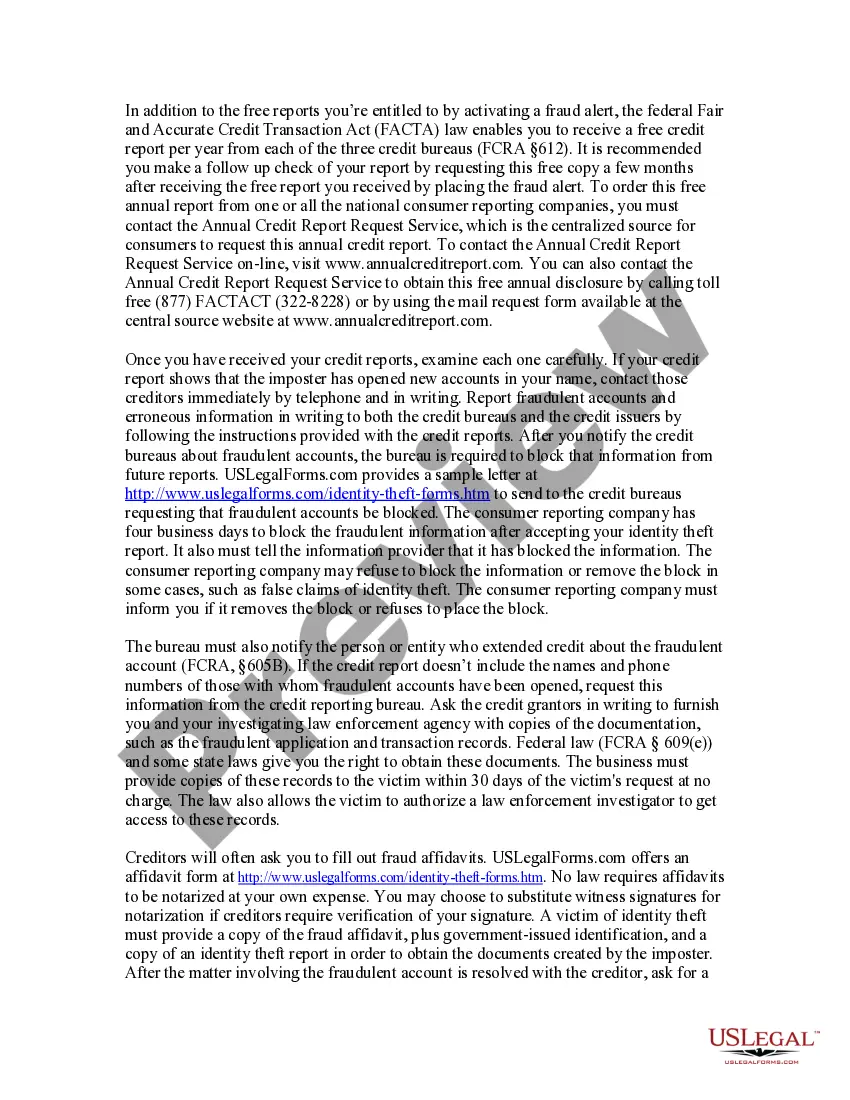
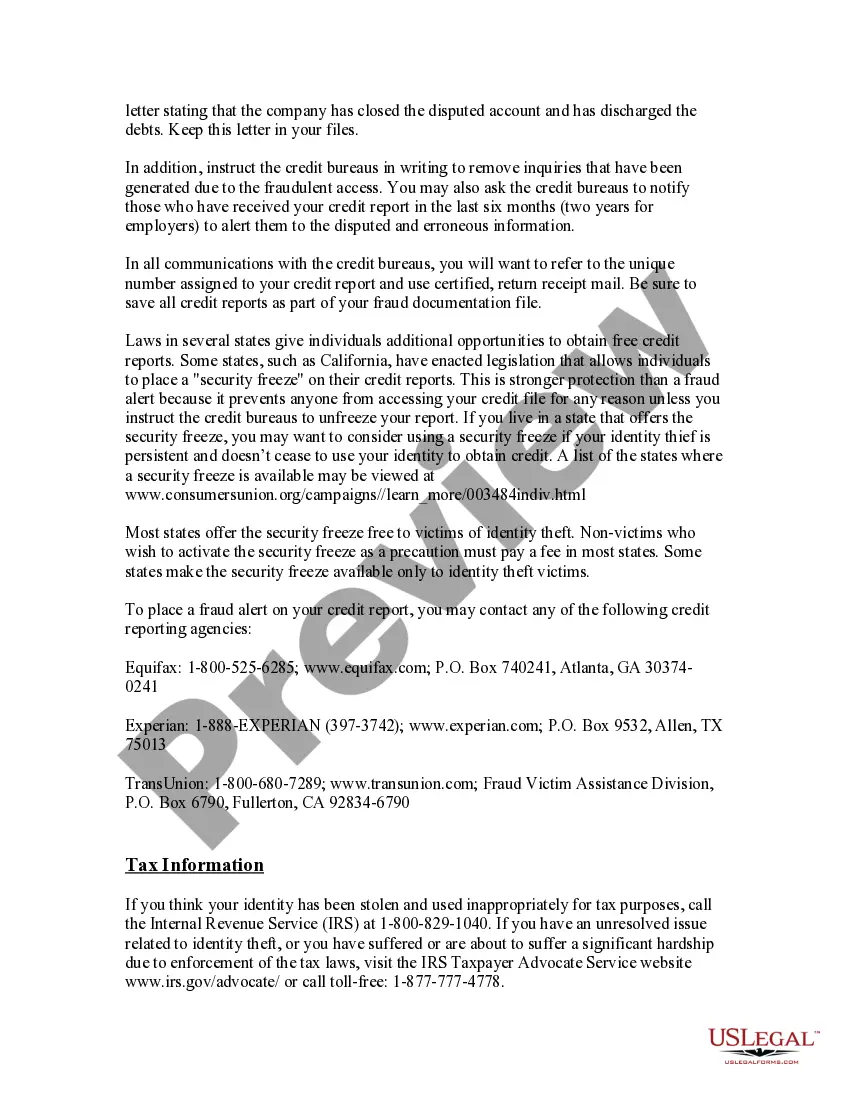

Get your form ready online
Our built-in tools help you complete, sign, share, and store your documents in one place.
Built-in online Word editor
Make edits, fill in missing information, and update formatting in US Legal Forms—just like you would in MS Word.
Export easily
Download a copy, print it, send it by email, or mail it via USPS—whatever works best for your next step.
E-sign your document
Sign and collect signatures with our SignNow integration. Send to multiple recipients, set reminders, and more. Go Premium to unlock E-Sign.
Notarize online 24/7
If this form requires notarization, complete it online through a secure video call—no need to meet a notary in person or wait for an appointment.
Store your document securely
We protect your documents and personal data by following strict security and privacy standards.

Make edits, fill in missing information, and update formatting in US Legal Forms—just like you would in MS Word.

Download a copy, print it, send it by email, or mail it via USPS—whatever works best for your next step.

Sign and collect signatures with our SignNow integration. Send to multiple recipients, set reminders, and more. Go Premium to unlock E-Sign.

If this form requires notarization, complete it online through a secure video call—no need to meet a notary in person or wait for an appointment.

We protect your documents and personal data by following strict security and privacy standards.
Looking for another form?




How to fill out Identity Theft Protection Guide?
US Legal Forms - one of the largest collections of legal documents in the USA - offers a broad selection of legal document templates that you can download or print. By using the website, you can access thousands of forms for business and personal purposes, organized by categories, states, or keywords. You can obtain the latest versions of forms such as the Oklahoma Identity Theft Protection Guide in just minutes.
If you have a subscription, Log In and download the Oklahoma Identity Theft Protection Guide from the US Legal Forms library. The Download button will appear on each form you view. You can access all previously downloaded forms from the My documents section of your account.
To use US Legal Forms for the first time, here are some simple steps to help you get started: Make sure you have selected the correct form for your region/state. Click the Preview button to check the content of the form. Read the form description to ensure you have chosen the right one. If the form does not meet your needs, use the Search bar at the top of the screen to find one that does. When you are satisfied with the form, confirm your choice by clicking the Get now button. Then, choose your preferred payment method and provide your details to register for the account. Process the payment. Use your Visa or Mastercard or PayPal account to complete the transaction. Select the format and download the form to your device. Make edits. Fill out, modify, and print and sign the downloaded Oklahoma Identity Theft Protection Guide. Each template you added to your account has no expiration date and is yours forever. Therefore, to download or print another copy, simply go to the My documents section and click on the form you wish to access.
With US Legal Forms, you can quickly find and download the legal documents you need with confidence.
Take advantage of the vast resources available and streamline your document management process today.
- Access the Oklahoma Identity Theft Protection Guide with US Legal Forms, one of the most extensive collections of legal document templates.
- Utilize thousands of professional and state-specific templates that meet your business or personal needs and requirements.
- Download templates quickly and easily.
- Edit and customize forms to fit your particular situation.
- Store and access all your forms in one place.
- Enjoy lifetime access to the documents you download.
Form popularity
FAQ
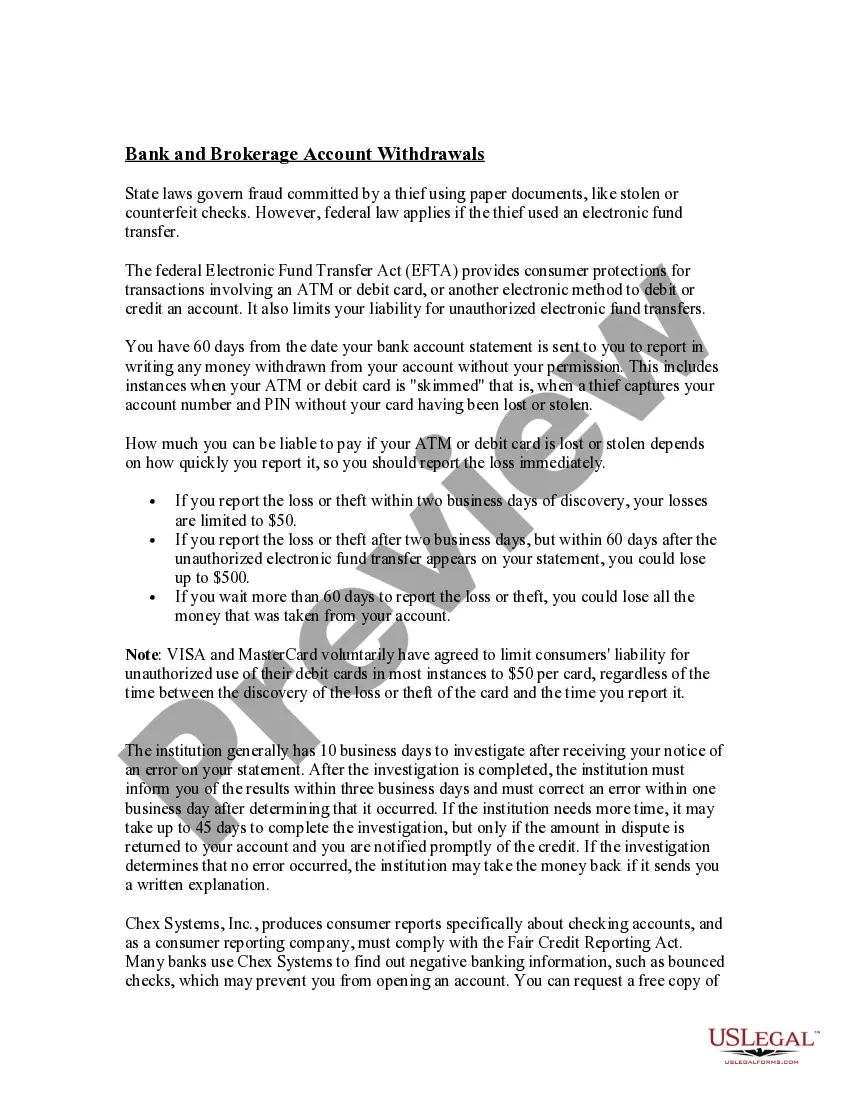
It is unlawful for any person to use with fraudulent intent the personal identity of another person, living or dead, or any information relating to the personal identity of another person, living or dead, to obtain or attempt to obtain credit or anything of value.
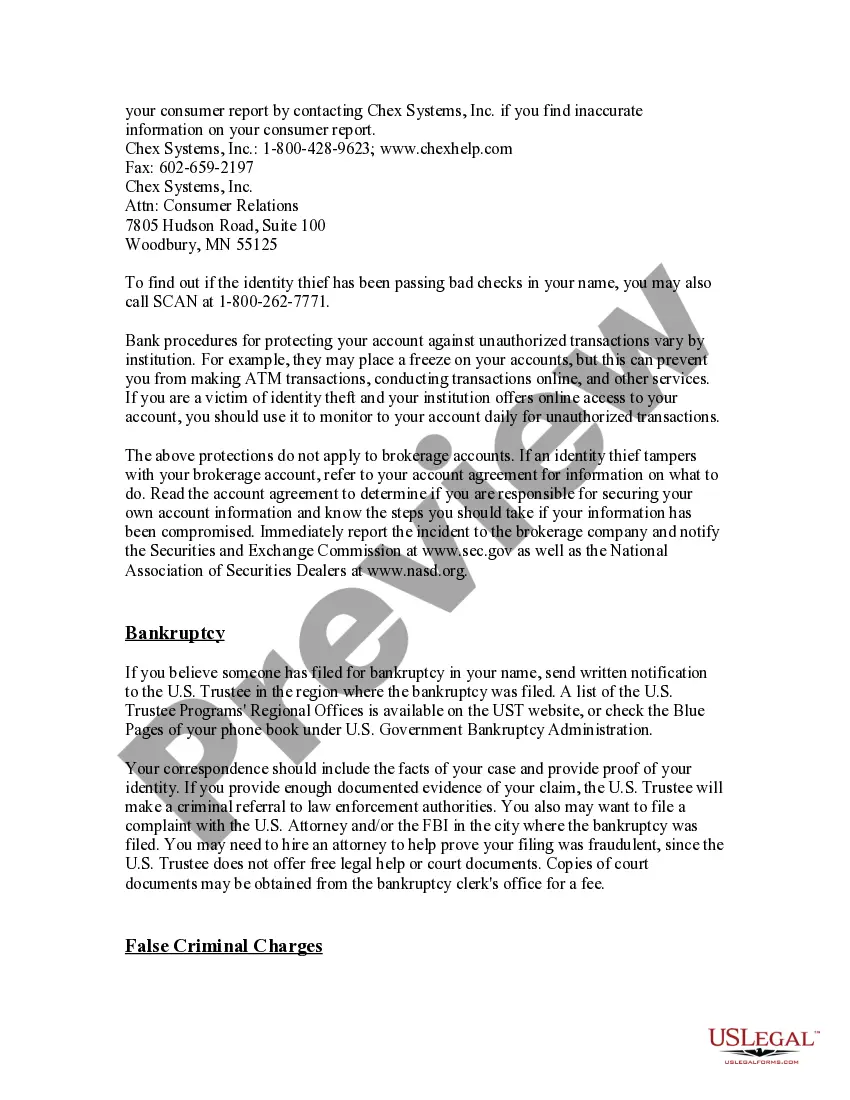
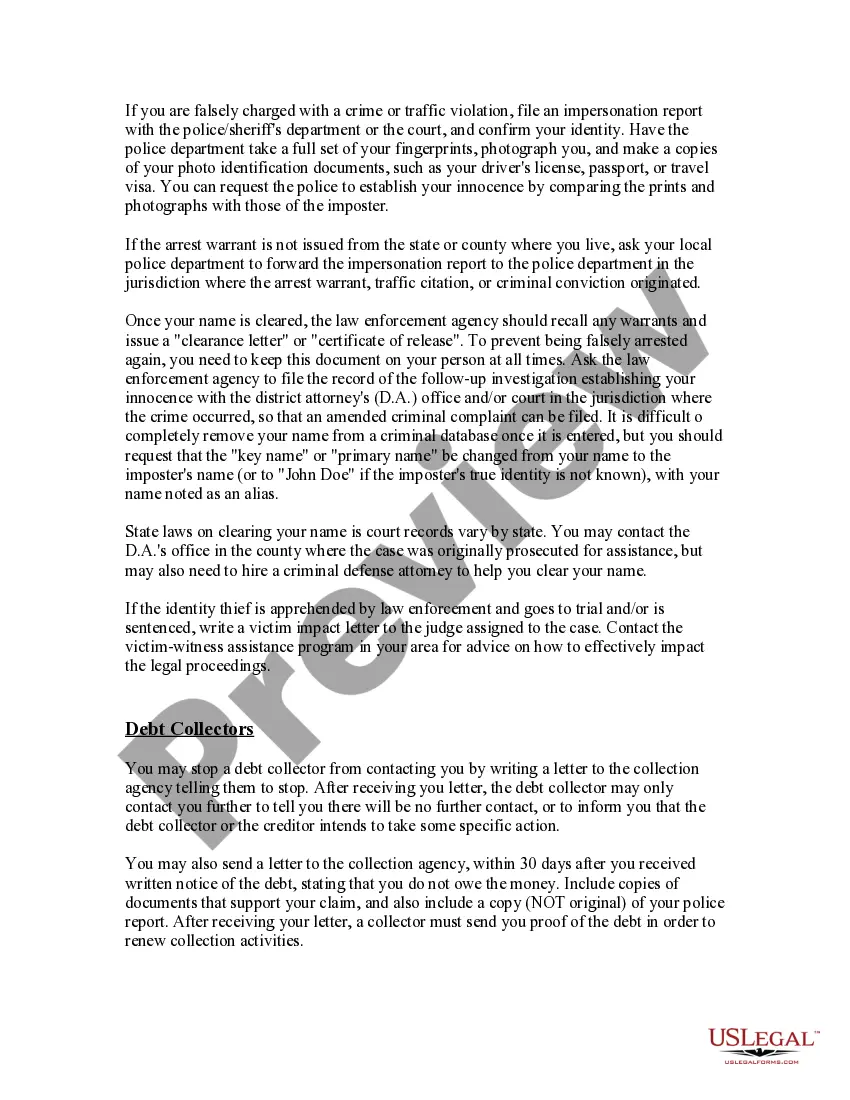
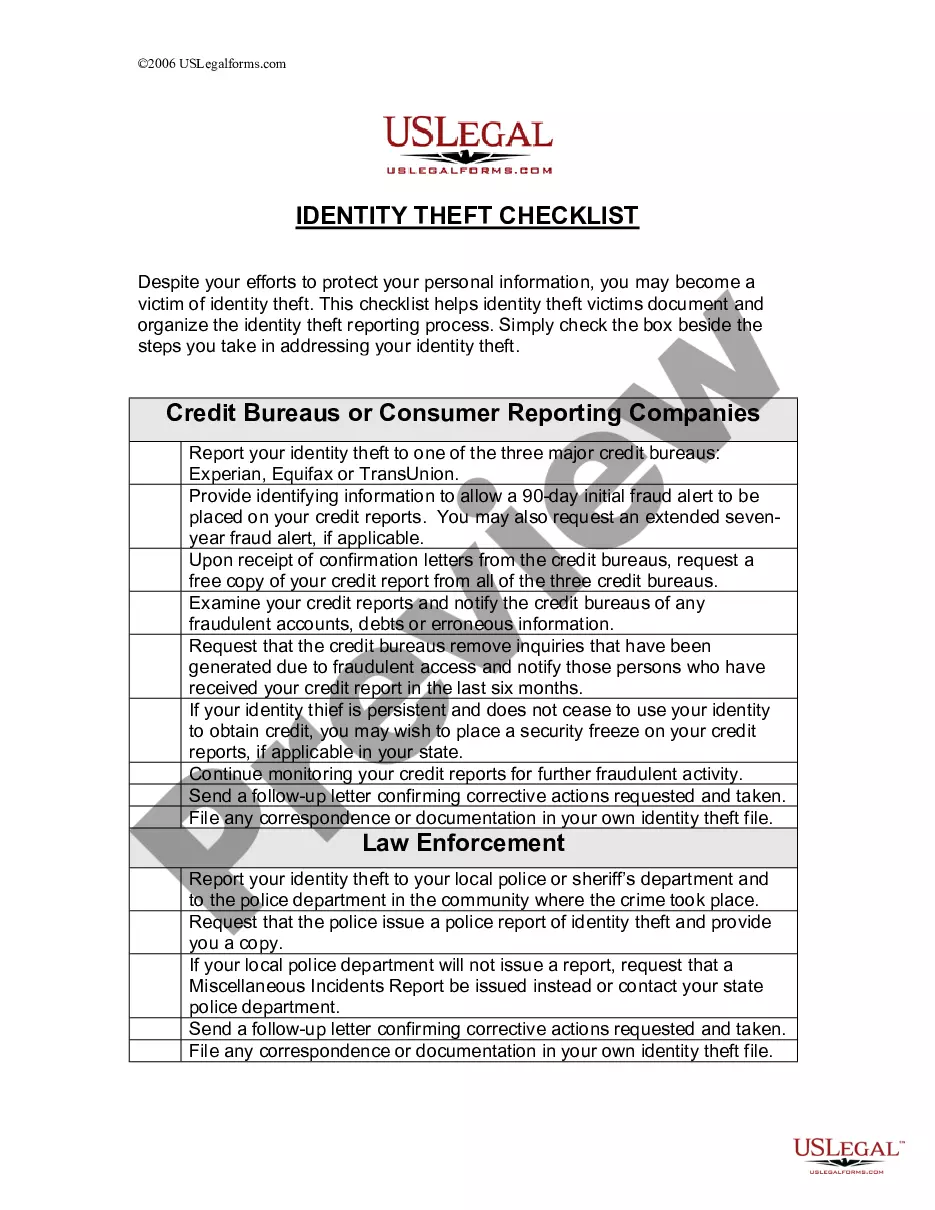
Tools/Resources for Victims Place a fraud alert on your credit report. Close out accounts that have been tampered with or opened fraudulently. Report the identity theft to the Federal Trade Commission. File a report with your local police department.
You can check whether someone has stolen your Social Security number by reviewing the earnings posted in your Social Security statement, which you can review online via My Social Security. Or, request free credit reports from each of the three credit bureaus annually to check your statements for suspicious activity.
Warning signs of identity theft Bills for items you did not buy. Debt collection calls for accounts you did not open. Information on your credit report for accounts you did not open. Denials of loan applications. Mail stops coming to, or is missing from, your mailbox.
Notify the IRS and the Social Security Administration. Contacting the IRS online at .irs.gov/uac/Identity-Protection or by phone at 800-908-4490 can help you avoid employment fraud and prevent someone else from accessing your tax refund.
Shred receipts, credit offers, loan and credit applications, insurance forms, bank statements, and similar documents when you no longer need them. A ?cross cut? shredder is best for this. Use different and strong passwords for each of your accounts ? and then safeguard them.
Contact the Internal Revenue Service (IRS) at 1-800-908-4490 or visit them online, if you believe someone is using your SSN to work, get your tax refund, or other abuses involving taxes. Order free credit reports annually from the three major credit bureaus (Equifax, Experian, and TransUnion).
Check Your Credit Report. If someone has used your SSN to apply for a credit card or a loan or open other accounts in your name, your credit report is the first place the activity can appear. Look for accounts you don't recognize or credit applications you never submitted.