Oklahoma Trust Deed and Note Securing Bail Bond
Overview of this form
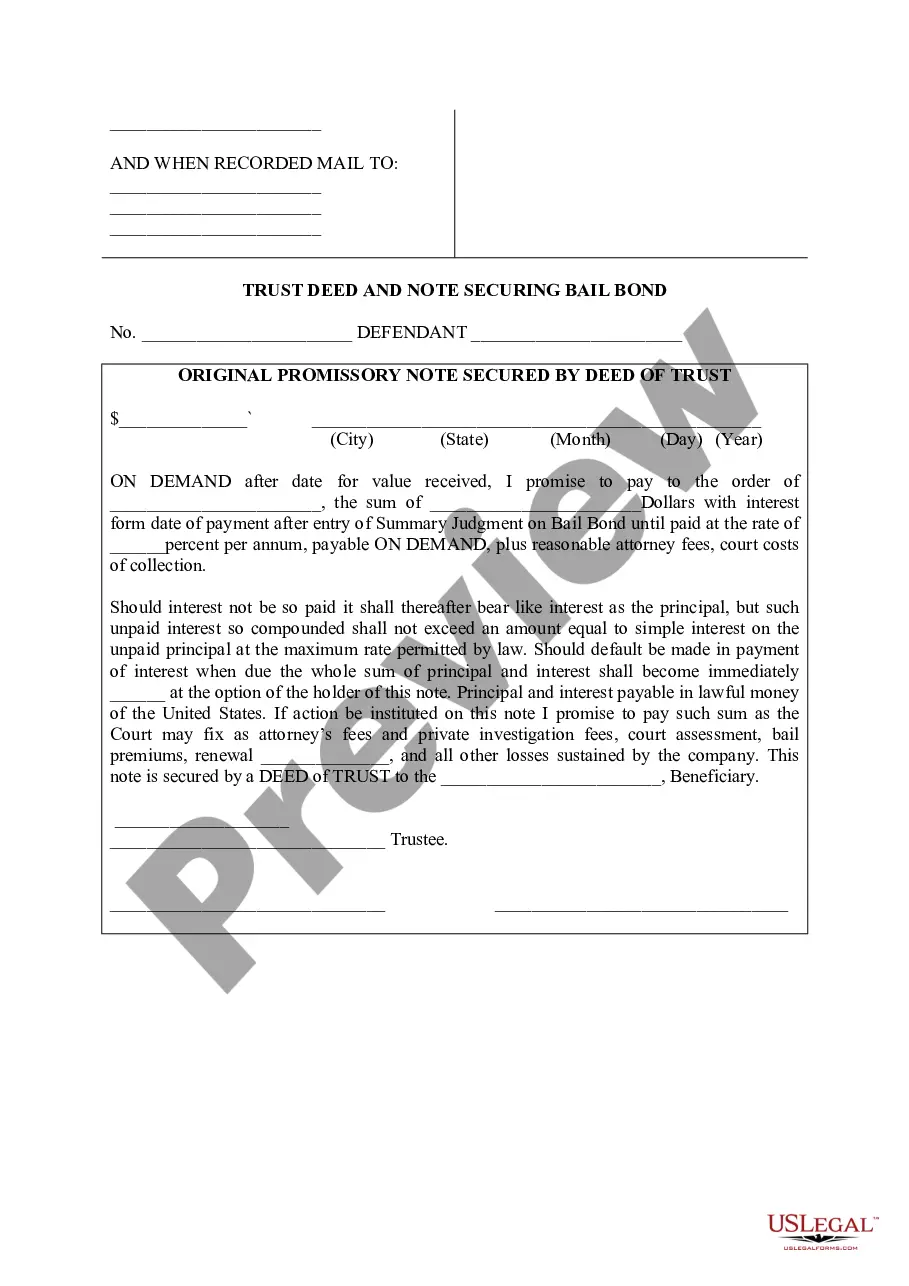
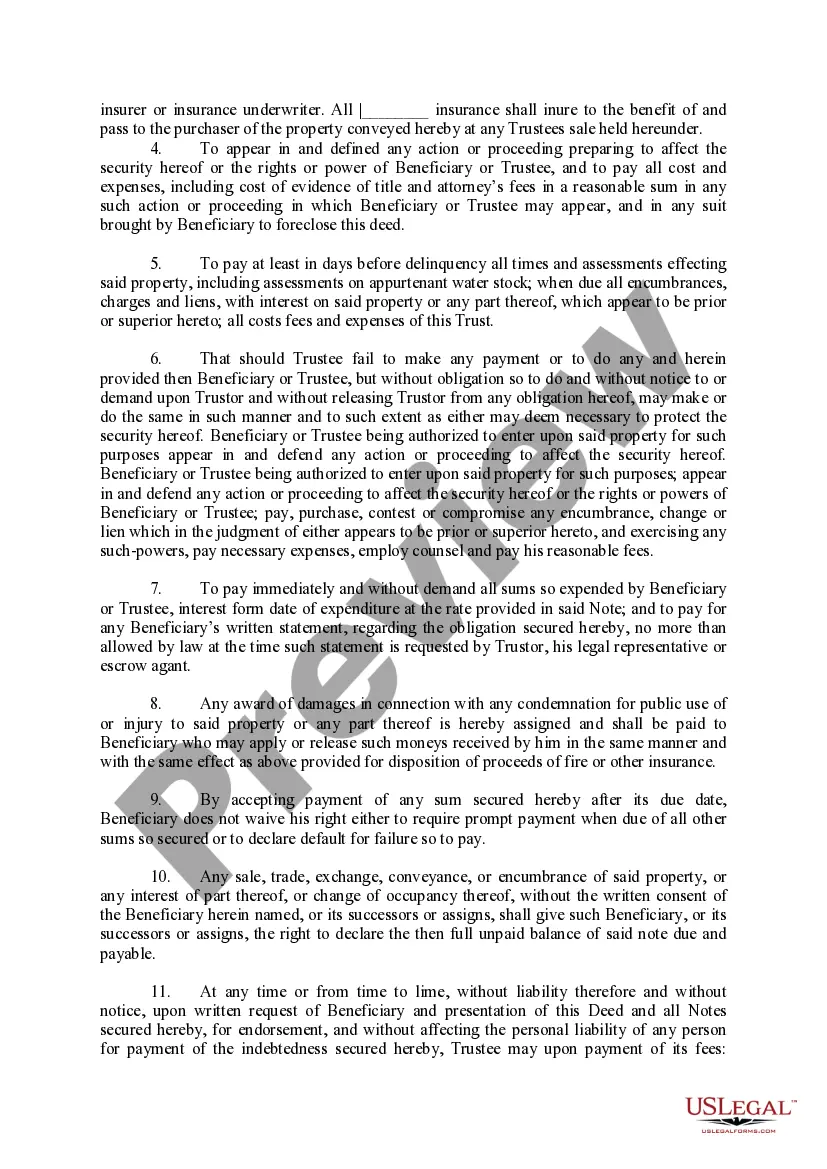
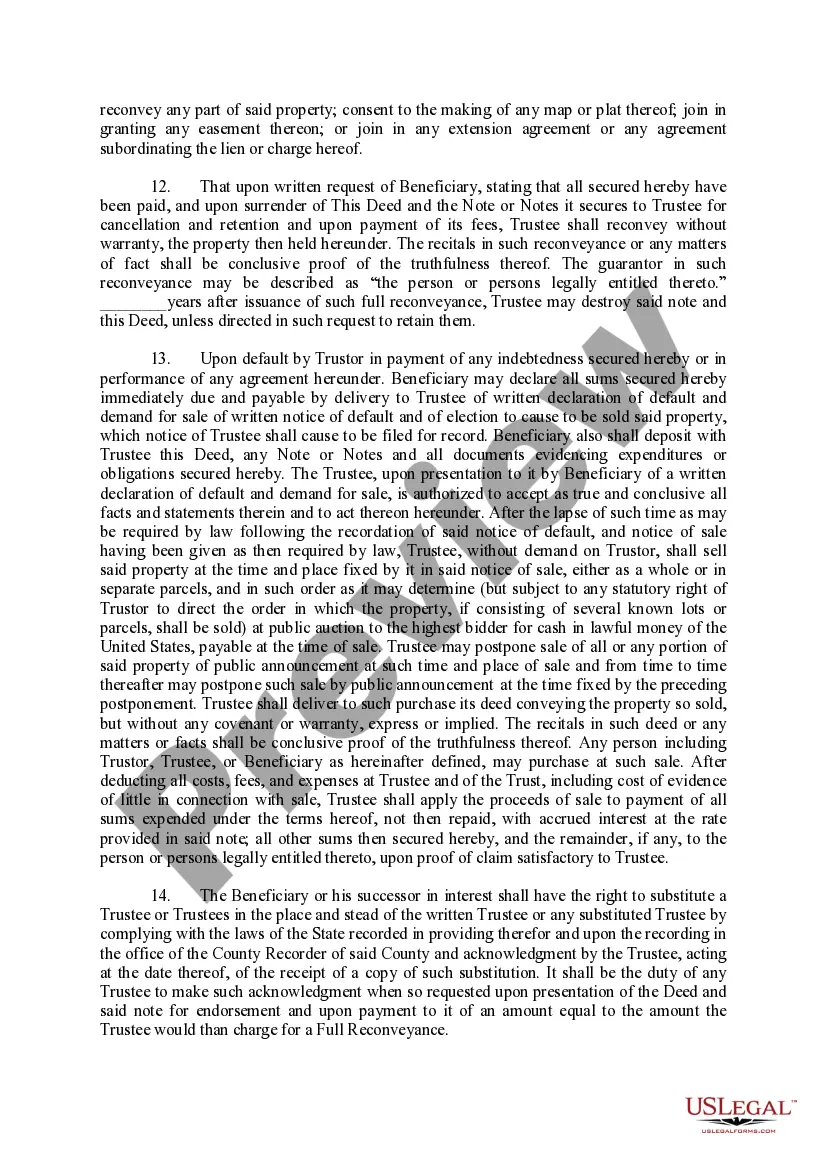
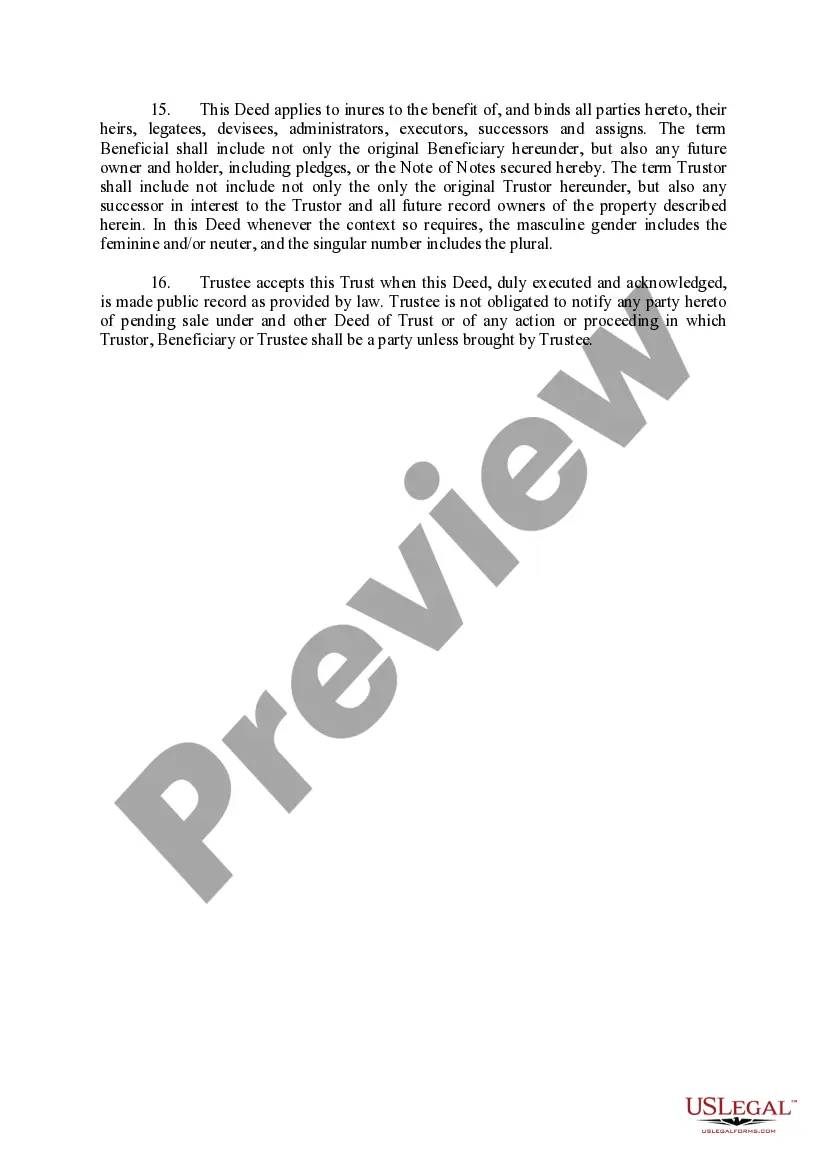
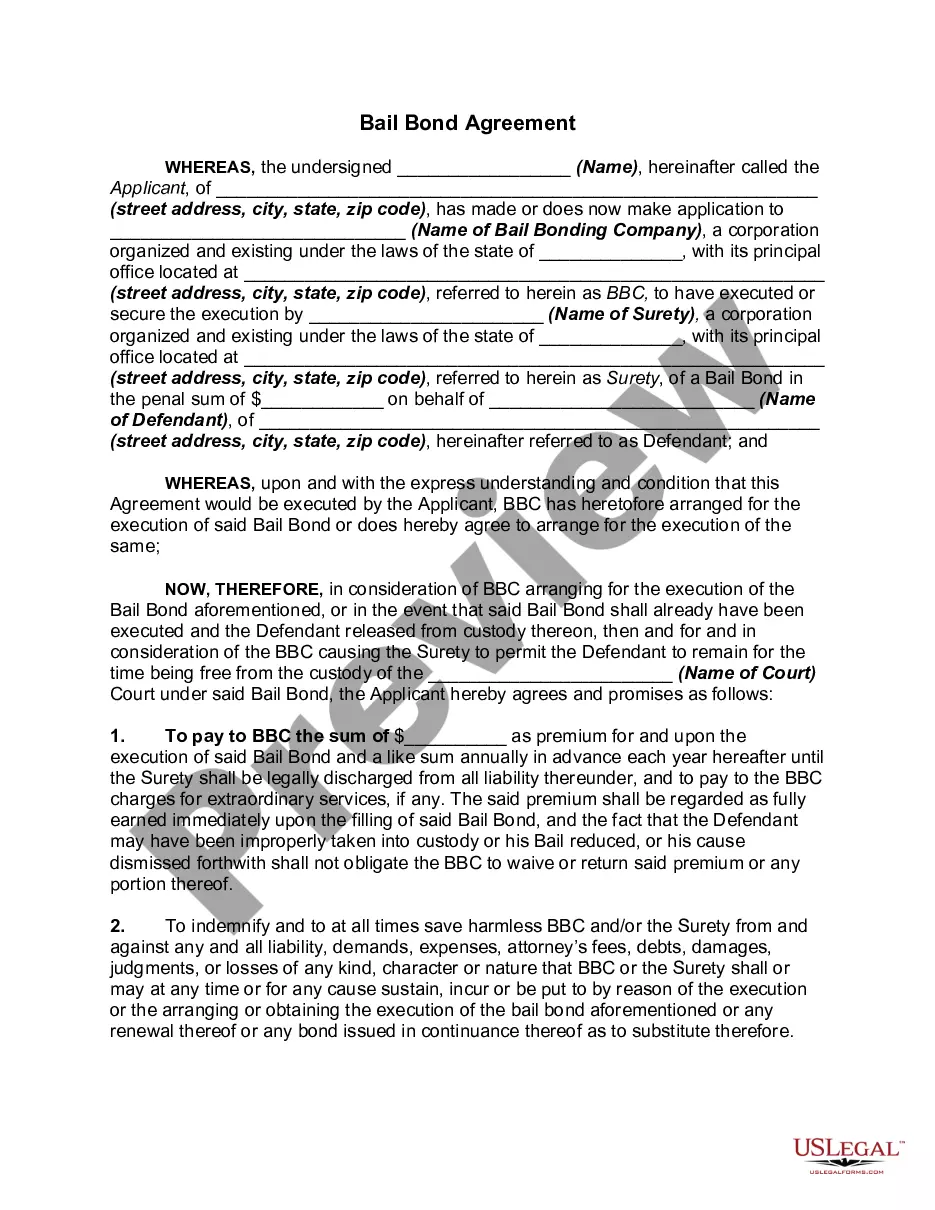
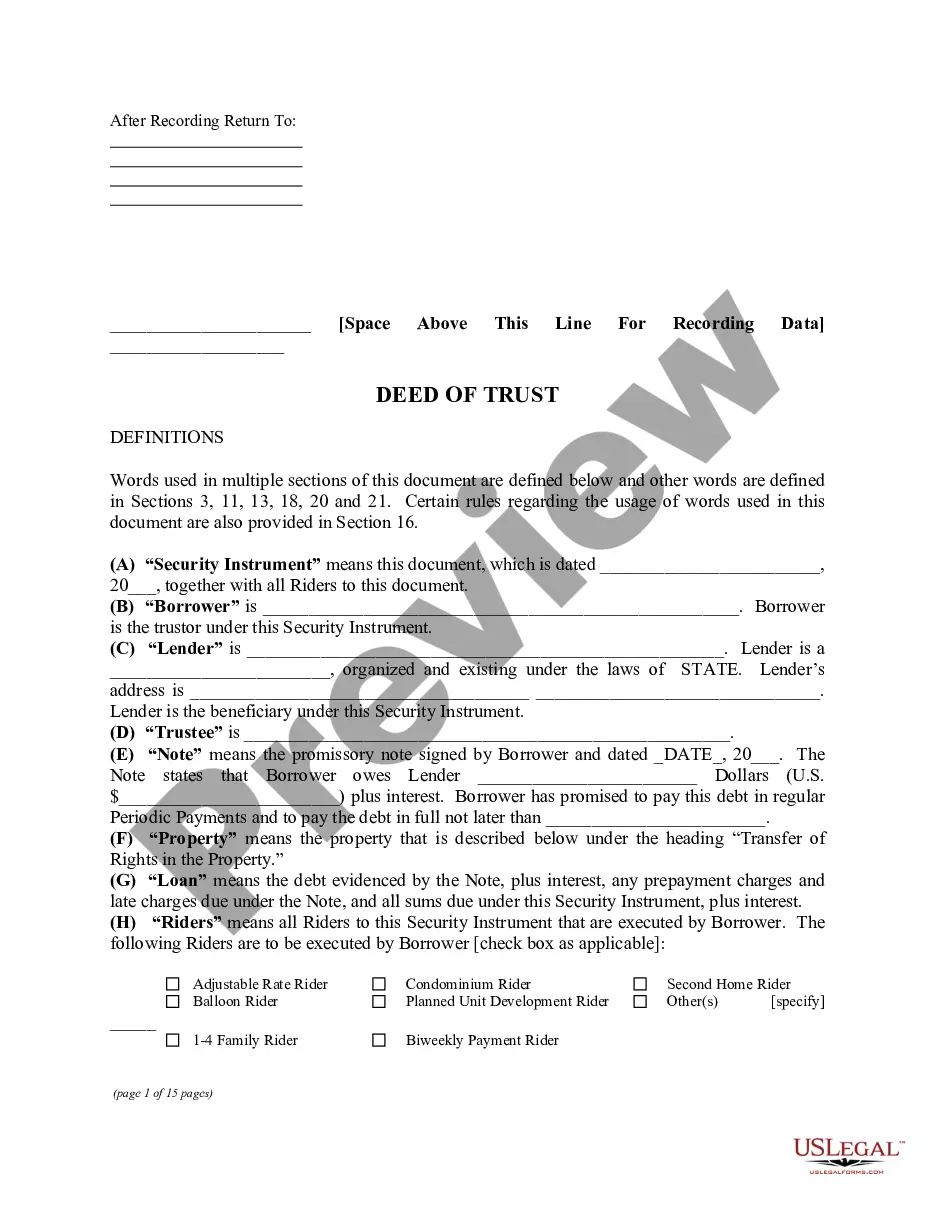
The Trust Deed and Note Securing Bail Bond is a legal document that ensures payment of all debts and expenses related to a bail bond agreement. This form secures the obligation of the trustor to pay the amount specified in the promissory note, thus guaranteeing that the defendant will appear in court as required. Unlike other financial agreement forms, this deed provides collateral in the form of real property to support the bail bond's financial obligations.
Form components explained
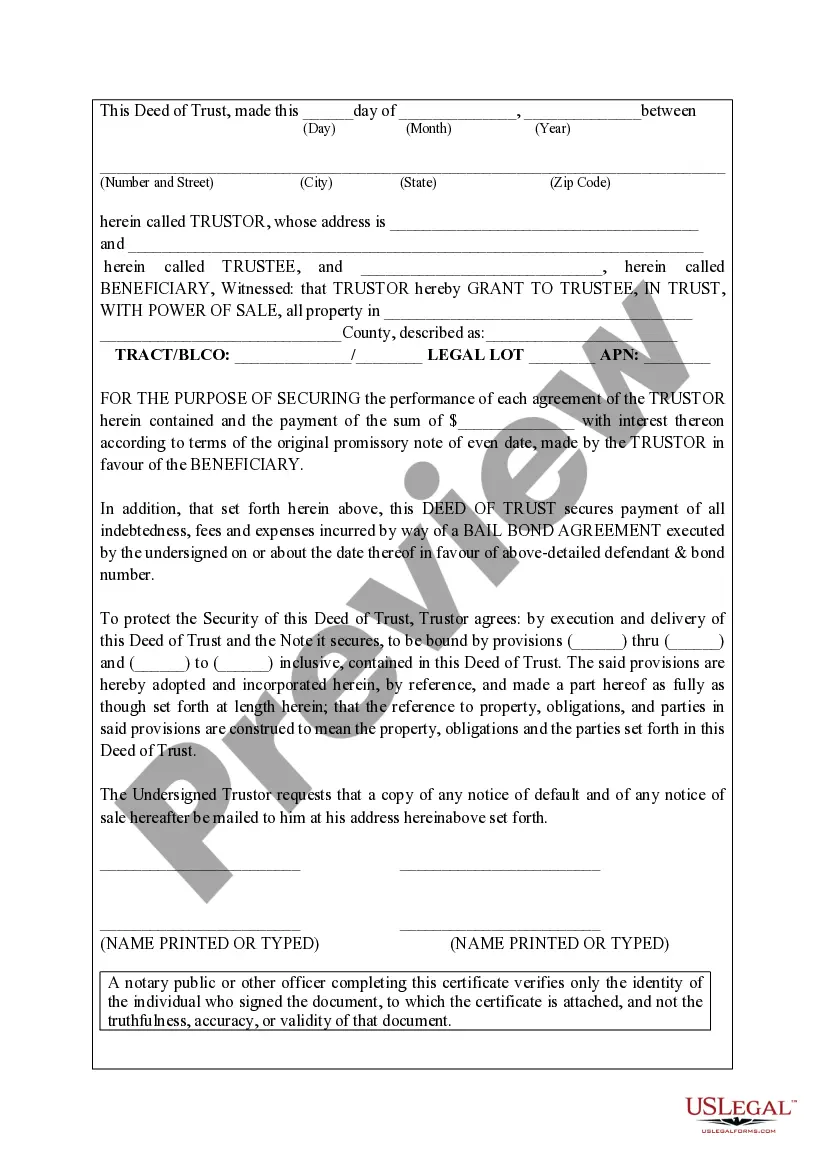
- Identification of the defendant and the parties involved (trustor, trustee, and beneficiary).
- Details of the original promissory note, including the principal amount and interest rate.
- Legal description of the property being used as collateral.
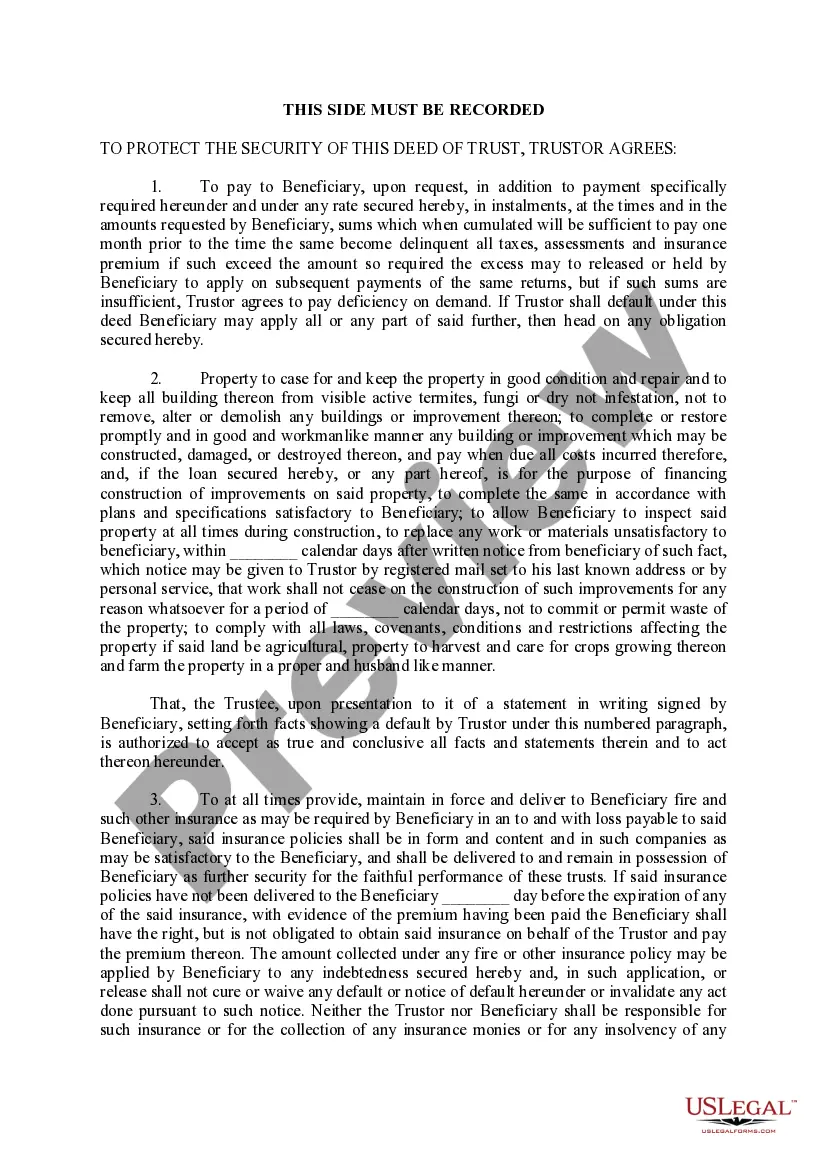
- Provisions outlining the trustor's obligations and rights under the deed of trust.
- Conditions under which the beneficiary can enforce the terms of the deed and initiate foreclosure if necessary.
When to use this document
This form should be used in situations where a defendant requires a bail bond and needs to provide collateral to secure the bond. It is essential when a financial institution or bail bondsman demands a trust deed as a guarantee of repayment for the costs associated with the bail. This document is also necessary when the bail amount is substantial, and the parties agree to secure the debt with real property.
Intended users of this form
- Individuals seeking to secure a bail bond for themselves or someone else.
- Bail bond companies that require collateral to issue a bond.
- Property owners who are willing to use their property as collateral for a bail bond.
- Attorneys representing defendants requiring bail assistance.
Instructions for completing this form
- Identify all parties involved: the defendant, trustor, trustee, and beneficiary.
- Specify the amount of the promissory note and applicable interest rate.
- Provide a detailed legal description of the property being collateralized.
- Include all necessary dates and ensure proper signatures are obtained.
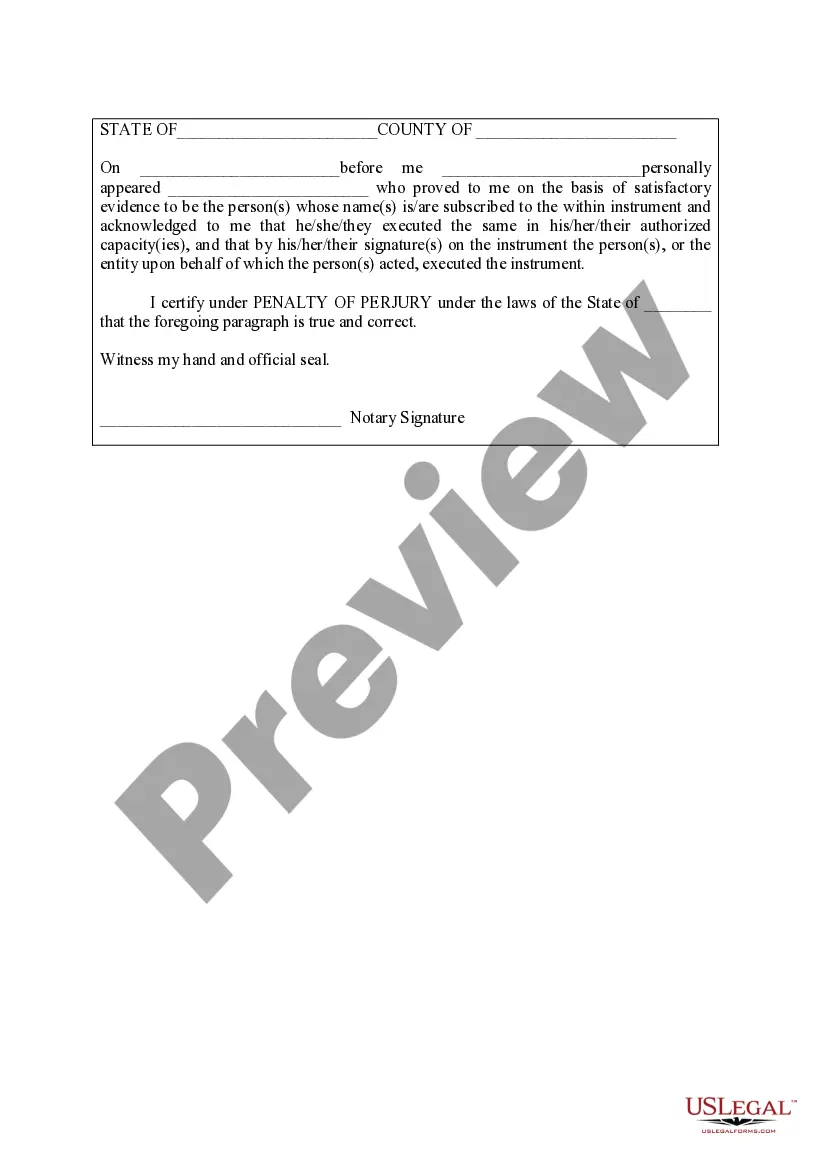
- Notarize the document if required by state law or as needed for enforceability.
Notarization guidance
Yes, this form must be notarized to be legally valid. It is essential to ensure that all signatures are verified by a notary public. US Legal Forms offers integrated online notarization, allowing users to complete the process securely via video call at any time, facilitating a streamlined legal experience without the need for travel.
Get your form ready online
Our built-in tools help you complete, sign, share, and store your documents in one place.
Make edits, fill in missing information, and update formatting in US Legal Forms—just like you would in MS Word.
Download a copy, print it, send it by email, or mail it via USPS—whatever works best for your next step.
Sign and collect signatures with our SignNow integration. Send to multiple recipients, set reminders, and more. Go Premium to unlock E-Sign.
If this form requires notarization, complete it online through a secure video call—no need to meet a notary in person or wait for an appointment.
We protect your documents and personal data by following strict security and privacy standards.

Make edits, fill in missing information, and update formatting in US Legal Forms—just like you would in MS Word.

Download a copy, print it, send it by email, or mail it via USPS—whatever works best for your next step.

Sign and collect signatures with our SignNow integration. Send to multiple recipients, set reminders, and more. Go Premium to unlock E-Sign.

If this form requires notarization, complete it online through a secure video call—no need to meet a notary in person or wait for an appointment.

We protect your documents and personal data by following strict security and privacy standards.
Avoid these common issues
- Failing to provide accurate details about the property, leading to potential disputes.
- Not obtaining proper signatures or notarization, resulting in an unenforceable document.
- Overlooking the interest rate and repayment terms, which can lead to financial issues later.
- Using outdated forms that may not comply with current state laws.
Why complete this form online
- Easy access to downloadable and editable legal form templates.
- Time-saving convenience of completing the form from home.
- Reliability of forms drafted by licensed attorneys familiar with legal standards.
- Instant updates to forms in compliance with changing laws.
Main things to remember
- The Trust Deed and Note Securing Bail Bond provides legal security for bail payments.
- It must include accurate party details and a complete property description.
- Notarization is typically required to ensure legality and enforceability.
- This form is crucial for individuals or companies involved in securing bail bonds.
Looking for another form?
Form popularity
FAQ
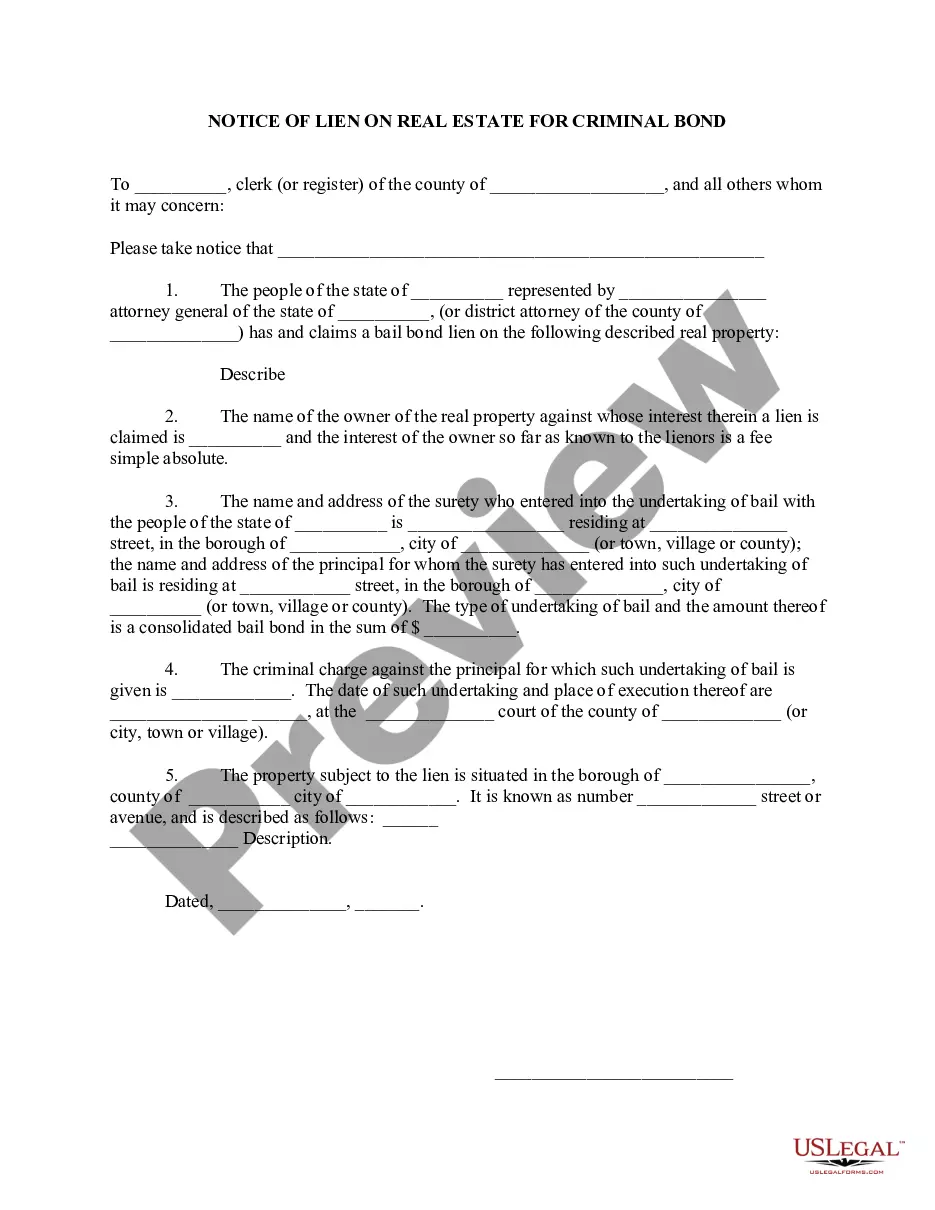
A property bond is an undertaking constituted as a lien on the real property given as security for the amount of the bail.
If you are offering your house, car or other large property item as collateral, the court or bail agent will typically have you place the deed or pink slip in their trust. If it is a smaller item such as jewelry, they will take physical possession and keep it in a secure location until the case is resolved.
You need a bail bond to get out of jail. When it comes to the secured bail bond, the lender or bondsman ensures he or she gets the money back.In this type of bail, you just need to promise the bondsman to appear before the judge on the scheduled trial dates.
It's important to note that Property Bonds are a non-regulated product and as such represent a high risk investment when compared to regular savings. Property bonds are not suitable for everyone. While the potential reward is high, investing in developments comes with some risk.
Oklahoma mandates that bail bond agents can only charge a 10 percent premium for bail bond services. For a $20,000 bail, for example, the defendant or a co-signer would have to pay $2,000 to the bail bond agent.In the case of a property bond, the property is seized and sold to pay for the bail and incidental charges.
Putting up your house means that you are acting as a bond agent basically. You are putting up your house and promising that he will appear. If he skips and bond is revoked you could lose your house.
If you paid cash bail to the court, meaning you paid the full bail amount, you will have that money returned to you after the defendant makes all required court appearances.If a defendant is found not guilty, the bond is discharged; if the defendant pleads guilty, the bond is discharged at the time of sentencing.
If an individual decides to bail someone out with a cash bond, they will have to provide the entire face amount of bail demanded by the court before an inmate can leave. For instance, if a judge sets a defendant's bail at $50,000, the entire amount must be paid up front, and then the inmate will be released.
Posting a property bond means you pledge the value of real property to the court to guarantee the defendant will appear in court.At the hearing, the court will determine who is the legal owner of the property and how much it is worth.