Oklahoma Judicial Determination - After Child is Removed from Home
What this document covers
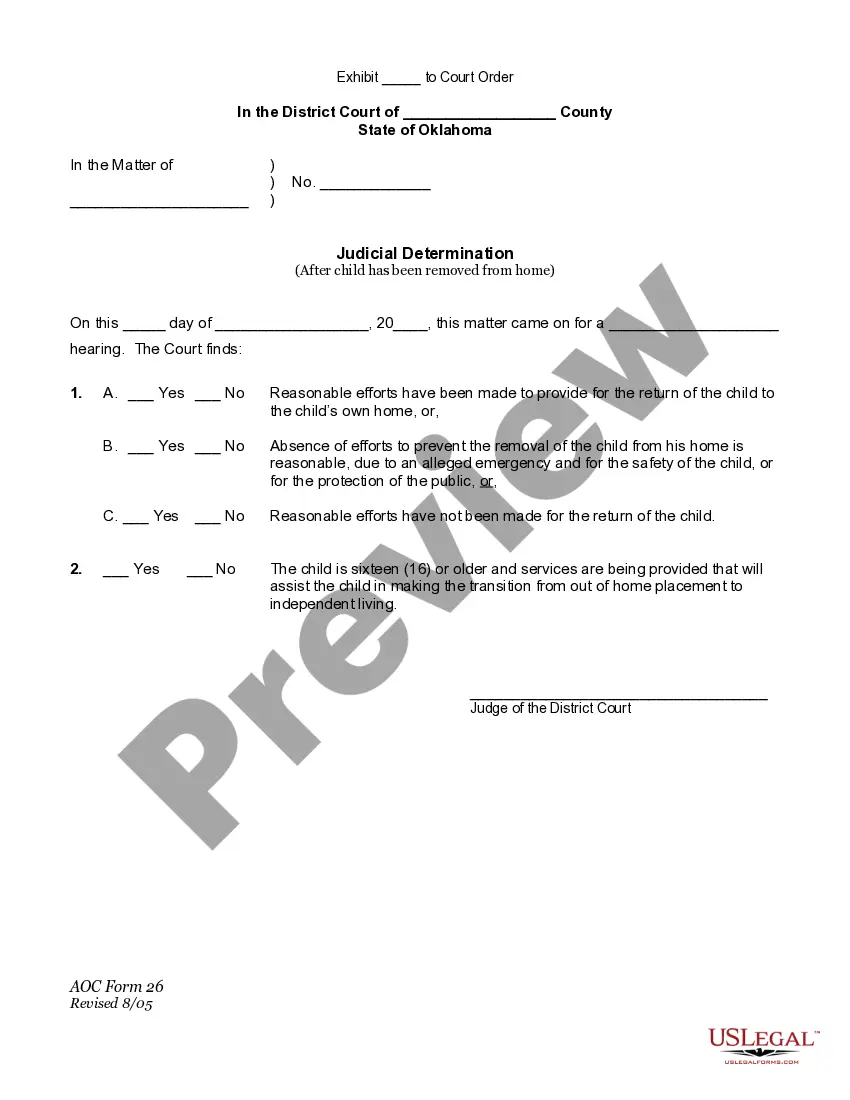
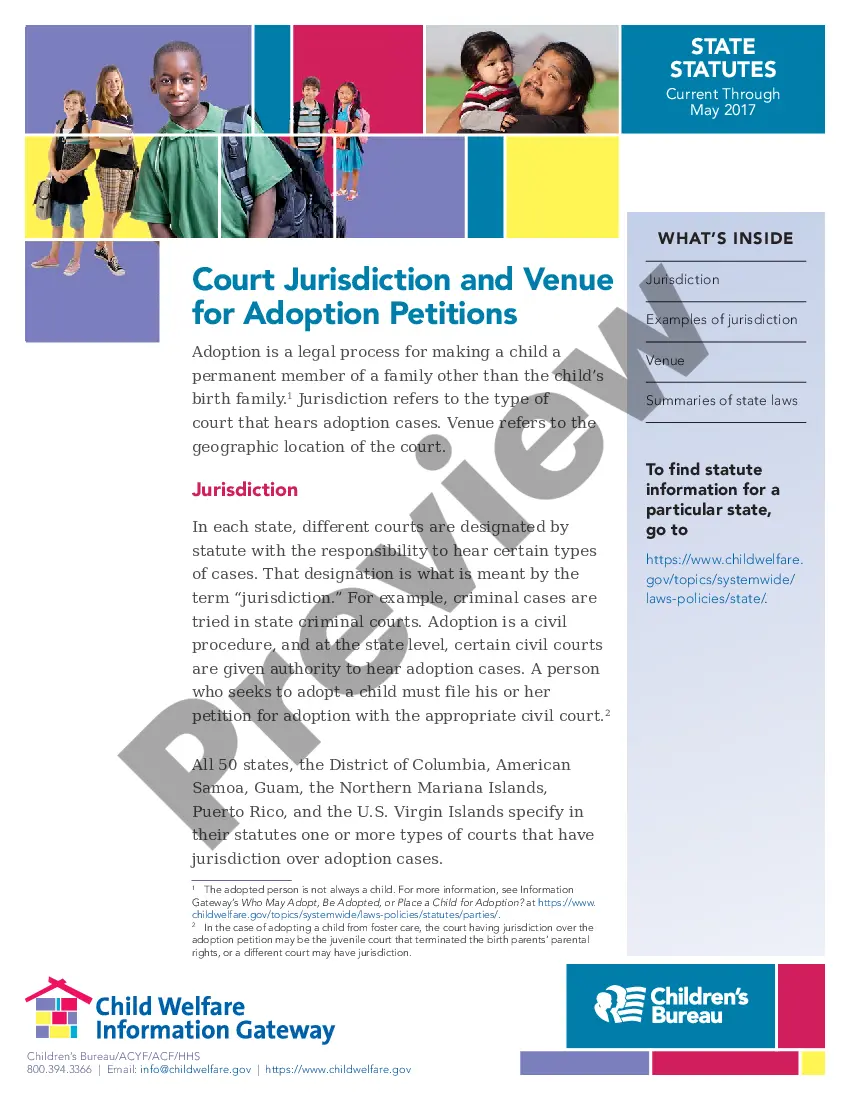
The Judicial Determination - After Child is Removed from Home is a legal document used in Oklahoma to formally assess circumstances after a child has been taken from their home. This form serves to ensure that the appropriate judicial review is conducted regarding the child's removal and any efforts made to return them home. It differentiates itself from similar forms by focusing specifically on the judicial findings related to the removal situation and the child's needs following the removal.
Key parts of this document
- Identification of the court and case number.
- Hearing date and type of hearing conducted.
- Assessments of reasonable efforts for the child's return.
- Consideration of services for children aged sixteen or older transitioning to independent living.
- Signature of the presiding judge.
Situations where this form applies
This form should be used after a child has been removed from their home, particularly during court proceedings to evaluate the circumstances surrounding the removal. It is necessary when the court seeks to determine whether reasonable efforts were made to return the child to their family or if such a return is feasible. The form is vital for protecting the child's welfare and ensuring that the legal process addresses their needs effectively.
Intended users of this form
- Judges overseeing child welfare cases.
- Child welfare caseworkers involved in the child's removal process.
- Parents or guardians seeking a judicial review after their childâs removal.
- Legal representatives for families in child custody proceedings.
Steps to complete this form
- Identify the appropriate District Court and enter the County and State at the beginning of the form.
- Fill in the case number assigned to your proceedings.
- Enter the date of the hearing and the type of hearing conducted.
- Check the boxes to indicate findings regarding efforts made for the child's return, as applicable.
- Ensure that the Judge signs and dates the form.
Does this form need to be notarized?
This form does not typically require notarization unless specified by local law. However, confirming with legal authorities or a lawyer can provide clarity on this matter.
Get your form ready online
Our built-in tools help you complete, sign, share, and store your documents in one place.
Make edits, fill in missing information, and update formatting in US Legal Forms—just like you would in MS Word.
Download a copy, print it, send it by email, or mail it via USPS—whatever works best for your next step.
Sign and collect signatures with our SignNow integration. Send to multiple recipients, set reminders, and more. Go Premium to unlock E-Sign.
If this form requires notarization, complete it online through a secure video call—no need to meet a notary in person or wait for an appointment.
We protect your documents and personal data by following strict security and privacy standards.

Make edits, fill in missing information, and update formatting in US Legal Forms—just like you would in MS Word.

Download a copy, print it, send it by email, or mail it via USPS—whatever works best for your next step.

Sign and collect signatures with our SignNow integration. Send to multiple recipients, set reminders, and more. Go Premium to unlock E-Sign.

If this form requires notarization, complete it online through a secure video call—no need to meet a notary in person or wait for an appointment.

We protect your documents and personal data by following strict security and privacy standards.
Typical mistakes to avoid
- Failing to identify the correct court and county.
- Omitting the case number, which is crucial for proper identification.
- Not accurately checking the boxes that apply to the childâs situation.
- Forgetting to obtain the Judge's signature after completion.
Why complete this form online
- Convenient access to form templates drafted by licensed attorneys.
- Editability allows for the customization of details specific to your case.
- Reliability in ensuring that the form meets legal standards.
Legal use & context
- This form is used exclusively in Oklahoma for judicial determinations related to child welfare cases.
- Proper completion is essential for the form to be recognized as valid in court.
- All findings documented in this form may impact the outcome of custody and child welfare proceedings.
Main things to remember
- The form is essential for assessing a child's removal from their home.
- Use this form to document judicial findings post-removal.
- Accurate completion ensures compliance with Oklahoma's child welfare laws.
Looking for another form?
Form popularity
FAQ
Q: How old does my child need to be before I can leave him home by himself? A: There is no law or policy in Oklahoma for how old a child has to be in order to be left alone. Here are the recommended guidelines for parents: Infants and children under 6 years of age should never be left alone without adult supervision.
Abandonment. If one of the parents decides to leave and never return, you can file for abandonment. This means that the parent in question has no ties to the child and has not made any effort to provide for or support the child.
Child abandonment occurs when a parent, guardian, or person in charge of a child either deserts a child without any regard for the child's physical health, safety or welfare and with the intention of wholly abandoning the child, or in some instances, fails to provide necessary care for a child living under their roof.
The parent or parents have left the child and failed to provide identification for the child (An example of this is providing a birth certificate); The parent or parents have failed to provide support for the child for an extended period of time;
8 to 10 Years - Should not be left alone for more than 1½ hours and only during daylight and early evening hours. 11 to 12 Years - May be left alone for up to 3 hours but not late at night or in circumstances requiring inappropriate responsibility. 13 to 15 Years - May be left unsupervised, but not overnight.
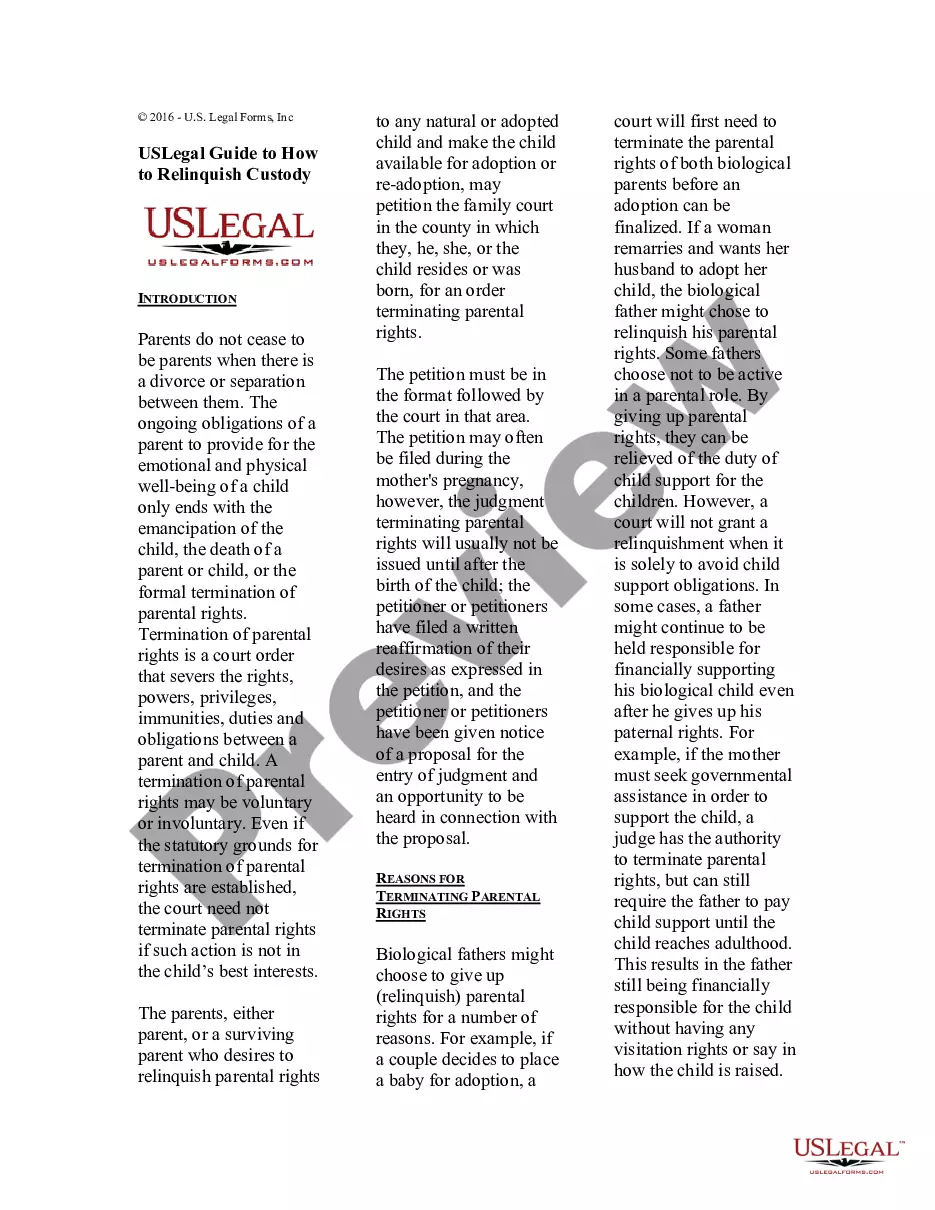
Absent parent: If a parent has been absent for 6 months or more, the law allows the other, more responsible parent, to petition to terminate parental rights. Not just parents can terminate: in fact, anyone with an interest in the well-being of a child can attempt to terminate one or both parents' rights.
As of now, the states that allow reinstatement of parental rights include: Alaska, Colorado, California, Delaware, Hawaii, Illinois, Louisiana, Maine, North Carolina, Nevada, New York, Oklahoma, and Washington; and while state statutes vary and each has its own terms and conditions when considering restoration of
Every person who shall without good cause abandon his wife in destitute or necessitous circumstances and neglect and refuse to maintain or provide for her, or who shall abandon his or her minor child or children under the age of fifteen (15) years and willfully neglect or refuse to maintain or provide for such child or