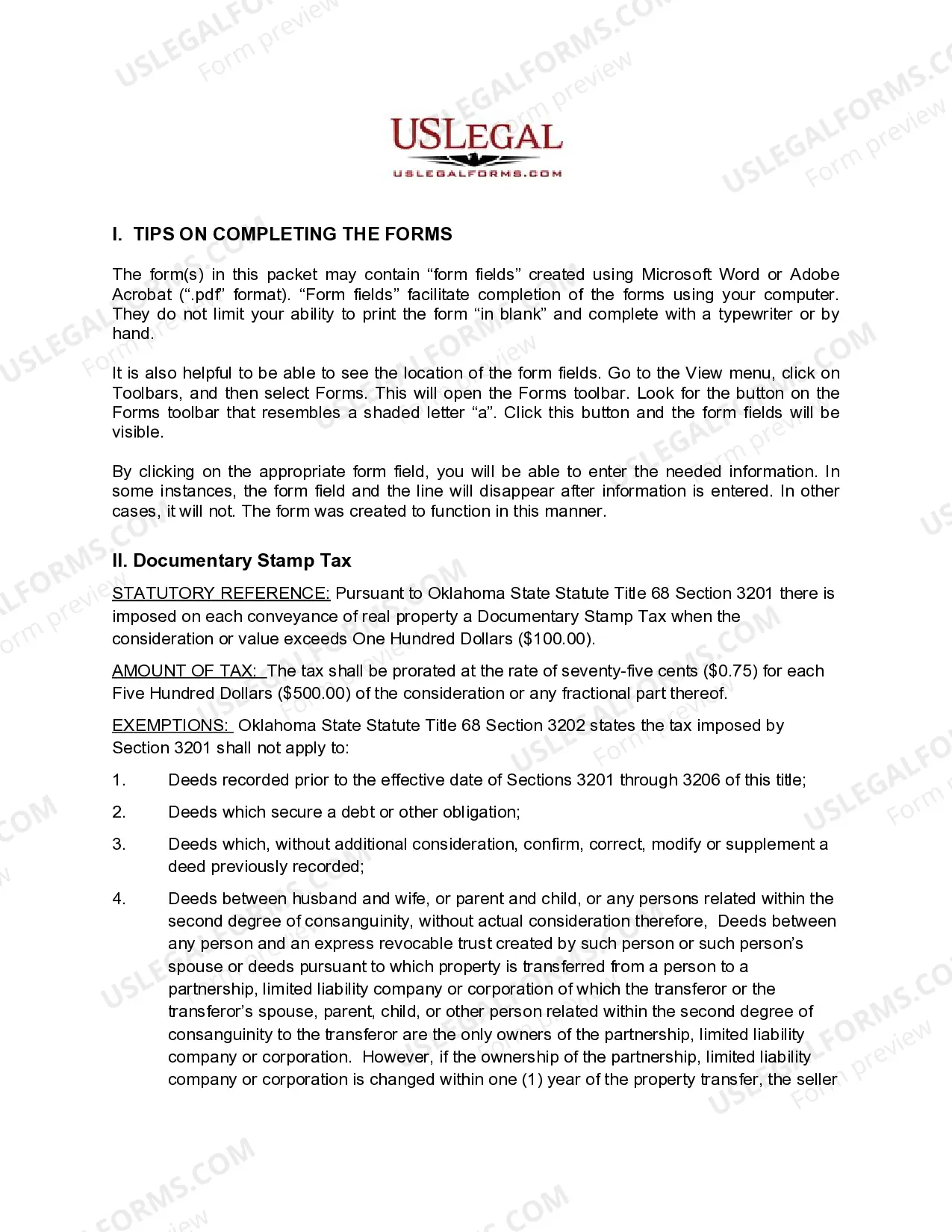
Oklahoma Special Warranty Deed from a Trust to Four Individuals Subject to a Life Estate
Understanding this form
A Special Warranty Deed from a Trust to Four Individuals Subject to a Life Estate is a legal document that allows a trustee to transfer property ownership to four individuals while specifying a life estate for a designated person. This type of deed guarantees that the grantor (the trust) will defend the title against claims that arose during their ownership, but it does not cover claims that occurred before the property was transferred. This deed differs from other forms of warranty deeds primarily by the nature of its warranty, which is limited to the period of the grantor's ownership.
What’s included in this form
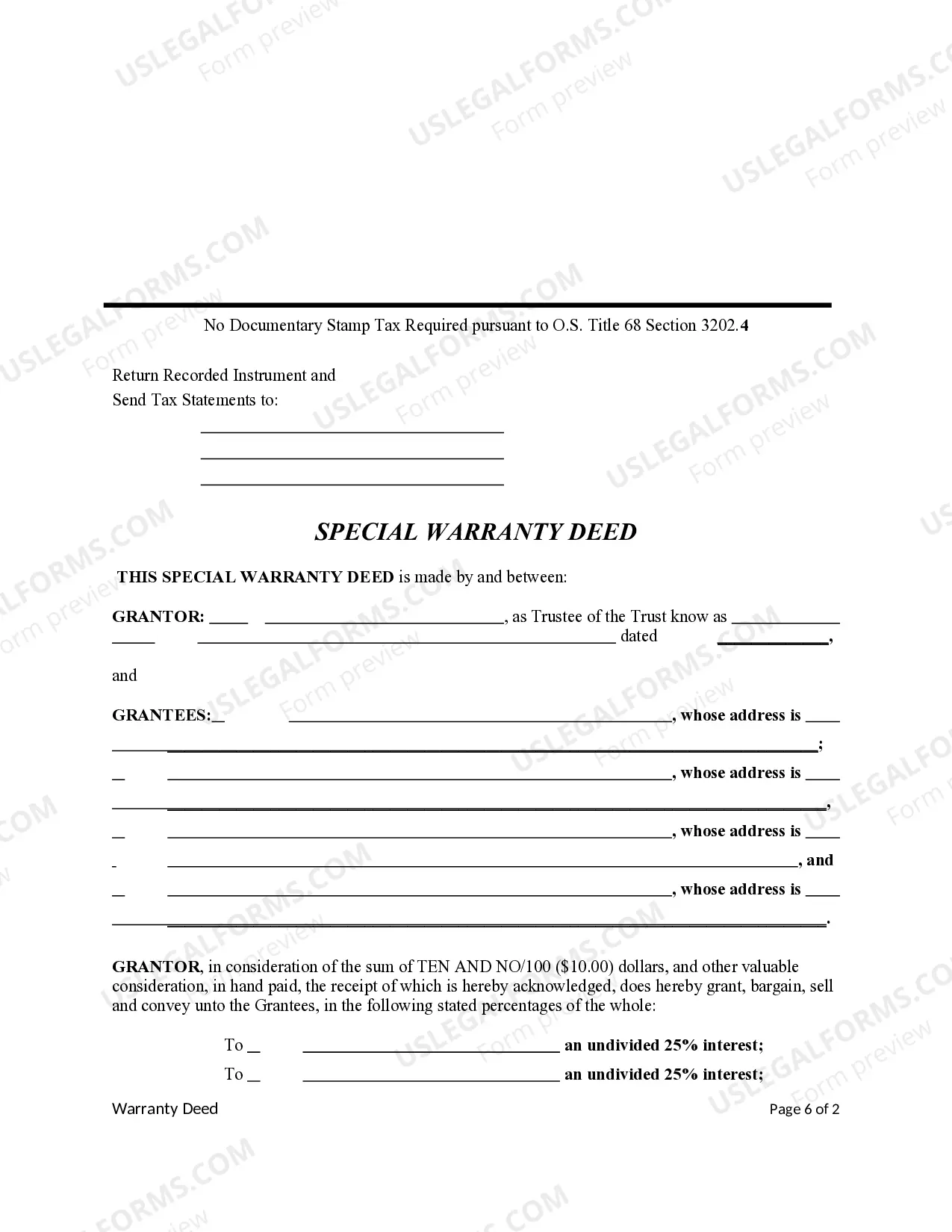
- Identification of the Grantor (the Trust) and Grantees (the four individuals).
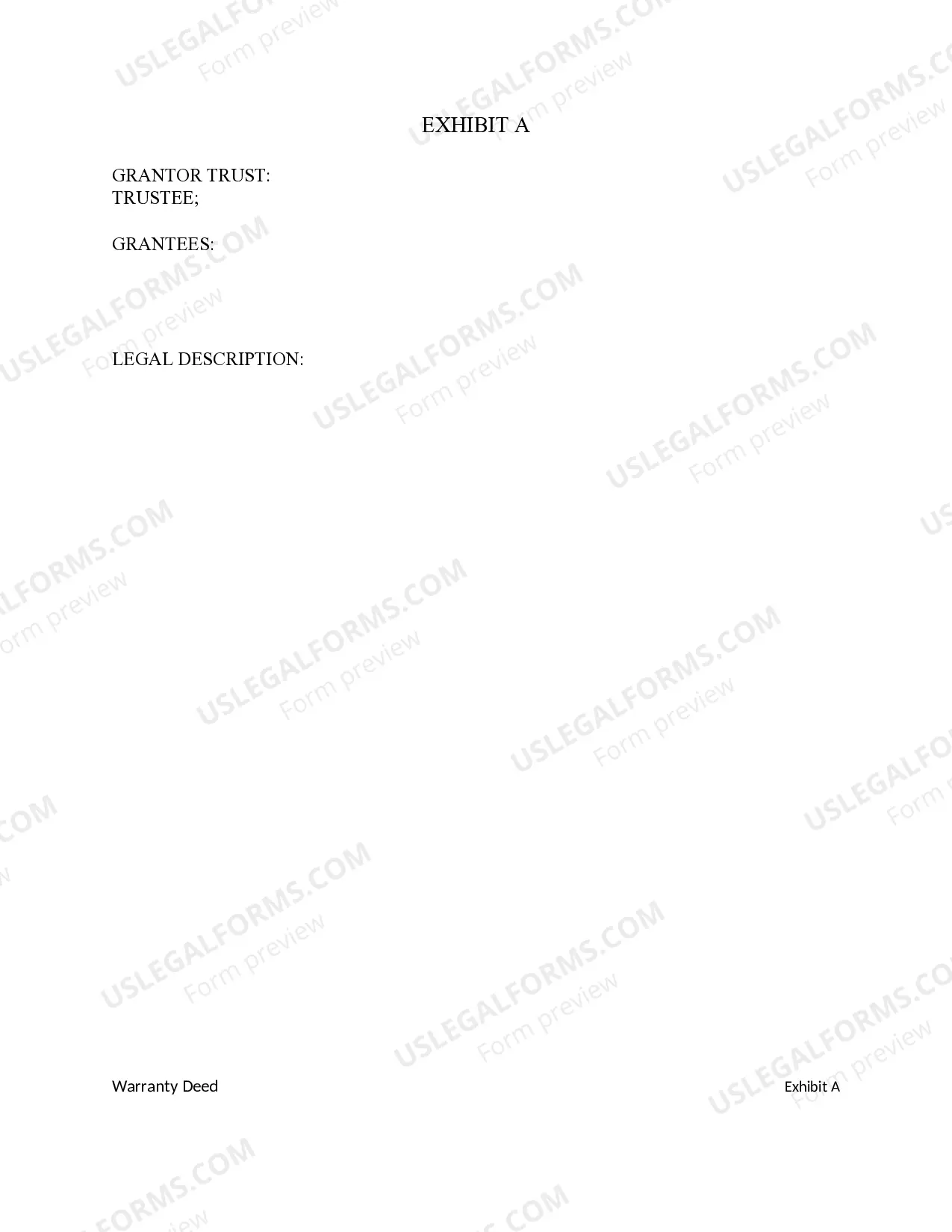
- Legal description of the property being conveyed.
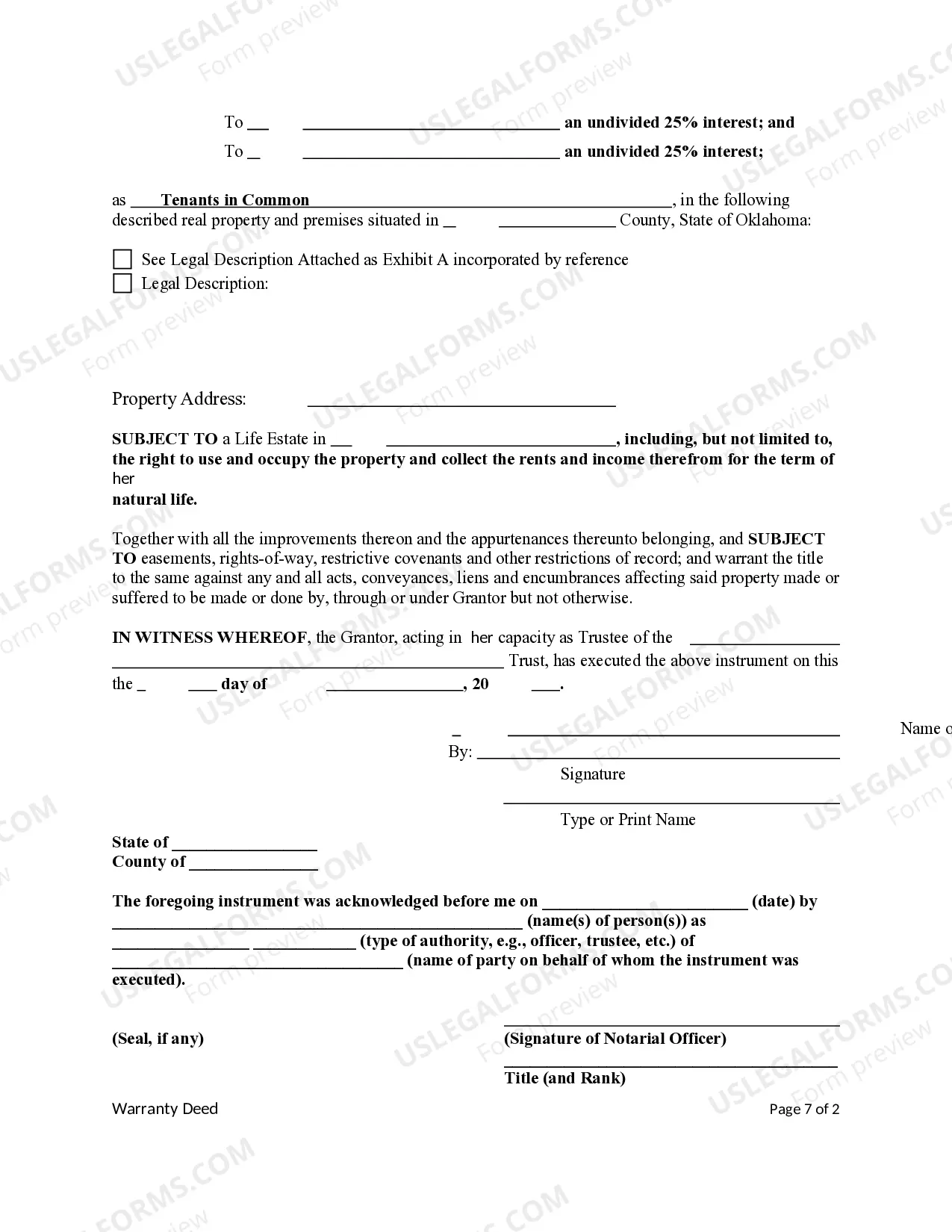
- Specification of the life estate, detailing who holds the life interest.
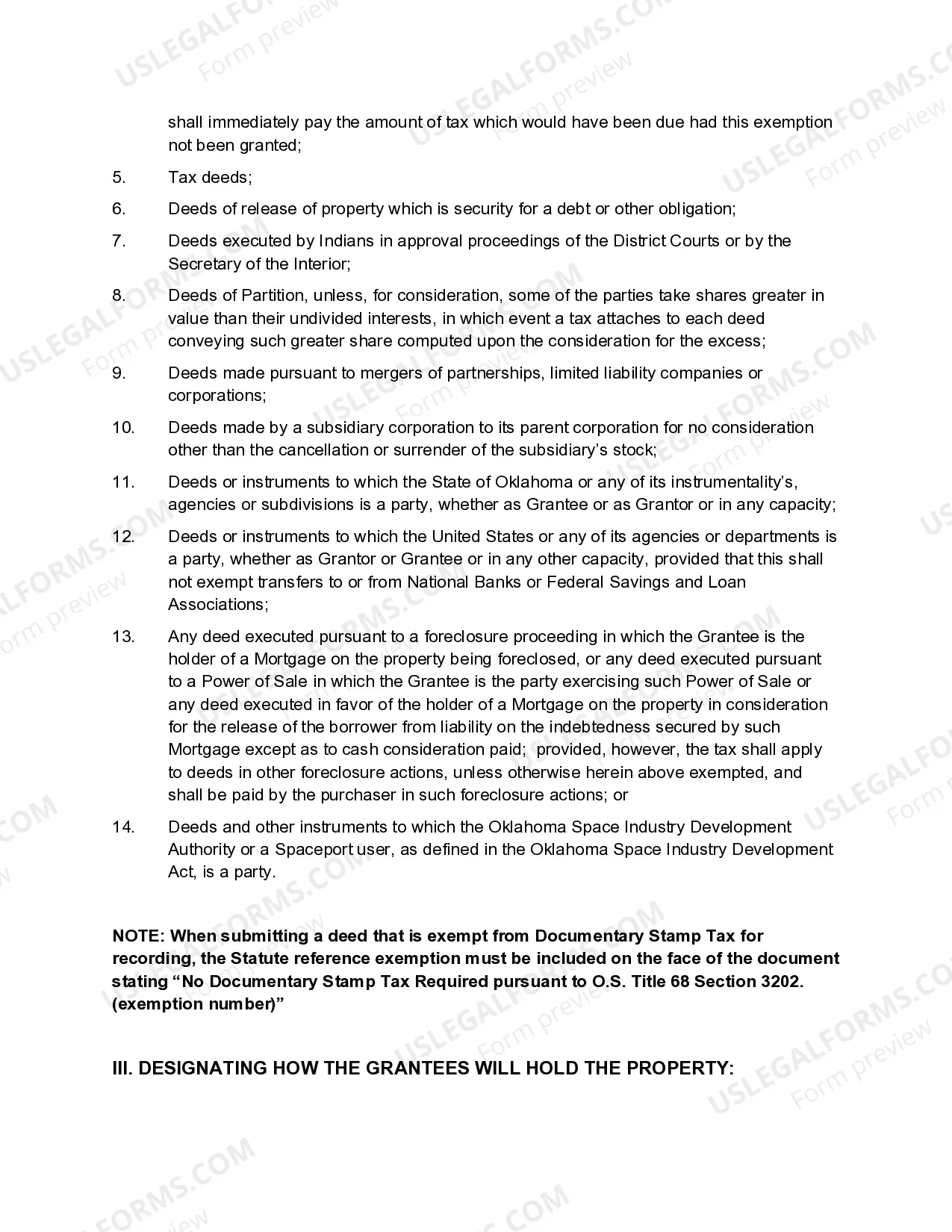
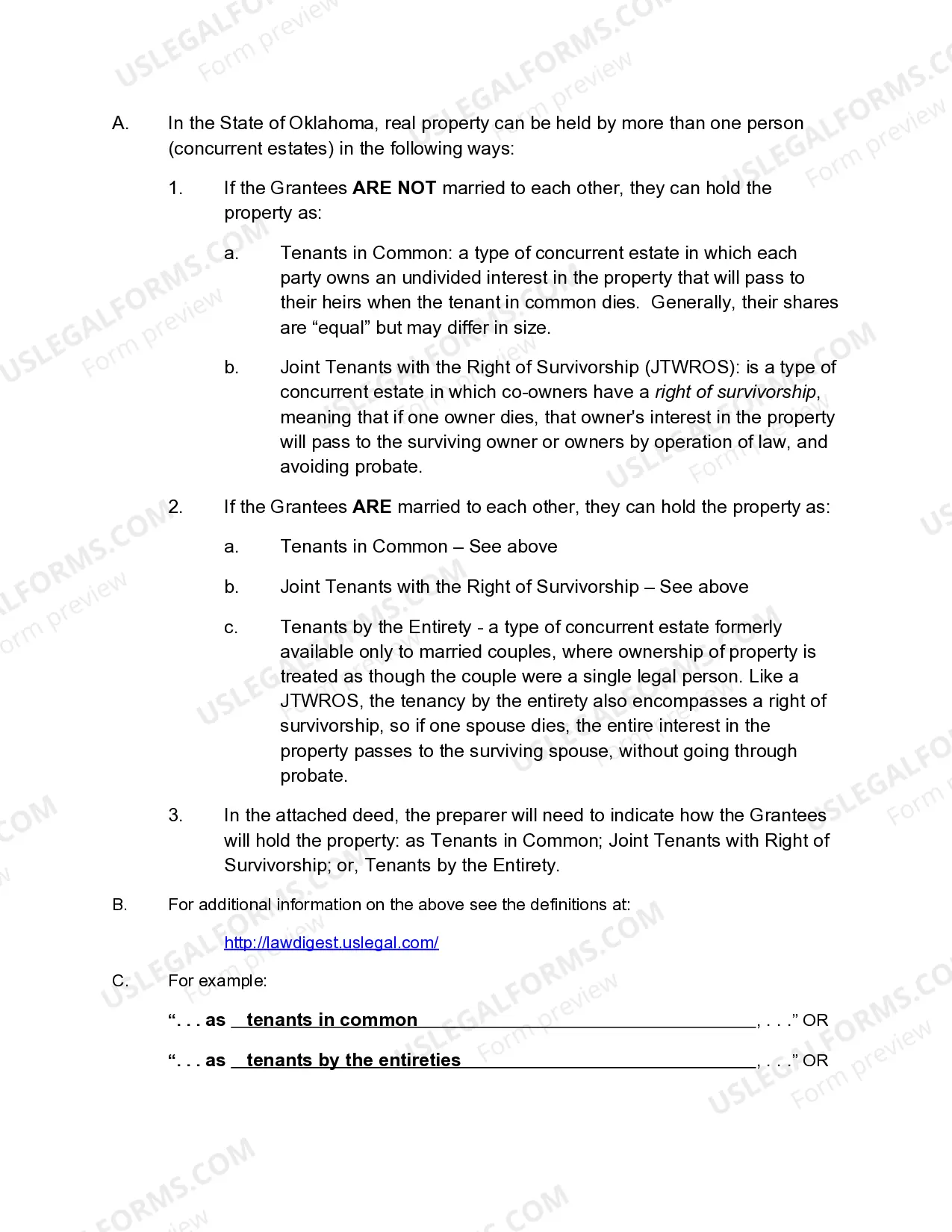
- Provisions regarding how the Grantees will hold the property (e.g., tenants in common, joint tenants with right of survivorship).
- Execution requirements, including signatures and date.





When to use this form
This form is appropriate when a trust wants to convey property to multiple individuals while reserving a life estate for a specific person. It can be used in estate planning, property transfer situations, or family agreements where it's important to maintain control over the property during an individualâs lifetime.
Intended users of this form
Eligible users of this form include:
- Trustees looking to transfer real estate held in trust.
- Individuals involved in estate planning who want to designate life estates.
- Families or groups wishing to divide property ownership while ensuring a life estate is maintained for a family member.
Steps to complete this form
To complete this form, follow these steps:
- Identify the grantor by stating the name of the trust.
- List the names of the four individuals who will be the grantees.
- Provide a detailed legal description of the property being transferred.
- Specify the individual who will hold the life estate and how the grantees will hold the property (tenants in common, joint tenants, or tenants by the entirety).
- Ensure all parties review the document, sign, and date it appropriately.
Does this form need to be notarized?
This form does not typically require notarization unless specified by local law. It is advisable to check with local regulations or an attorney regarding the notarization requirements in your jurisdiction.
Get your form ready online
Our built-in tools help you complete, sign, share, and store your documents in one place.
Make edits, fill in missing information, and update formatting in US Legal Forms—just like you would in MS Word.
Download a copy, print it, send it by email, or mail it via USPS—whatever works best for your next step.
Sign and collect signatures with our SignNow integration. Send to multiple recipients, set reminders, and more. Go Premium to unlock E-Sign.
If this form requires notarization, complete it online through a secure video call—no need to meet a notary in person or wait for an appointment.
We protect your documents and personal data by following strict security and privacy standards.

Make edits, fill in missing information, and update formatting in US Legal Forms—just like you would in MS Word.

Download a copy, print it, send it by email, or mail it via USPS—whatever works best for your next step.

Sign and collect signatures with our SignNow integration. Send to multiple recipients, set reminders, and more. Go Premium to unlock E-Sign.

If this form requires notarization, complete it online through a secure video call—no need to meet a notary in person or wait for an appointment.

We protect your documents and personal data by following strict security and privacy standards.
Mistakes to watch out for
- Failing to specify the exact nature of the life estate.
- Not including the complete legal description of the property.
- Omitting signatures or dates which can invalidate the deed.
- Not understanding how the property will be held by the grantees, leading to future disputes.
Benefits of completing this form online
- Convenient download and completion of the form from home or office.
- Editable fields allow for accurate customization.
- Access to forms drafted by licensed attorneys ensures legal compliance.
Main things to remember
- A Special Warranty Deed allows for property transfer from a trust to multiple grantees while specifying a life estate.
- Understanding the rights of all parties involved is crucial for future ownership matters.
- Properly completing and executing the form is essential to ensure legal validity.
Looking for another form?
Form popularity
FAQ
Fill out the "grantor" section of the warranty deed. The grantors are the givers, or current owners, of the property. Use the legal name of each grantor and insert current addresses after each grantor's name.
In the context of a California mortgage transaction, a trust deed also transfer ownership. Only this time, the title is being placed in the hands of a third-party trustee, who holds the property on behalf of the lender and the homeowner-borrower until the mortgage is paid.
In Oklahoma, title to real property can be transferred from one party to another by executing a special warranty deed. A special warranty deed conveys an interest in real property to the named grantee with limited warranties of title.Generally, real property is owned in either sole ownership or in co-ownership.
Locate the deed that's in trust. Use the proper deed. Check with your title insurance company and lender. Prepare a new deed. Sign in the presence of a notary. Record the deed in the county clerk's office.
California Property TaxesTransferring real property to yourself as trustee of your own revocable living trust -- or back to yourself -- does not trigger a reassessment for property tax purposes. (Cal. Rev. & Tax Code § 62(d).)
Special warranties allow the transfer of property title between seller and buyer. The purchase of title insurance can mitigate the risk of prior claims to the special warranty deed.
A quitclaim deed can be used to transfer property from a trust, but a Special Warranty Deed seems to be a more common way to do this.
When you're ready to transfer trust real estate to the beneficiary who is named in the trust document to receive it, you'll need to prepare, sign, and record a deed. That's the document that transfers title to the property from you, the trustee, to the new owner.
Step 1 Fill in the grantor's name and address along with indicating whether or not the grantor is married. Step 2 Enter the consideration to be paid for the property. Step 3 Write in the grantee's name and address and check the box showing how they intend to hold the property.