Ohio Letter Informing Debt Collector of False or Misleading Misrepresentations in Collection Activities - Threatening to Take an Action that Cannot Legally be Taken or That is not Intended to be Taken

State:
Multi-State
Control #:
US-DCPA-19.12BG
Format:
Word; 
Rich Text
Instant download

Description

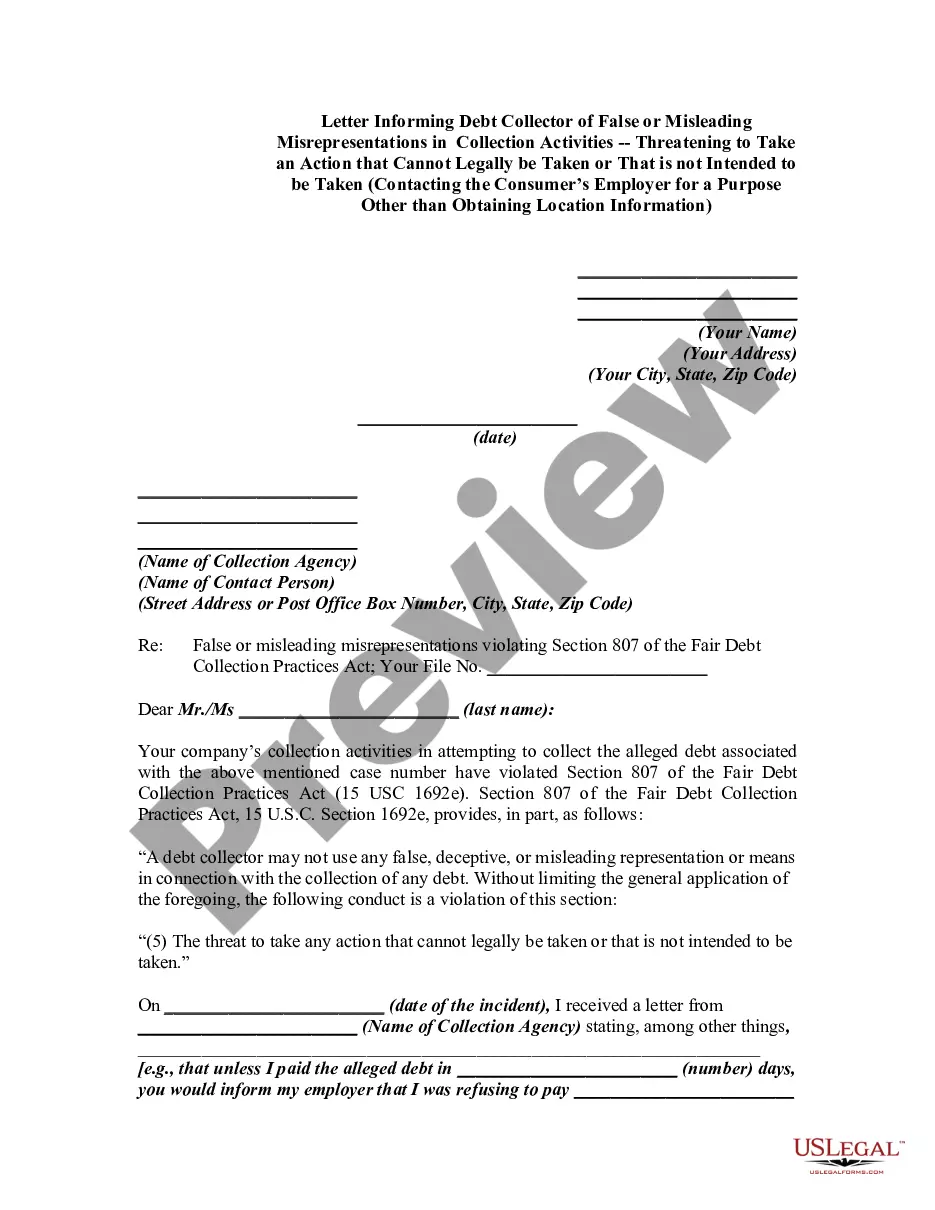
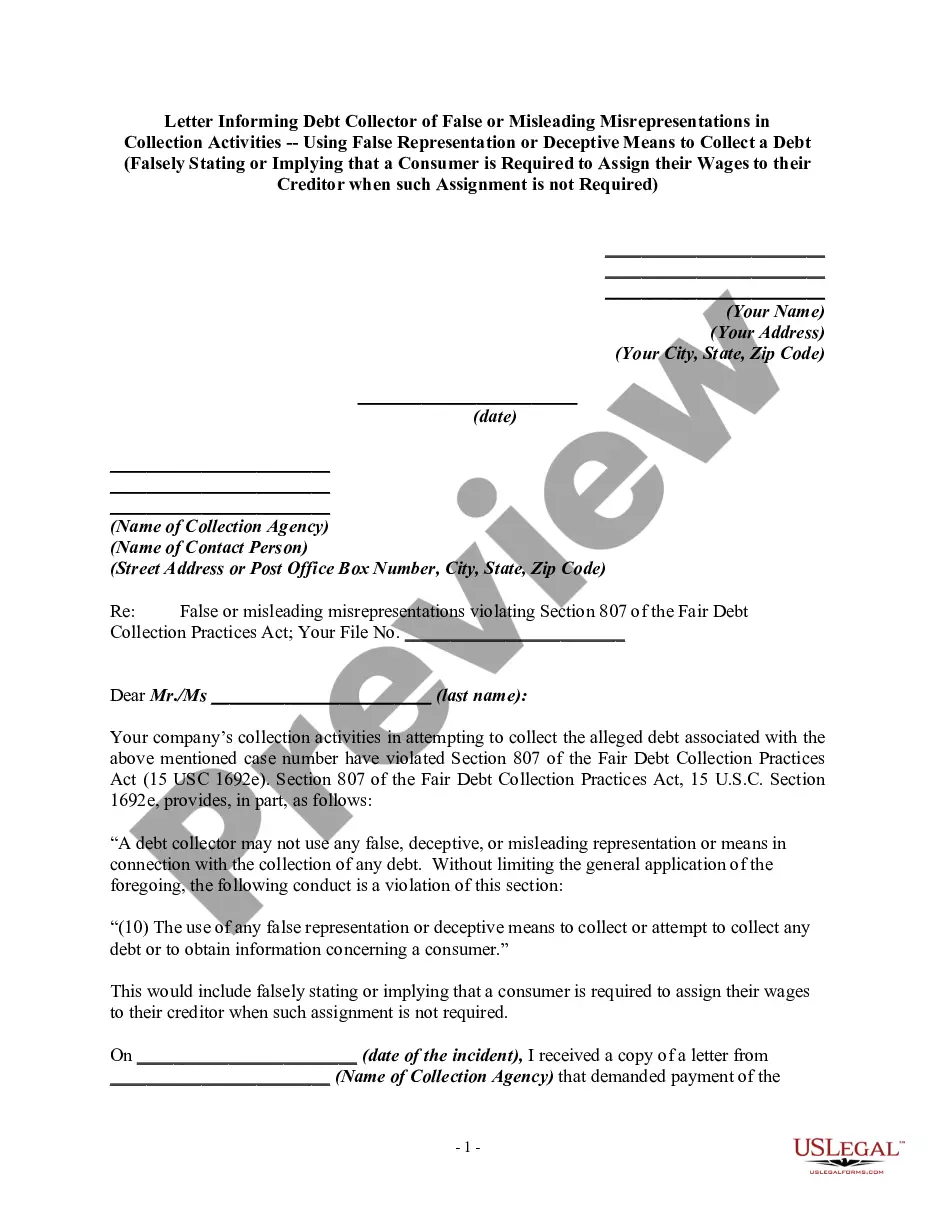
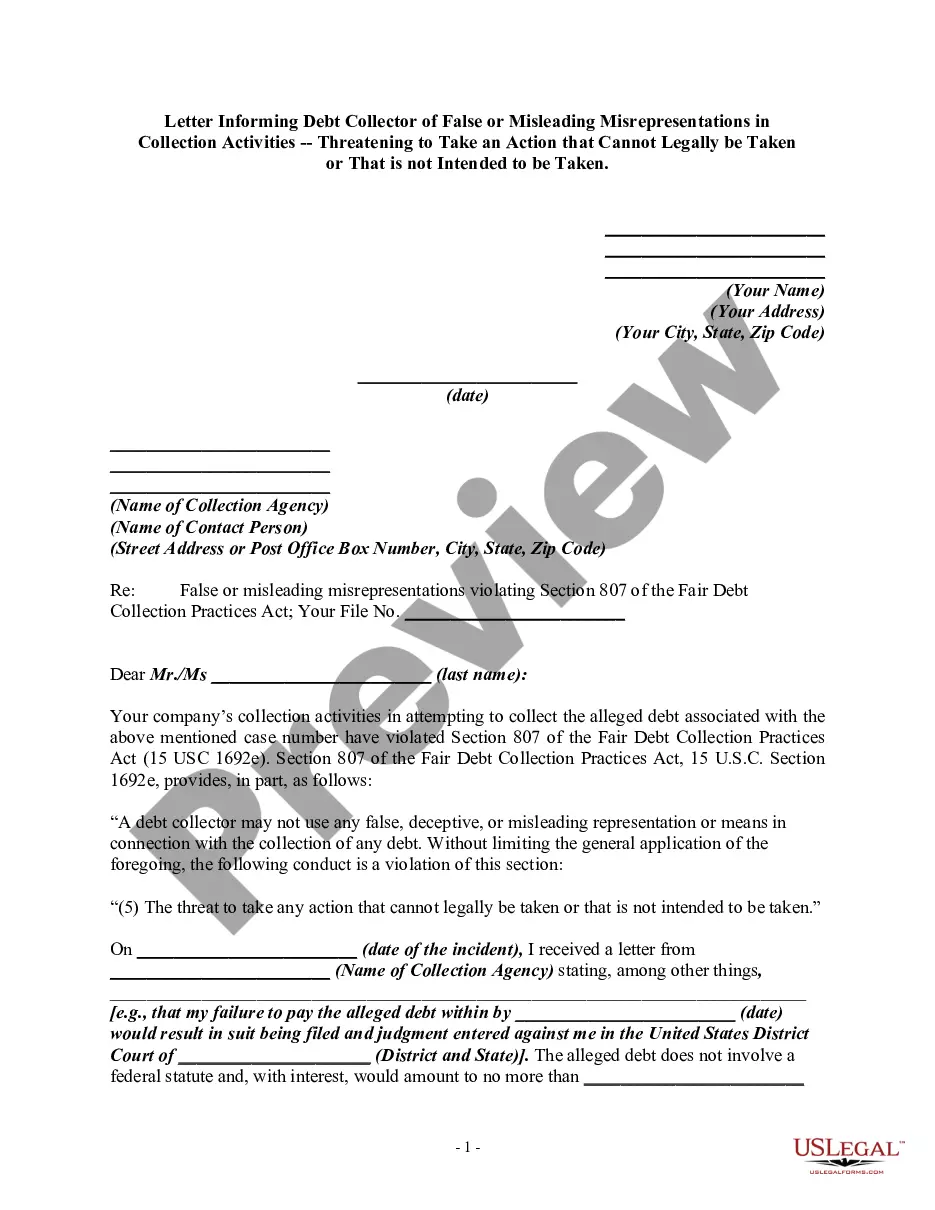
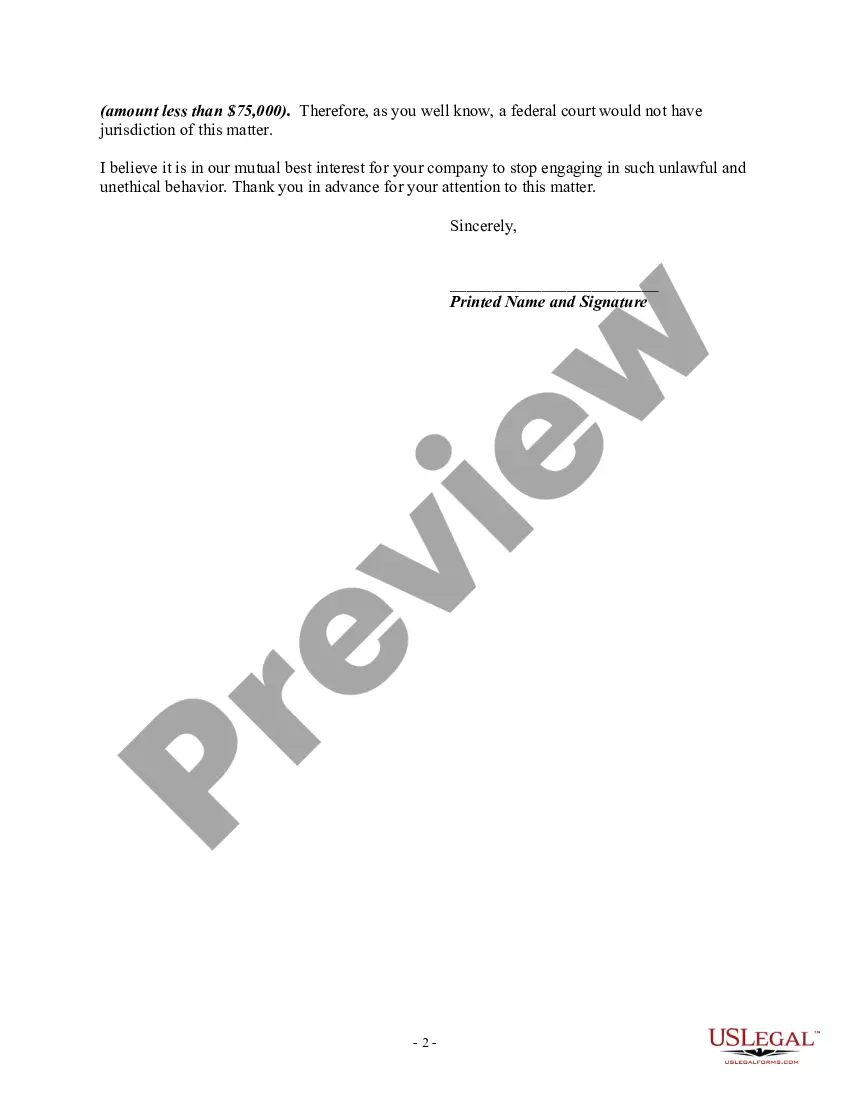
Section 807 of the Fair Debt Collection Practices Act, 15 U.S.C. Section 1692e, provides, in part, as follows: "A debt collector may not use any false, deceptive, or misleading representation or means in connection with the collection of any debt. Without limiting the general application of the foregoing, the following conduct is a violation of this section:


"(5) The threat to take any action that cannot legally be taken or that is not intended to be taken."
Free preview
  • Preview Letter Informing Debt Collector of False or Misleading Misrepresentations in Collection Activities - Threatening to Take an Action that Cannot Legally be Taken or That is not Intended to be Taken
  • Preview Letter Informing Debt Collector of False or Misleading Misrepresentations in Collection Activities - Threatening to Take an Action that Cannot Legally be Taken or That is not Intended to be Taken

Related forms

form-preview
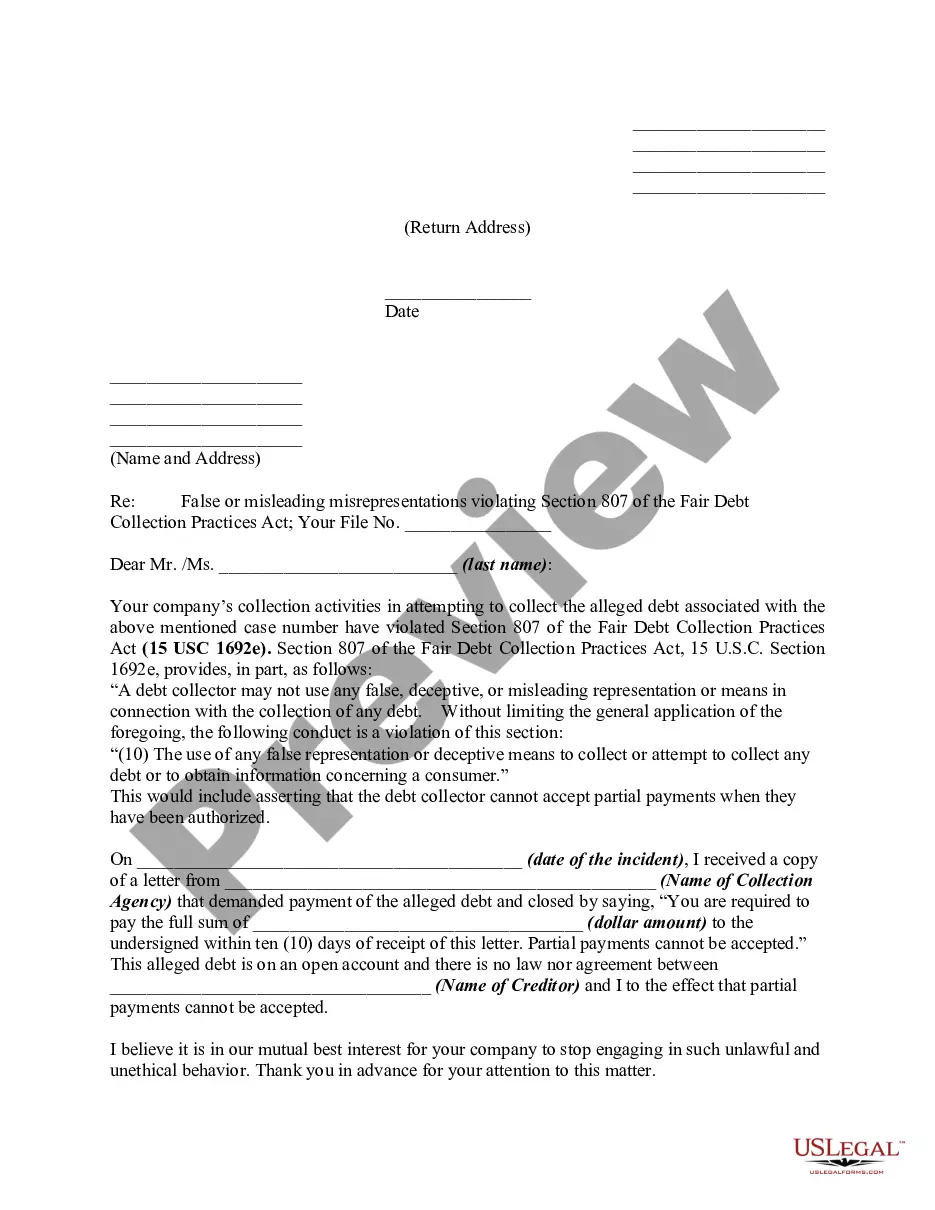
Ohio Letter Informing Debt Collector of False or Misleading Misrepresentations in Collection Activities

Ohio Letter Informing Debt Collector of False or Misleading Misrepresentations in Collection Activities

View this form
form-preview
Ohio Letter Informing Debt Collector of False or Misleading Misrepresentations in Collection Activities - Threatening to Take an Action that Cannot Legally be Taken or That is not Intended to be Taken - Contacting the Consumer’s Employer

Ohio Letter Informing Debt Collector of False or Misleading Misrepresentations in Collection Activities - Threatening to Take an Action that Cannot Legally be Taken or That is not Intended to be Taken - Contacting the Consumer’s Employer

View this form
form-preview
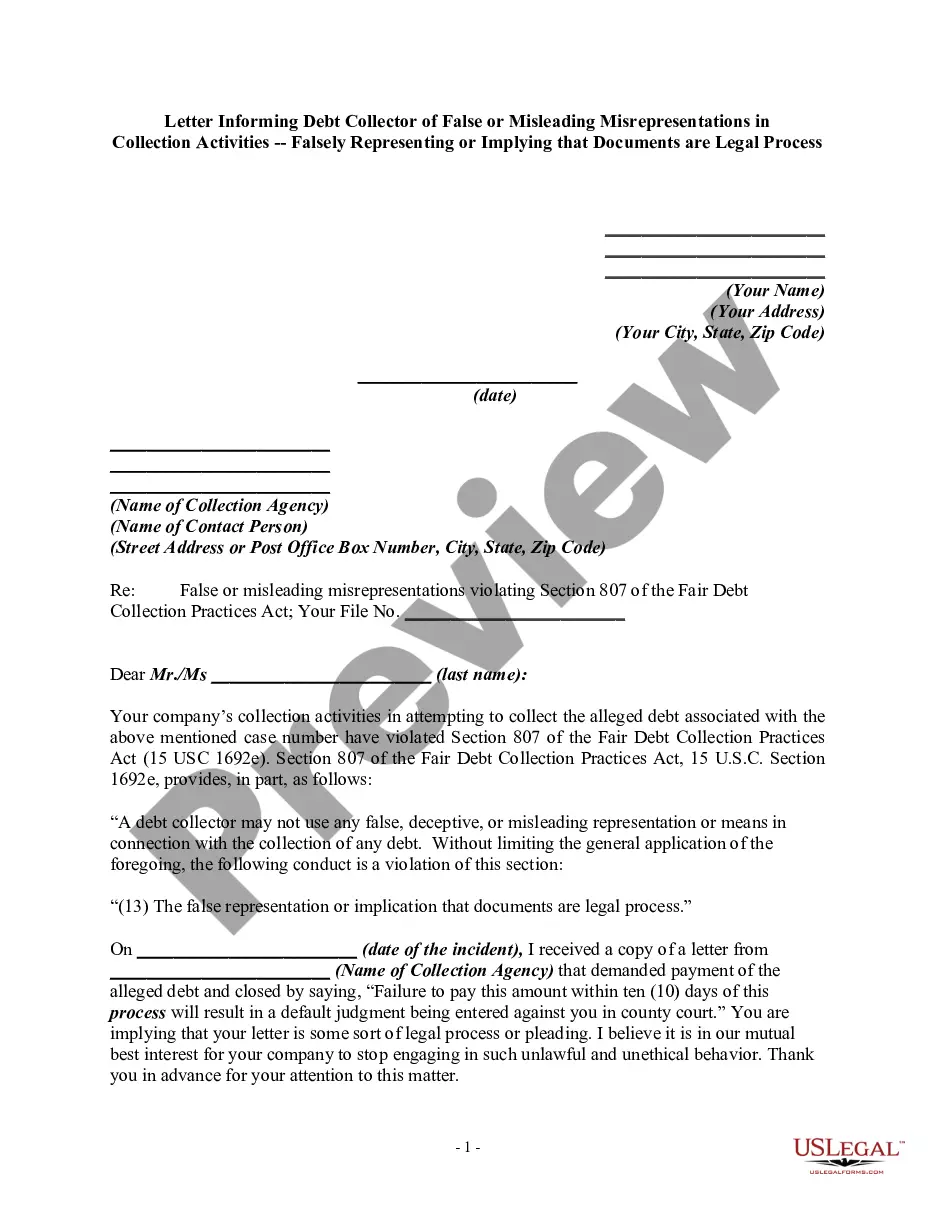
Ohio Letter Informing Debt Collector of False or Misleading Misrepresentations in Collection Activities - Falsely Representing or Implying that Documents are Legal Process

Ohio Letter Informing Debt Collector of False or Misleading Misrepresentations in Collection Activities - Falsely Representing or Implying that Documents are Legal Process

View this form
form-preview
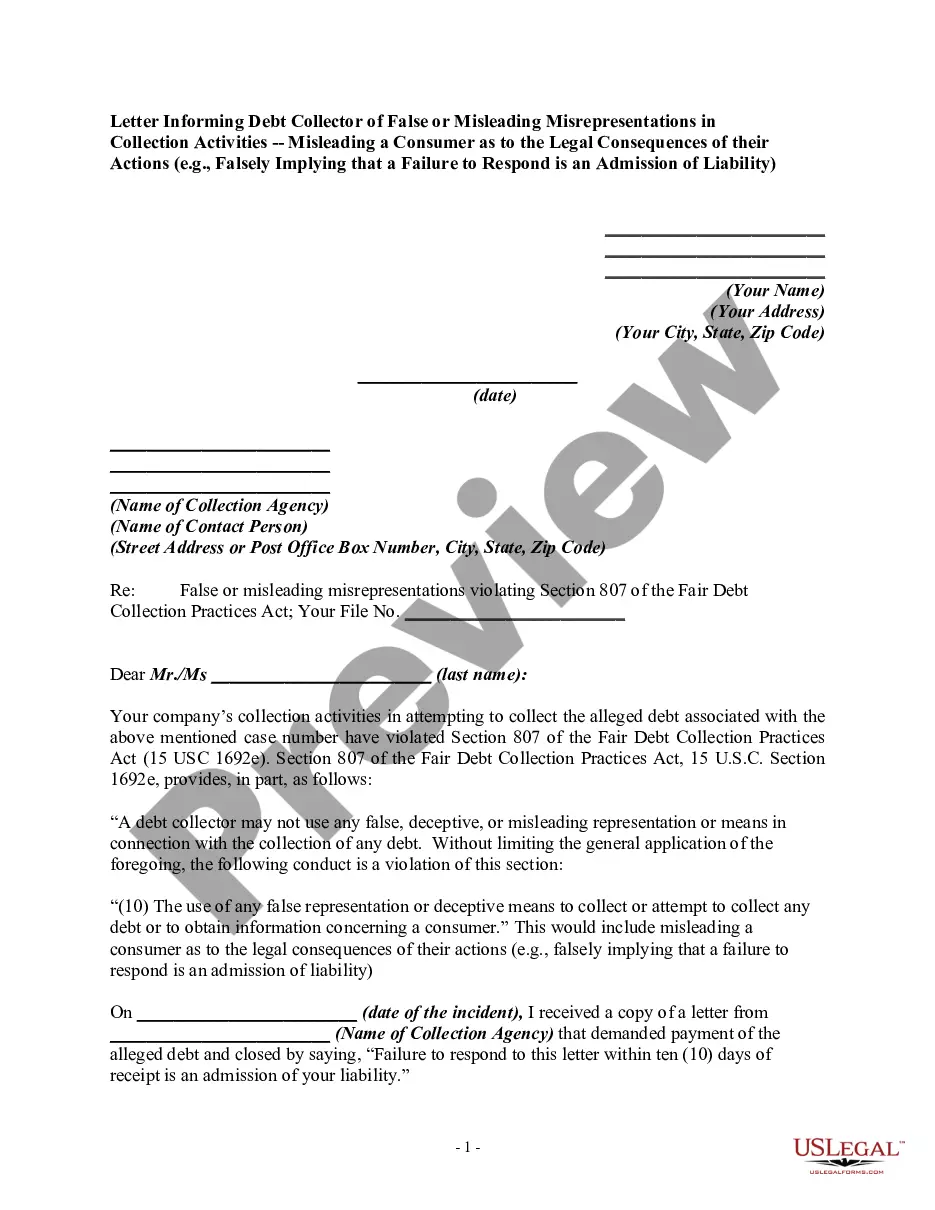
Ohio Letter Informing Debt Collector of False or Misleading Misrepresentations in Collection Activities - Misleading a Consumer as to the Legal Consequences of their Actions - e.g., Falsely Implying that a Failure to Respond is an Admission of Liability

Ohio Letter Informing Debt Collector of False or Misleading Misrepresentations in Collection Activities - Misleading a Consumer as to the Legal Consequences of their Actions - e.g., Falsely Implying that a Failure to Respond is an Admission of Liability

View this form
form-preview
Ohio Letter Informing Debt Collector of False or Misleading Misrepresentations in Collection Activities - Using False Representation or Deceptive Means to Collect a Debt

Ohio Letter Informing Debt Collector of False or Misleading Misrepresentations in Collection Activities - Using False Representation or Deceptive Means to Collect a Debt

View this form

How to fill out Letter Informing Debt Collector Of False Or Misleading Misrepresentations In Collection Activities - Threatening To Take An Action That Cannot Legally Be Taken Or That Is Not Intended To Be Taken?

You can invest time online seeking the proper legal document template that fulfills the federal and state regulations you need.

US Legal Forms offers a vast array of legal templates reviewed by experts.

You can download or print the Ohio Letter Informing Debt Collector of False or Misleading Misrepresentations in Collection Activities - Threatening to Take an Action that Cannot Legally be Taken or That is not Intended to be Taken from my assistance.

If available, use the Preview button to review the document template as well.

  1. If you have a US Legal Forms account, you can Log In and click the Acquire button.
  2. Then, you can complete, edit, print, or sign the Ohio Letter Informing Debt Collector of False or Misleading Misrepresentations in Collection Activities - Threatening to Take an Action that Cannot Legally be Taken or That is not Intended to be Taken.
  3. Every legal document template you purchase is yours forever.
  4. To access an additional copy of a purchased form, go to the My documents tab and click the corresponding button.
  5. If you are using the US Legal Forms website for the first time, follow the simple instructions below.
  6. First, ensure that you have selected the correct document template for your region/area of choice.
  7. Review the form summary to confirm you have chosen the right form.

Form popularity

FAQ

Unfair practices are prohibitedDeposit or threaten to deposit a postdated check before your intended payment date. Take or threaten to take property if it's not allowed. Collect more than you owe on a debt, which may include fees and interest.

Your dispute should be made in writing to ensure that the debt collector has to send you verification of the debt. If you're having trouble with debt collection, you can submit a complaint with the CFPB online or by calling (855) 411-CFPB (2372).

Debt collectors cannot harass or abuse you. They cannot swear, threaten to illegally harm you or your property, threaten you with illegal actions, or falsely threaten you with actions they do not intend to take. They also cannot make repeated calls over a short period to annoy or harass you.

Yes, you may be able to sue a debt collector or a debt collection agency if it engages in abusive, deceptive, or unfair behavior. A debt collector is generally someone who buys a debt from a creditor who, for whatever reason, has been unable to collect from a consumer.

Normally, collections are disputed because the debtor believes they are incorrect for some reason. For example, if you review a copy of your credit report and you see a collection account that you believe belongs to another person, has an incorrect balance or is greater than seven years old, you can file a dispute.

(1) The false representation or implication that the debt collector is vouched for, bonded by, or affiliated with the United States or any State, including the use of any badge, uniform, or facsimile thereof. (2) The false representation of -- (A) the character, amount, or legal status of any debt; or.

The Fair Debt Collection Practices Act (FDCPA) is a federal law that provides a mechanism for you to stop debt collectors from contacting you. You can do this by sending a Cease and Desist Letter. Federal law allows you to communicate with debt collectors to tell them that you want them to stop contacting you.

Write a dispute letter and send it to each credit bureau. Include information about each of the disputed itemsaccount numbers, listed amounts and creditor names. Write a similar letter to each collection agency, asking them to remove the error from your credit reports.

7 Most Common FDCPA ViolationsContinued attempts to collect debt not owed.Illegal or unethical communication tactics.Disclosure verification of debt.Taking or threatening illegal action.False statements or false representation.Improper contact or sharing of info.Excessive phone calls.

The Fair Debt Collection Practices Act (FDCPA) The FDCPA prohibits debt collection companies from using abusive, unfair or deceptive practices to collect debts from you.

Trusted and secure by over 3 million people of the world’s leading companies

Ohio Letter Informing Debt Collector of False or Misleading Misrepresentations in Collection Activities - Threatening to Take an Action that Cannot Legally be Taken or That is not Intended to be Taken