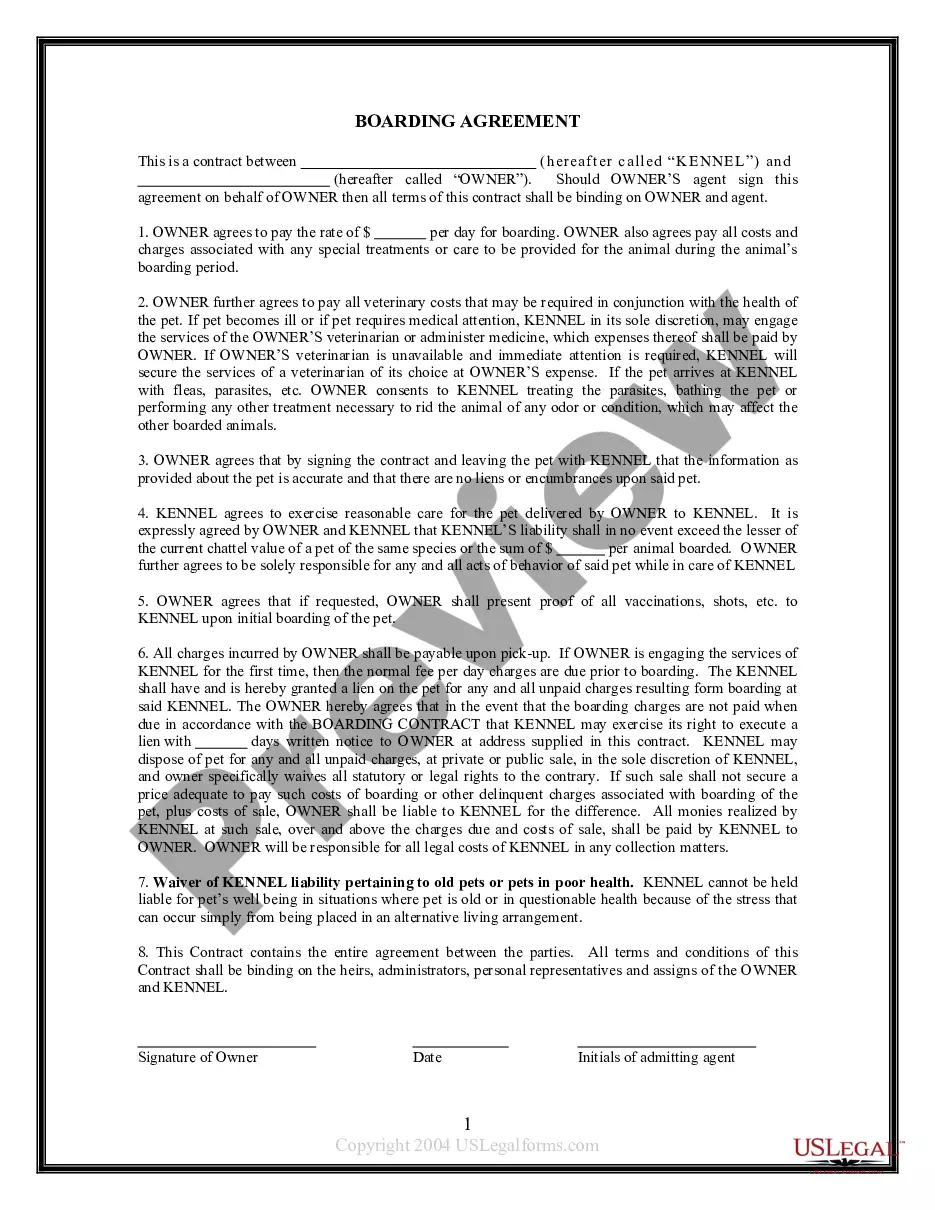
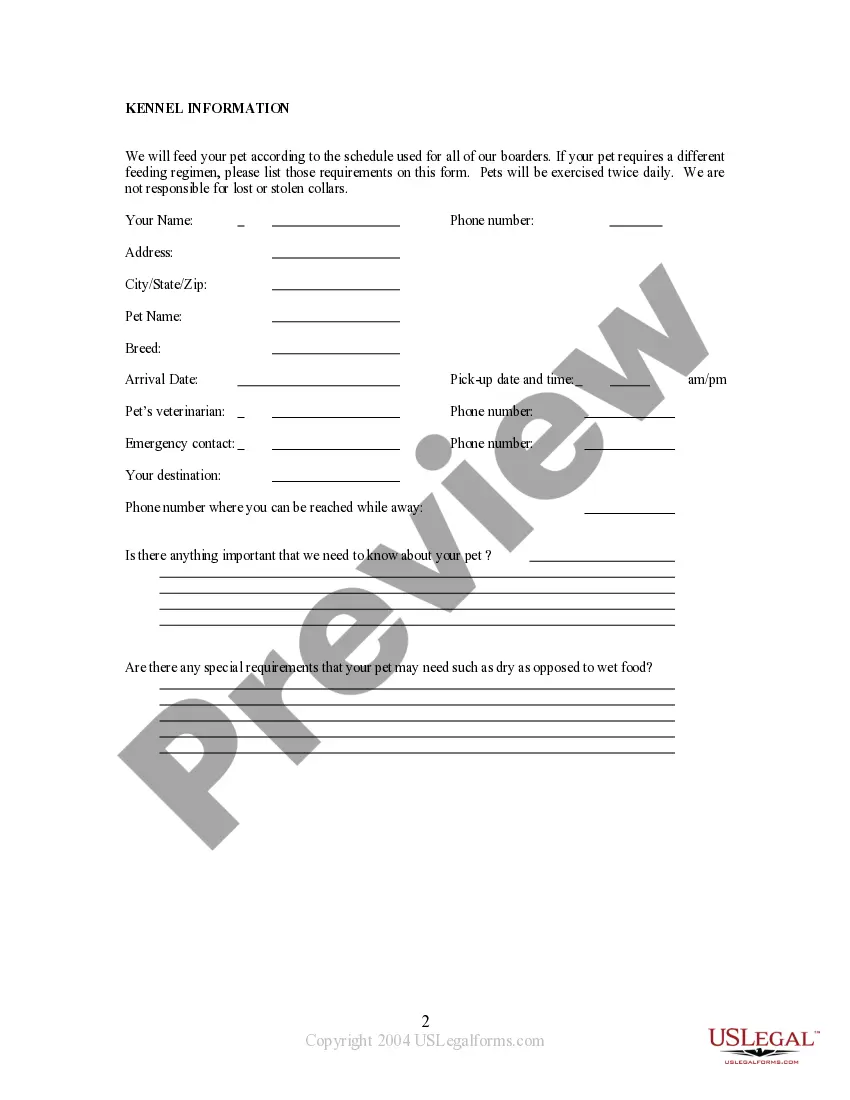
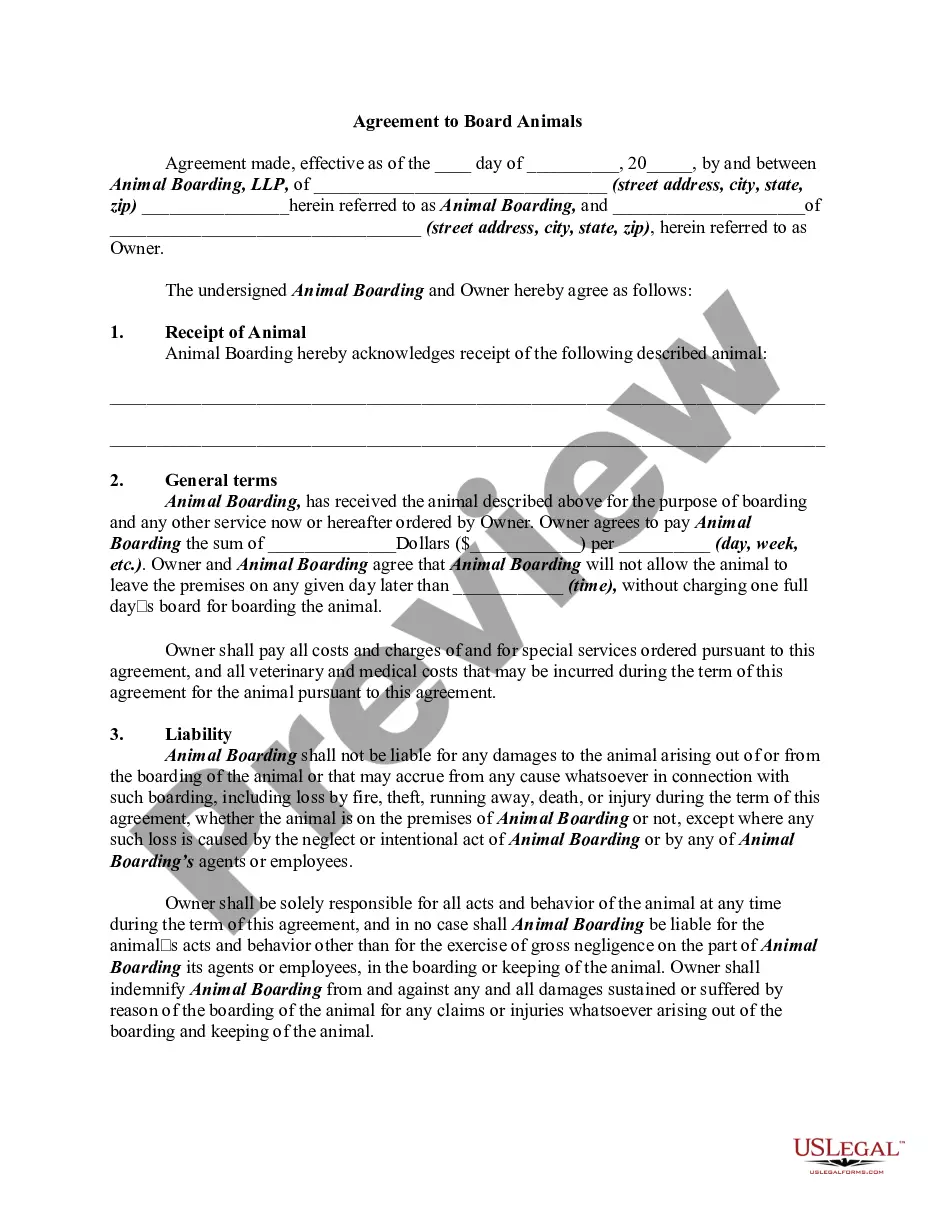
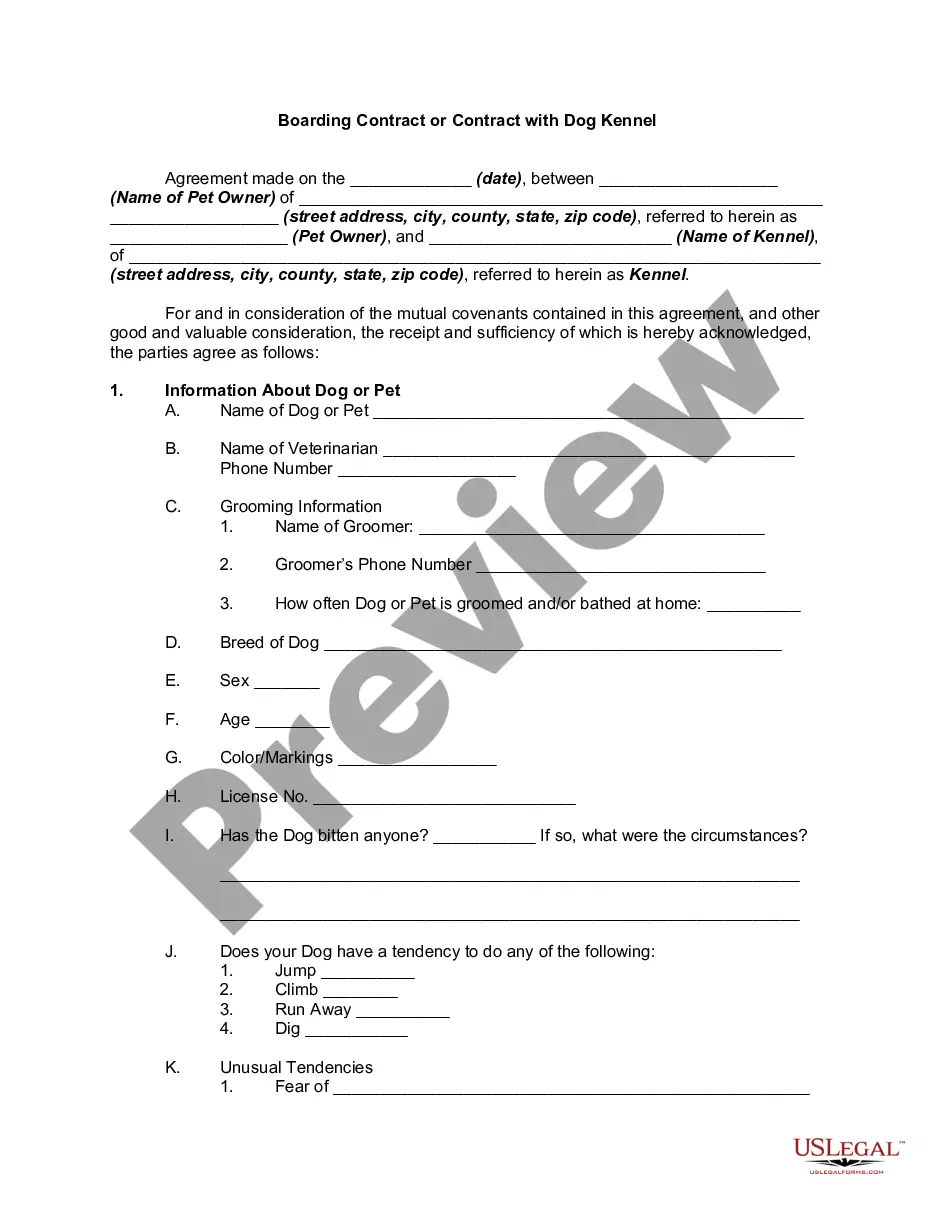
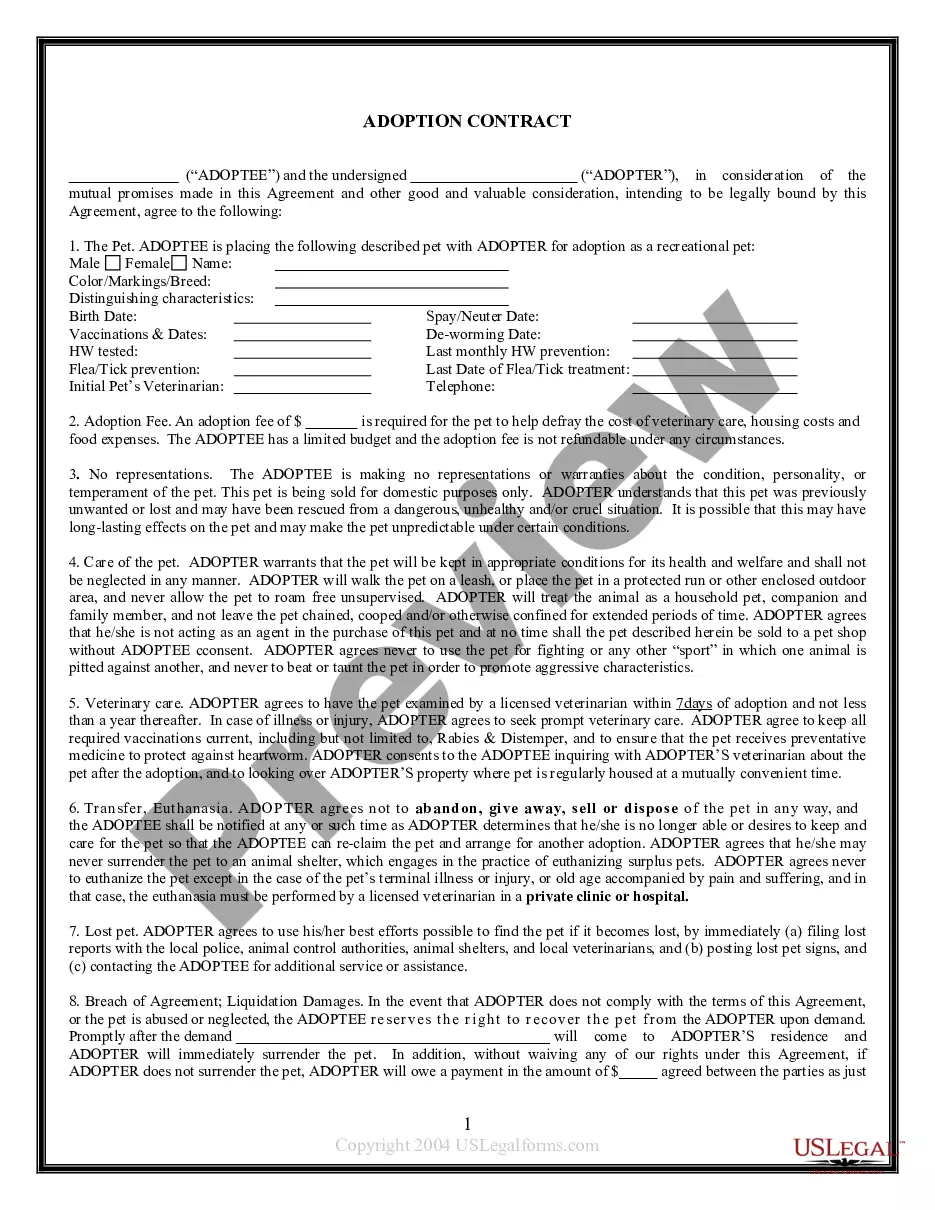
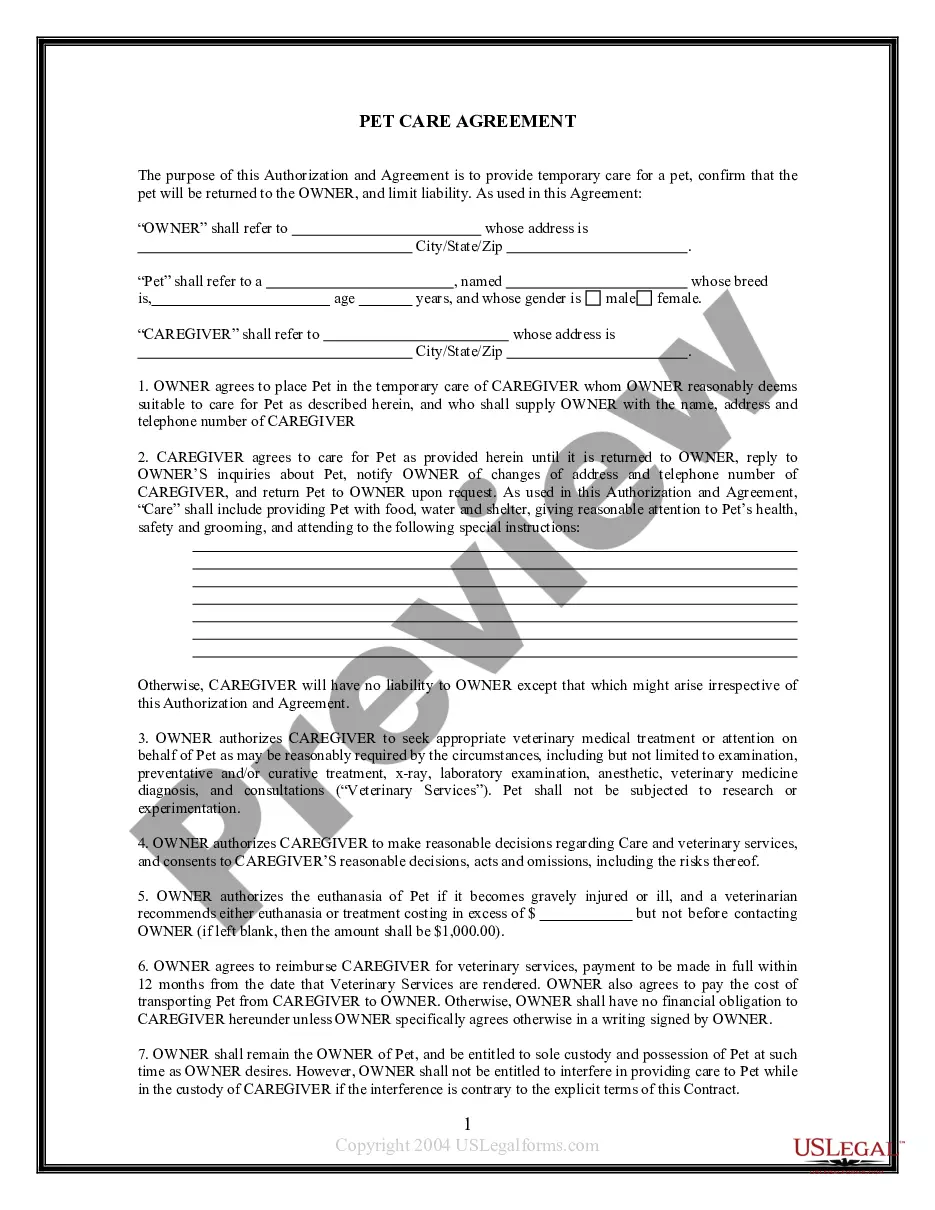
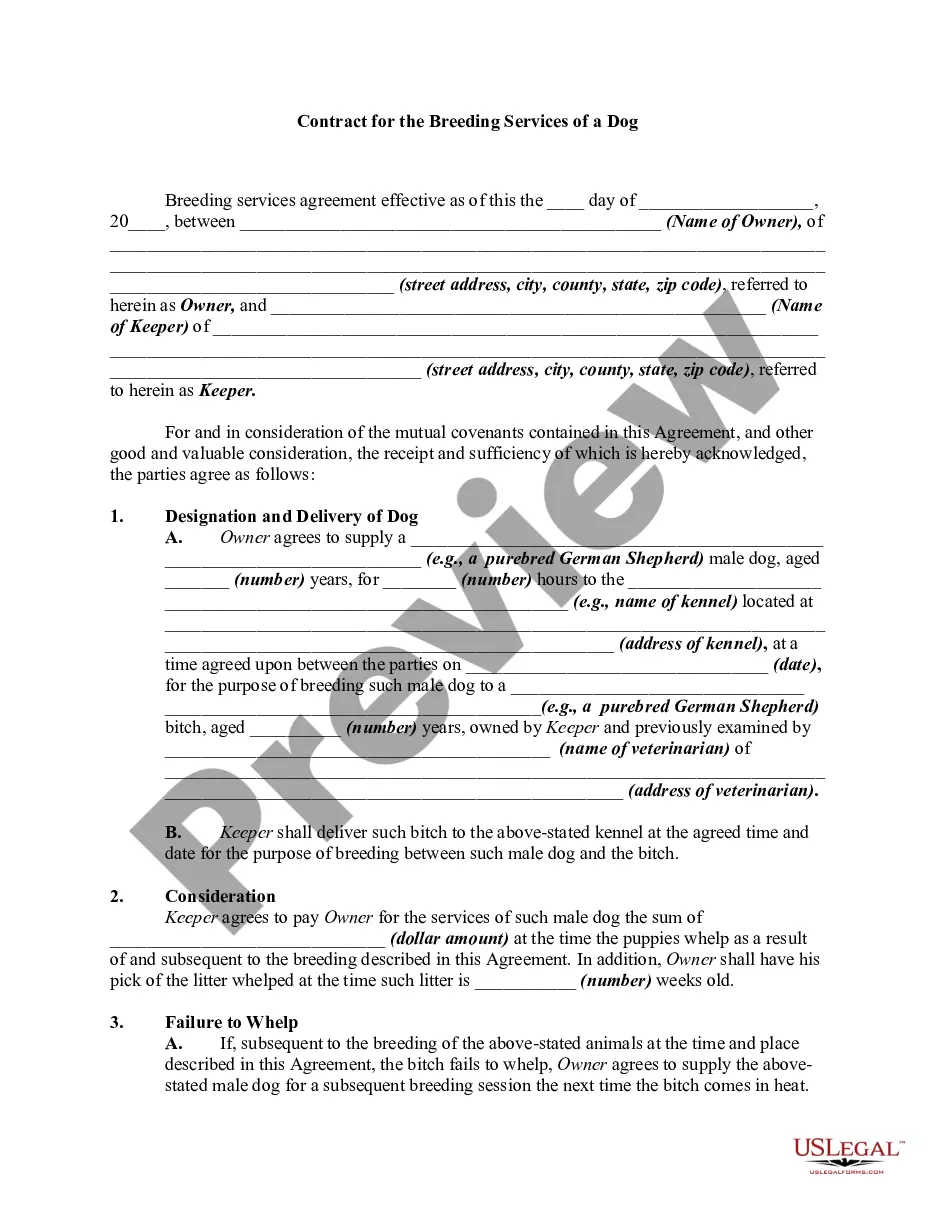
This form is an agreement between a pet owner and a boarder.
Ohio Pet Boarding Agreement
State:
Multi-State
Category:
Control #:
US-PET-3
Format:
Word;
Rich Text
220 downloads
Description
Free preview

Get your form ready online
Our built-in tools help you complete, sign, share, and store your documents in one place.
Built-in online Word editor
Make edits, fill in missing information, and update formatting in US Legal Forms—just like you would in MS Word.
Export easily
Download a copy, print it, send it by email, or mail it via USPS—whatever works best for your next step.
E-sign your document
Sign and collect signatures with our SignNow integration. Send to multiple recipients, set reminders, and more. Go Premium to unlock E-Sign.
Notarize online 24/7
If this form requires notarization, complete it online through a secure video call—no need to meet a notary in person or wait for an appointment.
Store your document securely
We protect your documents and personal data by following strict security and privacy standards.

Make edits, fill in missing information, and update formatting in US Legal Forms—just like you would in MS Word.

Download a copy, print it, send it by email, or mail it via USPS—whatever works best for your next step.

Sign and collect signatures with our SignNow integration. Send to multiple recipients, set reminders, and more. Go Premium to unlock E-Sign.

If this form requires notarization, complete it online through a secure video call—no need to meet a notary in person or wait for an appointment.

We protect your documents and personal data by following strict security and privacy standards.
Looking for another form?

How to fill out Pet Boarding Agreement?
It is feasible to spend hours online trying to locate the legal document template that satisfies the state and federal requirements you need.
US Legal Forms provides thousands of legal documents which can be assessed by professionals.
You can download or print the Ohio Pet Boarding Agreement from my service.
To obtain an additional version of the form, use the Search area to find the template that suits your needs and requirements. Once you have identified the template you want, click on Get now to continue. Select the pricing plan you desire, enter your details, and register for your account on US Legal Forms. Complete the transaction. You may use your credit card or PayPal account to pay for the legal form. Choose the format of the document and download it to your device. Make modifications to the document if necessary. You can complete, modify, and sign and print the Ohio Pet Boarding Agreement. Download and print thousands of document templates using the US Legal Forms site, which offers the largest selection of legal forms. Utilize professional and state-specific templates to address your business or personal needs.
- If you have a US Legal Forms account, you can Log In and click on the Download button.
- After that, you can complete, modify, print, or sign the Ohio Pet Boarding Agreement.
- Every legal document template you purchase is yours forever.
- To obtain another copy of the purchased form, go to the My documents tab and click on the corresponding button.
- If you are using the US Legal Forms site for the first time, follow the simple instructions below.
- First, ensure that you have selected the appropriate document template for your state/region that you choose.
- Review the form description to confirm you have chosen the correct form.
- If available, use the Preview button to view the document template simultaneously.
Form popularity
FAQ
To start a pet boarding business, you need a solid plan that includes a clear understanding of your local regulations, a suitable facility, and proper insurance. Moreover, you should develop an Ohio Pet Boarding Agreement to ensure all parties understand their rights and responsibilities. This agreement will help protect you and your clients by outlining the terms of service, pet care, and liability issues. Lastly, consider utilizing platforms like US Legal Forms to access customizable legal documents that can streamline your business setup.
To open a pet boarding facility, start by researching local regulations, including licensing requirements. Create a business plan that includes facility design, staffing, and marketing strategies. Finally, draft an Ohio Pet Boarding Agreement to define your services and protect your interests. This agreement will serve as a professional contract between you and your clients.
Requirements for a dog boarding facility in Ohio include proper licensing, adequate space, and sanitary conditions. You must also ensure that your facility provides safe and comfortable accommodations for the animals. An Ohio Pet Boarding Agreement can help you outline these requirements clearly to your clients, enhancing their confidence in your services.
Yes, a kennel license is required if you are operating a dog boarding facility in Ohio. This license ensures that your facility adheres to health and safety regulations. It’s important to have an Ohio Pet Boarding Agreement that reflects your licensed status, which can reassure clients about the quality of care their pets will receive.
Yes, obtaining a license is necessary to be a dog boarder in Ohio. Licensing verifies that you meet specific standards for animal care and facility safety. Without a license, you risk facing penalties and losing potential clients. Using an Ohio Pet Boarding Agreement will highlight your commitment to operating within the legal framework.
Yes, you need a license to board dogs in Ohio. This requirement ensures that you comply with health and safety standards, protecting both the animals and the public. When you draft an Ohio Pet Boarding Agreement, it’s crucial to include details about your licensing status. This transparency builds trust with your clients.
Yes, you can run a dog boarding business from home, but there are specific regulations you must follow. Check local zoning laws and licensing requirements to ensure you meet all necessary criteria. An Ohio Pet Boarding Agreement can help you outline the terms and conditions required for your home-based boarding services. This way, you will protect yourself and your clients.
If you board dogs without a license in Ohio, you may face legal consequences. Authorities could impose fines or require you to cease operations. Additionally, not having a license can affect your credibility and trust among clients. It's essential to have a proper Ohio Pet Boarding Agreement to ensure compliance with local regulations.