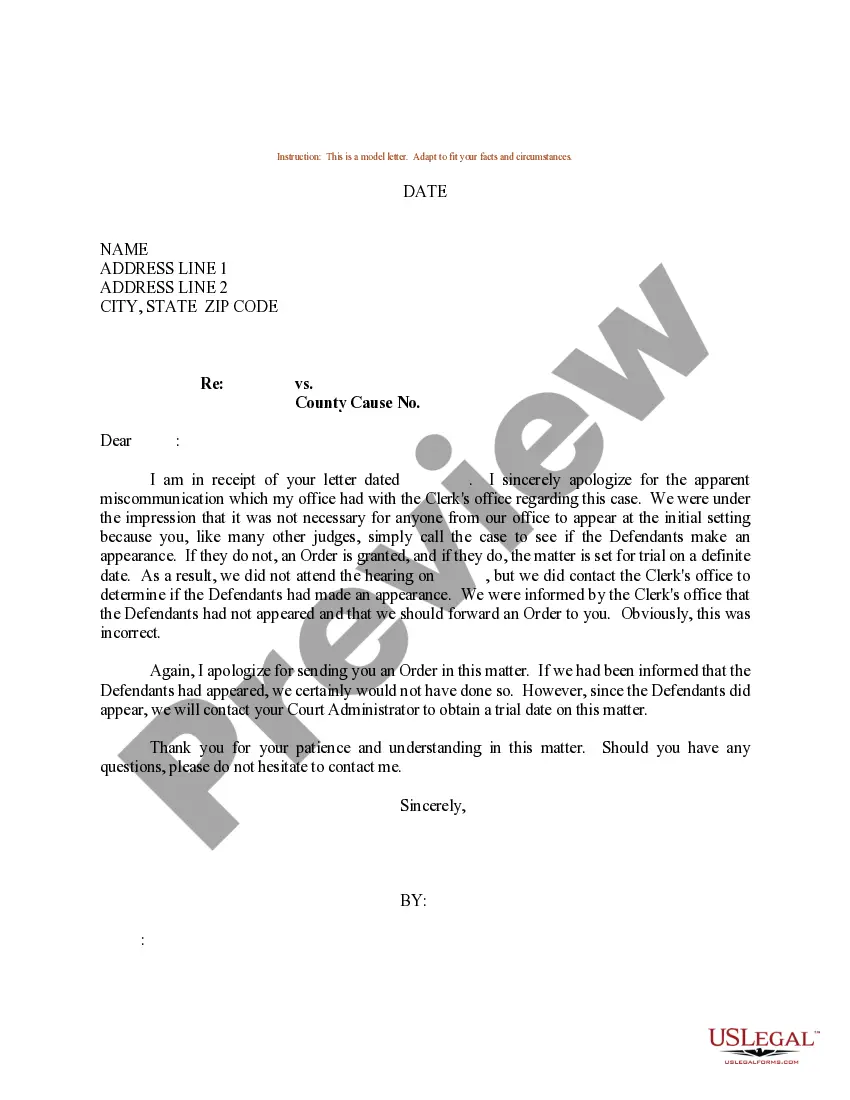
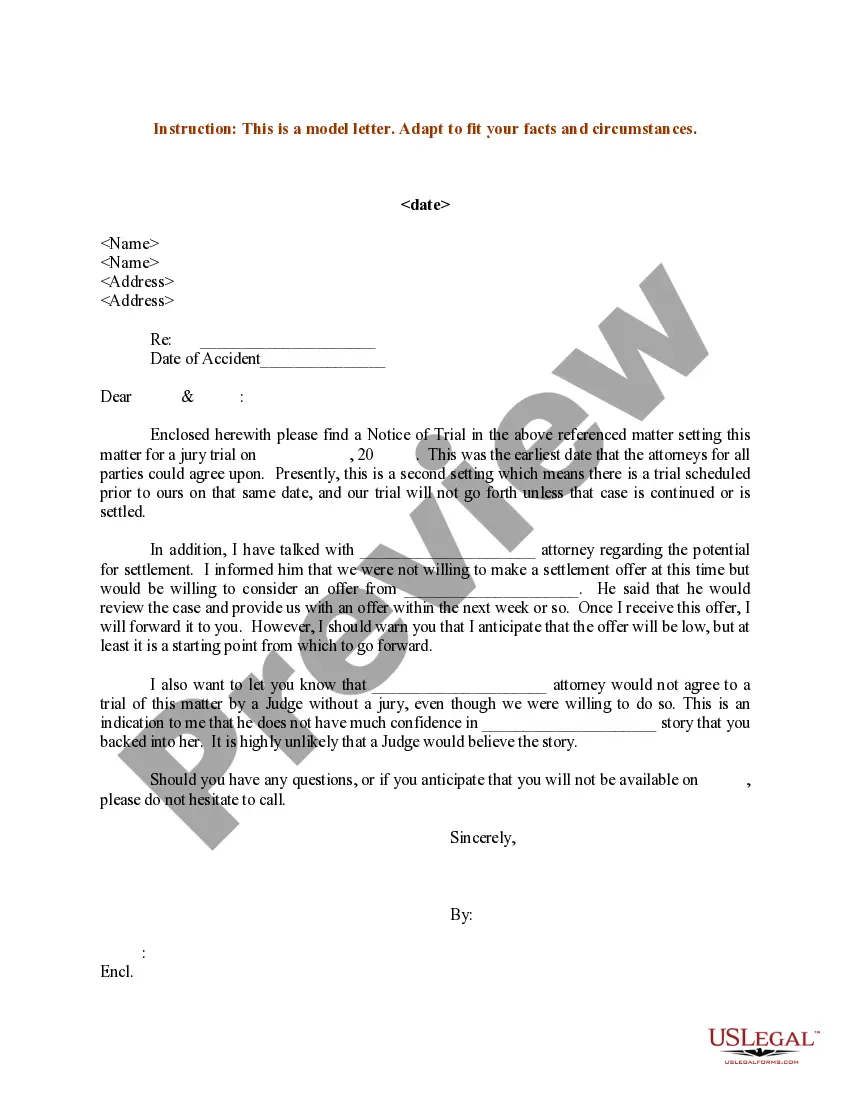
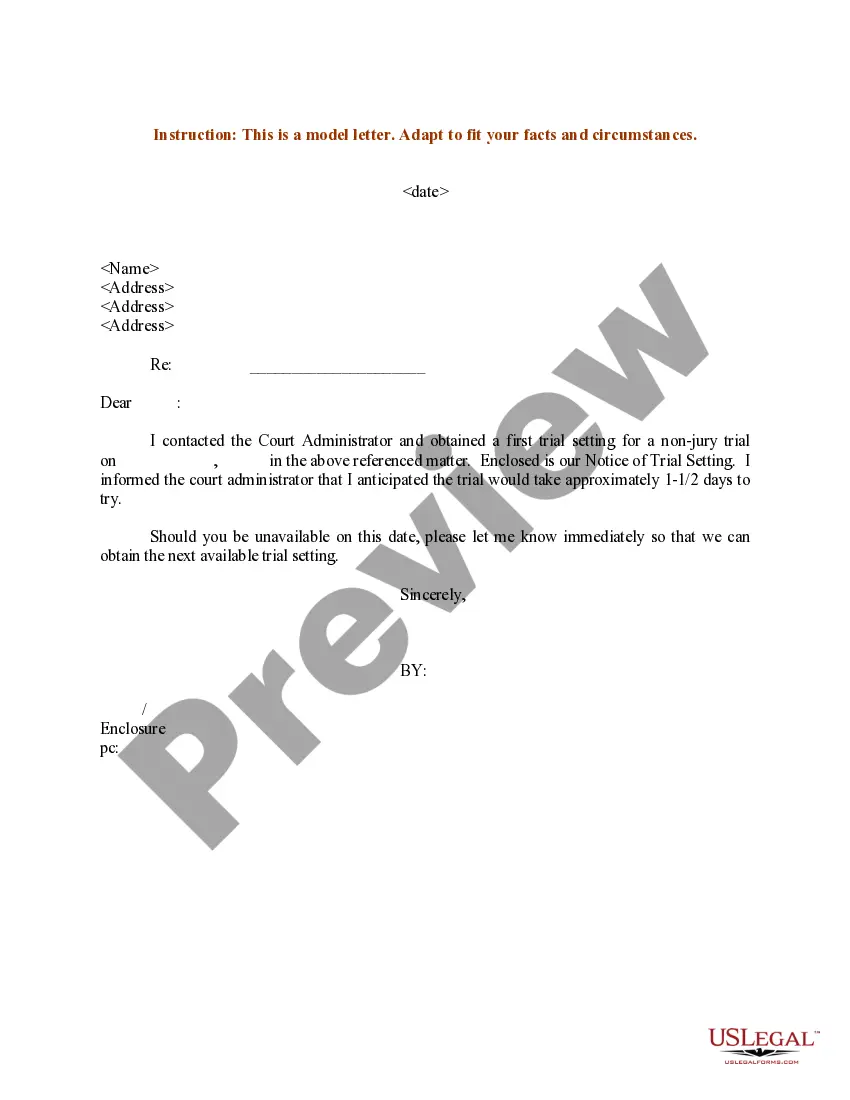
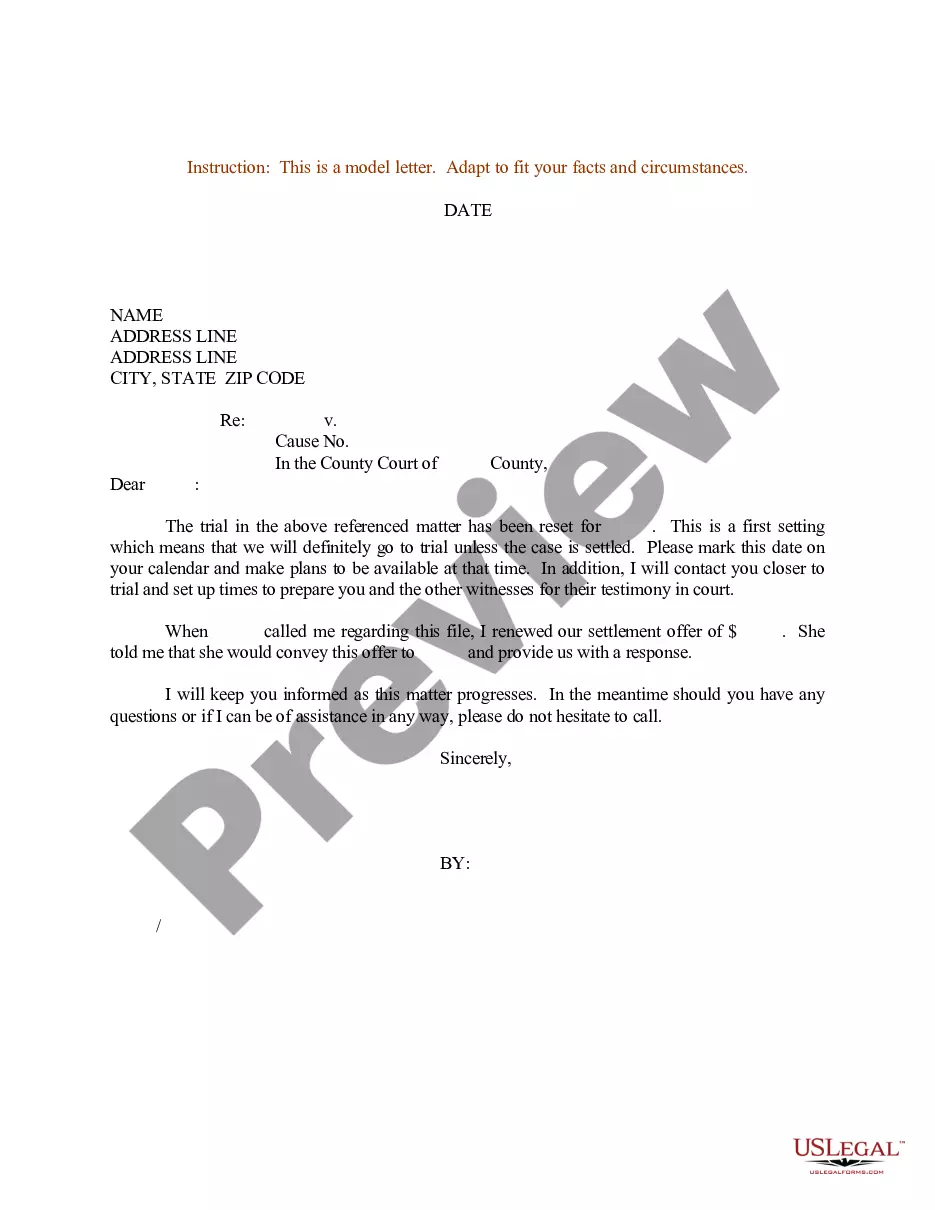
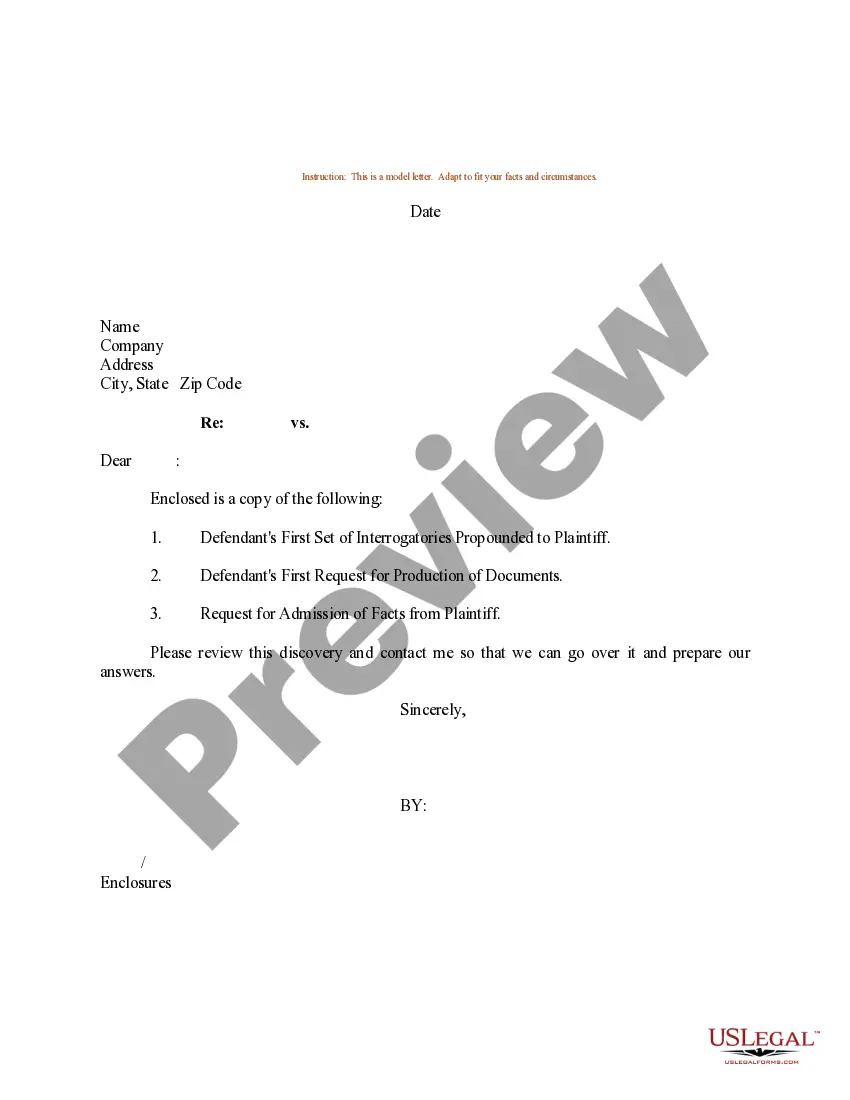
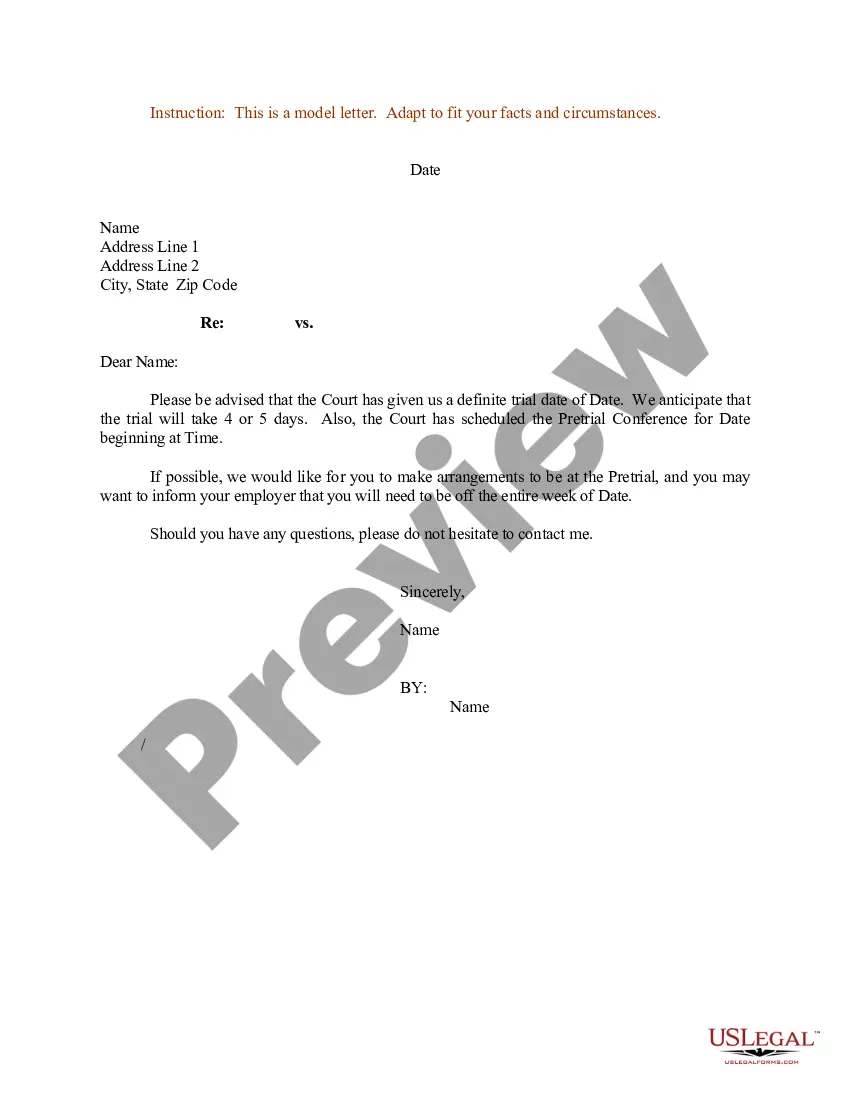
Ohio Sample Letter for Setting of Trial Date
Description
Get your form ready online
Our built-in tools help you complete, sign, share, and store your documents in one place.
Make edits, fill in missing information, and update formatting in US Legal Forms—just like you would in MS Word.
Download a copy, print it, send it by email, or mail it via USPS—whatever works best for your next step.
Sign and collect signatures with our SignNow integration. Send to multiple recipients, set reminders, and more. Go Premium to unlock E-Sign.
If this form requires notarization, complete it online through a secure video call—no need to meet a notary in person or wait for an appointment.
We protect your documents and personal data by following strict security and privacy standards.

Make edits, fill in missing information, and update formatting in US Legal Forms—just like you would in MS Word.

Download a copy, print it, send it by email, or mail it via USPS—whatever works best for your next step.

Sign and collect signatures with our SignNow integration. Send to multiple recipients, set reminders, and more. Go Premium to unlock E-Sign.

If this form requires notarization, complete it online through a secure video call—no need to meet a notary in person or wait for an appointment.

We protect your documents and personal data by following strict security and privacy standards.
Looking for another form?






How to fill out Sample Letter For Setting Of Trial Date?
Are you in a situation where you require documents for occasional organizational or personal purposes almost every day? There are numerous document templates available online, but finding ones you can trust is not easy.
US Legal Forms offers a vast collection of form templates, such as the Ohio Sample Letter for Setting of Trial Date, designed to comply with state and federal regulations.
If you are already familiar with the US Legal Forms website and have an account, simply Log In. Then, you can download the Ohio Sample Letter for Setting of Trial Date template.
Choose a convenient document format and download your copy.
You can find all the document templates you have purchased in the My documents section. You may obtain an additional copy of the Ohio Sample Letter for Setting of Trial Date anytime, if needed. Just select the required form to download or print the document template. Utilize US Legal Forms, one of the largest collections of legal forms, to save time and avoid errors. The service provides properly crafted legal document templates that you can use for a variety of purposes. Create your account on US Legal Forms and start simplifying your life.
- If you do not have an account and want to begin using US Legal Forms, follow these steps.
- Find the form you need and ensure it is for the correct city/county.
- Use the Preview button to review the form.
- Read the description to confirm you have selected the right document.
- If the form is not what you are looking for, use the Search field to locate the form that suits your needs and requirements.
- Once you find the appropriate form, click Acquire now.
- Select the pricing plan you want, fill in the required information to create your account, and pay for the order with your PayPal or credit card.
Form popularity
FAQ
Rule 38 - Jury Trial of Right (A) Right preserved. The right to trial by jury shall be preserved to the parties inviolate.
R. 36. Rule 36 - Requests for Admission (A)Availability; procedures for use A party may serve upon any other party a written request for the admission, for purposes of the pending action only, of the truth of any matters within the scope of Civ.
When a party against whom a judgment for affirmative relief is sought has failed to plead or otherwise defend as provided by these rules, the party entitled to a judgment by default shall apply in writing or orally to the court therefor; but no judgment by default shall be entered against a minor or an incompetent ...
(1) Application for a new trial shall be made by motion which, except for the cause of newly discovered evidence, shall be filed within fourteen days after the verdict was rendered, or the decision of the court where a trial by jury has been waived, unless it is made to appear by clear and convincing proof that the ...
Rule 34 - Producing Documents, Electronically Stored Information, and Tangible Things, or Entering Onto Land, for Inspection and Other Purposes (A) Scope. Subject to the scope of discovery provisions of Civ.
Rule 26 - General Provisions Governing Discovery (A)Policy; discovery methods It is the policy of these rules (1) to preserve the right of attorneys to prepare cases for trial with that degree of privacy necessary to encourage them to prepare their cases thoroughly and to investigate not only the favorable but the ...
Failure of United States to Participate in Good Faith in Discovery. Rule 37 authorizes the court to direct that parties or attorneys who fail to participate in good faith in the discovery process pay the expenses, including attorney's fees, incurred by other parties as a result of that failure.
Civ. R. 37(F) provides factors for judges to consider when a party seeks sanctions against an opponent who has lost potentially relevant electronically stored information. This rule does not attempt to address the larger question of when the duty to preserve electronically stored information is triggered.