Sample Corporate Records for an Ohio Professional Corporation aka Professional Association
Overview of this form
The Sample Corporate Records for an Ohio Professional Corporation, also known as a Professional Association, is a collection of essential documents for maintaining corporate governance. These records include notices of meetings, resolutions adopted by the board, a simple stock ledger, and a stock certificate. This form serves to ensure compliance with corporate formalities, providing a clear structure for conducting meetings and recording important decisions, setting it apart from general corporate forms.
Main sections of this form
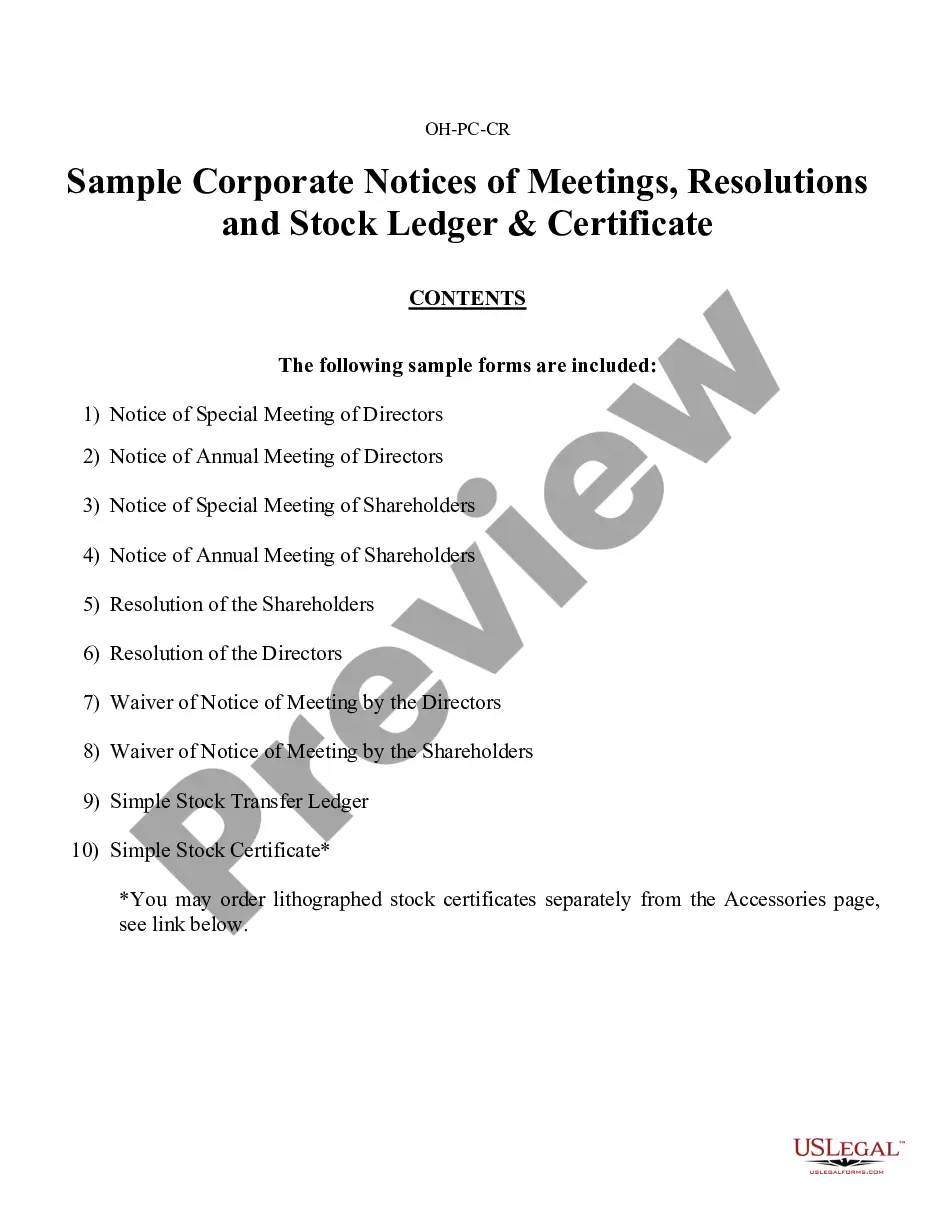
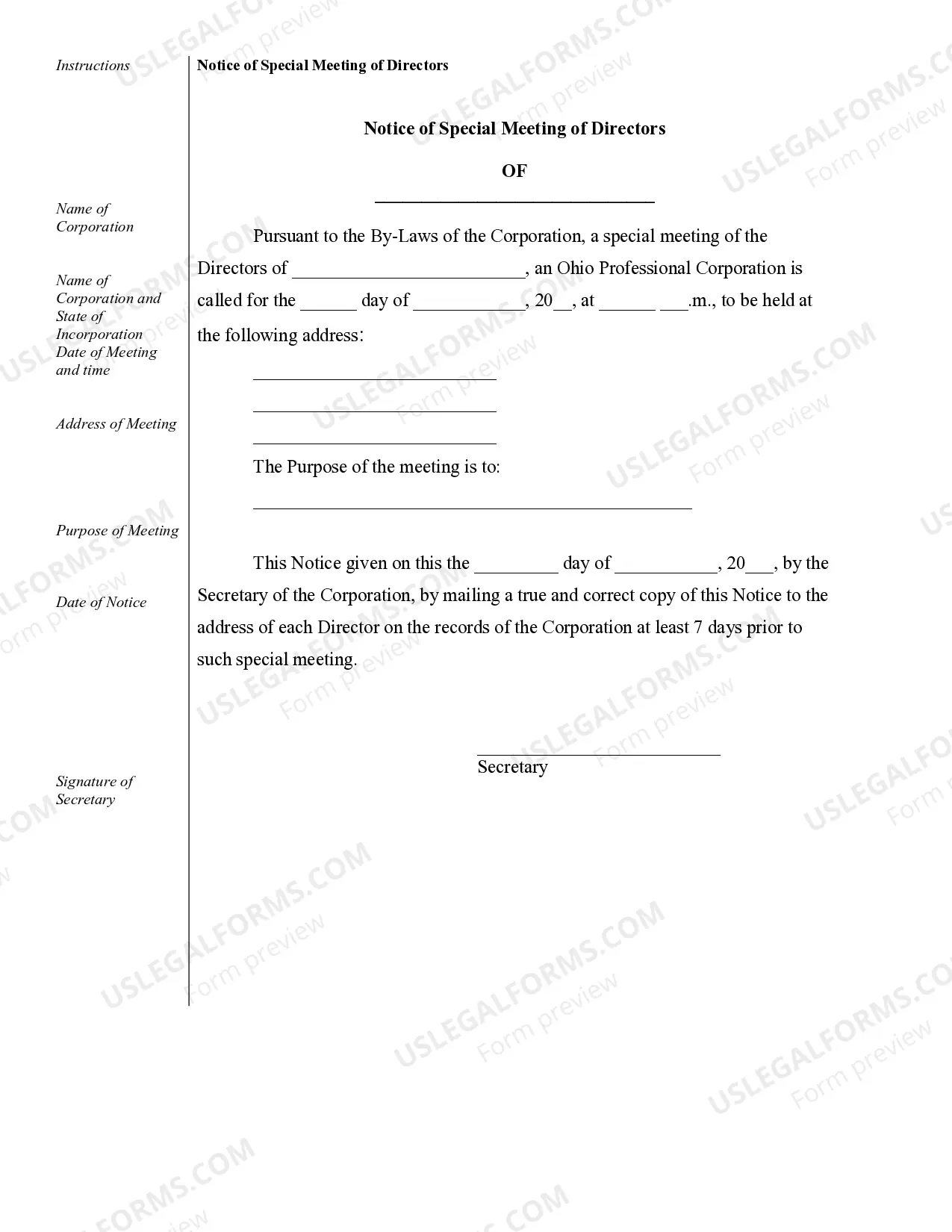
- Notice of Special Meeting of Directors
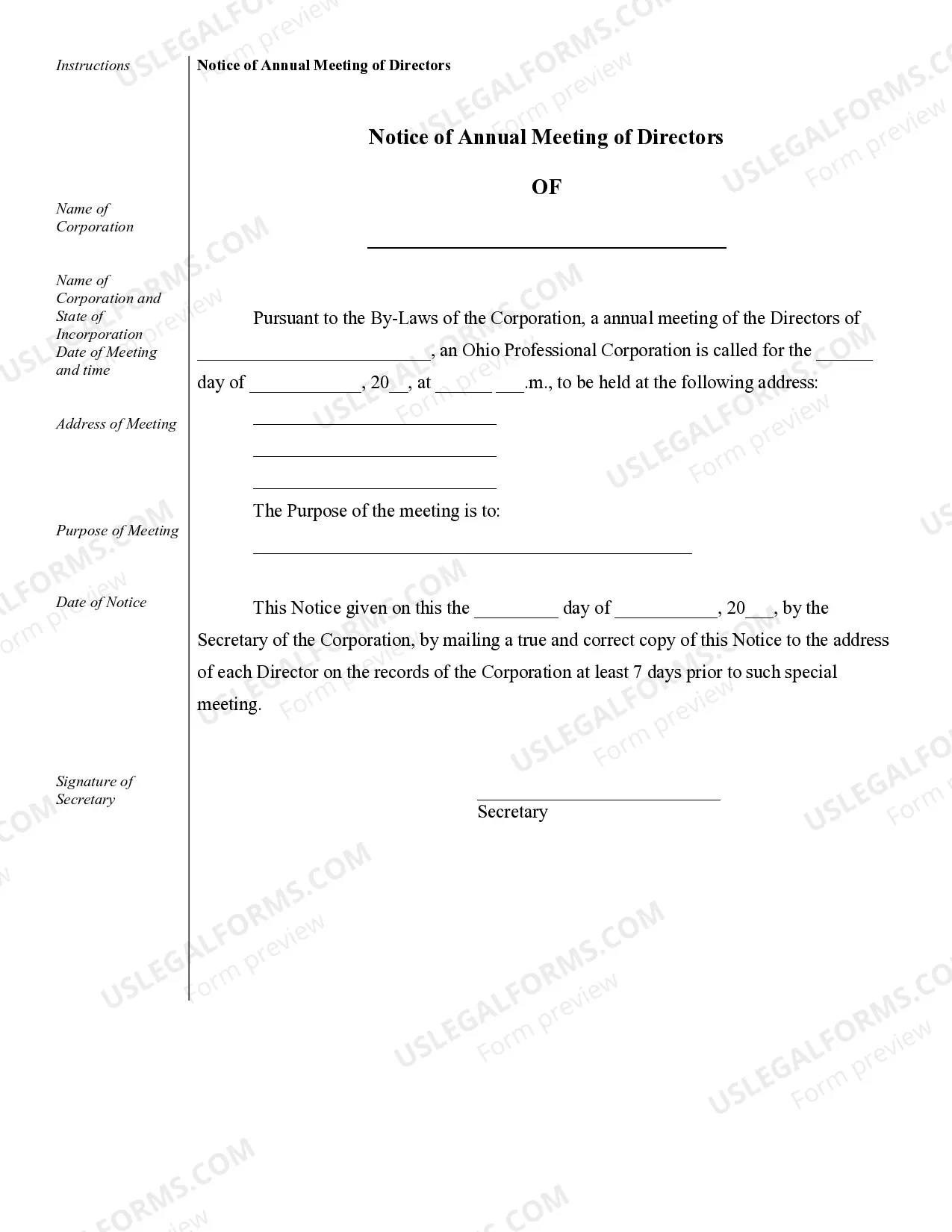
- Notice of Annual Meeting of Directors
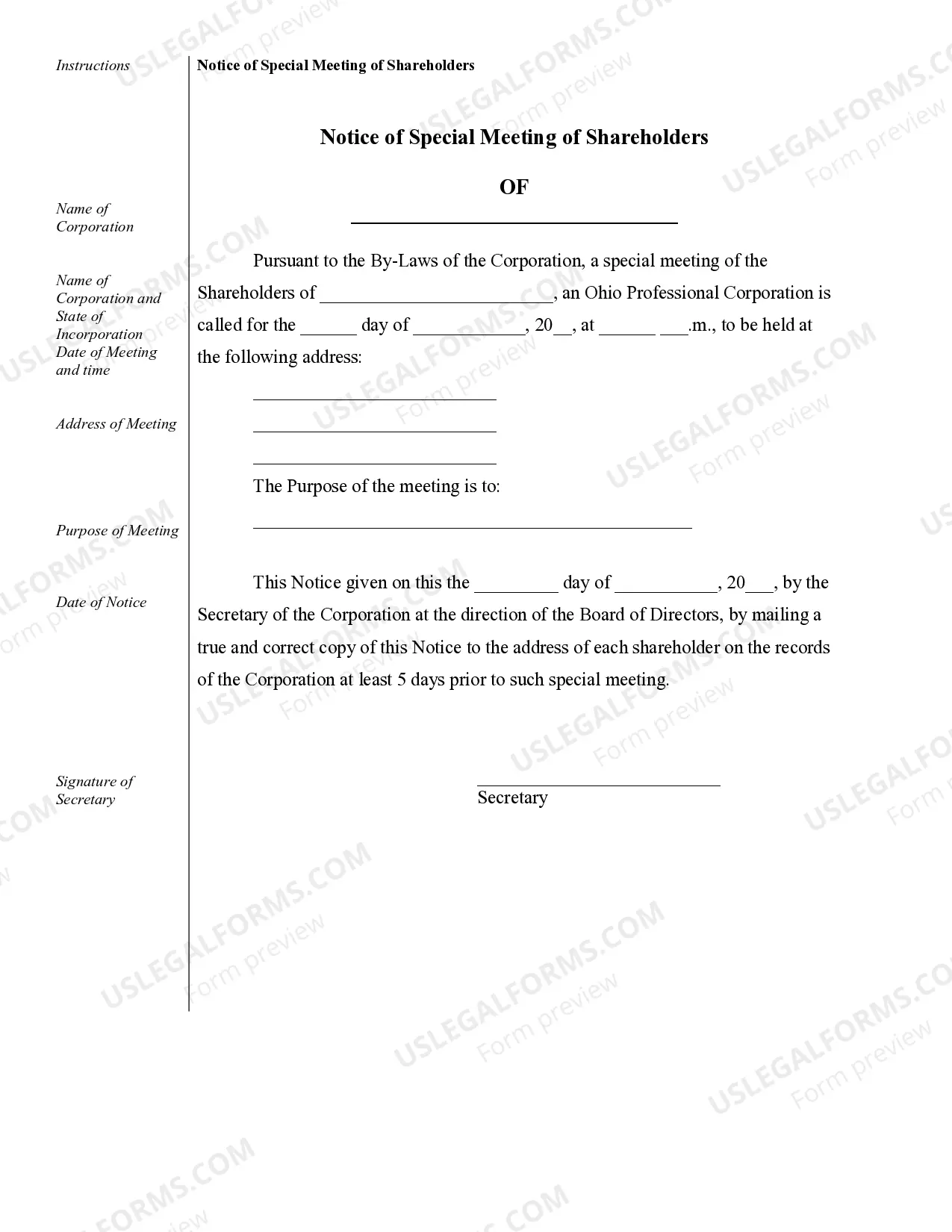
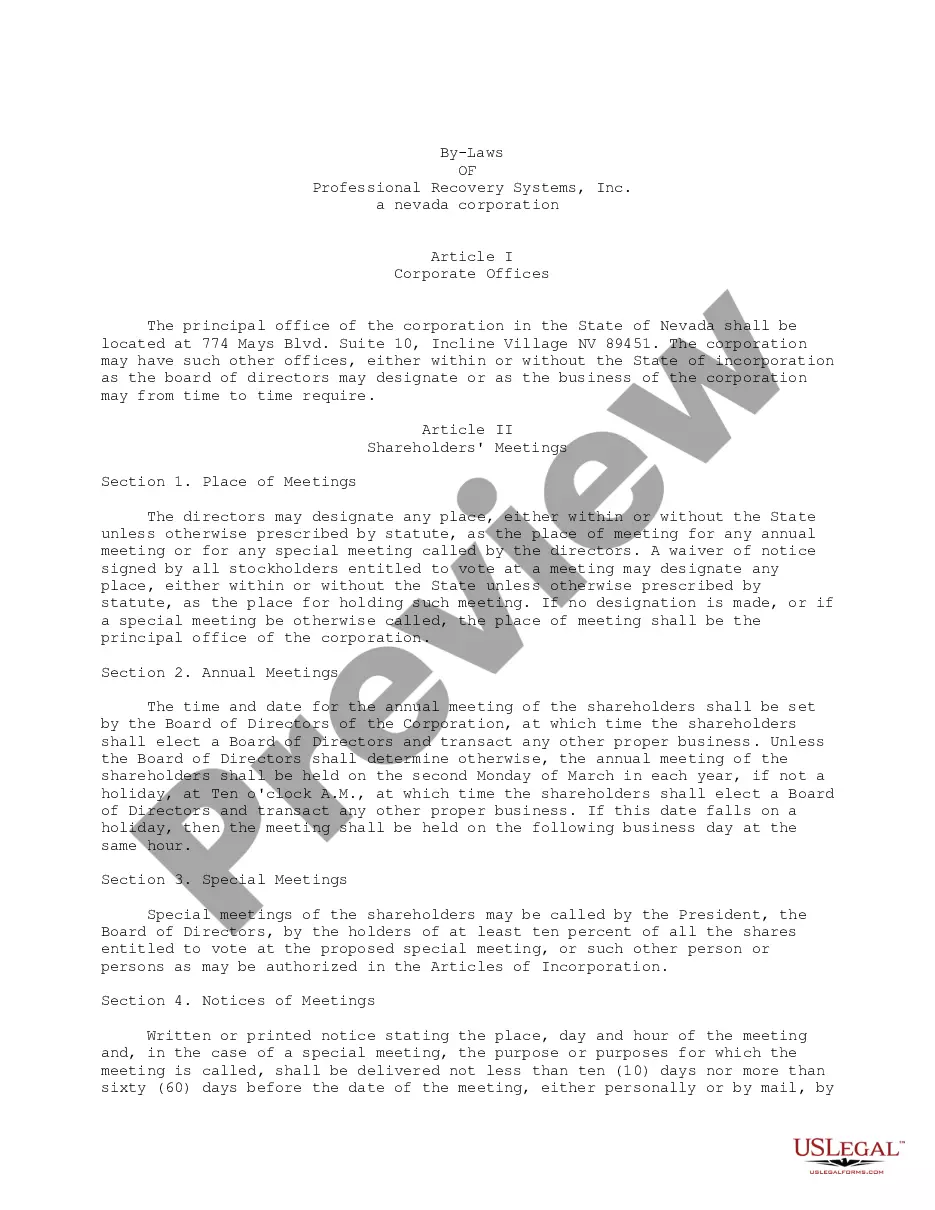
- Notice of Special Meeting of Shareholders
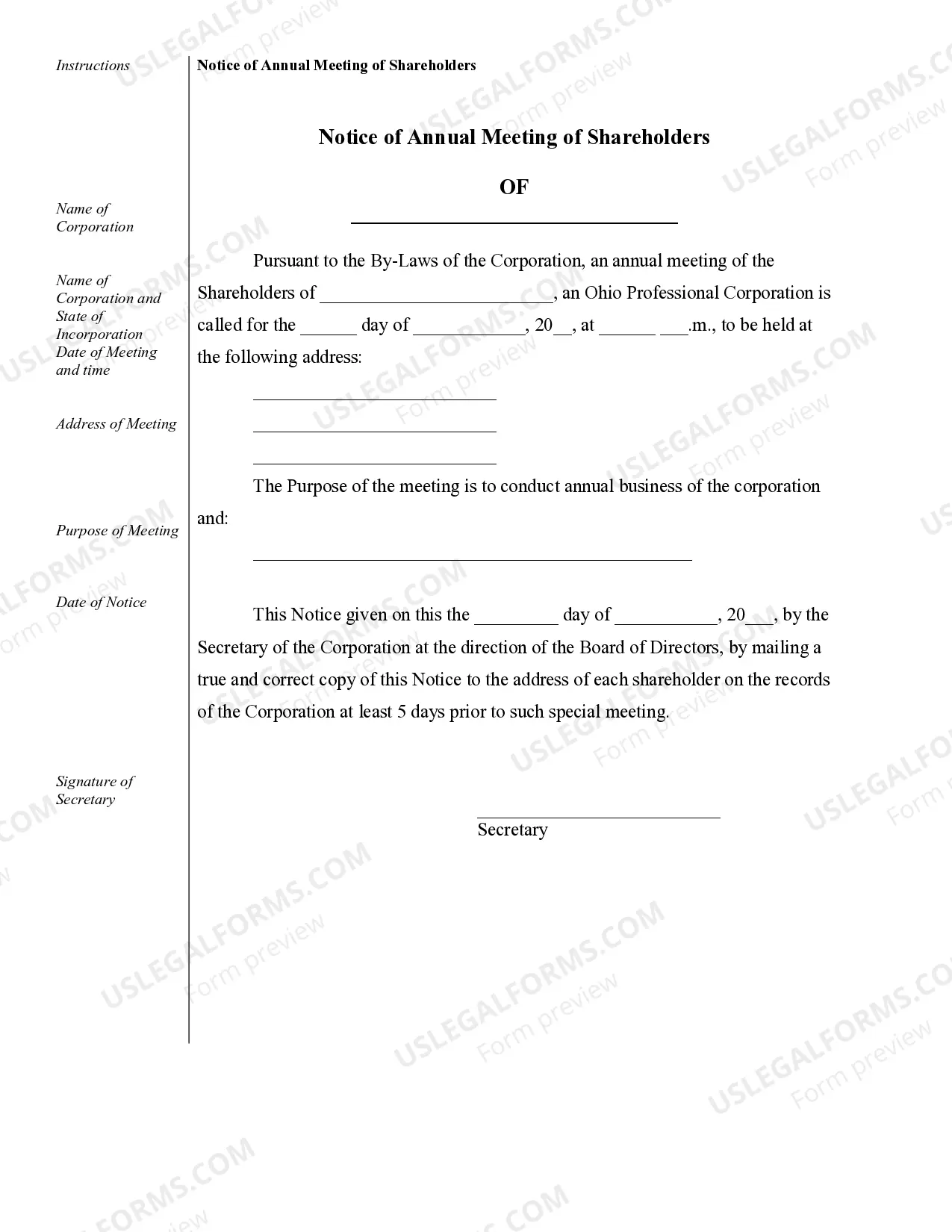
- Notice of Annual Meeting of Shareholders
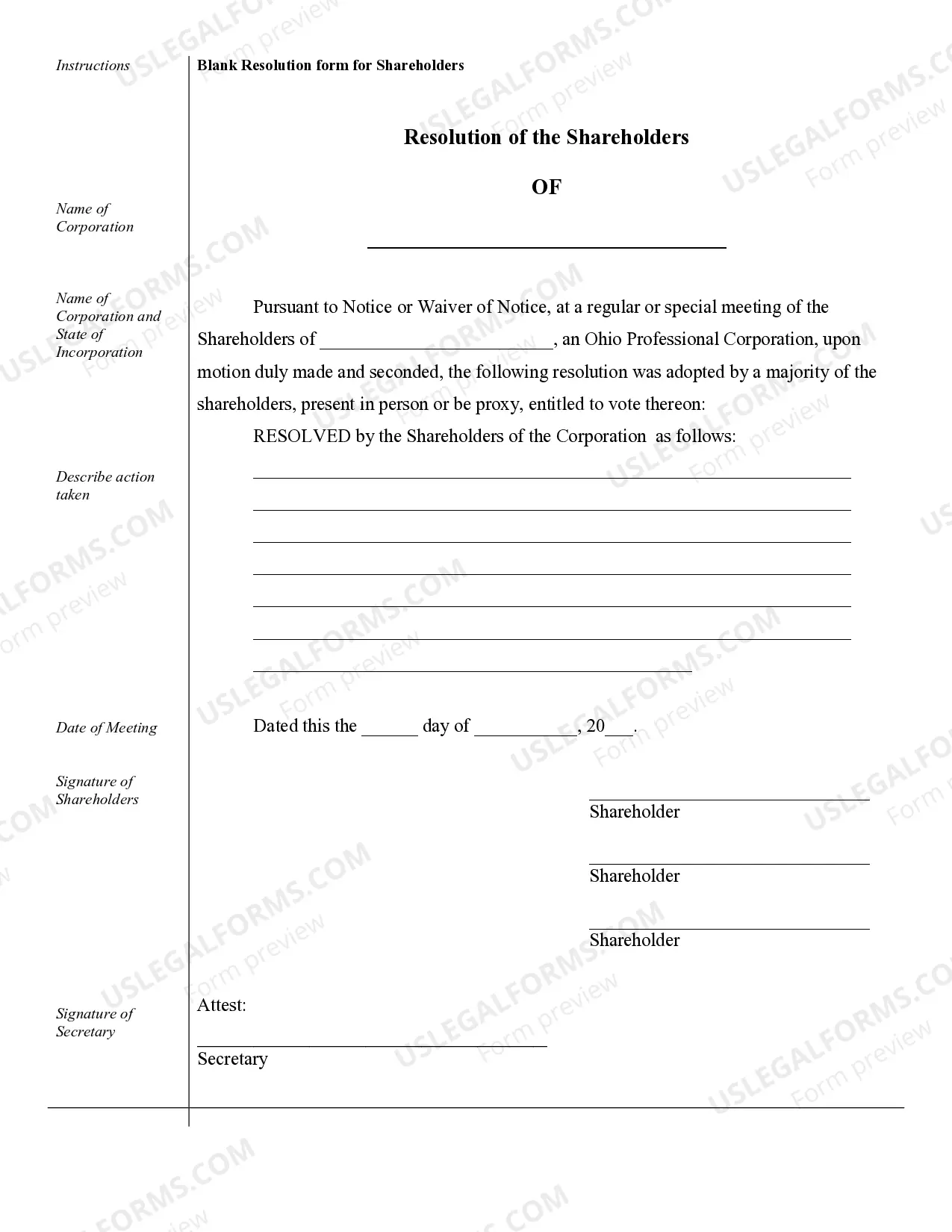
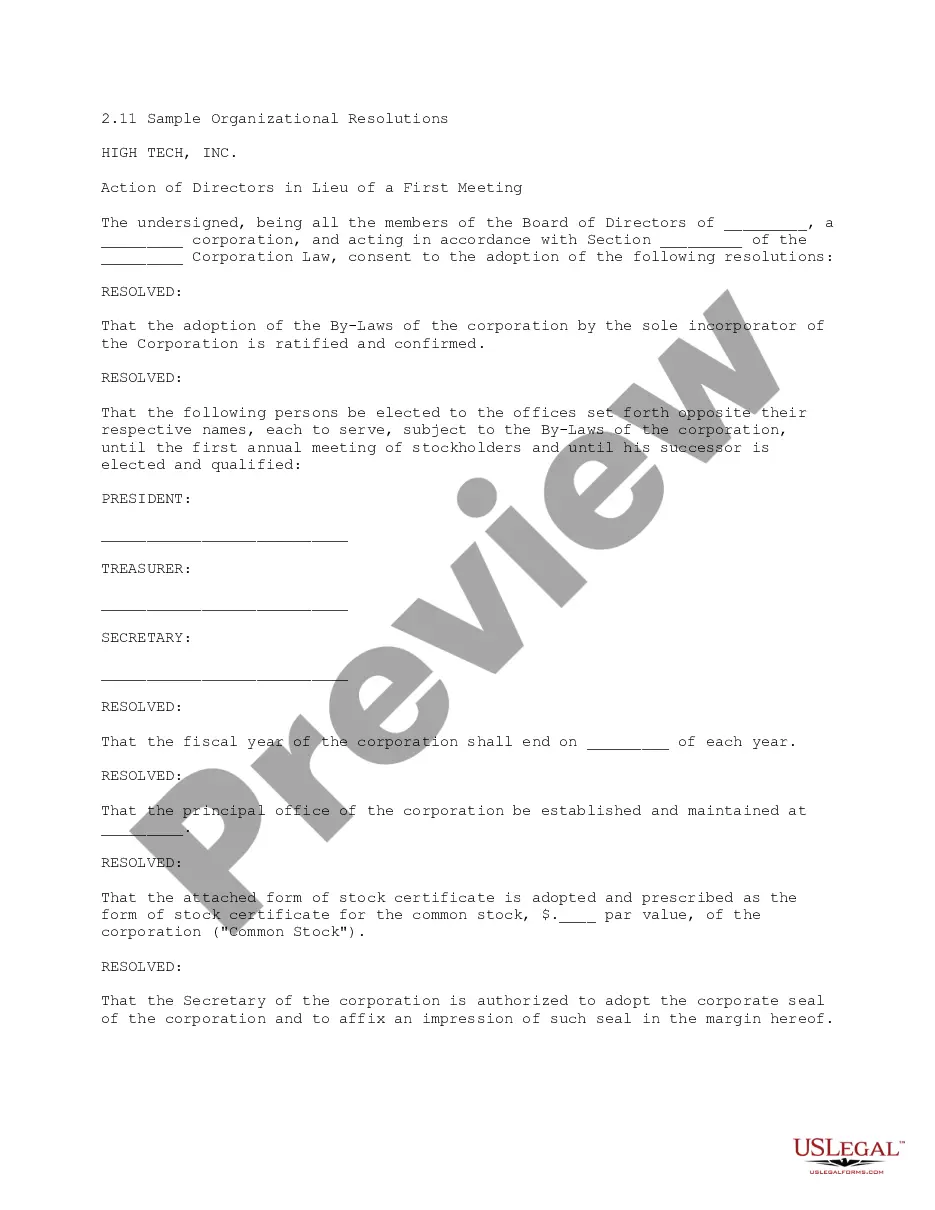
- Resolution of the Shareholders
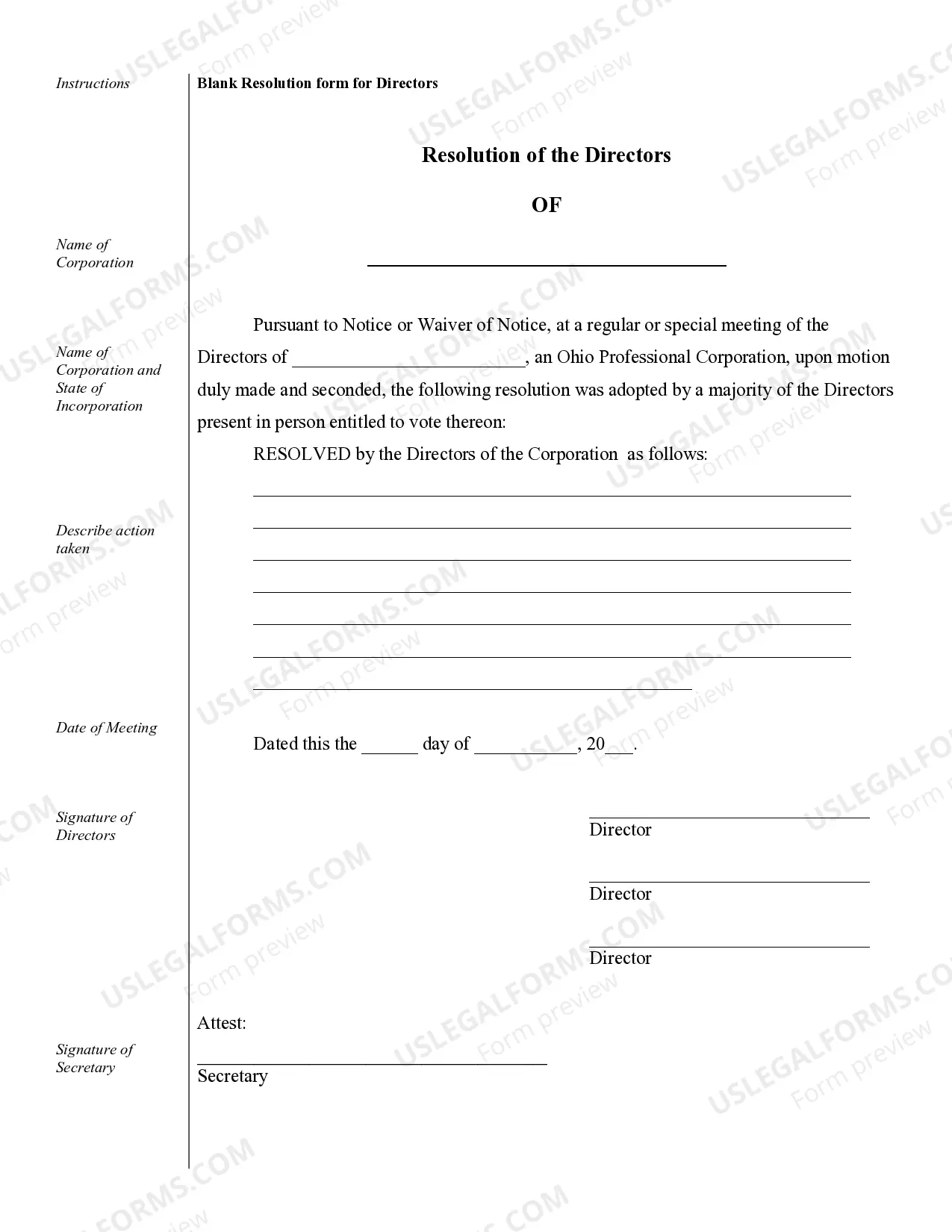
- Resolution of the Directors
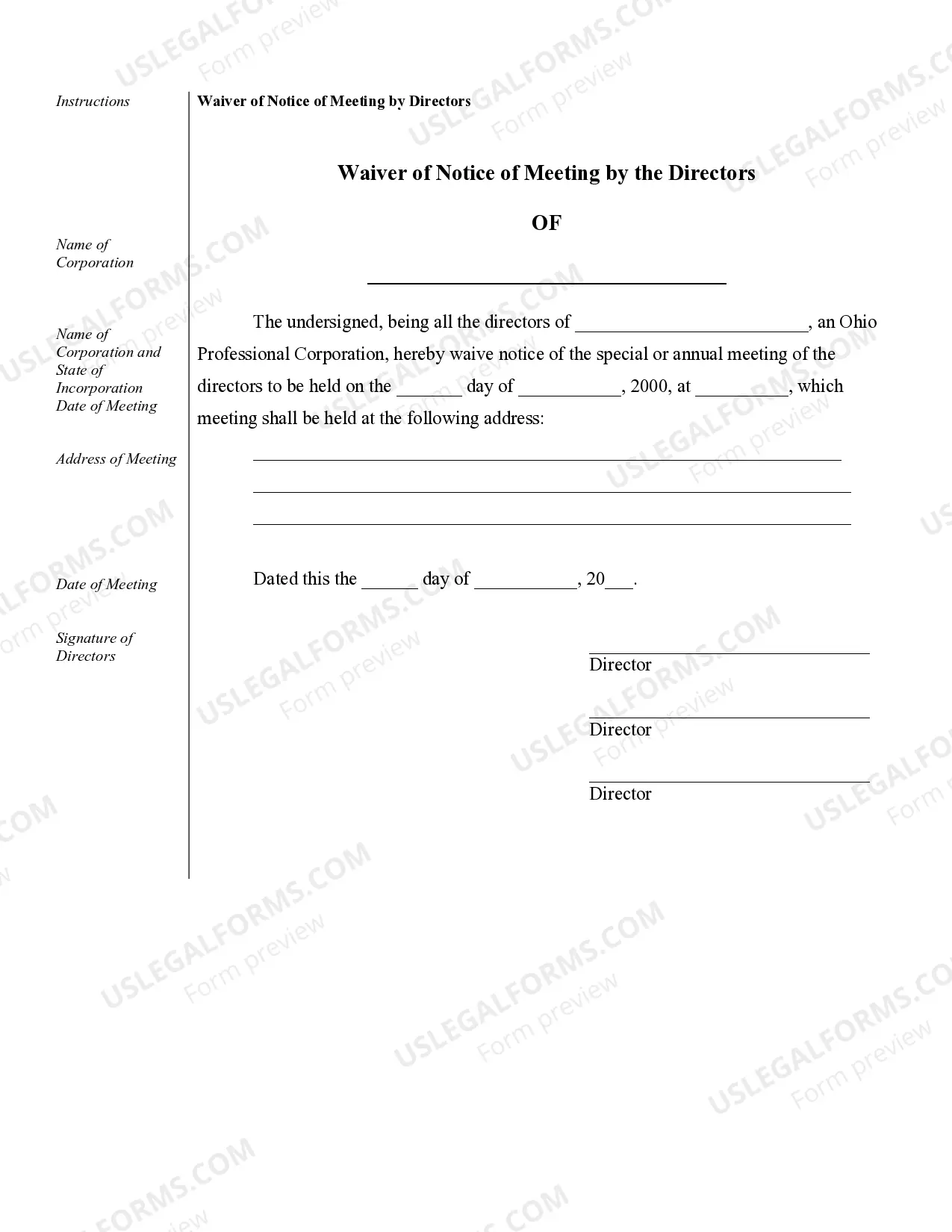
- Waiver of Notice of Meeting by the Directors
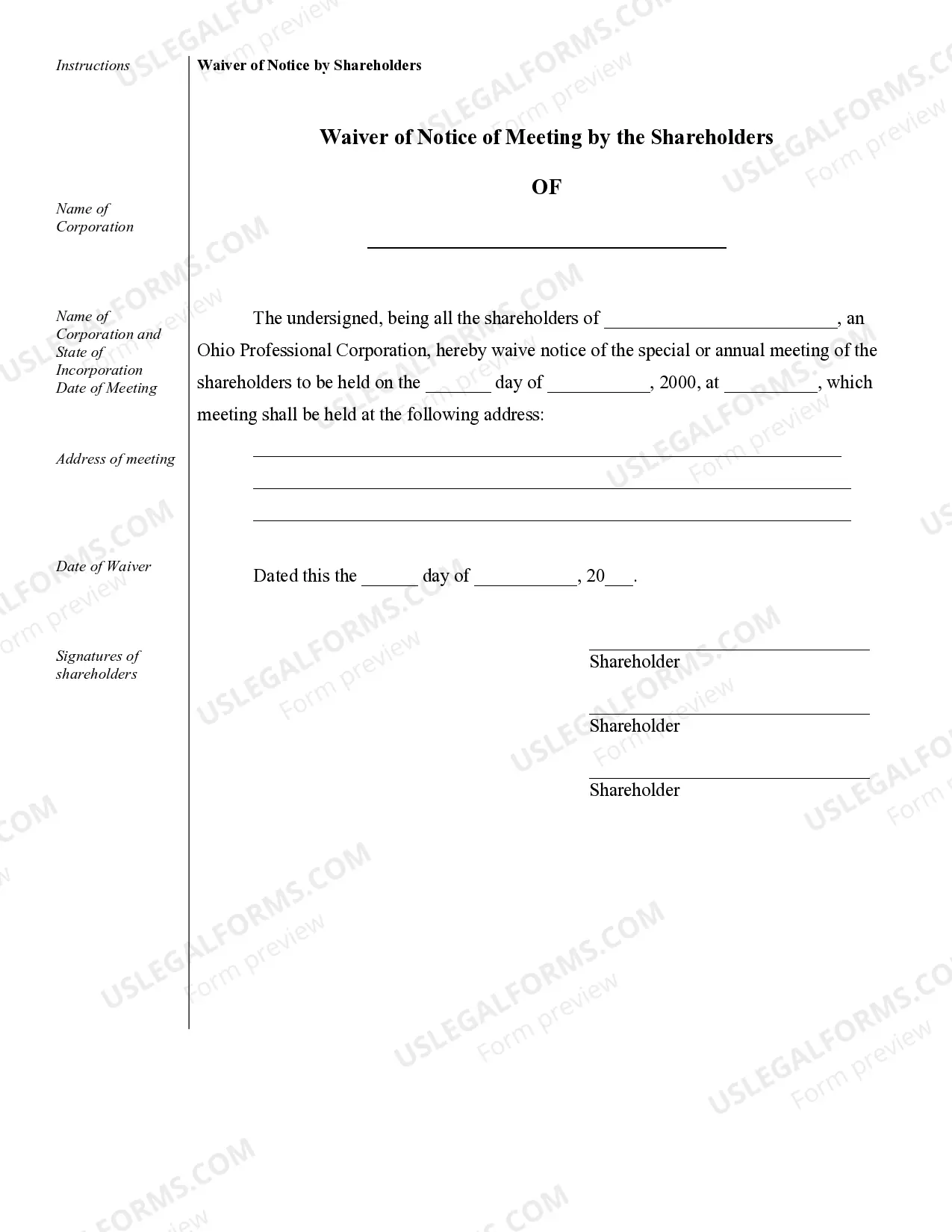
- Waiver of Notice of Meeting by the Shareholders
- Simple Stock Transfer Ledger
- Simple Stock Certificate

When to use this document
This form should be used by Ohio Professional Corporations when convening meetings of the directors or shareholders to discuss corporate affairs. It is necessary when making decisions requiring formal resolutions, such as approving budgets, electing officers, or amending corporate bylaws. Having organized records is crucial for demonstrating compliance with state regulations and for future reference during audits or legal inquiries.
Who this form is for
The following parties are encouraged to use this form:
- Directors and officers of Ohio Professional Corporations
- Shareholders seeking to document corporate decisions and agreements
- Legal representatives of businesses requiring corporate governance documentation
- Corporate accountants and auditors needing formal records for compliance
How to complete this form
- Identify the name of the corporation and include the state of incorporation.
- Specify the date, time, and location of each meeting.
- State the purpose of the meeting clearly in the notice sections.
- Include signatures from the Secretary or authorized officers to validate the documents.
- Maintain a simple stock transfer ledger by recording shareholder information and transaction details.
Is notarization required?
This form does not typically require notarization to be legally valid. However, some jurisdictions or document types may still require it. US Legal Forms provides secure online notarization powered by Notarize, available 24/7 for added convenience.
Get your form ready online
Our built-in tools help you complete, sign, share, and store your documents in one place.
Make edits, fill in missing information, and update formatting in US Legal Forms—just like you would in MS Word.
Download a copy, print it, send it by email, or mail it via USPS—whatever works best for your next step.
Sign and collect signatures with our SignNow integration. Send to multiple recipients, set reminders, and more. Go Premium to unlock E-Sign.
If this form requires notarization, complete it online through a secure video call—no need to meet a notary in person or wait for an appointment.
We protect your documents and personal data by following strict security and privacy standards.

Make edits, fill in missing information, and update formatting in US Legal Forms—just like you would in MS Word.

Download a copy, print it, send it by email, or mail it via USPS—whatever works best for your next step.

Sign and collect signatures with our SignNow integration. Send to multiple recipients, set reminders, and more. Go Premium to unlock E-Sign.

If this form requires notarization, complete it online through a secure video call—no need to meet a notary in person or wait for an appointment.

We protect your documents and personal data by following strict security and privacy standards.
Common mistakes
- Failing to provide adequate notice to directors or shareholders as outlined in the bylaws.
- Neglecting to sign the notices and resolutions, which may render them invalid.
- Incorrectly documenting resolutions or failing to specify the required details.
Why use this form online
- Convenient access to all necessary templates in one package.
- Editable forms allow for quick adjustments to meet specific needs.
- Reduces time and effort compared to manually drafting each document.
- Provides peace of mind by ensuring compliance with legal requirements.
Looking for another form?

Form popularity
FAQ
A professional corporation is one that only performs services in one, single profession. It is a specific type of corporation for professionals like doctors, lawyers, accountants, etc. The professional is able to form a corporation, but the professional remains liable for his or her own actions.
A PA, or professional association, is a business entity that is limited to specific professions. In contrast, an LLC, or limited liability company, is a hybrid between a corporation and a partnership. Each state has specific regulations for each type of business entity.
If you're starting a business that provides a professional service, you could consider both a professional association (PA) or a limited liability company (LLC).
Most professional corporations are classified as "personal service corporations" by the IRS and must file a professional corporation tax return. As of 2018, all professional corporations pay a flat tax rate of 21%.
A professional corporation can be either a regular C corporation that is a separate taxpaying entity that files its own tax returns and pays taxes at corporate tax rates, or it can elect to be taxed as an S corporation in which profits or losses are passed through the corporation to be taxed on the shareholders'
Depending on the individual state, shareholders in this type of corporation must be licensed in law, medicine, architecture, or another professional service.The IRS categorizes professional corporations as C corporations. They are considered taxpayers and must pay income taxes at the corporate rate.
Professional Associations and Professional Corporations Thus, most professional associations are, in-fact, merely professional corporations.