Ohio Claim of Lien
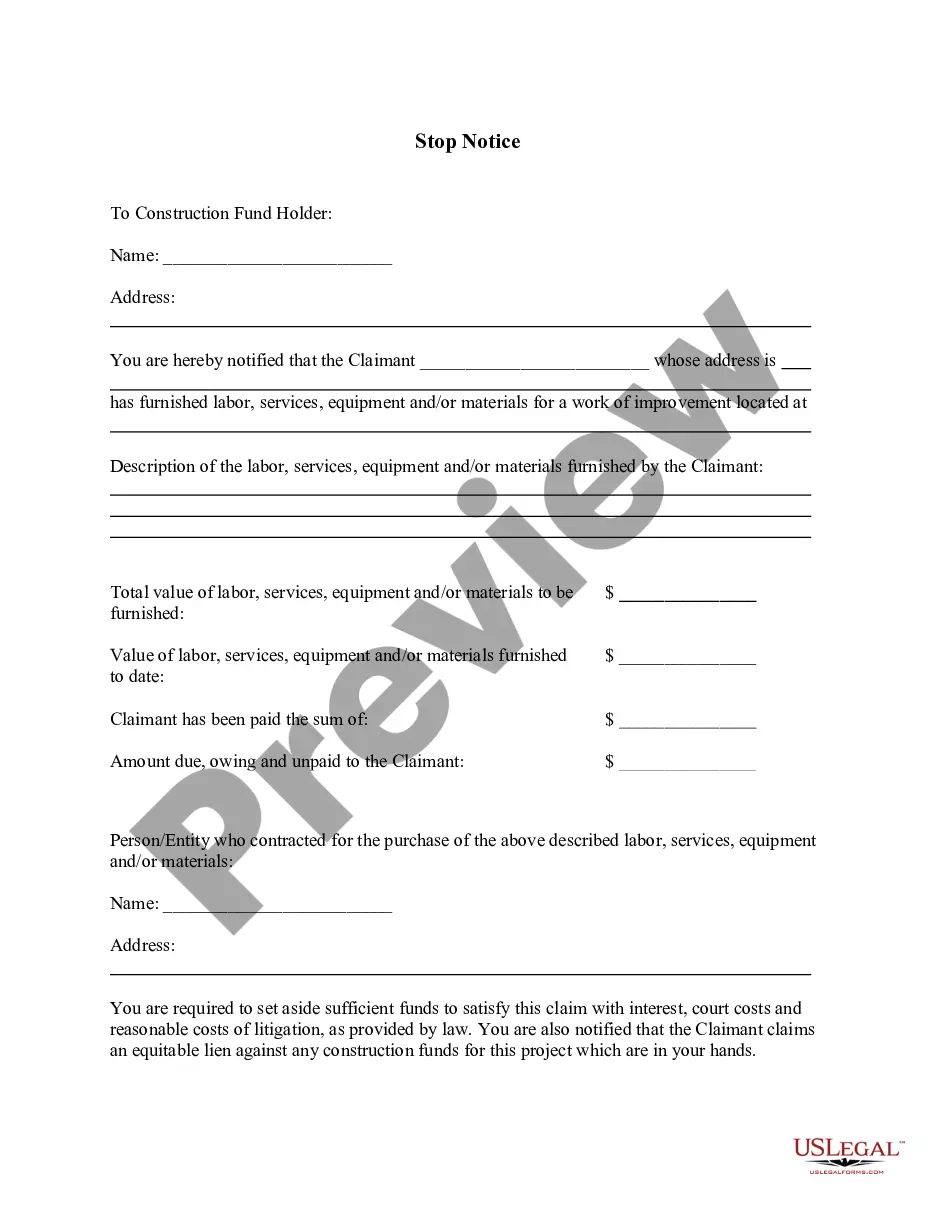
Overview of this form
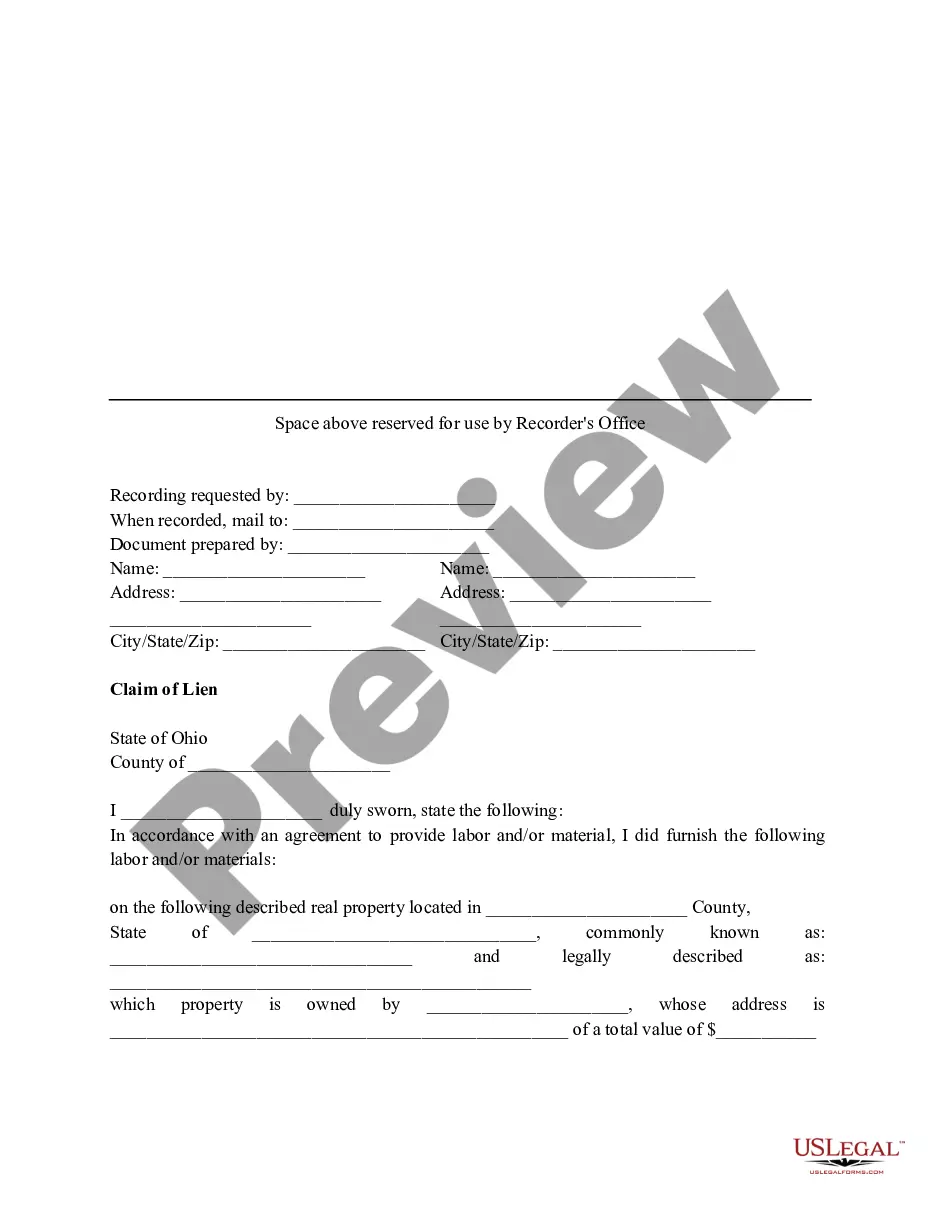
A Claim of Lien is a legal document that connects a debt to a specific piece of property, granting the creditor a claim over that property until the owed amount is paid. This form serves to assert the right to collect money or services owed, and it differs from other financial claims by its direct tie to real estate. By filing a Claim of Lien, claimants pursue security for unpaid obligations, making it a crucial tool in real estate transactions and contractor agreements.
Key components of this form
- Recorder's office details for document submission and mailing.
- Claimant's name and contact information.
- Description of the property involved, including legal identifiers.
- Statement of work completed or materials provided.
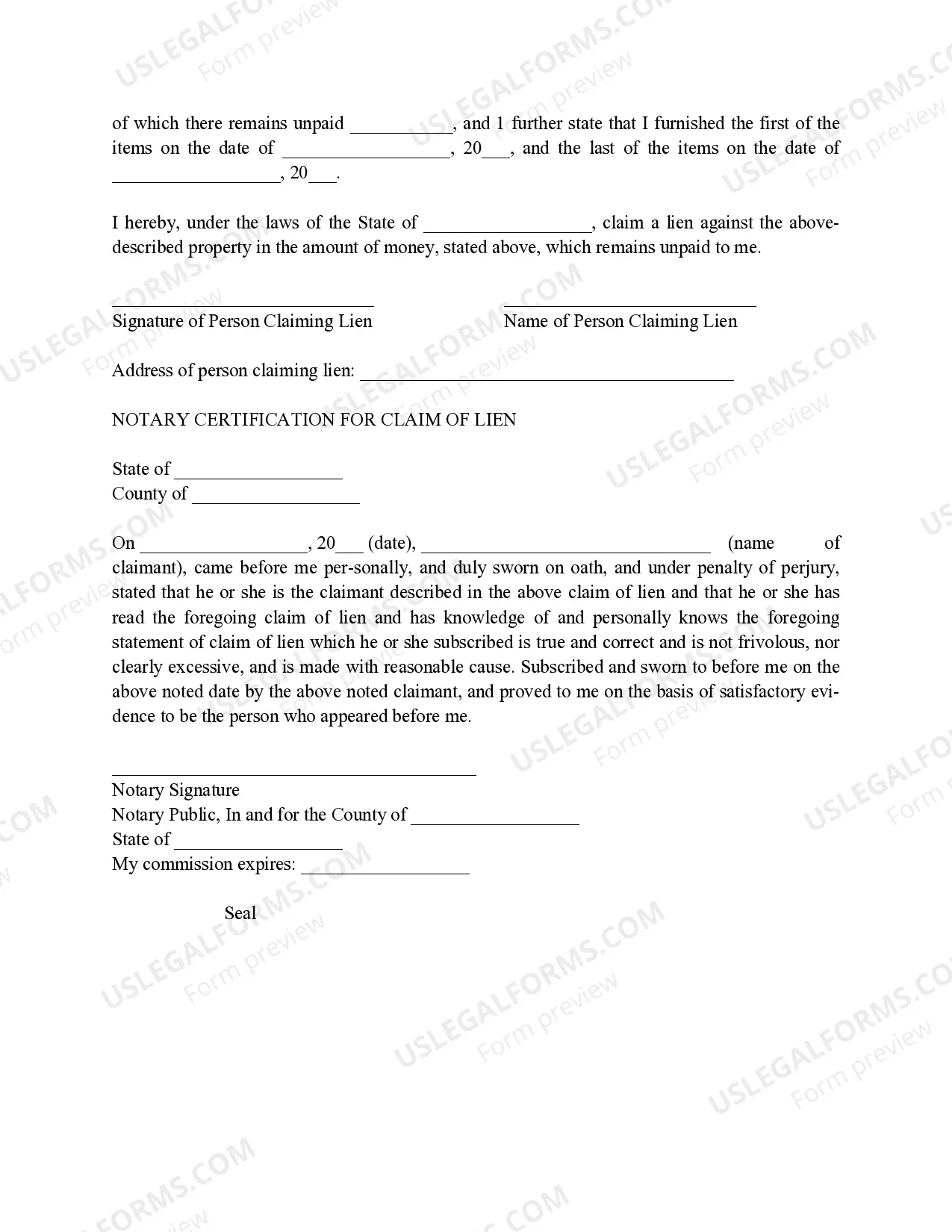
- Amount owed and details regarding payment status.
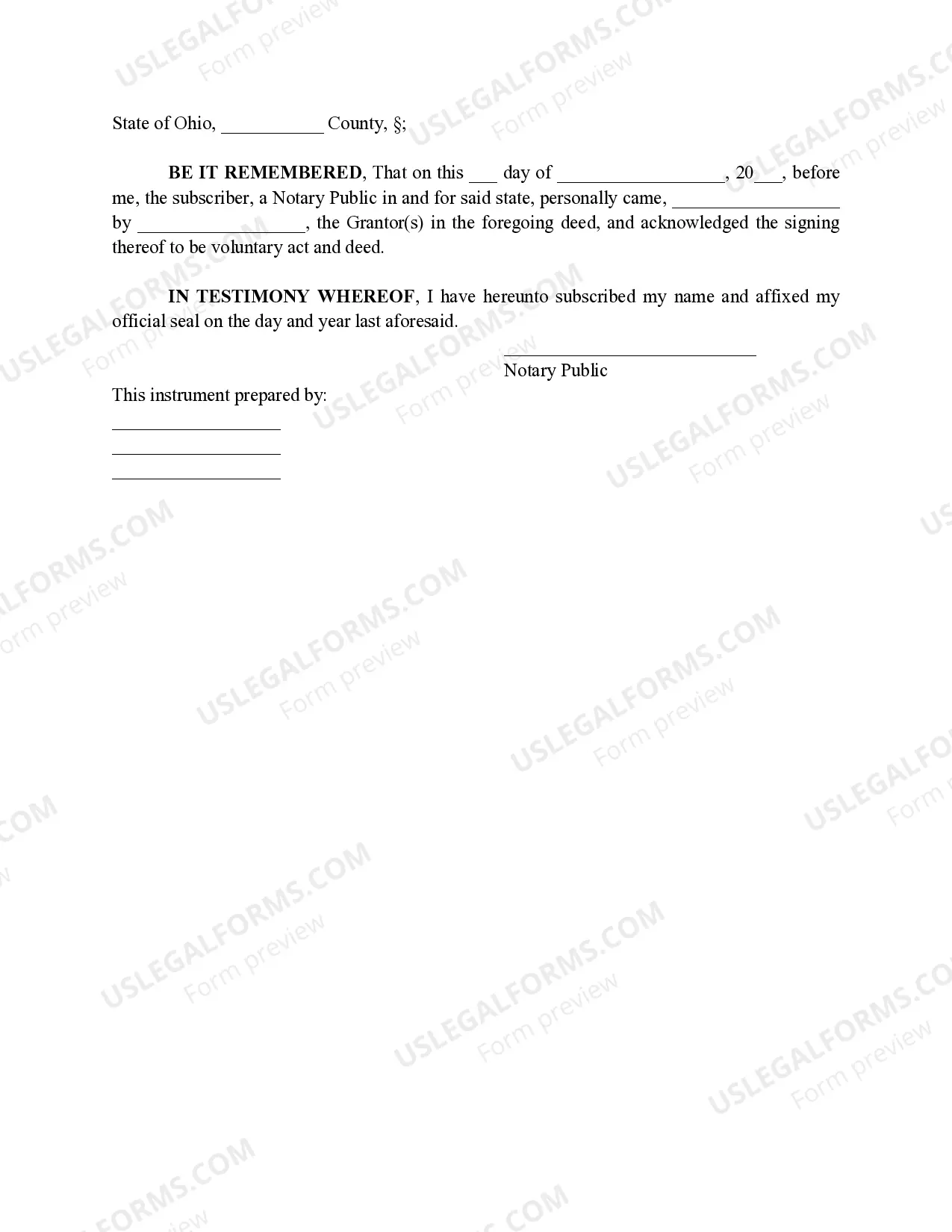
- Signature of the claimant and necessary notary section.
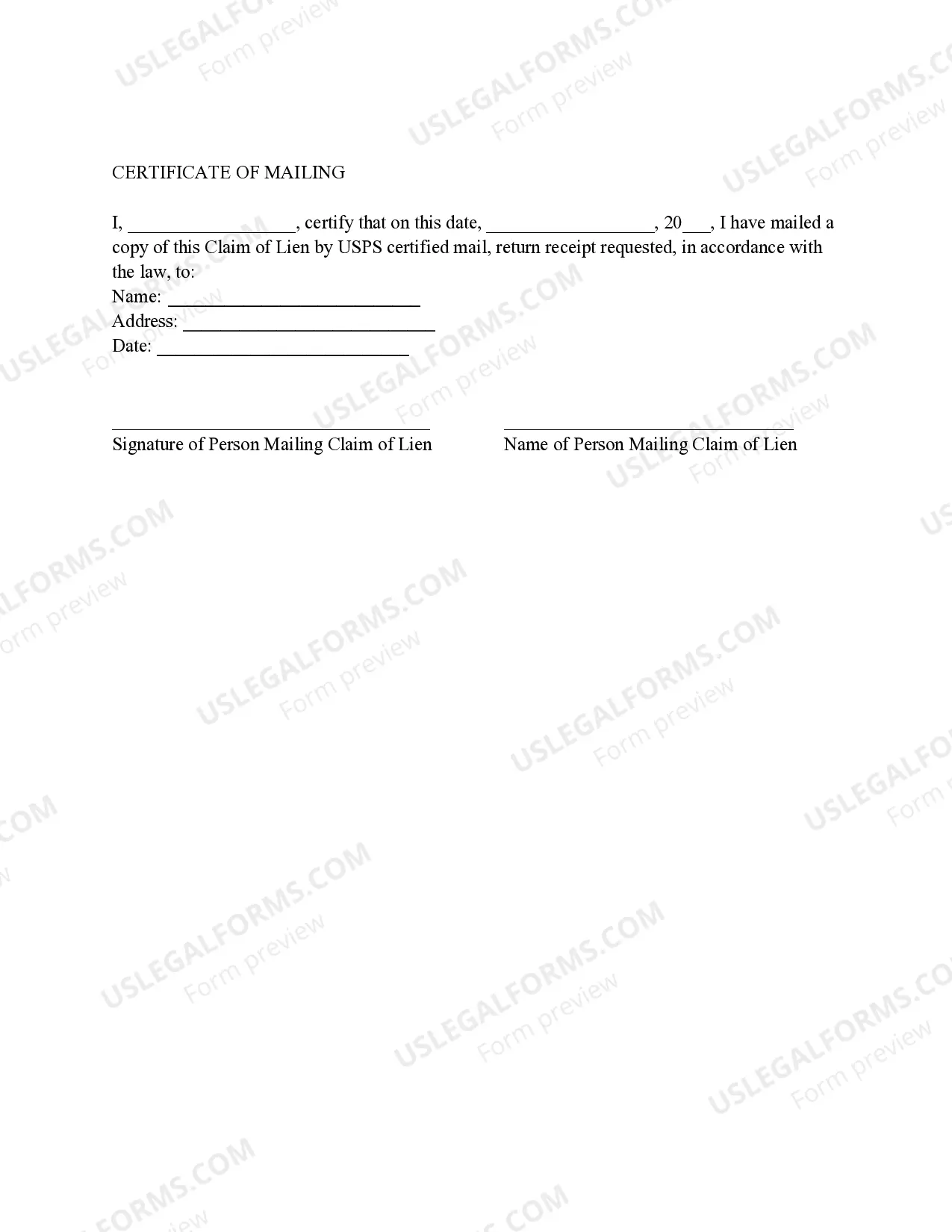
- Certificate of mailing to ensure notification of the claim.
When to use this document
This form should be used when a contractor, supplier, or service provider has not been paid for services or materials provided to a property owner. It is typically necessary in situations where the claimant seeks a legal claim against the property to secure the outstanding payment. Scenarios include construction projects, home repairs, and any situation in which a written agreement for services was established but not fulfilled financially.
Who can use this document
- Contractors seeking payment for services rendered.
- Material suppliers who have not received compensation.
- Service providers, such as electricians or plumbers.
- Property owners wanting to secure payment prior to completing work.
- Legal representatives managing claims for their clients.
Instructions for completing this form
- Fill out the recording information at the top, including who requested the recording.
- Provide the name and address of the claimant and the property owner.
- Describe the labor or materials provided, along with the property's legal description.
- Enter the total value of the work, indicating any unpaid amounts.
- Complete the dates for when the work was performed.
- Sign the document in front of a notary and ensure the notary section is correctly filled out.
Does this form need to be notarized?
Yes, this form must be notarized to be legally valid. The notarization serves as a confirmation of the identity of the claimant and the authenticity of the claim. US Legal Forms offers integrated online notarization services, allowing you to complete the process securely from anywhere at any time.
Get your form ready online
Our built-in tools help you complete, sign, share, and store your documents in one place.
Make edits, fill in missing information, and update formatting in US Legal Forms—just like you would in MS Word.
Download a copy, print it, send it by email, or mail it via USPS—whatever works best for your next step.
Sign and collect signatures with our SignNow integration. Send to multiple recipients, set reminders, and more. Go Premium to unlock E-Sign.
If this form requires notarization, complete it online through a secure video call—no need to meet a notary in person or wait for an appointment.
We protect your documents and personal data by following strict security and privacy standards.

Make edits, fill in missing information, and update formatting in US Legal Forms—just like you would in MS Word.

Download a copy, print it, send it by email, or mail it via USPS—whatever works best for your next step.

Sign and collect signatures with our SignNow integration. Send to multiple recipients, set reminders, and more. Go Premium to unlock E-Sign.

If this form requires notarization, complete it online through a secure video call—no need to meet a notary in person or wait for an appointment.

We protect your documents and personal data by following strict security and privacy standards.
Common mistakes
- Failing to include complete and accurate property descriptions.
- Not specifying the correct amount owed or unpaid.
- Omitting dates of service or material delivery.
- Neglecting to get the form notarized.
- Not mailing a copy of the claim to the property owner as required.
Benefits of using this form online
- Convenience of downloading and completing forms at any time.
- Editable templates that can be customized to fit specific needs.
- Access to professionally drafted forms ensuring legal compliance.
- Ability to store and retrieve forms easily for future reference.
Looking for another form?
Form popularity
FAQ
Lien Release Bond (Ohio) An owner of property in the State of Ohio that discovers or is notified of a mechanic's lien filed against his or her property may force a resolution of the matter by filing a notice to bring suit and posting an Ohio lien release bond with the county recorder in which the property is located.
The Affidavit of Mechanics' Lien must be filed at the county recorder's office where the project was located. It must also be served on the owner within 30 days of filing. If the owner cannot be found, a copy of the lien must be posted conspicuously on the project site within 10 days of failure of service.
Go to the Ohio Bureau of Motor Vehicles website. Download and print out form BMV 3774, which is titled as an Application for Certificate of Title to a Motor Vehicle (see Resources). Fill out form 3774 with the information about the lien and lien holder included.
What Is a Fraudulent Lien?the claimant is owed money on another job by the same general contractor or property owner, but didn't file a lien on that project before time expired; or. the claimant wants to file a lien because of personal reasons generally related to the identity of the property owner.
Your lawyer will help you decide whether to fight the lien in court or negotiate a settlement.In some, you may be able to fend off a lien if: You prove that you've paid your construction bills fully and on time. You prove that the contractor who filed the lien has breached his contract and doesn't deserve to be paid.
The simplest way to prevent liens and ensure that subcontractors and suppliers are paid is to pay with joint checks. This is when both parties endorse the check. Compare the contractor's materials or labor bill to the schedule of payments in your contract and the Preliminary Notices.
First, you can pay the lien off. Second, you may be able to Cancel your Contract and Eliminate the Mechanic's Lien. Third, you can file a Notice to Commence suit and Force the Contractor to act. Fourth, you can make a cash Deposit or file a bond with the court.
1) immediately dispute the lien (whether through statutorily provided preliminary means, a demand to/against the claimant, or a full-blown lawsuit) 2) force the claimant to file suit to enforce the lien in a shorter period (if available in your state) 3) just wait it out.
The lien gives the creditor an interest in your property so that it can get paid for the debt you owe. If you sell the property, the creditor will be paid first before you receive any proceeds from the sale. And in some cases, the lien gives the creditor the right to force a sale of your property in order to get paid.