Ohio Commercial Sublease
What is this form?
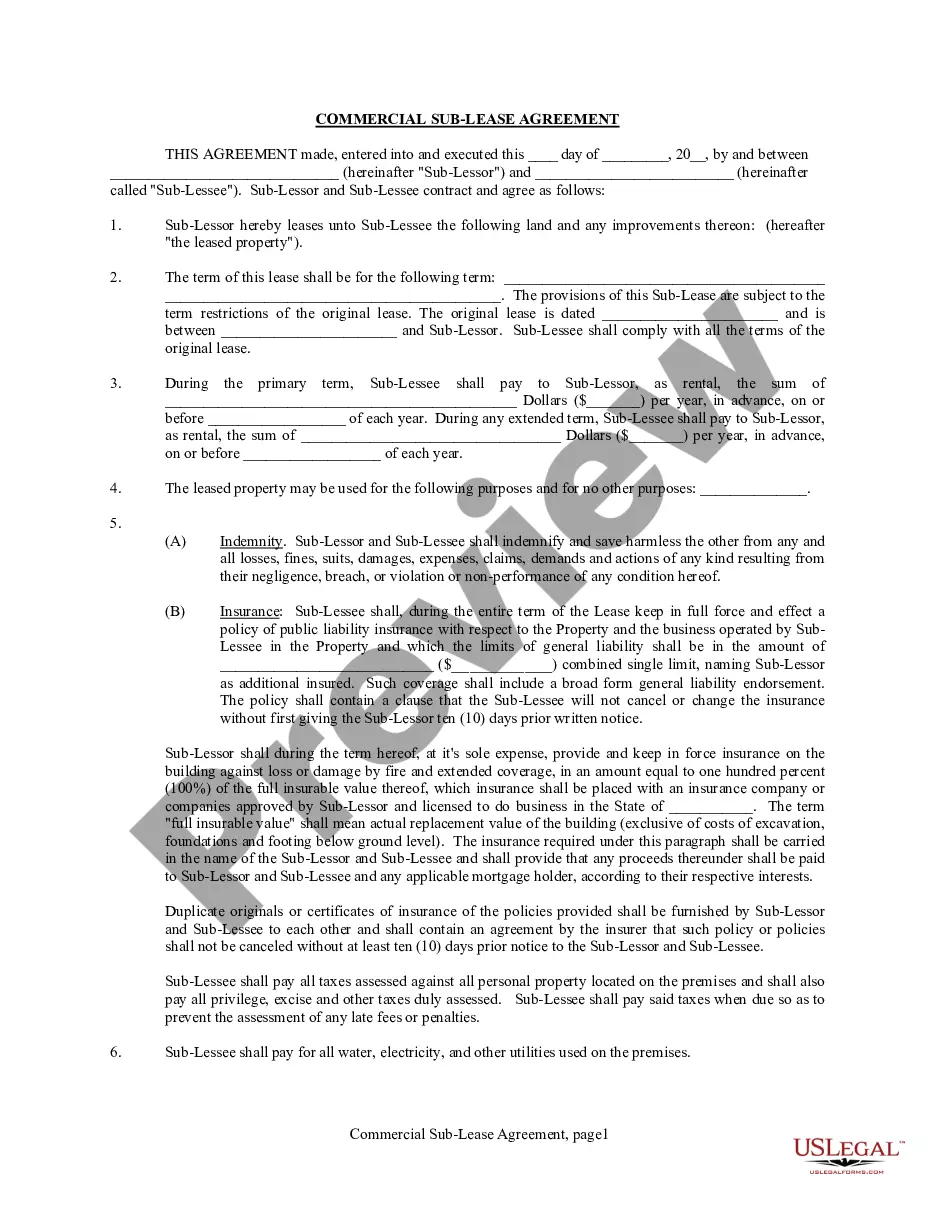
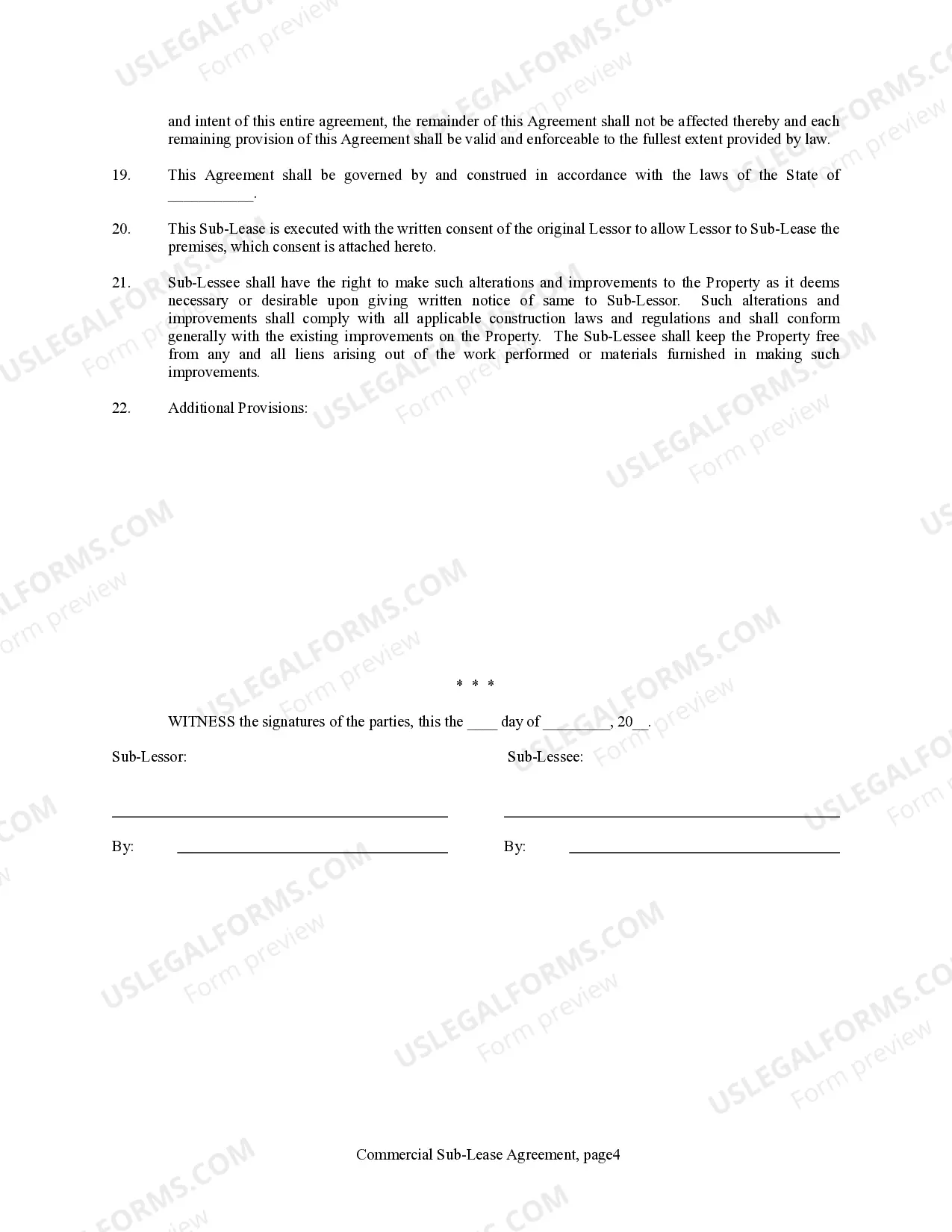
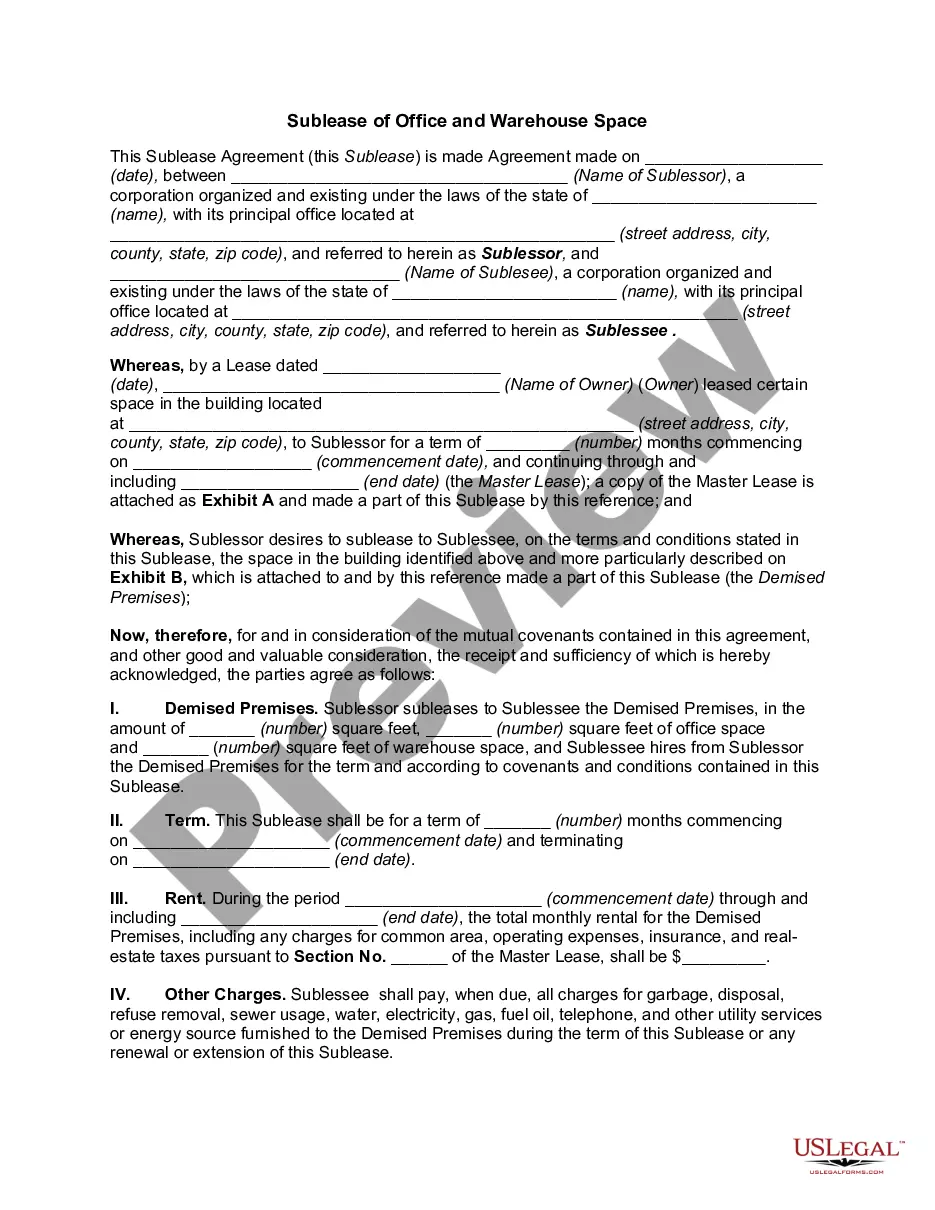
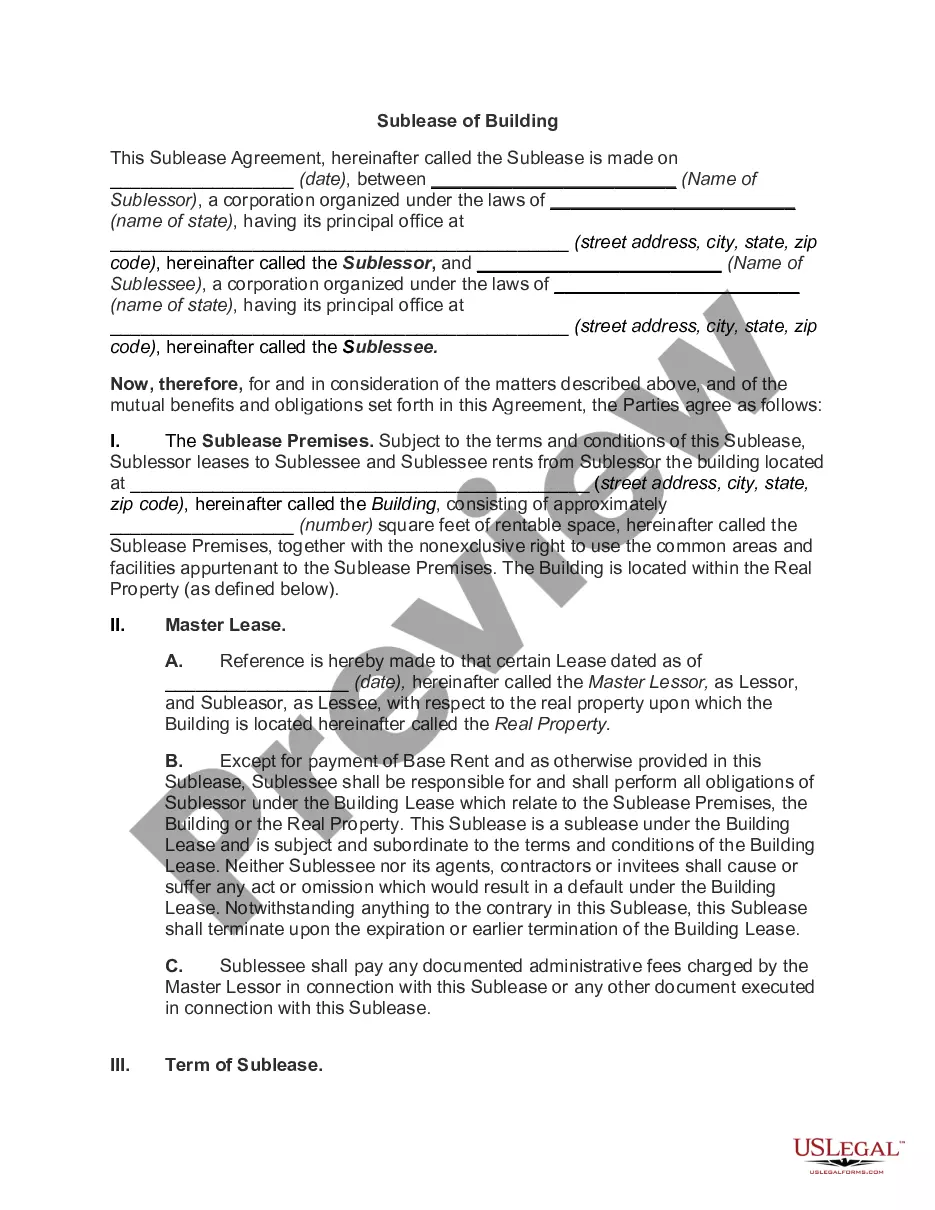
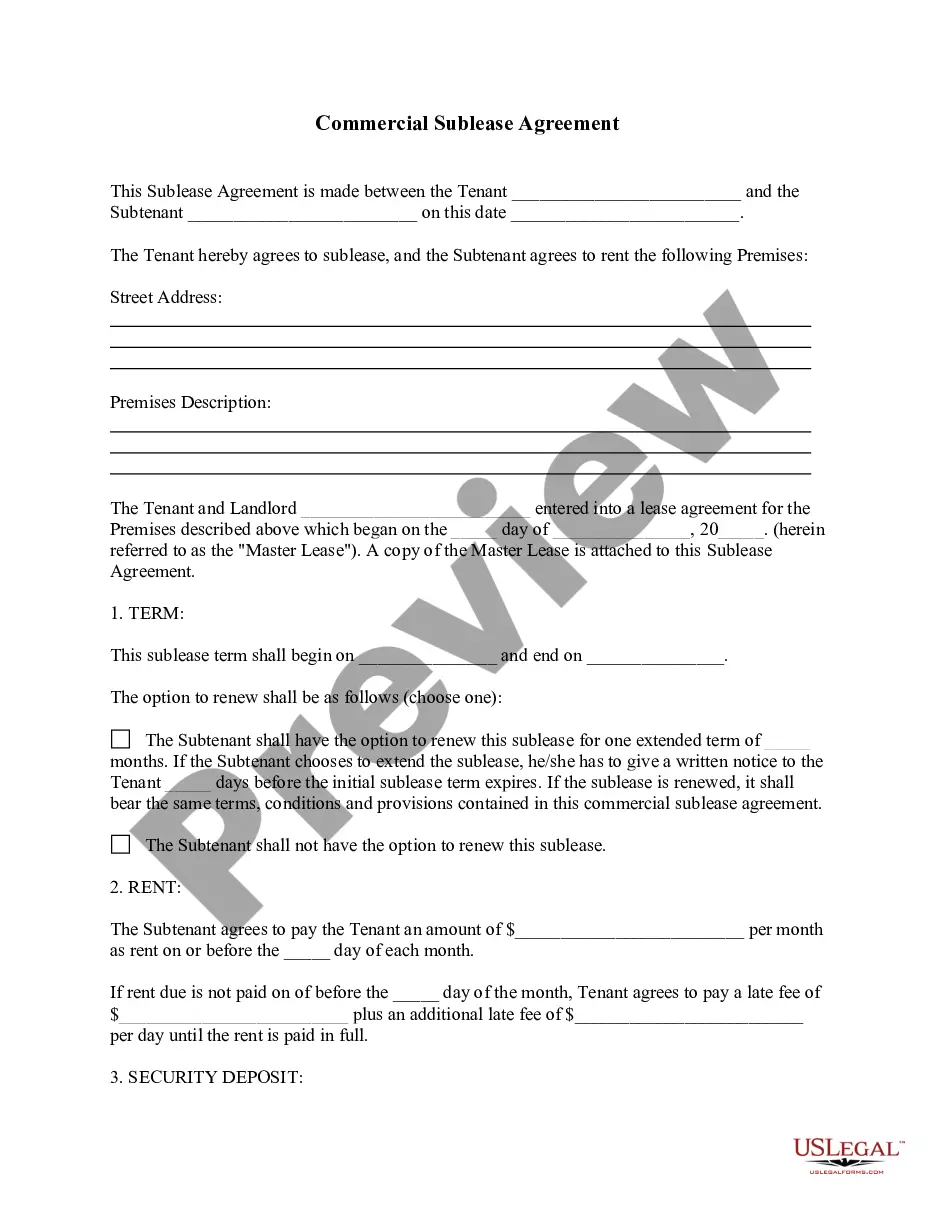
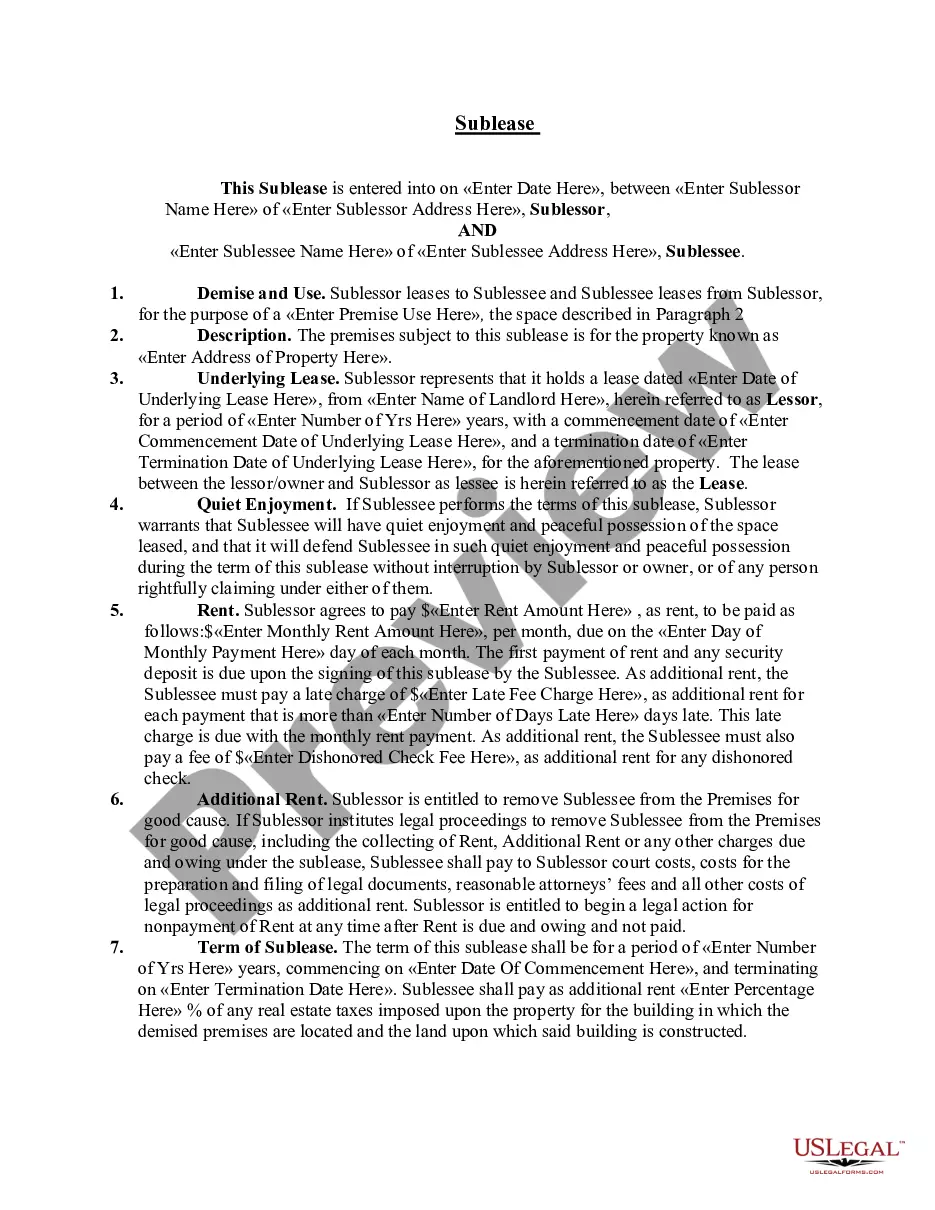
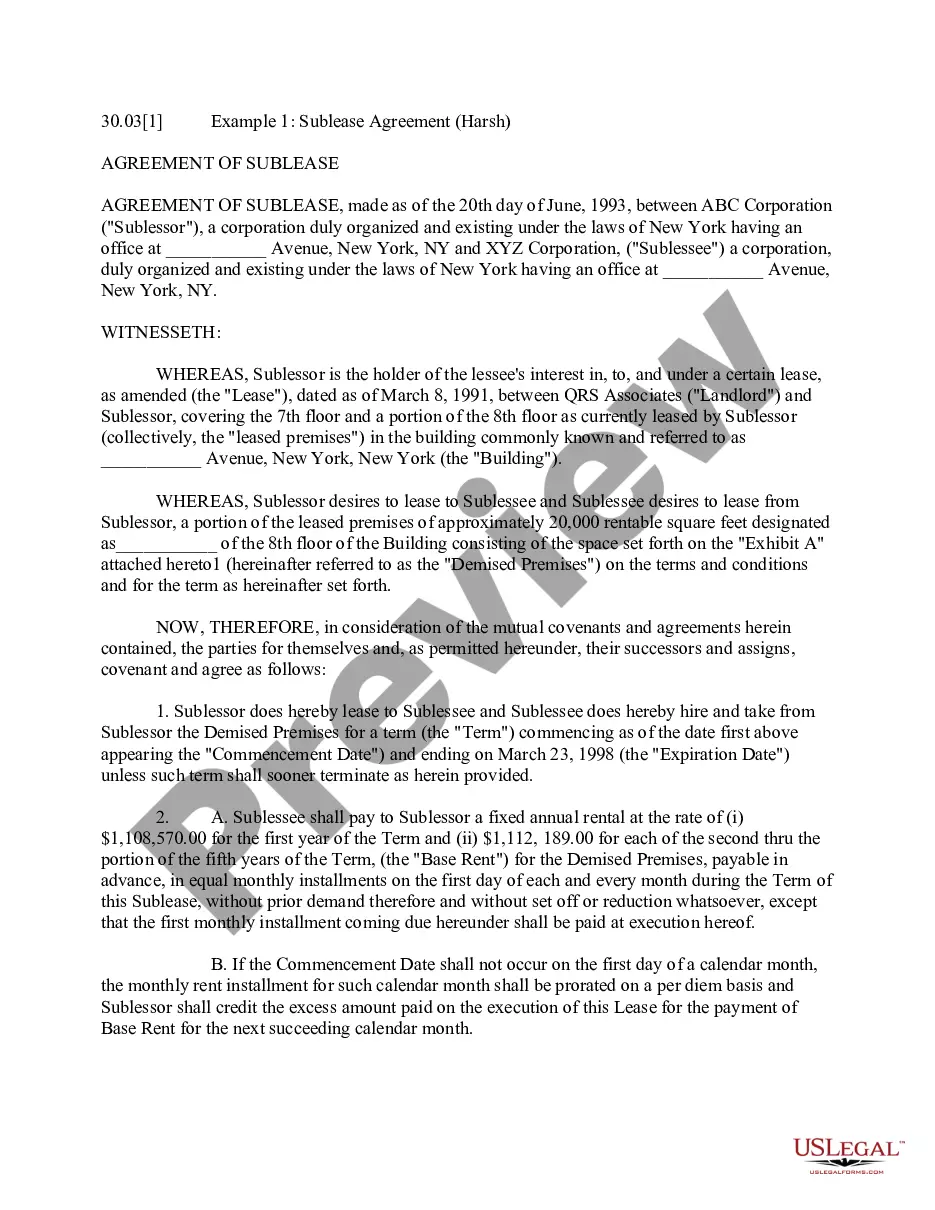
The Commercial Sublease form is a legal document that allows a current tenant (the Sub-Lessor) to lease out their rented commercial space to another party (the Sub-Lessee). This agreement outlines the terms under which the Sub-Lessee takes possession of the property, while still adhering to the original lease's requirements. It is essential for anyone looking to sublet commercial space, distinguishing itself from standard lease agreements by including specific clauses that govern the subletting process.
Key parts of this document
- Parties Involved: Identifies the Sub-Lessor and Sub-Lessee.
- Leased Property: Describes the property and any improvements included in the sublease.
- Payment Terms: Details the rent amount and payment schedule.
- Purpose of Use: Specifies how the leased property can be used by the Sub-Lessee.
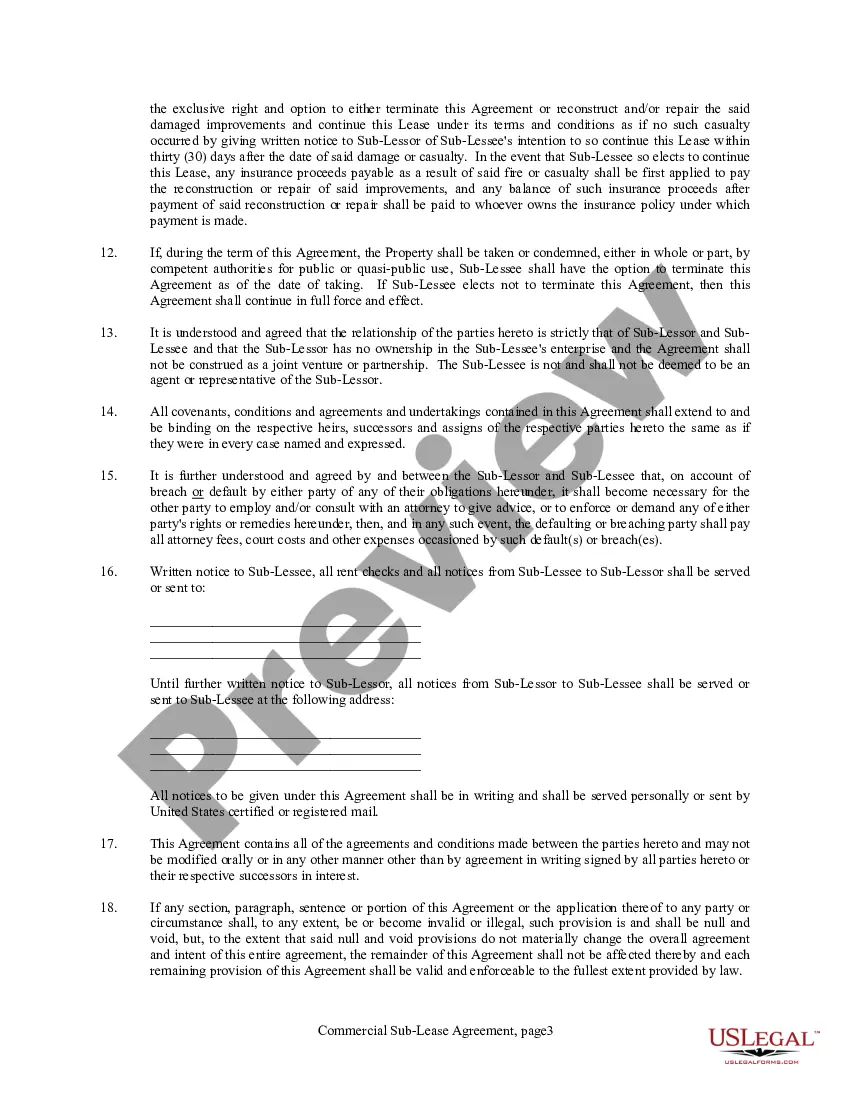
- Insurance Requirements: Outlines the insurance obligations for both parties.
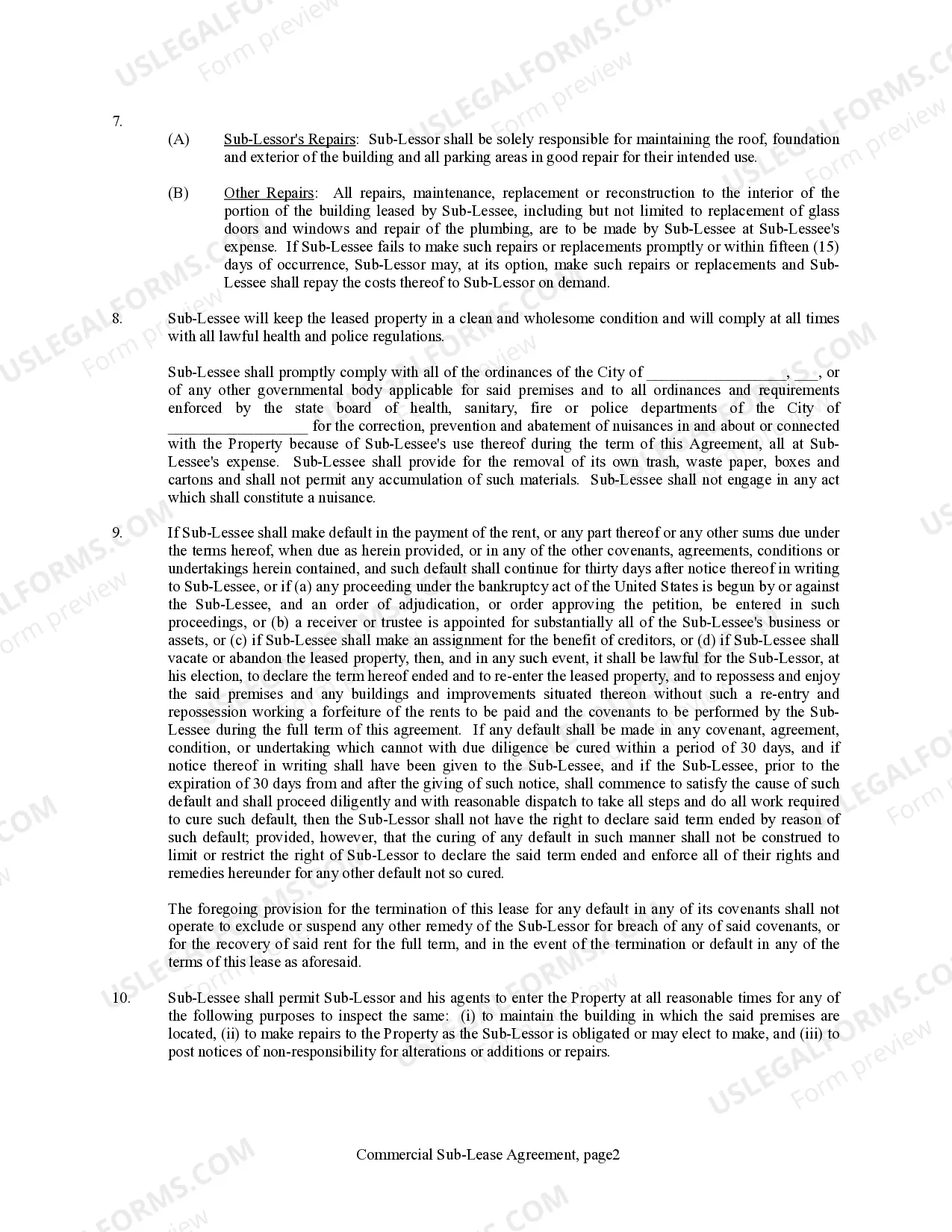
- Default Clauses: Explains the circumstances under which the agreement can be terminated.
Common use cases
This form is ideal for business owners who currently lease commercial property and wish to sublet part or all of that space to another tenant. It is particularly useful when the original tenant must relocate or is seeking to generate income from unused space while remaining responsible for the original lease obligations.
Who can use this document
The following individuals and entities should consider using the Commercial Sublease form:
- Current tenants of commercial properties looking to sublet.
- Business owners requiring temporary flexibility in their lease agreements.
- Individuals or companies that need to generate rental income from their leased space.
- Landlords seeking to outline terms for a sublessee under an existing lease agreement.
How to prepare this document
To complete this form, follow these steps:
- Identify the parties: Fill in the names of the Sub-Lessor and Sub-Lessee.
- Specify the leased property: Enter the address and any specific improvements included.
- Enter payment details: Provide the rental amount and payment schedule.
- Define the purpose of use: Clearly state the allowed activities for the leased property.
- Add insurance information: Indicate the required insurance coverage for the Sub-Lessee.
- Sign and date: Both parties should sign and date the agreement to finalize it.
Notarization requirements for this form
This form does not typically require notarization unless specified by local law. However, having a notary can add an extra layer of legal protection and validity for both parties.
Get your form ready online
Our built-in tools help you complete, sign, share, and store your documents in one place.
Make edits, fill in missing information, and update formatting in US Legal Forms—just like you would in MS Word.
Download a copy, print it, send it by email, or mail it via USPS—whatever works best for your next step.
Sign and collect signatures with our SignNow integration. Send to multiple recipients, set reminders, and more. Go Premium to unlock E-Sign.
If this form requires notarization, complete it online through a secure video call—no need to meet a notary in person or wait for an appointment.
We protect your documents and personal data by following strict security and privacy standards.

Make edits, fill in missing information, and update formatting in US Legal Forms—just like you would in MS Word.

Download a copy, print it, send it by email, or mail it via USPS—whatever works best for your next step.

Sign and collect signatures with our SignNow integration. Send to multiple recipients, set reminders, and more. Go Premium to unlock E-Sign.

If this form requires notarization, complete it online through a secure video call—no need to meet a notary in person or wait for an appointment.

We protect your documents and personal data by following strict security and privacy standards.
Mistakes to watch out for
- Failing to get permission from the original landlord for subletting.
- Not specifying the duration of the sublease clearly.
- Neglecting to outline maintenance responsibilities for the Sub-Lessee.
- Forgetting to include insurance requirements.
- Omitting key terms from the original lease that affect subletting.
Why use this form online
- Convenience of downloading and customizing the form to fit specific needs.
- Reliable legal templates drafted by licensed attorneys.
- Immediate access, allowing users to address subleasing opportunities quickly.
- Legally sound and up-to-date with current laws and regulations.
Looking for another form?


Form popularity
FAQ
Commercial leases in Ohio must be signed by the lessor, and the lessor's signature must be acknowledged before a notary or other official, according to Revised Code 5301.01. In addition, per Revised Code 5301.08, the acknowledgment is unnecessary if the lease term is three years or less.
If the property to be leased is used for illegal purposes, the lease would be invalid.However, it could be in some other form, such as a trade of labor or property improvements for tenancy. Rent is normally fixed for the life of the lease and cannot be changed unless agreed to in writing by both parties.
A sublease is a legally binding contract made between a tenant and a new tenant (also known as a subtenant or a sublessee).Usually, the first tenant must get consent from the landlord before he/she is allowed to sublease the premises.
The most common type of forms involved in a rental is a lease, with provisions for a security deposit to cover any damages. You may also desire to obtain a consent to conduct a background check from the tenant. The forms do not need to be witnessed or notarized.
Commercial leases in Ohio must be signed by the lessor, and the lessor's signature must be acknowledged before a notary or other official, according to Revised Code 5301.01. In addition, per Revised Code 5301.08, the acknowledgment is unnecessary if the lease term is three years or less.
A commercial sublease is an agreement between a tenant currently leasing a property, a new tenant looking for space, and the property owner. When you sublease your space you are the sublessor (or sublandlord) and your new tenant is the sublessee (or subtenant).
Recording a lease means that it (or a Notice of Lease) is submitted to the public record, usually at the local Registry of Deeds following the signing of it by both parties. Generally, recording of the lease protects the tenant against subsequent claims to the property.
No, lease agreements do not need to be notarized in California.A tenant and landlord can agree to have the lease notarized if they wish, but it is not required by California state law.
The process for retailers qualifying for a commercial lease can vary from landlord to landlord. Landlords consider several factors including tenant mix, personal credit history of the owner, company balance sheet, profit and loss statements, open credit lines, and growth projections.