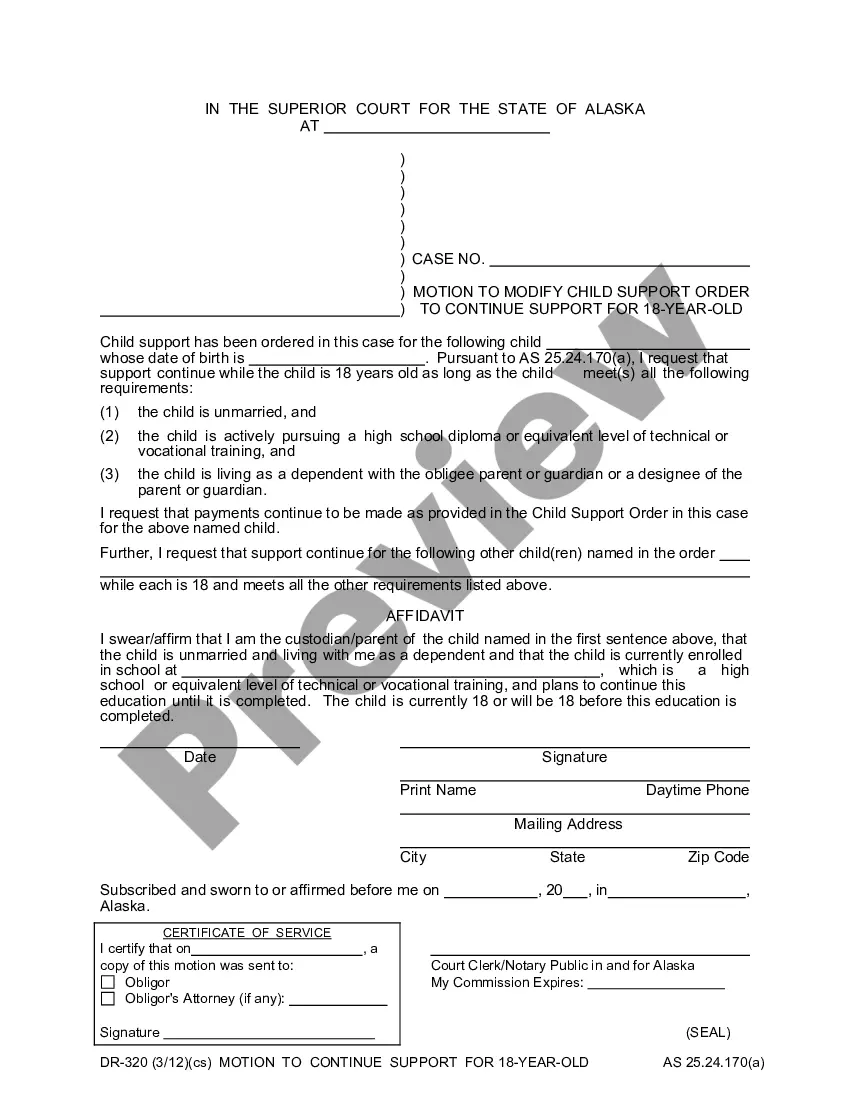
Ohio General Warranty Deed - Life Estate - Individual to Individual
Overview of this form
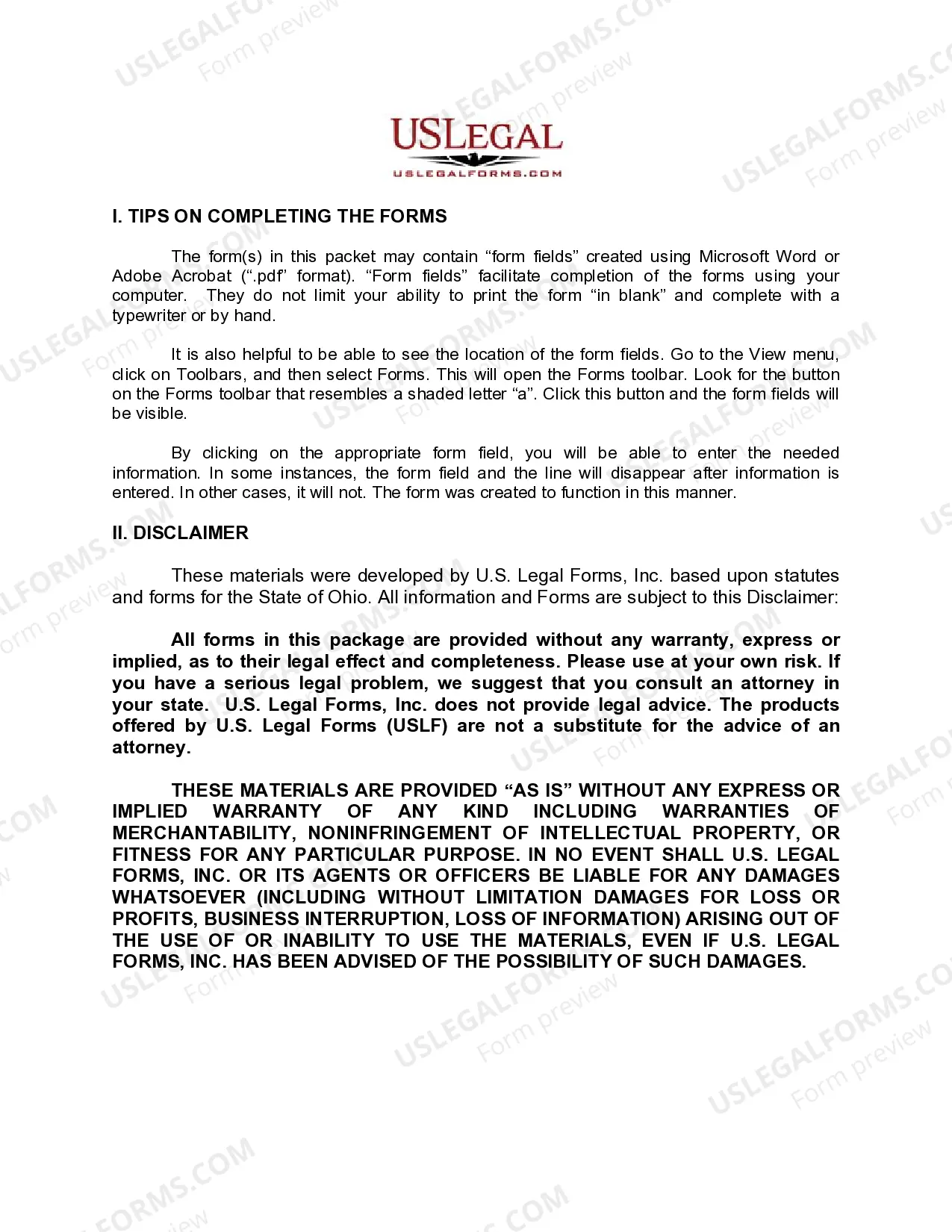
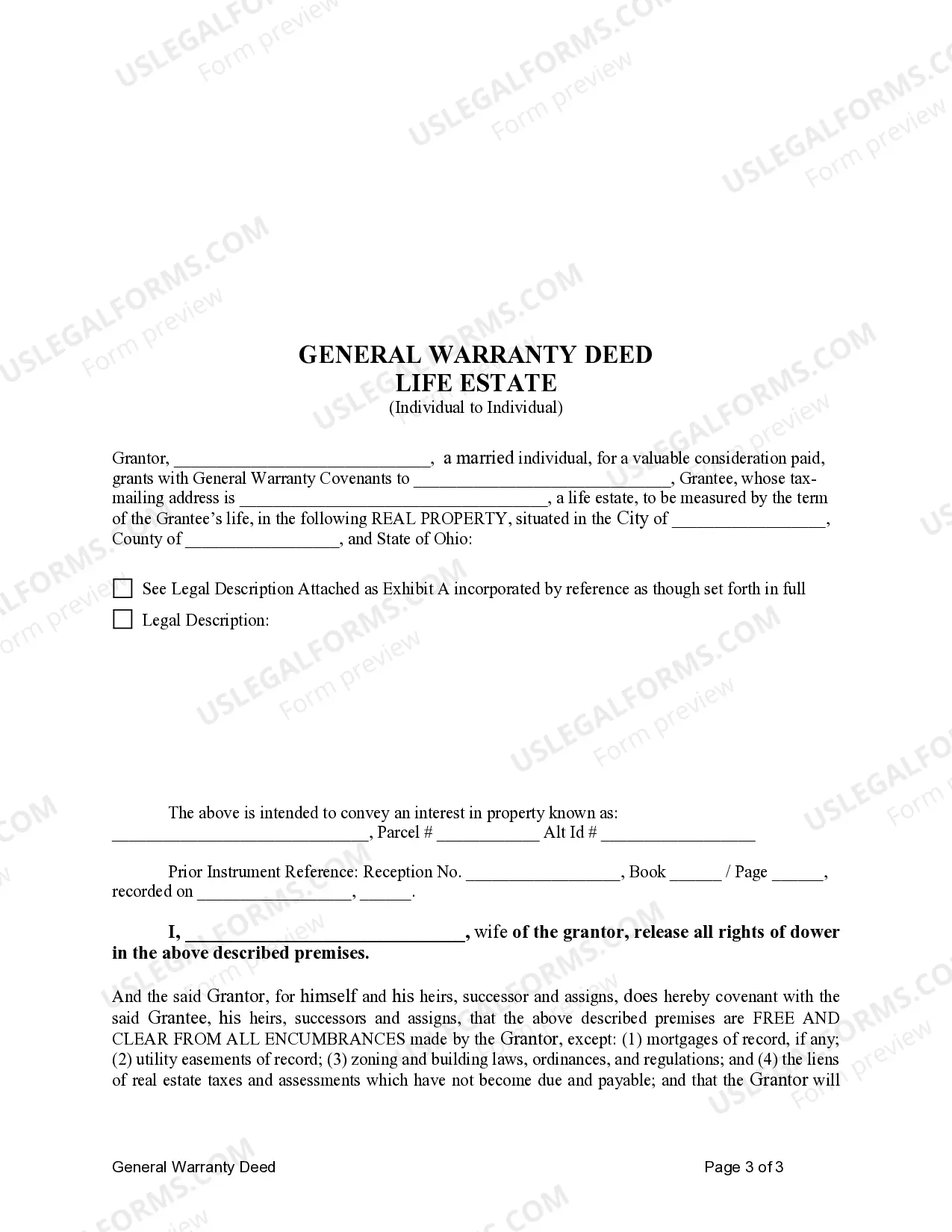
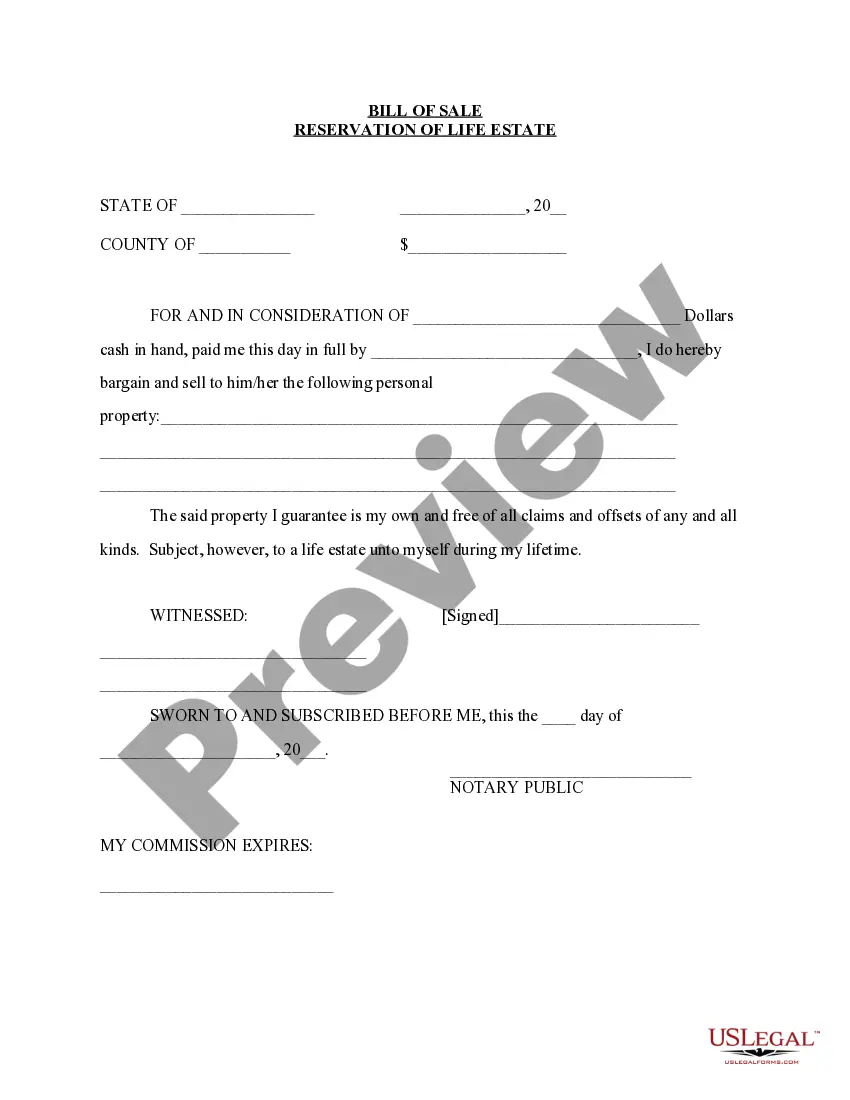
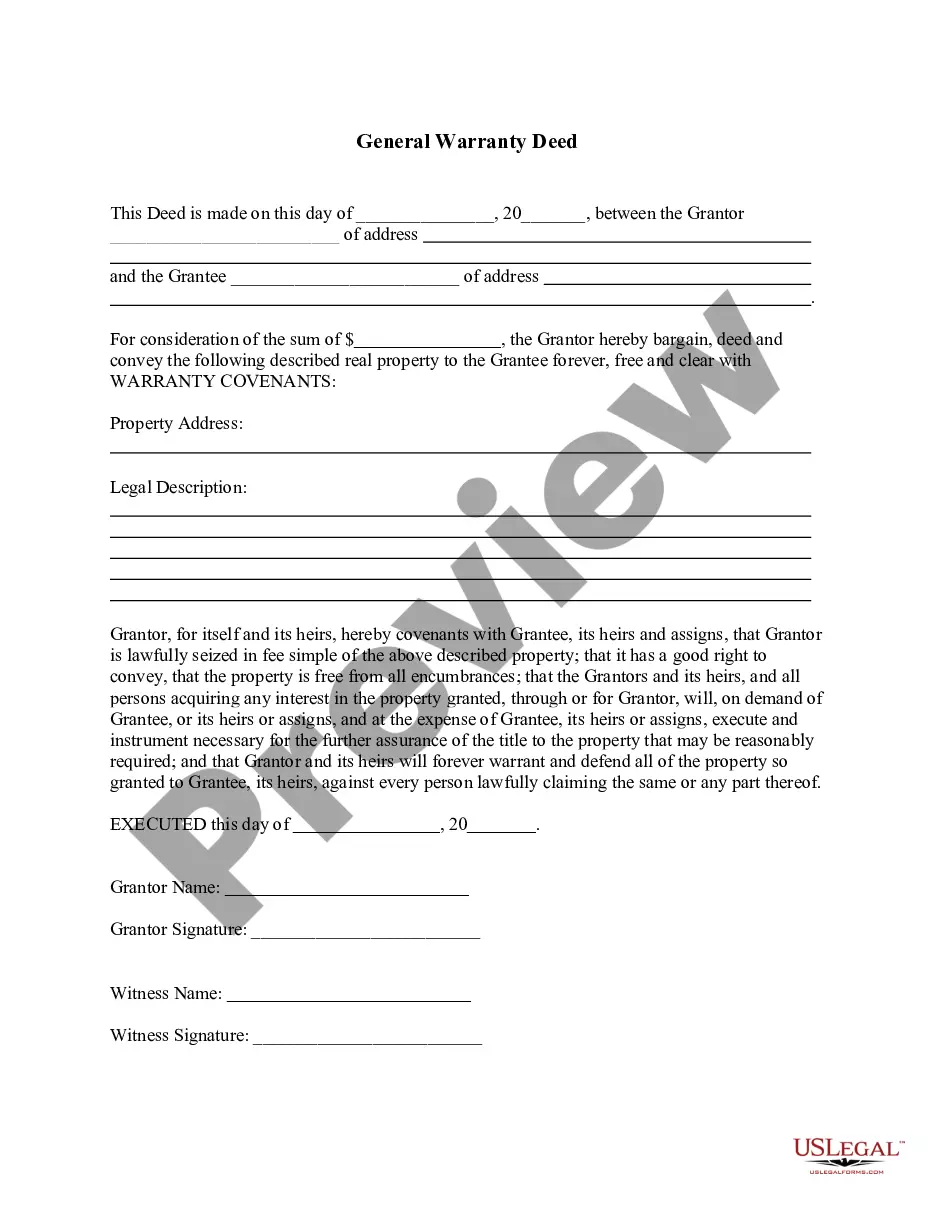
The General Warranty Deed - Life Estate - Individual to Individual is a legal document that allows an individual (the Grantor) to convey a life estate in a property to another individual (the Grantee). This deed provides a general warranty, which means the Grantor guarantees that they hold clear title to the property and have the right to transfer it. This form is distinct from other deeds because it specifically addresses the transfer of a life estate, which allows the Grantee to use the property for their lifetime while specifying that the rights will not pass on to their heirs after their death.
What’s included in this form
- Identification of the Grantor and Grantee
- Description of the property being transferred
- Warranties provided by the Grantor about their title to the property
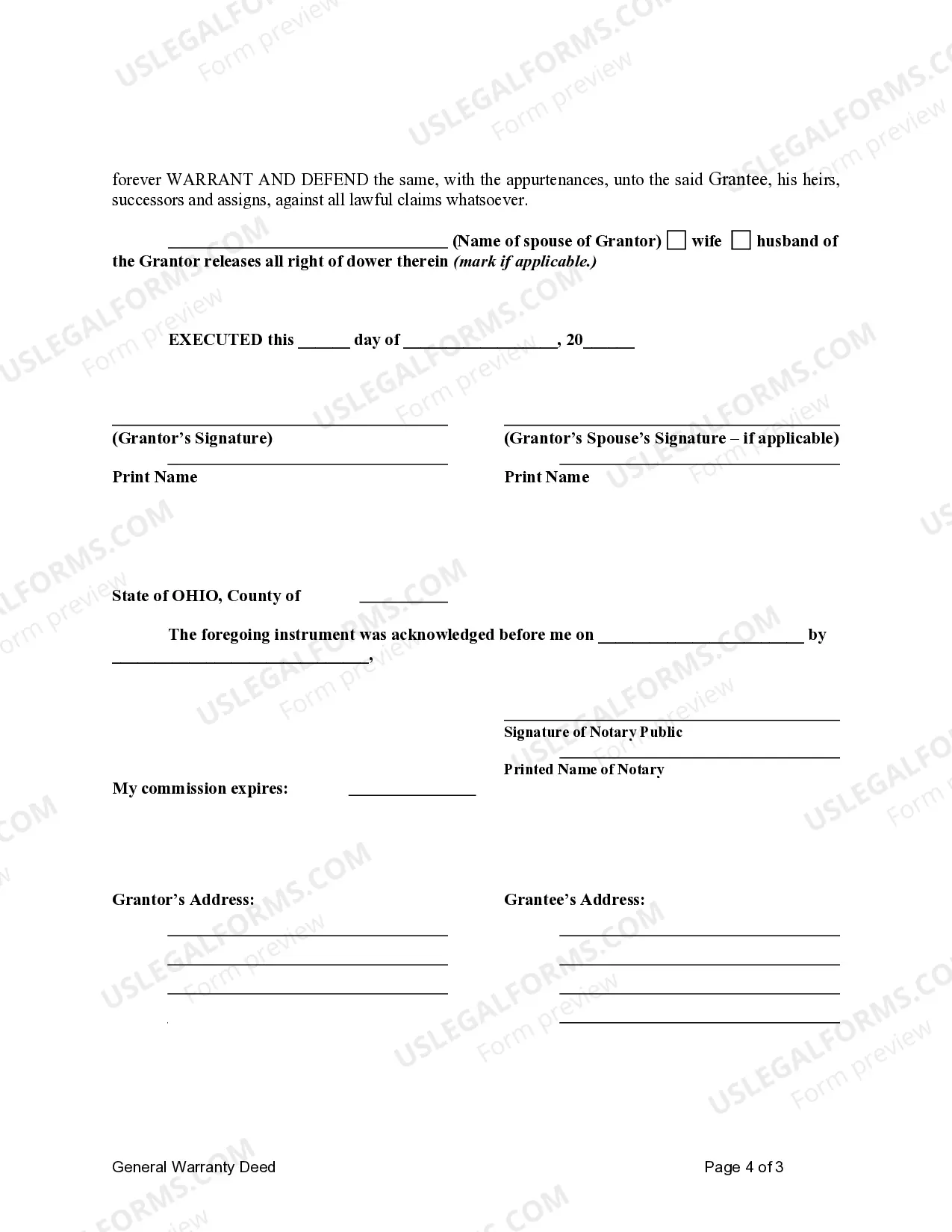
- Release of rights, such as dower rights, by the Grantor
- Signature lines for both parties
- Legal description of the property attached as an exhibit


When this form is needed
This form is appropriate to use when an individual wishes to grant a life estate to another person. Scenarios for using this General Warranty Deed may include instances where a parent transfers their home to a child while retaining the right to live in the home for the rest of their life. It is also useful in estate planning when the Grantor wants to ensure that a specific individual benefits from the property during their lifetime.
Intended users of this form
- Property owners looking to transfer a life estate to another individual
- Individuals involved in estate planning
- Those needing to document a familial agreement regarding property use
- Individuals who are not legal professionals but need a simple way to transfer property rights
Completing this form step by step
- Identify the Grantor and Grantee by entering their full names and addresses.
- Provide a clear and precise description of the property being conveyed.
- Include any warranties the Grantor wishes to make regarding the property's title.
- Sign the form to validate the transfer of the life estate.
- Attach any legal descriptions necessary as an exhibit to the deed.
Does this document require notarization?
Notarization is required for this form to take effect. Our online notarization service, powered by Notarize, lets you verify and sign documents remotely through an encrypted video session, available 24/7.
Get your form ready online
Our built-in tools help you complete, sign, share, and store your documents in one place.
Make edits, fill in missing information, and update formatting in US Legal Forms—just like you would in MS Word.
Download a copy, print it, send it by email, or mail it via USPS—whatever works best for your next step.
Sign and collect signatures with our SignNow integration. Send to multiple recipients, set reminders, and more. Go Premium to unlock E-Sign.
If this form requires notarization, complete it online through a secure video call—no need to meet a notary in person or wait for an appointment.
We protect your documents and personal data by following strict security and privacy standards.

Make edits, fill in missing information, and update formatting in US Legal Forms—just like you would in MS Word.

Download a copy, print it, send it by email, or mail it via USPS—whatever works best for your next step.

Sign and collect signatures with our SignNow integration. Send to multiple recipients, set reminders, and more. Go Premium to unlock E-Sign.

If this form requires notarization, complete it online through a secure video call—no need to meet a notary in person or wait for an appointment.

We protect your documents and personal data by following strict security and privacy standards.
Common mistakes to avoid
- Failing to accurately describe the property can lead to disputes.
- Not including the specific life estate terms in the deed.
- Neglecting to properly sign and date the document can render it ineffective.
- Forgetting to attach the legal description as an exhibit can cause recording issues.
Benefits of completing this form online
- Convenient access allows users to complete the form at their own pace.
- Editability ensures that all information can be accurately entered before printing.
- Secure download provides reassurance that the form is reliable and up to date.
Looking for another form?
Form popularity
FAQ
The name and address of the seller (called the grantor) The name and address of the buyer (called the grantee) A legal description of the property (found on the previous deed) A statement that the grantor is transferring the property to the grantee.
Attorney Involvement An attorney licensed to practice law in Ohio must prepare deeds, powers of attorney, and other instruments that are to be recorded. One exception is that a party to the transaction may prepare an instrument in which they are a party.
A life estate deed permits the property owner to have full use of their property until their death, at which point the ownership of the property is automatically transferred to the beneficiary.
The date the deed was made; The name of the party granting the life estate and their address; The name of the grantee and their address; The address and a legal description of the property that is subject to the life estate;
The person holding the life estate -- the life tenant -- possesses the property during his or her life. The other owner -- the remainderman -- has a current ownership interest but cannot take possession until the death of the life estate holder.