Ohio General Warranty Deed - One Individual to Two Individuals
What this document covers
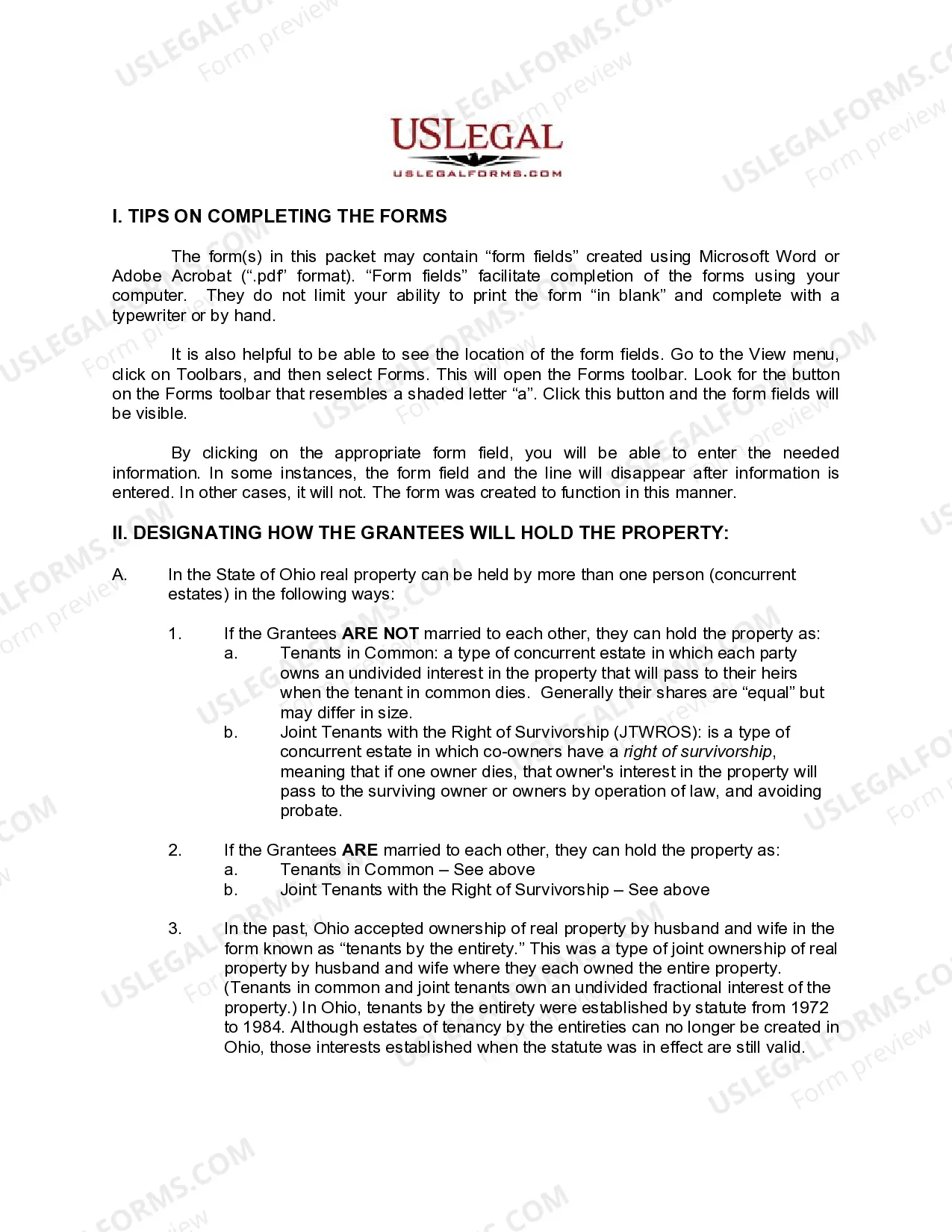
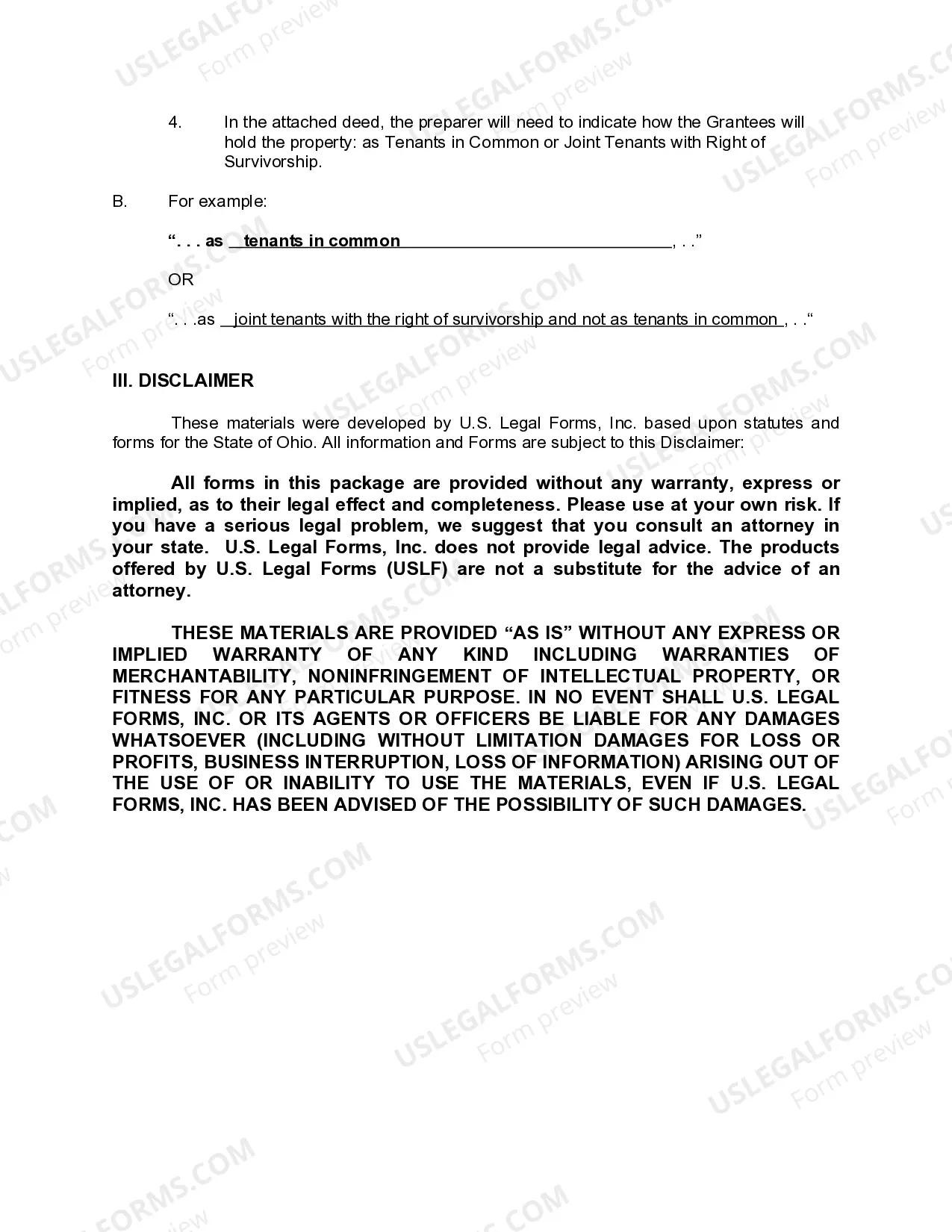
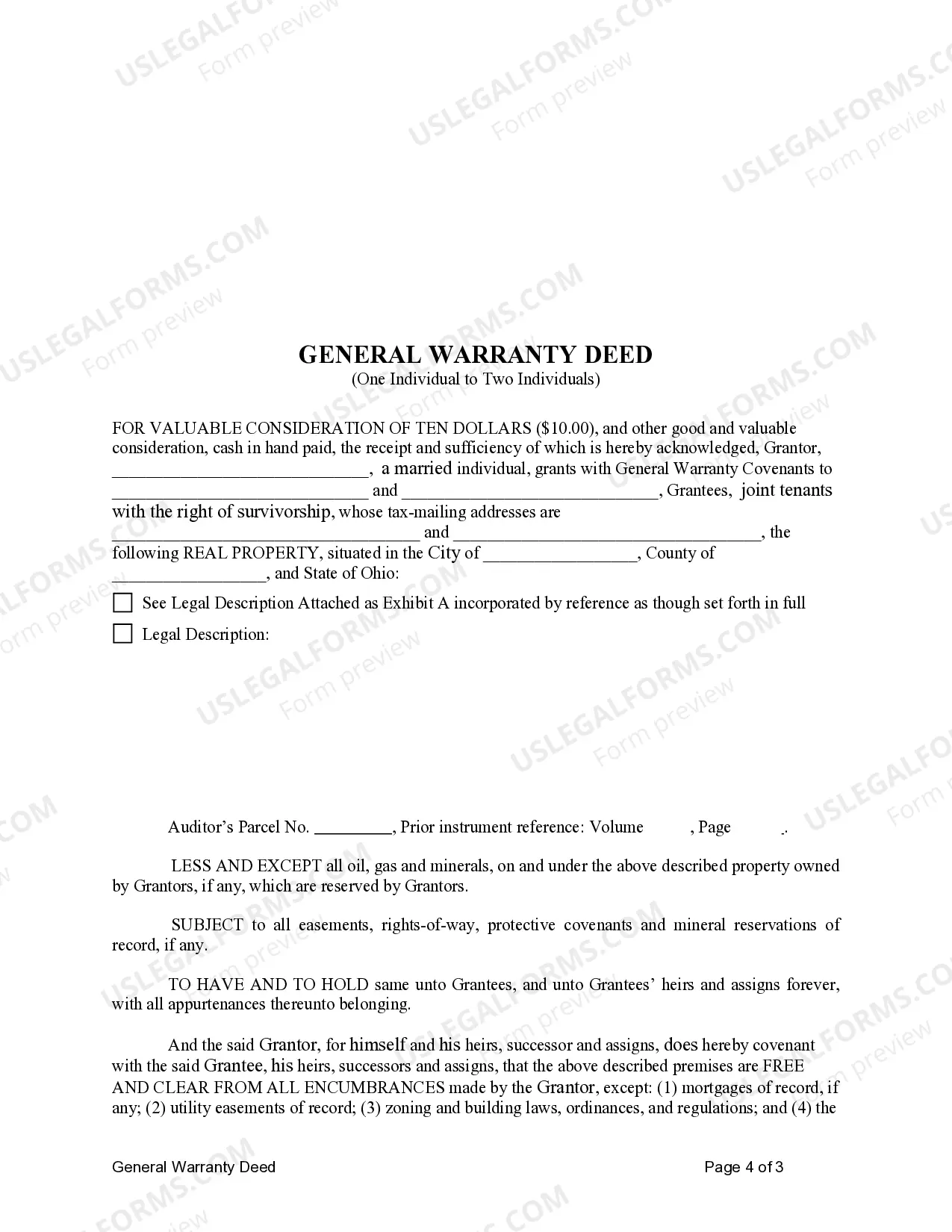
The General Warranty Deed - One Individual to Two Individuals is a legal document used to transfer property ownership from one person (the grantor) to two individuals (the grantees). This deed provides a warranty of title, ensuring that the property is free from encumbrances except as specified in the document. The grantees can hold the property either as tenants in common or joint tenants with the right of survivorship, making it distinct from simple transfer forms. This warranty deed complies with all state statutory laws.
Form components explained
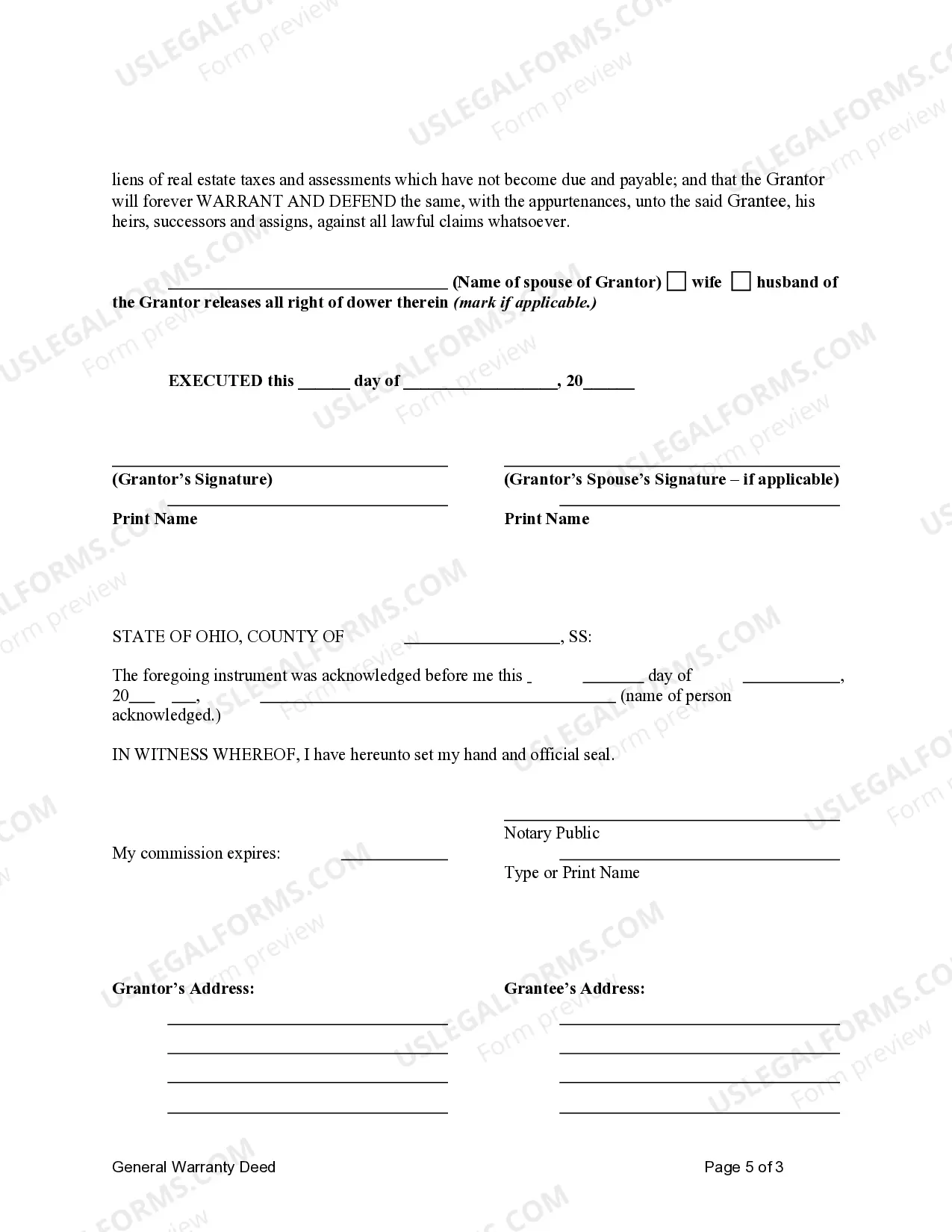
- Grantor's full name and signature.
- Grantees' names and how they will hold the property (tenants in common or joint tenants with right of survivorship).
- Description of the property being conveyed.
- Warranty clauses that detail the rights of the grantor regarding the property.
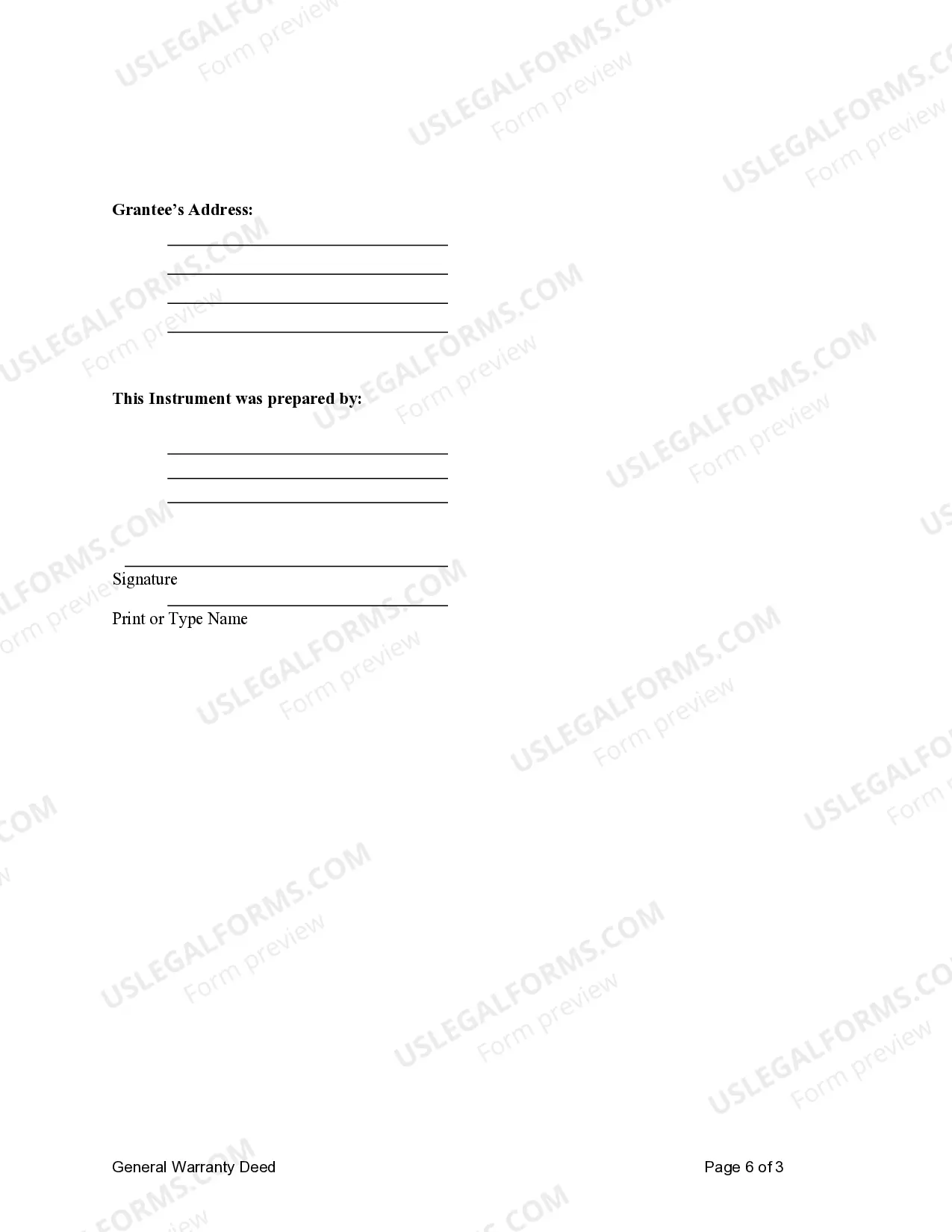
- Signatures and notarization if required.





When to use this form
This form is used when an individual wishes to formally convey ownership of real property to two other individuals. Situations may include family estate planning, joint purchases of property between friends, or any scenario where two parties need to share ownership with rights of survivorship or as tenants in common. It ensures legal clarity and protection regarding property rights.
Who needs this form
- Individuals looking to transfer property to two people.
- Couples wishing to hold property jointly or restrict ownership to share equally.
- Estate planners managing property transfers in family arrangements.
- Real estate professionals assisting clients in property transactions.
Instructions for completing this form
- Identify the grantor and grantees by entering their full legal names.
- Select how the grantees will hold the property: either as tenants in common or joint tenants with right of survivorship.
- Provide a clear description of the property, ensuring it matches public records.
- Complete the warranty clauses to affirm the grantor's rights over the property.
- Sign and date the form in the presence of a notary public if required to validate the deed.
Does this form need to be notarized?
Yes, this form must be notarized to be legally valid in most cases. Notarization helps verify the authenticity of signatures and can protect against fraud. US Legal Forms offers integrated online notarization, available 24/7 through secure video calls, ensuring convenience without the need for in-person meetings.
Get your form ready online
Our built-in tools help you complete, sign, share, and store your documents in one place.
Make edits, fill in missing information, and update formatting in US Legal Forms—just like you would in MS Word.
Download a copy, print it, send it by email, or mail it via USPS—whatever works best for your next step.
Sign and collect signatures with our SignNow integration. Send to multiple recipients, set reminders, and more. Go Premium to unlock E-Sign.
If this form requires notarization, complete it online through a secure video call—no need to meet a notary in person or wait for an appointment.
We protect your documents and personal data by following strict security and privacy standards.

Make edits, fill in missing information, and update formatting in US Legal Forms—just like you would in MS Word.

Download a copy, print it, send it by email, or mail it via USPS—whatever works best for your next step.

Sign and collect signatures with our SignNow integration. Send to multiple recipients, set reminders, and more. Go Premium to unlock E-Sign.

If this form requires notarization, complete it online through a secure video call—no need to meet a notary in person or wait for an appointment.

We protect your documents and personal data by following strict security and privacy standards.
Common mistakes to avoid
- Failing to accurately describe the property or including incorrect legal descriptions.
- Not specifying how the grantees will hold the property.
- Leaving fields blank where signatures or dates are required.
- Neglecting to have the form notarized when necessary.
Advantages of online completion
- Convenience of accessing and completing the form from anywhere with an internet connection.
- Editability allows for easy adjustments before finalizing the document.
- Reliable templates drafted by licensed attorneys, ensuring legal compliance.
- A General Warranty Deed provides assurances that the property is free of encumbrances, except for those disclosed in the deed.
- This form's validity may depend on complying with state laws, particularly surrounding notarization and witness requirements.
Summary of main points
- The General Warranty Deed is crucial for transferring property securely and ensures protection for the grantees.
- Understanding how the grantees will hold the property is essential for future rights and responsibilities.
- Use this deed for various property transfer scenarios, keeping state-specific laws in mind.
Looking for another form?
Form popularity
FAQ
In most states you can file a disclaimer or deed of disclaimer that says specifically you were placed in title without your knowledge or consent and disclaim the deed.
To make the form legally binding, you must sign it in front of a notary public. You must then file your signed and notarized deed with the county office that's in charge of recording property documents. Once the grantee signs the warranty deed, he/she legally has ownership and claim to the property.
Title the deed and list the amount given for the transfer. If it is a quitclaim deed, title the deed Quitclaim Deed; for warranty deeds, title the deed Warranty Deed. Write In consideration of dollar amount to list the amount given for the transfer. List the names of the parties involved.
The answer is yes. Parties to a transaction are always free to prepare their own deeds. If you do so, be sure your deed measures up to your state's legal regulations, to help avert any legal challenge to the deed later.
A warranty deed, also known as a general warranty deed, is a legal real estate document between the seller (grantor) and the buyer (grantee). The deed protects the buyer by pledging that the seller holds clear title to the property and there are no encumbrances, outstanding liens, or mortgages against it.
The name and address of the seller (called the grantor) The name and address of the buyer (called the grantee) A legal description of the property (found on the previous deed) A statement that the grantor is transferring the property to the grantee.
Under the Grantor section of the deed, write the name of the person transferring title. Under Grantee, write the name of the person receiving title. Describe the parcel of land. Use the street address and include the North Carolina County where the land is located.
To add a spouse to a deed, all you have to do is literally fill out, sign and record a new deed in your county recorder's office.
Today's question is is it possible to deed real estate to someone without them knowing it? Strictly speaking, the answer is no. Because it does not meet the acceptance element of a valid deed transfer. Us lawyers must learn to speak in elements because it governs everything that we do.