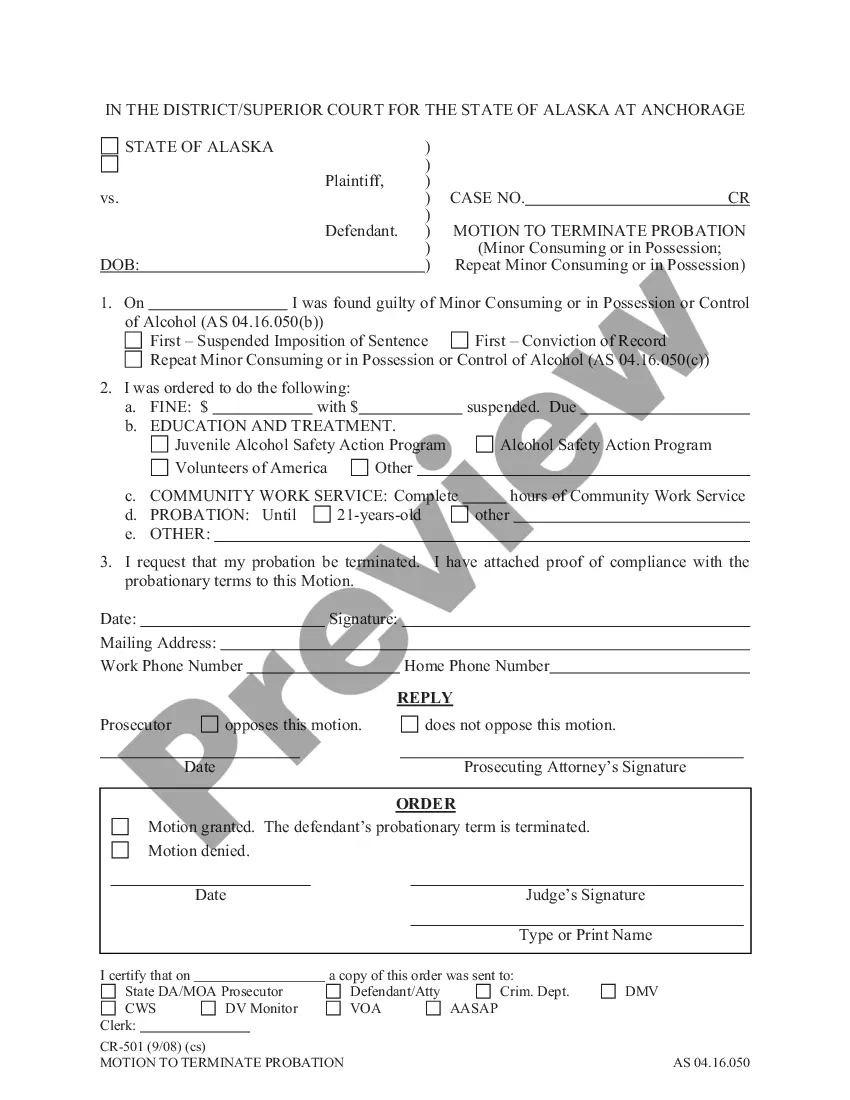
Ohio Quitclaim Deed - Two Individuals to One Individual
What is this form?
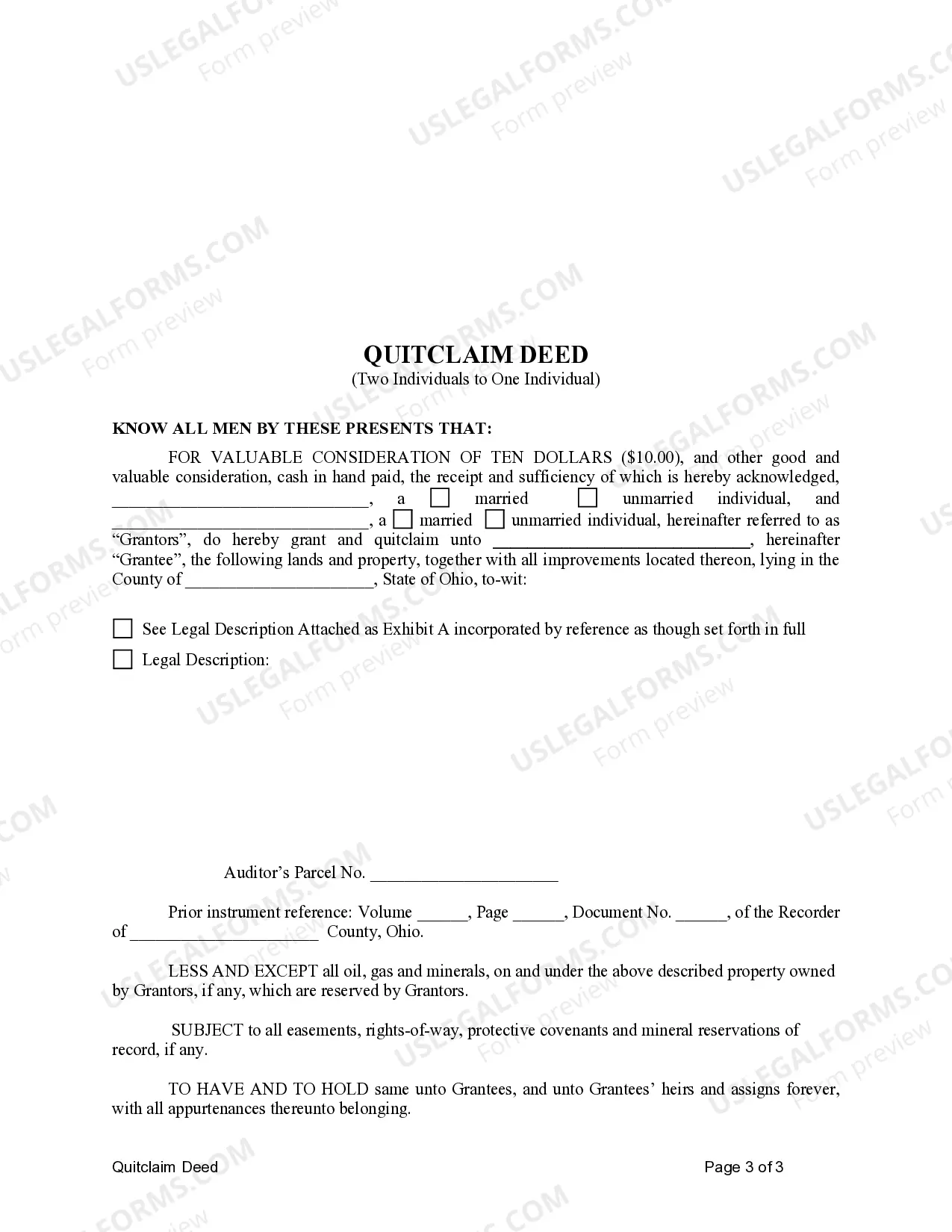
This Quitclaim Deed allows two individuals (the grantors) to transfer their ownership interests in a property to a single individual (the grantee). Unlike warranty deeds, a quitclaim deed does not guarantee that the grantors hold a clear title to the property. This form is particularly useful in situations where the ownership needs to be clarified or transferred without the burden of warranties or guarantees associated with the property's title.
Main sections of this form
- Identification of the grantors and grantee.
- Description of the property being transferred.
- Statement of the consideration (e.g., $10 or other value).
- Recital of any reservations or exceptions from the grantors.
- Signature lines for both grantors and any required witnesses.
- Date of execution.
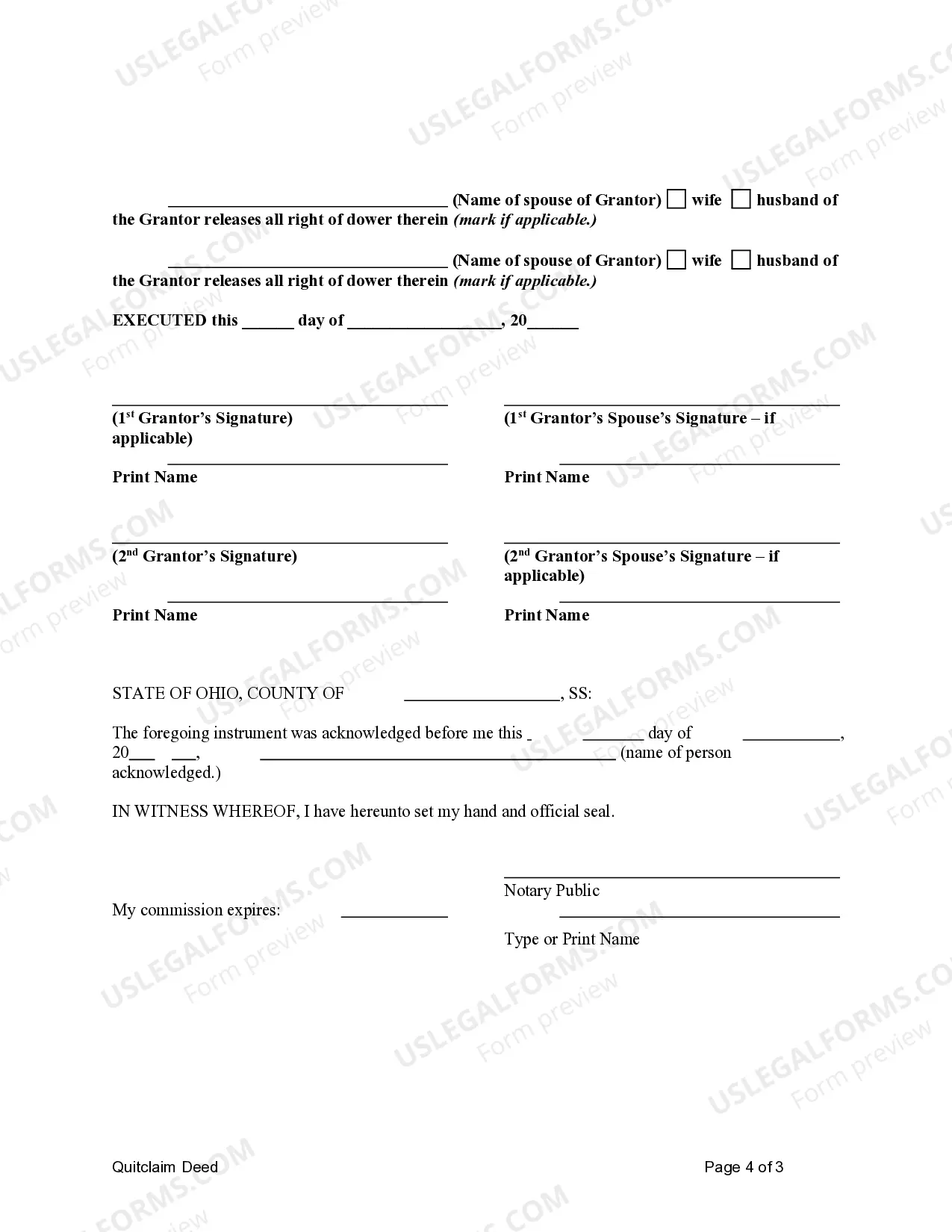
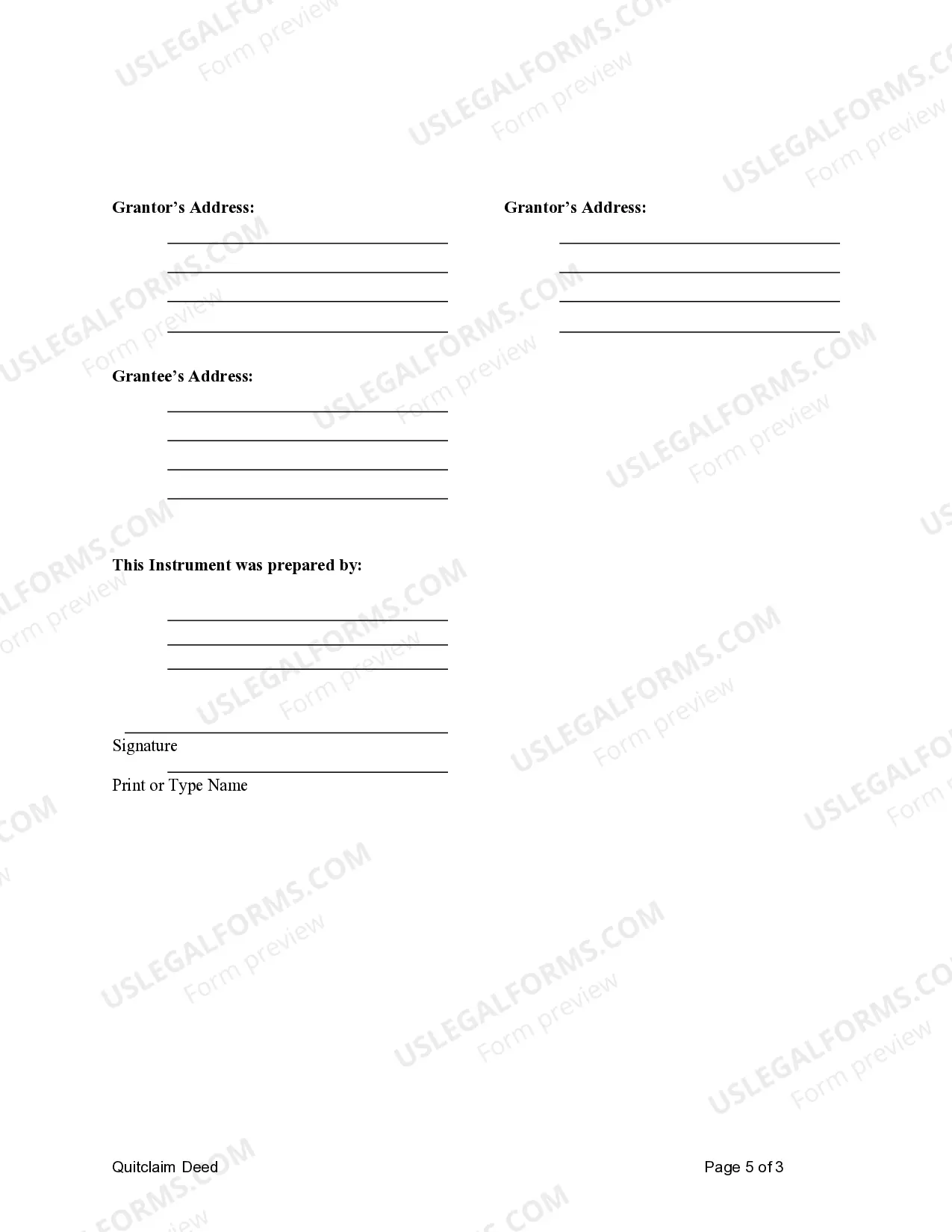






When to use this document
This Quitclaim Deed is typically used in situations such as transferring property ownership between family members, resolving title issues, or when a spouse is transferring their interest in property as part of a divorce agreement. It is also suitable for situations where the parties involved trust each other and do not require the additional protections that come with a warranty deed.
Intended users of this form
- Two individuals wishing to transfer property ownership to one individual.
- Family members involved in informal property transfers.
- Parties in a divorce looking to clarify property ownership.
- Individuals resolving minor title disputes without legal complications.
Completing this form step by step
- Identify the two individuals as grantors and the one individual as the grantee.
- Provide a complete legal description of the property being transferred.
- Indicate the consideration being exchanged for the transfer, typically at least $10.
- Ensure both grantors sign the document, along with any necessary witnesses if required.
- Fill in the date of execution accurately in the designated field.
Does this document require notarization?
This form does not typically require notarization unless specified by local law. However, having the document notarized is advisable for added legal validity and to ensure proper recording with relevant authorities.
Get your form ready online
Our built-in tools help you complete, sign, share, and store your documents in one place.
Make edits, fill in missing information, and update formatting in US Legal Forms—just like you would in MS Word.
Download a copy, print it, send it by email, or mail it via USPS—whatever works best for your next step.
Sign and collect signatures with our SignNow integration. Send to multiple recipients, set reminders, and more. Go Premium to unlock E-Sign.
If this form requires notarization, complete it online through a secure video call—no need to meet a notary in person or wait for an appointment.
We protect your documents and personal data by following strict security and privacy standards.

Make edits, fill in missing information, and update formatting in US Legal Forms—just like you would in MS Word.

Download a copy, print it, send it by email, or mail it via USPS—whatever works best for your next step.

Sign and collect signatures with our SignNow integration. Send to multiple recipients, set reminders, and more. Go Premium to unlock E-Sign.

If this form requires notarization, complete it online through a secure video call—no need to meet a notary in person or wait for an appointment.

We protect your documents and personal data by following strict security and privacy standards.
Mistakes to watch out for
- Failing to provide a full legal description of the property.
- Not including the signatures of both grantors.
- Leaving the date of execution blank or incorrectly filled out.
- Ignoring local recording laws which might require additional steps.
Advantages of online completion
- Convenient access to legal forms from home.
- Edit and customize the document easily using your computer.
- Reliability and compliance with state laws, crafted by licensed attorneys.
- Instant downloadable format for prompt completion and execution.
Legal use & context
- A Quitclaim Deed is generally used when the grantor does not guarantee clear ownership.
- This form is sufficient for casual property transactions or family-related transfers.
- It may not protect the grantee from any future claims regarding the property.
Key takeaways
- A Quitclaim Deed transfers property interests but does not guarantee clear title.
- Best used in straightforward situations like family transfers or divorces.
- Ensure all requisite information and signatures are included to avoid delays or legal issues.
Looking for another form?
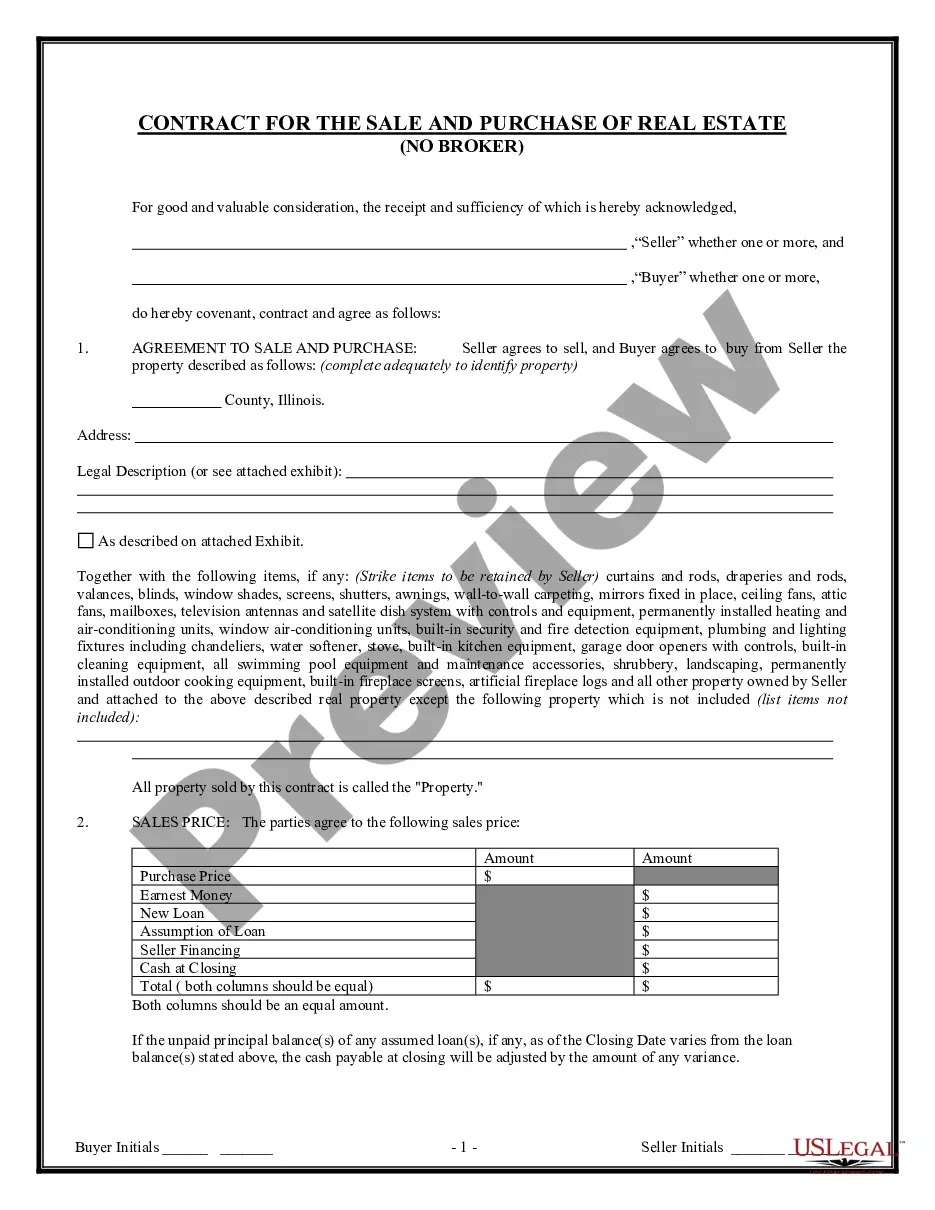
Form popularity
FAQ
But you might be wondering if an owner can transfer a deed to another person without a real estate lawyer. The answer is yes. Parties to a transaction are always free to prepare their own deeds.A quitclaim deed, for example, is far simpler than a warranty deed.
Once the quitclaim deed is signed and notarized, it is a valid legal document. But the grantee must also have the quitclaim deed recorded in the county recorder's office, or with the county clerk -- whoever has the authority to record deeds and property transfers.
The only way to forcibly change the ownership status is through a legal action and the resultant court order. However, if an owner chooses to be removed from the deed, it is simply a matter of preparing a new deed transferring that owner's interest in the property.
If you do not have any loan or mortgage over the said property, then the easiest way to remove your name from the joint names, is if you were to execute a release deed or relinquishment deed in favour of your wife with respect to 50% share that you are the owner of, then she in turn becomes the full and absolute owner
When done properly, a deed is recorded anywhere from two weeks to three months after closing. However, there are many instances where deeds are not properly recorded. Title agents commit errors, lose deeds, and even go out of business. Even county offices sometimes fail to record deeds that were properly submitted.
1Discuss property ownership interests.2Access a copy of your title deed.3Complete, review and sign the quitclaim or warranty form.4Submit the quitclaim or warranty form.5Request a certified copy of your quitclaim or warranty deed.
Fill in the application to change the register. You'll need to fill in the application to change the register, known as form AP1. Sign the transfer deed. Take form ID1 to a solicitors' firm. Send the completed forms to HM Land Registry.
An unrecorded quit claim deed is still valid.Failure to record a deed could render transfer or mortgaging of the property impossible and create numerous legal difficulties. The purpose of the recording a quit claim deed is to give notice to the world that there has been a change in ownership.
1Contact the county auditor's office to find out about the county's property transfer tax and exemptions.2Contact the county recorder's office to find out the volume and page numbers for the prior deed on the property.3Fill in the deed form.4Print it out.Ohio Quitclaim Deed - Create a Quit Claim Deed - Nolo\nstore.nolo.com > products > ohio-quitclaim-deed